Book Review: Pickle: The (Formerly) Anonymous Prank Club of Fountain Point Middle School by Kim Baker


13170031By Kimberly Mach

DESCRIPTION FROM THE BACK OF THE BOOK:

Dear Parents and Teachers:

This is a work of fiction. There is no Prank and Trick Association at Fountain Point Middle School. And you absolutely will not find instructions on how to log in to a top-secret prank instruction website anywhere on these pages. All we do is make pickles. OK?

Sincerely,

Ben Diaz

President, The League of Pickle Makers

MY TWO CENTS: Now, if the description above won’t get a child to pick up a book, I’m not sure what will.

Kim Baker had me laughing from the first page. The book opens with this line: Can I trust you? She had me hooked right there, with all that the question implies.

There are so many ways to talk about Pickle because it really is a perfect middle-grade novel. Kids will laugh out loud, and they may even go scrambling to create their own prank clubs. Beyond the laughter, they will identify with the ever-changing landscape of middle school friendships. Ben Diaz, the main character, creates a Prank Club, under the guise of a Pickle Makers Club. Due to an earlier incident, Ben does not invite his best friend Oliver into the club. (Oliver’s grandmother is the school principal and Oliver, well, Ben thinks Oliver just can’t be trusted to keep the secret.) Reading it, I found myself wondering what the halls of my school would look like if there were bubbles in the fountains or impromptu parties in the classrooms. Throughout the mayhem, lessons are woven in. Ben learns about himself, his new friends, and just how ‘off’ we can be when we try to label each other, but most of all he learns what kind of friendship he and Oliver really have. Spoiler alert: It’s made of the strong stuff. There are lessons here in action and reaction, consequences and the impact of our decisions, and they are all told masterfully through the eyes and comedy of young Ben Diaz.

As an adult reader, what resonated with me was the very real problem of what isn’t in our history books. For Pioneer Day, Ben and his friends have to present something pickled for the Pioneer Fair. If they don’t, they will lose their funding from the PTA and that will be the end of the Pickle Club and the secret Prank Club.

What to do? Ben turns to his family. They frequently serve escabeche, or pickled vegetables, at their Mexican restaurant. Ben sees that escabeche can be their entry for the fair. Then Ben hesitates. He asks the kind of question that many of our children who do not see themselves reflected on the pages of history books wonder about: Were there Mexican pioneers?

Ben goes on to say: “I’ve never seen any in the pictures. It’s always just a bunch of white guys.” And then later, the realization that, “It doesn’t mean they weren’t there.” Ben begins searching.

The time period for our children is different from that of my youth. In my youth, we may have asked the question, but because of available resources, we probably could not have answered it, at least not in a timely fashion. The internet has allowed people and organizations to post information and share resources in a much more efficient manner. When Ben wonders about pioneers from Mexico, he does not have to go far to find that reliable source. Instead of spending an afternoon at the town hall archives, he can answer it with the click of a button. As an adult, I could not escape the implications of Ben’s memory when he recalls being criticized in kindergarten for using the brown paper to make his Pilgrims for Thanksgiving. There are so many who were skimmed over in the history books, but the information is there if we ask the questions. Step one is teaching our children to ask. Where are the women in this picture? Who worked in the factories? Why does this city have a Spanish name? What happened when native peoples went to reservations? Ben chooses to share an authentic pickling recipe from Mexico. It may not be the pickle recipe people were expecting at the fair, but it is delicious and the scene, of course, is memorable. Trust me, you’ll be cheering for him when he has a conversation with Principal Lebonsky about traditional recipes.

TEACHING TIPS: This book would be an excellent read-aloud in the classroom, appropriate for grades 3-6. It can be enjoyed for the humor and story, or a teacher can choose to take the lessons further.

Language Arts: Life-size character sketches are one extension idea. Brief descriptions of each character are on the front jacket of the book. Many children will see themselves reflected in the personalities and the ethnicities of Ben and his friends. Traits can be filled in as readers follow the story, with life-size versions being presented at the end.

Social Studies: Many upper elementary and early middle school grades study pioneer days as part of their curriculum. Reading Pickle may encourage students to ask the important questions and to look more deeply at the pictures of people in their own state and communities.

The escabeche could be the beginning to a small unit on preserving food both in the past and now. Compare and contrast, how did Native Americans preserve food? When were other methods introduced?  What are traditional foods of the region? How are they preserved today?  The possibilities are endless here.

Enjoy the book. Readers of all ages will love it. When you are done, visit Kim Baker’s website at http://kimbakerbooks.com/ and enjoy her voice and humor there.

Pickle is Kim Baker’s debut novel and has already received five awards including the Louisiana Young Reader’s Choice 2015 nominee, 2014-2015 Texas Blue Bonnet Award Nominee, and the 2013 SCBWI West Crystal Kite award.

FOR MORE INFORMATION ABOUT Pickle visit your local library or bookstore. Also, check out WorldCat.orgIndieBound.orgGoodreadsAmazon, and Barnes & Noble.


Kimberly Mach has been teaching for sixteen years and holds two teaching certificates in elementary and secondary education. Her teaching experience ranges from grades five to twelve, but she currently teaches Language Arts to middle school students. It is a job she loves. The opportunity to share good books with students is one that every teacher should have. She feels privileged to be able to share them on a daily basis.

Mixed Up: Author Kim Baker Navigates a Bicultural Narrative

By Kim Baker

I’m bicultural. My grandparents on my mom’s side eloped and migrated from Mexico to New Mexico where they had babies and my grandpa worked in the coal mines until, lungs destroyed, they moved again to East Los Angeles for better weather. My uncle can tell you about how cramped it was with all the kids in the backseat. Sunshine couldn’t save my grandpa, but most of my family is still around the area. My dad is Anglo and from Texas. His side of the family has been in the states so long, nobody knows for sure from where they originally migrated. So, like lots of people, I’ve got a mixed ethnicity. Culture is a weird thing. It’s shared customs and distinct experiences. I’m ridiculously pale, and I have my husband’s surname so people are often surprised to hear about my Mexican heritage. When people do find out (and I’m pretty open about it), sometimes we play stereotype bingo and they ask questions to see if I meet their preconceived qualifications (Do I have a big family? Yes. Do I like spicy foods? …Yes. Do I listen to mariachi? Please stop.).

I consider myself Latina, and proud. This is me, the grouchy one covering her face in front, with a small portion of my family. My cousin Joey is mortified that I share this picture because he is self-conscious about how much leg he’s showing in those cutoffs.

Maciasfamily

Now I feel guilty about sharing it, so I will also tell you that later that day I threw up an Orange Julius at the mall and tried to hide it under a t-shirt rack. That’s worse than knobby knees.

When I was a lonely kid, books were my escape. I never really saw myself in books until I was older. There’d be bits in stories here and there (e.g. A kid in the book loved horses, and I was a horse nut. Harriet was overly curious about people? Me, too!). And maybe, in part, because of how I didn’t see myself as a whole in books as a kid, I often feel different and separate from those around me. Feeling abnormal in itself is a pretty shared understanding (We’re ALL weirdos!), but having a bicultural identity certainly magnifies the experience. Granted, I was getting most of my books from a Wyoming library that underestimated its Latino population by at least a few, so there were probably more stories out there than I wasn’t finding.

I grew up in Wyoming, where I could count the other non-Anglo kids at my school on one hand. My mom missed her family, missed the sunshine, missed seeing people like her, so we’d drive to East L.A. in the summertime to visit. My grandma and aunts would make all of the foods we couldn’t get in Wyoming and bring my favorite orejas from the panadería. Some of my cousins would tease me about my pale skin (I look just like my dad.), so I’d sit on the porch and watch my also shy uncle tend his jasmine and geraniums while the rest of the family visited inside. You could hear them laughing all the way down the block. We’d go back to Wyoming and I’d ride horses, trudge through snow, and eat American foods. The taco shells and beans in my hometown grocery store were labeled as “Spanish Foods.” I always felt a bit disconnected and different, no matter where I was. My parents split up and I lived with my mom in New Mexico and California. I was in primarily Latino communities, but still stood apart because of my Anglo features. Kids called me gringa and worse. I read more. My school didn’t have a library, the town didn’t have a bookstore, and the public library’s shelves were pretty spare, but I found what I could. I identified with S.E. Hinton’s The Outsiders being from the wrong side of the tracks, but found nothing about Mexican-American kids or mixed culture kids. I would have been overjoyed to find Isabel Quintero’s Gabi, A Girl in Pieces as a teen.

13170031The protagonist in my first book, Pickle, is straight up Mexican American. The main character in my next novel is a mixed Latino like me, and writing has been a little bit more of a personal journey. I’ve taken a little longer with it, because I want to do it right. There’s so much I want to include, and I’m still working on how much serves the story. I know that there are other writers out there who balance between environments and depend on cultural code-switching to find their way. And there are kids that are looking for those stories, that need them. Books are touchstones. Identity, displacement, and belonging are important themes in middle grade and YA fiction that can reach all readers. The crazy thing about the loneliness of feeling different from our peers is that it’s probably one of our most communal traits. So, as a writer, I’ll continue to write about Latino kids and put little pieces of myself and my world in there. I implore you to do the same. And putting your truth into stories isn’t necessarily autobiographical. I think the best stories come from combining what you love with what you wish there was a story about.

Every kid should be able to find mirrors on the bookshelves, and it’s especially crucial for those of us who might struggle to fit into their worlds. Let’s put more stories out there, because you can’t always tell who might need them.


BakerBWheadshotKim’s debut middle grade novel, Pickle (Macmillan), was a finalist for the 2013 Children’s Choice Awards, Book of the Year (5th and 6th grade), one of Mamiverse’s Top 50 Latino Children’s Books You Should Know, and the recipient of the 2013 SCBWI Crystal Kite West award. She lives with her family in Seattle and can often be found in the woods, despite a chronic fear of bears. Find out more at www.kimbakerbooks.com.
Book Review: Unusual Chickens for the Exceptional Poultry Farmer by Kelly Jones

22639675By Cindy L. Rodriguez

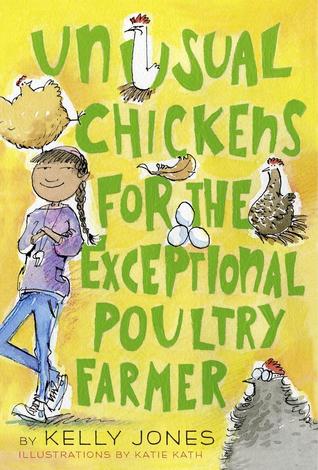
DESCRIPTION OF THE BOOK: Twelve-year-old Sophie Brown feels like a fish out of water when she and her parents move from Los Angeles to the farm they’ve inherited from a great-uncle. But farm life gets more interesting when a cranky chicken appears and Sophie discovers the hen can move objects with the power of her little chicken brain: jam jars, the latch to her henhouse, the entire henhouse….

And then more of her great-uncle’s unusual chickens come home to roost. Determined, resourceful Sophie learns to care for her flock, earning money for chicken feed, collecting eggs. But when a respected local farmer tries to steal them, Sophie must find a way to keep them (and their superpowers) safe.

Unusual Chickens for the Exceptional Poultry Farmer releases May 12 with Knopf Books for Young Readers.

MY TWO CENTS: It’s easy to love Sophie, the half-Latina main character in this middle grade novel that upgrades the “new girl in town” idea by adding cool, magical chickens and letters from the beyond. Sophie and her parents move from Los Angeles to a farm, left to them by her late Great-Uncle Jim. The farm, though, is “more like a big, boring garden. Dead-looking grapevines and blackbirds and junk piles and bugs, that’s it.” Sophie’s family is trying to start over after her dad lost his job.

In the novel, author Kelly Jones addresses issues such as unemployment, racism, and classism, but never in a heavy-handed way. Through her letters to her abuela, Uncle Jim, and Agnes from Redwood Farm Supply, Sophie talks about her family’s financial problems and the small town’s lack of diversity. “There aren’t any people around here–especially no brown people.” In another chapter, Sophie writes, “even though Mom was born here and speaks perfect English, she says you have to be twice as honest and neighborly when everyone assumes you’re an undocumented immigrant.” These moments, though, are not preachy. Instead, they are presented as things Sophie observes or wonders about as she navigates her bicultural reality and being the new girl–a city girl transplanted to a weed-choked farm with magical chickens.

And, for the record, the chickens are awesome. My favorite is the angry, telekinetic chicken. He’s so cute somehow even though he’s got the “if looks could kill” face all the time. Being responsible for the chickens helps Sophie to settle in and connect with her new surroundings. Caring for the chickens, and working hard to keep them safe from a thief, allows Sophie to develop her confidence.

What I really love about Sophie is that she’s a strong girl, but she’s also a quiet girl who isn’t afraid to admit when she’s sad or lonely. Being strong doesn’t always mean wielding weapons; sometimes it means going after a chicken thief or speaking in front of a crowd, even though it scares you. I think lots of middle grade readers will love this novel, which also has great illustrations, information about chickens throughout, and even a recipe for migas!

TEACHING TIPS: Language arts teachers could easily include this novel in a thematic literature circles unit with other stories about moving to new places, whether it’s to a new town or a new country.

Since Sophie writes letters throughout the novel, students could write and send personal letters to friends or family and formal business letters to local companies. In this electronic age, writing, sending, and receiving letters could be a fun activity for this generation of students, who may have seldom done this, if at all.

Asking a local farmer to visit the classroom, or taking students on a field trip, would be a wonderful experiential activity, especially for city students (like Sophie) who may have never visited a farm.

A classroom fiesta, complete with lots of eggs-based dishes and migas, using the recipe in the book, would be a wonderful and tasty way to end a unit.

Kelly JonesABOUT THE AUTHOR: Kelly Jones is a curious person, interested in chickens, magic, farm life, spies, sewing, the odd everyday bits of history, how to make sauerkraut, how to walk goats, superheroes and what makes them so super, recipes to make with a lot of eggs, anything with ghosts (particularly friendly ghosts), how to draw chickens that actually look like chickens, and any story she’s never heard before.

She’s also a writer: Her debut novel Unusual Chickens for the Exceptional Poultry Farmer, about twelve-year-old Sophie and her magical chickens, is forthcoming from Knopf Books For Young Readers in May of 2015.

Her second book, Glamour, is set in 1818, England, about sixteen-year-old Annis, who would like to become a spy like her father and who does not see why the War Office should put up such a fuss (with bonus magical dressmaking!) is forthcoming from Knopf Books for Young Readers in Spring of 2017.

FOR MORE INFORMATION ABOUT Unusual Chickens for the Exceptional Poultry Farmer visit your local library or bookstore. Also, check out WorldCat.orgIndieBound.orgGoodreadsAmazon, and Barnes & Noble.

Praise for Books Deemed Perfect for Reluctant Readers

By Cindy L. Rodriguez

Recently, a few 2015 debut author friends have had their books reviewed as being “good for reluctant readers,” and the question was, “Is this a good thing?” I jumped into that online conversation because I work all day, every day with reluctant readers at my full-time day job as a reading specialist in a large suburban middle school in Connecticut.

First, what is a reluctant reader? It’s a student who can read but chooses not to. They are not illiterate. They are aliterate. When it’s designated silent reading time, they fake read. If a movie has been made, they watch it first. They can get by on quizzes and tests by listening to the teacher and peers talk about the book. Reluctant readers are not unintelligent. Some make it through high school successfully, with good grades, without ever reading a book cover to cover.

For some students, however, a lack of reading for years can affect their fluency, vocabulary, and comprehension skills. A reluctant reader turns into a struggling reader. The achievement gap between struggling readers and their peers grows as the work becomes more rigorous and academic expectations increase. Across the nation, the students who represent the achievement gap are largely minority students from urban areas.

My school has about 900 students in grades 6-8. The vast majority of students read well above their grade level, so reluctant and/or struggling readers land in my class. Most of my students are Hispanic and almost all of them are either English Language Learners or students who have transferred to our district from nearby cities. The goal is for them not to need reading support. Getting them there can be a challenge because reading is something they do not enjoy.

The school year usually starts like this:

Me: Welcome to class!

Student: I don’t want to be in this class.

Me: How do you know? We haven’t even started yet.

Student: I hate reading.

Me: I know. That’s why you’re here. Everyone here hates to read, except for me, of course. It’ll be fun, I promise.

Student: How can it be fun if all we’re going to do is read?

Me: Well, that’s not all we’re going to do. We might take a break from reading to chit-chat like we are now, but yeah, we’re going to spend a lot of time reading.

Student: And you consider that fun?

Me: I do, and I think you will, too.

Student: Yeah, right. Good luck with that.

I’ve even had a few students cry on the first day of class and tell me they don’t want to be seen in the “stupid” class. I try to convince them it’s the best class in the building, but their discomfort is real and has been with them since they first started learning how to read and didn’t like it or were separated from their peers for extra help. The older they get, the more embarrassing this is. I do validate their feelings and their frustrations, and I equate it with my ongoing struggle with exercise.

I know it’s important, but I don’t like to do it. The longer I don’t do it, the more out of shape I get. If I decide it’s time to change my habits, it might be uncomfortable, even painful, but it will get easier with time. Eventually, I’ll be stronger and healthier. I may never love exercise, but I’ll do it because it’s good for me.

Some of my students are athletes or musicians or are engaged in some activity that requires an ongoing commitment, so they get my analogy. They understand that they may never love to read, but it’s important for their futures.

So, how to start? Me, I’ll start by walking my dog more now that winter is finally over. My students start by picking books they want to read, not books handed to them by a teacher. Some of them don’t even know where to begin. These are not the students who already have a favorite genre or author. Some of them don’t even know how to find a book in the library. All they’ve had is a longstanding feeling that reading is boring.

Enter books perfect for reluctant readers and teachers, booksellers, and librarians–the people who talk up books and place books in students’ hands.

For its annual Quick Picks for Reluctant Young Adult Readers list, YALSA considers a book’s physical appearance, style, and content. The criteria are meant as suggestions, and they clearly state not all criteria may fit all books. Here are the things they consider when evaluating a book for reluctant readers.

1.  Physical Appearance

  • Cover – catchy, action-oriented, attractive, appealing, good “blurb”
  • Print style – sufficiently large for enjoyable reading
  • Format – appropriate and appealing balance of test and white space
  • Artwork/illustrations – enticing, realistic, demonstrated diversity

2.  Style

  • Clear writing that easily communicates without long convoluted sentences of sophisticated vocabulary
  • Acceptable literary quality and effectiveness of presentation
  • Simple vocabulary but not noticeably controlled

3.  Fiction

  • High interest “hook” in first 10 pages
  • Well-defined characters
  • Sufficient plot to sustain interest
  • Plot lines developed through dialog and action
  •  Familiar themes with emotional appeal for teenagers
  • Believable treatment
  • Single point of view
  • Touches of humor when appropriate
  • Chronological order

4.  Informational Books

  • Technical language acceptable if defined in context
  •  Accuracy
  • Objectivity

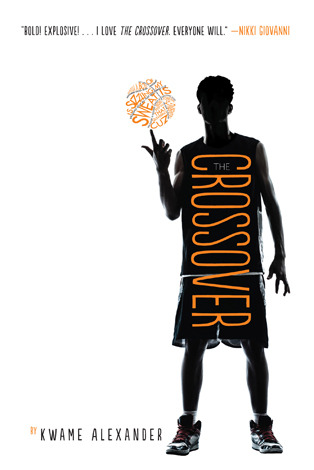
18263725In short, books perfect for reluctant readers have an attractive design, hook the reader early, are relatively easy to read, and are written in a way that keeps them reading. So, to the question, Is it a good thing to have my book called “perfect for reluctant readers”? I say, YES! Some of the titles on this year’s list include the Newbery winner The Crossover by Kwame Alexander and the Morris Award winner, Gabi, A Girl in Pieces by Isabel Quintero. That two of this year’s top prize winners are also good books for reluctant readers should settle any question about whether books for reluctant readers are somehow “less than” in the literary world.

If anything, I’d argue they achieve something special because book lovers will read just about anything or push through a novel, even if they’re not enjoying it entirely. Reluctant readers, though, are an author’s toughest critic. They will put a book down in a heartbeat if it doesn’t keep their interest. If you can capture a reluctant reader’s interest, that’s saying something. And if that reluctant reader goes on to read another book and then another, well, then I cry teacher tears of joy.

Getting these books into students’ hands is a crucial piece of the puzzle. During one-on-one conferences recently, I asked my students about what they were reading and why they chose it. ALL OF THEM said they chose the book because a teacher or librarian recommended it.

Wow, reality check time.

If I say, “This is a great book,” students will want to read it. Seems obvious, right? But, for those of us in this position, please realize the influence we have. We read lots of books as part of our jobs. We stand up in front of students, and we present a handful of books to them through book talks or when they ask for help to find a book. When we do this, they want to read them. The suggestions we make can turn non-readers into readers. This is serious.

So, which books are we recommending? Are we recommending the same books all the time? How diverse are our choices year to year in terms of genre, author, characters, content? Do we think there are girl books and boy books? Do we think there are books for students of color and books for all other students? These are important questions we should be asking ourselves because our answers will determine the books we champion. And the books we champion can become the books students, especially reluctant readers, choose to read.

For the record, here are some of the books my reluctant readers are currently reading and loving:

24048  12987986  17166339  6186357  18225810  Into the Wild (Warriors, #1)  After Tupac and D Foster

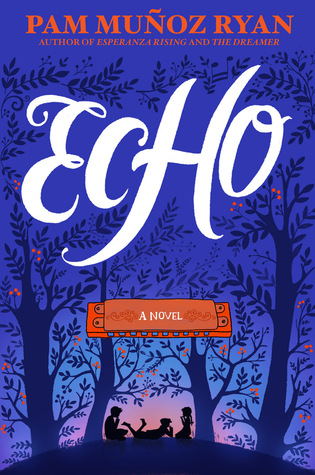
Book Review: Echo by Pam Muñoz Ryan


22749539By Cecilia Cackley

DESCRIPTION (from Goodreads): Music, magic, and a real-life miracle meld in this genre-defying masterpiece from storytelling maestro Pam Muñoz Ryan.

Lost and alone in a forbidden forest, Otto meets three mysterious sisters and suddenly finds himself entwined in a puzzling quest involving a prophecy, a promise, and a harmonica.

Decades later, Friedrich in Germany, Mike in Pennsylvania, and Ivy in California each, in turn, become interwoven when the very same harmonica lands in their lives. All the children face daunting challenges: rescuing a father, protecting a brother, holding a family together. And ultimately, pulled by the invisible thread of destiny, their suspenseful solo stories converge in an orchestral crescendo.

Richly imagined and masterfully crafted, Echo pushes the boundaries of genre and form, and shows us what is possible in how we tell stories. The result is an impassioned, uplifting, and virtuosic tour de force that will resound in your heart long after the last note has been struck.

MY TWO CENTS: Muñoz Ryan hits a sweet spot of historical fiction combined with a tiny bit of fantasy and a whole lot of heart in this new title. While the three separate narratives might seem overwhelming at first, they are never long-winded and large text and good formatting make things easy on the eyes. Muñoz Ryan introduces the reader to less familiar aspects of well-known historical events: laws regarding children with birth ‘defects’ in 1930’s Germany, conditions for orphans during the Depression in the US, and the segregation of schools in California for children of Mexican descent during World War II. All three main characters are easy to root for and their strength and determination makes happy coincidences and the final destination feel earned rather than magical. That harmonica though…what can I say? The power of music is mighty, a point Muñoz Ryan makes very clear. This is a great choice for middle grade readers, especially fans of historical fiction or stories involving music.

TEACHING TIPS: The historical settings make this a great title to connect to social studies units. It would also be a wonderful classroom read aloud. Teachers could assign groups to compile additional background research on the historical events mentioned in the text or on the harmonica and other musical instruments. Audio recordings would also be a great addition to the experience of the story.

ABOUT THE AUTHOR: Pam Muñoz Ryan has written over thirty books for young people, from picture books for the very young to young adult novels, including the award winning Esperanza Rising, Becoming Naomi Leon, Riding Freedom, Paint the Wind, and The Dreamer. She is the National Education Association’s Author recipient of the Civil and Human Rights Award, the Virginia Hamilton award for Multicultural Literature, and is twice the recipient of the Willa Cather Literary Award for writing. She was born and raised in Bakersfield, California (formerly Pam Bell), received her bachelor’s and master’s degrees at San Diego State University and now lives in North San Diego County with her family.

LINKS/OTHER INFO:

SLJ interview

Publisher’s Weekly interview

FOR MORE INFORMATION about Echo, visit your local library or bookstore. Also check out WorldCat.orgIndieBound.orgGoodreadsAmazon, and Barnes & Noble.


Cackley_headshotCecilia Cackley is a performing artist and children’s bookseller based in Washington DC where she creates puppet theater for adults and teaches playwriting and creative drama to children. Her bilingual children’s plays have been produced by GALA Hispanic Theatre and her interests in bilingual education, literacy, and immigrant advocacy all tend to find their way into her theatrical work. You can find more of her work at www.witsendpuppets.com.

Latin@ Heroes of the Planet

by Lila Quintero Weaver

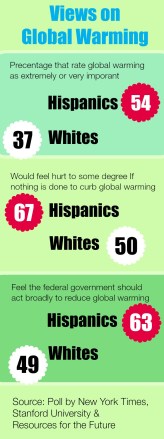
Views on Global WarmingFacts to contemplate and amaze: 1. A high percentage of Latin@s are persuaded that a connection exists between global warming and human activity. 2. A majority of Latin@s feel global warming carries an extreme or very serious potential to affect their lives.
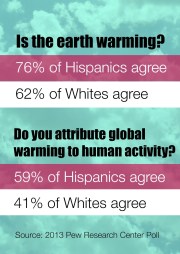
According to the findings of a new poll conducted by The New York Times, in conjunction with Stanford University and Resources for the Future, an environmental research group, “Hispanics are more likely than non-Hispanic whites to view global warming as a problem that affects them personally. It also found that they are more likely to support policies, such as taxes and regulations on greenhouse gas pollution, aimed at curbing it.”

Pew Research PollThe article in the New York Times acknowledges that these findings challenge stereotypes about Latin@s, as well as common assumptions that saving the environment is of concern mostly to white liberals.
So where are the books for kids that highlight this vigorous interest among Latin@s in saving the environment? My answer: they’re not easy to find and it sometimes means digging within tables of contents to discover a chapter or two featuring Latin@s.

Here are a handful of kids’ books sure to inspire a new generation of Latin@ planet saviors. Consider adding them to your Earth Day observations (April 22).

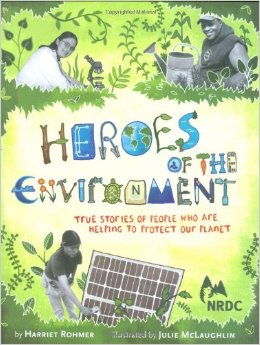
HEROES OF THE ENVIRONMENT: TRUE STORIES OF PEOPLE WHO ARE HELPING TO PROTECT OUR PLANET, by Harriet Heroes of the EnvironmentRohmer

This nonfiction book for grades 4 and up celebrates the environmental triumphs achieved by a dozen unsung heroes of all ages located in various parts of the United States and Mexico. I’m giving it star billing because I feel it deserves wider attention. The environmental challenges the activists take on—from urban gardens to saving caribou—are as diverse as the heroes themselves. Of the twelve, three heroes are Latin@, two are Native American, two are African American, one is Asian American and the remaining four are white. Rohmer relates the story of each person’s activism in a short chapter illustrated with photos and art by Julie McLaughlin.

The determination, innovation and enterprising spirit shown by all twelve heroes is truly inspiring. Here is a brief recounting of one of their stories. Erica Fernandez is a young immigrant from Mexico who learns of plans by an Australian company to build a large processing station for liquefied natural gas near her new hometown in California. If the company’s plans go through, a large, potentially lethal gas line would run directly beneath her community. Using Spanish and broken English, Erica sets out to inform neighbors and elected officials about the grave risks. The outcry of the community eventually reaches the ears of the governor, who nixes plans for the gas line.

In addition to the stories already alluded to, you will also find:

  • A Hopi girl installing solar panels on her reservation
  • A teacher turning the protection of wetlands into a classroom project
  • A man designing a unique bio-digestive sewage-treatment system
  • A boy organizing the safe disposal of old electronics
  • A lucha libre warrior fighting to protect coastlines and waterways
  • A woman taking on the coal company responsible for destructive mountaintop removal in her West Virginia location
  • A Bronx resident turning the problem of construction-site trash into a cooperative business
  • A young woman inventing a device for purifying polluted water
  • A Louisiana woman pressuring an oil company to relocate an entire community victimized by toxic disposal

The quieter message of this book is thrilling to me: that anyone can make a difference to the health of our planet—people of all ages, ethnic backgrounds and economic or educational levels.

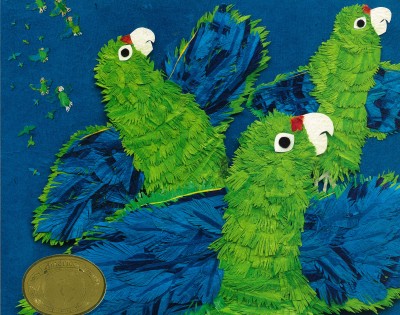
Parrots PRPARROTS OVER PUERTO RICO, by Susan L. Roth and Cindy Trumbore

This ingeniously illustrated picture book about a parrot species brought to the brink of extinction and the valiant efforts underway to rescue it, has received well-deserved acclaim. The story of Puerto Rico’s iguaca parrots demonstrates the vulnerability of all biological species, especially to the encroachment of human activity. Over the course of centuries, natural enemies preyed on the iguaca’s nests and hurricanes damaged their forest habitats, but it was humans who posed the biggest threat, primarily by trapping the birds and destroying their nesting sites. In 1968, when the iguaca population stood at less than thirty, Puerto Ricans jumped into action to save the birds. Thanks to their efforts, iguaca parrots’ numbers are on the rise again. An afterword provides further details on the Parrot Recovery Program.

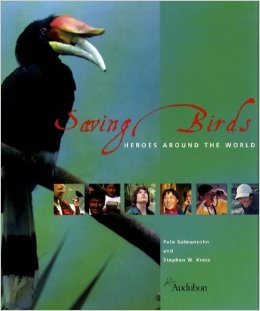
SAVING BIRDS: HEROES AROUND THE WORLD, by Peter Salmansohn and Peter W. KressSaving Birds

This book teaches young readers about preservation efforts on behalf of endangered birds in six locations around the world. One chapter focuses on a Latin American bird of legend, the quetzal. Like many animals of exceptional beauty, the quetzal has been exploited and poached. Furthermore, its habitat in Central America’s cloud forests is under threat by human activity, including deforestation and fires. Two men employed by a natural reserve in Chiapas, Mexico, called El Triunfo, set out to address the educational gaps surrounding the quetzal. Using puppet shows and books, they have recruited the support of children in villages throughout the region, teaching them to prize the quetzal and its forest home.

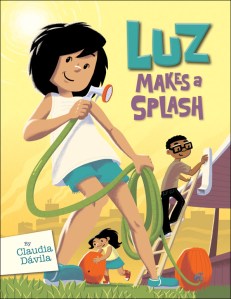
LUZ MAKES A SPLASH, by Claudia Dávila

Luz Makes a SplashHow can young readers learn about something as abstract as water conservation? This graphic novel for elementary grades introduces wise water-usage in a kid-friendly package. It’s part of a two-book series called The Future According to Luz. The companion book is entitled Luz Sees the Light. Luz Makes a Splash is built around an eponymous character and a community of friends and family whose lives are affected in multiple ways by scorching temperatures and drought conditions. Gardens are drying up. So is a city park and Luz’s favorite spring-fed pond. It turns out that a nearby soft-drink company is tapping groundwater to manufacture its cola products, and this contributes to the pond’s receding water level. A group of citizens mobilizes to address the problem. Meanwhile, Luz learns about rain barrels and a natural system for filtering household water used for cooking and washing (gray water). One of the story’s characters converts his sod lawn into a rock garden built around indigenous plants capable of thriving in drought conditions.
The author-illustrator of Luz Makes a Splash is Chilean-Canadian. She has made her energetic, intelligent and community-minded main character a Latina. Ethnic identity doesn’t figure into the story, but what a nice way to counteract stereotypes of Latin@s.

This is a book with a message. Some readers will find fault with its didactic approach and the fact that the characters are not given a broader story, but taken as a teaching tool, it delivers solid information that can be used to launch explorations into drought, government-enforced water restrictions, and smart solutions for reducing water waste and keeping gardens green during low-water conditions.

*****

The focus of this post is Latin@ activism for earth-friendly causes, but a growing number of works on the Latin@ kid lit bookshelf celebrate the planet.

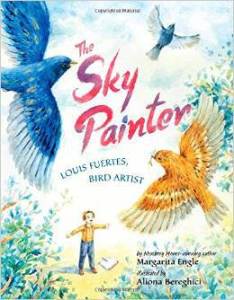
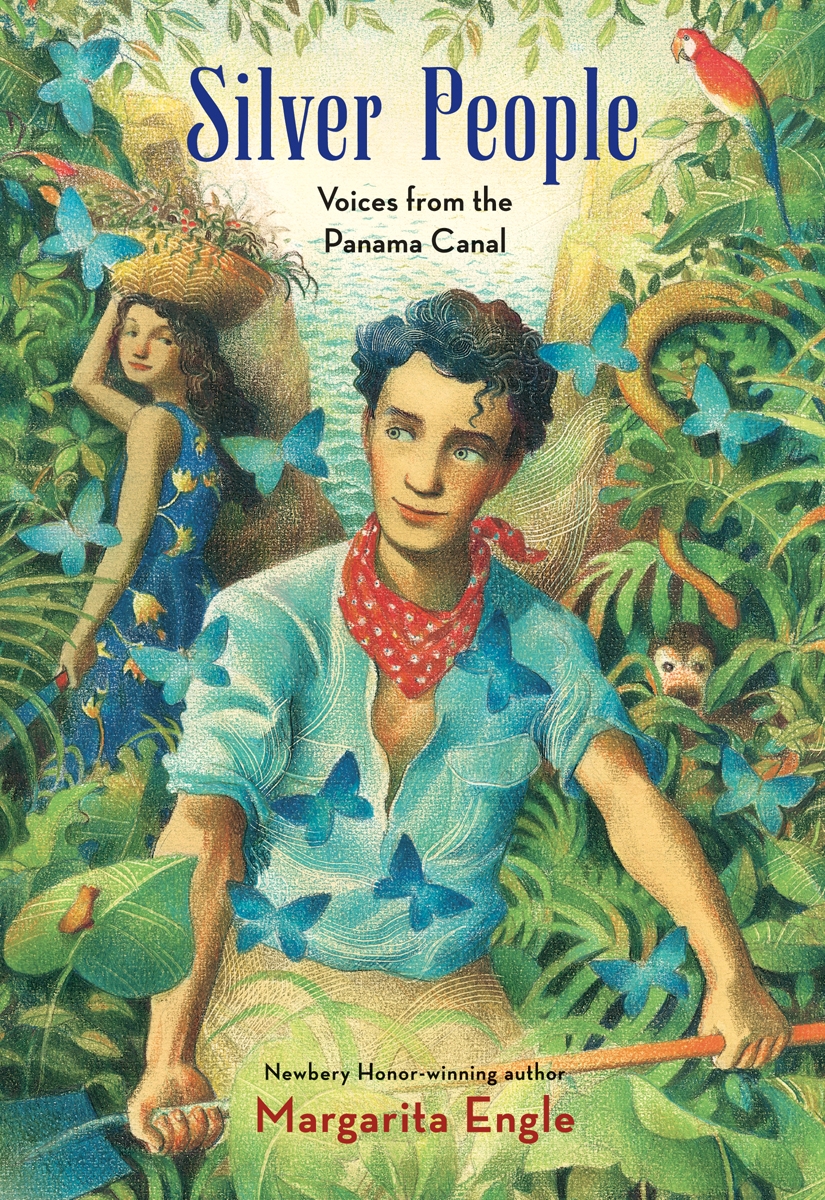
final Silver People cover-1Margarita Engle can be counted on to inject nature, naturalists, biodiversity, and environmental conservation in nearly all her books and has received recognition for her stand on these issues. Recently, Green Earth Book Awards shortlisted Silver People for its 2015 honors. Congratulations, Margarita!


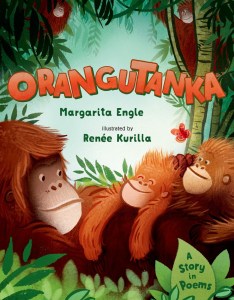
Two of Margarita’s 2015 releases embrace the wonders of nature.

Orangutanka   Sky Painter

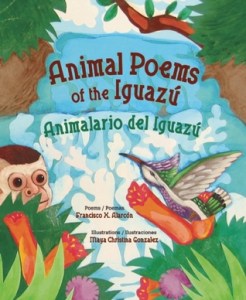
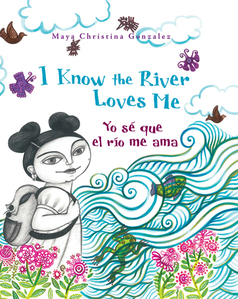
For more Earth Day-friendly books with Latin@ connections, check out these additional selections:

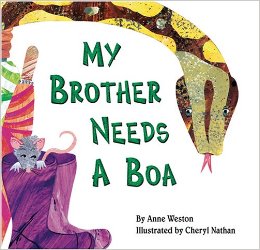
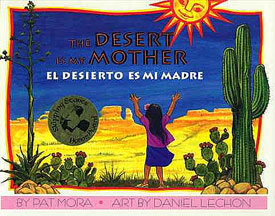
Animals Iguazy   River Loves Me      My Brother Needs a Boa   desert-is-my-mother

Need classroom resources related to the field of environmental activism?

Click here for information on The Américas Latino Eco Festival. Don’t overlook Mujeres de la Tierra, an inspiring group of activists located in California. 

Read about the amazing Xiuhtezcatl Martínez, a 14-year old champion of the planet!

For additional insights on the environmental heroes and projects featured in this post, check out these resources:

Omar Freilla is a New Yorker who appears in Heroes of the Environment. Here’s an article about his work.

Erica Fernanadez is another of the true-life characters in Heroes of the Environment. Here’s a video about her campaign for a cleaner environment:

As a follow up on Saving Birds, don’t miss this spectacular video of quetzals caring for their young.

And for young children, don’t forget Dora the Explorer’s cousin Diego, a passionate advocate for the environment!

https://www.youtube.com/watch?v=GTTat2FPKMU