Get your To-Be-Read lists out! Here are the 50+ titles we know about that are releasing in 2017 that are by Latinx creators with or without Latinx characters and by non-Latinx creators with Latinx characters. We plan to review as many of these as we can, so please check the site often or follow the blog for updates. The coming year brings new books from Benjamin Alire Sáenz, Anna-Marie McLemore, Lulu Delacre, Jenny Torres Sanchez, Adam Silvera, Veronica Chambers, Carmen Agra Deedy, Monica Brown, Maragarita Engle, and Diana Rodriguez Wallach. We will also see a few authors crossing genres. Morris Award winner Sofia Quintero will have a new chapter book out, and picture book writer Jennifer Torres will release a debut middle grade novel. The books are listed by the publishing date. Please let us know in the comments if we are missing any!
HAPPY READING!!
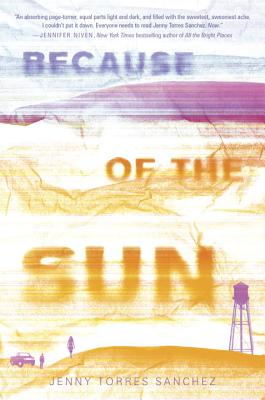 BECAUSE OF THE SUN by Jenny Torres Sanchez (Delacorte Press, January 3, 2017). Young Adult. Dani Falls learned to tolerate her existence in suburban Florida with her brash and seemingly unloving mother by embracing the philosophy Why care? It will only hurt. So when her mother is killed in a sudden and violent manner, Dani goes into an even deeper protection mode, total numbness. It’s the only way she can go on. But when Dani chooses The Stranger by Albert Camus as summer reading for school, it feels like fate. The main character’s alienation after his mother’s death mirrors her own. Dani’s life is thrown into further turmoil when she is sent to New Mexico to live with an aunt she never knew she had. The awkwardness between them is palpable. To escape, Dani takes long walks in the merciless heat. One day, she meets Paulo, who understands how much Dani is hurting. Although she is hesitant at first, a mutual trust and affection develop between Dani and Paulo, and Dani begins to heal. And as she and her aunt begin to connect, Dani learns about her mother’s past. Forgiving isn’t easy, but maybe it’s the only way to move forward.
OUR REVIEW: https://latinosinkidlit.wordpress.com/2017/01/12/book-review-because-of-the-sun-by-jenny-torres-sanchez/
 STEF SOTO, TACO QUEEN by Jennifer Torres (Little, Brown Books, January 3, 2017). Middle Grade. Estefania “Stef” Soto is itching to shake off the onion-and-cilantro embrace of Tia Perla, her family’s taco truck. She wants nothing more than for her dad to get a normal job and for Tia Perla to be put out to pasture. It’s no fun being known as the “Taco Queen” at school. But just when it looks like Stef is going to get exactly what she wants, and her family’s livelihood is threatened, she will have to become the truck’s unlikely champion.
OUR REVIEW: https://latinosinkidlit.wordpress.com/2017/02/02/book-review-stef-soto-taco-queen-by-jennifer-torres/
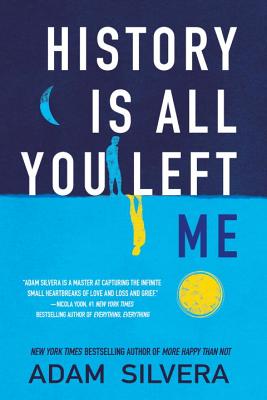 HISTORY IS ALL YOU LEFT ME by Adam Silvera (Soho Teen, January 17, 2017). Young Adult. Starred reviews from Kirkus, Publisher’s Weekly, Booklist, School Library Journal. When Griffin’s first love and ex-boyfriend, Theo, dies in a drowning accident, his universe implodes. Even though Theo had moved to California for college and started seeing Jackson, Griffin never doubted Theo would come back to him when the time was right. But now, the future he’s been imagining for himself has gone far off course. To make things worse, the only person who truly understands his heartache is Jackson. But no matter how much they open up to each other, Griffin’s downward spiral continues. He’s losing himself in his obsessive compulsions and destructive choices, and the secrets he’s been keeping are tearing him apart. If Griffin is ever to rebuild his future, he must first confront his history, every last heartbreaking piece in the puzzle of his life.
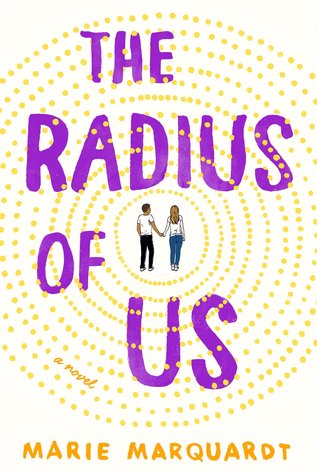 THE RADIUS OF US by Marie Marquardt (St. Martin’s Griffin, January 17, 2017). Young Adult. Starred review from School Library Journal. Ninety seconds can change a life — not just daily routine, but who you are as a person. Gretchen Asher knows this, because that’s how long a stranger held her body to the ground. When a car sped toward them and Gretchen’s attacker told her to run, she recognized a surprising terror in his eyes. And now she doesn’t even recognize herself. Ninety seconds can change a life — not just the place you live, but the person others think you are. Phoenix Flores-Flores knows this, because months after setting off toward the U.S. / Mexico border in search of safety for his brother, he finally walked out of detention. But Phoenix didn’t just trade a perilous barrio in El Salvador for a leafy suburb in Atlanta. He became that person — the one his new neighbors crossed the street to avoid. Ninety seconds can change a life — so how will the ninety seconds of Gretchen and Phoenix’s first encounter change theirs? Told in alternating first person points of view, The Radius of Us is a story of love, sacrifice, and the journey from victim to survivor. It offers an intimate glimpse into the causes and devastating impact of Latino gang violence, both in the U.S. and in Central America, and explores the risks that victims take when they try to start over. Most importantly, Marie Marquardt’s The Radius of Us shows how people struggling to overcome trauma can find healing in love.
OUR REVIEW: https://latinosinkidlit.wordpress.com/2017/06/29/book-review-the-radius-of-us-by-marie-marquardt/
 MORNING STAR HORSE by Margarita Engle. (Horizon Bound Books, January 30, 2017). Middle Grade. Award winning author Margarita Engle brings a tale of history mixed with a touch of fantasy. A young girl stricken with rickets and her mother face the aftermath of the Spanish-American War, the challenges of a new century and innovative teachers. Dreams realized and dreams crushed exploring the freedoms only a magical horse can offer.
 THE ROOSTER WOULD NOT BE QUIET written by Carmen Agra Deedy and illustrated by Eugene Yelchin. (Scholastic, January 31, 2017). Picture Book. Starred reviews from Publisher’s Weekly and Kirkus. La Paz is a happy, but noisy village. A little peace and quiet would make it just right. So the villagers elect the bossy Don Pepe as their mayor. Before long, singing of any kind is outlawed. Even the teakettle is afraid to whistle! But there is one noisy rooster who doesn’t give two mangos about this mayor’s silly rules. Instead, he does what roosters were born to do. He sings: “Kee-kee-ree-KEE!”
OUR REVIEW: https://latinosinkidlit.wordpress.com/2017/11/02/book-reviews-lola-levine-meets-jelly-and-bean-the-rooster-would-not-be-quiet/
 ABC PASTA by Juana Medina Rosas (Penguin Young Readers Group, February 7, 2017). Picture Book. Starred reviews from Booklist and School Library Journal.
A is for angel hair acrobat
M is for Macaroni the Magician
and T is for tortellini trapeze artist.
It’s an ABC circus that’s good enough to eat! Feb 7
OUR REVIEW: https://latinosinkidlit.wordpress.com/2017/10/12/book-review-lucia-the-luchadora-by-cynthia-leonor-garza-illustrated-by-alyssa-bermudez/
 LOLA LEVINE MEETS JELLY AND BEAN written by Monica Brown and illustrated by Angela Dominguez. (Little, Brown Books, February 7, 2017.) Chapter Book. The Levines are finally getting a pet–a furry one that is. They are excited about adopting a kitty they name Jelly, but they don’t get very far in the process when Ben starts sneezing. Oh no, he’s allergic! Lola is devastated and sets out to find Jelly a good home. Luckily, Lola is rewarded with a very happy (and still furry) ending! With Lola’s trademark humor, we can expect a few mishaps, many funny moments, and a cute new pet all wrapped in one adorable book. LOLA LEVINE AND THE VACATION DREAM will be released April 25, 2017, and LOLA LEVINE AND THE HALLOWEEN SCREAM will be released July 3, 2017.
OUR REVIEW: https://latinosinkidlit.wordpress.com/2017/11/02/book-reviews-lola-levine-meets-jelly-and-bean-the-rooster-would-not-be-quiet/
 THE EDUCATION OF MARGOT SANCHEZ by Lilliam Rivera (Simon & Schuster, February 21, 2017). Young Adult. After “borrowing” her father’s credit card to finance a more stylish wardrobe, Margot Sanchez suddenly finds herself grounded. And by grounded, she means working as an indentured servant in her family’s struggling grocery store to pay off her debts. With each order of deli meat she slices, Margot can feel her carefully cultivated prep school reputation slipping through her fingers, and she’s willing to do anything to get out of this punishment. Lie, cheat, and maybe even steal…Margot’s invitation to the ultimate beach party is within reach and she has no intention of letting her family’s drama or Moises—the admittedly good looking but outspoken boy from the neighborhood—keep her from her goal.
OUR REVIEW: https://latinosinkidlit.wordpress.com/2017/03/02/book-review-the-education-of-margot-sanchez-by-lilliam-rivera/
 FUTURE THREAT by Elizabeth Briggs (Albert Whitman, March 1, 2017). Young Adult. Six months ago Aether Corporation sent Elena, Adam, and three other recruits on a trip to the future where they brought back secret information–but not everyone made it back to the present alive. Now Elena’s dealing with her survivor’s guilt and trying to make her relationship with Adam work. All she knows for sure is that she’s done with time travel and Aether Corporation. But Aether’s not done with her–or Adam, or fellow survivor Chris. The travelers on Aether’s latest mission to the future have gone missing, and Elena and her friends are drafted into the rescue effort. They arrive in a future that’s amazingly advanced, thanks to Aether Corporation’s reverse-engineered technology. The mission has deadly consequences, though, and they return to the future to try to alter the course of events. But the future is different yet again. Now every trip through time reveals new complications, and more lives lost–or never born. Elena and Adam must risk everything–including their relationship–to save their friends.
 THE INEXPLICABLE LOGIC OF MY LIFE
 by Benjamin Alire Sáenz (Clarion Books,
March 7, 2017).
Young Adult. Starred reviews from Kirkus, School Library Journal, Publisher’s Weekly. Sal used to know his place with his adoptive gay father, their loving Mexican-American family, and his best friend, Samantha. But it’s senior year, and suddenly Sal is throwing punches, questioning everything, and realizing he no longer knows himself. If Sal’s not who he thought he was, who is he?
OUR REVIEW: https://latinosinkidlit.wordpress.com/2017/04/20/book-review-the-inexplicable-logic-of-my-life-by-benjamin-alire-saenz/
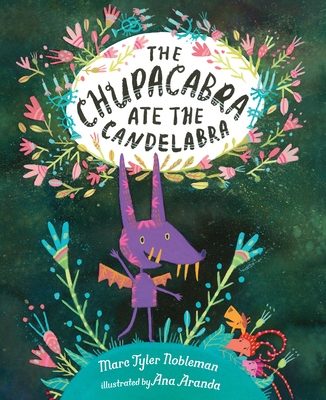 THE CHUPACABRA ATE THE CANDELABRA by Marc Tyler Nobleman, illustrated by debut artist Ana Aranda (Nancy Paulsen/Penguin, March 7, 2017). Picture Book. With its hilarious dialogue, trio of bumbling goats, and fantastically zany villain, this unique, laugh-out-loud story based on a legendary monster is sure to crack up kids and grown-ups alike.
OUR REVIEW: https://latinosinkidlit.wordpress.com/2017/10/26/book-reviews-marta-big-and-small-and-the-chupacabra-ate-the-candelabra/
 PROOF OF LIES: Anastasia Phoenix series by Diana Rodriguez Wallach (Entangled Teen, March 7, 2017). Young Adult. Anastasia Phoenix has always been the odd girl out, whether moving from city to international city with her scientist parents or being the black belt who speaks four languages. And most definitely as the orphan whose sister is missing, presumed dead. She’s the only one who believes Keira is still alive, and when new evidence surfaces, Anastasia sets out to follow the trail―and lands in the middle of a massive conspiracy. Now she isn’t sure who she can trust. At her side is Marcus, the bad boy with a sexy accent who’s as secretive as she is. He may have followed her to Rome to help, but something about him seems too good to be true. Nothing is as it appears, and when everything she’s ever known is revealed to be a lie, Anastasia has to believe in one impossibility. She will find her sister.
OUR REVIEW: https://wp.me/p3JARC-2vX
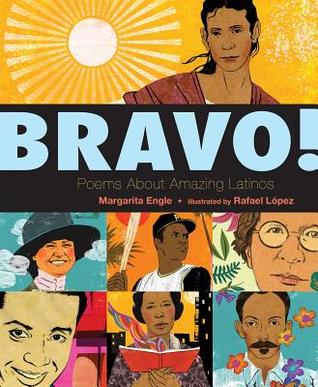 BRAVO! Poems About Amazing Latinos by Newbery Honor-winner Margarita Engle, illustrated by Pura Belpré Award winner Rafael López (Holt/Macmillan, March 14, 2017). Middle Grade. Starred reviews from School Library Journal, Booklist, The Bulletin of the Center for Children’s Books.Spanish language edition also available. Musician, botanist, baseball player, pilot—the Latinos featured in this collection come from many different countries and from many different backgrounds. Celebrate their accomplishments and their contributions to a collective history and a community that continues to evolve and thrive today! Biographical poems include: Aida de Acosta, Arnold Rojas, Baruj Benacerraf, César Chávez, Fabiola Cabeza de Baca, Félix Varela, George Meléndez, José Martí, Juan de Miralles, Juana Briones, Julia de Burgos, Louis Agassiz Fuertes, Paulina Pedroso, Pura Belpré, Roberto Clemente, Tito Puente, Ynes Mexia, Tomás Rivera.
OUR REVIEW: https://latinosinkidlit.wordpress.com/2018/02/12/book-review-bravo-poems-about-amazing-hispanics-by-margarita-engle-illus-by-rafael-lopez/
 LUCIA THE LUCHADORA written by Cynthia Leonor Garza and illustrated by Alyssa Bermudez (POW! March 17, 2017). Picture Book. Starred review from Kirkus. Lucia zips through the playground in her cape just like the boys, but when they tell her “girls can’t be superheroes,” suddenly she doesn’t feel so mighty. That’s when her beloved abuela reveals a dazzling secret: Lucia comes from a family of luchadoras, the bold and valiant women of the Mexican lucha libre tradition. Cloaked in a flashy new disguise, Lucia returns as a recess sensation! But when she’s confronted with a case of injustice, Lucia must decide if she can stay true to the ways of the luchadora and fight for what is right, even if it means breaking the sacred rule of never revealing the identity behind her mask.
OUR REVIEW: https://latinosinkidlit.wordpress.com/2017/10/12/book-review-lucia-the-luchadora-by-cynthia-leonor-garza-illustrated-by-alyssa-bermudez/
 VIVA, ROSE! by Susan Krawitz (Holiday House, March 30, 2017). Middle Grade. When fourteen-year-old Rose Solomon’s brother, Abe, left El Paso, he told the family he was heading to Brooklyn. But Rose discovers the truth the day she picks up the newspaper at Pickens General Store and spies a group photograph captioned The Southwestern Scourge of 1915! There stands Abe alongside none other than Pancho Villa and his army! Rose is furious about Abe’s lie; fearful for his safety; and worried about her traditional parents who, despite their strict and observant ways, do not deserve to have an outlaw for a son. Rose knows the only way to set things right is to get Abe home, but her clandestine plan to contact him goes awry when she is kidnapped by Villa’s revolutionaries and taken to his hideaway. Deep in the desert, amidst a richly rendered assortment of freedom-seekers that includes an impassioned young reporter, two sharp-shooting sisters with a secret past, and Dorotea, Villa’s tyrannical young charge, Rose sees no sign of Abe and has no hope of release. But as she learns to lie, hide, and ride like a bandit, Rose discovers the real meaning of freedom and what she’s willing to risk to get hers back.
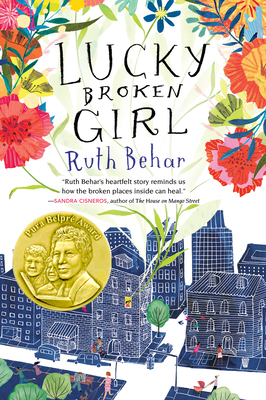 LUCKY BROKEN GIRL by Ruth Behar (Nancy Paulsen Books, April 11, 2017). Middle Grade. Starred review from Kirkus. Based on the author’s childhood in the 1960s, a young Cuban-Jewish immigrant girl is adjusting to her new life in New York City when her American dream is suddenly derailed. Ruthie Mizrahi and her family recently emigrated from Castro’s Cuba to New York City. Just when she’s finally beginning to gain confidence in her mastery of English and enjoying her reign as her neighborhood’s hopscotch queen, a horrific car accident leaves her in a body cast and confined her to her bed for a long recovery. As Ruthie’s world shrinks because of her inability to move, her powers of observation and her heart grow larger. She comes to understand how fragile life is, how vulnerable we all are as human beings, and how friends, neighbors, and the power of the arts can sweeten even the worst of times.
OUR REVIEW: https://latinosinkidlit.wordpress.com/2017/03/30/book-review-lucky-broken-girl-by-ruth-behar/
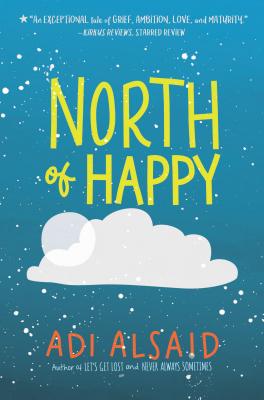 NORTH OF HAPPY by Adi Alsaid (Harlequin Teen, April 17, 2017). Young Adult. Carlos Portillo has always led a privileged and sheltered life. A dual citizen of Mexico and the United States, he lives in Mexico City with his wealthy family, where he attends an elite international school. Always a rule follower and a parent pleaser, Carlos is more than happy to tread the well-worn path in front of him. He has always loved food and cooking, but his parents see it as just a hobby. When his older brother, Felix–who has dropped out of college to live a life of travel–is tragically killed, Carlos begins hearing his brother’s voice, giving him advice and pushing him to rebel against his father’s plan for him. Worrying about his mental health but knowing the voice is right, Carlos runs away to the United States and manages to secure a job with his favorite celebrity chef. As he works to improve his skills in the kitchen and pursue his dream, he begins to fall for his boss’s daughter–a fact that could end his career before it begins. Finally living for himself, Carlos must decide what’s most important to him and where his true path really lies.
OUR REVIEW: https://latinosinkidlit.wordpress.com/2017/11/30/book-review-north-of-happy-by-adi-alsaid/
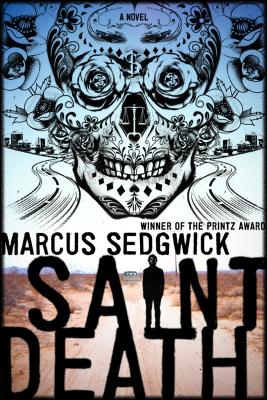 SAINT DEATH by Marcus Sedgwick (Roaring Brook Press, April 25, 2017). Young Adult. Starred review from Booklist. Anapra is one of the poorest neighborhoods in the Mexican city of Juarez – twenty meters outside town lies a fence – and beyond it – America – the dangerous goal of many a migrant. Faustino is one such trying to escape from the gang he’s been working for. He’s dipped into a pile of dollars he was supposed to be hiding and now he’s on the run. He and his friend, Arturo, have only 36 hours to replace the missing money, or they’re as good as dead. Watching over them is Saint Death. Saint Death (or Santissima Muerte) – she of pure bone and charcoal-black eye, she of absolute loyalty and neutral morality, holy patron to rich and poor, to prostitute and narco-lord, criminal and police-chief. A folk saint, a rebel angel, a sinister guardian.
 UGLY CAT & PABLO by Isabel Quintero (Scholastic, April 25, 2017). Chapter Book. Ugly Cat is dying for a paleta (ice pop) and his friend Pablo is determined to help him get one by scaring a little girl who is enjoying a coconut paleta in the park. Things go horribly wrong when, instead of being scared, the little girl picks Pablo up and declares that he would make great snack for her pet snake. Oh and there’s also the small problem that Ugly Cat may have inadvertently swallowed Pablo in all of the commotion!
 ROOTING FOR RAFAEL ROSALES by Kurits Scaletta. (Albert Whitman & Company, April 25, 2017). Middle Grade. Rafael has dreams. Every chance he gets he plays in the street games trying to build his skills, get noticed by scouts, and someday play Major League Baseball. Maya has worries. The bees are dying all over the world, and the company her father works for is responsible, making products that harm the environment. Follow Rafael and Maya in a story that shifts back and forth in time and place, from Rafael s neighborhood in the Dominican Republic to present-day Minnesota, where Maya and her sister are following Rafael s first year in the minor leagues. In their own ways, Maya and Rafael search for hope, face difficult choices, and learn a secret the same secret that forever changes how they see the world.
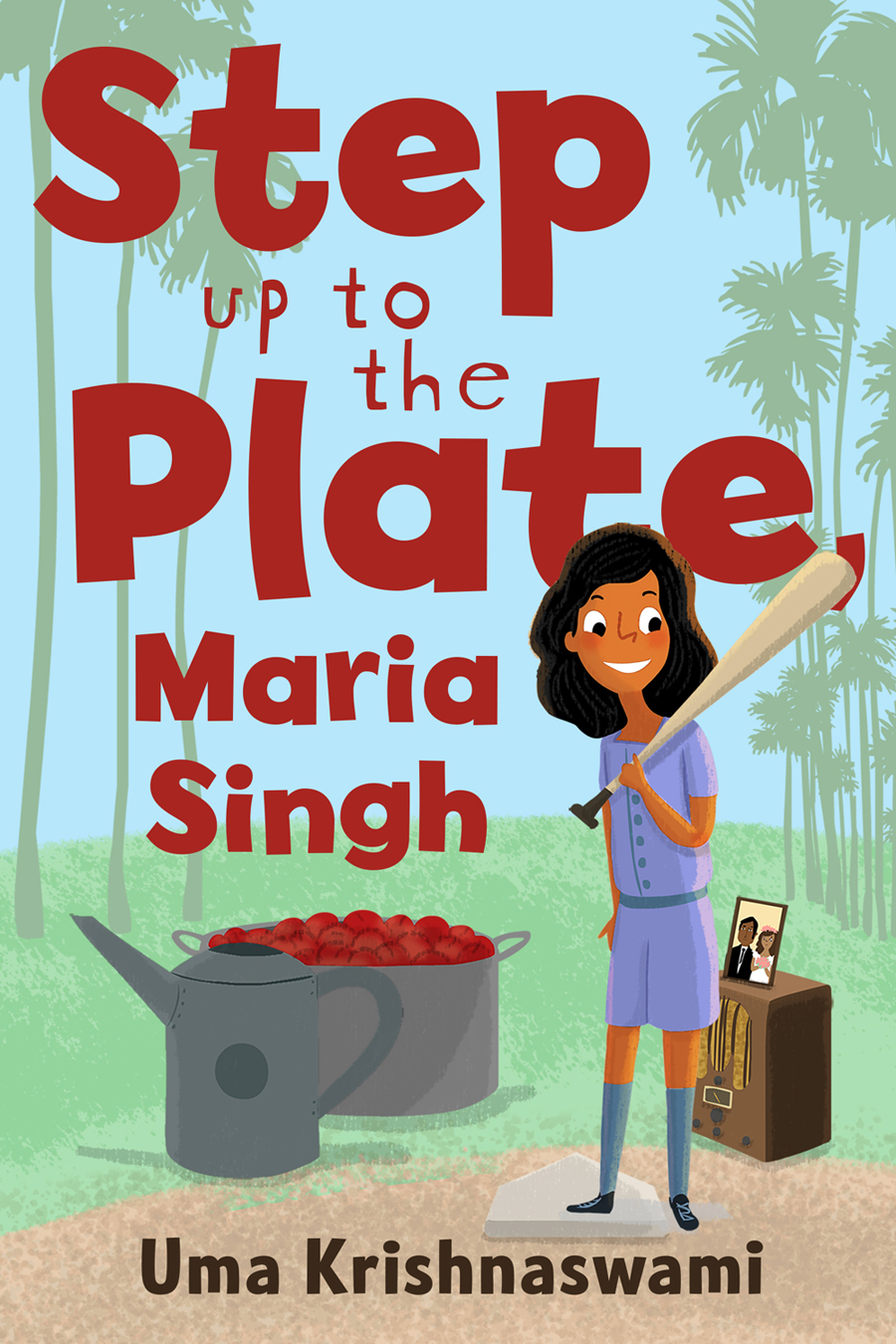 STEP UP TO THE PLATE, MARIA SINGH by Uma Krishnaswami (Tu Books, May 1, 2017). Middle Grade. Nine-year-old Maria Singh longs to play softball in the first-ever girls team forming in Yuba City, California. It’s the spring of 1945, and World War II is dragging on. Miss Newman, Maria’s teacher, is inspired by Babe Ruth and the All-American Girls League to start a girls softball team at their school. Meanwhile, Maria’s parents Papi from India and Mama from Mexico can no longer protect their children from prejudice and from the discriminatory laws of the land. When the family is on the brink of losing their farm, Maria must decide if she has what it takes to step up and find her voice in an unfair world. In this fascinating middle grade novel, award-winning author Uma Krishnaswami sheds light on a little-known chapter of American history set in a community whose families made multicultural choices before the word had been invented.
OUR REVIEW: Coming soon
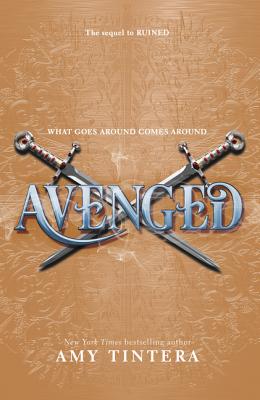 AVENGED by Amy Tintera (Harper Teen, May 2, 2017). Young Adult. With the romance of The Selection and the epic stakes of Red Queen, Amy Tintera’s New York Times-bestselling Ruined trilogy continues with the thrilling young adult fantasy Avenged. Emelina Flores has come home to Ruina. After rescuing her sister, Olivia, from imprisonment in rival kingdom Lera, Em and Olivia together vow to rebuild Ruina to its former glory. But their fight has only begun. Olivia is determined to destroy everyone who acts against Ruina. Em isn’t as sure. Ever since Em posed as Prince Casimir’s betrothed in Lera, she’s started to see another side to this war. And now that Cas has taken the throne, Em believes a truce is within reach. But Olivia suspects that Em’s romantic feelings for Cas are just coloring her judgement. Em is determined to bring peace to her home. But when winning the war could mean betraying her family, Em faces an impossible choice between loyalty and love. Em must stay one step ahead of her enemies–and her blood–before she’s the next victim in this battle for sovereignty.
 IT’S NOT LIKE IT’S A SECRET by Misa Sugiura (HarperTeen, May 9, 2017). Young Adult. Sixteen-year-old Sana Kiyohara has too many secrets. Some are small, like how it bothers her when her friends don’t invite her to parties. Some are big, like that fact that her father may be having an affair. And then there’s the one that she can barely even admit to herself—the one about how she might have a crush on her best friend. When Sana and her family move to California she begins to wonder if it’s finally time for some honesty, especially after she meets Jamie Ramirez. Jamie is beautiful and smart and unlike anyone Sana’s ever known. There are just a few problems: Sana’s new friends don’t trust Jamie’s crowd; Jamie’s friends clearly don’t want her around anyway; and a sweet guy named Caleb seems to have more-than-friendly feelings for her. Meanwhile, her dad’s affair is becoming too obvious to ignore anymore. Sana always figured that the hardest thing would be to tell people that she wants to date a girl, but as she quickly learns, telling the truth is easy… what comes after it, though, is a whole lot more complicated.
 GABBY GARCIA’S ULTIMATE PLAYBOOK by Iva-Marie Palmer. (Katherine Tegen Books, May 9, 2017). Middle Grade. If life were a baseball game, all-star pitcher Gabby Garcia would be having her Best. Season. EVER! Until she’s suddenly sent to another school and her winning streak is about to disappear—both on and off the field. But Gabby never gives up! She has a PLAN to keep her champion status intact, and every step of is written out—PLAY by PLAY. How could it not work? This new series written by Iva-Marie Palmer is filled with funny illustrations, sports facts, and blooper-reel moments that will have readers laughing and rooting for more.
 THE GO-BETWEEN by Veronica Chambers. (Delacorte, May 9, 2017). Young Adult. She is the envy of every teenage girl in Mexico City. Her mother is a glamorous telenovela actress. Her father is the go-to voice-over talent for blockbuster films. Hers is a world of private planes, chauffeurs, paparazzi and gossip columnists. Meet Camilla del Valle Cammi to those who know her best. When Cammi’s mom gets cast in an American television show and the family moves to LA, things change, and quickly. Her mom’s first role is playing a not-so-glamorous maid in a sitcom. Her dad tries to find work but dreams about returning to Mexico. And at the posh, private Polestar Academy, Cammi’s new friends assume she s a scholarship kid, the daughter of a domestic. At first Cammi thinks playing along with the stereotypes will be her way of teaching her new friends a lesson. But the more she lies, the more she wonders: Is she only fooling herself?
OUR REVIEW: https://latinosinkidlit.wordpress.com/2018/02/08/book-review-the-go-between-by-veronica-chambers/
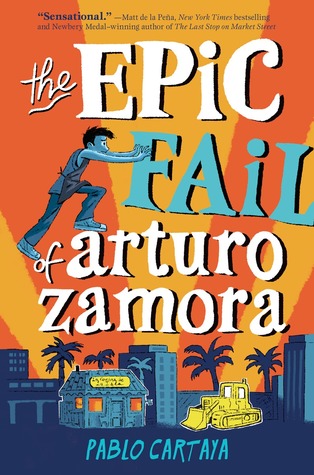 THE EPIC FAIL OF ARTURO ZAMORA by Pablo Cartaya (Viking, May 16, 2017). Middle Grade. Starred review from Kirkus. For Arturo, summertime in Miami means playing basketball until dark, sipping mango smoothies, and keeping cool under banyan trees. And maybe a few shifts as junior lunchtime dishwasher at Abuela’s restaurant. Maybe. But this summer also includes Carmen, a cute girl who moves into Arturo’s apartment complex and turns his stomach into a deep fryer. He almost doesn’t notice the smarmy land developer who rolls into town and threatens to change it. Arturo refuses to let his family and community go down without a fight, and as he schemes with Carmen, Arturo discovers the power of poetry and protest through untold family stories and the work of José Martí.
OUR REVIEW: https://latinosinkidlit.wordpress.com/2018/02/01/book-review-the-epic-fail-of-arturo-zamora-by-pablo-cartaya/
 NO GOOD DEED by Goldy Moldavsky. (Scholastic, May 30, 2017). Young Adult. He’s not asking for much. All Gregor Maravilla wants to do is feed all of the starving children on the planet. So when he’s selected to join Camp Save the World, a special summer program for teenage activists from all over the country to champion their cause, Gregor’s sure he’s on the path to becoming Someone Great. But then a prize is announced. It will be awarded at the end of summer to the activist who shows the most promise in their campaign. Gregor’s sure he has the prize in the bag, especially compared to some of the other campers’ campaigns. Like Eat Dirt, a preposterous campaign started by Ashley Woodstone, a famous young actor who most likely doesn’t even deserve to be at the camp. Everywhere Gregor goes, Ashley seems to show up ready to ruin things. Plus, the prize has an unforeseen side effect, turning a quiet summer into cutthroat warfare where campers stop focusing on their own campaigns and start sabotaging everyone else’s.
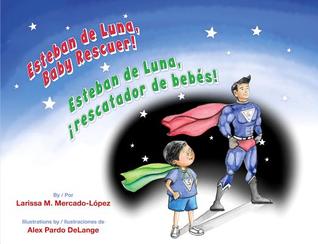 ESTEBAN de LUNA, BABY RESCUER / ESTEBAN de LUNA, RESCATADOR de BEBES! written by Larissa M. Mercado-Lopez, illustrated by Alex Pardo DeLange, and translated by Gabriela Baeza Ventura (Piñata Books, May 31, 2017). Bilingual Picture Book. Esteban loves his long green cape, but there is just one problem–it does not do ANYTHING! But when a doll is left behind at a park, Esteban discovers that while his cape does not have magical powers, he can still use it to be a hero!”
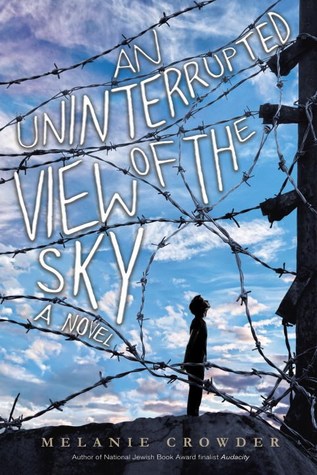 AN UNINTERRUPTED VIEW OF THE SKY by Melanie Crowder (Philomel, June 13, 2017). Young Adult. It’s 1999 in Bolivia and Francisco’s life consists of school, soccer, and trying to find space for himself in his family’s cramped yet boisterous home. But when his father is arrested on false charges and sent to prison by a corrupt system that targets the uneducated, the poor, and the indigenous majority, Francisco’s mother abandons hope and her family. Francisco and his sister are left with no choice: They must move into the prison with their father. There, they find a world unlike anything they’ve ever known, where everything—a door, a mattress, protection from other inmates—has its price.Prison life is dirty, dire, and dehumanizing. With their lives upended, Francisco faces an impossible decision: Break up the family and take his sister to their grandparents in the Andean highlands, fleeing the city and the future that was just within his grasp, or remain together in the increasingly dangerous prison. Pulled between two equally undesirable options, Francisco must confront everything he once believed about the world around him and his place within it.
 MARTÍ ‘S SONG FOR FREEDOM/Martí y sus versos por la libertad by Emma Otheguy, illustrated by Beatriz Vidal (Lee & Low, July 17, 2017). Debut author Emma Otheguy’s picture book biography of poet and Cuban national hero Jose Martí. Written in verse, with excerpts from Martí’s seminal work, Versos sencillos, this is a beautiful tribute to a brilliant political writer and courageous fighter of freedom for all men and women.
OUR REVIEW: https://latinosinkidlit.wordpress.com/2017/09/21/book-review-martis-song-for-freedommarti-y-sus-versos-por-la-libertad-written-by-emma-otheguy-illustrated-by-beatriz-vidal/
 MA LLORONA by Maya Gonzalez (Reflection Press, June 24, 2017). Young Adult. In times filled with terror and torment, one woman’s haunting grief rises from beyond to become the people’s howl in the dark. Sometimes a heartache is so great, it belongs to everyone. Sometimes a healing is so powerful it holds within it the spark to change everything….if we’re ready.
A queer reclamation of the classic Mexican ghost story, La Llorona, spanning from MesoAmerica 1500 to present day San Francisco.
 TELEGRAMS AL CIELO: La infancia de Monsenor Oscar Romero/TELEGRAMS FROM HEAVEN: The Childhood of Archbishop Oscar Romero written by René Colato Laínez; illustrated by Pixote Hunt (Luna’s Press, July 25, 2017). Picture Book. A bilingual picture book biography about Óscar Arnulfo Romero, Archbishop of San Salvador who was assassinated during the Civil War, to published on his Feast Day and anniversary of his assassination.
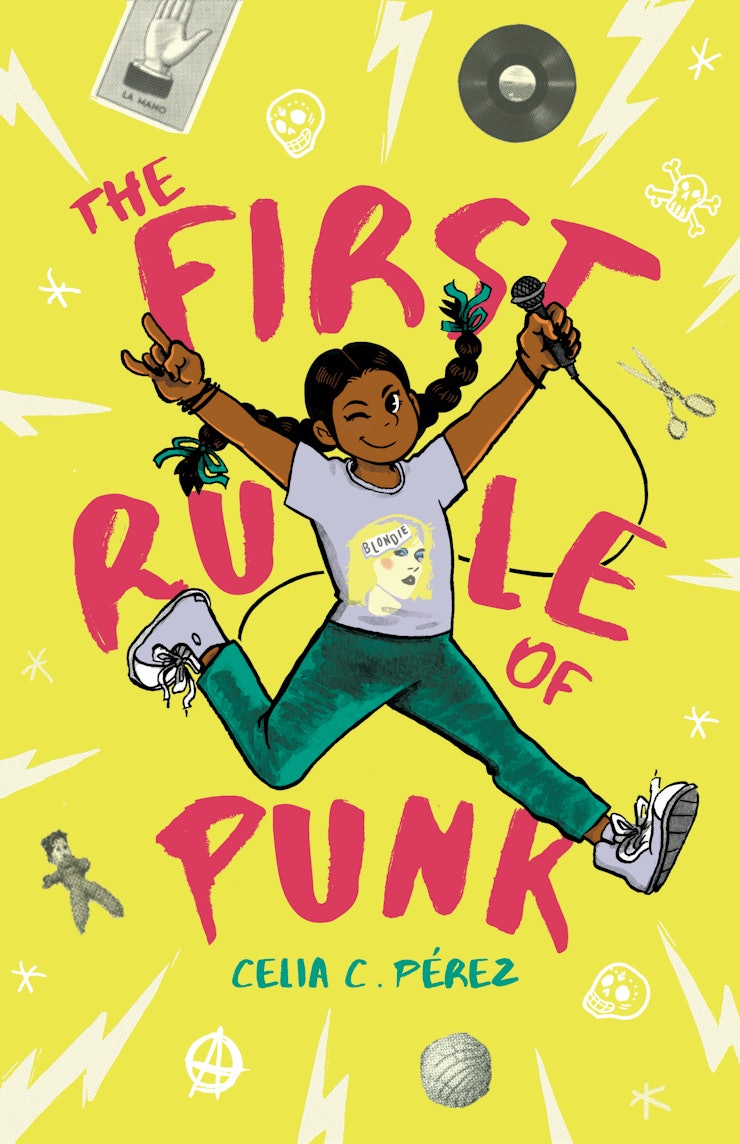 THE FIRST RULE OF PUNK illustrated middle grade debut by Celia C. Pérez (Viking, Penguin, August 22, 2017). There are no shortcuts to surviving your first day at a new school—you can’t fix it with duct tape like you would your Chuck Taylors. On Day One, twelve-year-old Malú (María Luisa, if you want to annoy her) inadvertently upsets Posada Middle’s queen bee, violates the school’s dress code with her punk rock look, and disappoints her college-professor mom in the process. Her dad, who now lives a thousand miles away, says things will get better as long as she remembers the first rule of punk: be yourself. The real Malú loves rock music, skateboarding, zines, and Soyrizo (hold the cilantro, please). And when she assembles a group of like-minded misfits at school and starts a band, Malú finally begins to feel at home. She’ll do anything to preserve this, which includes standing up to an anti-punk school administration to fight for her right to express herself! From debut author and longtime zine-maker Celia C. Pérez, The First Rule of Punk is a wry and heartfelt exploration of friendship, finding your place, and learning to rock out like no one’s watching. Black and white illustrations and collage art throughout make this a perfect pick for fans of books like Roller Girl and online magazines like Rookie.
OUR REVIEW: https://latinosinkidlit.wordpress.com/2017/09/28/book-review-the-first-rule-of-punk-by-celia-c-perez/
 SING, DON’T CRY by Angela Dominguez (Henry Holt, August 22, 2017). Picture Book. Once a year, Abuelo comes from Mexico to visit his family. He brings his guitar, his music and his memories. In this story inspired by the life of Apolinar Navarrete Diaz, author Angela Dominguez’s grandfather and a successful mariachi musician, Abuelo and his grandchildren sing through the bad times and the good. Lifting their voices and their spirits, they realize that true happiness comes from singing together.
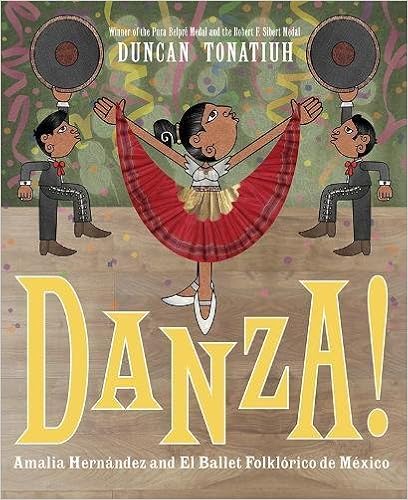 DANZA! Amalia Hernández and El Ballet Folklórico de México by Duncan Tonatiuh (Abrams Books for Young Readers, August 22, 2017). Picture Book. Award-winning author and illustrator Duncan Tonatiuh tells the story of Amalia Hernández, dancer and founder of El Ballet Folklórico de México. Published in time for the 100th anniversary of Hernández’s birth, Danza! is the first picture book about the famous dancer and choreographer. Danza! is a celebration of Hernández’s life and of the rich history of dance in Mexico. As a child, Amalia always thought she would grow up to be a teacher, until she saw a performance of dancers in her town square. She was fascinated by the way the dancers twirled and swayed, and she knew that someday she would be a dancer, too. She began to study many different types of dance, including ballet and modern, under some of the best teachers in the world. Hernández traveled throughout Mexico studying and learning regional dances. Soon she founded her own dance company, El Ballet Folklórico de México, where she integrated her knowledge of ballet and modern dance with folkloric dances. The group began to perform all over the country and soon all over the world, becoming an international sensation that still tours today.
OUR REVIEW: https://latinosinkidlit.wordpress.com/2018/03/05/book-review-danza-amalia-hernandez-and-el-ballet-folklorico-de-mexico-by-duncan-tonatiuh/
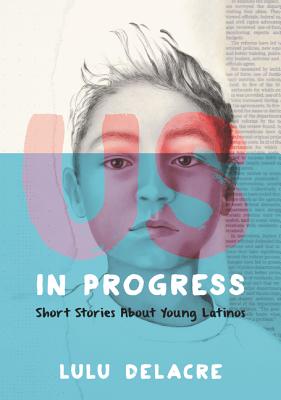 US, IN PROGRESS: SHORT STORIES ABOUT YOUNG LATINOS by Lulu Delacre. (HarperCollins, August 29, 2017). Middle Grade. In this book, you will meet many young Latinos living in the United States, from a young girl whose day at her father’s burrito truck surprises her to two sisters working together to change the older sister’s immigration status, and more. Turn the pages to experience life through the eyes of these boys and girls whose families originally hail from many different countries; see their hardships, celebrate their victories, and come away with a better understanding of what it means to be Latino in the U.S. today.
OUR REVIEW: Coming soon
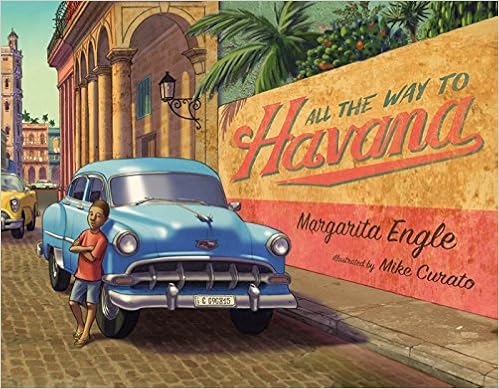 ALL THE WAY TO HAVANA by Maragarita Engle. (Henry Holt and Co., August 29, 2017). Picture Book. A family drives into the city of Havana to celebrate a cousin’s first birthday. Before their journey, the boy helps his papa tune up their old car, Cara Cara, which has been in their family for many years. They drive along the sea wall, along the coast, past other colorful old cars. The sounds of the city are rich the putt putts and honks and bumpety bumps of other cars chorus through the streets. A rich celebration of the culture of the Cuban people, their resourcefulness and innovative spirit, and their joy.
OUR REVIEW: Coming soon
 FOREST WORLD by Margarita Engle. (Atheneum Books for Young Readers, August 29, 2017.) Middle Grade. Edver isn’t happy about being shipped off to Cuba to visit the father he barely knows. The island is a place that no one in Miami ever mentions without a sigh, but travel laws have suddenly changed, and now it’s a lot easier for divided families to be reunited. Technology in Cuba hasn’t caught up with the times, though, and Edver is expecting a long, boring summer. He was NOT expecting to meet a sister he didn’t know he had. Luza is a year older and excited to see her little brother, until she realizes what a spoiled American he is. Looking for something—anything—they might have in common, the siblings sneak onto the Internet, despite it being forbidden in Cuba, and make up a fake butterfly. Maybe now their cryptozoologist mother will come to visit. But their message is intercepted by a dangerous poacher, and suddenly much more than their family is at stake. Edver and Luza have to find a way to overcome their differences to save the Cuban jungle that they both have grown to love.
 YO SOY MUSLIM: A Father’s Letter to His Daughter by Mark Gonzales, illustrated by Mehrdokht Amini (Salaam Reads, August 29, 2017). Picture Book.From Muslim and Latino poet Mark Gonzales comes a touching and lyrical picture book about a parent who encourages their child to find joy and pride in all aspects of their multicultural identity.
Dear little one,
…know you are wondrous.
A child of crescent moons,
a builder of mosques,
a descendant of brilliance,
an ancestor in training.
Written as a letter from a father to his daughter, Yo Soy Muslim is a celebration of social harmony and multicultural identities. The vivid and elegant verse, accompanied by magical and vibrant illustrations, highlights the diversity of the Muslim community as well as Indigenous identity. A literary journey of discovery and wonder, Yo Soy Muslim is sure to inspire adults and children alike.
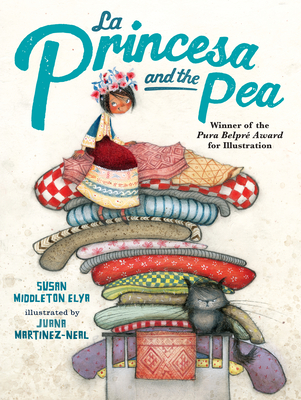 LA PRINCESA AND THE PEA written by Susan M. Elya, illustrated by LA MADRE GOOSE illustrator Juana Martinez-Neal (Putnam/Penguin, September 5, 2017). Picture Book. El príncipe knows this girl is the one for him, but, as usual, his mother doesn’t agree. The queen has a secret test in mind to see if this girl is really a princesa. But the prince might just have a sneaky plan, too . . . Readers will be enchanted by this Latino twist on the classic story, and captivated by the vibrant art inspired by the culture of Peru.
OUR REVIEW: https://latinosinkidlit.wordpress.com/2018/01/18/book-review-la-princesa-and-the-pea-by-susan-middleton-elya-illus-by-juana-martinez-neal/
 THEY BOTH DIE AT THE END by Adam Silvera (HarperCollins, September 5, 2017). Young adult. On September 5, a little after midnight, Death-Cast calls Mateo Torrez and Rufus Emeterio to give them some bad news: they’re going to die today. Mateo and Rufus are total strangers, but, for different reasons, they’re both looking to make a new friend on their End Day. The good news is: there’s an app for that. It’s called the Last Friend, and through it, Rufus and Mateo are about to meet up for one last great adventure—an unforgettable day that will change both their lives forever.
OUR REVIEW: https://latinosinkidlit.wordpress.com/2017/11/16/book-review-they-both-die-at-the-end-by-adam-silvera/
 FRIDA KAHLO AND HER ANIMALITOS by Monica Brown, illustrated by Pura Belpré Honor winner John Parra (North South Books, September 5, 2017). Monica Brown’s latest picture book biography takes a look at the popular and iconic female artist with a child-friendly view of the many animals that surrounded her art and her life. Spanish edition also available.
OUR REVIEW: https://latinosinkidlit.wordpress.com/2017/11/27/book-review-frida-kahlo-and-her-animalitos-by-monica-brown-illus-by-john-parra/
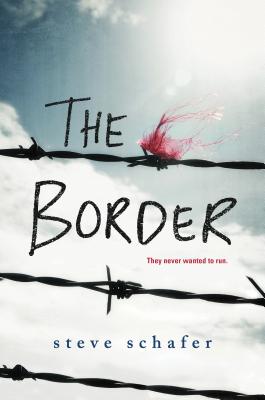 THE BORDER by Steve Schafer (Sourcebooks Fire, September 5, 2017). Young Adult. One moment changed their lives forever. A band plays, glasses clink, and four teens sneak into the Mexican desert, the hum of celebration receding behind them. Crack. Crack. Crack. Not fireworks―gunshots. The music stops. And Pato, Arbo, Marcos, and Gladys are powerless as the lives they once knew are taken from them. Then they are seen by the gunmen. They run. Except they have nowhere to go. The narcos responsible for their families’ murders have put out a reward for the teens’ capture. Staying in Mexico is certain death, but attempting to cross the border through an unforgiving desert may be as deadly as the secrets they are trying to escape.
 SHADOWHOUSE FALL (Shadowshaper #2) by Daniel José Older (Arthur A. Levine Books, September 12, 2017). Young Adult. Sierra and Shadowhouse have been thrust into an ancient struggle with enemies old and new — a struggle they didn’t want, but are determined to win. Revolution is brewing in the real world as well, as the shadowshapers join the fight against systems that oppress and incarcerate their community. To protect her family and friends in every sphere, Sierra must take down the Hound and master the Deck of Worlds … or else she could lose everything that matters most.
OUR REVIEW: https://latinosinkidlit.wordpress.com/2017/09/14/book-review-shadowhouse-fall-by-daniel-jose-older/
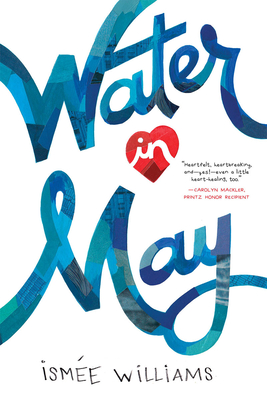 WATER IN MAY by Ismée Amiel Williams (Harry N. Abrams, September 12, 2017). Young Adult. Fifteen-year-old Mari Pujols believes that the baby she’s carrying will finally mean she’ll have a family member who will love her deeply and won’t ever leave her–not like her mama, who took off when she was eight; or her papi, who’s in jail; or her abuela, who wants as little to do with her as possible. But when doctors discover a potentially fatal heart defect in the fetus, Mari faces choices she never could have imagined. Surrounded by her loyal girl crew, her off-and-on boyfriend, and a dedicated doctor, Mari navigates a decision that could emotionally cripple the bravest of women. But both Mari and the broken-hearted baby inside her are fighters; and it doesn’t take long to discover that this sick baby has the strength to heal an entire family.
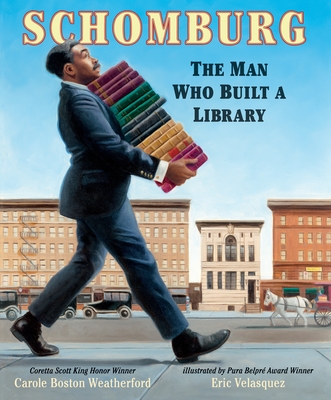 SCHOMBURG: The Man Who Built a Library by Carole Boston Weatherford, illus. by Eric Velaasquez (Candlewick Press, September 12, 2017). Picture Book. Amid the scholars, poets, authors, and artists of the Harlem Renaissance stood an Afro-Puerto Rican named Arturo Schomburg. This law clerk’s life’s passion was to collect books, letters, music, and art from Africa and the African diaspora and bring to light the achievements of people of African descent through the ages. When Schomburg’s collection became so big it began to overflow his house (and his wife threatened to mutiny), he turned to the New York Public Library, where he created and curated a collection that was the cornerstone of a new Negro Division. A century later, his groundbreaking collection, known as the Schomburg Center for Research in Black Culture, has become a beacon to scholars all over the world.
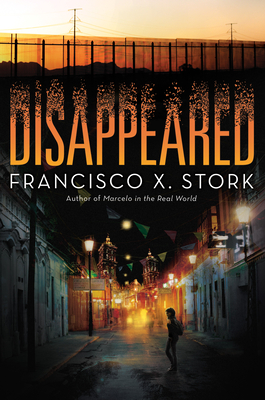 DISAPPEARED by Francisco X. Stork (Arthur A. Levine Books, September 19, 2017). Young Adult. Four Months Ago: Sara Zapata’s best friend disappeared, kidnapped by the web of criminals who terrorize Juarez. Four Hours Ago: Sara received a death threat – and with it, a clue to the place where her friend is locked away. Four Weeks Ago: Emiliano Zapata fell in love with Perla Rubi, who will never be his so long as he’s poor. Four Minutes Ago: Emiliano got the chance to make more money than he ever dreamed – just by joining the web. In the next four days, Sara and Emiliano will each face impossible choices, between life and justice, friends and family, truth and love. But when the web closes in on Sara, only one path remains for the siblings: the way across the desert to the United States.
OUR REVIEW: Coming soon
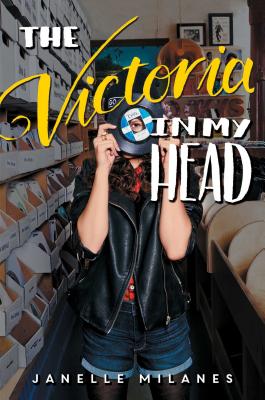 THE VICTORIA IN MY HEAD by Janelle Milanes (Simon Pulse, September 19, 2017). Young Adult. A shy, rule-following teen winds up joining a local rock band in this laugh-out-loud, heartfelt coming-of-age novel.Victoria Cruz inhabits two worlds: In one, she is a rock star, thrashing the stage with her husky voice and purple-streaked hair. In the other, currently serving as her reality, Victoria is a shy teenager with overprotective Cuban parents, who sleepwalks through her life at the prestigious Evanston Academy. Unable to overcome the whole paralyzing-stage-fright thing, Victoria settles for living inside her fantasies, where nothing can go wrong and everything is set to her expertly crafted music playlists.But after a chance encounter with an unattainably gorgeous boy named Strand, whose band seeks a lead singer, Victoria is tempted to turn her fevered daydreams into reality. To do that, she must confront her insecurities and break away from the treadmill that is her life. Suddenly, Victoria is faced with the choice of staying on the path she’s always known and straying off-course to find love, adventure, and danger.
 WILD BEAUTY by Anna-Marie McLemore (Feiwel & Friends/Macmillan, October 3, 2017). Young Adult. In Wild Beauty, McLemore introduces a spellbinding setting and two characters who are drawn together by fate—and pulled apart by reality. For nearly a century, the Nomeolvides women have tended the grounds of La Pradera, the lush estate gardens that enchant guests from around the world. They’ve also hidden a tragic legacy: if they fall in love too deeply, their lovers vanish. But then, after generations of vanishings, a strange boy appears in the gardens. The boy is a mystery to Estrella, the Nomeolvides girl who finds him, and to her family, but he’s even more a mystery to himself; he knows nothing more about who he is or where he came from than his first name. As Estrella tries to help Fel piece together his unknown past, La Pradera leads them to secrets as dangerous as they are magical in this stunning exploration of love, loss, and family.
OUR REVIEW: Coming soon
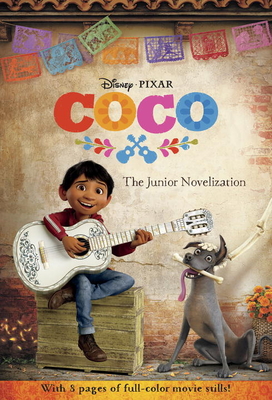 COCO: THE JUNIOR NOVELIZATION by Angela Cervantes (Random House Disney, October 10, 2017). Middle Grade. Coco: The Junior Novelization retells the whole exciting movie and features eight pages of full-color scenes in this paperback novel. Despite his family’s baffling generations-old ban on music, Miguel (voice of newcomer Anthony Gonzalez) dreams of becoming an accomplished musician like his idol, Ernesto de la Cruz (voice of Benjamin Bratt). Desperate to prove his talent, Miguel finds himself in the stunning and colorful Land of the Dead following a mysterious chain of events. Along the way, he meets charming trickster Hector (voice of Gael Garcia Bernal), and together, they set off on an extraordinary journey to unlock the real story behind Miguel’s family history.
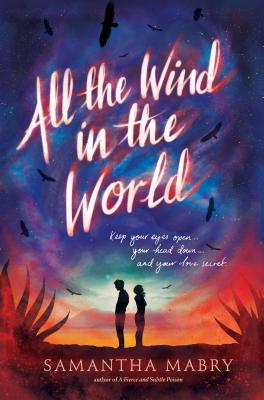 ALL THE WIND IN THE WORLD by Samantha Mabry (Algonquin Young Readers, October 10, 2017). Young Adult. Sarah Jac Crow and James Holt have fallen in love working in the endless fields that span a bone-dry Southwest in the near-future–a land that’s a little bit magical, deeply dangerous, and bursting with secrets. To protect themselves, they’ve learned to work hard and–above all–keep their love hidden from the people who might use it against them. Then, just when Sarah Jac and James have settled in and begun saving money for the home they dream of near the coast, a horrible accident sends them on the run. With no choice but to start over on a new, possibly cursed ranch, the delicate balance of their lives begins to give way–and they may have to pay a frighteningly high price for their love.
OUR REVIEW: Coming soon
 I AM NOT YOUR PERFECT MEXICAN DAUGHTER by Erika L. Sánchez (Knopf Books for Young Readers, October 17, 2017). Young Adult. Perfect Mexican daughters do not go away to college. And they do not move out of their parents’ house after high school graduation. Perfect Mexican daughters never abandon their family. But Julia is not your perfect Mexican daughter. That was Olga’s role. Then a tragic accident on the busiest street in Chicago leaves Olga dead and Julia left behind to reassemble the shattered pieces of her family. And no one seems to acknowledge that Julia is broken, too. Instead, her mother seems to channel her grief into pointing out every possible way Julia has failed. But it’s not long before Julia discovers that Olga might not have been as perfect as everyone thought. With the help of her best friend Lorena, and her first kiss, first love, first everything boyfriend Connor, Julia is determined to find out. Was Olga really what she seemed? Or was there more to her sister’s story? And either way, how can Julia even attempt to live up to a seemingly impossible ideal?
OUR REVIEW: Coming soon
 AMERICA by Gabby Rivera, illustrated by Joe Quinones (Marvel Comics, Volume 1 releases October 31, 2017.) She was a Young Avenger. She leads the Ultimates. And now she officially claims her place as the preeminent butt-kicker of the entire Marvel Universe! But what’s a super-powered teenager to do when she’s looking for a little personal fulfi llment? She goes to college! America just has to stop an interdimensional monster or two first and shut down a pesky alien cult that’s begun worshipping her exploits before work can begin. Then she can get on with her first assignment: a field trip to the front lines of World War II – with Captain America as her wingman!
RAFI AND ROSI: PIRATES! by Lulu Delacre (Lee & Low Books, October 31, 2017). Picture Book.
 THE CLOSEST I’VE COME by Fred Aceves (Harper Collins, November 2017). Marcos Rivas wants to find love. He’s sure as hell not getting it at home where his mom’s racist boyfriend beats him up. Or from his boys, who aren’t exactly the “hug it out” type. Marcos yearns for love, a working cell phone, and maybe a pair of sneakers that aren’t falling apart. But more than anything, Marcos wants to get out of Maesta, his hood—impossible. When Marcos is placed in a new after-school program for troubled teens with potential, he meets Zach, a theater geek whose life seems great on the surface, and Amy, a punk girl who doesn’t care what anyone thinks of her. These new friendships inspire Marcos to open up to his Maesta crew, too, and along the way, Marcos starts to think more about his future and what he has to fight for. Marcos ultimately learns that bravery isn’t about acting tough and being macho; it’s about being true to yourself.
OUR REVIEW: https://latinosinkidlit.wordpress.com/2018/03/15/book-review-the-closest-ive-come/
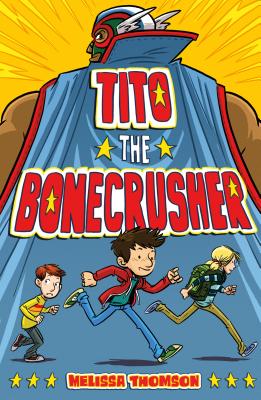 TITO THE BONECRUSHER by Melissa Thompson (FSG, Winter 2017). A middle-grade debut about a boy who seeks the help of a pro-wrestler turned action star to rescue his dad from a deportation detention center, in a story about heroes, friendship, and forgiveness.
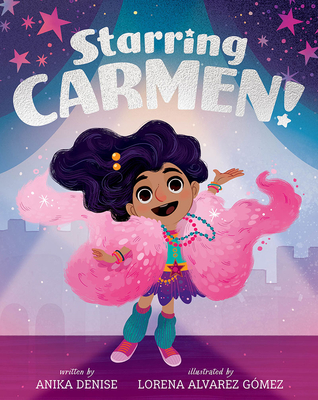 STARRING CARMEN written by Anika Denise and illustrated by Lorena Alvarez (Abrams 2017) Picture Book. About a big sister who learns to share the spotlight with an adoring (if annoying) little brother.

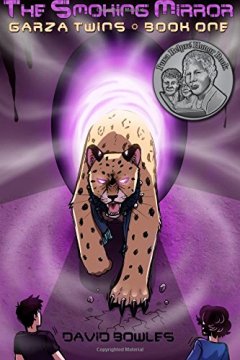 DESCRIPTION FROM THE BOOK JACKET: Carol and Johnny Garza are 12-year-old twins whose lives in a small Texas town are forever changed by their mother’s unexplained disappearance. Shipped off to relatives in Mexico by their grieving father, the twins learn that their mother is a nagual, a shapeshifter, and that they have inherited her powers. In order to rescue her, they will have to descend into the Aztec underworld and face the dangers that await them.
 ABOUT THE AUTHOR: A product of an ethnically diverse family with Latino roots, David Bowles has lived most of his life in the Río Grande Valley of south Texas. A recipient of awards from the American Library Association, the Texas Institute of Letters, and the Texas Associated Press, he has written several books, most notably the Pura Belpré Honoree The Smoking Mirror. His work has also been published in venues such as BorderSenses, Strange Horizons, Apex Magazine, Stupefying Stories, Asymptote, Translation Review, Huizache, Metamorphoses and Rattle.
 ABOUT THE REVIEWER: Cris Rhodes is a doctoral student at Texas A&M University – Commerce. She received a M.A. in English with an emphasis in borderlands literature and culture from Texas A&M – Corpus Christi, and a B.A. in English with a minor in children’s literature from Longwood University in her home state of Virginia. Cris recently completed a Master’s thesis project on the construction of identity in Chicana young adult literature.
 Esquivel! Space-Age Sound Artist/¡Esquivel! Un artista del sonido de la era espacial, written by Susan Wood; illustrated by Duncan Tonatiuh. This fun biography introduces readers to a key figure of space-age lounge music. My son Liam Miguel loves everything illustrated by Duncan Tonituah, whose illustrations take on added movement and playfulness as they complement Susan Wood’s prose. Juan García Esquivel was a Mexican composer, bandleader, and pianist who pioneered stereo sound in the 50s and 60s and took an inventive view of musical possibility. Esquivel’s music capitalizes on unusual instrumentation and makes substantial use of unorthodox vocal textures and effects. The story highlights Esquivel’s accomplishments, providing another creative great to inspire young people of all backgrounds to see possibility all around them. —Ashley
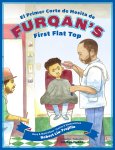 Furqan’s First Flat Top/El primer corte de mesita de Furqan, written and illustrated by Robert Liu-Trujillo. As the first day of school approaches, 10-year-old Furqan Moreno gets ready for a haircut, but this time he is going to get his first flat top. A bilingual picture book about the connections and trust built between an Afro Latino young boy and his dad, this is the work of California-based Liu-Trujillo. You may remember him from two previous appearances on this blog:
 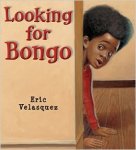 Looking for Bongo, written and illustrated by Eric Velasquez, is yet another lovely representation of Afro-Latinos by this Pura Belpré winning illustrator. (See my review of
  Mamá the Alien/Mamá la extraterrestre, written by René Colato Laínez; illustrated by Laura Lacámara. In this whimsical and relevant story, Sofía happens on her mother’s old resident alien card, arriving at some interesting conclusions about her origins. Laura Lacámara’s playful and bright illustrations suit this narrative well, inviting a gentle view of all the ways we come to call this country home. At a time when the term “alien” continues to circulate in the media and anti-immigrant sentiment is on the rise in some quarters, this book offers a timely reminder that, as the author’s note indicates, we are all citizens of Planet Earth.–Ashley
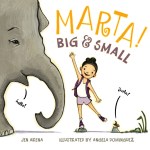 Marta! Big and Small, written by Jen Arena; illustrated by Angela Dominguez. Want to introduce some basic Spanish vocabulary to your kid? Looking for a concept book suitable for a classroom discussion of opposites? Look no further than Angela Dominguez’s latest book. Marta! Big and Small is an entirely adorable picture book that explains how Marta compares to various animals, including giraffes, elephants and rabbits. A glossary at the end puts all the vocabulary in one place. This would be a great inspiration for students to make books of their own, comparing themselves to different animals and using adjectives in Spanish or any language. –Cecilia
 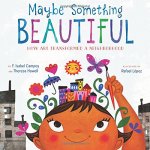 Maybe Something Beautiful: How Art Transformed a Neighborhood, written by F. Isabel Campoy and Theresa Howell; illustrated by Rafael López. Through its inspiring tale and vibrant illustrations, Maybe Something Beautiful introduces readers to Mira, a girl who lives “in the heart of a gray city” and who enjoys doodling, drawing, coloring, and painting. She considers herself an artist and likes to gift her illustrations to people in her neighborhood. She even tapes and “gifts” one of her paints to a dark wall around her block. One day she meets a muralist, and learns the magic of painting murals, and the power of bringing together the whole community to create something beautiful. The book is based on a true story about an initiative by Rafael López, the illustrator of the book, and his wife Candice López, a graphic designer and community leader, as a way to bring people together and transform their neighborhood into a vibrant one. Please check out
 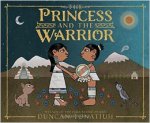 The Princess and the Warrior: A Tale of Two Volcanoes, written and illustrated by Duncan Tonatiuh. I’m a longtime fan of Duncan Tonituah’s fine illustrations and storytelling, and this book is no exception. A colleague and I spent an entire plane ride reading and re-reading the text, which gracefully and vibrantly retells an Aztec myth that offers an origin tale for the formation of the volcanoes Popocatépetl (“Smoking Mountain”) and Iztaccíhuatl (“The Sleeping Woman”) near the valley of México. Duncan’s work brings this story to life by rendering the mythical characters vibrant and relatable through crystal-clear prose and memorable illustrations. –-Ashley
 Radiant Child: The Story of Young Artist Jean-Michel Basquiat, written and illustrated by Javaka Steptoe. This is a heartfelt and vibrant picture book biography about the childhood and life of Puerto Rican-Haitian American artist Jean-Michel Basquiat. He was a boy who saw art everywhere, who learned that art goes beyond museum walls, galleries, and poetry books, who developed his own “messy” style that echoes powerful emotions, social issues, and politics. Information about the artist and the motifs and symbolism in his work along with a note from author and illustrator Javaka Steptoe are appended. —Sujei
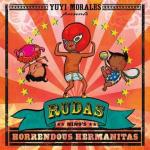 Rudas: Niño’s Horrendous Hermanitas, written and illustrated by Yuyi Morales. They’re back! The terrible twins are once again making trouble for Niño and none of his fantastic foes can defeat them. Morales captures the eye and the imagination with her bright colors, fun-sounding words, and thoroughly believable baby weapons (poopy pants included). The ending is sweet and will hopefully inspire many older siblings to read to their own brothers and sisters. This is a great family gift and a wonderful addition to the sibling story canon. —Cecilia
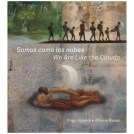 We Are Like the Clouds/Somos como las nubes, is a collection of beautiful bilingual poems by Jorge Argueta with illustrations by Alfonso Ruano. The poems center around real lived experiences of unaccompanied minors migrating from El Salvador to the United States. The poems are laid out to represent a migration journey. The opening poem “Somos las nubes” represents the everyday beauty, like “pupusas/tamales, alboroto, dulde de algodon.” The poems that follow touch on the violence that forces so many people to leave their homes and then forces children to go look for their parents. The poems then signal the grueling difficulties of navigating multiple borders, la bestia, and crossing the desert. The closing poems speak to the new challenges and the newfound beauty of living in the U.S. Argueta’s poems are timely, enduring, and powerful. —Sonia
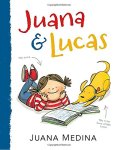 Juana & Lucas, written and illustrated by Juana Medina. Journey to Bogotá, Colombia, with Juana, who is eager to tell you all about her life. She loves her city, her mom, her grandparents, and her friends, but especially her dog, Lucas. Unfortunately, Lucas can’t help her with her biggest challenge at the moment–learning “The English.” Juana struggles to make sense of the strange sounds and words, but when her family promises her a trip to the theme park Astroworld, she is determined to succeed. Bright, energetic illustrations provide support to young readers still transitioning from pictures to text. A delightful choice for either read-aloud or independent reading. Don’t miss
 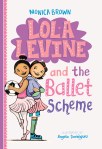 Lola Levine and the Ballet Scheme, written by Monica Brown; illustrated by Angela Dominguez. There’s a new girl in Lola’s class at school and at first Lola thinks that friendship is a possibility–but then she finds out that the new girl loves ballet, not soccer. Brown tackles the gender stereotypes that require girls to be sporty OR girly, and shows readers that it’s fine to love what you love, but that having different interests doesn’t mean you can’t still be friends. This latest addition to a fantastic series written partially in diary entries contains plenty of Spanish, as well as Lola’s trademark stubbornness. A must-read for 7-8 year olds. In
 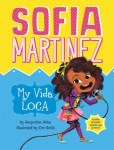 Sofía Martinez: My Vida Loca, written by Jacqueline Jules. The latest multi-story collection by Jacqueline Jules invites early chapter book readers on three new adventures with the charming Sofia Martinez: “The Singing Superstar,” “The Secret Recipe,” and “The Marigold Mess.” One of the things I loved about “The Secret Recipe” was the chance to share my own early baking mishaps with my son. As always, Sofia’s experiences will be relatable to all young readers, with Spanish text and Latinx cultural content woven in a way that stresses them as valued assets. Kids who connect well with Sofia Martinez will likely enjoy the lovely Lola Levine chapter books when they are ready for more text on each page. See
 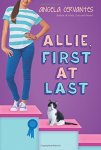 Allie, First at Last, by Angela Cervantes. Full disclosure: I got teary multiple times reading this book because while it is rare to find a middle-grade book featuring a Mexican-American family, it is even more rare to find one with a Mexican-American family who has been in the US for three generations, like mine. Allie is a classic middle child, looking for a place to shine. All her siblings excel at various activities and when her teacher announces a contest, Allie is determined to win a trophy of her own. One of the strongest parts of this book is the pride Allie takes in her family and their history as immigrants. Lessons about friendship, ambition and the danger of making assumptions about others are layered throughout the story in subtle ways, and readers will cheer for Allie as she learns more about just what it means to be the best. See our
  Lowriders to the Center of the Earth, written by Cathy Camper; illustrated by Raúl the Third. Cathy Camper and Raúl the Third have followed their fantastic Lowriders in Space with a second volume that is equally interesting, playful, and visually absorbing. I tried to sneak this out of my son’s room when he finished it, but he caught me.
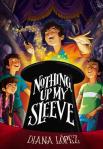 Nothing Up My Sleeve, by Diana Lopez. In
  Bloodlines, by Joe Jiménez, is a poetic vision of the complexities of (de)constructing Latino masculinities. Abraham is a seventeen-year-old figuring out what it means to be a man. He gets conflicting messages from the adults in his life. His grandmother wants him to be a good man so she solicits the help of her son Claudio, who Becky, grandma’s friend, doesn’t think is such a good man. Ophelia, Abraham’s love interest, wants Abraham to stop fighting but she also wonders what it feels like to fight. Abraham will follow the road that helps him learn whether he’s a good man or a bad one. —Sonia. Don’t miss these related posts: Joe Jiménez contributed a revealing
 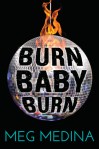 Burn Baby Burn, by Meg Medina, is set in Queens, New York, during the fateful year of 1978. While a serial killer prowls the city and arsonists torch random locations, Nora faces a disturbing issues at home. She has a sneaking suspicion that her brother is dabbling in dangerous activities, but their mom is too paralyzed to confront him head on. Nora’s story includes a supportive best friend, a cute guy who works at the same after-school job as Nora, and an apartment building full of complex and menacing characters. Also: disco dancing! Disco is a nice touch that, along with other historical elements, lends spark and crackle to an already intriguing story. We
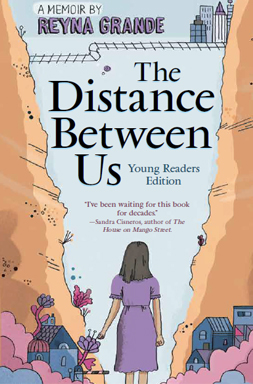
 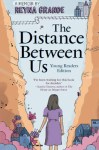 The Distance Between Us: Young Readers Edition, by Reyna Grande, is a memoir of astonishing power and relevance. Set in Mexico and California, it captures a decade of the author’s eventful life, intertwining elements of poverty, immigration, abandonment, and family strife. More than anything, it’s an account of personal triumph against enormous odds. I highly recommend it. To learn more, please see my
 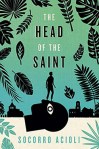 The Head of the Saint, by Socorro Acioli. Set Brazil and translated from Portuguese, this story is a dreamlike marvel. It follows a 14-year-old boy’s desperate journey toward reconnection and revenge. Destitute and rejected by his one living relative, he ends up living inside the hollow head of a broken statue of Saint Anthony. There, he magically hears the prayers of the village women, and to his consternation, gains celebrity status. One female voice sings her litany and captivates the boy’s heart, sight unseen. How can he find out who she is? The story is told in the language of fable and contains elements of magic realism. I found it irresistibly beautiful. Here’s our
 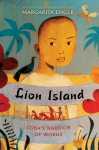 Lion Island: Cuba’s Warrior of Words, by Margarita Engle. Engle wraps up her series of books in verse that examine freedom and slavery in the Caribbean with this look at the Chinese community in 19th-century Cuba. Antonio is a Chinese-African boy, using his language skills to carry messages between Spanish and Chinese businessmen and diplomats. Through his job and his friendship with Chinese-American twins Wing and Fan, he learns about the persecution that forced the Chinese to flee California and the injustices they face as indentured laborers in Cuba. Meanwhile, rebels wage war against the Spanish, and as tensions grow, Antonio must decide how he is going to fight for freedom. An excellent choice for a classroom read-aloud or community book choice, especially now that Cuba is in the news again. —Cecilia
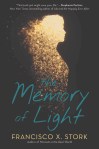 The Memory of Light, by Francisco X. Stork. When Vicky Cruz wakes up in the hospital after a suicide attempt, she is sure that it’s only a matter of time before she will try again. But with the help of Dr. Desai and the other teens at the hospital, Vicky gains a better understanding of how to live with depression and how to take control of her future. That summary makes the book sound didactic, but it’s actually funny, thoughtful, and moving. This is the kind of book that you can open to any page and find wisdom and words to help you breathe and find strength. A hopeful, light-filled book that will help many readers–not just teens–face tomorrow with renewed courage. Check out our
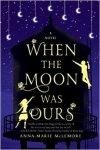 When the Moon Was Ours, by Anna-Marie McLemore. Miel and Sam have been friends ever since Miel emerged from the floodwaters of a toppled water tower. Each has secrets of their own, and now the Bonner sisters are determined to uncover them and steal the roses that grow out of Miel’s wrist. Gorgeous prose, and insights on love, family and gender identity make this a unique love story that is not to be missed. I’ve read this book about ten times now and each time I find new beauty that I missed before. A must-read for YA fans. —Cecilia
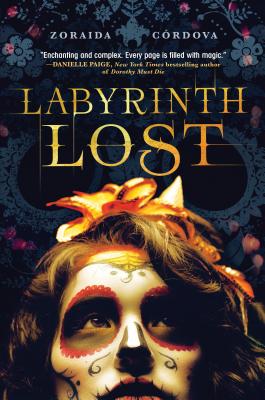 Labyrinth Lost by Zoraida Córdova. Alex is a bruja, the most powerful witch in a generation…and she hates magic. At her Deathday celebration, Alex performs a spell to rid herself of her power. But it backfires. Her whole family vanishes into thin air, leaving her alone with Nova, a brujo boy she can’t trust. A boy whose intentions are as dark as the strange marks on his skin. The only way to get her family back is to travel with Nova to Los Lagos, a land in-between. Alex’s journey through Los Lagos feels very classic. The different communities she encounters, each with its own history and strengths and weaknesses, may remind readers of classic adventures like The Odyssey, Dante’s Inferno, and Alice in Wonderland. Every new area of Los Lagos brings a ton of action. Not every writer can create battle scenes so the reader can clearly visualize them without having to re-read. Zoraida is GREAT at this. —Cecilia
 Gaby Rivera’s Juliet Takes a Breath is one of a kind. Rivera creates a beautiful, relatable, and necessary character in 19 year old Juliet Palante. Juliet comes out to her family the day she is set to travel to Oregon for an internship with a well renowned white feminist writer. Juliet is convinced that in order to be proudly lesbian she needs to leave her small and suffocating home in the Bronx. But this precious nena has so much to learn. Rivera takes Juliet on a journey of self-discovery that also allows the readers to learn about Latinx queer identity, history, and culture. After a few heartaches, let downs, and realizations, Juliet learns that the answers she seeks are where she least expects them. —Sonia
 Multicultural Literature for Latino Bilingual Children: Their Words, Their Worlds, edited by Ellen Riojas Clark, Belinda Bustos Flores, Howard L. Smith, & Daniel Aleandro Gonzalez. From Sujei’s
  The Pura Belpré Award 1996-2016: 20 Years of Outstanding Latino Children’s Literature, edited by Nathalie Beullens-Maoui & Teresa Mlawer. Published to commemorate the 20th Anniversary of the Pura Belpré Award, which celebrates the best of Latinx children’s literature, this book offers essays and stories by past and present winners of the award. It includes an introduction by Reformistas and co-founders of the Pura Belpré award, Oralia Garza de Cortés and Sandra Ríos Balderrama, as well as pictures and short biographies of past winners and the award-winning books they created. —Sujei

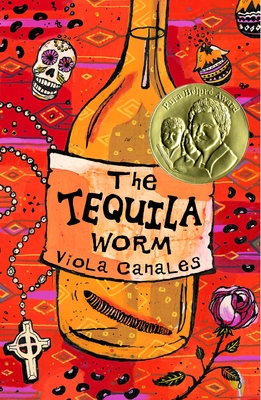 DESCRIPTION FROM THE PUBLISHER: Sofia comes from a family of storytellers. Here are her tales of growing up in the barrio, full of the magic and mystery of family traditions: making Easter cascarones, celebrating el Día de los Muertos, preparing for quinceañera, rejoicing in the Christmas nacimiento, and curing homesickness by eating the tequila worm. When Sofia is singled out to receive a scholarship to an elite boarding school, she longs to explore life beyond the barrio, even though it means leaving her family to navigate a strange world of rich, privileged kids. It’s a different mundo, but one where Sofia’s traditions take on new meaning and illuminate her path.
 ABOUT THE AUTHOR (from the
  Cindy L. Rodriguez
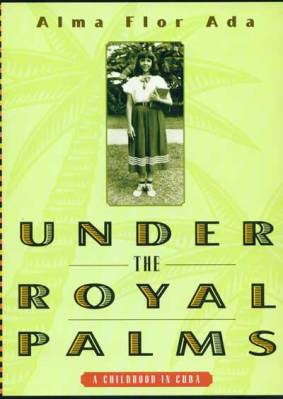 Review by Lila Quintero Weaver
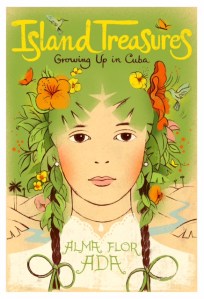 based on the Island Treasures edition.
 ABOUT THE AUTHOR: Alma Flor Ada is renown for her work as an educator, speaker, poet, and author of many children’s books as well as professional books for educators. In addition to the Pura Belpré Medal, her major awards include the 2012 Virginia Hamilton Award, the Christopher Medal, and the Marta Salotti Gold Medal. One of her great passions is social justice advocacy. Learn more about Alma’s dazzling career in children’s literature at her
  Lila Quintero Weaver
 Latinxs in Kid Lit