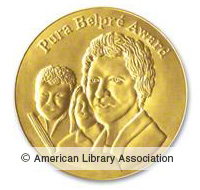
The Pura Belpré Awards turns 20 this year! The milestone was marked on Sunday, June 26, during the 2016 ALA Annual Conference in Orlando, FL. In honor of the award’s anniversary, we have been highlighting the winners of the narrative and illustration awards. Today’s spotlight is on Margarita Engle, the winner of the Pura Belpré Narrative Medal for The Poet Slave of Cuba (2008), The Surrender Tree (2009), and Enchanted Air (2016). Margarita has also won Pura Belpré Honors for The Lightning Dreamer (2014), Hurricane Dancers: The First Caribbean Pirate Shipwreck (2012), and The Firefly Letters: A Suffragette’s Journey to Cuba (2011).
Reviews of The Poet Slave of Cuba and Enchanted Air by Dr. Sonia Alejandra Rodríguez
Review of The Surrender Tree by Cindy L. Rodriguez
THE POET SLAVE OF CUBA
DESCRIPTION FROM THE PUBLISHER: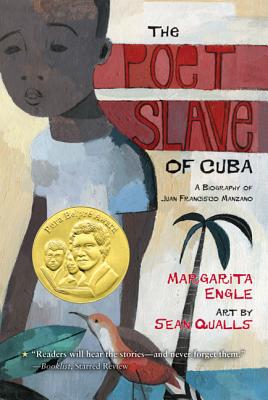 A lyrical biography of a Cuban slave who escaped to become a celebrated poet.
Born into the household of a wealthy slave owner in Cuba in 1797, Juan Francisco Manzano spent his early years by the side of a woman who made him call her Mama, even though he had a mama of his own. Denied an education, young Juan still showed an exceptional talent for poetry. His verses reflect the beauty of his world, but they also expose its hideous cruelty.
Powerful, haunting poems and breathtaking illustrations create a portrait of a life in which even the pain of slavery could not extinguish the capacity for hope.
The Poet Slave of Cuba is the winner of the 2008 Pura Belpre Medal for Narrative and a 2007 Bank Street – Best Children’s Book of the Year.
MY TWO CENTS: In The Poet Slave of Cuba: A Biography of Juan Francisco Manzano, Margarita Engle beautifully captures the life of Juanito, a slave in Cuba with a talent and passion for words. Juanito is smart. He can memorize verses, songs, plays simply by listening. He can then recite them off the top of his head. His owner, Doña Beatriz, keeps him as an entertaining pet. The other slave owners call him the “Golden Beak” because of his amazing ability to recite from memory. After Doña Beatriz dies, Juanito is given to La Marquesa de Prado Ameno, a woman who does not find him amusing and is instead bent on punishing him. Juanito’s family is given freedom, but he remains enslaved. The violence he endures eventually forces him to escape. Throughout all the time, Juanito’s love for words never wavered, but instead, he taught himself to read and write.
Juan Francisco Manzano’s biography in verse is an important contribution to the retelling of Latin American history. At first, his owners found his recitations entertaining because they did not believe that he understood what he repeated, but eventually Manzano learned the power of words and would construct his own poems and stories. However, this new understanding of words led to many years of physical and emotional abuse. Engle does not romanticize slavery in this text. Her verses help readers feel Juanito’s innocence and his genuine interest for words. At the same time, Engle’s verses feel painful when Juanito gets whipped. Juanito’s life story is told through the voices of those in his life. The different voices paint a bigger picture of Juanito’s life. His mother’s death is more sorrowful, for example, because their voices formed a part in telling Juanito’s story. Engle’s verses are accompanied by artwork by Sean Qualls. There is something about the art that is also beautiful and sad.
The Poet Slave of Cuba broaches the subject of slavery in Latin America unlike any other text I’ve come across in Latinx children’s and young adult literature. Engle’s verses helps put a human face to those that were oppressed, abused, and killed by slavery. Through her verses, Engle has immortalized Manzano’s story, and, at least in this one way, readers of this text can begin or continue to have conversations about slavery in Latin America.
THE SURRENDER TREE
DESCRIPTION FROM THE PUBLISHER: 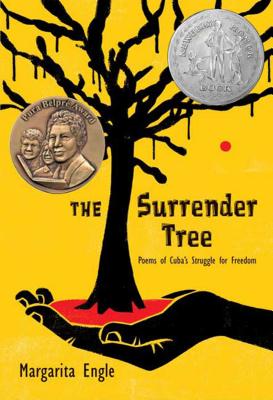 It is 1896. Cuba has fought three wars for independence and still is not free. People have been rounded up in reconcentration camps with too little food and too much illness. Rosa is a nurse, but she dares not go to the camps. So she turns hidden caves into hospitals for those who know how to find her.
Black, white, Cuban, Spanish―Rosa does her best for everyone. Yet who can heal a country so torn apart by war? Acclaimed poet Margarita Engle has created another breathtaking portrait of Cuba.
The Surrender Tree is a 2009 Newbery Honor Book, the winner of the 2009 Pura Belpré Medal for Narrative and the 2009 Bank Street – Claudia Lewis Award, and a 2009 Bank Street – Best Children’s Book of the Year.
MY TWO CENTS: In The Surrender Tree: Poems of Cuba’s Struggle for Freedom, which was was the first novel by a Latinx to receive a Newbery Honor, Engle portrays almost 50 years of the life of Rosario Castellanos, known as Rosa la Bayamesa, who grows from a slave, a “witch-child” learning about nature as medicine, to an iconic herbalist war nurse who treated anyone–friend or enemy–and never asked for money. Engle’s novel in verse follows Rosa from 1850-1899, through the Ten Years War, the Little War, and the War of Independence. After all of that fighting, the novel ends with Spain’s surrender to the United States. With Cuba still not free, the characters are left with mixed feelings of disappointment and hopeful anticipation for a better future.
Engle’s poems alternate among five perspectives, those of Rosa, her husband José, a slavehunter known as Lieutenant Death, Captain-General Valeriano Weyler y Nicolau, Marquis of Tenerife, Empire of Spain, and a young girl named Silvia. By including these voices, Engle captures different war experiences and interesting intersections. For example, Rosa meets Lieutenant Death early on, heals him later, and then becomes his target, since Rosa has become a powerful, elusive wartime figure. Also, later in the novel Silvia, an eleven-year-old girl, leaves her farm with her ailing mother and young twin brothers because of the mandatory order for peasants to enter reconcentration camps. Silvia’s grandmother had been healed by Rosa in a previous war, and now Silvia believes Rosa is her only hope for survival.
As in The Poet Slave of Cuba, Engle does not shy away from the brutalities of slavery and war. She explains that the ear of a runaway slave, proof that the slave died resisting capture, earns the hunter four pesos. Later, Rosa notes that “some of the ears come from people whose names and faces I know.” Other times, Engle captures the exhaustion, fear, loneliness, heartbreak, and confusion of the men, women, and children hiding in caves. For example, she writes through Rosa:
The Little War?
How can there be
a little war?
Are some deaths
smaller than others,
leaving mothers
who weep
a little less?
And yet, throughout the novel, the characters also express feelings of pride and hope and a constant sense of purpose that leads to perseverance. While reading, it was easy to see why The Surrender Tree is one of Engle’s many highly-acclaimed and decorated novels.
ENCHANTED AIR
DESCRIPTION FROM THE PUBLISHER: 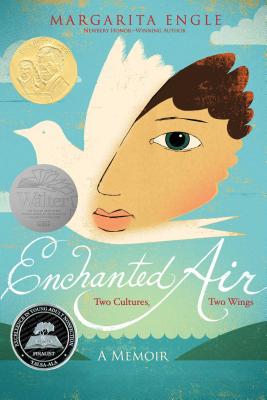 In this poetic memoir, which won the Pura Belpré Narrative Award, was a YALSA Nonfiction Finalist, and was named a Walter Dean Myers Award Honoree, acclaimed author Margarita Engle tells of growing up as a child of two cultures during the Cold War.
Margarita is a girl from two worlds. Her heart lies in Cuba, her mother’s tropical island country, a place so lush with vibrant life that it seems like a fairy tale kingdom. But most of the time she lives in Los Angeles, lonely in the noisy city and dreaming of the summers when she can take a plane through the enchanted air to her beloved island. Words and images are her constant companions, friendly and comforting when the children at school are not.
Then a revolution breaks out in Cuba. Margarita fears for her far-away family. When the hostility between Cuba and the United States erupts at the Bay of Pigs Invasion, Margarita’s worlds collide in the worst way possible. How can the two countries she loves hate each other so much? And will she ever get to visit her beautiful island again?
MY TWO CENTS: Margarita Engle’s non-fiction memoir in verse, Enchanted Air: Two Cultures, Two Wings, tells of her upbringing in Los Angeles during the Cold War era, learning about the Bay of Pigs invasion, and the palpable fear she felt for her family in Cuba. Engle describes the challenges of growing up with two cultures and always longing for one place while in another. Young Margarita finds herself in words when it feels like she belongs to both culture and neither at the same time. Enchanted Air is the outstanding memoir of a truly amazing writer.
Engle’s memoir in verse is a timely story. War and violence continue to separate many children and their family in one country from their families in another country. Engle describes the isolation she felt due to her different culture when she left Cuba for the U.S. The freedom to roam about as she did in Cuba was not always very realistic in the U.S. She notes that even her mother changed a bit. Engle further recounts the fear and anxiety she felt when she learned that her two countries did not get along. Engle found solace in libraries and the stories they contained. Poetry gave her the wings to soar again. Her memoir stops in 1965 with her childhood hope that she will one day be able to return to Cuba. Now that relations with Cuba have been renewed and commercial flights to Cuba might soon be available there are probably many that are also glad they will be able to reacquaint themselves with the island of their childhood.
TEACHING TIPS: Both The Poet Slave of Cuba and Enchanted Air tell of the importance of poetry as a tool for empowerment. Ask students to discuss the significance of words in Manzano’s and Engle’s childhood. Explaining the historical context of each text will be important so that students don’t conflate one experience with the other. In other words, slavery and the Cold War are not the same experiences and should be differentiated. Ask students to consider the circumstances that left Manzano or Engle feeling voiceless. How did they each use words (i.e. poetry and stories) to empower themselves?
Storytelling is another common thread in both texts. Ask students to discuss the memoirs, autobiographies, and biographies as genres. What are their cultural significance? In other words, why do people write their or other’s life story? Ask student to journal about whose biography they might write. Encourage students to consider someone in their family or in their community as the potential subject of their biography.
Since almost all of the characters in The Surrender Tree were real people, students could research one of the historical figures and any of the wars outlined in the novel. Another interesting exercise would be to closely examine the ending, when the American soldiers arrive and, while they are met with hospitality, they are at one point called “a foreign tyrant” rather than saviors. Students should be encouraged to read the text closely through the eyes of the Cuban characters to understand the mixed emotions at the end, when the U.S. flag is raised instead of the Cuban flag.
For more ideas on these and other books by Engle, check out her “for teachers” page on her website.
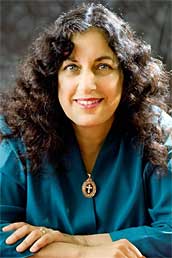 ABOUT THE AUTHOR (from her website): Margarita Engle is the Cuban-American author of many verse books, including a Newbery Honor winner, The Surrender Tree, a PEN USA Award winner, The Lightning Dreamer, and a verse memoir, Enchanted Air, winner of many awards, including an inaugural Walter Dean Myers Award Honor, the inaugural Arnold Adoff Teen Poetry Award, and the Lee Bennett Hopkins Poetry Award. Margarita’s books have also received three Pura Belpré Awards and four Américas Awards, as well as a Jane Addams Award, International Reading Association Award, and Claudia Lewis Poetry Award. Books for younger children include Mountain Dog, Summer Birds, and the Charlotte Zolotow Award winning picture book, Drum Dream Girl.
Margarita grew up in Los Angeles, but developed a deep attachment to her mother’s homeland during summers with her extended family in Cuba. She was trained as a botanist and agronomist before becoming a full-time poet and novelist. She lives in Central California, where she enjoys hiding in the wilderness to help train her husband’s search and rescue dog.
 Dr. Sonia Alejandra Rodríguez’s research focuses on the various roles that healing plays in Latinx children’s and young adult literature. She currently teaches composition and literature at a community college in Chicago. She also teaches poetry to 6th graders and drama to 2nd graders as a teaching artist through a local arts organization. She is working on her middle grade book. Follow Sonia on Instagram @latinxkidlit
 Cindy L. Rodriguez is a former journalist turned public school teacher and fiction writer. She was born in Chicago; her father is from Puerto Rico and her mother is from Brazil. She has degrees from UConn and CCSU and has worked as a reporter at The Hartford Courant and researcher at The Boston Globe. She and her daughter live in Connecticut, where she teaches middle school reading and college-level composition. Her debut contemporary YA novel, When Reason Breaks, released with Bloomsbury Children’s Books on 2/10/2015. She can also be found on Facebook, Twitter, and Goodreads.

 by Cecilia Cackley
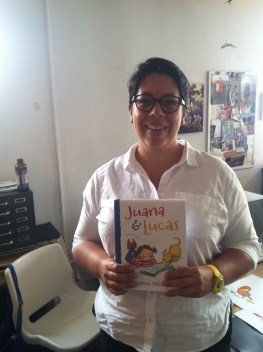
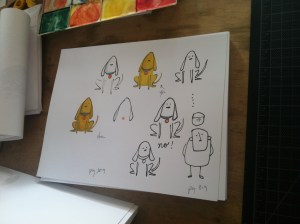 That sense of exploration is on full display in Juana and Lucas, which features a loose, sketchy quality to the ink drawings. Medina points to the British illustrator Quentin Blake as a key influence, noting that he draws with both hands, and she often does too, or sometimes draws with one hand and colors with the other. Another favorite artist is Joaquin Salvador Lavado, better known by his pen name Quino, who created the iconic comic strip Mafalda for the Argentine newspaper El Mundo. Medina gushes about Quino’s “level of expressiveness.” She points out: “He includes wit in such simple traces and achieves complexity and an incredible level of detail in just a few lines.”
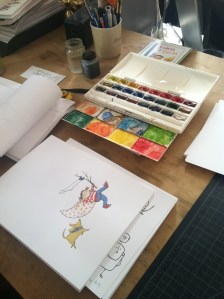 For Juana and Lucas, Medina experimented with sketches in pencil first, then used a light box to draw the final version of each illustration in ink. Watercolor came next and the drawing was then scanned so that the colors could be adjusted digitally. This process also allowed Medina to correct small errors without having to redraw an entire composition. She showed me one spread containing an airplane that hadn’t been in the original sketch. Later in the process, it was added digitally to cover up an unruly inkblot!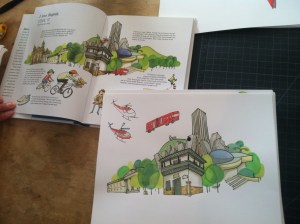
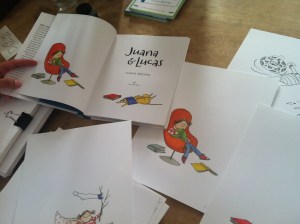 The dynamic presentation of text (words that curve, get bigger or in other ways deviate from the standard type) featured throughout the story was Medina’s idea. Her thinking is that typography is part of language, explored, and it can cue certain meanings of words that may be unfamiliar to young readers.
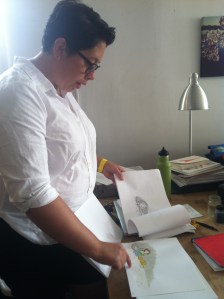 For readers in the United States used to seeing European cities such as London or Paris in children’s literature, it’s a breath of fresh air to get such a detailed, child’s-eye view of a major South American city. Medina went back to Bogotá after writing several versions, and says the trip was bittersweet. “It was the first time there without my grandparents, without having a place there to call home. It was a difficult trip, but it was sweet to see the mountains and smell the eucalyptus, and it was validating to see everything. I took some license in the book. I’m not tying myself to fact-checking everything, which was liberating in a way. There was a lot I left out, especially surrounding the conflict and civil war I grew up with. That’s something I’ll maybe address in another book. The hardest illustration was my grandparents’ house, which no longer exists. It was a safe haven, so no illustration could truly do it justice.”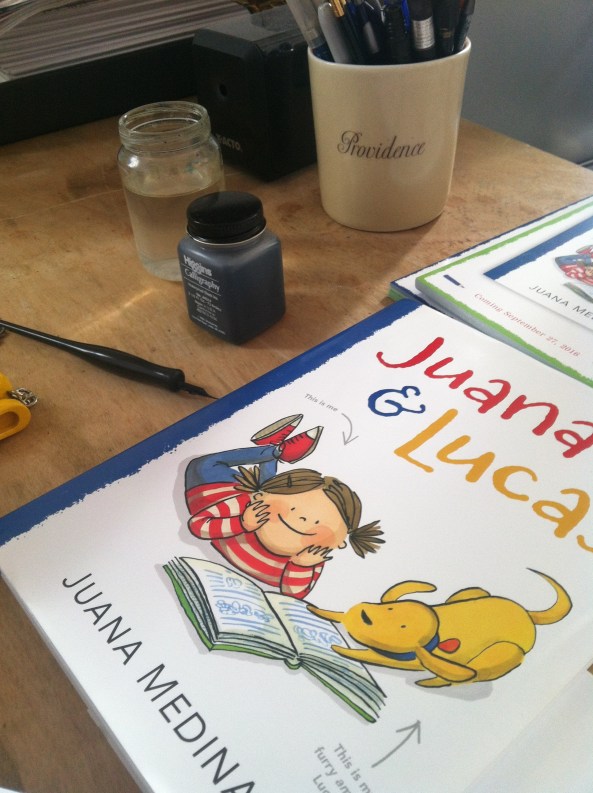
 Cecilia Cackley is a performing artist and children’s bookseller based in Washington, DC, where she creates puppet theater for adults and teaches playwriting and creative drama to children. Her bilingual children’s plays have been produced by GALA Hispanic Theatre and her interests in bilingual education, literacy, and immigrant advocacy all tend to find their way into her theatrical work. You can find more of her work at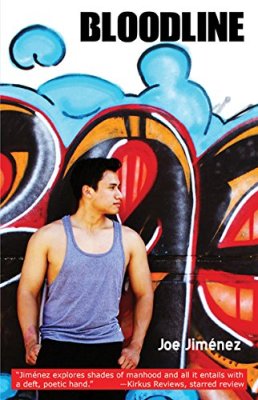
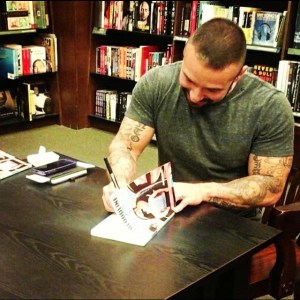
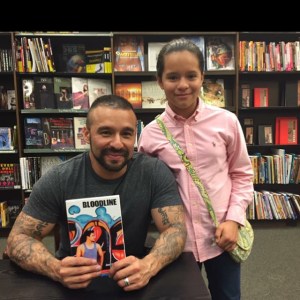
 Joe Jiménez is
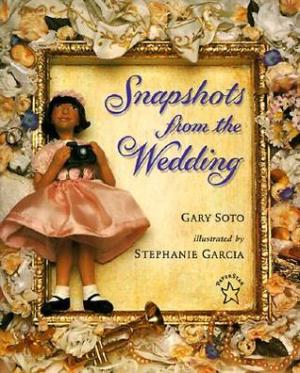 DESCRIPTION FROM THE BOOK JACKET: Meet Maya, Isabel’s flower girl, as she describes in vivid detail the exciting wedding day. Maya introduces us to Danny, the ring bearer; Aunt Marta, crying big tears; Uncle Trino, jump-starting a car in his tuxedo; and Rafael, the groom, with a cast on his arm. Of course, the big day also includes games, dancing, cake, and a mariachi band that plays long into an evening no one will ever forget.
 ABOUT THE ILLUSTRATOR: Stephanie Garcia is an illustrator, graphic designer, art director, and design consultant, with a wealth of experience in the corporate world and the classroom, where she shares her knowledge with others. Learn more about her in
  ABOUT THE AUTHOR: Gary Soto is the author of multiple picture books, including the Chato series, which won the Pura Belpré illustrator award for Susan Guevara. He also published many novels for youth, as well as books of short stories for young readers, and collections of essays and poems. His awards include the prestigious Guggenheim Fellowship, the Andrew Carnegie Medal, and the National Book Award. Learn more at
  Lila Quintero Weaver
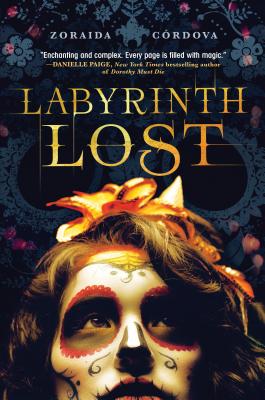 DESCRIPTION FROM THE PUBLISHER: Nothing says Happy Birthday like summoning the spirits of your dead relatives.
 Alex’s journey through Los Lagos feels very classic. The different communities she encounters, each with its own history and strengths and weaknesses, may remind readers of classic adventures like The Odyssey, Dante’s Inferno, and Alice in Wonderland. Every new area of Los Lagos brings a ton of action. Not every writer can create battle scenes so the reader can clearly visualize them without having to re-read. Zoraida is GREAT at this.
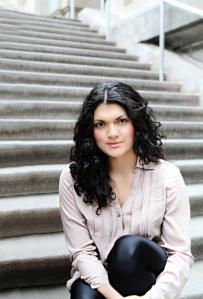 ABOUT THE AUTHOR:
  Latinxs in Kid Lit