Book Review: Jumped In by Patrick Flores-Scott

By Edith Campbell17343397

DESCRIPTION FROM THE BOOK JACKET: Sam has the rules of slackerhood down: Don’t be late to class. Don’t ever look the teacher in the eye. Develop your blank stare. Since his mom left, he has become an expert in the art of slacking, especially since no one at his new school gets his intense passion for the music of the Pacific Northwest—Nirvana, Hole, Sleater-Kinney. Then his English teacher begins a slam poetry unit and Sam gets paired up with the daunting, scarred, clearly-a-gang-member Luis, who happens to sit next to him in every one of his classes. Slacking is no longer an option—Luis will destroy him. Told in Sam’s raw voice and interspersed with vivid poems, Jumped In by Patrick Flores-Scott is a stunning debut novel about differences, friendship, loss, and the power of words.

MY TWO CENTS: Sam is a teen who once had much going for him but has decided to give up on everything after his mother dumps him with her parents and leaves. Sam now wants to also disappear by becoming a slacker. He’s got the slacker rules down pat and he follows them quite well until the new guy, Luis, is assigned to sit near him in every single class. Everyone assumes Luis is a gangster; after all, his brother is.

Flores-Scott writes to teach the power of words and the obliterating effect of silence. Sam finds comfort in the music of Nirvana. His sadness is echoed in the gray, wet landscape that surrounds him in Seattle. The humor and optimism of his grandparents emphasize what a jerk Sam is becoming. Luis appears in poetic form and he while he really isn’t much more than a thought, a poem in the story, his presence changes Sam. We never really know what’s going on in young people’s minds, do we? Flores-Scott captures their inconsistencies as he writes about so many characters who seem one way but act another. Rupe and Dave were Sam’s touch stones, but even they grew and changed in ways Sam wasn’t quite prepared for.

The writing will attract students who don’t often find themselves in books, those who try to disappear as well as those who are fascinated by the power of language. Some of the short chapters themselves look like poems. I wanted to slow down the story and clean up the ending. I wanted the parrot to go ahead and scream “goodbye Sam” and for Sam to be OK with that. I wanted to add “Trayvon” to the graffiti on the cover because that young man in the hooded green jacket reminds us all how our young boys in hoodies too often disappear.

Jumped In was listed on YALSA’s 2014 list of Best Fiction for Young Adults and as a Favorite Chapter Book by the International Reading Association.

AUTHOR: Patrick Flores-Scott was born and raised in the Snoqualmie Valley (just east of Seattle). He studied theatre at the University of Washington and ended up getting a teaching certificate as well. He spent years working as a reading specialist by day while writing and acting in plays in his free time. While teaching at a middle school in Des Moines, Washington, he was inspired to write a novel that reflected his students’ lives, something that his struggling readers would able to enjoy, something he might have enjoyed all the years he was a struggling reader. Jumped In is his debut novel. He lives in Seattle with his wife and two children.

FOR MORE INFORMATION about Jumped In, visit your local library or bookstore. Also, check out worldcat.org, indiebound.org, goodreads.com, amazon.com, barnesandnoble.com, and Henry Holt/Christy Ottaviano Books.

 

Edith CampbellEdith Campbell is a mother, librarian, educator and quilter. She received her B.A. in Economics from the University of Cincinnati and MLS from Indiana University.  Her passion is promoting literacy in all its many forms to teens and she does this through her blog, CrazyQuiltEdi and in her work as an Education  Librarian at Indiana State University in Terre Haute, Indiana. Edith currently serves as the IN State Ambassador for the United States Board on Books for Young People and is a past member of YALSA’s Best Fiction for Young Adults selection committee.
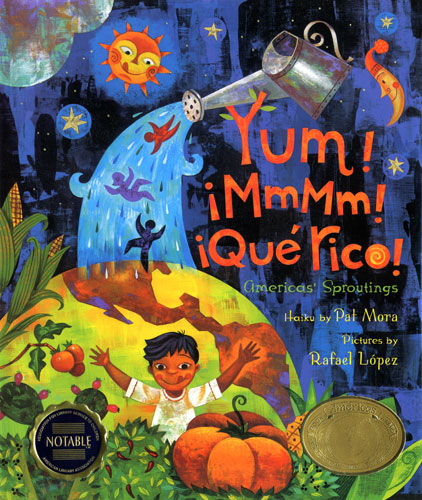
 

Book Review: Yum! ¡MmMm! ¡Qué Rico!: Americas’ Sproutings by Pat Mora

largeBy Sujei Lugo

DESCRIPTION FROM THE BOOK JACKET: Peanuts, blueberries, corn, potatoes, tomatoes, and more—here is a luscious collection of haiku celebrating foods native to the Americas. Brimming with imagination and fun, these poems capture the tasty essence of foods that have delighted, united, and enriched our lives for centuries. Exuberant illustrations bring to life the delicious spirit of the haiku, making Yum! ¡MmMm! ¡Qué Rico! an eye-popping, mouth-watering treat.

MY TWO CENTS: Beware: This book will make you feel hungry!

Through Pat Mora’s wonderful haikus (a traditional and very popular form of Japanese poetry) and Rafael López’s vivid illustrations, we are introduced to a wide variety of foods from the Americas. From blueberries and papaya, to pumpkin and vanilla, readers will have the opportunity to discover and learn about crops that have been growing in our lands for centuries.

Mora uses this opportunity to present us with 14 different types of foods accompanied by a haiku, an illustration, and an informational paragraph for each. This combination effectively makes this book a fun, poetic, and informational read. Mora’s short poems strive to capture the various feelings and sensory experiences we encounter when we eat and enjoy these foods. The informational paragraph provides us with the etymology, origin and uses for each food, and some of them even include national holidays across the region that celebrate them.

Even though food is the main character of the book, children and nature are presented throughout each page, as they interact with the food that is being discussed. Through cheerful and colorful illustrations, López supports Mora’s words with lively anthropomorphic foods, suns and moons, friendly animals, and picturesque landscapes. The book also embraces the real diversity of the Americas, giving us multiethnic and multiracial children and their families enjoying and being part of this magic realism journey of foods and words.

Among the food, colors, and haikus there is an important aspect that is constant throughout Yum! ¡Mmmm! ¡Qué rico!, although featured discreetly: a strong sense of how vital sharing is–sharing the land with nature, humans, and animals, as well as sharing the products of our land with others. It stresses the need to understand the importance of a non-exploitative relationship with nature and our role in taking care of our land. We can see this aspect clearly with López’s constant use of images of children and families, seen either eating or preparing food together, planting seeds, and picking crops, as well as images of nature watering our soil. There’s no doubt that this book will encourage children to eat fruit, vegetables, and other natural foods. At the same time, it will help them to recognize the work that needs to happen to enjoy those foods.

Yum! ¡Mmm! ¡Qué Rico! America’s Sproutings was the first collaboration between Pat Mora and Rafael López. Published in 2007, the book won several awards such as Bank Street Children’s Books of the Year (2008), Américas Award (2007) and American Library Association (ALA) Notable Books (2008). It was also included in the Texas Bluebonnet Award Master List (2008-2009), Great Lakes Great Books Award Master List (2008-2009) and ALA’s Top Ten Quick Picks for Reluctant Young Adult Readers. 

TEACHING TIPS: The book works well for children in grades K-6. At home, kids can read it with adults and learn about haikus and how to incorporate some of the foods into their diet. They can do fun cooking activities, such as making fruit faces or fruit kabobs, and even make ice cream, like in this activity shared by the book’s publisher Lee and Low Books.

The content of the book provides librarians, teachers and educators the opportunity to create cross-curricular activities in subjects such as language arts, social studies, art, and health. Students may even become inspired by Pat Mora’s haikus and write their own pieces about the foods they’ve just learned about, and how they feel by eating them or sharing them. The book incorporates a few words in Spanish, such as luna and dulces, teaching children new words as well as showing them they can incorporate words in other languages in their writing. For activities related to social students, art, and health, Lee and Low Books provides a great classroom guide.

LEXILE: AD970L

AUTHOR & ILLUSTRATOR: Pat Mora (author) is a writer, speaker, multicultural literacy advocate, and founder of Día de los Niños/Día de los Libros (Children’s Day/Book Day). A former teacher, university administrator and consultant, Mora has dedicated her life to spread her “bookjoy” to children and adults. She is the recipient of various awards and honors such as Honorary Doctorates from North Carolina State University and SUNY Buffalo, Kellogg National Leadership Fellowship, National Endowment of the Arts Poetry Fellowship, Civitella Ranieri Fellowship, Honorary Membership in the American Library Association, Lifetime Membership in the United States Board on Books for Young People and several Southwest Book Awards.

She was written books of poetry, fiction and nonfiction for children and adults. Some of her children’s books are: Listen to the Desert/Oye al Desierto (1994); Tomás and the Library Lady (1997), winner of the 1998 Tomás Rivera Mexican American Children’s Book Award; The Bakery Lady (2001); Doña Flor: A Tall Tale about a Giant Woman with a Great Big Heart (2005), winner of the Pura Belpré Author Honor and Illustrator Awards (2006) and Golden Kite Award from the Society of Children’s Book Writers and Illustrators; Book Fiesta!: Celebrate Children’s Day/Book Day/Celebremos El Día de los Niños/El Día de Los Libros (2009), a Junior Library Guild selection and Pura Belpré Illustrator Award (2010) winner; Gracias/Thanks (2009), recipient of the Pura Belpré Illustrator Honor (2010); A Piñata in a Pine Tree: A Latino Twelve Days of Christmas (2009), Dizzy in Your Eyes: Poems about Love (2010) and The Beautiful Lady: Our Lady of Guadalupe (2012).

Rafael López (illustrator): Rafael López is a Mexican award-winning illustrator and artist, whose work is influenced by his cultural heritage, colors of Mexican street life, and Mexican surrealism. In addition to children’s books, Rafael López has created illustrated posters and United States Postal Service stamps such as the Latin Music Legends series. He also launched street art projects to revitalize urban neighborhoods such as the Urban Art Trail Project.

He is the recipient of various Pura Belpré Honor for Illustration awards, for books such as: My Name is Celia: The Life of Celia Cruz/Me Llamo Celia: La Vida de Celia Cruz (2006), Book Fiesta!: Celebrate Children’s Day/Book Day/ Celebremos El Día de los Niños/El Día de Los Libros (2010), The Cazuela That the Farm Maiden Stirred (2012) and Tito Puente: Mambo King/Rey del Mambo (2013). He also received two Américas Awards for Children’s and Young Adult Literature for My Name is Celia (2006) and Yum! ¡Mmmm! ¡Qué Rico! Americas’ Sproutings (2007).

FOR MORE INFORMATION about Yum! ¡MmMm! ¡Qué Rico!: Americas’ Sproutings (2007) visit your local library or bookstore. Also, check out worldcat.orgindiebound.orggoodreads.comamazon.comleeandlow.com.

Book Review: Saving Baby Doe by Danette Vigilante

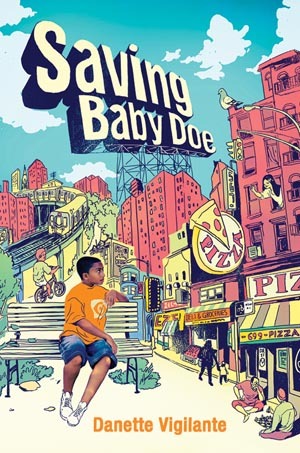
Saving Baby DoeBy Cindy L. Rodriguez

On Monday, author Danette Vigilante wrote about dream seeds and how she turned a teacher’s comment into a challgenge to become a better reader. Today, we celebrate her latest novel Saving Baby Doe.

DESCRIPTION FROM THE BOOK JACKET: Lionel and Anisa are the best of friends and have seen each other through some pretty tough times–Anisa’s dad died and Lionel’s dad left, which is like a death for Lionel. They stick together no matter what. So when Lionel suggests a detour through a local construction site on their way home one day, Anisa doesn’t say no. And that’s where Lionel and Anisa make a startling discovery–a baby abandoned in a Porta-Potti. Anisa and Lionel spring into action. And in Saving Baby Doe, they end up saving so much more.

MY TWO CENTS: Danette Vigilante pulls the reader right into this novel from the opening scene of a scared young woman is giving birth to her child in a Porta-Potti on a construction site. Soon after, Lionel and Anisa discover the baby, after playing in the closed-off site, and they decide to save “Baby Doe.” This is a middle grade novel that addresses some tough issues. In addition to the abandoned baby, the author explores the effects on children of absentee fathers and drug dealing. At the heart of it all is Lionel, who tries to do the right thing in the worst of situations.

While the issues are serious, Lionel responds to them as only a middle-schooler would. The real possibility of severe consequences doesn’t prevent him from launching into an ill-conceived plan to retrieve the baby from the hospital so that she doesn’t end up in foster care. While reading, I caught myself thinking, “Lionel, what are you doing? This is a bad idea!” Of course, he knows this, too, but he goes ahead anyway. In this way, Vigilante perfectly captures the middle school mind and creates tension through the narrative.

Then, there’s the end of Chapter 10, which I totally did not see coming. I probably should have, but I was wrapped up in Lionel’s plan to steal the baby and sell drugs to support her and then…chapter 10! Whoa! Well played! I’m not going to spoil it, but the story takes an important turn. That’s all I’ll say about that.

One of the many things I loved about this novel was the diversity within Lionel’s community. They all struggle financially, but they’re all individually-drawn people. Some work hard at “regular” jobs, while others choose quick money. Some are ultra-religious, while others are not. Some of the kids go to public school, while others go to the “genius” private school. Characters vary in terms of age, race, ethnicity, and experience, all of which creates a rich, real setting for Lionel and Anisa story to unfold.

TEACHING TIPS: In addition to all of the expected language arts lessons, this novel would work well in a health class since it deals with sex education (a lecture given by Lionel’s mom), child birth, the possible results of not seeking medical care, and the Safe Haven laws. Fiction is often reserved for language arts classes, but this type of realistic novel is ideal for blending fiction and nonfiction in health, where teachers and students tackle these serious issues.

LEXILE: N/A

Danette_Vigilante_head_shot_high_resAUTHORDanette Vigilante grew up in the Red Hook Houses in Brooklyn, New York. She now resides in Staten Island with her husband, two daughters, two puppies and a cat with a bad attitude. Danette is the author of THE TROUBLE WITH HALF A MOON, a 2012-2013 Sunshine State Young Readers award nominee, and SAVING BABY DOE.

FOR MORE INFORMATION about Saving Baby Doevisit your local library or book store. Also, check out IndieBound.org,  GoodreadsAmazon.com, and Barnes and Noble.com.


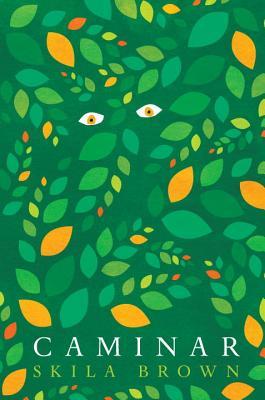
Book Review: Caminar by Skila Brown

Caminar

By Cindy L. Rodriguez

On Monday, we interviewed first-time author Skila Brown about her novel in verse, Caminar. Check out the Q&A for information about her research and writing and her decision to tackle a subject outside her own racial/ethnic experience. Today, we celebrate her debut.

DESCRIPTION FROM THE BOOK JACKET: Carlos knows that when the soldiers arrive with warnings about the Communist rebels, it is time to be a man and defend the village, keep everyone safe. But Mama tells him not yet–he’s still her quiet moonfaced boy. The soldiers laugh at the villagers, and before they move on, a neighbor is found dangling from a tree, a sign on his neck: Communist.

Mama tells Carlos to run and hide, then try to find her…Numb and alone, he must join a band of guerillas as they trek to the top of the mountain where Carlos’s abuela lives. Will he be in time, and brave enough, to warn them about the soldiers? What will he do then? A novel in verse inspired by actual events during Guatemala’s civil war, Caminar is the moving story of a boy who loses nearly everything before discovering who he really is.

MY TWO CENTS: Skila Brown’s debut novel in verse tells the heartbreaking story of Carlos, who is forced from his devastated village and treks up a mountainside to save his grandmother and her neighbors from a similar fate.

One thing that struck me most was Brown’s ability to create a touching coming-of-age narrative set in such tragic events. The novel is not graphic, although the topic is brutal. And while it is a civil war, fueled by politics, Brown does not support or condemn any side. Instead, more than anything, it’s about the ability of the human spirit to survive and persevere even after an unexpected, horrific loss.

A moment that grabbed me by the heart was when Mama tells Carlos to go into the woods and then find her later. He does so, obediently, but we just know there won’t be a later, that this is her last protective act as his mother. Another was when the children wave at the passing helicopter, as children will do when they see something interesting, but they don’t grasp the imminent danger signaled by this flying machine’s presence. From the novel:

They flew

over our village many times, searching the mountains for

something. We didn’t care,

just reached our arms as high as we could, stretched

toward the sky, wanting

to be seen.

We did not know to be

afraid, did not know they were a storm

of death, searching

for a place to rain.

Brown brilliantly combines history, fiction, and poetry in this novel, which she dedicates to the “memory of the more than 200,000 people who were killed or disappeared in Guatemala between 1960 and 1996.” These numbers are staggering, and I often questioned while reading Caminar why I didn’t know more about this 36-year civil war. This is definitely a book I will have on my classroom shelf and recommend to my middle school social studies and language arts teacher-friends.

TEACHING TIPS: Caminar would fit perfectly into a middle school social studies or language arts curriculum. Students could read this in addition to nonfiction articles or essays about the war and its effects on Guatemalan villages. Students could then compare the nonfiction pieces to Caminar to determine what’s history in the novel and what’s fiction.

In a social studies class, this book could be used in a unit about the causes of war and its effects on a country. Students could read other, similar novels or essays and compare the experiences.

Any of the individual poems could be read closely multiple times to discuss word choice and the use of figurative language in poetry.

Students could write a short story in poems to learn first hand the difficulty involved with writing individual poems that also tell a story when read together.

LEXILE: N/A

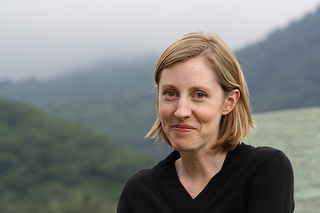
skilaAUTHOR: Skila Brown has an MFA in writing for children and young adults from Vermont College of Fine Arts. Caminar is her debut novel. She lives in Indiana with her husband and their three children.

FOR MORE INFORMATION about Caminar, visit your local library or book store. Also, check out Candlewick PressIndieBound.org,  GoodreadsAmazon.com, and Barnes and Noble.com.


We are giving away two copies of Caminar!! Go to a Rafflecopter giveaway to enter for free. You can enter once per day through this week. Two winners will be selected Saturday morning.

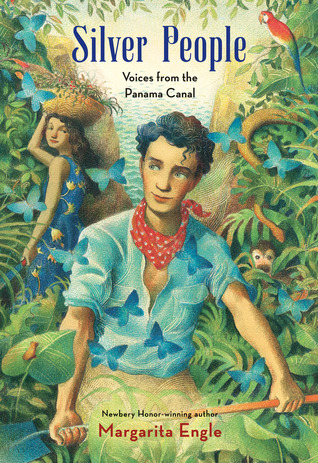
Book Review: Silver People: Voices From the Panama Canal by Margarita Engle

By Zoraida Córdova

Silver People

DESCRIPTION FROM THE BOOK JACKET: One hundred years ago, the world celebrated the opening of the Panama Canal, which connected the world’s two largest oceans and signaled America’s emergence as a global superpower. It was a miracle, this path of water where a mountain had stood—and creating a miracle is no easy thing. Thousands lost their lives, and those who survived worked under the harshest conditions for only a few silver coins a day.

From the young “silver people” whose back-breaking labor built the Canal to the denizens of the endangered rain forest itself, this is the story of one of the largest and most difficult engineering projects ever undertaken, as only Newbery Honor-winning author Margarita Engle could tell it.

MY TWO CENTS: Silver People is a historical novel written in verse. Told in alternating perspectives over eight years, each poem is vibrant, unique, and many times heartbreaking. The story starts with Mateo, a fourteen year old boy from Cuba who lies about his ethnicity in order to get passage to and work in Panama. He’s mixed, and even though this takes place over 100 years ago, the feeling of not fully belonging to one part of yourself or culture is still relevant. His dark skin and green eyes allow him to “pass.” Like many of the men who flocked to Panama during this time, Mateo wants to work. But with a new world and new people come many challenges. First, there’s the hunger for food. Second, there’s a hunger for home. Third, there’s a fear of survival.

Through his careful observations, we are given a scope of surviving the working life on the canal. A structure of segregation is placed: “Americans, Frenchmen, and Dutch./ Spaniards, Greeks, Italians./ Jamaicans, Barbadians, Haitians” leaving Mateo wondering how any of them will be able to work together. Although all of the men are doing backbreaking and soul crushing work each day, the white men get paid in gold, the dark Europeans in silver, and the islanders in half the silver as other men. During the night, the monkeys howl and insects bite; Mateo ends up wondering “How can I miss the place/ I was so desperate to leave?” When I read that I thought to myself that even now, that’s the immigrant struggle. You long for a place that might give you a better life, a place that could be better, but also a place to belong to. At the end of the day, no matter where the working men came from, whether they wanted home, refuge, gold, silver, they were still joined in one thing: surviving the rain forest.

Although physical survival isn’t the only thing that bonds them. Henry, a Jamaican worker who watches as the medium-dark Spaniards get to sit for their meals while he has to stand, finds an unlikely friend in Mateo. They find commonality in sickness, mudslides, bitterness, pain, fighting, and a longing for home.

Other narratives include that of Anita “La Yerbera” who becomes a close ally of Mateo’s. Also an orphan, Anita was abandoned in the forest and taken in by an old Cuban woman. Her voice is unique and offers a different perspective to life in Panama. Unlike Mateo and other newcomers who are there to blow up the trees and remove entire landmasses, Anita feels she belongs to the forest itself. It’s her home, and we watch with her home is destroyed right before her eyes.

I love that in this story of the struggle of humans versus nature, Margarita Engle gives nature a voice. “The Forest” gets its own sections, detailing the point of views of the animals as they watch and howl at the intruders.

Okay, so I know this book is told in poems. Don’t let this shy you away. After all, it’s Poetry Month! What I love about this book is that each poem pulls you to the next. You can’t read just one poem; you have to read just one more. This blog post could be 10 pages long because each poem packs such a punch and makes you stop and think about what Mateo, Anita, and Henry are going through. It makes you wonder just how much is different today. I laughed out loud at one of Anita’s poems during Teddy Roosevelt’s visit to the canal, and the sludge of tourists that “…all they want/is hats–white hats like the American president’s,/ hats woven in Ecuador, hats that tourists/ insist on calling Panama hats. Don’t they/understand that Latin America/ has many countries?” It’s not a “laugh out loud” thing, but 100 years later, still relevant.

I wish Silver People had been around when I was in school. From our text books, all we learned about the Panama Canal was that “America built it.” I wish I’d known about the Silver People. But when you’re little, how do you go about describing the injustices of the world in a way that a child will understand? This is just the book for that. Margarita Engle weaves questions about identity, struggle, and discrimination, all through beautiful poetry.

The truth about most of these men is that they didn’t go home. Some didn’t make it out of the forest alive. But the white Americans, the Italians, the Jamaicans, the Cubans who “passed,” some of them stayed in Panama and became locals. Some spread out across the continent. This books reminded me that the history of the world should always be told through many perspectives, and that when pushed together we keep creating new cultures.

TEACHING TIPS: This book is a great read on it’s own, but would also be fun when learning about Panama, the Panama Canal, Teddy Roosevelt’s presidency, rain forest depletion, Latin@ studies, or because it’s National Poetry Month.

Margarita Engle has a section for teachers on her website! –> click.

AUTHOR: Margarita Engle is the Cuban-American winner of the first Newbery Honor ever awarded to a Latino. Her award winning young adult novels in verse include The Surrender TreeThe Poet Slave of CubaTropical Secrets, and The Firefly Letters.

Engle’s most recent books are The Lightning Dreamer and When You Wander.

Her new middle grade chapter book, Mountain Dog, was published in August 2013. Margarita’s latest book, Silver People, Voices From the Panama Canal is out now.

She lives in central California, where she enjoys helping her husband with his volunteer work for wilderness search and rescue dog training programs.

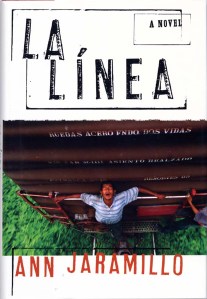
Book Review: La Línea by Ann Jaramillo

La Linea imageBy Lila Quintero Weaver

DESCRIPTION FROM THE BOOK JACKET: When fifteen-year-old Miguel leaves his rancho deep in Mexico to migrate to California across la línea, the border, his life is about to begin. Or so he thinks.

MY TWO CENTS“It’s been six years, eleven months and twelve days since I left to go north across la línea. It’s time for you to come.” So reads the note that Miguel receives from his father on his fifteenth birthday. During the long separation (his mother has also emigrated), Miguel, his grandmother, and sister, Elena, 13, eke out a meager existence in drought-stricken San Jacinto, Mexico. Surely life holds more than this! In the note, Papá instructs Miguel to pay a visit to Don Clemente, the wealthy patrón of the area. Years back, Papá rescued Don Clemente from a house fire. Now the old man repays that debt by funding Miguel’s flight to El Norte.

The arduous journey across la línea involves several modes of travel: by bus, riding the roof of a freight train, and crossing the desert on foot. Miguel encounters a wide array of obstacles en route, including the unwelcome surprise that Elena is along for the journey, too. Despite a series of setbacks, the siblings and a helpful new acquaintance named Javier press on toward their dream. At one point, bandits decimate their resources. At another, Mexican officials send them packing south— all the way to the Guatemalan border, in fact. Next, the trio sneaks a ride north by clambering on the roof of a freight train. The risks involved can’t be overstated. Nicknamed mata gente (people killer), such trains are responsible for dismemberments and deaths, not to mention exposure to cold, heat, and roving bands of ruthless gangs. I won’t even begin to list the perils they encounter in the next leg of the journey, the desert.

I respect the authoritative voice behind this novel. Ann Jaramillo is an ESL instructor with many years’ exposure to the true, and often harrowing, stories of border crossings by Mexicans and Central Americans. Her depiction of the mechanics involved is well informed. She describes life before and during the flight to the United States effectively, and highlights the poverty and bleak opportunities on the Mexican side with convincing detail, within age-appropriate limits.

Readers will encounter frequent terms and phrases in Spanish, not always translated, but whose meanings are usually discernible through context.

TEACHING TIPSTeaching Books offers a detailed curriculum guide for La Línea.

Miguel and Elena’s immigrant journey reflects recent and ongoing sociopolitical conditions. More importantly, they add faces and human emotions to related current events. Students can use this novel as a jumping-off point for the investigation of true immigration stories. They can achieve better understanding of what motivates people to emigrate/immigrate by researching their own family histories, or by comparing the characters’ experiences with that of other Latino and non-Latino settlers of the Americas.

This is a good text for enhancing Spanish vocabulary. It can also be used to increase awareness of rural Mexican customs.

LEXILE: 650

AUTHOR: Ann Jaramillo lives in Salinas, California. La Línea is her first novel. Ms. Jaramillo’s intimate knowledge of the Mexican-American immigrant journey comes through her work as an instructor of English as a Second Language, and her marriage of many years to Luis Jaramillo, a lawyer of Mexican-American heritage who has served migrant farmworkers for decades. In the author’s note, she explains that the inspiration for writing La Línea came from accounts of perilous crossings that her middle-grade students shared with her.

For more information about La Línea visit your local library or bookstore. Also check out WorldCat.orgIndiebound.orgGoodreadsAmazon and Barnes and Noble.