Book Review: Talking with Mother Earth / Hablando con Madre Tierra by Jorge Argueta

By Marianne Snow

349744DESCRIPTION OF THE BOOK (from Goodreads): Tetl’s skin is brown, his eyes are black, and his hair is long. He’s different from the other children, whose taunts wound him deeply, leaving him confused and afraid. But Tetl’s grandmother knows the ancient teachings of their Aztec ancestors, and how they viewed the earth as alive with sacred meaning. With her help, he learns to listen to the mountains, wind, corn, and stones. Tetl’s journey from self-doubt to proud acceptance of his Nahuatl heritage is told in a series of powerful poems, beautifully expressed in both English and Spanish. Vivid illustrations celebrate nature’s redemptive powers, offering a perfect complement to the poignant story.

MY TWO CENTS: History books and other nonfiction texts often speak of the Americas’ original inhabitants in the past tense, as if they completely disappeared after Europeans swept across the land. For example, I remember learning that the Spanish defeated and killed (or married) all indigenous people when they invaded Mexico and Central America in the sixteenth century. Wrong. Despite facing frequent marginalization and discrimination by “mainstream” society, Nahua people, the diverse descendants of the Aztecs, still live in El Salvador, Mexico, and the United States today.

Talking with Mother Earth / Hablando con Madre Tierra – a stunning bilingual collection of autobiographical poems and winner of the illustrious International Latino and Américas Book Awards for outstanding works of Latin@ children’s literature – affirms and celebrates the complexity of a contemporary Nahua individual. In these simple yet profound poems, Jorge Tetl Argueta, who identifies as Pipil Nahua, provides us with a window into his childhood and sensitively explores issues of cultural identity from several different angles, including his spiritual beliefs, his connection to Mother Earth, ethnic pride, racial bullying, and history of the Nahua people. As they read his beautiful words, children with Nahua heritage might see reflections of themselves, while readers from other backgrounds can learn about cultural practices and perspectives that are different from their own.

Mirroring Argueta’s poems are Lucía Angela Pérez’s vibrant pastel drawings, simultaneously striking and soft, bold and soothing as they permeate each page. Prepare to be swallowed up in color as soon as you open the cover! Also, the illustrations sustain the theme of links between the present and past as they portray young Tetl standing side by side with his grandmother, his ancestors, and Aztec gods.

Another enticing feature of this book is its relatively unusual dual language format. Although we’re seeing more and more English-Spanish dual language books on the market these days, most of these books place the English text first on the page, above or before the Spanish text. While this positioning might not seem like a big deal, it can send a message to readers that English should be the first language in their lives – that it’s better than Spanish. Books that place Spanish first do pop up every once in awhile, however, and Talking with Mother Earth / Hablando con Madre Tierra is one of them, emphasizing to Spanish-speaking readers the importance of their linguistic skills.

So if you’re searching for a book that promotes empathy, beauty, linguistic diversity, cultural awareness, and positive self-image, look no further! If you enjoy it, be sure to check out Jorge Argueta’s other works for children – they’ll leave you smiling (and probably a little bit hungry).

TEACHING TIPS: Due to multifaceted subject matter in Talking with Mother Earth / Hablando con Madre Tierra, educators can choose to use the entire text or individual poems to start fruitful, critical discussions and lessons with their students. For example, teachers might draw upon “Indio” / “Indian” – an examination of racial bullying – when facilitating analyses of racism and discrimination in schools. Additionally, they might focus on Argueta’s poems on nature and Nahua spirituality to help students understand the diversity of religious beliefs and ethnicities in contemporary Latin America. Or they might highlight this book as a mentor text when encouraging students to write their own nature poetry.

The dual language format of Talking with Mother Earth / Hablando con Madre Tierra also makes it a valuable resource for Spanish and English learners – the abundance of words related to nature can help readers describe the earth bilingually. An added bonus is the inclusion of several Nahuatl words and phrases that illustrate Latin@ / Latin American linguistic diversity even further.

ABOUT THE AUTHOR (from his website): Jorge Tetl Argueta is a celebrated Salvadoran poet and writer whose bilingual children’s books have received numerous awards. His poetry has appeared in anthologies and textbooks. He won the Américas Book Award, among other awards, for his first collection of poems for children, A Movie in my Pillow. He was the Gold Medal Award winner in the 2005 National Parenting Publications Awards (NAPPA) for Moony Luna / Luna, Lunita, Lunera. His other works for children include Xochitl and the Flowers (2003 Américas Award Commended Title), Trees are Hanging from the Sky, Talking with Mother Earth, The Little Hen in the City, and The Fiesta of the Tortillas.

RELATED LINKS:
 

MarianneMarianne Snow is a doctoral student at the University of Georgia, where she researches Latin@ picture books, representations of Latin@ people in nonfiction children’s texts, and library services for Spanish-speaking children and families. Before moving to Georgia, she taught Pre-K and Kindergarten in her home state of Texas and got her master’s degree in Teaching English to Speakers of Other Languages (TESOL) at Texas A&M University. In her spare time, she enjoys obnoxiously pining for Texas, exploring Georgia, re-learning Spanish, and blogging at Critical Children’s Lit.

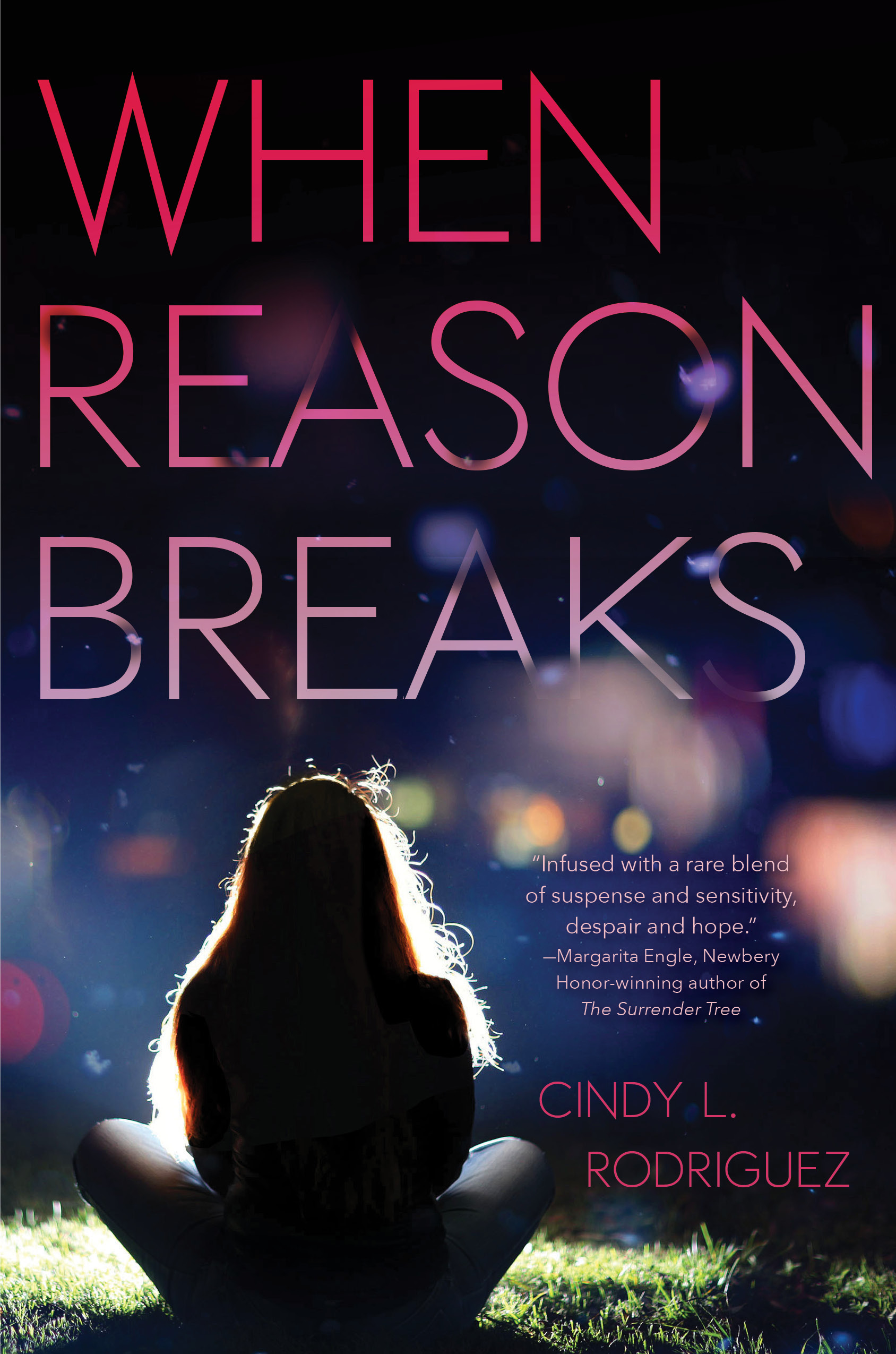
Celebrating When Reason Breaks by Cindy L. Rodriguez

This post is a little different from our usual Libros Latinos features in that it focuses on the release of our very own Cindy L. Rodriguez’s debut YA novel, When Reason Breaks, which is available now. Cindy wasn’t sure she wanted us to blog about her book at all, but we persuaded her that readers would want to know more about the rock-star author whose initiative brought Latin@s in Kid Lit into the world. This post is more a celebration than a review, but we aim to celebrate in a way that’s useful to readers, teachers, librarians, and advocates of Latin@ literature. Read on to hear from Latin@s in Kid Lit bloggers Ashley, Lila, Zoraida, and Sujei!

WhenReasonBreaks_Comp

Publisher’s Description: A Goth girl with an attitude problem, Elizabeth Davis must learn to control her anger before it destroys her. Emily Delgado appears to be a smart, sweet girl with a normal life, but as depression clutches at her, she struggles to feel normal. Both girls are in Ms. Diaz’s English class, where they connect to the words of Emily Dickinson. Both are hovering on the edge of an emotional precipice. One of them will attempt suicide. And with Dickinson’s poetry as their guide, both girls must conquer their personal demons to ever be happy. In an emotionally taut novel that is equal parts literary and commercial, with a richly diverse cast of characters, readers will relish in the poetry of Emily Dickinson and be completely swept up in the turmoil of two girls fighting for their lives.

What We Love

Ashley: Whatever the similarity of their names, there’s an immediate outward contrast between quiet, cautious Emily and bold, impulsive Elizabeth. Yet When Reason Breaks powerfully illustrates the animosity—and, ultimately, kinship—that develops between these two as they each become more aware of the inner demons the other faces. This emerges in a rare private encounter between the two girls:

 “I see you, Emily Delgado,” she whispered. “Your problem isn’t really about your friends of Kevin or your dad. You try to hide it, but I know.” Elizabeth patted Emily’s leg. “Trust me, I know.”

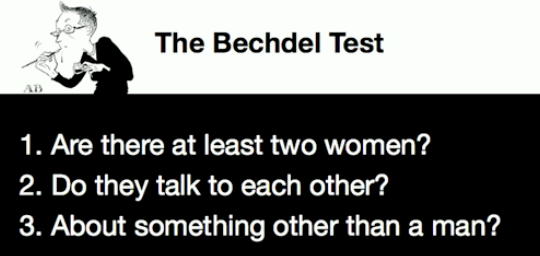
In the oblique understanding of inner struggle communicated in this relationship, When Reason Breaks passes the Bechdel Screen Shot 2015-02-08 at 4.12.00 PMtest with flying colors. Whereas no one can miss Elizabeth’s explosive temper and sometimes contentious behavior, Elizabeth “sees” Emily’s struggle with depression in a way teachers, counselors, parents, and friends do not. (Even Emily’s supportive and observant boyfriend Kevin doesn’t recognize what’s going on with her.) Still, for me a crucial point of drama in the novel was the question of whether Emily and Elizabeth would ultimately help each other or perhaps instead enable each other’s self-destructive tendencies.

Other highlights in the novel for me were the fabulously written group scenes–both between family members and the girls with their friends–and the graceful incorporation of Spanish.

Lila: I adore a novel that takes me somewhere I’ve never been. In When Reason Breaks, that new territory is the intricate relationship of two high school classmates whose personal styles and family backgrounds sharply contrast. They’re forced to cross the divide when their teacher pairs them in an assignment involving Emily Dickinson’s poetry. As the story moves forward, the girls’ opposite natures create conflict, but you sense that they’re somehow on intersecting paths. At one point, deep in the book, a bridge seems to form between them.

It’s a beautiful scene that takes place in the woods, framed by autumn trees. (I’m a craft geek, and one of the elements I admire in a strong work of fiction is setting.) But it gets better. In this scene, the characters exchange funny stories that somehow morph into poignant, self-revelations that reveal far more than either girl has allowed her closest friends to see. Cindy pulls off this delicate dance in such a natural, believable way, primarily through dialogue. And just when I thought the girls’ friendship was cemented, something else comes along and the tension between them ratchets up all over again.

Sujei: Cindy captures the emotional journey of the main characters through rich descriptions of what they do, think, experience, and feel. Above all, what came to my mind while reading the novel is its “New England” feeling and how it brings a new voice and view to Latin@ literature. The references to Thoreau’s Walden, Amherst College, Red Sox, the woods, Emily Dickinson contribute to that feeling as do other details. Here, Cindy brings us a YA novel that portrays a Latino family living in New England, a very real experience that is often marginal (if not invisible) in broader literary and media depictions of Latinos.

Emily D in WhiteZoraida: This is the first book I’ve read in a long time (or maybe ever) that made me choke up by the end of chapter 1. When I was in high school, I fell madly in love with Emily Dickinson and her poetry—and poetry in general. So for that, this book has a special place in my heart. I love the way each chapter starts with a short epigraph from one of Emily’s poems. I also love that both girls share the same initials, and despite coming from different backgrounds, also share the same internal struggle. Cindy deals with the strong emotions in this book so subtly that when you realize what’s happening, it hits you in the gut. Here are some of the many, many things I loved in this book:

#1 Two individual and smart girls.

#2 Girls that don’t let themselves get bossed around by boys.

#3 Complicated and complex relationships between girls/girls, student/teacher, boys/girls, children/parents.

#4 Dealing with depression and anger in a way that is very real

#5 Straight up beautiful and emotionally subtly powerful writing.

#6 An incredibly diverse cast that is genuine.

#7 All the feels.

While I was reading the book I kept seeing myself in both of these girls. As a teen. As an adult. And I think that was my takeaway from this. I’m a little bit of both, and maybe so is everyone else.

****

When Reason Breaks has received praise all over the blogosphere and on review sites. Check out these awesome write-ups: What Sarah Read, The Lifelong Bookworm, Disability in Kid Lit, Rich in Color, Kirkus and Publisher’s Weekly.

Teaching Tips from Ashley

How I wish this book had been around back in 2007 when I was teaching a thematic unit on mental illness. As Cindy discussed here, one of the crucial contributions of the novel is that it shows depression and mental illness apart from especially traumatic circumstances. It also provides ample opportunity for discussion of the subtlety of many of depression’s symptoms.

We see Emily’s gradual withdrawal from her personal relationships and the slow creep of fatigue taking over ordinary functioning. It also powerfully illustrates the challenges of managing anger. As Zoraida notes, “I remember feeling like Elizabeth all the time as teen. I had (and sometimes still do) have this anger that I feel is overwhelming and don’t want other people to see. Yet, her acting out is a sign that she WANTS to be seen, which is the opposite of Emily who shies away from that and internalizes her feelings.”

For additional recent works that deal with depression, suicide, and mental illness, see this School Library Journal post and this post on Stacked. These are great resources for finding companion pieces to read along with When Reason Breaks.

Teachers may also find this an easy sell to students intrigued by Emily Dickenson’s life or poetry, and Cindy’s subtle incorporation of biographical details in fiction—combined with an author’s note that unpacks many of these connections—offers a fine model of the use of fiction in multi-genre research projects. For an overview of the multi-genre approach, check out this general introduction to multi-genre writing from Colorado State, and for an online workshop module focused on teaching multi-genre writing in middle school, see this site. Once you’re sold on the idea, Tom Romano’s pioneering books on the approach will become indispensible. The key texts are Writing with Passion: Life Stories, Multiple Genres (1995) and Blending Genre, Altering Style: Writing Multigenre Papers (2000).

Book Review: Extraction by Stephanie Diaz

By: Zoraida Córdova

DESCRIPTON FROM GOODREADSExtraction cover

“Welcome to Extraction testing.”

Clementine has spent her whole life preparing for her sixteenth birthday, when she’ll be tested for Extraction in the hopes of being sent from the planet Kiel’s toxic Surface to the much safer Core, where people live without fear or starvation. When she proves promising enough to be “Extracted,” she must leave without Logan, the boy she loves. Torn apart from her only sense of family, Clem promises to come back and save him from brutal Surface life.

What she finds initially in the Core is a utopia compared to the Surface—it’s free of hard labor, gun-wielding officials, and the moon’s lethal acid. But life is anything but safe, and Clementine learns that the planet’s leaders are planning to exterminate Surface dwellers—and that means Logan, too.

Trapped by the steel walls of the underground and the lies that keep her safe, Clementine must find a way to escape and rescue Logan and the rest of the planet. But the planet leaders don’t want her running—they want her subdued.

With intense action scenes and a cast of unforgettable characters,Extraction is a page-turning, gripping read, sure to entertain lovers of Hunger Games and Ender’s Game and leave them breathless for more.

MY TWO CENTS: The world in Extraction is exactly what we (I) fear: pollution has rendered life on the surface practically inhabitable. Here, a shield keeps the lethal acid from the moon from penetrating the surface of the planet Kiel. (The acid is called Moonshine, which really tickled me, btw.) The layers of civilization are Surface, Crust, Mantel, Layer, and Core. While the poor and young live on the Surface and other layers, working till they’re dead or Extracted from this life, the rich have found a way to live in the Core of the earth. Extraction weeds out the intelligent and obedient (key word) hopefuls that could be of better use to Core society. I was instantly drawn into the idea of fearing the sky. Imagine living every day fearing that the heavens are going to rip open and the Moonshine is going to come pouring down on you? Add that with extreme levels of hunger, poverty, and strenuous physical labor, and you’ve got the same problems as Clementine, our narrator.

As Clementine faces Extraction, she also faces the difficult choice that comes with leaving the person you care about. Here, Diaz creates not just a romance, but a love that is rooted in hardship and loneliness. Logan isn’t the typical YA paramour. He’s not just there to rescue her. She does everything she can to save him, which is refreshing. While Clementine wants to stay on the surface with Logan, her options are limited. She could stay and be worked until she dies at 20 because of population control. She could become a breeder, which is part of the initiative to replenish the surface workers. There are so many ways that Clementine could die, but being Extracted means the chance to live.

18625184One of the most poignant passages was when Clementine was waiting to see if her name was selected. It had the feel of the reaping in Hunger Games, but while in the HG the selection is random, in the Extraction, each person is selected by this benevolent Core commander. I loved that Clementine did feel torn in a very human way. Going into the unknown, even if the unknown promises a better life, is extremely terrifying. There’s Logan, and then there’s a better life. There’s Logan, and then there’s the feeling that you don’t want to die. And as Clementine kept saying that she didn’t want to die, I appreciated that she allowed herself to be just a little bit selfish. It’s self-preservation.
And in a world where the odds are against you, you have to have a lot of that.

But, the Core utopia isn’t what it seems. Even though the novel is often pitched as dystopian, it should be recommended as straight up science fiction. Stephanie Diaz has woven a world that is nothing like ours. There are humans, and a deeply corrupt government, but they’re in space. There are lasers. There are ships. There is evolved medicine. There is cool slang. As in, Clementine is a vruxing cool heroine. As I watched her journey start from wanting to escape a terrible life, to wanting to do anything to get top marks in all her trials, to her realization that there is something galactically wrong going on in the Core, I found myself rooting for her despite all the obstacles stacked against her. I will add a trigger warning for the threat of sexual assault from a villain in the book. The girls in the Surface had to endure terrible threats, and in the Core, just because it’s clean and supposedly civilized, doesn’t mean that it’s actually safe. However, Clementine is never a victim. She makes it clear to her biggest foe that she is smarter and better. It’s that defiance that prevents someone like Clementine from bowing down blindly to Core society.

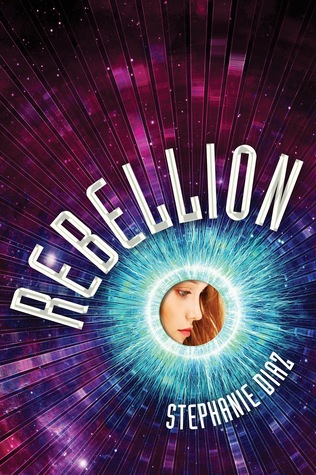
Utopia comes at the loss of individual freedom. At least it does in Kiel. In Extraction, Diaz creates a dynamic heroine, a fast-paced plot, and secrets that unravel with every page. Rebellion is out in store now, so you don’t have to wait to continue Clementine’s adventure as a rebel.

Stephanie Diaz author photoABOUT THE AUTHOR: Stephanie first knew she wanted to be an author when she was in second grade, sitting in a book club drinking tea and reading books like The Egypt Game. She dreamed someday people might drink tea while devouring books she had written. She wrote her first book soon after, a 30-page fantasy story–complete with a hand-drawn map–stapled together and presented to her younger sister for a birthday present.Now twenty-two years old, she lives in San Diego with her family. She graduated from San Diego State University with a degree in film production and a publishing deal for a young adult sci-fi trilogy. She is the author of Extraction, Rebellion, and the forthcoming Evolution.
When she isn’t lost in other worlds, she can be found singing, marveling at the night sky, or fangirling over TV shows.Visit her at www.stephaniediazbooks.com and follow her on twitter.

How and Why I Wrote My Graphic Memoir

by Lila Quintero Weaver

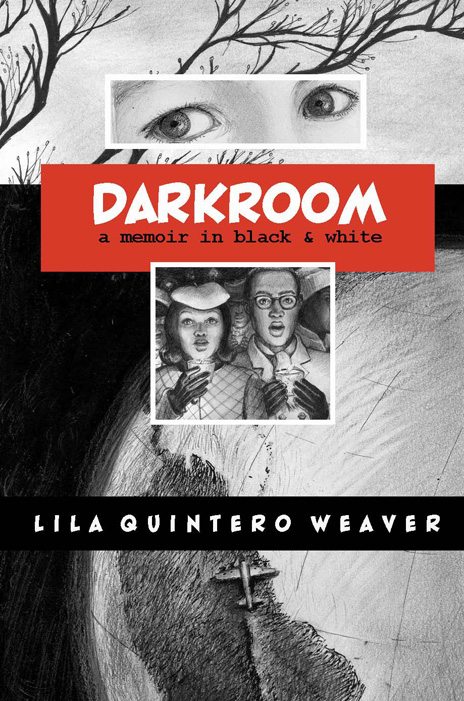
Final CoverreducedLast September at the Comadres and Compadres Writers Conference in Brooklyn, NY, I listened as Daisy Hernandez stated her belief that memoir writing arises from the unanswered questions a writer has about her own life. For me, by contrast, starting a memoir is what led me to realize I had questions.

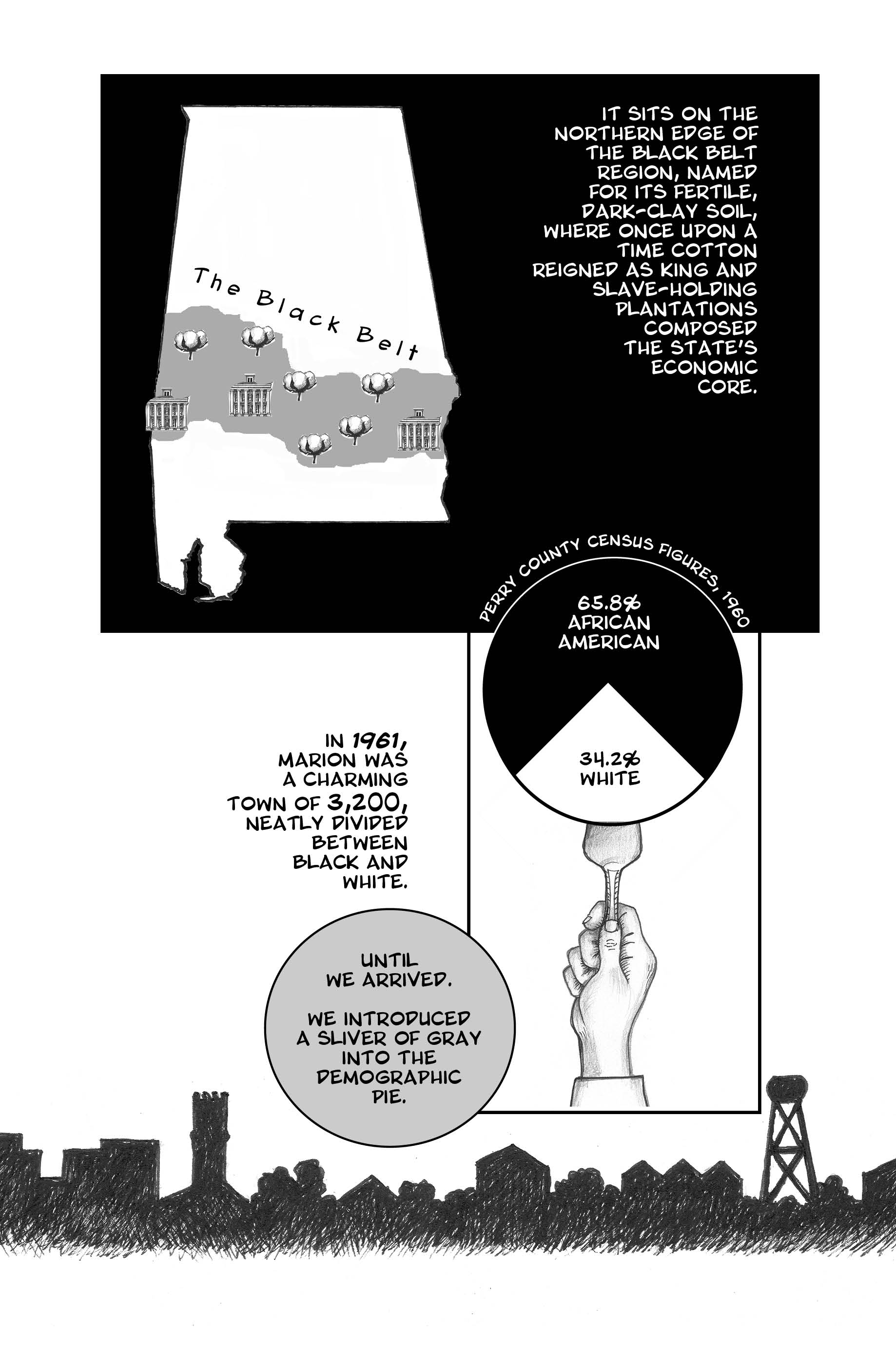
Before beginning my writing journey, it had never occurred to me that there was anything remotely fascinating about my life. I’d grown up as an immigrant child from Argentina in Marion, a tiny dot of a town in the Black Belt region of Alabama, where for most of our 12 years in residence we were the only Latin@s. But then I realized that our isolation at this time and in this place was a story.Demographic pie

How big of a role did this cultural setting, with its legacy of racism, play in making me who I am? That was one of my biggest questions, and eventually, my outsider status and my awakening to racial inequity formed the narrative core of my graphic memoir, Darkroom: A Memoir in Black and White (The University of Alabama Press, 2012).

[Note: All the art in this post is from Darkroom. Click on images to enlarge the view.]

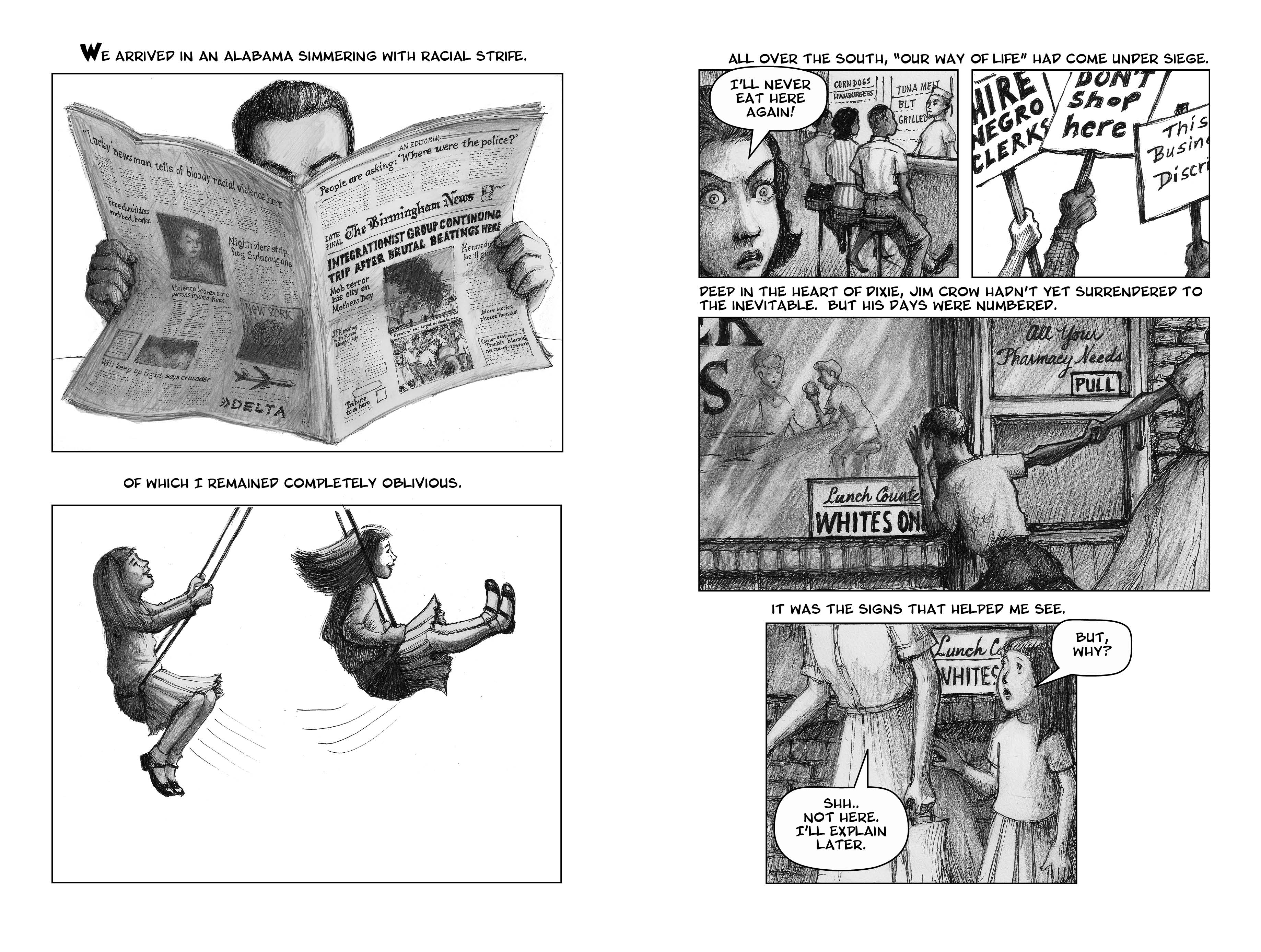
My family’s arrival in Alabama synched up perfectly with several hallmark events in the Civil Rights Movement. We first briefly lived in Birmingham, where within six weeks of our arrival, the Freedom Riders rolled up to the bus depot and into the hands of a vicious mob. Then we moved to Marion, where racial segregation ruled every conceivable setting. Most white people seemed perfectly at home with this arrangement, but it made me deeply uneasy, even at age six.

Whites only

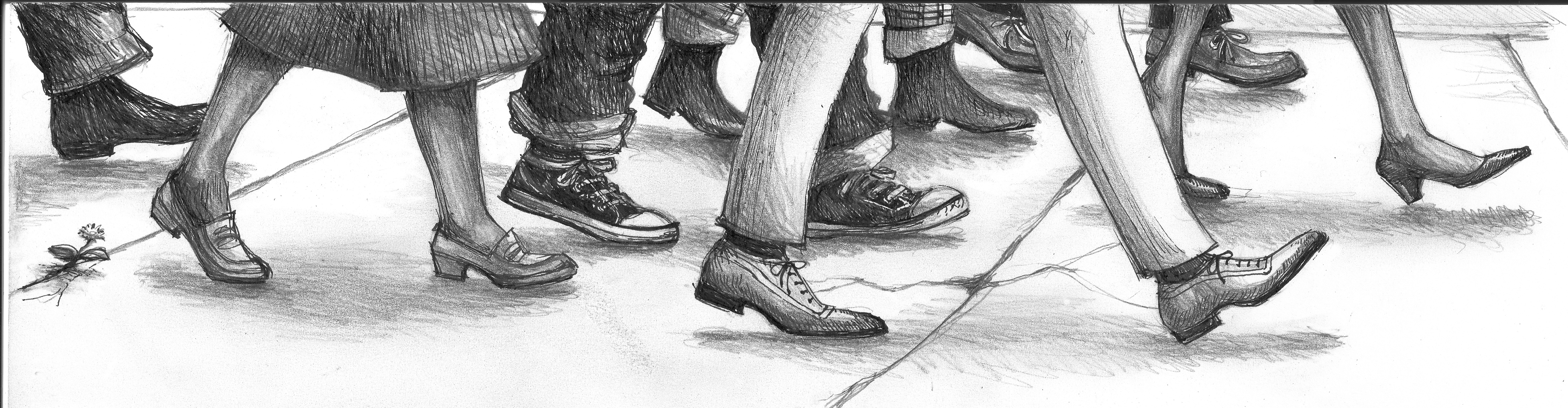
In 1965, African Americans across the Black Belt region were attempting to register as voters, but local officials obstinately barred the way. That February 18th, in Marion’s city square, a white mob clashed with a group of mostly local black protesters, while police stood idly by or participated in the beatings. My father witnessed some of these horrors and so did a host of other citizens, yet none of my teachers ever addressed these events. February 18th and everything surrounding it was quickly swept aside as if it had never happened.

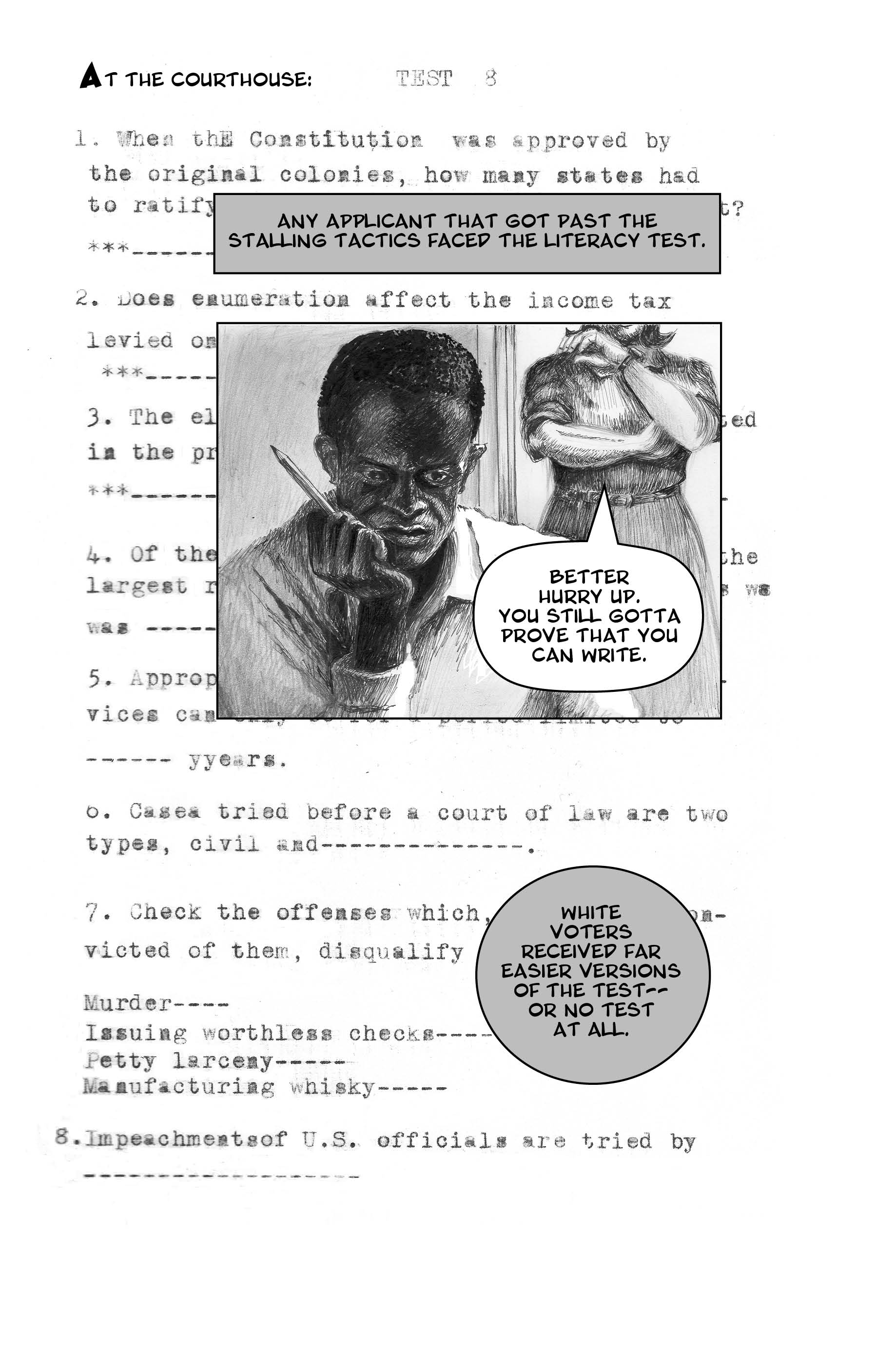
Literacy TestI’d always known that a young black activist had been shot by a state trooper that night, but I’d never actually heard his name—Jimmie Lee Jackson. I did not know that his death—eight days later at Good Samaritan Hospital, in nearby Selma—had triggered Bloody Sunday, which led to the passage of the Voting Rights Act of 1965.

My father died in 1995 before I ever thought to press him for details of what he saw during the violent clash. Among other things, I would have asked how witnessing such brutality at close hand affected his view of America. For decades, the only reason his account of that night didn’t fade from memory completely was because of some home movies he’d taken around the same time. They showed peaceful protest marches in the days leading up to February 18th.

After the Voting Rights Act was signed into law, civil rights activists set their sights on desegregating public schools. This time, I was the eyewitness to history—not that any child understands federal court orders, states’ rights battles, or the long, embittered tug-of-war to sort them out. Those questions would come later.

In 2004, I went back to college to complete my degree. That’s when I started to make up lost ground on the history of my region. The last thing on the checklist before graduating was a senior project.  The graphic memoir Persepolis, by Marjane Satrapi, gave me the idea to combine a written account with images, as an artistic exploration of my family’s immigration journey and the racially troubled times we encountered in our new homeland.

One of my goals was to find out exactly what happened that February night. I also wanted to pay homage to my father’s sideline work as a photographer and the crucial contribution that other photographers, as journalists, made to the Civil Rights Movement.

Darkroom joined spread

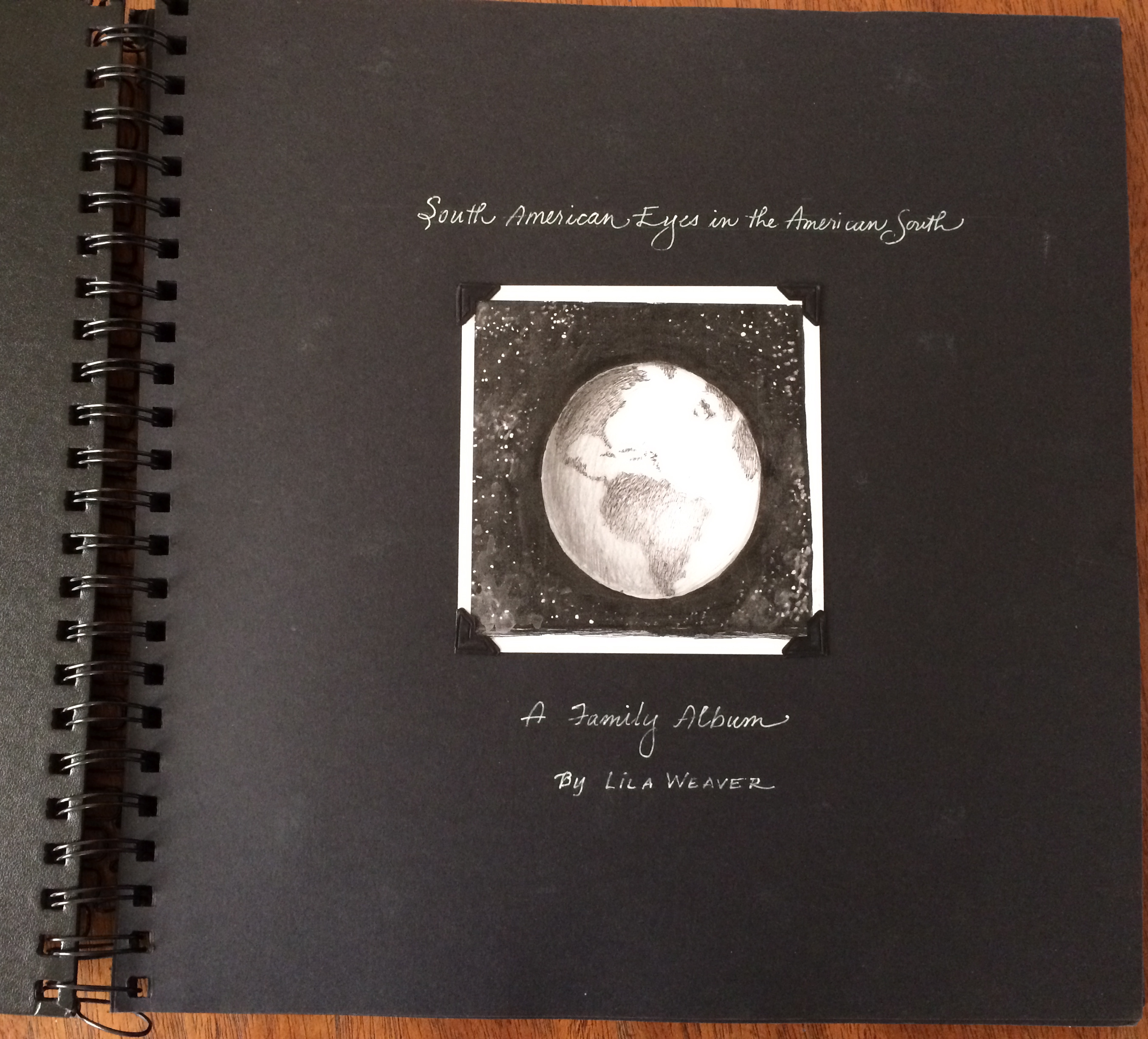
Grabbing the motif of photography helped me unify a complex story through metaphor and add a visual nod to the documenting power of the camera. So this is how my senior project looked: forty pages of drawings and captions, assembled in a photograph album. My drawings stood in for the photos. IMG_0031

At this stage, editors from The University of Alabama Press saw my work and offered me a contract for an expanded version. I said yes before I knew what I was getting into–a project that would consume the next three and a half years of my life.

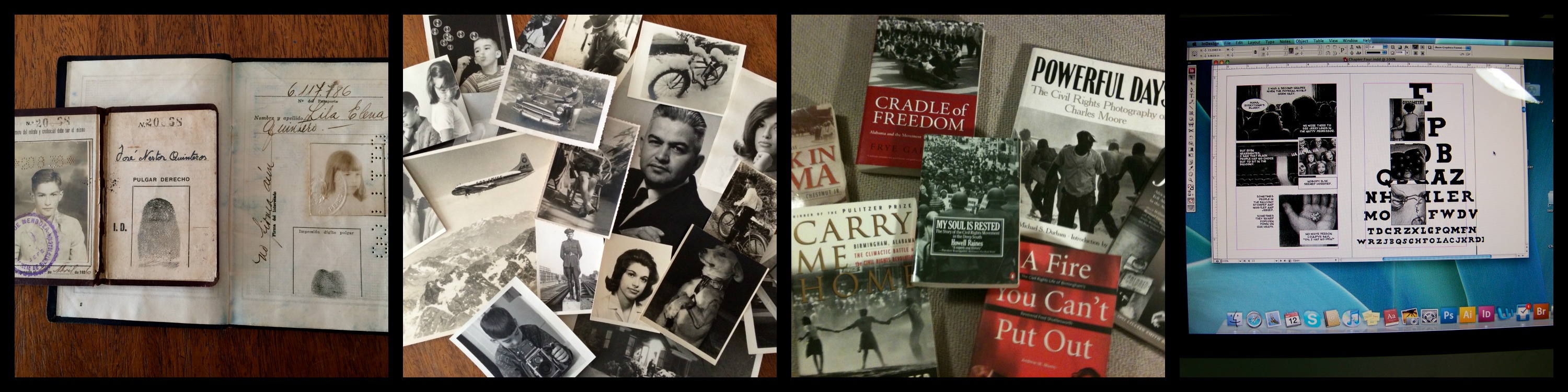
To prepare, I dug down into family memorabilia and photos. I researched the current events of my childhood and gained a degree of perspective that wasn’t possible while the news reports were still fresh.

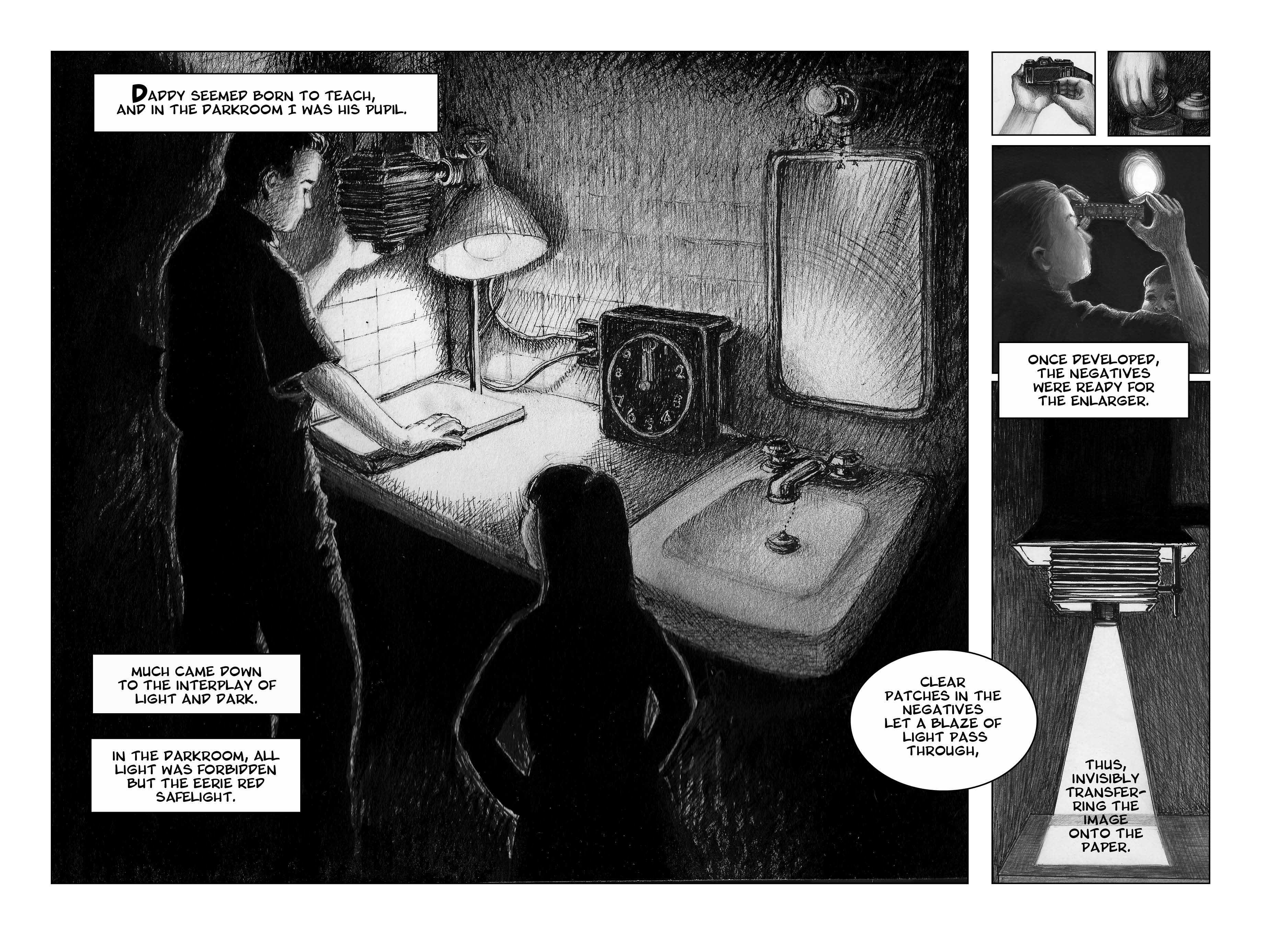
Darkroom process

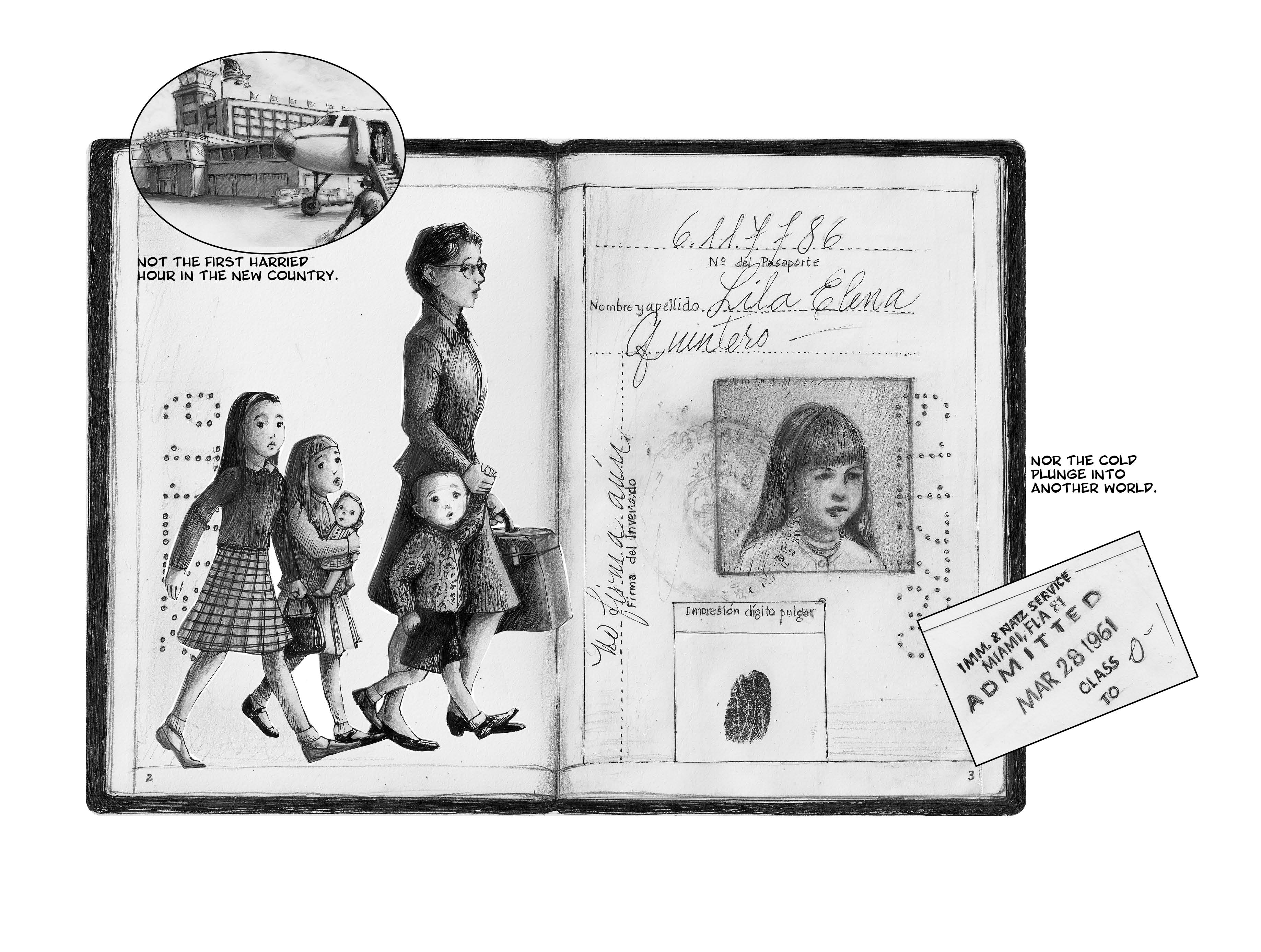
One daunting aspect of putting the book together was teaching myself the bare necessities of digital graphics programs. First, I created my drawings traditionally, on paper—more than 500 in all. Then I experimented with different ways of digitally layering the scanned drawings and combining them with text. The effect I was going for was a scrapbook of photos and ephemera.

Passport

When the book launched in 2012, people in far-flung places showed interest in my story, including a publisher in France and college instructors from around the country who placed my memoir on their reading lists. Although I didn’t write the book with young readers in mind, it has also received a welcome in some middle school and high school classrooms.

Throughout this decade, the nation has been celebrating the 50th anniversaries of civil rights milestones. The Selma march has come to life in a major motion picture, and in a graphic novel series co-authored by U.S. Congressman John Lewis. Many eyewitnesses have published their stories, forming a rich tapestry of personal accounts. Teaching Tolerance, a division of the Southern Poverty Law Center, recently produced an instructional film for classrooms about the campaign for voting rights. It’s entitled Selma: The Bridge to the Ballot. It features visual documentation from previously untapped primary sources, including footage from the home movies that my father shot.

Bloody Sunday lies half a century behind us, yet racial tension and violence continue. I sometimes ask myself: what has actually changed? I remember the days of Jim Crow, which are, thankfully, well behind us. Yet, it seems like the passage of fifty years would’ve brought us deeper, more enduring changes.

Marching feet for Chpt 8

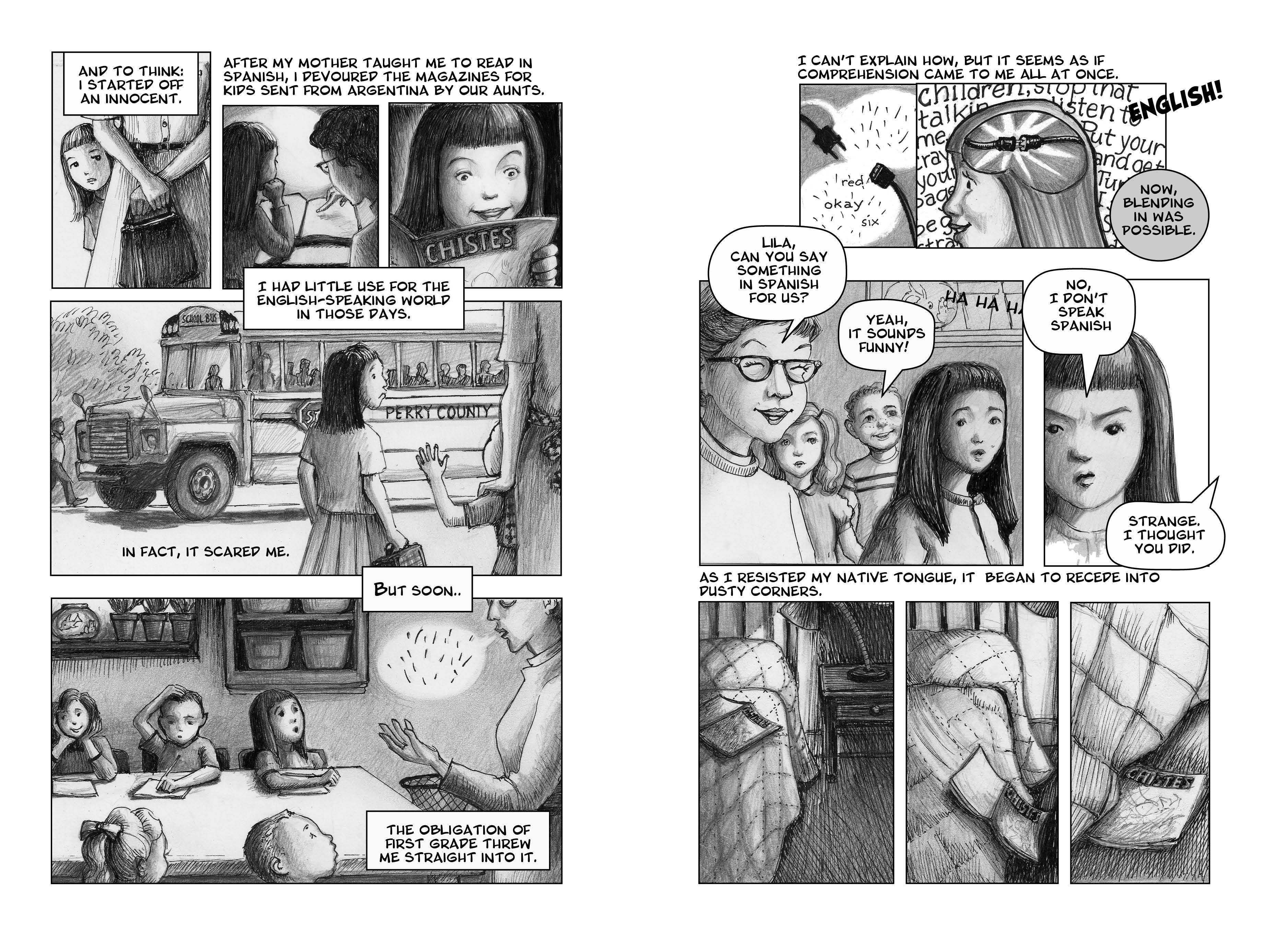
You may be left wondering: where’s the Latino component to my memoir? It’s there, in my initial struggle with learning English—a struggle that soon turned into a childish rejection of Spanish. It’s there, in my family’s generational divide on American culture and how fervently to embrace it.

School bus page

It’s there, in the troublesome fact that my family was spared overt bigotry because in Alabama in the middle of the 20th century, Latin@s were an almost invisible minority that posed little threat. I see this now, through the lens of history. If our immigration journey had taken us to a different region of the U.S., one where Latin@s were openly reviled and denied equality, I would’ve experienced things from a starkly different perspective. I can’t begin to guess what my life’s questions would’ve been then. For that, I turn to the stories of others.

Lila Quintero Weaver is the author-illustrator of Darkroom: A Memoir in Black and White. She’s working on a second book, a middle-grade novel. If Lila’s name looks vaguely familiar, it may be because she’s a regular co-blogger on Latin@s in Kid Lit. You can find her on Twitter, Facebook, and at her official author site.

Book Review: Hostage (The Change #2) by Rachel Manija Brown and Sherwood Smith


23899848By Eileen Fontenot

DESCRIPTION FROM GOODREADS: Welcome back to Las Anclas, a frontier town in the post-apocalyptic Wild West. In Las Anclas, the skull-faced sheriff possesses superhuman strength, the doctor can speed up time, and the squirrels can teleport sandwiches out of your hands.

In book one, Stranger, teenage prospector Ross Juarez stumbled into town half-dead, bringing with him a precious artifact, a power no one has ever had before, and a whole lot of trouble — including an invasion by Voske, the king of Gold Point. The town defeated Voske’s army, with the deciding blow struck by Ross, but at a great cost.

In Hostage, a team sent by King Voske captures Ross and takes him to Gold Point. There he meets Kerry, Voske’s teenage daughter, who has been trained to be as ruthless as her father. While his friends in Las Anclas desperately try to rescue him, Ross is forced to engage in a battle of wills with the king himself.

MY TWO CENTS: Even more gripping than the first of this series, Hostage takes us right back to the aftermath of Voske’s attack on our intrepid band of superhuman teens, which caused the death of a much-respected adult leader. We are introduced to a new player in this book, the daughter of Voske, the series’ main antagonist. The authors do a tremendous job of telling us about Kerry, who is smart, capable and raised to assess challengers and exploit their weaknesses.

Just as I began to dislike this new character, the authors begin chapters from her point of view. We see her life under her parents’ restrictive rule, and her love for her boyfriend, Santiago, softens her image. I came to root for Kerry, for her to find her own way in life and to make positive choices in her life, rather than negative ones. We also get to see how things are run in Gold Point, part of Voske’s kingdom. And it’s not pretty.

One of the main themes of this book was trust. Characters were thrust into various life-or-death situations, with only another to depend upon. And sometimes this other person wasn’t exactly the most trustworthy individual. Tracing the elaborate, yet tenuous, agreements made between unlikely partners became a bit of a challenge. I also liked the message that it’s OK to follow your own path, especially when you disagree with the way your family is behaving.

And because there are still several mysteries to be solved in the last couple of books, and a character I hope makes a big resurgence, I look forward to future volumes. The authors plan to release two more books in this series, and I can’t wait to see how these characters grow and change with each other. I read this on my Kindle, but Manija Brown says a paper copy of Hostage will be released in March, according to GoodReads.

RECOMMENDATIONS: As a young adult librarian, I would suggest this series to teens who love post-apocalyptic fantasy worlds who also want to see themselves reflected in the characters. The series is incredibly diverse; the main characters are all people of color and LGBT characters are also well represented. The authors are wonderful showing readers the depth of their familial connections through details dropped in throughout the action, which is plentiful.

For a book club pick, I would ask participants to discuss the role trust played in these characters’ choices. Teens could also talk about who they trust in their own lives and why. What would they share with their closest friends and family? What would make them lose trust in their loved ones?

AUTHORS:

Paraphrased From Goodreads: Rachel Manija Brown is the author of all sorts of stories in all sorts of genres. She has produced a memoir, All the Fishes Come Home to Roost: An American Misfit in India, and she has also written television, plays, video games, and a comic strip meant to be silk-screened on to a scarf. In her other identity, she is a trauma/PTSD therapist. She writes urban fantasy for adults under the name of Lia Silver.

From cahreviews.blogspot.com: Sherwood Smith began her publishing career in 1986, writing mostly for young adults and children. Smith studied in Austria for a year, earning a master’s in history. She worked many jobs, from bartender to the film industry, then turned to teaching for twenty years, working with children from second grade to high school. To date she’s published over forty books, nominated for several awards, including the Nebula, the Mythopoeic Fantasy Award, and an Anne Lindbergh Honor Book.

FOR MORE INFORMATION ABOUT Hostage (The Change #2) visit your local public library, your local bookstore, barnesandnoble.com, amazon.com or goodreads.com.

Eileenfontenot headshot Fontenot is a recent graduate of Simmons College Graduate School of Library and Information Science in Boston. She works at a public library and is interested in community service and working toward social justice. A sci-fi/fantasy fan, Eileen was formerly a newspaper writer and editor.

Guest Post: A Sock Thief in the Making

DON’T MISS THE BOOK GIVEAWAY! THE INFO IS AT THE BOTTOM OF THIS ARTICLE.

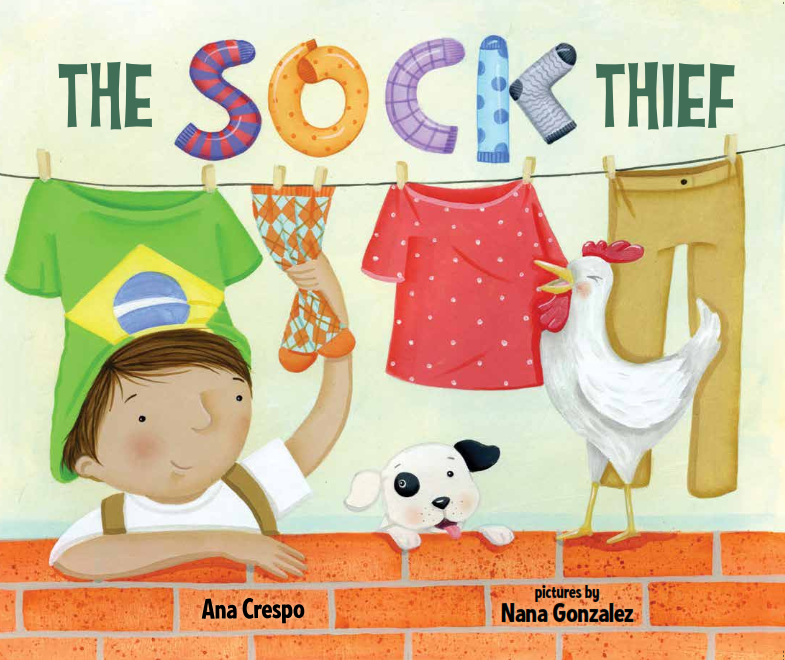
COVER

By Ana Crespo

Sometimes I wonder what the reaction of my younger self would be if I could tell her that, at almost 40, I am investing in a career as a children’s book writer… in English.

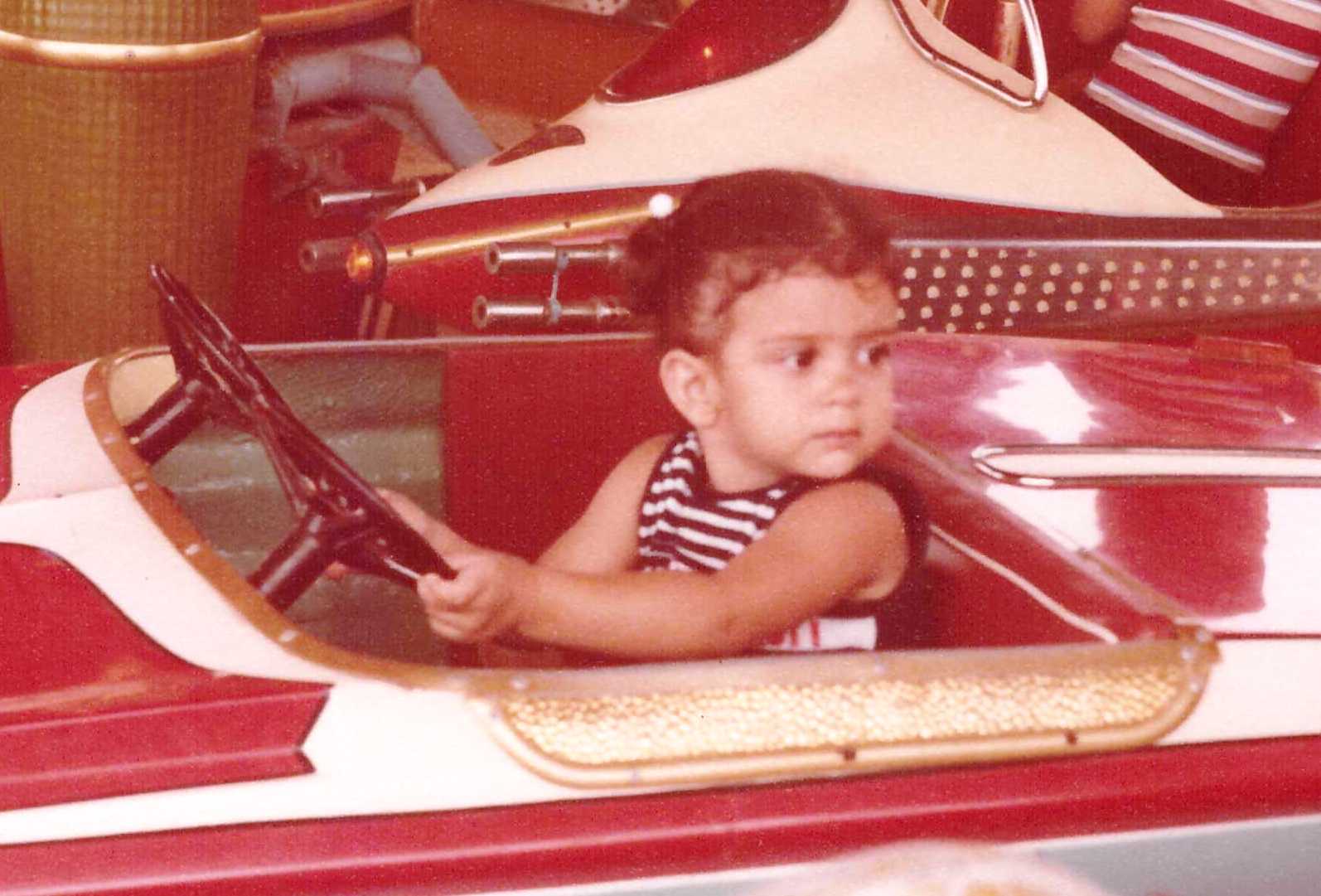
“Awesome!” my enthusiastic five-year-old self would probably scream. Pequena1

“But you don’t speak English,” the realistic 10-year-old me would point out.

“Ha! You don’t even like to read,” the sarcastic teenager would mention. (It’s true. I didn’t. Learn about how I became a reader here.)

“You’re studying to be a journalist. Your job is to expose the facts and allow your readers to form their own opinions, not to create stories,” the determined 20-year-old me would explain.

Certainly, I never thought I would one day publish any book, let alone a children’s book, in English. Yet THE SOCK THIEF has been in the making since I was that enthusiastic five-year old in Rio de Janeiro, Brazil. It started when my father tucked me into bed each night and shared stories of his childhood.

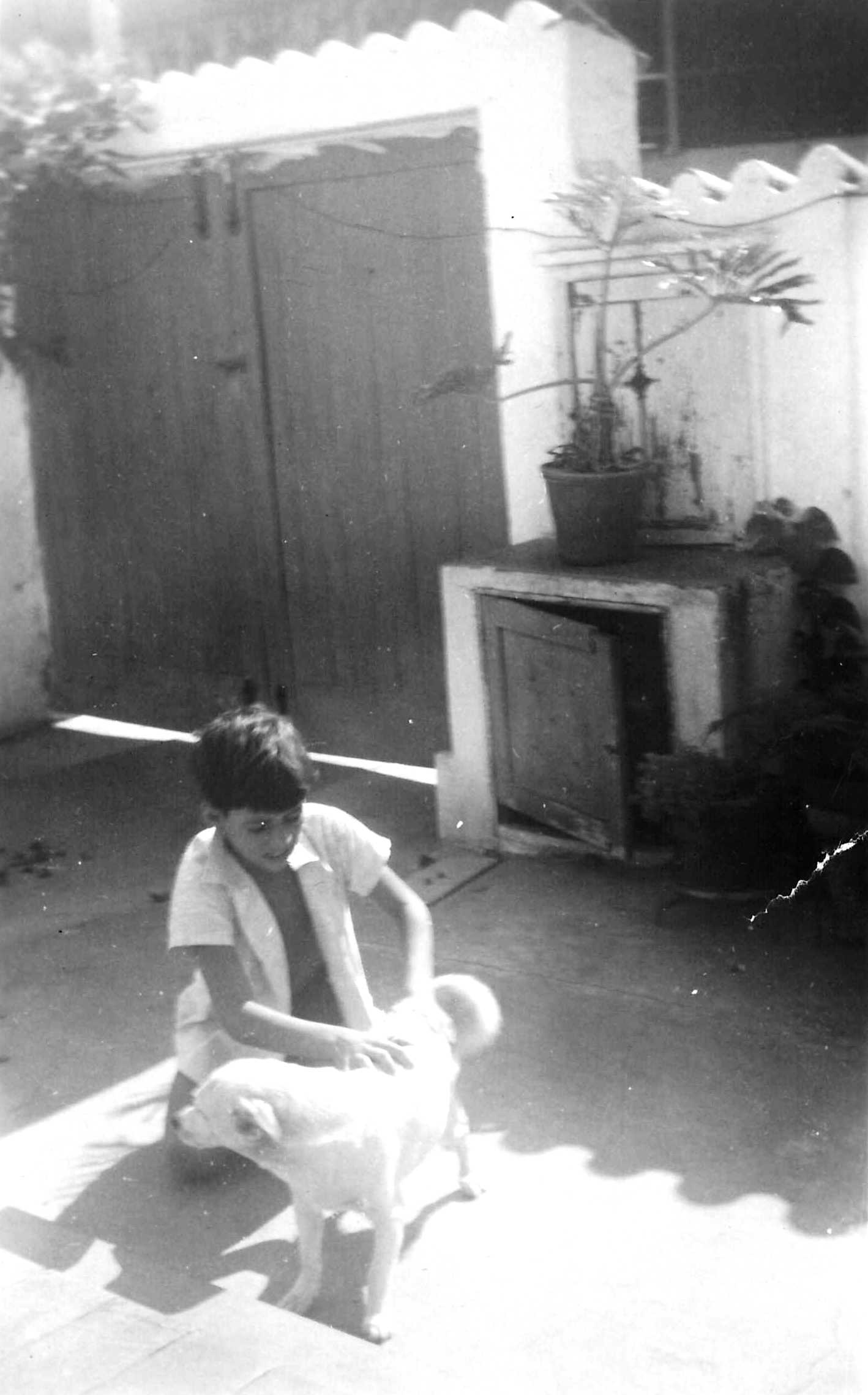
PapaiAlthough my paternal grandmother came from a wealthy family, my grandfather didn’t, and their five kids lived a frugal life. This included not owning a soccer ball, a very expensive item in the 1960s, in Rio. My father and his older brother had to be creative. They would sneak into my grandmother’s bedroom, take a pair of women’s hose, stuff it with newspaper, and make a soccer ball.

Don’t ask me why, but that story stuck in the back of that enthusiastic five-year old’s mind and resurfaced in the wanna-be children’s writer I eventually became. I had wanted to write a story with a Brazilian character since I started writing for kids in 2012. During a local SCBWI conference, a speaker mentioned something that brought back the long-forgotten memory. It wasn’t a story yet, just a memory with potential.

Then, I remembered something else from long ago. One day, watching a famous Brazilian TV show called Fantástico, I learned about a kid who had to walk a huge number of miles to reach school every day. I was a middle-class kid, riding on a comfortable school bus over paved roads, completely sheltered. That different reality, unthinkable to me up until then, left a strong impression. Maybe it sat in the back of my mind, by my father’s childhood story. Together, they started to form a plot.

Although I felt there was still something missing in the plot, I wrote THE SOCK THIEF (or MONDAY IS SOCK DAY, its first title) and submitted it to two different agents. And received two rejections. It wasn’t until I found that missing something that the manuscript received some attention.

One of the things that surprised me when I first moved to the United States was the way animal sounds are represented in written English. While in English a dog says “woof, woof,” in Portuguese, it says “au, au, au.” I imagined the difference would be a surprise to others as well, and decided to add it to THE SOCK THIEF. In my opinion, it gave the story a unique flavor.

A year after the idea first sprouted, I met my future editor at the same local SCBWI conference. I had paid for a manuscript critique, which included a 10-minute, face-to-face, in-depth analysis of THE SOCK THIEF. My editor thought the story was interesting. However, it was only after she learned that making soccer balls out of socks was a real practice in Brazil that her interest really sparked.

After the conference came the cutting, and cutting, and cutting of words. In the original text, I carefully described the process of making a soccer ball out of newspaper-stuffed socks. It was a tedious and confusing text, better shown through illustrations. I fixed some weird sentences. I added an author’s note. And I submitted my revised manuscript.

I crossed my fingers, lit some candles, held on to my figa, and tied some Nosso Senhor do Bonfim bracelets around my wrists. Okay, maybe I’m exaggerating a little. The point is that, although I really wanted a positive response, I had received so many rejections in the past, for this and other manuscripts, that I wasn’t keeping my hopes up too much.

In fact, I had set up a mental deadline. If I didn’t receive a positive reaction to my work, I was going to give up. The submission process is very stressful and the fact that it usually comes with rejections doesn’t really help. I never expected that the positive reaction I was hoping for would come in the form of a publishing offer, but it did.

From that point on, everything was new and exciting–the illustrator choice (Nana Gonzalez’s grandpa used to make soccer balls out of socks in Argentina!), the first drafts, the adjustments to the text, the illustrations in color, the adjustments to the text, the front cover reveal, the adjustments to the text, the first book review (a bit nerve-wrecking!), the scheduling of school visits, the book promotion… And, during it all, I sold four more books to Albert Whitman & Company–even more excitement.

While this journey would be exhilarating no matter what, to me it’s particularly rewarding because writing in English doesn’t come easily. No matter how long I’ve lived in the US, or how many college degrees I hold, or how much work experience I have, sometimes, I still sound foreign. I’m not talking (or writing, I should say) about my accent. It’s the word choices, the sentence structure, the weird use of prepositions. I’ve been through many funny and embarrassing moments thanks to the complexity of the English language…but that’s a whole different story.

***

A BOOK GIVEAWAY!

To celebrate the upcoming release of THE SOCK THIEF, we’re launching an amazing giveaway.  Sign up for a chance to win a copy of the book, plus a total of six copies to be donated to two elementary schools of your choice (three copies to each school). This giveaway was made possible thanks to a donation from Albert Whitman & Company.  To sign up for a chance to win and to check out the terms and conditions of the giveaway, visit the giveaway page on Ana Crespo’s website.

 ***

AnaCrespo_PURPLEAna Crespo is the author of THE SOCK THIEF (Albert Whitmam & Company, March 2015), JP AND THE GIANT OCTOPUS and JP AND THE POLKA-DOTTED ALIENS (Albert Whitman and Company, September 2015). Before investing in a career as a writer, Ana worked as an academic advisor and a translator. She holds a bachelor’s degree in Journalism and a Master of Education in Career and Technology Education. To find out more about Ana, visit her website. You may also find her tweeting away at Twitter , or sharing news on Facebook.