Book Review: Francisco’s Kites by Alicia Z. Klepeis

25673458

Reviewed by Marianne Snow

DESCRIPTION OF THE BOOK (from Arte Público Press): Francisco looks out his bedroom window and thinks about his home back in El Salvador. He misses his friends and playing in the village’s park. He wants to fly a kite near his new home in the U.S., but his mother can’t afford one.

“If Mamá can’t buy me a kite, maybe I can make one,” he thinks. Picking up a bag, Francisco leaves the apartment in search of treasures that he can use for his project. He finds purple cellophane, a pile of string and a broken model airplane. In his apartment building’s recycling area, Francisco discovers other useful items that people have thrown away. He can’t wait to spread out all the goodies and start building his very own cometa!

Soon Francisco is testing his creation in Sunnydale Park. He makes it fly up and down, spin in the air, even make loops! The colorful toy catches the attention of a man who runs a recycled goods store. He wants to sell Francisco’s kites in his shop! But can Francisco really find enough material to make them? And will he be able to deliver them in time?

MY TWO CENTS: I love how Alicia Klepeis so deftly and unassumingly weaves together a variety of topics in this dual language book. With themes like homesickness, immigration, recycling, ingenuity, and family, Francisco’s Kites might easily become cluttered or scattered, but it’s not. Instead, it’s a simple story about a boy who creatively channels his past experiences – flying kites in his former home in El Salvador – to establish himself in windy Chicago, spend quality time with his mom, meet new people, and work on saving the earth. Readers will enjoy following the inventive Francisco, learning about kites, and maybe even picking up some information about Salvadoran food (pupusas – yum!). Meanwhile, Gary Undercuffler’s charmingly retro – but still fresh, clean, and colorful – illustrations add to the airy, buoyant tone of the book.

Another perk of this book is its message about recycling, which is delivered clearly without being heavy-handed. As they observe Francisco resourcefully collecting trash and other used objects to make kites, readers will learn about repurposing, a recycling strategy that anyone can try. These days, we know about the benefits of recycling, and no doubt children constantly hear about it at school. But many neighborhoods, towns, and even larger cities don’t have accessible, user-friendly services and resources like curbside pickup or community recycling bins. If kids don’t have access to these services at home, it’s important for them to learn about other options – like repurposing, which can provide them with fun, easy ways to help the earth and feel like they’re making a difference. When young readers pick up a book like Francisco’s Kites, who knows how they’ll be inspired?

TEACHING TIPS: Teachers who want to foster their students’ interests in recycling can use Francisco’s Kites as a platform for a hands-on, interdisciplinary learning unit. In addition to this book, teachers can share other texts about recycling of various genres and formats (non-fiction, poetry, news articles, videos), and students can discuss how repurposing used materials can not only prevent waste from piling up in landfills, but also help people save money as they reuse instead of buying new. Next comes collecting used materials – either at home or at school – and turning them into some kind of magnificent art project.

ABOUT THE AUTHOR (from her website): I arrived on this planet on a fall day in 1971. My mom delivered me at a big hospital in Boston, Massachusetts. She stayed home with me until I went to school. My dad was a 5th and 6th grade teacher. I spent my entire childhood in Woburn, Massachusetts on a quiet dead-end road. An only child, I was somewhat of a bookworm. I was always a bit nervous about school and spent a lot of my time doing homework until I graduated from college.

Right after I finished college, I got an internship at the National Geographic Society in Washington, D.C. I loved that job for many reasons. The work was interesting, I got to go to great films and concerts nearly every week and… I met my husband (a fellow intern) there. We’ve been married nearly 20 years now. When my internship ended, I started graduate school to become a teacher. I taught middle school geography for several years in Massachusetts. Then I moved to upstate New York and stayed home with my three children for about ten years before becoming a writer. I now write almost full-time for kids and plan to do that for as long as possible. I love this job!

FOR MORE INFORMATION about Francisco’s Kites, check your local public library, your local bookstore or IndieBound. Also, check out GoodreadsAmazon, and Barnes & Noble.


MarianneMarianne Snow is a doctoral student at the University of Georgia, where she researches Latin@ picture books, representations of Latin@ people in nonfiction children’s texts, and library services for Spanish-speaking children and families. Before moving to Georgia, she taught Pre-K and Kindergarten in her home state of Texas and got her master’s degree in Teaching English to Speakers of Other Languages (TESOL) at Texas A&M University. In her spare time, she enjoys obnoxiously pining for Texas, exploring Georgia, re-learning Spanish, and blogging at Critical Children’s Lit.

Book Review: Out of Darkness by Ashley Hope Pérez

25256386

DESCRIPTION OF THE BOOK: “This is East Texas, and there’s lines. Lines you cross, lines you don’t cross. That clear?”

New London, Texas. 1937. Naomi Smith and Wash Fullerton know about the lines in East Texas as well as anyone. They know the signs that mark them. They know the people who enforce them. But there are some forces even the most determined color lines cannot resist. And sometimes all it takes is an explosion.

Ashley Hope Pérez takes the facts of the 1937 New London school explosion—the worst school disaster in American history—as a backdrop for a riveting novel about segregation, love, family, and the forces that destroy people.

OUR TWO CENTS: 

Cindy L. Rodriguez: As soon as I finished Ashley’s novel, I wanted to reread it as a writer. I want to pull it apart and study it because it’s that good. One of the things I appreciate most was the slow burn of the narrative. The novel opens with the explosion, and then flashes back to show how the characters’ live intersect before the event. The fuse lit in that opening scene coils through the narrative, gaining in intensity as the story leads back to the explosion and then its aftermath. The tension in Naomi’s home, school, and community is palpable throughout the story and increases slowly as we’re led into the heartbreaking climax.

Ashley masterfully balances the big picture and the smallest details. Her writing made me think of a photographer who could both go wide and capture a panoramic view and then zoom in for a close up and not lose anything in this process. She also beautifully balances the swoony magic of falling deeply in love for the first time and the absolutely brutal realities faced by African-Americans and Mexicans at this time in history. BRAVA!!

Lila Quintero Weaver: Ashley’s command of narrative is impressive! In Out of Darkness, she tells a story set in the American past and makes it feel of the moment. It holds all the markers of a historical novel, starting with the cataclysmic explosion of 1937 that looms with ominous eventuality over the characters we come to care about. Threaded with lively detail, the historical richness comes through in social customs, daily activities, and the speech patterns and cultural attitudes typical of 1930s east Texas. No easy feat. I detect a massive amount of research behind it all.

This devotion to authenticity translates into contemporary meaning through the story’s characters and the complicated problems they face. Naomi’s most serious problem is a predatory stepfather whose capacity for evil keeps her in a constant state of vigilance. There is no escape. She has no money or resources and she feels deep loyalty toward her two tender stepsiblings. Because Naomi is Mexican-American and lives in a part of Texas where Mexicans aren’t numerous, she has no community to fall back on and is looked upon by some white classmates as dirty and worthless. When she falls hard for Wash, a young black man who offers her a chance at true happiness, Naomi steps into the arena of forbidden love—one she must keep hidden from society and the stepfather who follows her every move with lecherous eyes. What a story!

Others agree with us, too! Out of Darkness received starred reviews from School Library Journal and Kirkus Reviews. Here are some quotes and links with more information about and praise for the novel:

“The beauty of Perez’s prose and her surefooted navigation through the dangerous landscape of the East Texas oil field in the late 1930s redeem the fact that anyone who dares read this agonizing star-crossed love story will end up in about six billion numb and tiny pieces. Absolutely stunning.” —Elizabeth Wein, author of Code Name Verity and Michael L. Printz Award Honoree

Teen Library Toolbox (an SLJ blog): http://www.teenlibrariantoolbox.com/2015/09/book-review-out-of-darkness-by-ashley-hope-perez/

Detailed review from The Midnight Garden (YA for adults): http://www.themidnightgarden.net/2015/08/outofdarkness.html

Q&A on NBChttp://www.nbcnews.com/news/latino/out-darkness-latina-author-n419026

Diversity in YA post: http://www.diversityinya.com/2015/08/words-that-wake-us/

Q&A on our site earlier this weekhttps://latinosinkidlit.wordpress.com/2015/09/09/qa-with-ashley-hope-perez-about-out-of-darkness/

And this post by Forever Young Adult nails the “casting call” for novel if it were made into a movie. Their picks of Christian Serratos as Naomi and Titus Makin Jr. as Wash were spot on! Nicely done, Forever Young Adult!


TEACHING TIPS: Although the New London, Texas, school explosion was the worst school disaster in our nation’s history, it’s one many (most) students have probably never learned about but should, as it has interesting implications concerning race and class worth exploring. Out of Darkness asks readers to think beyond the black and white dynamics of U.S. race issues by adding Latin@ children to the segregated schools system and portraying the daily concerns and realities of Mexicans who could or could not “pass” as white. Also, the violent consequences of marginalized romantic relationships isn’t often explored in curricula, but might be/should be considering the U.S. Supreme Court’s decision on gay marriage. A book like Out of Darkness could help teen readers appreciate the long history of struggle and violence experienced by people who have wanted to live and love freely.

2012AuthorPhoto500pixelsABOUT THE AUTHORAshley Hope Pérez is a writer and teacher passionate about literature for readers of all ages—especially stories that speak to diverse Latino experiences. She is the author of three novels, What Can’t Wait (2011) and The Knife and the Butterfly (2012), and Out of Darkness (2015). A native of Texas, Ashley has since followed wherever writing and teaching lead her. She completed a PhD in comparative literature from Indiana University and enjoys teaching everything from Spanish language and Latin American literature to the occasional course on vampires in literature. She can also be found on Twitter and Facebook.

FOR MORE INFORMATION about Out of Darkness, check your local public library, your local bookstore or IndieBound. Also, check out GoodreadsAmazon, and Barnes & Noble.


Let’s Read Latin@: 73 titles released in 2015


We’re back!

After a short summer break, the Latin@s in Kid Lit crew is back to begin our third year online, celebrating children’s literature by/about/for Latin@s. In December 2014, we had posted a preview of 24 middle grade and young adult releases in 2015. Well, as the year rolled on, we discovered many more! Below, we have posted the covers of 71 picture books, early readers, middle grade, and young adult novels by/for/or about Latin@s that have been or will be released in 2015. If we have missed any, please let us know in the comments.

If we have already highlighted a title on the site, you will be led to that post when you click on the cover. Otherwise, you will be taken to IndieBound.org, Amazon, or GoodReads for more information. We have not read all of these titles–so we cannot vouch for each one–but we plan to read and recommend many of these in addition to 2016 releases. So, go ahead and browse the titles, add them to your to-be-read lists, or buy copies for yourself, friends, and family. With schools opening and holidays around the corner, it’s the perfect time to buy books! If we want to continue to celebrate libros Latin@s, we need to read, buy, and support libros Latin@s! Happy reading!


Picture Books & Early Readers:

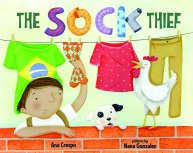
22521973   21469072   22750413   22929558      25066557   The Sock Thief   KNIT TOGETHER by Angela Dominguez (Dial) 2/15 -- Picture book   23467663   23467664   23467662   23467661      18528167   22749711   23379443            25779175      FINDING THE MUSIC / EN POS DE LA MUSICA by Jennifer Torres; illustrated by Renato Alarcão (Lee & Low) 5/15 -- Picture book  24753419


Middle Grade:

            24527773   22571259   23282198   24040566   23734473   22504701   22639675   22082059   18938092   23756784      22749539      23309533


Young Adult:

17566703         22718685   23899848   Orange Candy Slices: And Other Secret Tales   22918050   21529626   18625184   20734195   23309551   25317760   20345202   24202275   TAKING HOLD: FROM MIGRANT CHILDHOOD TO COLUMBIA UNIVERSITY by Francisco Jiménez (Houghton Mifflin Harcourt) 4/15 -- YA Memoir   23013839      25077874       22392926   22609306   22295304   25256386   23395349   The House of Hades (The Heroes of Olympus, #4)   WhenReasonBreaks_Comp   22550839   19542841   23202520   NAKED 1600x2400   23281665

Book Review: Surviving Santiago by Lyn Miller-Lachman


23013839By Cindy L. Rodriguez

DESCRIPTION OF THE BOOK: Returning to her homeland of Santiago, Chile, is the last thing that Tina Aguilar wants to do during the summer of her sixteenth birthday. It has taken eight years for her to feel comfort and security in America with her mother and her new husband. And it has been eight years since she has last seen her father.

Despite insisting on the visit, Tina’s father spends all his time focused on politics and alcohol rather than connecting with Tina, making his betrayal from the past continue into the present. Tina attracts the attention of a mysterious stranger, but the hairpin turns he takes her on may push her over the edge of truth and discovery.

The tense, final months of the Pinochet regime in 1989 provide the backdrop for author Lyn Miller-Lachmann’s suspenseful tale of the survival and redemption of the Aguilar family, first introduced in the critically acclaimed Gringolandia.

MY TWO CENTS: As part of her parents’ divorce agreement, Tina Aguilar must travel from Madison, Wisconsin to Santiago, Chile, to spend the summer with her father, Marcelo, a leader of the democracy movement who was previously imprisoned and tortured by the government. The experience left him with permanent physical disabilities. He is also suicidal and an alcoholic.

At first, Tina’s summer is uneventful. She stays mostly in the house with her aunt and father, who barely pays attention to her. She decides she wants to go home early, but then she meets Frankie, a motorcycle delivery boy who gives her plenty of swoony reasons to stay in Chile. Tina and Frankie fall in love, but later–without giving too much away–she discovers he can’t be trusted and that she and her father’s lives are in danger.

Lyn Miller-Lachman does a beautiful job with creating a multi-layered narrative. The romance, family drama, and political intrigue are woven together seamlessly and each of the characters are fully developed. Because of Miller-Lachman’s extensive research and personal travel experiences, the descriptions of Chile are vivid. She captures both the physical landscape and the tense emotional atmosphere during the last months of the Pinochet regime.

One thing I especially appreciated was that Miller-Lachman allows the story to unfold. In other words, I have read so many young adult novels that literally start with a bang, following the “drop the reader right into the action” formula, that reading a narrative that didn’t start this way was a relief. I got to know Tina at home in Wisconsin before she started her journey, which allowed me to connect and sympathize with her before her struggles began.

TEACHING TIPS: This novel would obviously work well in an English classroom if the focus is historical fiction, stories from Latin America, and/or themes about survival or relationships in times of political strife. Surviving Santiago would also work well in cross-curricular way, with students analyzing it as literature in English class and then discussing the historical and political aspects in history class. Teachers could also use it as an option during literature circles with a focus on multi-generational or bicultural experiences. Surviving Santiago could be one of several books offered to students in which the protagonist has to return to her homeland or a parent’s homeland, which allows the main character the opportunity to reconnect with their culture or experience it for the first time.

An image posted by the author.ABOUT THE AUTHOR (from her website): I grew up in Houston, Texas but left at age 18 to attend Princeton University, where I met my husband, Richard Lachmann. After living in Connecticut, Wisconsin, upstate New York, and Lisbon, Portugal, we recently settled in New York City. We have two children, Derrick and Maddy Lachmann.

I received my Masters in Library and Information Science from the University of Wisconsin, Madison and edited the journal MultiCultural Review for 16 years. In 2012, I received my Masters in Fine Arts in Writing for Children and Young Adults from Vermont College of Fine Arts.

I love teaching as much as writing and have taught both middle and high school English, social studies, and Jewish studies. Before moving to New York City, I taught American Jewish History to seventh graders at Congregation Gates of Heaven in Schenectady, New York and ran a playwriting elective for fourth to seventh graders.

I have lots of different hobbies because I love trying new things. In 2007, I became the assistant host of “Los Vientos del Pueblo” a bilingual program of Latin American and Spanish music, poetry, and history that currently airs on WRPI-FM, the radio station of Rensselaer Polytechnic Institute, on Sundays from 2-6 pm ET. I have also built a LEGO town, Little Brick Township, and create stories with my minifigures that I photograph and post on Instagram and my blog.

My husband and I enjoying traveling around the world. If I put a pin on a map for every place I’ve been, the map would have lots of pins. I’ve always wondered what it would be like to live in another place and time, and that’s one of the reasons I write historical fiction.

Lyn Miller-Lachman is also the author of Gringolandia and Rogue and the editor of Once Upon a Cuento, an anthology of short stories by contemporary Latin@ writers. She is also a team member for We Need Diverse Books.

FOR MORE INFORMATION about Surviving Santiago, check your local public library, your local bookstore or IndieBound. Also, check out GoodreadsAmazon, and Barnes & Noble.

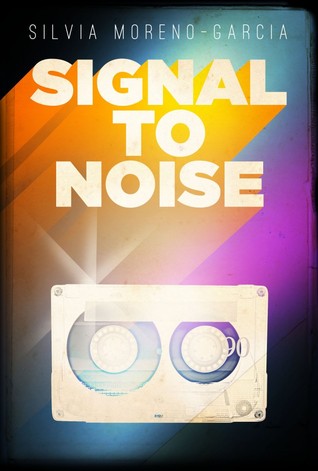
Book Review: Signal to Noise by Sylvia Moreno-Garcia


22609306By Eileen Fontenot

DESCRIPTION FROM THE PUBLISHER A literary fantasy about love, music and sorcery, set against the background of Mexico City.

Mexico City, 1988: Long before iTunes or MP3s, you said “I love you” with a mixtape. Meche, awkward and fifteen, has two equally unhip friends — Sebastian and Daniela — and a whole lot of vinyl records to keep her company. When she discovers how to cast spells using music, the future looks brighter for the trio. With help from this newfound magic, the three friends will piece together their broken families, change their status as non-entities, and maybe even find love…

Mexico City, 2009: Two decades after abandoning the metropolis, Meche returns for her estranged father’s funeral. It’s hard enough to cope with her family, but then she runs into Sebastian, and it revives memories from her childhood she thought she buried a long time ago. What really happened back then? What precipitated the bitter falling out with her father? And, is there any magic left?

MY TWO CENTS: This is an intimate tale that, while telling us both the story of teenage Meche and how she has grown up – and not – in the intervening 20 years, has its foundations in a pure coming-of-age romance.

Teens today should be able to relate to 15-year-old Meche, who is equal parts charismatic and surly. Growing up in Mexico City in the 1980s with an alcoholic father and an overbearing mother, she protects herself from the indignities of teenagehood in the earphones of her Walkman. (For those born after the 1980s, Walkmans are the precursors to our wonderful digital devices that can sync up with iTunes.) One day, she discovers that the power of her records can make magic–literal magic, just like her grandma, Mama Dolores says exists.

She convinces her best pals, Sebastian, a literature-loving pseudo-punk, and Daniela, who dresses all in pink and still has a soft spot for her Barbie collection, to help her use magic to meddle in romantic matters and take revenge on those who wrong her and her friends. Classic rock beloved by her father and artists like Miguel Bose and Duncan Dhu spur on her magic, which becomes dangerous as she gets deeper and deeper. Until the bonds between her and those closest to her are stretched to the utmost limit.

We hop back and forth in time from the ‘80s to 2009, when Meche, a successful professional living abroad, returns to Mexico City for her father’s funeral. We find out that they’ve been estranged, which is a surprise, since we know how much Meche’s father (through passages in his book in his point of view) adored her. Much as she did as a teen, adult Meche feels out of place in her old neighborhood. Will she find a place for her in her old neighborhood or is the magic gone forever? Sebastian may have something to say about that.
TEACHING TIPS: Much like the books that have won Alex Awards, Signal to Noise has appeal for both teens and adults. The universal themes of alienation and parental discord are emotions that anyone of any age can relate to. Modern teens may find themselves fascinated by the description of life in Mexico City nearly 30 years ago and discover it’s not so different from their lives today. Teens in local book clubs could compare and contrast how they think teens in the ‘80s would have communicated with their friends (with no fancy technology, horror!) or completed homework assignments (studying honest-to-God paper books at the library, anyone?). A fun craft that librarians could work into a book club discussion is decorating T-shirts with neon puffy paint or stylishly shredding an old pair of jeans. I know of several people who still have records (and one public library as well), so perhaps an old-fashioned listening party is in order?

Book club facilitators could also prompt teens to imagine what their lives will be like in 20+ years. What sort of technology may we see in 2035? What sort of social progress may we have made, if you’d like a deeper discussion? What sort of things have their parents seen happen in the past few decades that seems like no-brainers to youth of today. (Gay marriage and women’s rights come to mind. However, groups may want to explore how much advancement we’ve made regarding racial equality in light of the recent Charleston shooting and the events of Baltimore and Ferguson.)

S_Moreno_20150516_0492_print-1020x1530AUTHOR (DESCRIPTION FROM HER WEBSITE): Mexican by birth, Canadian by inclination. Silvia Moreno-Garcia‘s debut novel, Signal to Noise, about music, magic and Mexico City, was released in 2015 by Solaris. Silvia’s first collection, This Strange Way of Dying, was released in 2013 and was a finalist for The Sunburst Award for Excellence in Canadian Literature of the Fantastic. Her stories have also been collected in Love & Other Poisons. She has co-edited the anthologies Sword & Mythos, Historical Lovecraft, Future Lovecraft, Candle in the Attic Window and Fungi. Dead North and Fractured are her solo anthologies. Silvia is the publisher of Innsmouth Free Press, a Canadian micro-publishing venture specializing in horror and dark speculative fiction.


FOR MORE INFORMATION ABOUT Signal to Noise visit your local public library, your local bookstore or IndieBound. Also, check out GoodreadsAmazon, and Barnes & Noble.


Eileenfontenot headshot Fontenot is a recent graduate of Simmons College Graduate School of Library and Information Science in Boston. She works at a public library and is interested in community service and working toward social justice. A sci-fi/fantasy fan, Eileen was formerly a newspaper writer and editor.


Book Review: Shadowshaper by Daniel José Older

22295304By Cecilia Cackley

DESCRIPTION: (from Goodreads): Sierra Santiago was looking forward to a fun summer of making art, hanging out with her friends, and skating around Brooklyn. But then a weird zombie guy crashes the first party of the season. Sierra’s near-comatose abuelo begins to say “No importa” over and over. And when the graffiti murals in Bed-Stuy start to weep…. Well, something stranger than the usual New York mayhem is going on.

Sierra soon discovers a supernatural order called the Shadowshapers, who connect with spirits via paintings, music, and stories. Her grandfather once shared the order’s secrets with an anthropologist, Dr. Jonathan Wick, who turned the Caribbean magic to his own foul ends. Now Wick wants to become the ultimate Shadowshaper by killing all the others, one by one. With the help of her friends and the hot graffiti artist Robbie, Sierra must dodge Wick’s supernatural creations, harness her own Shadowshaping abilities, and save her family’s past, present, and future. Shadowshaper releases June 30, 2015.

MY TWO CENTS: Sierra Santiago is one of my new favorite heroines. She makes plans and follows through, is clear-eyed about the shortcomings of people she loves and takes charge with attitude. As Sierra follows her grandfather’s direction to find Robbie and fix the murals in her neighborhood, more and more secrets keep coming to light and she discovers an entire spirit world that has been hidden to her, but to which she is strongly connected. Older weaves in many great discussion points among the action and supernatural fighting, including colorism, gender expectations, ethics (or lack thereof) in anthropology and handling difficult family members. The Brooklyn setting and Sierra’s group of friends add realism and humor to the story, making this fresh, exciting adventure a must read for YA fans.

TEACHING TIPS: There are many different ways this title could fit into the classroom. The themes of appropriation and anthropology would fit nicely into a history or sociology classroom. Librarians will want to recommend this to teens who love fantasy or adventure stories with urban settings. Art teachers could also add this title to a list of books involving murals and large scale public art projects, as well as discuss the tradition of honoring the dead in art or have students design their own murals.

ABOUT THE AUTHOR: Daniel José Older is the author of the Bone Street Rumba urban fantasy series, which began in January 2015 with Half-Resurrection Blues from Penguin’s Roc imprint. Publishers Weekly hailed him as a “rising star of the genre” after the publication of his debut ghost noir collection, Salsa Nocturna. He co-edited the anthology Long Hidden: Speculative Fiction from the Margins of History and guest edited the music issue of Crossed Genres. His short stories and essays have appeared in Tor.com, Salon, BuzzFeed, the New Haven Review, PANK, Apex and Strange Horizons and the anthologies Subversion and Mothership: Tales Of Afrofuturism And Beyond. Daniel’s band Ghost Star gigs regularly around New York and he facilitates workshops on storytelling from an anti-oppressive power analysis. You can find his thoughts on writing, read dispatches from his decade-long career as a NYC paramedic and hear his music at ghoststar.net/ and @djolder on twitter.

RESOURCES:

Interview from Source Latino: http://thesource.com/2015/06/08/source-latino-interview-with-shadowshaper-author-daniel-jose-older/

Review from Debbie Reese about overlap with Indigenous history: http://americanindiansinchildrensliterature.blogspot.com/2015/04/daniel-jose-olders-shadowshaper.html

Interview from School Library Journal: http://www.slj.com/2015/06/interviews/qa-urban-fantasy-counter-narrative-daniel-jose-older-on-shadowshaper/#_

Interview from The Rumpus: http://therumpus.net/2015/05/the-rumpus-interview-with-daniel-jose-older/

FOR MORE INFORMATION ABOUT Shadowshaper, visit your local library or bookstore. Also, check out WorldCat.orgIndieBound.orgGoodreadsAmazon, and Barnes & Noble.

Cackley_headshotCecilia Cackley is a performing artist and children’s bookseller based in Washington DC where she creates puppet theater for adults and teaches playwriting and creative drama to children. Her bilingual children’s plays have been produced by GALA Hispanic Theatre and her interests in bilingual education, literacy, and immigrant advocacy all tend to find their way into her theatrical work. You can find more of her work at www.witsendpuppets.com.