Book Review: Allie, First At Last by Angela Cervantes


Allie, First At Last (1)Reviewed by Marianne Snow Campbell

FROM ANGELA CERVANTES’S WEBSITE: Allie Velasco wants to be a trailblazer. A trendsetter. A winner. No better feeling exists in the world than stepping to the top of a winner’s podium and hoisting a trophy high in the air. At least, that’s what Allie thinks…. she’s never actually won anything before. Everyone in her family is special in some way—her younger sister is a rising TV star; her brother is a soccer prodigy; her great-grandfather is a Congressional Medal of Honor winner. With a family like this, Allie knows she has to make her mark or risk being left behind.  She’s determined to add a shiny medal, blue ribbon, or beautiful trophy to her family’s award shelf. When a prestigious school contest is announced, Allie has the perfect opportunity to take first —at last. There’s just one small snag… her biggest competition is also her ex–best friend, Sara. Can Allie take top prize and win back a friend — or is she destined to lose it all?

MY TWO CENTS: Fifth grade can be a tough year – it certainly was for me.  As kids approach and enter adolescence, many begin to grapple with who they are and who they want to be. Meanwhile, they may fall out with longtime friends who are going through the same transitions. While experiencing these growing pains and periods of uncertainty, kids can find comfort in books. Reading about characters who are undergoing the same journeys and struggles can help young readers see that they’re not alone – it’s normal to feel out of place and unsure of oneself.

Allie Velasco is a fifth-grader trying her best to discover her identity and make her mark on the world around her. For Allie, that means being the best at something – not that she’s sure what that something is. While her siblings excel at acting, soccer, and community service, her mother has been voted Best News Anchor of the Year, and her great-grandfather is a war hero, Allie is keenly seeking out her niche and putting a lot of pressure on herself to “succeed.”

Frankly, I wish Allie, First at Last had existed when I was in fifth grade. Although it’s been a couple of decades since I experienced my own tween tribulations, it was almost therapeutic to revisit that stage of my life through Allie. And I’m certain there are plenty of young readers out there today who will relate to her as well. This book is sure to appeal to kids who are “finding themselves,” having friend problems, or feeling eclipsed by siblings.

But don’t go thinking that this book is all sadness and doubt! Angela Cervantes fills the pages with humor that’s sharp with hints of snark and sarcasm, but never mean. For example, Allie and her best friend write a song about her cat called “It’s Not Easy Being Fluffy.” I approve. Also, although Allie faces challenges and insecurities, she still demonstrates strength and self confidence by assertively confronting rude kids in her class, nurturing a loving relationship with her sister and bisabuelo, and demonstrating a deep, natural appreciation for her Mexican-American roots. A great role model indeed.

TEACHING TIPS AND RESOURCES:  Allie, First at Last would be a perfect choice for a middle-grade classroom book club. Teachers can provide students with a list of books (including this one), and students can then choose which book they’d like to read, form small groups with classmates who chose the same book, enjoy, and discuss. With its highly relevant themes and humor, Allie is certain to be a hit, and kids can make it their own as they connect it to their lives and respond collaboratively. Educators should be sure to stock this volume in their classroom libraries and media centers for self-selected reading time. There’s nothing like a fun, engrossing book for motivating kids to read!

Also, be sure to check out Angela Cervantes’s teacher resources, available on her website. She’s created printer-friendly activity sheets with writing prompts for both Allie, First at Last and her previous novel, Gaby, Lost and Found.  The prompts present great ideas for journaling, in-class discussions, and even research projects.  Enjoy!
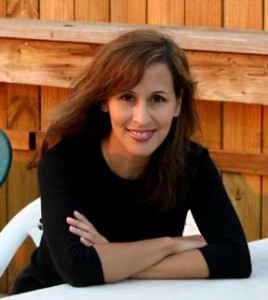
Angela CervantesABOUT THE AUTHOR: Angela was born and raised in Kansas. Most of her childhood was spent in Topeka, Kansas living in the Mexican-American community of Oakland. Her family also spent a lot of time in El Dorado and Wichita visiting a slew of aunts, uncles and cousins on weekends.

Angela graduated from the University of Kansas (Go Jayhawks!) with a degree in English. After KU, she moved to Brownsville, Texas. In Brownsville, Angela was introduced to the music of Selena, ceviche, and learned to two-step. After Brownsville, Angela moved to Guadalajara, Mexico, where for two years she taught High School English and literature. In 2003, Angela returned to Kansas City, completed an MBA, co-founded Las Poetas, an all-female poetry group, and began working at an international children’s organization.

In 2005, Angela’s short story, “Pork Chop Sandwiches” was published in Chicken Soup for the Latino Soul. In 2007, she won third place for Creative Nonfiction in the Missouri Review’s audio competition for her story “House of Women” and Kansas City Voices’ Best of Prose Award (Whispering Prairie Press) for her short story, “Ten Hail Marys”. In 2008, she was recognized as one of Kansas City’s Emerging Writers by the Kansas City Star Magazine. In 2014, she was named one of the Top Ten New Latino Authors to Watch by LatinoStories.Com.

Angela’s first novel, Gaby, Lost and Found [Scholastic Press; 2013], won Best Youth Chapter Fiction Book in the International Latino Book Awards. Angela’s second middle-grade novel, Allie, First At Last, will be released Spring 2016. See FAQs about the author.

WE ARE GIVING AWAY A HARDCOVER OF ALLIE, FIRST AT LAST BY ANGELA CERVANTES, WHICH OFFICIALLY RELEASES 3/29/16.

CLICK HERE TO LINK TO THE RAFFLECOPTER GIVEAWAY!


MarianneMarianne Snow Campbell is a doctoral student at The University of Georgia, where she researches nonfiction children’s books about Latin@ and Latin American topics and teaches an undergraduate course on children’s literature. Before graduate school, she taught pre-K and Kindergarten in Texas, her home state. She misses teaching, loves critters, and can also be found on Twitter and Facebook.


Spotlight on Latina Illustrators Part 2: Juana Martinez-Neal, Maya Christina González & Laura Lacámara


By Cecilia Cackley

This is the second in a series of posts spotlighting Latina illustrators of picture books. Some of these artists have been creating children’s books for many years, while others will have their first book out this year. Some of them live in the US, while others live overseas. They come from many different cultural backgrounds, but all are passionate about connecting with readers through art and story. Please look for their books at bookstores and libraries!


Juana Martinez-Neal

Children's Illustrator Juana Martinez-NealJuana was born in Lima, the capital of Peru. She has been illustrating for children since she was 16. Juana attended the best art school ever, Pontificia Universidad Catolica del Peru – School of Fine Arts. After 3 years of a crazy 8-to-8 schedule and way too many all-nighters, she was in desperate need of a semester-break and decided to give L.A. a “test drive.” She has lived in the US ever since.

Q: What inspired you to become an artist?

A: My father and grandfather were artists. The walls of our house were full of their paintings, and we had art supplies all around the house. Drawing and painting were natural ways to use our time. Every Summer, my mom enrolled us in a different art classes. She always took us to visit Museums, and her special treat was taking us to see puppet shows. Art was part of our life. There is nothing else I could be but an artist.

Q: Tell us about your favorite artistic medium.

A: I love the process more than a specific media. I think that’s the reason why I’m a mixed media illustrator. When I add materials and change my the process, the work becomes even more interesting. The idea of solving the problem makes the process so very exciting.

Q: Please finish the sentence “Picture books are important because…”

A: They expand a child’s mind, fulfill their soul, and show new points of views.


Maya Christina González

Maya Gonzalez is an artist, author, educator, activist, peacemaker, publisher, equality lover, obsessive recycler, traveler, river lover, tree talker, sky kisser……

Her fine art graces the cover of Contemporary Chicano/a Art and is well documented as part of the Chicano Art Movement. She has illustrated over 20 award-winning children’s books, several of which she also wrote, Her book My Colors, My World won the prestigious Pura Belpré Award Honor from the American Library Association and her most recent picture book, Call Me Tree was listed in Kirkus’ Best Picture Books of 2014 that Celebrate Diversity. Since 1996, Maya has been providing presentations to children and educators about the importance of creativity as a tool for personal empowerment. Her work with children in public schools helped her develop several lines of curriculum that offer a holistic approach to learning and open doors to new ways of thinking and relating in the world. In 2009 she co-founded Reflection Press, an independent press that publishes radical and revolutionary children’s books, and works that expand spiritual and cultural awareness. And in 2013, Maya co-created an online learning environment called School of the Free Mind about expanding the mind and reclaiming the creative. The School offers e-courses for those who are ready to uncover and connect with their unique and most powerful way of living and creating.

Q: What inspired you to become an artist?

A: I remember as a child drawing my round Chicana face into the backs of books. I think on some level I knew I needed to see myself in my books. I didn’t. I know in many ways those early ‘self-portraits’ were my way of affirming my existence in a world that did not include me. We are born artists. Creativity is our greatest tool to express and transform our world. I think it was a natural act to be an artist. I think I’ve remained visually expressive because it is the most powerful and immediate way to communicate and create change.

Q: Tell us about your favorite artistic medium.

A: I am notorious for trying different mediums in my children’s books. Acrylics, watercolors, oil pastels, ink, charcoal, painted collage, photo collage, color pencils and combinations of all of those. What I love is the feeling of exploration and not completely knowing what I’m doing. I know that’s how kids feel all the time. Everything is new and curiosity rocks. So I follow that feeling. I’ve made so much art that I’m familiar with all the materials so now I’m exploring how to use them differently. More expression. More immediate and raw. This is how kids create because this is how kids feel. I’m always exploring the edges of my expression.

Q: Please finish the sentence “Picture books are important because…”

A: Picture books are important because they are powerful tools of expression, support and potential healing. I believe children’s books are one of the most radical things we can do for ourselves and our communities.


Laura Lacámara

Laura_photo_2015-300 dpiCuban-born Laura Lacámara is the award-winning author and illustrator of Dalias Wondrous Hair / El cabello maravilloso de Dalia (Piñata Books), a bilingual picture book about a clever girl who transforms her unruly hair into a vibrant garden. Laura also wrote Floating on Mamas Song / Flotando en la canción de mamá, a bilingual picture book inspired by her mother, who was an opera singer in Havana. Illustrated by Yuyi Morales and published by HarperCollins, Floating on Mamas Song was a Junior Library Guild Selection for Fall 2010 and was a Tejas Star Book Award Finalist for 2011-2012.

Laura earned her Bachelor of Fine Arts in Drawing and Painting at California State University, Long Beach. She studied printmaking at Self Help Graphics in East Los Angeles and began exhibiting and selling her work.

When a fellow artist suggested Laura’s images would be ideal for picture books, Laura signed up for a children’s book illustration class at Otis College of Art and Design. She instantly fell in love with both writing and illustrating for children. It was in that class that she wrote the first draft of Floating on Mamas Song.

Laura illustrated the 2012 Tejas Star Book Award winner, The Runaway Piggy / El cochinito fugitivo (Piñata Books), as well as Alicias Fruity Drinks / Las aguas frescas de Alicia (Piñata Books). Laura is a popular presenter at schools, book festivals, and conferences, and she is an active member of the Society of Children’s Book Writers and Illustrators (SCBWI).  Laura lives in Southern California with her husband, their daughter, and a lovable mutt.

Q:  What inspired you to become an artist?

A: Having an artist father, who made a living as a graphic designer and illustrator, inspired me and showed me that it was possible to be a working artist.  In high school and beyond, I had many artist friends – we found inspiration together in art classes and museum visits.  And, to be honest, as a young adult, doing art was the only job I didn’t get fired from!

Q: Tell us about your favorite artistic medium.

A: I like painting with acrylics on a variety of surfaces – my current favorite being wood. (I love the texture.)  I also enjoy adding collage elements to my paintings.  I’ve always loved bright patterned fabrics and papers – the more the colors and patterns clash, the better!

Q: Please finish this sentence: “Picture books are important because…”

A: Picture books are important because they teach us about ourselves, our world, our feelings, our realities.  Stories with pictures can give young kids a great deal of validation and comfort.  A picture book may be the first time a child realizes, “I’m not the only one who feels that way!”


Books to Check Out:

Lacámara Laura. Dalias Wondrous Hair

Luna, James. The Runaway Piggy

Ruiz-Flores, Lupa. Alicias Fruity Drinks

Elya, Susan Middleton. La Madre Goose (coming in July)

Gonzalez, Maya Christina. Call me Tree/Llamame Arbol

Gonzalez, Maya Christina. I Know the River Loves Me/Yo se que el rio me ama

Gonzalez, Maya Christina. My Colors, My World/Mis colores, mi mundo

Alarcon, Francisco X. Animal Poems of the Iguazu

Perez, Amada Irma. Nanas Big Surprise

Perez, Amada Irma. My Diary from Here to There

Alarcon, Francisco X. Iguanas in the Snow

Book Review: Kill the Boy Band by Goldy Moldavsky

First, a a few words from debut author Goldy Moldavsky:

Goldy M.

From Goldy’s Twitter account

New York is my hometown. It’s the place where I grew up, the place I love like a person. But the first time I set foot in New York, I didn’t know a word of English. My family immigrated to New York from Peru when I was five, leaving behind my grandparents, aunts, uncles, and cousins in Lima. I can’t imagine how hard it was for my parents to move to a new place, and obviously it was infinitely easier for a five year old to adapt, but still—the culture shock was no joke. I remember crying as a kindergartner because I could not understand anything that my teacher was saying. Luckily, there was a girl in my class who spoke Spanish and translated everything for me.

Eventually, I picked up the language quickly enough, and it was this new culture—and specifically pop culture—that taught me to speak English. When I showed up in Brooklyn, neighborhood kids were singing along to New Kids on the Block and everyone was quoting Steve Urkel. I soaked it up. I guess it’s only fitting that my debut novel, Kill the Boy Band, is infused with pop culture references. While my parents were out working hard, I was learning a new language watching episodes of Saved By the Bell and the Fresh Prince of Bel Air after school. Though, I would still watch telenovelas with my family after dinner. I was just as hooked on episodes of Full House as I was on the melodramatic struggles my favorite childhood actress Thalia had to face on Maria del Barrio.

As a Jewish Latina girl who has confounded Jewish people with my Latinaness and Latino people with my Jewishness, pop culture was my great equalizer. And now I have a book that will hopefully be a part of that pop culture, written in a language that I adopted. As corny as it may sound, for an immigrant like me, getting Kill the Boy Band published is my very own version of the American Dream.

Now, the review of Kill the Boy Band by Zoraida Córdova

DESCRIPTION FROM THE PUBLISHER: From debut author Goldy Moldavsky, the story of four superfan friends whose devotion to their favorite boy band has darkly comical and murderous results.

Okay, so just know from the start that it wasn’t supposed to go like this. All we wanted was to get near The Ruperts, our favorite boy band.

We didn’t mean to kidnap one of the guys. It kind of, sort of happened that way. But now he’s tied up in our hotel room. And the worst part of all, it’s Rupert P. All four members of The Ruperts might have the same first name, but they couldn’t be more different. And Rupert P. is the biggest flop out of the whole group.

We didn’t mean to hold hostage a member of The Ruperts, I swear. At least, I didn’t. We are fans. Okay, superfans who spend all of our free time tweeting about the boys and updating our fan tumblrs. But so what, that’s what you do when you love a group so much it hurts.

How did it get this far? Who knows. I mean midterms are coming up. I really do not have time to go to hell.

MY TWO CENTS: Fandom is a complicated culture. ~Goldy Moldavsky, Kill the Boy Band

I loved this book. It’s a refreshing feeling when you find a book that stands out the way Kill the Boy Band does. The book boasts it’s “The most shocking debut of the year,” and I think it might be right. This isn’t the YA novel we’re used to. It’s like a fangirl version of Scream Queens and Mean Girls. And it’s an unapologetic satire, which you need to keep in mind while reading it. It follows four fangirls who idolize a British mega pop band called The Ruperts. They are named so because each of the four boys is named Rupert. They end up kidnapping Rupert P, the least talented, “ugly” one. Every boy band has one. (Chris Kirkpatrick, anyone?) What was meant as an opportunity to get as close as possible to the Boys ends up with girls committing a felony. Things get out of hand. Like, way out of hand. Pause for suspension of disbelief, Weekend at Bernie’s style.

IMG_1839

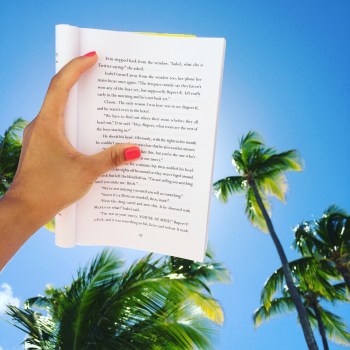
Zoraida reading Kill the Boy Band on a beach in the Dominican Republic

The girls are at various stages of fandom. There’s Isabel: The Tough One. She’s Dominican and curses in Spanish when she’s mad. She runs a fansite dedicated to The Ruperts, online harasses people who hate The Ruperts, and blackmails her way into being the #1 source for The Ruperts. She’s seen them so often that she’s really at the end of her fandom and more in it for the hits she gets on her website. There’s Erin. She’s like Emma Roberts in every role she plays. She’s the Beautiful, Mean One. Her role is “The Mastermind” of the layers to this scheme. Her story arc and twist are compelling and shocking. There’s Apple. “The Simple One” by a long shot. She doesn’t seem to have a good grasp on reality, and her whims are totally dictated by The Ruperts. She’s Chinese and was adopted by an elderly wealthy couple who gives her everything she wants. They have funded her obsession with The Ruperts, including concerts and Apple’s own Latin nanny (who is an honorary Rupert’s fangirl at this point). Without Apple, the girls wouldn’t be able to secure the super expensive hotel room they need to carry out their plans. Trigger warning: Apple is the target of fat shaming from the other girls. This is where the “friendship” between these girls unravels. They’re friends, but not. This trial is what forces them to remain a unit, even if the only thing they truly have in common is The Ruperts. Once that tie is broken, what do they have left when it comes to friendship?

Finally, there’s our unreliable narrator. She goes by many names, usually plucked from popular 80s movies. The final and most prominent identity is Sloane from Ferris Bueler’s Day Off. “Sloane” is the “Innocent One.” She’s the voice of reason and law in this slice into crime and murder. The best part of this novel is the use of the unreliable narrator. Do we trust Sloane? We shouldn’t, but she frames the story to make herself come out as the “Good One.” Even she tells the reader, breaking the fourth wall constantly, that she very well could make herself as the “Innocent” when she should be or could be the “Crazy” one. There’s a very real moment when Sloane wonders what is the truth in her web of lies. She is a writer of fanfic, after all. What if this is just one more of her elaborate stories she makes up?

Another wonderful aspect of the narrative is the use of modern dialect and internet slang. Gosh, saying that makes me feel a tad old, but it’s true. Sloane speaks the way the internet does. She offers a reflection on fandoms, the mad frenzy of loving someone you only know through music or film, the rush that comes with knowing the intimate details through gossip websites, Twitter, and stolen photos. (I did learn a new term: Citizen Pap. No that kind of pap. It’s Citizen Paparazzi. Duh.) Sloane slowly comes out of her fangirl craze and sees other fangirls through the eyes of their critics. The entire time I think, Why is it that when girls love something, it is easily dismissed? There’s a pivotal moment that summarizes my takeaway from this book. It’s when Sloane is speaking to an adult male:

“You girls…”

Are never taken seriously.

“…should find a nice hobby.”

But we should be taken seriously. We can be amazing. And dangerous.

Kill the Boy Band by Goldy Moldavsky is a crazy, ultra modern ride into the world of fangirls everywhere. With ROTFL moments and girls who are as smart as they are mean, as cunning as they are unreliable, it is a must read.

*Bonus points for cleverly threading in boy band lyrics throughout the novel. #ItsTheHardestThingIllEverHaveToDo.


ABOUT THE AUTHOR:

From Goldy’s Tumblr

Goldy Moldavsky writes YA fiction from her hometown of Brooklyn. She studied journalism in college, where she got to interview some cool celebrities for her school paper. After a bit she realized it’d be more fun making up stories about celebrities, so that’s what she does in her writing. Some of her influences include Buffy the Vampire Slayer, the esteemed works of John Irving, and the Mexican telenovelas she grew up watching with her mother. Follow her on Twitter @GoldyWrites and visit her website.

Goodreads * Amazon * B&N 


Spotlight on Latina Illustrators Part 1: Angela Dominguez, Juana Medina, and Ana Aranda

By Cecilia Cackley

This is the first in a series of posts spotlighting Latina illustrators of picture books. Some of these artists have been creating children’s books for many years, while others will have their first book out this year. Some of them live in the US, while others live overseas. They come from many different cultural backgrounds, but are all passionate about connecting with readers through art and story. Please look for their books at bookstores and libraries!

Angela Dominguez

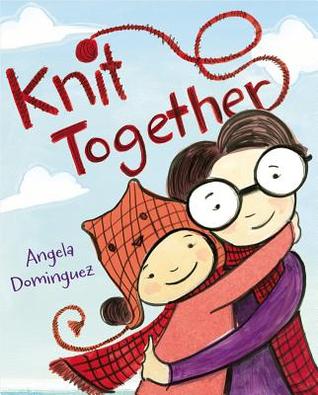
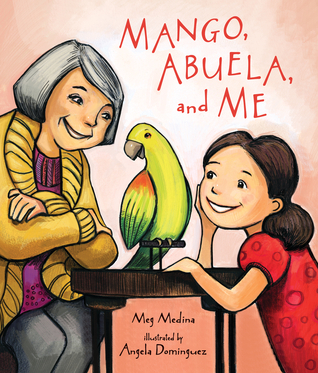
Angela DominguezAngela Dominguez was born in Mexico City, grew up in the great state of Texas, and lived in San Francisco. She’s the author and illustrator of picture books such as Let’s Go Hugo!, Santiago Stays, Knit Together, and Maria Had a Little Llama, which received the American Library Association Pura Belpré Illustration Honor. Recently, she received her second Pura Belpré Honor for her illustrations in Mango, Abuela, and Me written by Meg Medina. Her new books How do you Say?/Como se Dice?  and Marta, Big and Small (by Jen Arena), will both be published later this year. To see more of Angela’s work, visit her website, blog or twitter.

Q: What inspired you to become an artist?

A: Like many of my artist friends, I’ve always liked to draw. Growing up, I was obsessed with books and art in general. I’d spend evenings watching VHS tapes and drawing all night (if I wasn’t doing homework). Still, I didn’t really consider art something I could do professionally until high school. Fortunately, my high school really had a great art program and teachers who were supportive. Then I received a partial scholarship to Savannah College of Art and Design based on my skills and academics. That sort of sealed my fate as a professional artist.

Q: Tell us about your favorite artistic medium.

A: I still love drawing with pencil. It feels so good in my hand. I even love the way a freshly sharpened pencil smells. I also enjoy working with ink especially with a dip pen and brush. I just like how there is less control. It forces you to work boldly and confidently. My last favorite medium is tissue paper. I just really enjoy collage and the texture it produces. It’s really fun to work with all three at the same time. In graduate school when I saw that Evaline Ness worked that way, I was inspired to do it even more!

Q: Please finish the sentence “Picture books are important because…”

A: Picture books are important because they can speak universal truths to people of all ages. They can make you cry and laugh all in the same little book. (Also there are pictures!)

14933584  17245526  22504706  15937128  23153010  25066557  24727082  25688982


Juana Medina

Photo by Silvia Baptiste

Photo by Silvia Baptiste

Juana Medina was born in Bogotá, Colombia, where she grew up, getting in a lot of trouble for drawing cartoons of her teachers.

Eventually, all that drawing (and trouble) paid off. Juana studied at the Rhode Island School of Design – RISD (where she has also taught). She has done illustration & animation work for clients in the U.S., Latin America, & Europe.

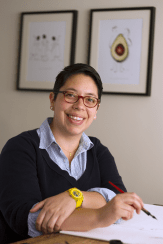
She now lives in Washington, DC. where she teaches at George Washington University. Juana draws and writes stories from a big and old drafting table, in an even older -but not much bigger- apartment.  Juana is the illustrator of the picture book Smick! by Doreen Cronin. Her new books 1 Big Salad: A Delicious Counting Book and Juana and Lucas will be published later this year. You can find out more about Juana on her website and blog.

Q: What inspired you to become an artist?

A: I grew up in a family where pretty much everyone had some kind of artistic outlet; my grandfather was a great draftsman, my grandma was a fantastic carpenter, my aunt a potter… everyone found a way to use arts as a way to express themselves, so it took me a while to realize not everyone in the world did this! Moreover, I went to a school that valued arts very much. So for the longest time, I thought art was just one more fabulous aspect of being human. I didn’t think of art or my ability to draw as super powers; they were simply an added feature, almost as a bonus language. Now that I recognize not everyone draws, I have dedicated a lot of time to using this ability as best as possible, to tell stories.

Q: Tell us about your favorite artistic medium.

A:  Ink is one of my favorite mediums, because I find it very expressive. I enjoy the high contrast between the stark white paper and the very dark black ink; it makes it very exciting to see lines and traces -almost magically- appear on the page.

Q: Please finish the sentence “Picture books are important because…”

A:  Picture books are important because they don’t require more than visuals -and a handful of words- to understand a story. And understanding a story can lead to a shared experience with those who have also read the book. This not only serves for entertainment purposes, but allows us to learn about other people’s feelings, struggles, and dreams. Picture books also allow us to see the world through a different point of view and they tend to teach us things we perhaps didn’t know about, like how people live in villages we’ve never visited, or what dinosaurs used to eat, or how giant squids live in the darkest, deepest waters in the ocean, all valuable lessons to be learned.

22522295


Ana Aranda

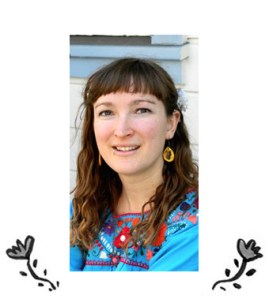
Ana ArandaAna Aranda was born and raised in Mexico City, where she studied design. From there, she moved to France, where she lived for three years while doing her undergraduate studies in illustration. Ana now lives in San Francisco thanks to a grant from the Mexican Fund for Culture and Arts (FONCA). Her biggest inspirations are her childhood memories, the vibrant colors of Mexico, and music. Her work focuses on transforming the every day into fantastical situations, and often includes images from nature and whimsical creatures. Ana’s work has been featured in different galleries and museums in the United States, France, Mexico and Italy. In San Francisco, she has painted murals in the Mission District, for the Consulate General of Mexico, and for the prestigious de Young Museum. Ana’s illustrations can be found in picture books published in France and Italy. Some of her forthcoming titles include “J’ai Mal à Mon Écorce” (Éditions du Jasmin, France, 2015). She also illustrated ¡Celebracion! by Susan Middleton Elya, coming in 2016 and The Chupacabra ate the Candleabra by Marc Tyler Nobleman, coming in 2017.

Q:  What inspired you to become an artist?

A: When I was a little girl, I lived in a colorful city in Mexico called Cuernavaca, also known as the “City of Eternal Springtime”. My childhood memories in this city full of flowers always inspire me to create colorful and joyful pieces for children of all ages.

I have also been very inspired by my family, teachers, Mexican muralists and printmakers, growing up learning about women artists such as Remedios Vario and Leonora Carrington.

Q: Tell us about your favorite artistic medium.

A: I first learned to use acrylics when I was around 14 years old and fell in love with it! Since then I’ve been playing with bright colors and mixing that technique with others such as pigments, scratchboards, etc. I’m in love with color and finding how every color can be part of an emotional experience.

Q: Please finish this sentence: “Picture books are important because…”

Ana Aranda Cover


A: Picture books are important because they help you travel to different worlds!


Books to Check Out:

Dominguez, Angela. Lets Go Hugo

Dominguez, Angela. Maria Had a Little Llama

Dominguez, Angela. Santiago Stays

Dominguez, Angela. Knit Together

Medina, Meg. Mango, Abuela and Me

Brown, Monica. Lola Levine is NOT Mean!

Elya, Susan Middleton. ¡Celebracion!  (coming Fall 2016)

Cronin, Doreen. Smick!

Medina, Juana. 1 Big Salad: A Delicious Counting Book (coming Summer 2016)

Author David Bowles on his Garza Twins Series and the Pura Belpré Honor


By David Bowles

When my three kids were younger, we had a tradition of reading YA fantasy and sci-fi series together. Harry Potter was a big deal for many years, followed by His Dark Materials, Percy Jackson, Hunger Games, and so on. I even read the Twilight series with my oldest daughter, if you can believe it.

This shared reading was fantastic. We shed tears, laughed aloud, and had many deep conversations. One thing we kept coming back to—as Mexican-American fans of speculative fiction—was the lack of people of color in most of the books we read (beyond secondary, less important roles). Typically these series boasted a team of what amounted to Anglo young people facing off against European or Western legendary beings, gods, or dilemmas.

“Wouldn’t it be nice,” we often mused, “to open one of these books and find a Chicana facing off against Aztec deities or Mexican monsters?”

Venting this frustration to writer friends of mine, I was answered by an idea that should have been obvious from the beginning:

“You’re a writer, David. This matters to you. Why not develop such a series yourself?”

It was a no-brainer, clearly. Tan obvio. The trick now was to hit on the right story. I was hasta el cuello en research into Aztec and Maya literature at the time, and it occurred to me that a journey through the nine levels of Mictlan/Xibalba (the Mesoamerican Underworld) would make for a great hero quest. I cast about for the right characters for a while, until I started paying close attention to the fantastic friendship between my youngest son and middle daughter. With a few tweaks to age and interests, they became templates for the Garza twins.

But who were the Garza twins? What was special about them? Why would they travel through the Underworld? The answers became clear to me one morning when I stepped outside to find a dead jackrabbit in my backyard. An image suddenly overlaid the scene in my head: my daughter, asleep in the grass, the jackrabbit between her hands. I knew in that instant that the twins were naguales, shapeshifters, and the rest fell into place.

Once the book was written, it was rejected by many agents and publishers before finding a nice home with the Australian press IFWG Publishing, who treated the project with a good deal of love, even agreeing to allow one of my very talented daughters to design the cover. Reviewers and young readers alike responded positively to The Smoking Mirror, and I was delighted to have added to the body of diverse YA literature.

When the request came for us to submit copies to the Pura Belpré Award, I was floored, truly overwhelmed at the idea that these incredible advocates for Latino books would be reading my novel. Then, months later, I got the call from the committee—they’d selected The Smoking Mirror as one of two Pura Belpré Author Honor Books.

Very seldom am I at a loss for words—ni en inglés ni en español—but I found it hard to catch my breath and thank them profusely. It’s a humbling yet fulfilling sensation, seeing a project you believe so strongly in get this level of recognition, and I am eternally indebted to all the people who believed in Garza Twins at every stage of its development.

28484604Of course, this is only the beginning for me and the twins. Book two, A Kingdom Beneath the Waves, will be out in late April. This time, Johnny and Carol Garza find themselves plunging deeply into the Pacific Ocean to stop a renegade prince of the merfolk and his allies—among them the water elementals the Aztecs called tlaloqueh—from recovering the Shadow Stone, a device that can flood the planet.

Garza Twins will last for five volumes, and Kingdom ratchets up the tension and stakes, introducing cool new characters and laying the foundation for future conflicts. As with The Smoking Mirror, the normal life of the Garza family is explored; the twins grapple with problems facing many modern Latino teens, and the courage and compassion with which they resolve those issues bleed into their supernatural encounters as well. But, as with me in my writing endeavors, they can’t triumph alone. Family and friends are vital to the success of their mission.

You see, I think the biggest myth in our culture, and perhaps the most dangerous, is that of the lone hero. Each of us is part of a greater community, a web of support and lore without which we could not survive. If there is a message at the heart of Garza Twins, I think that’s it.

Unidos podemos. Together, we can.


me 6-3-14A product of an ethnically diverse family with Latino roots, David Bowles has lived most of his life in the Río Grande Valley of south Texas. Recipient of awards from the American Library Association, the Texas Institute of Letters, and the Texas Associated Press, he has written several books, most notably the Pura Belpré Honoree The Smoking Mirror. His work has also been published in venues such as BorderSenses, Strange Horizons, Apex Magazine, Stupefying Stories, Asymptote, Translation Review, Huizache, Metamorphoses and Rattle.
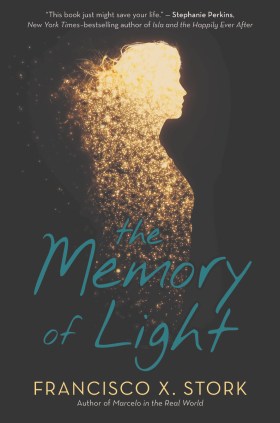
Book Review: The Memory of Light by Francisco X. Stork

image

Reviewed by Lila Quintero Weaver

This book talk is based on an uncorrected advance copy.

FROM THE PUBLISHER: School: failure. Romance: failure. Family: failure. Suicide: failure. There’s only one thing left to try: living.

When Vicky Cruz wakes up in the Lakeview Hospital psychiatric ward, she knows one thing: She can’t even commit suicide right. But there she meets Mona, the live wire; Gabriel, the saint; E.M., always angry; and Dr. Desai, a quiet force. With stories and honesty, kindness and hard work, they push her to reconsider her life before Lakeview, and offer her acceptance she’s never had.

Yet Vicky’s newfound peace is as fragile as the roses that grow around the hospital. And when a crisis forces the group to split up—sending her back to the life that drove her to suicide—Vicky must find her own courage and strength. She may not have any. She doesn’t know.

Inspired in part by the author’s own experiences with depression, The Memory of Light is the rare young adult novel that focuses not on the events leading up to a suicide attempt, but the recovery from one—about living when life doesn’t seem worth it, and how we go on anyway.

MY TWO CENTS: Another fifteen minutes and the pills would’ve done their work, extinguishing all the bright, unrealized promise of 16-year-old Vicky Cruz’s life. Luckily, someone finds her in time. When she wakes up in the psychiatric unit of Lakeview Hospital, in Austin, Texas, her stomach has been pumped, and the first voice she hears belongs to Dr. Desai, a therapist whose guidance and fierce advocacy serve to pull Vicky away from the brink.

At Lakeview, Dr. Desai oversees the treatment of teens hospitalized with serious mental-health issues. Vicky becomes intimately acquainted with three fellow patients, who play integral roles in her healing journey and offer compelling stories of their own:

E.M. came to Lakeview after one of his violent outbursts resulted in court-mandated treatment.

Mona wrestles with bipolar disorder, which was recently compounded by trauma at home. Child Protective Services removed her little sister from the custody of their mom and stepdad.

Gabriel is a young mystic who initially withholds the exact nature of his mental illness from the others in the group. In Vicky’s eyes, he’s a tender soul who moves in and out of functionality.

Lakeview is the primary setting for much of the novel, but some scenes unfold during off-site excursions, including a stay at Dr. Desai’s working ranch, where the patients perform minor farm chores, and go on a wild-river adventure that nearly leads to tragedy but ultimately opens new avenues for transformation. And there are more wild rides as two of the characters plunge into distressing setbacks. Despite her own shaky condition, Vicky responds to others with empathy, leading her to find greater definition in her own life’s purpose.

Vicky’s road to recovery is far from smooth. Shortly after surviving “the deed,” as she calls her suicide attempt, she’s hard pressed to pinpoint what’s so unbearable about her life. But she’s certain she’ll try to escape it again. Strong clues lie in the hollowness of her family relationships. Her mother died of cancer six years before, and less than one year later, her father remarried. Throughout her mother’s illness and even after her passing, Vicky’s father and her older sister, Becca, detached themselves from the trauma. By contrast, Vicky was the sensitive and attentive child who felt her mother’s absence keenly. Afterwards, it was Juanita, the family housekeeper, who served as Vicky’s truest human connection. Unfortunately, Juanita’s arthritis is too disabling for her to continue working and she plans to return to her native Mexico.

Once Vicky leaves the chilly environment of home and enters the warmer climate of the treatment unit, she begins to entertain the idea that life may be worth living. After consulting with an outside therapist, Vicky’s father and stepmother try to convince her to return home and resume normal activities, including school—the general idea being to jump back on the horse after a fall. Vicky’s instinct tells her this won’t work. For one thing, “our house is not a good place to figure things out,” she realizes. Bit by bit, through flashbacks and in conversations in Dr. Desai’s office and with her new friends, we see that Vicky’s family may be well off, but it isn’t well. For example, whether born obtuse or blinded by unresolved grief, Mr. Cruz uses words as bludgeons, and for Vicky, these words and the attitudes behind them strip her of the sense that she is lovable.

Francisco Stork brilliantly depicts the intangibles of interior life, an ability that he ably demonstrated in his 2009 YA novel, Marcelo in the Real World. In The Memory of Light, Stork summons these powers to communicate the nature of depression. Here’s how Vicky tries to explain its mysterious operations to herself: “I imagine a whole bunch of little minerlike elves who live and work inside the dark tunnels of my brain. They wear flashlight hats of different colors and push clanging carts full of words on steel rails from one corner of my mind to another.”

Vicky experiences small, but important epiphanies during her hospital stay. In a particularly shining scene, Dr. Desai shares approaches to unlocking the vicious circle of obsessive thoughts. One of the nuggets from this conversation is a fable from Dr. Desai’s native India that illuminates the self-defeating nature of holding on to such thoughts.

All of the teen characters and many of the adults in this novel are Latin@s, representing a full range of personalities, social and economic classes, and occupations. The Cruz family belongs to the wealthy sector of Austin. Vicky, who attends an exclusive private school, is markedly aware of her privileged status—and of the fact that it doesn’t shield her from mental illness. Her exposure to the less-privileged lives of her new friends alerts her to her father’s snobbish attitude toward working-class Latin@s. She sees the hypocrisy, too. His own grandfather arrived in the United States from Mexico without a penny.

The Memory of Light is a compelling view of teens in crisis. It points the way toward life beyond depression, yet steers clear of romanticizing serious mental illness. Although it’s primarily Vicky Cruz’s story of dealing with suicidal depression and the agony of living in a family broken by loss and dysfunction, the intertwining narratives of the other young characters charge the novel with extra vitality and shed light on the many faces of mental illness.

TEACHING RESOURCES: Don’t miss Cindy L. Rodriguez’s timely reflections on how depression is viewed in the Latino community. Her article includes a list of YA novels featuring Latin@ characters wrestling with mental illness.

On his website, Francisco Stork features two blog posts related to the topic of depression and the writing of The Memory of Light. See them here and here.

In this article, a school psychologist offers tips for teachers on classroom strategies to help depressed students.

francisco_storkABOUT THE AUTHOR: Francisco X. Stork is a Mexican-born author of six novels for young people. Among these is the multiple award-winner Marcelo in the Real World. A graduate of Harvard University and Columbia Law School, he spent much of his law career working in the field of affordable housing. Learn more about Francisco and his books at his official author site.


IMG_1291Lila Quintero Weaver is the author-illustrator of Darkroom: A Memoir in Black & White. She was born in Buenos Aires, Argentina. Darkroom recounts her family’s immigrant experience in small-town Alabama during the tumultuous 1960s. It is her first major publication. Lila is a graduate of the University of Alabama. She and her husband, Paul, are the parents of three grown children. She can also be found on her own websiteFacebookTwitter and Goodreads.