Q&A with Author Diana López about NOTHING UP MY SLEEVE


By Marianne Snow Campbell

Today we’re very pleased to host a dialogue with Diana López in honor of her newest middle grades novel, Nothing Up My Sleeve, which released on April 19.  This book follows three friends – Dominic, Loop, and Z – as they discover the exciting world of stage magic one summer. It’s equal parts humor, character study, and magic lessons – a fun and fascinating read. After finishing Nothing Up My Sleeve (click here for our book review), I was definitely curious about Diana’s creative process, so I’m very grateful that she was able to answer these questions for me. Enjoy!

I love the backdrop of stage magic in Nothing Up My Sleeve.  What inspired you to explore this topic?

My husband, Gene, inspired me. I wouldn’t know the first thing about magic if it weren’t for him. He’s an aficionado with a great collection of magic books, props, and videos. Over the years, I’ve been a tagalong at magic lectures and conventions, including the TAOM convention that I write about. Magicians are so creative, and if you think about a magic performance, you’ll realize that it’s just another form of storytelling. How could I resist? I had to write this book! And I had so much fun finding magic tricks that resonated with the characters’ personal lives. This is what stories do—give us tools for coping and for celebrating life.

Another important source of inspiration comes from my nephews who turn absolutely everything into a competition. Think about it. Competitions are wonderful for writers because they have a built-in sense of conflict—you’re “fighting” against others but you’re also fighting against yourself as you work to problem-solve or overcome insecurities. In a sense, a competition is a form of story, too.

Also, could you describe your process in creating this book?

I carry a little notebook around and jot down bits of dialogue or names of interesting things. I sometimes take pictures, too. Anything that feels like a good detail for a story. The magic shop, Conjuring Cats, is completely inspired by JCR Magic in San Antonio, for example.

Eventually, I realized that I wanted to write about three boys at a magic competition. But who were they? What kind of magic did they do? What else were they dealing with? To find out, I had to do a lot of exploratory writing, stuff that never gets into the final novel. It’s my way of searching for voices. And with three boys, I needed three voices that were distinct.

Once I had the voice and general sense of where the book was going, I started drafting. I’m not an outliner. I prefer to write, rewrite, rewrite, and rewrite. Stuff gets moved around, deleted, added, and the story eventually works itself out. I know it’s not the most efficient way to write, but for me, it’s the most enjoyable.

What made you decide to use three narratives? How did you go about developing Dominic, Loop and Z?

My previous books follow one character, so using three narratives was a new experience for me. From the beginning, however, it felt like the best approach for this novel. I love competitions—sports, board games, reality shows like Survivor or Amazing Race. It’s fun to root for someone, but often, I find myself rooting for more than one person. Something similar happened when writing this book. I found myself rooting for all three boys, so I wanted to give each of them time on the stage.

Using three perspectives also gave me a chance to explore how different people learn a new skill and perform in front of audiences. I love the unique set of abilities and insecurities that accompany each character. One of my favorite experiences with this book was taking a classic sleight, like the French drop, and seeing how the boys used their personalities to create different versions of this one move.

As for developing the characters, Dominic, Loop, and Z are very loosely based on three of my nephews. I love to eavesdrop on their conversations, and I’ve had plenty of chances to witness how they fight and how they show affection. Writers harvest ideas and voices from their environment, and that’s exactly what I did. I even called my nephews when I was looking for creative insults like “Fungus Foot, Toilet Clogger, Slobber Boy, and Stink Bomb.” Yup, they get total credit for that.

What do you want readers to carry away from Nothing Up My Sleeve and your other middle-grades books, Confetti Girl, Ask My Mood Ring How I Feel, and Choke?

I want them to enjoy the books. Just have fun. It breaks my heart to hear young people (or anyone) complain that books are boring. If I can make people laugh or nod because they recognize a bit of themselves in the story, then I have done my job.

For readers who like to dig a little deeper, I’ve posted some discussion guides on my website. You can find them on the “classroom” page http://www.dianalopezbooks.com/classroom.php . Find a friend and have a book chat. Published books don’t belong to the authors anymore. They belong to the readers.


As an author and creative writing professor, you clearly know a thing or two about writing. What kind of advice would you like to give to aspiring young writers out there – especially writers who want to publish books that celebrate diverse experiences and perspectives?

Aspiring writers are probably tired of hearing this, but it bears repeating because it’s so true. The best way to improve your writing is to read, read, read. And if you’re interested in celebrating diverse perspectives, then buy those titles. Do a little research to discover writers from your community, and then support them. We need to let publishers know that there’s a real interest in these books.

The second bit of advice is to pay attention to the world around you. Just read the signs, watch the people at parks or malls, browse the aisles at grocery stores. Examine familiar places as if seeing them for the first time. The diversity is built-in, and these are the details you want to capture in your books.

Since you published your first book, have you seen a change in the quality/quantity of diverse books published?

Yes, there’s an enthusiastic call for diverse books right now. I’m thinking of the We Need Diverse Books Campaign, and I’m seeing more diversity in our award-winners. This makes me very happy.

But, we still have a long way to go. I grew up in a working class, Mexican American family, a group that is still underrepresented. Here is a population statistic from “A Demographic Portrait of Mexican-Origin Hispanics in the United States” by Ana Gonzalez-Barrera and Mark Hugo Lopez: “Mexicans are by far the largest Hispanic-origin population in the U.S., accounting for nearly two-thirds (64%) of the U.S. Hispanic population in 2012.” Two-thirds of the Hispanic population in this country! I haven’t done the research, but I’m curious. If you took all the books published by Latinos in this country, what percentage will be by Mexican Americans?

So, moving in the right direction? Yes. But are we there yet? No. That’s why it’s an exciting time to be a writer and an advocate for diverse books.

Do you have any new book projects in the works?  Can you share anything about these projects?

Right now, I’m working hard to spread the news about NOTHING UP MY SLEEVE. I like to write short stories, too, so I’m using the time between book projects to finish and polish some shorter pieces I’ve been working on.

I was so excited to find out about CentroVictoria!  Tell us about your work there.
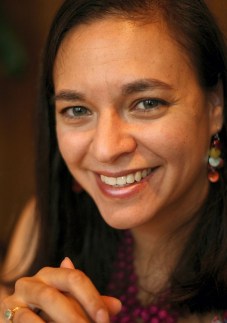
Photo credit: Todd Yates

Photo credit: Todd Yates

CentroVictoria is supported by the University of Houston-Victoria, where I work. Its founding director is Dagoberto Gilb, author of BEFORE THE END, AFTER THE BEGINNING. Our goal is to promote Mexican American literature and art. Right now, we’re doing this in two ways. One is the publication of an annual magazine called HUIZACHE. It’s a beautiful magazine, and I highly recommend it for people interested in Latino literature. Please visit our website http://huizachemag.org/ to learn more. The second way we promote the literature is to help educators. Dagoberto and his son, Ricardo Gilb, edited a textbook that was just released by Bedford St. Martin’s. It’s called MEXICAN AMERICAN LITERATURE: A PORTABLE ANTHOLOGY, a great resource for those who want a taste of important works and a sense of how the literature has changed. Dagoberto and Ricardo did a phenomenal job. For my part, I wrote an instructor’s manual full of discussion questions. It’s available as a downloadable pdf file.

To learn more about me, my books, and my work with CentroVictoria, please visit my website at www.dianalopezbooks.com


MarianneMarianne Snow Campbell is a doctoral student at The University of Georgia, where she researches nonfiction children’s books about Latin@ and Latin American topics and teaches an undergraduate course on children’s literature. Before graduate school, she taught pre-K and Kindergarten in Texas, her home state. She misses teaching, loves critters, and can also be found on Twitter and Facebook.

Celebrate Earth Day By Reading Kid Lit Books As An Ecocritic

By Marianne Snow Campbell

Earth Day is here again!  It’s a time to honor the natural world that surrounds us, consider how we can take better care of the environment, and take action keep our planet healthy and beautiful. In schools, many teachers and students will join together to read and discuss books with environmentalist lessons – The Lorax, The Great Kapok Tree, a variety of picture books about recycling and picking up litter. Last year, Lila Quintero Weaver shared a beautiful post about books celebrating “Latin@ Heroes of the Planet” and other “Earth Day-friendly books with Latin@ connections.” I love the strong messages that these texts carry and believe that they should play a prominent role in educating children about conservation and ecology.

However, reading literature with overt lessons about the earth isn’t the only method for learning about environmentalism. There’s another, somewhat subtler, approach – ecocriticism. Ecocriticism is a form of literary analysis that investigates how literature depicts nature and, ideally, inspires readers to take action to keep the natural environment healthy. But it’s not just for literature scholars – kids of all ages can be ecocritics, too!

To start an ecocritical analysis, choose a book that depicts nature but isn’t about ecological themes like conservation, recycling, and saving the earth.  For example, I like to use Maya Christina González’s Call Me Tree / Llámame árbol, a poetic, bilingual picture book that celebrates the strength and beauty of trees, as well as humans’ connections with these majestic plants.

Throughout the book, the narrator, a child, embodies nature by pretending to be a tree. They begin as a seed nestled in the earth. Slowly, they sprout from the earth and stretch toward the sky, just like a young sapling. As the child/tree grows, they are joined by other children, who also identify as diverse, strong, leafy forest residents:

“Trees!

More and more trees

Trees and trees

Just like me!


¡Árboles!

Más y más árboles

Árboles y árboles

¡Iguales a mí!”

To explore a book like Call Me Tree / Llámame árbol with an ecocritical lens, young readers can ponder questions (adapted from Dobie, 2011) that facilitate thinking about nature and readers’ relationship with the earth:

  • How do the author and illustrator depict nature in this text?
  • What is/are the relationship/s between humans and nature in this text?
  • What does this text tell you about nature?
  • Do you agree with this text’s representation of nature?  Why or why not?
  • Does this text make you want to do something to help the environment?  Why or why not? What do you want to do, and how can you accomplish these goals?

Let’s apply those questions to Call Me Tree / Llámame árbol. When I consider these questions in relation to this book, I’m filled with awe and gratitude for the trees that surround me. I love how González depicts trees and humans as equals. In both the text and the illustrations, she presents children and trees as one and the same; people are trees, and trees are people. Nature isn’t a commodity for us to consume. This representation makes me rethink my responsibility for the environment and how I should treat nature as I want to be treated. Trees care for me by cleaning the air, providing shade, and sharing their beauty, so shouldn’t I do more to care for trees? Even though Call Me Tree isn’t about conservation, it certainly makes me want to do my part to respect and sustain the natural world.

Doing ecocriticism can benefit kids in a variety of ways. By analyzing and evaluating representations of nature in texts, they’ll flex their critical thinking muscles. Moreover, ecocriticism’s blending of environmental science and literary studies can help science lovers get more into literature (and vice versa). Also, readers who enjoy expressing themselves creatively can take ecocritical analysis a step further by creating their own nature poetry, art, music, and drama.

 The best news? There are tons of literature by Latinx and Latin American authors that kids can explore with an ecocritical lens. Below are some great books for readers of all ages that feature various types of nature motifs. (Special thanks to Lila Quintero Weaver, Sonia Alejandra Rodriguez, Cindy L. Rodriguez, and Cecilia Cackley for their rich contributions to this list of suggested books!)

Picture Books

It’s Our Garden (George Ancona)

Kids get their hands dirty and grow food for their community in this nonfiction tale about a school garden.


Prietita and the Ghost Woman / PRIETITA Y LA LLORONA
(Gloria Anzaldúa, Maya Christina Gonzalez)

Prietita wanders the South Texas woods seeking a medicinal plant for her ailing mother.  What will happen when she meets la Llorona?

Domitila y el mar (Nina Basich, Teresa Martínez)

After receiving a postcard from her uncle, who’s vacationing at the beach, Domitila can’t get the sea out of her head. (Text in Spanish.)

Domitila

I Know the River Loves Me / Yo sé que el río me ama (Maya Christina Gonzalez)

Can a child and a river be best friends?  Of course!

Talking with Mother Earth / Hablando con Madre Tierra (Jorge Argueta, Lucía Angela Pérez)

In this sumptuous collection of poetry, Argueta explores his childhood connections with the earth.

Chavela and the Magic Bubble (Monica Brown, Magaly Morales)

Magical bubble gum takes Chavela back in time to visit a grove of sapodilla trees and the people who harvest their chicle in Playa del Carmen, Mexico.

Middle Grades Books

Silver People: VOICES OF THE PANAMA CANAL (Margarita Engle)

This collection of poems about the construction of the Panama Canal is narrated not only by humans, but also by animals and plants.

The Dreamer (Pam Muñoz Ryan)

As an adult, Chilean poet Pablo Neruda often incorporated nature into his work.  This account follows the young Neruda (born Ricardo Eliécer Neftalí Reyes Basoalto) and his encounters with the natural world.

Esperanza Rising (Pam Muñoz Ryan)

Forced off of their wealthy ranch in Mexico, Esperanza and her mother immigrate to California to work the land.

Where the Flame Trees Bloom (Alma Flor Ada)

Natural imagery permeates Alma Flor Ada’s stories of her childhood in Cuba.

My Ocean: A Novel of Cuba (Enrique Pérez Díaz)

Struggling to understand why friends and family are leaving Cuba for the United States, Enrique seeks solace and comfort in the ocean.

3364012

Young Adult Books

Under the Mesquite (Guadalupe García McCall)

Wrestling with her mother’s cancer diagnosis and the responsibility of caring for her siblings, Lupita seeks refuge and resilience in the shade of a tree.

The Vicious Deep (Zoraida Córdova)

Nature meets fantasy!  Tristan has always loved the water – a love that begins to make sense when he discovers that he’s heir to an underwater kingdom.

Out of Darkness (Ashley Hope Pérez)

The East Texas woods are a place of safety for Naomi and Wash as they cope with violence and racism.

.

.

MarianneMarianne Snow Campbell is a doctoral student at The University of Georgia, where she researches nonfiction children’s books about Latin@ and Latin American topics and teaches an undergraduate course on children’s literature. Before graduate school, she taught pre-K and Kindergarten in Texas, her home state. She misses teaching, loves critters, and can also be found on Twitter and Facebook.


Listening Latinx: An author’s audiobook experience

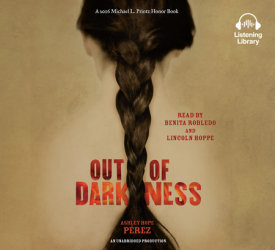
OutOfDarknessAudioCoverI have been listening to audiobooks for nearly three decades, so it was something of a dream come true to see Out of Darkness go into production shortly after it received a Printz Honor. Before production began, though, I found myself wondering if my strong opinions about narration, pronunciation, and the like would get in the way—or set me up for disappointment. What if the narrator’s voice didn’t match the texture or tone I’d imagined in writing?

I needn’t have worried. I loved how involved I got to be in the process with Listening Library. Executive producer Aaron Blank proved scrupulous in his attention to detail, from the pronunciation of my last name (yes, that accent mark means something, as I explain here) to the particulars of how to say “Cari” and “Beto,” the names of the twins in the novel. Yes, I might have sent him audio recordings of me pronouncing their names…

A few people have asked me if I wanted to narrate my own book. In general, I find that author-narrated audiobooks are rarely as effective as those narrated by actors. In particular, I have an aversion to the sound of my own voice on recordings, so that option wasn’t even on the table. (Although I would like brownie points for recording this brief introduction to Out of Darkness.)

WashAsJackie

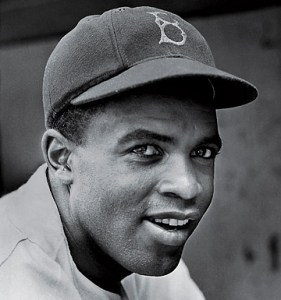
Robinson: my image of Wash

Aaron shared my sense that it was important to cast a Latinx narrator or a narrator with exceptional Spanish and cultural competency. We also agreed that it would be important to find talent capable of handling the wide range of voices, including Henry’s oil field diction and Wash’s African American Vernacular. It’s possible that I sent Aaron YouTube videos to illustrate the flattening of vowels common among East Texans as well as examples of intonation for Southern accents and African American Vernacular that captured the particularity of speech without any whiff of caricature. And (*secret revealed*) since I always pictured Wash as a young Jackie Robinson, I had to send some footage of a film about Robinson, too.

I listened to many wonderful auditions, but Benita Robledo’s beautifully modulated voice stood out immediately. She settled quickly into the world of the novel, managing not only to capture the texture of Naomi’s experience but also the nuances of other point-of-view characters as well.

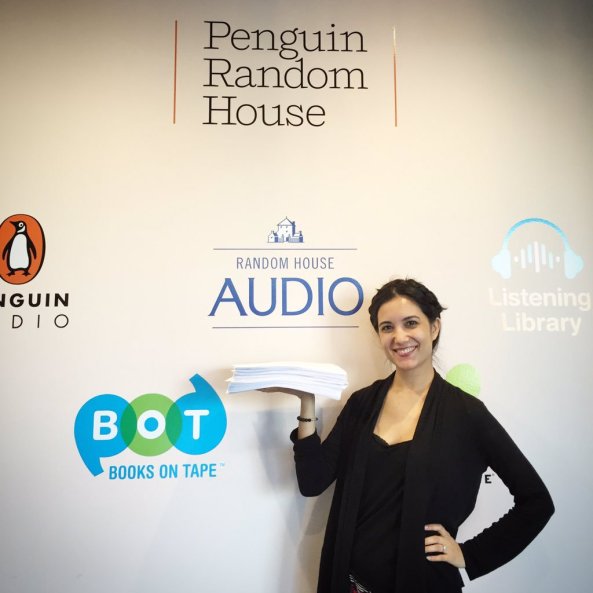
BenitaRobledo_ItsAWrap

Benita’s voice is as beautiful as she is. Sometimes you can feel that smile in the narration.

It’s a tremendous boon that, as director Tony Hudz noted, Benita gets “all the pronunciations, pitch- and letter-perfect.” But what Benita brings is more than that. Also a Texan, she grew up near Brownsville and (again quoting Tony) “knows this turf” emotionally and psychologically. In my listening, I hear the spark of connection, sincere animation of my words that comes in part from recognizing the silences that they seek to counter. Benita shared this about the experience of bringing Out of Darkness to sound:

In the still hush of the recording studio, with only my voice and my director to guide me, I would lose myself in Ashley Hope Pérez’s words. Sometimes I’d get so involved in the story, I wouldn’t realize a whole morning had passed and it was time for a break. She has an incredible talent for creating beauty even in the ugliest of times. For me, getting to live and breathe Out of Darkness, was nothing short of magic.

The admiration is mutual. Ditto regarding my feelings for Lincoln Hoppe, who masterfully renders the passages in the voice of “The Gang,” which captures the collective voice of the senior class. The Gang is a kind of ugly distillation of the thoughts circulating and is often thick with unexamined racism. Because of the character of these sections, and because it is the only first-person narration in the novel, we felt it should have a different narrator. (Benita does all the other chapters.) Here’s what Tony had to say about Lincoln’s role:

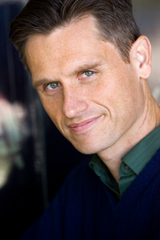
Lincoln_Hoppe_NotEvil

Lincoln Hoppe

The first thing you have to know about Lincoln Hoppe is that he’s a 6’4″ puppy dog. With glasses. One of the sweetest, gentlest people I’ve ever met. It is thus a tribute and a testament to his professionalism and skill as a reader when I say that he captured full well the ugliness and evil of The Gang. God, he did a good, awful job. And I think the slightly husky/sometimes almost raw texture of his voice will play off beautifully against Benita’s relative sweetness and lightness.

And it does, friends, it does.

Benita and Lincoln’s voices animate the narrative world of my book. Benita captures the beauty and audacity of hope in the face of prejudice, and Lincoln distills the surprising lyricism of some of the darkest threads of human consciousness that I’ve ever tried to write.

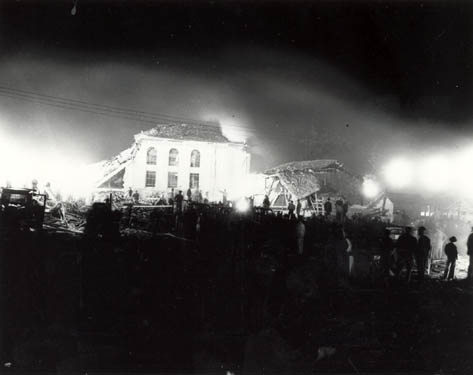
A caveat: it’s hard to listen to the prologue of Out of Darkness. This is through no fault of Benita’s. The prologue is difficult to read on the page, too; I wanted it to be that way. As one reviewer noted, the prologue acts as “a litmus test to see if you can emotionally handle this haunting novel.” The prologue figures the tremendous loss of the New London school explosion, which left one in four children dead, and the terrible possibilities it unleashes in the imagined world of my novel. Hearing this part read aloud ups the ante as Benita’s voice evokes the human stakes of tragedy.

NLSchoolExplosionatNight

Some of the lights that inspired the opening of the prologue.

It’s a difficult beginning for a difficult book. But it is a kind of difficulty that, I believe, we need to reckon with. It’s the kind of difficulty that helps us face, honestly, all that we are capable of in moments of great loss, the beauty and the horror of our humanity.

Want to listen to Out of Darkness on audio? It releases April 26. Pre-order it from Listening Library or Audible. You can also request it on CD at your local library or get a digital check-out through Overdrive.com.

And, PS, here’s the scoop on Out of Darkness, copy courtesy of the brilliant folks at Carolrhoda Lab:

“This is East Texas, and there’s lines. Lines you cross, lines you don’t cross. That clear?”

New London, Texas. 1937. Naomi Vargas and Wash Fuller know about the lines in East Texas as well as anyone. They know the signs that mark them. They know the people who enforce them. But sometimes the attraction between two people is so powerful it breaks through even the most entrenched color lines. And the consequences can be explosive.

Ashley Hope Pérez takes the facts of the 1937 New London school explosion the worst school disaster in American history as a backdrop for a riveting novel about segregation, love, family, and the forces that destroy people.


Book Review: Nothing Up My Sleeve by Diana López


Reviewed by Marianne Snow Campbell

DESCRIPTION FROM THE PUBLISHER: Sixth graders Dominic, Loop, and Z stumble upon a new magic shop in town and can’t wait to spend their summer mastering cool tricks to gain access to the Vault, a key holders-only back room bound to hold all kinds of secrets. And once they get in, they set their sights even higher: a huge competition at the end of the summer. They work on their card tricks, sleights, and vanishing acts, trying to come up with the most awesome routines possible….Problem is, the trip is expensive, and it’s money that each guy’s family just doesn’t have.

To make things worse, the shop-owners’ daughter, Ariel (who just so happens to be last year’s competition winner), will do anything to make sure the boys don’t come out on top. Even pit them against one another. Will they make it to the competition? And if so, at what cost?

Diana López, author of Confetti Girl and Ask My Mood Ring How I Feel, offers a story that’s just the right mix of heart, high jinks, and a bit of magic.

MY TWO CENTS: There’s a reason that magic trick kits sell so well at toy stores. Lots of kids love the thrill of stage magic – practicing illusions until they’re just right, creating mystery with visual puzzles, and tricking others with sleights of hand. Performing magic can help build kids’ confidence and give them a sense of agency when they might otherwise feel powerless. That’s certainly the case for Dominic, Loop, and Z, three friends who venture into the world of illusion at Conjuring Cats, the new magic store in Victoria, Texas. Each of the boys is facing a quandary that makes him feel powerless. Dominic’s parents are divorced and refuse to speak to each other, which frustrates him to no end. Meanwhile, Loop just found out that his father is actually his stepfather, and Z, the youngest child in a large family, always feels invisible. Their new magical hobby, however, leads to a summer of discovery that none of the friends expect.

One of the most valuable lessons I took away from Nothing Up My Sleeve is that hobbies are important. Once Dominic, Loop, and Z get involved in magic, they blossom. Sure, they encounter struggles along the way – jealousy, in-fighting, money troubles, family drama – but these difficulties only cause the boys to grow cognitively, socially, and emotionally. The teacher in me loves how practicing magic stimulates their critical thinking skills as they write patter (“what a magician says while performing a trick,” p. 134) for their routines and synthesize new tricks by putting their own personal spins on classic illusions. Really smart stuff! As the friends puzzle through magic, you can see how clever each boy is in his own way. This is the beauty of hobbies – kids expressing their intelligence and creativity through fun, personally meaningful activities.

OK, enough with the nerdy teacher musings. Another quality that I love about Diana López’s books is their attention to character development, and Nothing Up My Sleeve doesn’t disappoint. With magic as the backdrop, she conjures three well-rounded, realistic characters who face struggles and earn triumphs just like any real kid might. López creates a strong balance between the boys’ magical endeavors and their personal and home lives that gives this book the perfect blend of excitement and real world relevance.

Furthermore, I have to stress how much it means to me that López sets this book (and her other books) in South Texas. Catching references to places I know – Victoria, Refugio, Corpus Christi, and Houston – made me smile. Like me, a lot of young readers appreciate it when stories are set near their homes. A familiar setting can create a comfortable feeling, which, in turn, can make a book even more personally meaningful and engaging. With so many books, movies, and TV shows set in well known locales like New York and Los Angeles, it’s refreshing to find home in the pages of a book. Thank you, Ms. López for an enjoyable, relatable read!

TEACHING TIPS: As I read through Nothing Up My Sleeve, I couldn’t help thinking what a wonderful summer reading book it would be. Dominic, Loop, and Z’s adventures take place during the summer, and I can easily imagine kids soaking up this book on languid afternoons in June, July, and August. If you teach upper elementary or middle grades, consider putting it on your summer reading list.

Nothing Up My Sleeve is also an excellent book for classroom use. López fills her writing with various literary elements, which makes the book a solid model for student writing. Two particular elements that she focuses on in this book are metaphor – drawing comparisons between magic tricks and problems the boys face – and alternate perspectives. Each chapter assumes a different point, making the story richer and more complex. Unpacking these literary devices with students and encouraging them to incorporate the devices into their own pieces can really help them hone their creative writing skills.

Photo credit: Todd Yates

Photo credit: Todd Yates

ABOUT THE AUTHOR: A former middle school teacher, Diana López has written several books for children, young adults, and adults, including Confetti Girl, Ask My Mood Ring How I Feel, Choke, and Sofia’s Saints. Her writing has also been featured in the anthologies Hecho en Tejas and You Don’t Have a Clue: Latino Mystery Stories for Teens. In 2004, she received a writing fellowship from the Texas Commission for the Arts and the Alfredo Cisneros del Moral Foundation, and Emporia State University honored Confetti Girl with the William Allen White Award in 2012. She teaches literature and creative writing at the University of Houston—Victoria and serves as managing director for Centro Victoria, an organization that celebrates Mexican-American literature and culture. To learn more about her work, you can visit her website or check out her Twitter.


MarianneMarianne Snow Campbell is a doctoral student at The University of Georgia, where she researches nonfiction children’s books about Latin@ and Latin American topics and teaches an undergraduate course on children’s literature. Before graduate school, she taught pre-K and Kindergarten in Texas, her home state. She misses teaching, loves critters, and can also be found on Twitter and Facebook.

Poetry in the Lives of Children and Young Adults


By Dr. Sonia Alejandra Rodriguez

“Before you go further,/ let me tell you what a poem brings,/ first, you must know the secret,/ there is no poem/ to speak of, it is a way to attain/ a life without boundaries”

— from “Let Me Tell You What a Poem Brings by Juan Felipe Herrera

I have been teaching creative writing to middle school and high school students in and outside of traditional classroom spaces for about five years now. For the most part, I have found that despite the need for these creative spaces, they are too hard to come by. My purpose in each teaching space is to create a safe space where youth can use their lived experiences, their communities, and their imagination as inspiration to find their voices—alongside teaching them a skill or two about creative writing. My favorite part of teaching creative writing is the opportunity to listen to youth tell their stories. When I start my classes, I always let youth know that I was undocumented when I was their age, and with high school students, I might reveal that I grew up around domestic violence. I don’t share these personal facts for any shock factor but because there’s still a dangerous misconception that people like me—and like my students—are not writers. The lack of representation and diversity in books available in K-12 classrooms impacts whether children and young adults understand their experiences as valuable and whether they can see themselves as agents of their own stories. In other words, not seeing ourselves represented in what we read while in school influences the value we give to our personal experiences and whether we consider ourselves worthy enough to write our own stories. Most of the work that I do in each teaching space is about undoing the fallacies of who can be a writer and what stories can be told.

I enjoy teaching poetry most of all because, at first, youth are very hesitant about reading and writing poetry because it’s “too hard” to understand or there are “too many rules” to follow, but they are then surprised and even excited when we read poems by the likes of Francisco X. Alarcon, Pat Mora,  or Juan Felipe Herrera. I’m sure what surprises them is that these poems are about tortillas, abuelas, or about barrios like the ones in which they live. The idea here is not to essentialize their Latinx experiences, or their experiences as children of color for that matter, but stories about cultural foods, grandmas, immigration, class, and the like still resonate with children and young adults of color for a reason. Even if they are exposed to writers of color in their classrooms, students and teachers alike are constantly battling the negative messages youth receive about their cultural, ethnic, and class background. Because of this, it’s refreshing and empowering for youth to hear stories they can relate to in hopes that they do will want to share their own stories.

Poetry usually becomes the favorite outlet for many of my students, especially after I tell them that they can write poetry without needing to follow any rules. Poetry has become a safe way for my students to unleash their dreams, their pain, and their imaginations without necessarily revealing the truth about any of the above. Imagery, metaphors, similes, and symbols are very powerful tools for youth to process their experiences without needing to name their afflictions if they don’t want to. On the other hand, poetry is the perfect vessel for them to say what they want with little stress from conventional English grammar rules. Believe it or not, complete sentences, subject-verb agreement, and punctuation can be real bummers. I have had the most hesitant of 6th grade boys write poems about video games, boogers, balls, or about how stupid 6th grade is. And I encourage those types of poems because those, too, are important stories. There are certainly other students that can relate to poetry about video games and the dreadfulness that is 6th grade. In the same vein, I have had students reveal that they struggle with depression, that they don’t like the color of their skin, that they are embarrassed by their parent’s broken English, that they or a family member are undocumented or have been deported. I don’t ever ask students to write about their deepest, darkest secrets. I often give them the option to make something up if they don’t want to write about themselves. But more often than not, students share these personal stories without prompting because they need to. In my poetry sessions[i], I try to give students the opportunity to say what they can’t say aloud in hopes that they may “attain a life without boundaries.”

How to Use Poetry in Latinx Children’s Literature to Encourage Children and Youth to Read/Write Poetry

For elementary and middle school students, I often start off with Francisco X. Alarcón’s poetry for children because they are fun, culturally relevant, and bilingual (English/Spanish). Alarcón has many wonderful books of poetry for children but I use the “The Magical Cycle of the Seasons Series,” which includes Iguanas in the Snow: And Other Winter Poems, Laughing Tomatoes: And Other Spring Poems, From the Bellybutton of the Moon: And other Summer Poems, Angels Ride Bikes: And Other Fall Poems, because it allows me to use the five senses to describe how each season manifest itself in a student’s community.


For example, Alarcón’s poem “Dream,” in Laughing Tomatoes: And Other Summer Poems, is about gardens everywhere and everyone helping to plant gardens. When teaching this poem, I first ask the youth to read the poem aloud. I like to ask different students to read the same poem several times so that we can hear different intonations and discuss if emphasizing different words in the poem changes its meaning. I do the same with the Spanish version of the poem. I then talk about which of the five senses the poem uses to tell the story. I ask students to point to specific lines in the poem to support their arguments. We then move into a group discussion about gardens, their purposes, where we might see them, and if they have one of their own. Depending on the group, I might ask them to write in free verse about the gardens in their homes/communities or to imagine their own garden. If the youth or group needs more structure, I might ask them to write an acrostic or cinquain poem about gardens or a garden related subjects. To close out the session, I often ask students to share their poems, or we might try to mime or sing the poem. When there’s not enough time to go into that much detail with the poem, I read the poem with the youth, ask them what they think the poem is about, and ask them to write their own poem about their garden, a garden they’ve seen, or why there should or shouldn’t be more gardens in their communities. Maya Christina Gonzalez’s beautiful illustrations also present an opportunity for students to create additional garden paintings, drawings, or an entirely new poem based on the illustrations.

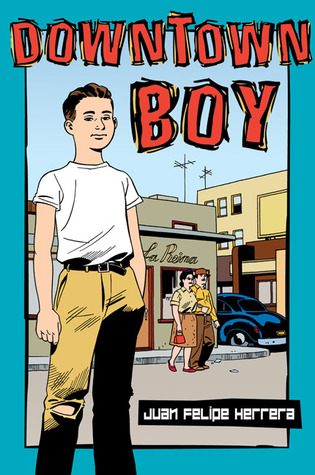
For older students I often refer to Juan Felipe Herrera’s novel in verse Downtown Boy. More often than not, we focus on the young main character Juanito to discuss issues such as discrimination in school, immigration, gender roles, masculinity and femininity, diabetes, family, and more. If I have an opportunity to teach the entire novel, then I often create poetry portfolios with my students where we pick a broader theme like identity, culture, and/or community that will thread throughout all their poems.  If I don’t have enough time to cover the entire novel, then I usually pick the poems that will best represent the student population or the poem with which they can connect to the most.
For example, Downtown Boy opens with Juanito’s cousin trying to coerce him into boxing Sweet Pea Price. Juanito is new to San Francisco and wants to make friends but his father has advised him against fighting. Juanito will need to decide if he will fight or not. When teaching this poem, I ask students to read this poem aloud; we then discuss Juanito’s character traits and the overall voice of the poem. I brainstorm with my students about times they might have been in a similar predicament. Because this poem uses dialogue, I encourage my students to include two different voices. If the youth have finished their poems, I might ask them to share their work. With older students, I like to encourage revisions and workshopping each other’s poems in order to improve our writing and to learn from one another.

Poetry in Action

The following poems were written by young poets in my creative writing classes. Kimberly Alvarez is currently a sophomore in high school in Riverside, California. Naomi Lara is currently a 6th grader in an elementary in Chicago, Illinois. Jennifer Alvarez is currently a senior in high school in Riverside, California. I’m grateful for their words and for their permission to share them here.

Dream[ii].

by Kimberly Alvarez

At Night,

I look up at the ceiling.

Bare.

NO DREAMS

Anywhere.

At midnight,

I’m sound asleep

In Paradise

Floating.

Free. Away.

I don’t want to wake up.

Until my eyes just…

Open,

Like a curtain beside me

When the wind comes through

At 5:00 a.m…

I hear my dad getting ready for

Work.

I can tell he didn’t choose that

Job or this life for himself

Or my family.

I see through him

Through his eyes,

To his soul.

It may seem…

COLD

but in reality

I can feel,

Feel the warmth

When I look into his eyes,

To his soul.

They change color. His eyes.

With him. His mood.

¿Porque? Why?

Can’t he be as warm as his soul is..

Dream.

I always do

Of him,

Of my family,

Finally happy together.

Put back together

Like a puzzle.

I always wonder

What my family would

Be like without

Dreams.

At morning,

When I get up

It all flows down

Goes down like a giant wave

Drowning my dreams

And pulling them down

At night,

I look up at the ceiling

All of my dreams,

Are floating

Up, wandering

On the ceiling

Waiting for the rest

Of my dreams to

Join them

And

Soon…

They will

Become

One BIG dream.

Un Gran Sueño.


It All Changed

By Noemi Lara

Happy girl, good friends

Big house

She should have cherished those moments

For they would be gone too soon

She looked up at the moon

Little did she know everything was about to change

Her mom and dad were acting strange

They told her they needed to arrange a meeting to see new houses.

Their new house has mouses

The neighborhood was foul

She couldn’t help but growl

She grew older

And things got colder

Her friends were bolder

Her parents would fight

It gave her a fright

She fought with all her might

But all she would see was the night

Oh how it all changed


My California[iii]

By Jennifer Alvarez

My California is fun times at Lake Perris.

Running into the water but jumping back when you feel the ice

cold water.

In those rare but amazing visits to see my “best cousin forever”

in Fontana.

Laughing, fighting, hugging, and talking until the next three

months when we reunites.

It is those two times going to Big Bear.

Snowman on the roof of my dad’s car, attempting to bring it back

home to show it to my friends.

It is the  multiple times driving to Moreno Valeey to Walmart with my sister.

Music blaring, singing along with smiles on our faces.

It is the sisterly bonding we had going to the Moreno Valley

Mall.

But mostly, my California are memories with the people I love.


[i] Currently I teach poetry as a Teaching Artist with ElevArte Community Studio, an arts organization in Chicago. “Word Up,” is a pilot program funded by ElevArte and the Poetry Foundation to create a safe space for underrepresented youth to learn about and write poetry. I visit a local elementary school once a week to teach, read, and write poetry with two 6th grade classes. I have worked closely with their awesome teacher, Ms. Delta Cervantes, to create a poetry curriculum that also meets common core standards. The 6th graders are presently working on spoken word projects.

[ii] Dream was first published in 2012 in a youth anthology, R’side of the Story, out of the Youth Opportunity Center in Riverside, California

[iii] My California was published in 2013 in R’side of the Story


FullSizeRender (1)Dr. Sonia Alejandra Rodriguez’s research focuses on the various roles that healing plays in Latinx children’s and young adult literature. She currently teaches composition and literature at a community college in Chicago. She also teaches poetry to 6th graders and drama to 2nd graders as a teaching artist through a local arts organization. She is working on her middle grade book. Follow Sonia on Instagram @latinxkidlit
Spotlight on Latina Illustrators Part 3: Sara Palacios, Claudia Rueda, and Tania de Regil


By Cecilia Cackley

This is the third in a series of posts spotlighting Latina illustrators of picture books. Some of these artists have been creating children’s books for many years, while others will have their first book out this year. Some of them live in the US, while others live overseas. They come from many different cultural backgrounds, but all are passionate about connecting with readers through art and story. Please look for their books at bookstores and libraries!

Interview answers from Claudia Rueda and Tania de Regil have been translated from Spanish.

Sara Palacios

Sara Palacios is an illustrator from Mexico. She studied Graphic Design at Universidad Autónoma Metropolitana, Mexico DF, School of Design, INBA  (National Institute of Fine Arts) Mexico DF, and Universidad del Claustro de Sor Juana, Mexico DF. She studied illustration at Academy of Art University, San Francisco CA, where she has been part-time faculty since 2014. She received the Pura Belpré Honor for illustration in 2012 and is the illustrator of the Marisol McDonald series by Monica Brown for Lee & Low, as well as numerous other books. Her newest picture book, One Big Family (written by Marc Harshman) will be published by Eerdmans Books for Young Readers later this year.

Q: What inspired you to become an artist?

A: I always liked to draw, but I didn’t know that illustrators even existed until I was pursuing my Graphic Design degree in Mexico. I was invited to an illustration exhibition. That was the first time I became aware of what illustration was. I was in awe! and I knew that’s what I wanted to do. The same friend who invited me to the exhibition told me that one of the illustrators was looking for somebody to help him. My friend encouraged me to go to the interview and show my drawings and I got the job! I started washing brushes and cutting paper until little by little I was taught to paint in watercolor. That job was my first school of illustration and I’ve been doing that ever since. After finishing my degree in Mexico I went on to study for my BFA and MFA in illustration in the US.

Q: Tell us about your favorite artistic medium.

A: I don’t really have a favorite medium. The first technique I ever learned was watercolor and for years that was the only medium I used until I started working toward my BFA at the Academy of Art in San Francisco. Through the classes, I began using gouache, acrylics , pastels, the computer etc. At first, I was afraid of mixing one technique with another, but I started experimenting on my own and I realized that what works best for me is mixed media. I also like collage, so all my illustrations are done with mixed media now. I use everything from colored pencils, watercolor, markers, gouache, digital. I don’t think I can just pick one technique.

Q: Please finish the sentence “Picture books are important because…”

A: They can bring some magic to children and adults alike.

12629258  17940785


Claudia Rueda

Image result for claudia rueda
Claudia Rueda
 is a Colombian picture book author, New York Times Best Seller illustrator and a 2016 Hans Christian Andersen award nominee. Her books have been published throughout North America, Europe and Asia and have been translated into more than ten different languages. In the United States, she is best known as the illustrator of the series Here Comes theCat by Deborah Underwood. Her concept books for young readers have been published in Spanish by the publisher Oceano Travesia.

Q: What inspired you to become an artist?

A: I have always liked to draw, like all kids. And I’ve always liked to imagine things and create stories, also like kids when they are playing. Basically, when it was time to put away the colored pencils and imagination to become ‘grown up’ I decided not to do it.

Q: Tell us about your favorite artistic medium.

A: Graphite pencil on white paper is my favorite medium. The capacity for expression in the strokes, it’s simplicity and versatility goes very well with my creative process.

Q: Please finish the sentence “Picture books are important because…”

A: The combination of visual narration with the verbal enriches the experience of reading and allows the story to happen in the mind of the reader that combines the two languages.

18349512  18701595  23281875  25361885


Tania de Regil

taniadrTania de Regil is an author and illustrator from Mexico City. When she was five, she moved to Stockholm, Sweden with her family, where she discovered her love of reading and decided that she wanted to be a professional author some day. Tania studied fashion design at Parsons School of Design in New York City and finished her studies in her home country of Mexico. Her work as a costume designer in film and television has helped to better grasp the art of storytelling through images. Tania’s illustration work is always filled with interesting details for children to discover. She uses a variety of media in her work, such as watercolor, gouache, color pencils, wax pastels and ink to create richly textured, engaging images. Tania’s debut picture book, Sebastián y la isla Tut, which she both wrote and illustrated, was published in November, 2015 by Macmillan Mexico.

Q: What inspired you to become an artist?

A: When I was a girl, my family and I went to live in Sweden. Since I didn’t know the language, what helped me the most was reading. My teacher gave me lots of books and among them were books by Roald Dahl, illustrated by Quentin Blake. In that moment, I fell in love completely with the stories and illustrations and I decided that one day I would be a great writer and illustrator like them. I was eight years old.

Q: Tell us about your favorite artistic medium.

A: I like watercolor a lot because I can never have complete control over it. It’s a medium full of surprises and makes it much more expressive and fun to use. I also like to mix it with other materials like colored pencil, oil pastels, gouache and ink. I liked to always continue experimenting with new materials but the basis of all my illustrations is watercolor.

Q: Please finish the sentence “Picture books are important because…”

A: They take you to worlds where the imagination never ends.


Books to Look For:

Brown, Monica. Marisol McDonald Doesnt Match

Brown, Monica. Marisol McDonald and the Clash Bash

Harshman, Marc. One Big Family

Rueda, Claudia Is it big or is it little?

Thong, Roseanne Greenfield. Twas Nochebuena

Underwood, Deborah. Here Comes the Easter Cat

Underwood, Deborah. Here Comes Santa Cat

Underwood, Deborah Here Comes Valentine Cat