Latin@s in Kid Lit at the Library: Interview with Angie Manfredi

By Sujei Lugo 

The Latin@s in Kid Lit at the Library series focuses on interviews with children’s librarians, youth services librarians, and school librarians, where they share their experiences, knowledge, and challenges using Latino children’s literature in their libraries. In this third installment of this series, I interview a great supporter of diverse books and an awesome booktalker, Angie Manfredi.
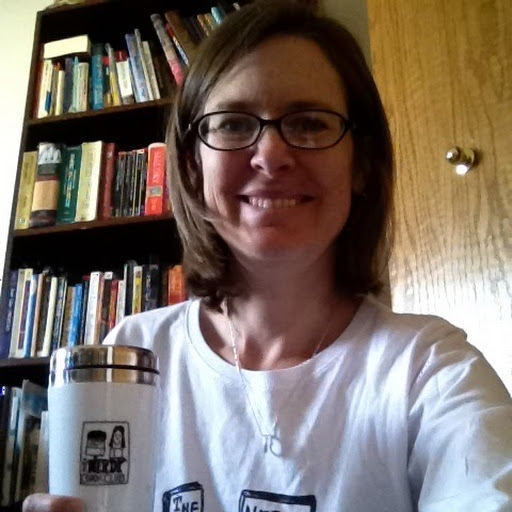
Angie ManfrediAngie Manfredi blogs at www.fatgirlreading.com and tweets constantly as @misskubelik. She is currently serving on the Stonewall Awards Committee. She has presented nationally on library issues from diversity to building teen services. She still can’t believe they pay her to be a librarian.

Talk a little bit about yourself and your library.
I am a born and raised New Mexican and proud of it. I am ethnically Italian, but my maternal great-mother was Latina and my maternal grandmother never let me forget it, “You’re not ALL Italian, after all.”

I’m Head of Youth Services at the Los Alamos County Library System in New Mexico. My library serves a large international population but, like most of New Mexico, also serves a Hispanic community. I work with ages 0-18 and can’t ever pick a favorite demographic.

What are your library’s selection and acquisition processes regarding Latino children’s books? Do you have any input in these processes?
Yes, as the Head of Youth Services, I am the final selector. I make sure to read widely from a variety of sources, both online and in print (For example, I love and use this blog). I ask my professional learning network on Twitter, publishers and small and regional publishers as well. University of New Mexico Press has some great regional titles like The Eyes of the Weaver/Los Ojos del Tejedor by Cristina Ortega, about the weaving tradition in the local Chimayó Valley and Amadito and the Hero Children/Amadito y los Niños Héroes by Enrique R. Lamadrid, about a flu epidemic and a pioneering New Mexican physician. These are local and bilingual titles a major publisher might never carry but are relevant to our region and our community. (I really recommend UNM Press. Check them out!)

What types of children and youth programming does your library offer using Latino children’s literature?
Nothing regularly, but we make an effort to include Latino children’s books in our storytimes, displays, and recommended book lists, so that they are a fully integrated part of our library services. We also create displays and booklists for National Hispanic Heritage Month.

Can you talk about community outreach and promoting library events?
I’ve been in this position almost eight years, so I’m lucky I’ve met lots of people! That’s a big part of what we do, I try to get my face out there. We have booths at community events, I contact school librarians with info about programs, and I’ve connected with our community educators group. If people know you’re willing to collaborate or help, even on a low level (making a booklist for an event even if you can’t attend), they are more likely to think of you or ask you.

What is the reaction of kids, teens, and families regarding Latino children’s books?
I’m lucky, everyone is receptive. That’s one of the best parts of living in New Mexico, though the Latino/a experience and the New Mexican experience are often so closely intertwined.

I love when parents and grandparents ask for books in Spanish or I get to show them our Spanish-language collection and they marvel at how many we have. Besides the books in English with Latino/a characters, we have everything from pictures to The Hunger Games in Spanish. They all circulate, which the entire staff takes pride in. We are always looking for more materials!

Any challenges regarding the acquisition of Latino children’s books or programming? What programs would you like to offer?
We’ve worked hard to refresh the Spanish-language collection with new materials. I found some motivated parent volunteers (that’s why we get out and mingle with patrons!) and they helped with the selection.

I’d love to have a Spanish-language storytime at least once a month. We had one when I first started, but our volunteer that was doing it got a full-time job. I’m definitely still interested in that. After our success participating in the African American Read-In, I also plan to expand our National Hispanic Heritage Month programming this year to have a read-in and a week full of themed storytimes. I’m excited about that.

Do you address issues of prejudice, oppression and inaccuracy in your library and in children’s books?
I hope I have weeded most of the books with inaccurate and outdated information. But I try, instead, to guide patrons to the books with positive and accurate portrayals. I say: “I really love this one!” or “This one really gets it right!” or “This one won an award, let me tell you about it!” That’s the kind of situation when patrons can really benefit from our guidance and enthusiasm, so it’s on us to be informed and proactive about the promotion.

Any advice for other librarians and educators who would like to use and incorporate Latino children’s literature into their programming?
Do it! If you feel unsure about where to start, dig into the Pura Belpré Award, the Tomás Rivera Award, and the Américas Award winners to give you a good start. Find one or two books you feel confident booktalking or reading in storytime and build from there, integrating those titles into your repertoire. There are families and kids in your community who will see themselves in these stories, and their cousins, and grandmothers, and friends.

Which are the most popular Latino children’s books in your library?
Our patrons love text where the Spanish is integrated through the text, so some favorite picture books are anything by Pat Mora and Yuyi Morales. Pam Muñoz Ryan is one of our most popular middle grade authors, Esperanza Rising is often assigned in schools and kids genuinely love it. The Tía Lola stories by Julia Alvarez are popular here too. Yaqui Delgado Wants to Kick Your Ass by Meg Medina was a very popular book here. And, of course, I can’t keep Gabi: A Girl in Pieces by Isabel Quintero on the shelf.

And finally, which Latino children’s books do you recommend?

    
I love everything by Duncan Tonatiuh. I can’t wait to see what Guadalupe García McCall writes next. I think every middle schooler should be required to read The Revolution of Evelyn Serrano by Sonia Manzano. It’s an amazing book about finding who YOU are and what YOU will stand for. Similarly, Grandma’s Gift by Eric Velásquez made me cry the first time I read it and I think elementary school kids should all be taught it. It does a great job discussing how having someone support your dreams can change you and so can seeing someone who looks like you in art and media.

Oh, and Bless Me Última by Rudolfo Anaya. A required high school read for me and for thousands of other New Mexican students over the years. It helped me see that everyone has a story and it’s OUR job to listen.


Book Review: Muckers by Sandra Neil Wallace

by Zoraida Córdova 

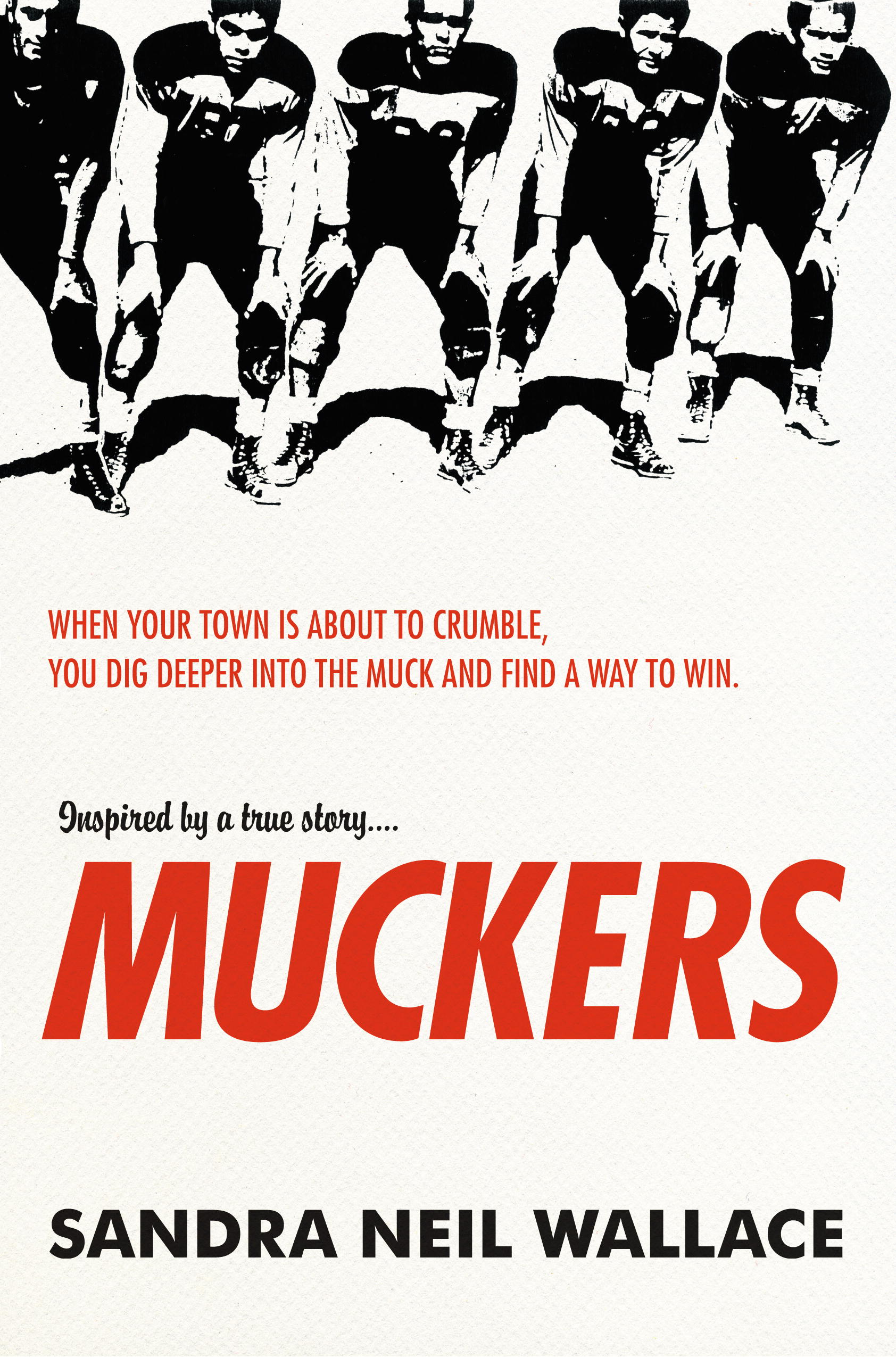
DESCRIPTION OF THE BOOKmuckerscover

Former ESPN sportscaster Sandra Neil Wallace makes her young adult debut with a historical fiction novel that School Library Journal recommends to fans of Friday Night Lights in a starred review.

Felix “Red” O’Sullivan’s world is crumbling around him: the mine that employs most of town is on the brink of closing, threatening to shutter the entire town and his high school with it. But Red’s got his own burdens to bear: his older brother, Bobby, died in the war, and he’s been struggling to follow in his footsteps ever since. That means assuming Bobby’s old position as quarterback and leading the last-ever Muckers team to the championship.

But the only way for the hardscrabble Muckers to win State is to go undefeated and tackle their biggest rival, Phoenix United, which would be something of a miracle. Luckily, miracles can happen all the time on the field.

MY TWO CENTS:

I admit I started reading this book because I had a little bit of Superbowl fever (Can we talk about that last call? No? Ok…)

Muckers took me incredibly by surprise for one reason: I’m reading a book set during World War II, and somehow I still felt like the social climate hasn’t changed that much sixty plus years later.

The novel is based on a true story of the Jerome Muckers. The Muckers in this novel are fictional, but they felt entirely real. We follow “Red” O’Sullivan (Anglo Irish), Rabbit (Italian American), and Cruz (Mexican) as they take up their places in the last football season their town of Hatley will ever have. Theirs is a mining town, which has run dry. The people of the town still cling to shreds of hope, and that hope is football. Football becomes this magnanimous thing, greater even than the power of the lonesome church, and the townspeople put their belief in those kids.

There are some, like Cruz, who keep believing that everything is going to be okay. That Mr. Ruffner (the owner of pretty much the town) will change his mind about closing down the mine, and that they’ll be able to keep going. There are others, like Red’s father, who are broken from such a hard life, that they resolve to drinking and (barely) basic human functioning. Hatley itself is this living, breathing thing that is holding on just barely, it seems, to see the team become champions. And I loved learning about the town as much as I learned about it’s inhabitants, each of them adding layers to the story and to Red’s life. A part of me wanted so very much for a Disney type of resolution, with one of the kids finding an open vein of ore during football practice. But as much as the town is built around the mine, and the mine plays a role in the life or death of the town, the hope of the town lies in a group of scrawny boys whose field is made out of slag.

The training of new and old Muckers is in this paragraph:

“The knees of the wobbly freshman are dripping blood onto the slag and I don’t think he’ll make it. I want to tell him to keep going, that if you on’t you’re sunk. But he’ll have to learn for himself. We’re hanging off the side of a mountain exposed to the desert’s blazing sun with the heart of out town ripped open, churned up, and processes into copper. We play football on the discarded part–the gunk that gets delivered back to us from Cottonville…”

While the adult workers fight their own struggles, the Hatley young Muckers have their enemies in the form of rival teams with new uniforms, equipment, and a field that isn’t called “Hell’s Corner.” The Cottonville Wolves are the worst, and I actually found myself hating this fictional town that never did anything to me. The more the Muckers keep winning, the more I want them to be okay. I want to pull them out of the story and tell them that history is wrong. That segregation is wrong. That miners shouldn’t have to live off dirt wages. That Rabbit doesn’t have to enlist in the war. That Red’s mother is going to get better. The ugly parts of the novel (and I mean ugly in the sense that history can be a cruel thing to read about) is the discrimination that is underlined in the novel.

Red says it best when he’s in the middle of English class and his teacher is putting the fear of Commies into the hearts of his students.

“It’s a funny thing about our town. …everyone’s got the spirit of good ol’ Hatley High. They rally on the sidelines of our football games, but if you want to go for a swim, or say, get married, it better be ‘with’ or ‘to’ your own kind. We come together during the day, but we all head home to our places on the hill. If you climb up from Main to Company Ridge–Gringo Ridge, Cruz likes to remind me–you’re right and her run the mine your house overlooks.

If you stay on Main and follow it to the city limits…you could be Rabbit’s dad…in the middle of Little Italy. If you walk down the hill in the direction from the pool hall that fits your nationality, chances are you work in the mine.

If it’s the Copper star and your legs are draped over a burro…you’re Mexican, maybe Santiago, Cruz’s father, working your way down the switchbacks to the bottom of the Gulch and a little wooden shanty in the Barrio.”

Yeah, that’s pretty emotional to read considering Arizona was still in the headlines in 2014 on account of banning Mexican American studies from public school and not being disability friendly.  And when they passed a bill that made it okay for businesses to discriminate against gays.

So as I’m reading about a town with a football team made up of mostly Mexicans, led by a ginger named Red O’Sullivan, during a time of the Red Scare, I found myself wondering about the kind of progress (or regress) we’re making as a society in 2014. One of the most heartbreaking parts of the story (there are many) is when Red falls for Cruz’s sister, Angie, who has permanent discoloration on her hands because she works at the pool and has to bleach it every time “Mexican hours” are over. Angie who hopes for a little while that they might be together, but realizes she’ll never be able to come to terms with an interracial romance because “they” would always make her feel like she’s doing something wrong. Don’t worry, there is hope.

At the end of it all, there is hope, and it comes in the form of young and bloody football players with big dreams. Even as the town deteriorates around them, they have this one thing that no one in the world can take from them.

In the Author’s Note, Wallace remarks on how incredible the nature of this story is, but it never made any sort of headlines in it’s day, which is very sad indeed. I’m just glad she was able to tell a version of it that is filled with just as much heart.

About the author (from Goodreads): A former news anchor and ESPN sportscaster, Sandra Neil Wallace may have snagged her best lead yet in uncovering the inspirational achievements of the Jerome Muckers football team. She discovered the story while sifting through a box of letters and other memorabilia. The trail of letters led her to write Muckers.

Sandra was named an outstanding newcomer to the children’s literature scene by the Horn Book following the publication of her first novel, Little Joe. She lives in New Hampshire with her husband, author Rich Wallace, and travels to Jerome, Arizona, to visit the surviving Muckers players.

Visit her at www.sandraneilwallace.com

Add Muckers to your Goodreads!

Latin@s in Kid Lit at the Library: Interview with Crystal Brunelle

By Sujei Lugo

The Latin@s in Kid Lit at the Library series focuses on interviews with children’s librarians, youth services librarians, and school librarians, where they share their experiences, knowledge, and challenges using Latino children’s literature in their libraries. In this second entry of this series, I interview Crystal Brunelle.

Crystal is a library media specialist from Wisconsin. In times when schools and their libraries are impacted by budget cuts, closings, and lack of institutional and government support, there are still school librarians and media specialists striving to support their students, teachers and community.

crystalinterview
Crystal Brunelle
Library Media Specialist, Northern Hills Elementary School, Onalaska, Wisconsin
Blogger for richincolor.com (co-founder) and readingtl.blogspot.com (personal blog)

Tell us a little bit about yourself, your identity, and your library.
I am a white mid-westerner with German ancestors. My family moved many times, so my childhood years were spent in various cities in both Texas and California. I was an elementary school teacher and a certified ESL teacher for eleven years before coming to live in the Midwest.

I started working in libraries when we moved to Wisconsin and have loved making that transition. When we came here, it was clear that some of my students had a rather limited view of the world and though our library had some diverse titles, there weren’t nearly enough. I want our students to have plenty of books available so they can see other ways of living, and I want to make sure that all of our students have books that are mirrors reflecting their lives. 12-15% of our student population is Hmong, so the first author visit was with a woman who had written a book featuring a Hmong family and was written in English but also had Hmong text alongside. As I prepared the classes for her visit, what surprised me was that the word bilingual was virtually unknown for most of my students. That’s when I also started acquiring more bilingual materials in a variety of languages. I shared about that experience in more detail at the Nerdybookclub blog.

What process does your library take to select and acquire Latino children’s books for the collection? Do you have any input in this process?
As the Library Media Specialist, I have the responsibility of choosing all of the materials in the collection. Before Latin@s in Kid Lit came on the scene, I relied on the Pura Belpré Award, The Tomás Rivera Award, and The Américas Award for titles. More recently, I’ve been participating in the Latin@s in Kid Lit Reading Challenge which has provided me with a lot of more book titles. I’ve also had the opportunity to review several books published by Piñata Books for Children, a division of Arte Público Press.

What type of children and youth programming does your library offer using Latino children’s literature? How frequently?
I focus on Latino children’s literature during Hispanic American Heritage Month and in the past two years, I have also added El Día de los Niños to our activities. Beyond these two major events, I have many lessons that center around Latino works. A few examples are our first grade author study of Yuyi Morales, our second grade biography lesson using the book Tito Puente, Mambo King/Rey Del Mambo by Monica Brown and Rafael López, and a poetry lesson in fifth grade that includes poetry from Francisco X. Alarcón. I generally try to infuse Latino lit throughout many lessons and activities, though, so we see it all year long. An example of this is when we have a lesson about giving thanks and I share Pat Mora’s Gracias/Thanks along with Giving Thanks: A Native American Good Morning Message and Thanking the Moon: Celebrating the Mid-Autumn Moon Festival.

In terms of promoting events and community outreach, what does your library do?
This is an area that I am working on and have begun to make some progress. I oversee the fifth grade students as they create video announcements for the school. They’re posted on our school YouTube channel for parents and the community to view. This past summer was exciting because I asked for and received funding to have the library open during the summer. I only had two hours every other week, but it meant that students in walking distance (we are a neighborhood school) could come get library materials all summer. It wasn’t as well attended as I had hoped, but it was a start and something that I will publicize more in the future.

What is the reaction of kids, teens, and families regarding Latino children’s books and programming? And the reaction of your co-workers and library staff?
I have had very positive reactions to the inclusion of more Latino children’s materials. One of the families that came in during the summer library times (they speak Spanish at home) checked out a pile of books and were happy to even find a wonderful bilingual board book, Global Babies. The mother said she was happy to have that one (Global Babies) because that way the father could read to the baby in Spanish.

I know our English Language teacher has also been very happy to have the materials available. We don’t have many students with Spanish as their first language, but it helps so much with the few that are here and especially when we have a newcomer in the district. I love seeing the eyes of my Latino students light up when they hear or see Latino materials being featured in class. In addition, students who only know English enjoy experiencing other languages. They also seem to like seeing me working a little harder when I read aloud a book that includes Spanish text.

Any challenges regarding the acquisition of Latino children’s books or your programming? What would you like to do in terms of programming that you haven’t been able to?
There is nothing preventing me from buying more except budget limitations. I would like to expand our El Día de los Niños celebration beyond the school day with a family event. We’re going through a major building renovation so that isn’t a reasonable task for this coming spring due to space constraints, but it is something I will strive for in the future.

Do you address issues of prejudice and oppression in your library through and in children’s books?
Yes, this is something I address specifically in the fourth and fifth grade classes, but at a more subtle level in the younger grades. In line with the common core standards, I’m working to help students learn to read critically and to ask questions such as: who is telling the story, what is their perspective, is there a voice or perspective that is missing, and do we see evidence of bias or stereotypes? I could just tell them which books have issues, but I won’t always be with them and I want them to be able to spot problems on their own.

Any advice for other librarians/educators who would like to use and incorporate Latino children’s literature into their programming?
There is a lot of fantastic Latino children’s literature out there (see this SLJ post about that) and it isn’t just for Latino children. Even if your demographic doesn’t include many Latino patrons/students, these books can be a wonderful addition to your library. We have to move away from the idea that Latino literature is only created for Latinos. Latino literature can and should be present in book displays throughout the year and featured in story times or lessons across all kinds of topics. We have a small number of Latino students at our school, but I don’t just purchase Latino children’s materials for them – they’re beneficial to all staff and students.

Which are the most popular Latino children’s books at your library?
The most popular Latino books in my library are Niño Wrestles the World, Just a Minute, Gracias, Mi Familia Calaca, Dalia’s Wondrous Hair, Dora the Explorer books, Maximillian & the Mystery of the Guardian Angel, and in non-fiction, the series Superstars of Soccer: Mexico.

15953630  1660305  7123496

16057383  18654384  11538645

And finally, which Latino children’s books do you recommend?
To increase the amount of books I can recommend, I’m listing authors. If I only listed my recommendations from Yuyi Morales, the list would already be lengthy.

Picture Books by: Francisco X. Alarcón (poetry), George Ancona (non-fiction), Monica Brown, Laura Lacámara, Yuyi Morales, Pat Mora, Gary Soto, and Duncan Tonatiuh

Middle Grade by: Alma Flor Ada, Julia Álvarez, Margarita Engle, Jack Gantos, Xavier Garza, Meg Medina

Young Adult by: Patrick Flores-Scott, Sonia Manzano, Guadalupe Garcia McCall, Meg Medina, Benjamin Alire Sáenz, Alex Sánchez, and Francisco X. Stork.

Latin@s in Kid Lit at the Library: Interview with Patricia Toney

By Sujei Lugo

Long overdue is the need of a myriad of children’s books that embody the diversity of our communities and society. Children and adults of all backgrounds should have the opportunity to be exposed to historically untold and misrepresented stories in children’s literature. For years, educators, authors, librarians, illustrators, scholars, parents, and other community members have challenged and critiqued the gaps and invisibility of diverse populations, as well as stereotypes and inaccuracies present in children’s books. Although there have been several efforts to expand the availability of diverse children’s literature (The We Need Diverse Books campaign comes to mind as a recent example), the percentage of diverse titles still doesn’t reflect the world around us in terms of numbers and cultural experiences. But despite these problems, flourishing from this serious gap (and misrepresentation) inside the children’s literature world, we have encountered great titles that portray the Latino experience and Latinos/as in the United States.

Organizations like REFORMA (The National Association to Promote Library & Information Services to Latinos and the Spanish Speaking) and initiatives like Día de los Niños/Día de los Libros and the National Latino Children’s Literature Conference are constantly advocating and promoting the incorporation of Latino children’s literature in library collections and programming. Several awards such as the Pura Belpré Award, Tomás Rivera Mexican American Children’s Book Award, International Latino Book Awards, and Américas Awards, also play a role in acknowledging Latino children’s literature. All these initiatives help in raising a much-needed awareness of the existence of Latino children’s books, but, in addition to celebrating and promoting them, an urgent need exists to incorporate and use  these books in our classrooms and libraries.

We need to keep in mind that two pivotal places where children constantly interact with books and stories are schools and libraries. How are librarians bringing Latino children’s books to children? How are they incorporating them into their collections, school curriculum, and programming? In a bid to try to answer these questions I decided to develop a series of interviews with children’s librarians, youth services librarians, and school librarians, where they can  share their experiences, knowledge, and challenges dealing with Latino children’s literature. Although there are great resources and literature that can serve as guides to Latino children’s librarianship (Celebrating cuentos: promoting Latino children’s literature and literacy in classrooms and libraries, 25 Latino craft projects, Programming with Latino children’s materials: a how-to-do-it manual for librarians, and Serving Latino communities: a how-to-do-it manual for librarians), the communities that libraries serve are different and constantly evolving. Librarians are met with the ongoing challenge to stay up-to-date and relevant to their needs.

In this first post of our Latin@s in Kid Lit at the Library series, I’m honored to interview Patricia Toney, a fellow librarian and REFORMA member and great advocate of diversity in children’s librarianship.

Pat Toney Librarian

Patricia Toney, Bilingual Children’s Services Librarian
San Francisco Public Library

Tell us a little bit about yourself, your identity, and your library.
As the offspring of parents who immigrated from Guyana and Costa Rica, I identify as Afribbean. I’m a native of Southern California who grew up in a working class Spanish speaking community, and who later moved to the San Francisco Bay Area to attend University of California, Berkeley. I have a master’s in Counseling Psychology and a second master’s in Library Science. I started my professional career in International Student Services, then I worked in Student Counseling, and now I’m in my third career as a librarian.

I’ve been working at San Francisco Public Library (SFPL) for three years; moving up from temporary, to part-time, and finally, to full-time a year ago. SFPL serves a linguistically diverse community. I work at the Main Library and I’m in charge of providing Spanish language children’s services to families in Tenderloin, San Francisco, an economically challenged and densely populated part of the city.

What process does your library take to select and acquire Latino children’s books for the collection? Do you have any input in this process?
We have a dedicated Spanish language collection development committee and individual selectors for specific genres. My position as a Bilingual Children’s Services Librarian holds a provisional seat on the Spanish language selection committee, so my input on children’s material selection is welcomed.  Committee members regularly attend book fairs such as FIL (Guadalajara International Book Fair) and I annually attend the Bibliotecas Para La Gente Book Fair.

What type of children and youth programming does your library offer using Latino children’s literature?
I conduct a weekly bilingual family storytime and system wide we host five Spanish and Bilingual (English-Spanish) storytimes a week. We also have a ¡Viva! Latino Heritage Month Celebration, which includes music, dance, crafts, food, and films. This year, I hosted a Zumba program at my location and a Día de los Muertos altar. Also, at the end of our summer reading program, I hosted an afternoon of Lotería.

In terms of promoting events and community outreach, what does your library do?
In addition to word of mouth, social media, and printed announcements, we have four bookmobiles which traverse the city. The library recently took part in Sunday Streets-San Francisco (open street event), the Friday Night Market and Litquake (San Francisco Literary Festival). The San Francisco Public Library, Mission Branch (located in a historically Spanish speaking neighborhood) hosted a memorial reading in honor of Gabriel García Márquez during Litquake.

What is the reaction of kids, teens and families regarding Latino children’s books and programming? And the reaction of the library staff?
Children spark up when they hear or see something that is familiar to them. Parents appreciate the opportunity to share their home language with others in the community.  Colleagues and library staff are generally supportive of diversity in action. One of the library’s strategic priorities is to have “collections, services and programs that reflect diversity and inclusion.

What would you like to do in terms of programming that you haven’t been able to?
I would ideally like to hold monthly evening programs for Spanish speaking families. Tenderloin, San Francisco is a socially-oriented rich community, so there’s a lot of competition for evening programming. So not a lot of families come to the San Francisco urban civic center area for evening programs.

Do you address issues of prejudice and oppression in your library through and in Latino children’s books?
As a member of the Association of Children’s Librarians of Northern California, these issues are always addressed. SFPL has a commitment to diversity and the book selection committee takes racism and oppression into consideration before buying a book. With the population I serve, I tend to address sexism and ableism more than racism. I am always open to discussing these issues when children ask and point out opposing viewpoints and when I hear biased language. I like to give patrons the option to think for themselves.

Any advice for other librarians who would like to use and incorporate Latino children’s literature into their programming?
Latino children’s literature isn’t just for Latinos. One can incorporate Latino children’s books into book displays, class visits, and recommended reading lists.

Which are the most popular Latino children’s books at your library?
I have to say that most of our popular titles are the Spanish language translations.

And finally, which Latino children’s books do you recommend?
Anything written by Monica Brown, Yuyi Morales, or Gary Soto; Anything illustrated by Rafael López or Jose Ramírez; Esperanza Rising by Pam Muñoz Ryan; The Revolution of Evelyn Serrano by Sonia Manzano and I’m currently reading Aristotle and Dante Discover the Secrets of the Universe by Benjamin Alire Sáenz.