Author Sarah Fine Talks About Hell, Trauma, and Creating Diverse Characters

13482750By Cindy L. Rodriguez

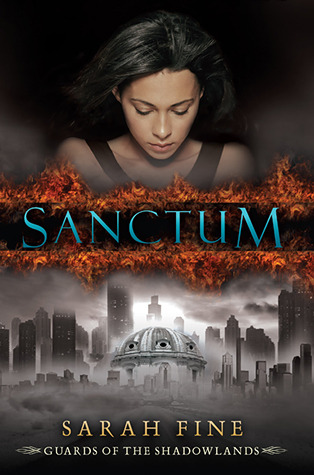
This month, we are taking a look at Latin@s in science fiction and fantasy. Today, we have a Q&A with Sarah Fine, author of Sanctum and Fracture. (Book three is in the works.) Here is a partial description of Sanctum, which features Lela Santos, a Latina main character, a foster child from Rhode Island who has experienced abandonment, neglect, and sexual abuse:

A week ago, seventeen-year-old Lela Santos’s best friend, Nadia, killed herself. Today, thanks to a farewell ritual gone awry, Lela is standing in paradise, looking upon a vast gated city in the distance—hell. No one willingly walks through the Suicide Gates, into a place smothered in darkness and infested with depraved creatures. But Lela isn’t just anyone—she’s determined to save her best friend’s soul, even if it means sacrificing her eternal afterlife.

Cindy: First, let me say that I loved Sanctum. The only part that frustrated me was how long it took for Lela and Malachi to kiss :.)

Sarah: I’m so glad you enjoyed it, and I hope the kiss was worth the wait!

Cindy: The premise of Lela going into hell to retrieve Nadia is similar to the Greek myth Orpheus and Eurydice, but obviously this is not a retelling. How influenced were you by that myth or mythology in general?

Sarah: I actually didn’t think about that particular myth at all as I was generating the idea for this book. When I read that comparison in a review, I was like … you know, that’s actually quite apt! I was a little more influenced by Jewish and Mesopotamian mythology. The Mazikin are mentioned in the Talmud as evil spirits or demons, and the inhuman Guards are very loosely based off protective deities called the lamassu in Mesopotamian myths, where they’re described as half-man, half-bull.

Cindy: Your setting is an interesting kind of hell, with the buildings being alive and able to feed off its inhabitants. How did you create and develop this idea? What kind of research do you do for fantasy world creation?

Sarah: This idea was inspired by the way C.S. Lewis wrote about his version of hell/purgatory in The Great Divorce. The “grey town” is this massive, depressing city where it’s always raining, always twilight—and here’s the part that really got me: people could have whatever they wanted, but it was of low quality. That Grey Town at the very beginning of that book completely inspired the dark city in Sanctum. Obviously, I changed it a lot, including the idea that the city is really one living, breathing entity that grows off the depression of the people residing within, but I give Lewis the credit for the basic idea (and he was clearly influenced by Dante in that work, so he deserves credit as well.)

17667916Cindy: Do you continue to work as a child psychologist? Did your work experiences help you to portray the emotional recovery Lela and the others have to go through in order to heal from trauma?

Sarah: I do, but in a different capacity than I have in the past, when I did a lot of home-based evaluations and therapy. Now I direct programs and supervise clinicians who provide those services to children and adolescents who are at risk for out-of-home placement in psychiatric hospitals or residential treatment facilities. Our goal is to work with families to keep these kids at home and in their communities, where research clearly shows they do best.

My work definitely influences how I see the complexity of trauma and what it takes to heal. A huge percentage of our clients have experienced some type of trauma, and usually not what we think of as single event, “simple” trauma. Though that can be devastating, it’s actually easier to treat than the complex developmental trauma we often see, where the trauma is more chronic and ongoing. This is actually the type of trauma Lela’s experienced—multiple disruptions in attachments, several instances of abuse or neglect. As I show her fragile but growing relationship with Diane, her foster mom, that’s always on my mind. I definitely explore more of that in book three.

Cindy: In addition to the great action scenes, this story focused on the characters’ battles with their personal demons. Thinking about author choices here…because of the issues the characters face, this story could have been developed as a YA contemporary. What led you to decide to develop the story as fantasy instead?

Sarah: I guess it’s a preference thing. There are some brilliant, brilliant authors who have explored these issues with contemporary YA (Nina LaCour, for example), but I wanted to place these characters in an environment where the depression was a tangible, living thing. This fantasy world gave me the chance to explore a lot of philosophical issues, like what is heaven, really, and how could it possibly be the same for everyone? What if you’re not emotionally ready to be there and accept what it offers? To me, that’s not a religious question, but a more concrete way of exploring something very emotional–Can you have some version of that goodness in your life, no matter where you are? What would you have to understand and embrace to receive that?

Cindy: Again with author choices….Obviously you could have created characters of any race, ethnicity, etc. What made you decide to create a Latina MC?
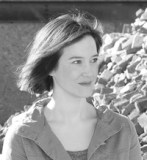
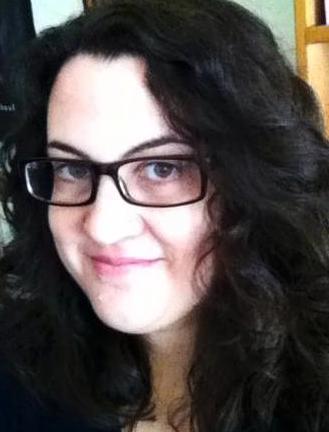
Sarah Fine

Sarah Fine

Sarah: Lela Santos really just materialized to me in that form. However, I will tell you that the majority of the school children in the urban core of Rhode Island, where Lela’s from, are Latino/a. Also, in general, children of color are overrepresented in terms of involvement in the juvenile justice system in this country (with harsher sentences as well—we’ve had court workers outright say that they’re harder on these kids because of the racism they face within society, which is a totally twisted logic that over-penalizes those children and in my opinion perpetuates that racism). Once I considered those facts, it seemed wrong to consider making her anything other than what she was from the beginning.

Cindy: Your secondary characters have interesting back stories as well, which suggests to me that including diversity in your writing is important to you. Some authors shy away from including diverse characters for fear of “getting it wrong.” Did you have any concerns about creating diverse characters? What advice, if any, would you give to fantasy writers about diversity in the genre?

Sarah: This story takes place in the afterlife, and the idea that the only people residing there would be Anglo-American, or any kind of American, is pretty laughable. The world is a BIG place—and the afterlife would be the same, minus the country divisions. Everyone would be there together, right? The dark city where most of Sanctum takes place is where everyone in the world who committed suicide has gone (with some exceptions, I think, but that’s a different interview!). I felt very strongly that having Lela coincidentally meet up with people who were American would just be false and icky.

I did have concerns, of course, because I really wanted these characters to have an impact, and to feel like real people. I did quite a bit of research. I also focused on writing from the inside out, trying to focus on each of those characters as human beings who loved and hoped and despaired in their own ways. I don’t think I’m some kind of expert on this. I’m certain I’ve made mistakes. But I’m curious and always wanting to learn about people who are different from me. And I started from the premise that all those diverse characters—Lela, Malachi, Ana, Takeshi—were on their own profoundly personal journeys, armed only with their intelligence, resilience, perseverance, and the capacity to risk their lives and hearts for a chance at peace. The rest flowed from that.

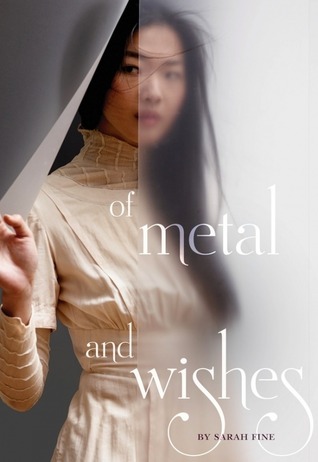
Check out these other works by Sarah Fine:

17733363  13451410  17303139

Guest Post: Stephanie Diaz, YA Author of EXTRACTION , talks about diversity and her debut novel

This month, we are taking a look at Latin@s in science fiction and fantasy. Today, we have a guest post from Stephanie Diaz, debut author of Extraction, which releases July 22.

By Stephanie Diaz

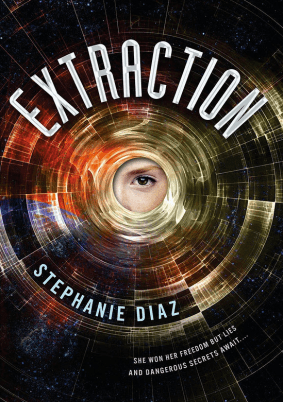
Extraction coverThanks so much to Latin@s in Kid Lit for having me here on the blog today! I wanted to share a few of my thoughts on diversity in science fiction, stemming from my experiences as a half-Latina writer of YA.

My father’s side of my family is Latino, primarily of Mexican and Spanish descent. My mother’s ancestors were white Europeans, mostly French and German. I grew up in an English-speaking household, in a Southern California town a state away from my dad’s side of the family. As such, I’ve never been hugely in touch with the Latina side of my roots, except during Christmas vacation, and for a long time it had no great influence on my writing.

My first book, which I wrote in middle school, was a story about a family in the Civil War era. My second book was a fantasy with demons and magical swords. The book I wrote in college and sold to a publisher, Extraction, was my first try at writing science fiction. It wasn’t until I was well into revising the novel that conversations about diversity in fiction grew more widespread and caught my attention. For the first time, I took a long, hard look at my characters and realized I’d made some of the supporting characters different races, but the main characters of the cast were pretty much all white. And my book was supposed to be set on a planet in a completely different galaxy! Here I’d had so much potential to diversify my made-up world, and I’d wasted it.

I plan on doing a better job in the future. I’m still working on the second and third books in the Extraction trilogy, making sure I pay attention and don’t automatically whitewash every new character I introduce to the cast. I’m also working on an unrelated YA sci-fi with a multi-racial/multi-species cast. The beauty of stories set in the future or in distant worlds is that there are so many ways for a writer to imagine how cultures will grow and influence one another over time. Science fiction allows me to imagine all sorts of possibilities that don’t exist in real life, but real life has to be an influence to make the story believable.

My goal is to tell stories that show life the way it is and the way it could evolve—and life is diverse. In physical characteristics, but also in a wealth of traditions. I’m learning that understanding the differences in all the world’s cultures is key to creating new ones, whether they be human or a made-up species.

My hope is that my own books and other books in this genre will grow more and more diverse in the coming years, drawing on little-known cultures to expand the worldview of all readers. I hope to be able to pay homage to my Latina heritage, as well as the other cultures in my blood, in future novels I write. But more than that, I hope to tell many stories about different kinds of people, not just the people I know best. After all, how can I grow as a writer—or a person—if I never venture out of my comfort zone?


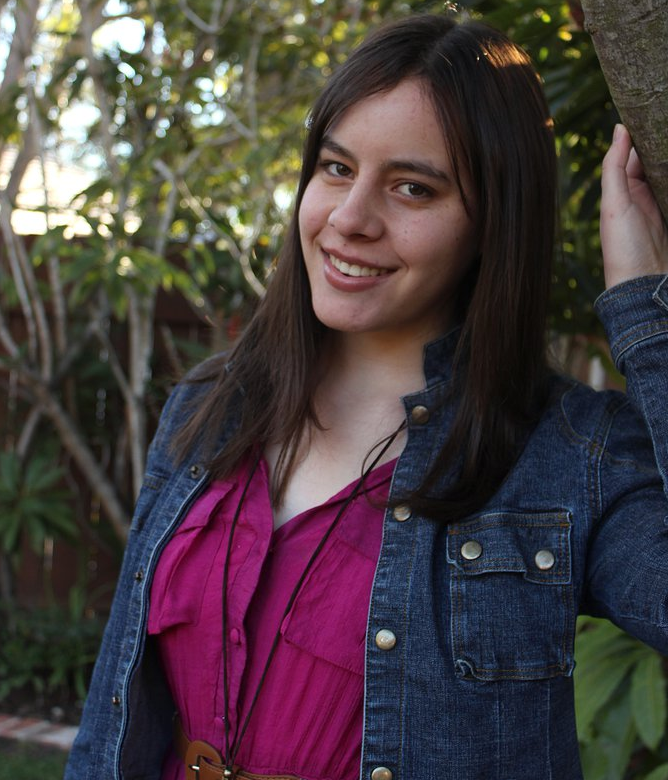
Stephanie Diaz author photoTwenty-one-year-old Stephanie Diaz wrote her debut novel, Extraction, when she should’ve been making short films and listening to class lectures at San Diego State University. When she isn’t lost in books, she can be found singing, marveling at the night sky, or fan-girling over TV shows. Visit her online at www.stephaniediazbooks.com.

Twitter​   *  Blogger  *  Facebook  *  Tumblr  *  Pinterest  * 

You can email her at: stephaniediazbooks@gmail.com

Extraction, published by St. Martin’s Press, releases July 22. Here is a description of Stephanie’s debut novel:

Clementine has spent her whole life preparing for her 16th birthday when she’ll be tested for Extraction, in the hopes of being sent from Kiel’s toxic Surface to the much safer Core, where people live without fear or starvation. When she proves promising enough to be “extracted,” she must leave without Logan, the boy she loves. Torn apart from her only sense of family, Clem promises to come back and save him from brutal Surface life. What she finds initially at the Core is a utopia compared to the Surface—it’s free of hard labor, gun-wielding officials, and the moon’s lethal acid—but life is anything but safe, and Clementine learns that the planet’s leaders are planning to exterminate Surface dwellers—and that means Logan, too. Trapped by the steel walls of the underground and the lies that keep her safe, Clementine must find a way to escape and rescue Logan and the rest of the planet. But the planet’s leaders don’t want her running—they want her subdued.

Cover Reveal for When Reason Breaks, a 2015 Young Adult Debut

.

By Cindy L. Rodriguez

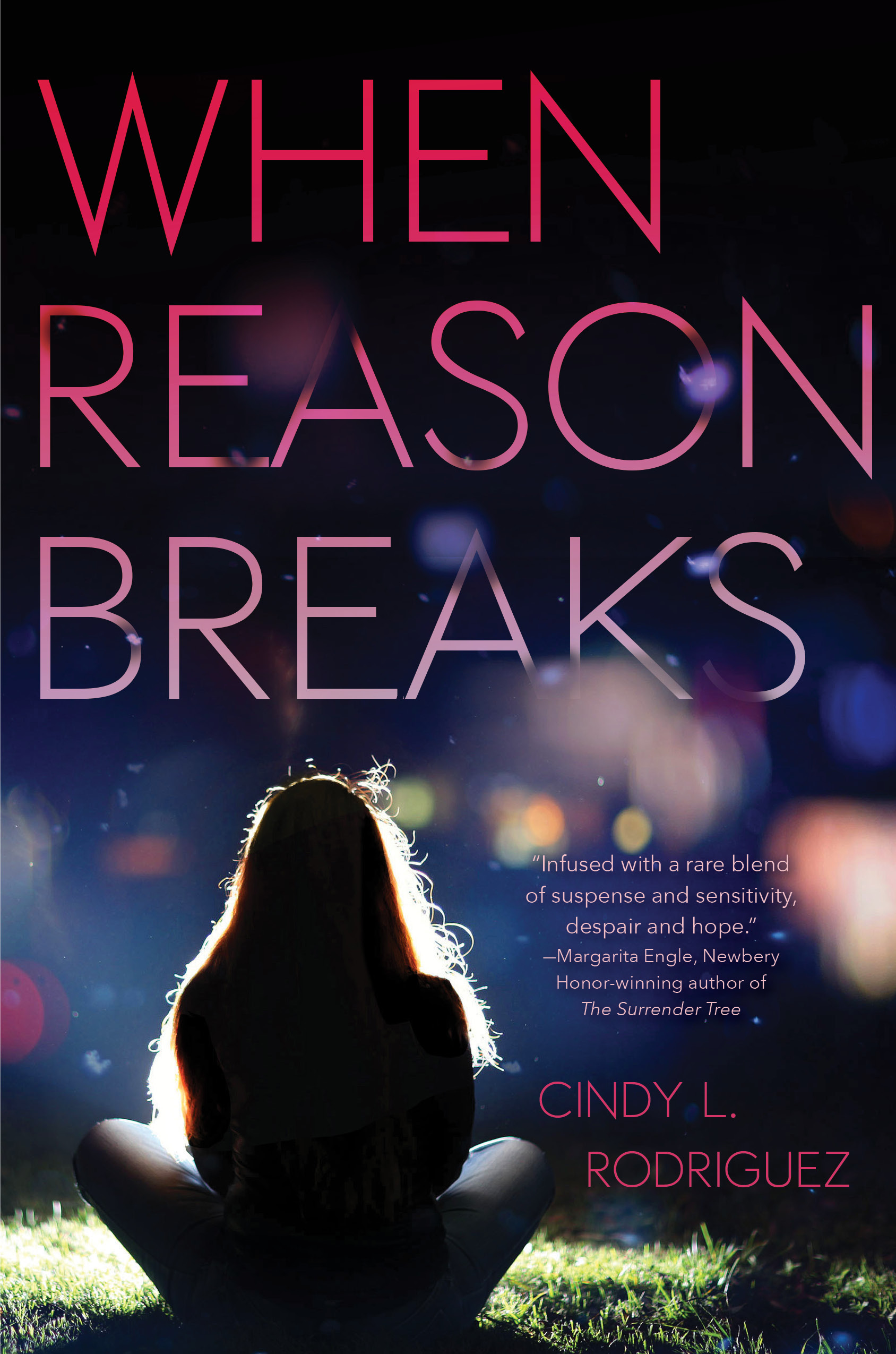
I’m really excited to reveal the cover for my debut novel, When Reason Breaks, which will be published 2/10/2015 by Bloomsbury USA Children’s Books. I’m equally thrilled to share it here because one of the main characters is Latina and the first blurb the novel received is from the wonderful, generous, super-talented Margarita Engle.

Before you scroll down to see the cover, here’s a description of the novel:

A Goth girl with an attitude problem, Elizabeth Davis must learn to control her anger before it destroys her. Emily Delgado appears to be a smart, sweet girl, with a normal life, but as depression clutches at her, she struggles to feel normal. Both girls are in Ms. Diaz’s English class, where they connect to the words of Emily Dickinson. Both are hovering on the edge of an emotional precipice. One of them will attempt suicide. And with Dickinson’s poetry as their guide, both girls must conquer their personal demons to ever be happy.

In an emotionally taut novel with a richly diverse cast of characters, readers will relish in the poetry of Emily Dickinson and be completely swept up in the turmoil of two girls grappling with demons beyond their control.

An extra tidbit for any big-time Emily Dickinson fans: Almost all of the characters represent a real person from ED’s life. Emily and Elizabeth represent Dickinson herself, sharing personal traits and experiences. Tomás Bowles represents Thomas Wentworth Higginson and Samuel Bowles, two important men in ED’s life, etc. You’ll have to read more in the author’s note!

So, now for the cover……………

*

*

*

*

Keep scrolling…(I was told to build suspense. Isn’t this suspenseful?)

*

*

*

*

TA-DA!!!!

*

*

*

*

WhenReasonBreaks_Comp

I love it for lots of reasons! The dark and light, focused and unfocused elements symbolize what the characters experience with their emotional and mental health issues. Same with how the letters start out solidly colored and then fade. Not seeing the girl’s face is also perfect since it’s a mystery as to which of the two girls attempts suicide. And here is the full quote from Margarita Engle, which will be included in its entirety on the back cover:

When Reason Breaks is infused with a rare blend of suspense and sensitivity, despair and hope. The poetic spirit of Emily Dickinson shines through the gloom of daily struggles faced by modern teens, as they discover the possibilities where they dwell.”

I’m so excited to share my debut novel with the world–starting now with a giveaway! One winner will receive a signed ARC of When Reason Breaks. Click on the Rafflecopter link below to enter. I’ll choose a winner in a week!

a Rafflecopter giveaway

CindyRodriguez150For more information about me and/or my debut novel, check out my website. You can also find me here on the About Us page and on Facebook, Twitter, and Goodreads.

When Reason Breaks is available for pre-order here:

Indiebound Barnes and Noble | Amazon Powell’s Book Depository | Books-A-Million

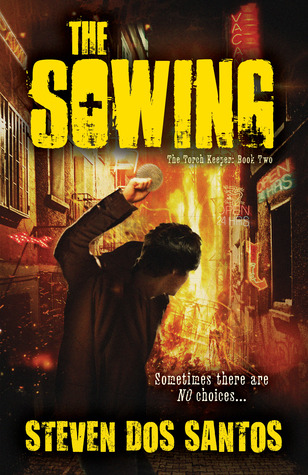
Book Review: The Sowing: The Torch Keeper Series, Book Two by Steven Dos Santos

17342414By Eileen Fontenot

DESCRIPTION FROM THE BOOK JACKET: “This time, there are no choices. Lucian “Lucky” Spark leads a double life. By day, he trains to become one of the Establishment elite. At night, he sabotages his oppressors from within, seeking to avenge the murder of his love, Digory Tycho, and rescue his imprisoned brother. But when he embarks on a risky plot to assassinate members of the Establishment hierarchy, Lucky is thrust into the war between the Establishment and the rebellion, where the lines between friend and foe are blurred beyond recognition. His only chance for survival lies in facing the secrets of the Sowing, a mystery rooted in the ashes of the apocalyptic past that threatens to destroy Lucky’s last hope for the future.”

MY TWO CENTS: Wow. When I say, the action doesn’t stop, well, it just doesn’t stop. The reader is taken immediately to a dramatic fight a couple of months after newly minted Imposer Lucky finishes the trials, portrayed in the first book, The Culling. The series is set in a post-apocalyptic future in which the totalitarian Establishment, led by Cassius Thorn, really enjoys keeping Parish citizens downtrodden.

We continue to view the world through Lucky’s eyes – including struggle to protect his little brother, Cole, and the injustices he must now pretend to participate in, while actively working toward positive change. We can see that Lucky has grown and matured, but is weighed by his constant terror of losing Cole. As he is forced to return to the Trials, this time as an Incentive, he experiences old horrors in new ways – and we learn more about the mysteries of the first book as well. There are a couple shocking twists, that I won’t mention here, but suffice it to say, this is one entertaining read. And readers can see that a bigger story line is building – bound to shake up Lucky’s already precarious situation.

The amazing thing about this series, besides the edge-of-your-seat suspense that gives the reader inventively gory payoffs, is that the sexuality of the LGBTQ characters are treated totally matter of factly. In this horrific version of our future, at least society recognizes that love is love. I think LGBTQ teens who love dystopian thrillers like The Hunger Games will enjoy a similar story that focuses on sympathetic characters that just happen to be gay. Dos Santos doesn’t make a big deal out of his characters’ sexuality. Normalizing this aspect of society is a long time coming; I think today’s teens deserve to envision a future without a closet and this series supports that idea. Although it would be nice if the other parts of the future didn’t go down the drain!

This series would be great as a pick for a LGBTQ teen book group, whether for high school or in a public library. It’s an excellent counterpoint for LGBTQ books that are serious or that focuses on sexuality as the actual story. Teens will also understand Lucky’s growth and his love of family. But, most of all, it’s just a fun read.

AUTHOR: Steven dos Santos was born in New York City and raised in south Florida. He began writing at 7, but didn’t become a professional writer until after graduating with a communications degree and then spending time working in the field of law. The two books of The Torch Keeper series are his first professionally published works, and The Culling has been added to the 2014 ALA GLBTQ’s Rainbow Project Reading List. He’s currently at work writing the final book in The Torch Keeper series.

FOR MORE INFORMATION ABOUT Dos Santos and The Sowing, visit your local library or bookstore. Online he can be found at stevendossantos.com, worldcat.org, goodreads.com, indiebound.org, barnesandnoble.com and amazon.com.

fontenot headshotEileen Fontenot is a recent graduate of Simmons College Graduate School of Library and Information Science in Boston. She works at a public library and is interested in community service and working toward social justice. A sci-fi/fantasy fan, Eileen was formerly a newspaper writer and editor.

2014 Reading Challenge: June

Participants in our 2014 Latin@s in Kid Lit Reading Challenge are out of control in the best possible way! Take a look at the variety of books that were read in June, which happens to be the half-way point of the challenge. Now would be a great time to join us or renew your commitment to the challenge, which is to read one book a month that is written by a Latin@ author (any subject) or a book written by anyone that has Latin@ characters, themes, settings, etc. You’re not required to review–only read and enjoy and let us know what you have read! If you do post a review somewhere, we will link it to the book covers below. If you choose not to review, we will link the covers to Goodreads. For July, you may want to consider some of the new winners of the International Latino Book Awards.

6413788 16043528 13436375 9757257 18166935 13482750 8585924  17286899 18048909 15814459 11387515 862908 8811369 6789056  14740980 240298 465967  13610203  2282907  6084038  4080320  15953630  17171578  8455432  16057383  18654377  10351733  18654384  1861037  52390 1139921  18148193  321133  3308853  15791044  11129790  12921673313233169587  688161  1807231  424182  640476  15893258  2429455

YA Author Steven dos Santos Talks Sci-Fi, Diversity, and Overcoming Obstacles

12617286By Eileen Fontenot

This month, we are taking a look at Latin@s in science fiction and fantasy. Today, we have a Q&A with Steven dos Santos, author of The Culling and The Sowing.

Born in New York City and raised in South Florida, Steven dos Santos began writing at age 7. It was only after a couple different career paths as an adult that he decided to become a professional writer. His trilogy, entitled The Torch Keeper, is his first effort. Book One, The Culling, was published last year, and the second book, The Sowing, was published in 2014.

In addition to the mind-boggling twists and shocks and the intense descriptions of violence and the horror in which his characters live in their dystopian world, what makes this series special is its main character, Lucian “Lucky” Spark, who is gay. Also striking is that the world in which dos Santos’ characters inhabit have equal rights, such as marriage equality. It’s also a bit of a novelty to have the main character in this type of genre not be a straight female. (Looking at you, Katniss Everdeen.)

Steven was kind enough to answer a few questions for Latin@s in Kid Lit – among other things, about the rewards and struggles of his writing career and what’s in store for the future.

Eileen: Could you tell us a bit about what prompted you to write this series? What is it about this genre that is appealing to you?

Steven: I’ve always been a fan of sci-fi movies and books, particularly stories that deal with moral dilemmas. Ever since I was a kid I was always terrified by the idea of what would happen if I was in a situation where I could only save one person that I loved. Who would I choose? How would I choose in such an impossible situation? Writing The Culling gave me a chance to explore that no-win scenario and grapple with my own nightmares.

Eileen: What kind of research do you do to create your books’ themes/characters/setting?

Steven: For The Torch Keeper series, I found myself researching a lot of different things that probably raised a few eyebrows at the NSA! LOL. Everything from disarming explosive devices, the effects of hypothermia on the body, symptoms of terminal illnesses, the history and stats of the Statue of Liberty, humankind’s negative effects on the environment and potential harm it can create in the future, etc. Even though both The Culling and The Sowing have futuristic elements, I felt it was very important to ground them in reality in order to heighten the emotional effects. All the tech and post-apocalyptic devastation are based on things that could actually happen, which, in my opinion, not only raises the stakes, but definitely increases the tension.

17342414Eileen: Do you base your characters on people you know in real life? Would you say that Lucky is a reflection of yourself?

Steven: I try not to base my characters on specific people that I know. I may borrow traits from people I’ve encountered and then blend those together to create someone totally different. That being said, my protagonist, Lucian “Lucky” Spark is very sensitive, a dreamer, and a bit of a romantic. He also likes to read and he’s a gay male of Latin descent. You do the math! 😉

Eileen: What are your thoughts on diversity in YA scifi/fantasy works? Is this an important issue for you personally? If so, how?

Steven: This is an issue I’m very passionate about! While I think it’s great that there is definitely an increased awareness on the parts of readers and publishers alike regarding diversity in YA scifi/fantasy, I think we are only beginning to scratch the surface of this extremely important issue. Everyone deserves to see him or herself portrayed as the hero of a novel, the one to save the world. It’s also extremely important for young people to read about all types of people and realize just how much they have in common. Growing up, I wish there had been more books that included characters like me on their pages. This was definitely a big motivator in writing The Torch Keeper series.

Eileen: Who or what has influenced you in your writing career? Do you feel that being a gay Latino influences your work?

Steven: My mom was a definite inspiration in pursuing my writing dreams. I was brought up not only embracing my Hispanic heritage, but also to be proud of the country of my birth, America. I also definitely feel being part of a minority (or more than one in my case) has challenged me to strive for greater representation of diversity. But on those days when I’m feeling particularly frustrated, I read these messages I’ve received.

This one from a high school student:

Thanks for writing a great book and I hope it receives all of the attention it deserves. I know some people won’t pick up the book because it has gay characters. I try to plead with them because it is a great book. Love is love to me and everyone should be accepted for what they are and that’s the great thing about your book. Right now I’m struggling with my own sexuality, not really struggling because I know I am gay but my mother doesn’t accept them. You have inspired me though to try to come out. You have relieved some of the pressure. Thank you.

And this other one from another reader:

I just really want to say thank you for your books because it’s really really awesome to see a novel with an openly queer protagonist on the shelf at Barnes and Noble and then read it and find that the book isn’t about the “struggles of being a queer teen” and instead created actual conflicts rather than people just being appalled by two boys being together and after I read The Culling I sat down and just cried because it’s so nice to feel validated and accepted especially if you live in a place where being accepted as anything other than heterosexual is unheard of so yeah thank you so so much for your books they’re incredible and I really really hope they affect other people like they affected me.

And that is a magical reminder of why I do what I do. If I can reach just one person in such a powerful manner, I’ve accomplished something wonderful. That’s also why it meant so much to me when The Culling was recently named an American Library Association Rainbow List Top Ten Selection.

Eileen: Have you experienced any roadblocks getting published? Or has it been fairly smooth sailing?

Steven: I’ve definitely experienced obstacles on my road to publication. I actually had an agent put in writing that while she loved my book, she was going to have to pass because the market for YA books is heterosexual females and no one would want to read a book about a male protagonist, especially a gay male protagonist. To say I was crushed would be a grave understatement. This wasn’t a rejection of the quality of my writing, which I could improve if need be. This was far more insidious. It was a rejection of my being. Basically, the message was, no matter how good my writing was, no one was ever going to be interested if I wrote about a particular type of teen.

If I wrote about people like me.

Eileen: What are you working on now?

Steven: I’m actually working on finishing the concluding novel in The Torch Keeper series! My goal is to finish it by the end of summer. I’ve already written the ending, which I pretty much envisioned while writing The Culling. I can’t say too much about it, but rest assured like The Culling and The Sowing, the title of Book 3 will also end in ING. (Hint: It’s NOT “The Reaping!”) I’ve also started work on an entirely new novel that is more in the horror genre and will once again feature a diverse cast.

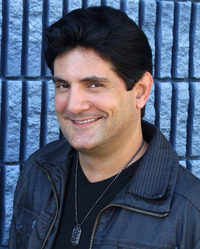
Steven dos Santos

Steven dos Santos

If readers would like to contact me, they can do so at:

www.stevendossantos.com

www.facebook.com/stevendossantosauthor

www.facebook.com/TheTorchKeeper

http://www.tumblr.com/blog/stevendossantos

www.twitter.com/stevendossantos

www.twitter.com/TheTorchKeeper

Join The Torch Keeper Fan Forums at:

http://chaosreads.com/forum/69-the-torch-keeper-series-steven-dos-santos/

And they can find my books at:

Goodreads: The Culling

Goodreads: The Sowing

Amazon: The Culling

Amazon: The Sowing