by Jacqueline Jules

Jacqueline Jules’ family in 1956
In my small Virginia town, like many places in the 1960s south, the first question people asked upon meeting was “What church do you go to?”
As a child, I remember fielding that question from parents of new friends and hearing my mother answer it in grocery stores.
“We’re Jewish,” I would explain politely. “We go to a synagogue.”
The response was generally a startled one. People would stare like I was a new species at the zoo.
“Oh my! I don’t think I’ve ever met a Jewish person before!”
From there, I’d often have to answer a series of questions about my “Jewish Church.”
I had been taught from a young age that I represented my religion. If I was impolite, all Jews would be considered rude. I had to be on my best behavior at all times so that others would not have a reason to dislike Jewish people. On many occasions, I also had to explain why Jews didn’t believe in Jesus and why I wasn’t terrified of going to hell. And the questions were just as likely to come from adults as other children.
Growing up, Christmas and Easter were never seasons of joy for me. They were times when the questions intensified. Why didn’t I celebrate Christmas? Didn’t the Jews kill Jesus? I learned early on that the Christmas spirit did not extend to Jewish children.
To add to my stranger status, my parents were not Southern born. Mom was a Northerner from Rochester, New York. Dad was from Switzerland and spoke with a thick German accent. He came to the US after World War II and was not a citizen when I was born. His name was Otto. In small-town Southern culture, having foreign roots set my family apart even in our tiny Jewish community.
So feelings of being “different” are quite familiar to me. I know what it is like to be the child of an immigrant. To be embarrassed in public when people ask your father to repeat something three times because they can’t understand what he is saying. To hear a parent talk of a homeland missed deeply. To long for relatives abroad who were only a part of our lives through letters and very occasional visits. To feel alone, apart from others who are comfortable in their skin and their surroundings.
Years later, when I took a position as a librarian in an elementary school with a large immigrant population, I identified with my students immediately. I had watched my own father struggle with the English language, which he learned in adulthood, at age 32. To his credit, he became quite fluent, but he still made some mistakes with grammar and pronunciation. Misunderstandings occurred in family conversations when my father did not understand a nuance or a cultural reference. Or we didn’t understand the perspective he was coming from. He didn’t approve of everything American. I recall what fun he made of sliced white bread which he compared to eating a sponge, and how excited he was when we found bakeries that sold French bread. And I remember how much my father hated turkey. He thought it tasted dry and he insisted my mother serve lamb or duck on Thanksgiving. I also remember that he didn’t care for pumpkin pie. In his mind, pies should be filled with fruit, gooseberries in particular.
The first Thanksgiving I taught at Timber Lane Elementary, a Title I school in Fairfax County, Virginia, I noticed right away that my immigrant students were not interested in my Thanksgiving lessons. Up until then, my story times had been received warmly. Seeing that my English-language learners enjoyed repetitive songs and choruses, I had quickly adopted them into my curriculum. My students had enjoyed songs about animals, the seasons, the five senses, etc. Why did they hate my turkey songs?
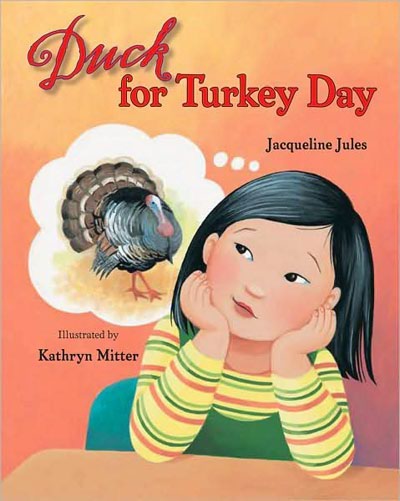 A student gently explained: “We don’t have that kind of Thanksgiving dinner in my house.” Suddenly, I stopped being a teacher and returned to my own childhood, where I had been informed that turkey and pumpkin pie were the correct meal choices. These memories led to my first book with Albert Whitman Publishers, Duck for Turkey Day, about young Tuyet, who is worried that her Vietnamese-American family is breaking the rules for Thanksgiving. While the emotions of this book belong to my own childhood, they were deeply shared by the kids I taught. Making my characters Vietnamese-American gave me the opportunity to show how much I identified with my students, along with the universality of the problem. It also made my story current. My experiences as a Jewish child of a German-Swiss in the 1960s south are historical now. While I have shared my Jewish heritage in many of my books, I don’t want everything I write to be limited to my own particular, and not necessarily, universal experiences. Growing up as an outsider myself has naturally made me empathetic to other minorities in America. And it has made me downright indignant that so few children’s books reflect the lives of children who are not white, Christian, and middle-class.
All too often, books with non-majority characters portray their lives as a situation requiring great explanation. As a young Jewish mother in the 1980s, I was annoyed that most Jewish holiday books described traditions in such detail, they read like nonfiction. Not every Christmas story describes the Nativity. Most Easter stories are about bunnies, not the Resurrection. Why can’t Jewish children have light-hearted picture books that celebrate the joy of their culture, too?
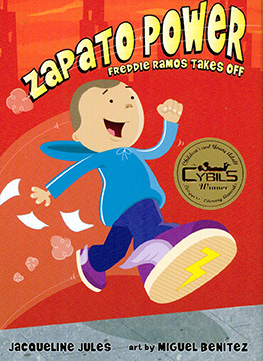 And why can’t children of color have books, particularly easy readers, where they see themselves enjoying life? Why is minority status always the problem in a story rather than just one facet of a particular person’s existence? In my Zapato Power books, a chapter book series about a boy with super-powered purple sneakers, the main character, Freddie Ramos, is Latino. He lives an urban apartment life in a close-knit immigrant community, just like most of the students I taught. But that is not the plot of his stories. Freddie is mostly concerned with how he will solve mysteries and be a hero with his super speed. And in my new series, Sofia Martinez, my main character is a spirited Latina who wants more attention from her large, loving family. I taught many Sofias. Her family eats tamales at Christmas. She uses Spanish phrases in her conversations. And she deserves to learn to read with books that show her family life as fun and normal, not a particular ethnic challenge to be overcome.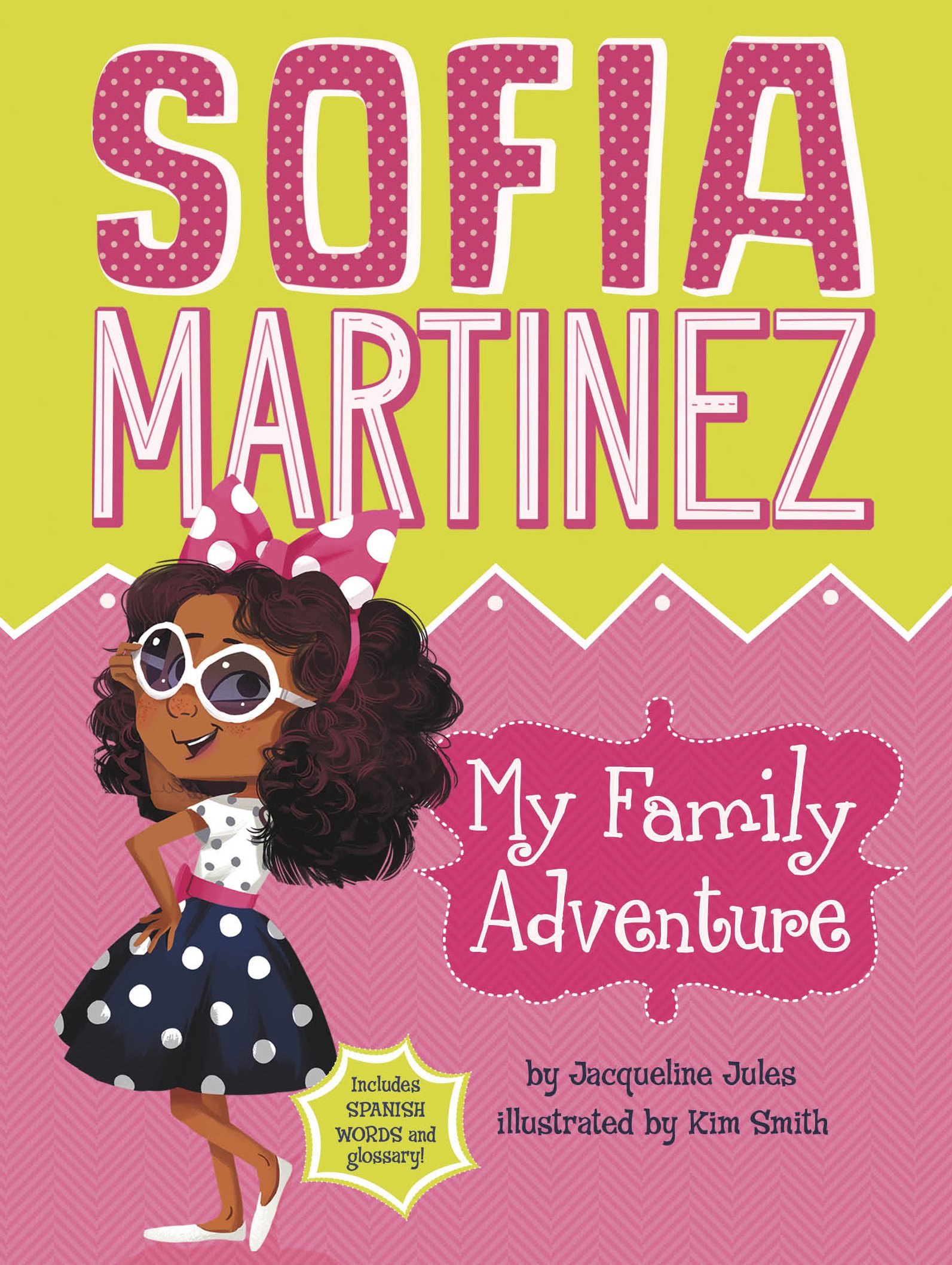
Many authors say they write the books they would have liked to see as a child. I do that. But I also write stories I wish I had been able to give my students when I taught—books that show it is okay to be who you are.
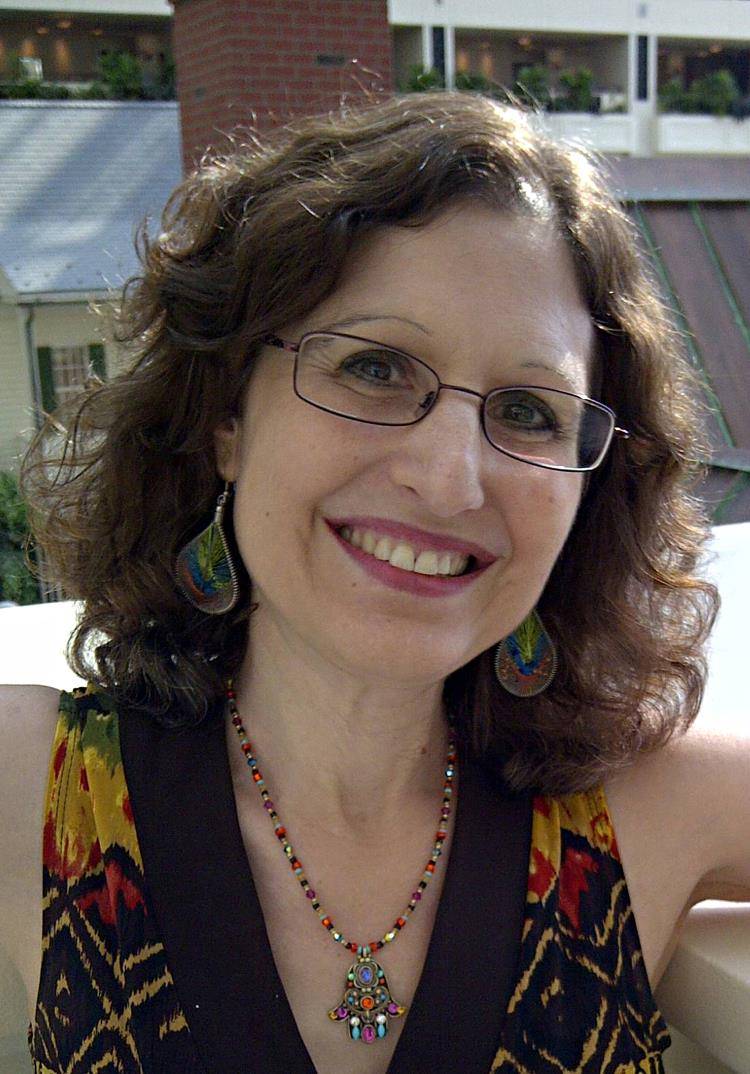
Jacqueline Jules is the award-winning author of 30 books, including No English, Duck for Turkey Day, Zapato Power, Never Say a Mean Word Again, and the recently released Sofia Martinez series. After many years as a librarian and teacher, she now works full-time as an author and poet at her home in Northern Virginia. Find her on Facebook and at her official author site.
 Today is the official release day of
  This first picture represents the writing, revising, and editing phase done alone and then with critique partners. It took me three years to write the draft that I used to query agents. Yes, that’s a long time, but I was working a full-time job and a part-time job, while single-parenting. My writing place is on my bed, and without fail, my dogs–first Rusty (RIP) and now Ozzie–have kept me company. This has been very sweet, except for the times they pawed the keyboard. Notice the guilty look in his eyes.
 I landed an agent, Laura Langlie, after a few months of querying. I revised based on her feedback, and then the manuscript went out on submission. It stayed out there for a long, long time. We received some valuable feedback after the first round, so I revised again and went back out on submission. Finding the right agent and editor is kind of like literary Match.com. You might go on lots of dates that don’t work, but that’s okay, because the goal is finding the perfect person. So, it took a long time, but the book landed with the perfect person, Mary Kate Castellani at Bloomsbury. This is a picture of the manuscript next to my contract. Receiving the contract is one of those “oh-my-goodness-this-is-happening” moments. At this point, the deal had already been announced online, but seeing the contract in black-and-white makes it real.
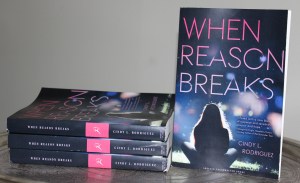 AHHHHH! ARCs. This was a big moment. I didn’t taken any pictures during revising and copy editing. They wouldn’t have been pretty. But, please know that a lot goes on between the previous picture and this one (major understatement). After revisions, the manuscript went to copy edits. That day was significant because it meant drafting, for the most part, was over. Changes could still be made, but the story moved from creation into production. I received a blurb from the amazing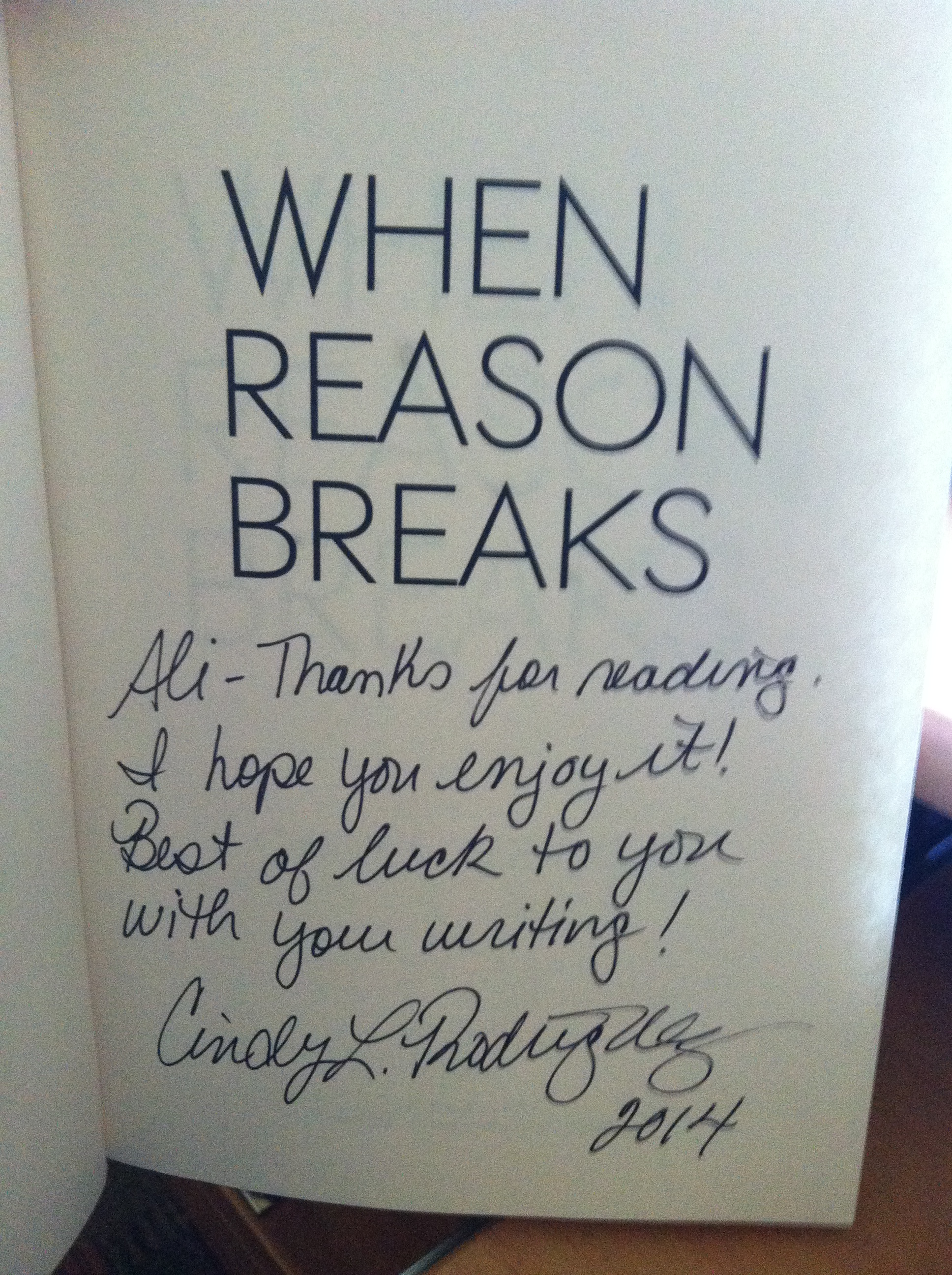

 Now that ARCs were out in the world, I considered ways to help market the novel. One thing I learned from other authors was that I had to do my part when it came to marketing. I didn’t go overboard with swag. I decided to create a book trailer and print book marks and postcards with a QR code linked to the book trailer.
 nephew–a high school freshman–doing all of the real tech work. He’s a genius with computers, so he handled putting it all together. The opening voice belongs is my niece, and I narrate the rest of it, although my voice was altered to be lower and much cooler, in my opinion. Bookmarks have been distributed to teachers, librarians, and bloggers. Postcards went to high schools, public libraries, and independent bookstores in Connecticut, in addition to some libraries and bookstores in other parts of the country. Writers always question “what works,” and I think the answer is different for each of us. Bookmarks worked for me because I’m a teacher and I have lots of teacher friends who asked for 50-100 at a time. I knew they’d get into the hands of teen readers. Also, I have received some positive feedback from the postcards. A few librarians emailed me saying they received the post card, viewed the trailer, and planned to order the book; some even invited me to participate in events. So, in my mind, these three things were worth it.

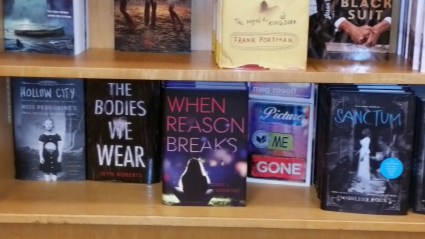






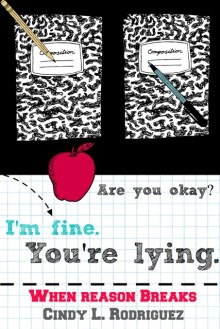 When I was 23 years old, I left Connecticut for Boston for what should have been an amazing experience. I had been recently hired to be a researcher for the Boston Globe’s award-winning investigative team, a dream come true for a young journalist. Over the next two years, however, depression slowly ruined me, although many people close to me never knew. I wrote about it for the Courant years later, when my mind was clear enough to make sense of it. Here’s an excerpt from that article: