DESCRIPTION (from Goodreads): Music, magic, and a real-life miracle meld in this genre-defying masterpiece from storytelling maestro Pam Muñoz Ryan.
Lost and alone in a forbidden forest, Otto meets three mysterious sisters and suddenly finds himself entwined in a puzzling quest involving a prophecy, a promise, and a harmonica.
Decades later, Friedrich in Germany, Mike in Pennsylvania, and Ivy in California each, in turn, become interwoven when the very same harmonica lands in their lives. All the children face daunting challenges: rescuing a father, protecting a brother, holding a family together. And ultimately, pulled by the invisible thread of destiny, their suspenseful solo stories converge in an orchestral crescendo.
Richly imagined and masterfully crafted, Echopushes the boundaries of genre and form, and shows us what is possible in how we tell stories. The result is an impassioned, uplifting, and virtuosic tour de force that will resound in your heart long after the last note has been struck.
MY TWO CENTS: Muñoz Ryan hits a sweet spot of historical fiction combined with a tiny bit of fantasy and a whole lot of heart in this new title. While the three separate narratives might seem overwhelming at first, they are never long-winded and large text and good formatting make things easy on the eyes. Muñoz Ryan introduces the reader to less familiar aspects of well-known historical events: laws regarding children with birth ‘defects’ in 1930’s Germany, conditions for orphans during the Depression in the US, and the segregation of schools in California for children of Mexican descent during World War II. All three main characters are easy to root for and their strength and determination makes happy coincidences and the final destination feel earned rather than magical. That harmonica though…what can I say? The power of music is mighty, a point Muñoz Ryan makes very clear. This is a great choice for middle grade readers, especially fans of historical fiction or stories involving music.
TEACHING TIPS: The historical settings make this a great title to connect to social studies units. It would also be a wonderful classroom read aloud. Teachers could assign groups to compile additional background research on the historical events mentioned in the text or on the harmonica and other musical instruments. Audio recordings would also be a great addition to the experience of the story.
ABOUT THE AUTHOR: Pam Muñoz Ryan has written over thirty books for young people, from picture books for the very young to young adult novels, including the award winning Esperanza Rising, Becoming Naomi Leon, Riding Freedom, Paint the Wind, and The Dreamer. She is the National Education Association’s Author recipient of the Civil and Human Rights Award, the Virginia Hamilton award for Multicultural Literature, and is twice the recipient of the Willa Cather Literary Award for writing. She was born and raised in Bakersfield, California (formerly Pam Bell), received her bachelor’s and master’s degrees at San Diego State University and now lives in North San Diego County with her family.
Cecilia Cackley is a performing artist and children’s bookseller based in Washington DC where she creates puppet theater for adults and teaches playwriting and creative drama to children. Her bilingual children’s plays have been produced by GALA Hispanic Theatre and her interests in bilingual education, literacy, and immigrant advocacy all tend to find their way into her theatrical work. You can find more of her work at www.witsendpuppets.com.
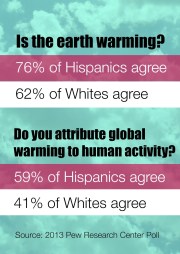
Facts to contemplate and amaze: 1. A high percentage of Latin@s are persuaded that a connection exists between global warming and human activity. 2. A majority of Latin@s feel global warming carries an extreme or very serious potential to affect their lives.
According to the findings of a new poll conducted by The New York Times, in conjunction with Stanford University and Resources for the Future, an environmental research group, “Hispanics are more likely than non-Hispanic whites to view global warming as a problem that affects them personally. It also found that they are more likely to support policies, such as taxes and regulations on greenhouse gas pollution, aimed at curbing it.”
The article in the New York Times acknowledges that these findings challenge stereotypes about Latin@s, as well as common assumptions that saving the environment is of concern mostly to white liberals.
So where are the books for kids that highlight this vigorous interest among Latin@s in saving the environment? My answer: they’re not easy to find and it sometimes means digging within tables of contents to discover a chapter or two featuring Latin@s.
Here are a handful of kids’ books sure to inspire a new generation of Latin@ planet saviors. Consider adding them to your Earth Day observations (April 22).
This nonfiction book for grades 4 and up celebrates the environmental triumphs achieved by a dozen unsung heroes of all ages located in various parts of the United States and Mexico. I’m giving it star billing because I feel it deserves wider attention. The environmental challenges the activists take on—from urban gardens to saving caribou—are as diverse as the heroes themselves. Of the twelve, three heroes are Latin@, two are Native American, two are African American, one is Asian American and the remaining four are white. Rohmer relates the story of each person’s activism in a short chapter illustrated with photos and art by Julie McLaughlin.
The determination, innovation and enterprising spirit shown by all twelve heroes is truly inspiring. Here is a brief recounting of one of their stories. Erica Fernandez is a young immigrant from Mexico who learns of plans by an Australian company to build a large processing station for liquefied natural gas near her new hometown in California. If the company’s plans go through, a large, potentially lethal gas line would run directly beneath her community. Using Spanish and broken English, Erica sets out to inform neighbors and elected officials about the grave risks. The outcry of the community eventually reaches the ears of the governor, who nixes plans for the gas line.
In addition to the stories already alluded to, you will also find:
A Hopi girl installing solar panels on her reservation
A teacher turning the protection of wetlands into a classroom project
A man designing a unique bio-digestive sewage-treatment system
A boy organizing the safe disposal of old electronics
A lucha libre warrior fighting to protect coastlines and waterways
A woman taking on the coal company responsible for destructive mountaintop removal in her West Virginia location
A Bronx resident turning the problem of construction-site trash into a cooperative business
A young woman inventing a device for purifying polluted water
A Louisiana woman pressuring an oil company to relocate an entire community victimized by toxic disposal
The quieter message of this book is thrilling to me: that anyone can make a difference to the health of our planet—people of all ages, ethnic backgrounds and economic or educational levels.
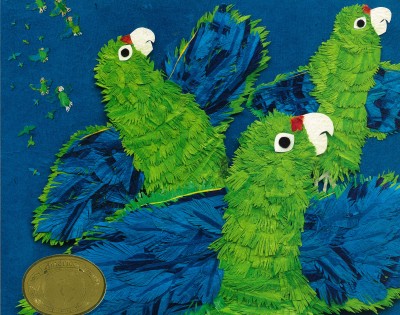
This ingeniously illustrated picture book about a parrot species brought to the brink of extinction and the valiant efforts underway to rescue it, has received well-deserved acclaim. The story of Puerto Rico’s iguaca parrots demonstrates the vulnerability of all biological species, especially to the encroachment of human activity. Over the course of centuries, natural enemies preyed on the iguaca’s nests and hurricanes damaged their forest habitats, but it was humans who posed the biggest threat, primarily by trapping the birds and destroying their nesting sites. In 1968, when the iguaca population stood at less than thirty, Puerto Ricans jumped into action to save the birds. Thanks to their efforts, iguaca parrots’ numbers are on the rise again. An afterword provides further details on the Parrot Recovery Program.
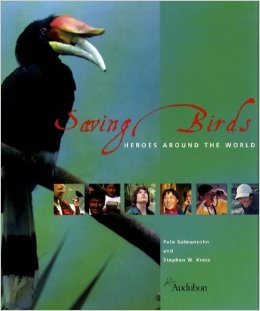
This book teaches young readers about preservation efforts on behalf of endangered birds in six locations around the world. One chapter focuses on a Latin American bird of legend, the quetzal. Like many animals of exceptional beauty, the quetzal has been exploited and poached. Furthermore, its habitat in Central America’s cloud forests is under threat by human activity, including deforestation and fires. Two men employed by a natural reserve in Chiapas, Mexico, called El Triunfo, set out to address the educational gaps surrounding the quetzal. Using puppet shows and books, they have recruited the support of children in villages throughout the region, teaching them to prize the quetzal and its forest home.
How can young readers learn about something as abstract as water conservation? This graphic novel for elementary grades introduces wise water-usage in a kid-friendly package. It’s part of a two-book series called The Future According to Luz. The companion book is entitled Luz Sees the Light. Luz Makes a Splash is built around an eponymous character and a community of friends and family whose lives are affected in multiple ways by scorching temperatures and drought conditions. Gardens are drying up. So is a city park and Luz’s favorite spring-fed pond. It turns out that a nearby soft-drink company is tapping groundwater to manufacture its cola products, and this contributes to the pond’s receding water level. A group of citizens mobilizes to address the problem. Meanwhile, Luz learns about rain barrels and a natural system for filtering household water used for cooking and washing (gray water). One of the story’s characters converts his sod lawn into a rock garden built around indigenous plants capable of thriving in drought conditions.
The author-illustrator of Luz Makes a Splash is Chilean-Canadian. She has made her energetic, intelligent and community-minded main character a Latina. Ethnic identity doesn’t figure into the story, but what a nice way to counteract stereotypes of Latin@s.
This is a book with a message. Some readers will find fault with its didactic approach and the fact that the characters are not given a broader story, but taken as a teaching tool, it delivers solid information that can be used to launch explorations into drought, government-enforced water restrictions, and smart solutions for reducing water waste and keeping gardens green during low-water conditions.
*****
The focus of this post is Latin@ activism for earth-friendly causes, but a growing number of works on the Latin@ kid lit bookshelf celebrate the planet.
Margarita Engle can be counted on to inject nature, naturalists, biodiversity, and environmental conservation in nearly all her books and has received recognition for her stand on these issues. Recently, Green Earth Book Awards shortlisted Silver Peoplefor its 2015 honors. Congratulations, Margarita!
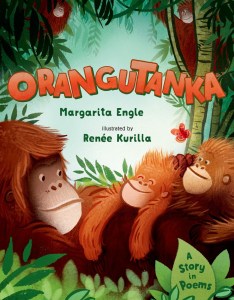
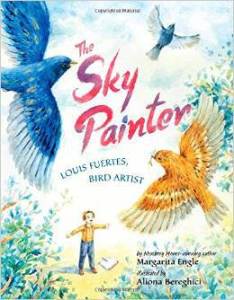
Two of Margarita’s 2015 releases embrace the wonders of nature.
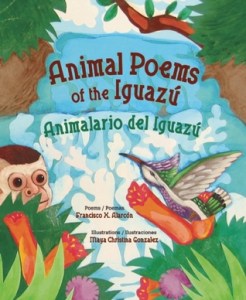
For more Earth Day-friendly books with Latin@ connections, check out these additional selections:
Need classroom resources related to the field of environmental activism?
DESCRIPTION FROM THE BOOK JACKET: The only thing I knew for sure was that I had issues. Lots of issues. No wonder my mood ring kept changing! It went from black for tense to pink for uncertain to white for frustrated. I kept waiting to see blue, the color for calmness and peace, but no such luck. With all the craziness in my life, I couldn’t see blue if I looked at the sky.
MY TWO CENTS: Ask My Mood Ring How I Feel, by Diana Lopez, is an excellent middle grade novel for a teen book group or for an individual read.
Author Diana Lopez remembers what it’s like to be a middle school girl. Rarely have I read a book that made me feel so connected to my eighth grade self. The excitement, the fear, the boys, the uncertainty of everyone’s confidence, the loyalty of friends, the changing body, Lopez gets it all. On top of that, she shows us that kids deal with real problems, too. Our kids face real problems, like having a parent with cancer.
The book opens with Erica’s (Chia’s) mom buying bathing suits before their summer vacation. Mom shows Erica and her younger sister, Carmen, nine new bikinis. Then she throws the bottoms away. Soon the girls learn their mother has breast cancer and is due to have a mastectomy. Summer vacation plans have changed.
Before the surgery, the family makes a pilgrimage to La Virgen de San Juan del Valle. Each member of the family leaves a special object as an offering, prays for God and La Virgen to help mom, and then makes a promesa. The promesa is a thank-you promise to God and La Virgen in acknowledgment of their help and healing.
This is where I fell in love with Erica’s character. Erica takes her time deciding what her promesa, or promise, will be. While at the shrine she discovers el cuarto de Milagros, or the miracle room, “where people share stories and make offerings.” It is here where Erica sees a newspaper article and a picture of the Race for the Cure. Erica’s promesa is to walk the 5k and raise money for breast cancer research.
Erica returns to school in the fall to face many challenges in her eighth grade year. Throughout them her mood ring changes color. Erica relies on the ring to tell her what she is feeling instead of listening to her heart. Her friends, the Robins, remain a constant support throughout the story. Erica deals with boys and homework, then goes home and deals with her mother’s illness, all while trying to work on her promesa. Erica takes on the role of an adult covering most of the house chores and taking care of her younger brother as her mother recovers from surgery and then faces radiation treatment. Very quickly Erica starts missing assignments and her grades, especially in math, plummet. When a counselor calls a meeting with the family at school, Erica finally shares what she has been struggling with. When at last her teachers and her parents are on the same page, Erica gets the help she needs.
The book concludes with Erica and many of her friends completing her promesa. She trusts herself to know and understand her own feelings. She does not rely on her mood ring anymore to tell her how she feels.
TEACHING TIPS: The two most beneficial ways this book could be used are through book talks and book clubs. If a teacher or librarian book talks this book, students will gravitate toward it. Most of the readers will be girls, but I think that’s what it’s designed to do. Even as an adult reading it, I felt the same kinship and recognition I had felt when I read Are You There God? It’s me, Margaret when I was eleven years old. It’s about a girl growing and changing and dealing with the trials of middle school. The only difference is that students will also recognize the struggle of a family dealing with cancer, and we get characters from diverse backgrounds, which all our children need.
The second way I see this book being effective is for a teen girl book club. Again, the driving force for me was the honesty with which Erica (Chia) looked at her friends, her family, and her challenges with school. All girls will recognize this. They will see themselves and their friends in this book.
In a Social Studies and Language Arts classes, teachers can use the book as a launching point for their own students’ service projects as well as a geographic study of San Antonio. You may visit the church of La Virgen de San Juan del Valle on line at http://www.olsjbasilica.org/ There are links to the history of the church, as well as information on pilgrimages and pictures of the basilica – including the mural that Erica describes seeing.
Teachers may even create math problems from the book. How much money did Erica raise? How much do local teams in Race for the Cure raise? Was Erica’s achievement similar to this or greater?
An awareness of breast cancer and the organizations that raise money for research may also be used in an extension of science curriculum.
ABOUT THE AUTHOR: You may visit the author website for Diana Lopez at http://www.dianalopezbooks.com/Home_Page.html She does have teacher resource links for her middle grade novel Confetti Girl and her young adult novel Choke. (None were listed for Ask My Mood Ring How I Feel at the time of this writing.) A talented writer living in Texas, Lopez has two writing awards under her belt. She spent time teaching at the middle school level and currently teaches at the university level. She continues to find stories in the pages of life and we look forward to reading more!
Kimberly Mach has been teaching for sixteen years and holds two teaching certificates in elementary and secondary education. Her teaching experience ranges from grades five to twelve, but she currently teaches Language Arts to middle school students. It is a job she loves. The opportunity to share good books with students is one that every teacher should have. She feels privileged to be able to share them on a daily basis.
DESCRIPTION FROM THE BOOK JACKET: What happens when a small girl suddenly starts turning green, as green as a cilantro leaf, and grows to be fifty feet tall? She becomes Super Cilantro Girl, and can overcome all obstacles, that’s what! Esmeralda Sinfronteras is the winning super-hero in this effervescent tale about a child who flies huge distances and scales tall walls in order to rescue her mom. Award-winning writer Juan Felipe Herrera taps into the wellsprings of his imagination to address and transform the concerns many first-generation children have about national borders and immigrant status. Honorio Robledo Tapia has created brilliant images and landscapes that will delight all children.
MY TWO CENTS: Upon learning that her mother has been detained at the border, Esmeralda Sinfronteras transforms into a superhero to rescue her mother from ICE. She uses the power of cilantro to grow taller than a house, with hair longer than a bus, and skin so green it could have only come from cilantro. Super Cilantro Girl flies to the border, climbs the dark and dreary detention center to her mother’s window, and simply picks her up and puts her in her pocket and they fly home. The ICE agents are so mesmerized by the power of cilantro that they do not notice or prevent Super Cilantro Girl from rescuing her mother. The next morning, Esmeralda makes a huge discovery about her and her mother.
Author Juan Felipe Herrera and illustrator Honorario Robledo Tapia have created a magnificent children’s book about the transformative power of imagination. Esmeralda is emblematic of the many children who have been separated from their families due to unjust and xenophobic immigration laws. Herrera and Tapia go beyond common debates about immigration to give a face and a voice to the children impacted. Esmeralda gains the power and courage she needs to confront ICE from the environment around her. Her grandmother and the land serve as vessels for alternative knowledge that guide Esmeralda through her journey. Furthermore, Herrera’s and Tapia’s reclamation of the color green juxtaposes Esmeralda’s power with the cultural and social power of the “green card.” In Esmeralda’s imagination, her power is much stronger than anything ICE or a green card could ever have.
There are several ways to read race, gender, and class into this story in order to come up with a thorough analysis of how immigration impacts Latina/o children and their families. What I appreciate most about Herrera’s children’s book is that hope and empowerment are central to the narrative. Giving Esmeralda superpowers reveals the possibility for change that manifests from a child’s imagination. Super Cilantro Girl encourages children to dream, hope, and fight for their rights even if it means going against an entire state apparatus like ICE.
TEACHING TIPS: Super Cilantro Girl can be taught thematically by focusing on issues of (im)migration. The story’s emphasis on alternative healing methods is resonant of Gloria Anzaldua’s Prietita and the Ghost Woman and Friends from the Other Side. All three texts pay particular attention to holistic healing methods that include using nature as a resource. This is especially important because it allows the children protagonists to gain empowerment from their environments—much in the same way that Esmeralda finds power in cilantro.
Focusing on the superhero theme presents an opportunity to connect art activities with reading. Yuyi Morales’s Niño Wrestles the World prompted the creation of Niño masks to accompany the story—something similar can be done with Herrera’s Super Cilantro Girl. The relationship between social justice and superheroes in this story can be addressed by asking students to draw and imagine their own superhero. Students can imagine what a superhero in or from their community might look like or students can find inspiration from their community to create a superhero. Xavier Garza’s Charro Claus and the Tejas Kid is another excellent example of a child protagonist using his culture and community to be heroic.
There are several Latino kid’s books that focus on lucha libre that will pair wonderfully with Super Cilantro Girl. Lucha libre connects superhero-like characters with fantasy and reality and that can generate a powerful conversation about superheroes in our communities and culture as well as how children and youth can be their own heroes. Morales’s Niño Wrestles the World and Xavier Garza’s Lucha Libre: The Man in the Silver Mask are a few examples that tell stories about children and luchadores.
Sonia Alejandra Rodríguez has been an avid reader since childhood. Her literary world was first transformed when she read Rudolfo Anaya’s Bless Me, Última as a high school student and then again as a college freshman when she was given a copy of Sandra Cisneros’s The House on Mango Street. Sonia’s academic life and activism are committed to making diverse literature available to children and youth of color. Sonia received her B.A. in English from the University of Illinois at Urbana-Champaign. She is currently a PhD candidate at the University of California, Riverside, where she focuses her dissertation on healing processes in Latina/o Children’s and Young Adult Literature.
In the years that I’ve been researching and writing about Latina/o kid’s literature, I’ve gone back and forth about the impact that “happy endings” have on the stories and young readers. Because I focus specifically on realistic fiction, narratives that capture lived experiences, I found the happy endings to be a bit misleading. Real stories on deportation and family separation, for example, do not always get a happy ending and especially not as immediately as books make it seem. In general, happy endings are an essential component of children’s illustrated texts. That is, picture books for children tend to have happy endings because a book that tells children, for example, that “life sucks” and encourages them to give up would probably not fare well in the industry. Within this genre, happy endings also function as a way to preserve a child’s innocence. There is something both beautiful and problematic about the genre’s desire to protect children from “growing up too fast,” from the “dangers of the real world,” and whatnot. In this way, the happy ending allows children to explore the world through books with the guarantee that they will be safe, that everything will work out, and that they will be protected. However, not all children are seen as inherently innocent and therefore their access to protection and safety is limited and certainly not guaranteed.
Because Latina/o kid’s lit as a genre has done an exceptional job at pointing out the marginality, discrimination, and uncertainty that Latina/o children face in this country I had often found the happy endings in some of these texts disconcerting. The reconciliation between the oppressions experienced by a Latino child protagonist and the happy ending was too simple. I was afraid that those endings would mislead or further discourage real children who were undergoing similar situations as those portrayed in the books but who were not experiencing the happy endings. My concern was also that the happy endings minimized the urgency of the topics being discussed.
I have found that the most beneficial way to understand happiness in Latina/o kid’s books is to read it as part of the story rather than the ending. In other words, happiness is a piece of a much larger story and not just the end. This understanding is particularly important when teaching Latina/o kid’s books dealing with social justice issues. It is significant to note that the happy endings do not suggest that the oppressions the characters experience have also ended. Furthermore, characters’ happiness does not suggest that they are not being oppressed. These caveats on happy endings may seem unnecessary and a bit of a downer; however, happy endings in kid’s picture books assume that children access happiness equally when, in fact, this is not the case. Because of this, happy endings in children’s picture books with social justice themes further present an opportunity to discuss happiness as a social justice issue.
As important as it is to contest happy endings, it is also important to protect Latino children’s right to happiness. I became more aware of this significance upon giving a presentation on Juan Felipe Herrera’s Super Cilantro Girl where I was asked if the story’s ending undermined Esmeralda’s agency. Super Cilantro Girl tells the story of Esmeralda Sinfronteras and her transformation into a giant green superhero set to rescue her mother from an ICE detention center. Upon learning that her mother has been detained at the border, Esmeralda taps into the power of cilantro and gradually changes into Super Cilantro Girl. Bigger than a bus, taller than a house, and with the power of cilantro and flight, Esmeralda breaks her mother out of the detention center and brings her home. Super Cilantro Girl disrupts the anti-immigration policies that seek to separate her family by becoming bigger, stronger, and more heroic than the system. At the end of the story, however, it turns out that Esmeralda was dreaming and did not change into Super Cilantro Girl nor did she rescue her mother. Despite that, though, Esmeralda’s mother returns. In my presentation, I claimed that Esmeralda’s transformation exemplified how the body can be a site of healing. What does the ending then suggest about Esmeralda’s healing process and agency if her transformation into a superhero was just a dream? It was then suggested that I’d have a more productive reading of Super Cilantro Girl if I talked about it as magical realism and/or science fiction.
While an argument can be made to read Super Cilantro Girl as magical realism and/or science fiction, I choose not to because there is something difficult about reading Esmeralda’s dream of rescuing her mother from ICE as fantastical. Despite having been a dream, there is agency and power in Esmeralda’s ability to see herself as a superhero with the strength to fight ICE and reunite her family. Regardless of ICE’s threat, Esmeralda can imagine herself as powerful and, ultimately, happy. Esmeralda’s happiness upon rescuing her mother is an important part of her healing process. Again, happiness needs to be understood as part of the narrative and not the end point. Super Cilantro Girl demonstrates how happiness and imagination function to promote hope and resilience despite the systemic oppressions that hinder Esmeralda’s life. Challenging happy endings and reading happiness as a social justice issue present opportunities to further understand how childhood in the United States is racialized and how Latina/o kid’s lit creates alternative narratives.
Sonia Alejandra Rodríguez has been an avid reader since childhood. Her literary world was first transformed when she read Rudolfo Anaya’s Bless Me, Última as a high school student and then again as a college freshman when she was given a copy of Sandra Cisneros’s The House on Mango Street. Sonia’s academic life and activism are committed to making diverse literature available to children and youth of color. Sonia received her B.A. in English from the University of Illinois at Urbana-Champaign. She is currently a PhD candidate at the University of California, Riverside, where she focuses her dissertation on healing processes in Latina/o Children’s and Young Adult Literature.
DESCRIPTION OF THE BOOK (from Goodreads): Tetl’s skin is brown, his eyes are black, and his hair is long. He’s different from the other children, whose taunts wound him deeply, leaving him confused and afraid. But Tetl’s grandmother knows the ancient teachings of their Aztec ancestors, and how they viewed the earth as alive with sacred meaning. With her help, he learns to listen to the mountains, wind, corn, and stones. Tetl’s journey from self-doubt to proud acceptance of his Nahuatl heritage is told in a series of powerful poems, beautifully expressed in both English and Spanish. Vivid illustrations celebrate nature’s redemptive powers, offering a perfect complement to the poignant story.
MY TWO CENTS: History books and other nonfiction texts often speak of the Americas’ original inhabitants in the past tense, as if they completely disappeared after Europeans swept across the land. For example, I remember learning that the Spanish defeated and killed (or married) all indigenous people when they invaded Mexico and Central America in the sixteenth century. Wrong. Despite facing frequent marginalization and discrimination by “mainstream” society, Nahua people, the diverse descendants of the Aztecs, still live in El Salvador, Mexico, and the United States today.
Talking with Mother Earth / Hablando con Madre Tierra – a stunning bilingual collection of autobiographical poems and winner of the illustrious International Latino and Américas Book Awards for outstanding works of Latin@ children’s literature – affirms and celebrates the complexity of a contemporary Nahua individual. In these simple yet profound poems, Jorge Tetl Argueta, who identifies as Pipil Nahua, provides us with a window into his childhood and sensitively explores issues of cultural identity from several different angles, including his spiritual beliefs, his connection to Mother Earth, ethnic pride, racial bullying, and history of the Nahua people. As they read his beautiful words, children with Nahua heritage might see reflections of themselves, while readers from other backgrounds can learn about cultural practices and perspectives that are different from their own.
Mirroring Argueta’s poems are Lucía Angela Pérez’s vibrant pastel drawings, simultaneously striking and soft, bold and soothing as they permeate each page. Prepare to be swallowed up in color as soon as you open the cover! Also, the illustrations sustain the theme of links between the present and past as they portray young Tetl standing side by side with his grandmother, his ancestors, and Aztec gods.
Another enticing feature of this book is its relatively unusual dual language format. Although we’re seeing more and more English-Spanish dual language books on the market these days, most of these books place the English text first on the page, above or before the Spanish text. While this positioning might not seem like a big deal, it can send a message to readers that English should be the first language in their lives – that it’s better than Spanish. Books that place Spanish first do pop up every once in awhile, however, and Talking with Mother Earth / Hablando con Madre Tierra is one of them, emphasizing to Spanish-speaking readers the importance of their linguistic skills.
So if you’re searching for a book that promotes empathy, beauty, linguistic diversity, cultural awareness, and positive self-image, look no further! If you enjoy it, be sure to check out Jorge Argueta’s other works for children – they’ll leave you smiling (and probably a little bit hungry).
TEACHING TIPS: Due to multifaceted subject matter in Talking with Mother Earth / Hablando con Madre Tierra, educators can choose to use the entire text or individual poems to start fruitful, critical discussions and lessons with their students. For example, teachers might draw upon “Indio” / “Indian” – an examination of racial bullying – when facilitating analyses of racism and discrimination in schools. Additionally, they might focus on Argueta’s poems on nature and Nahua spirituality to help students understand the diversity of religious beliefs and ethnicities in contemporary Latin America. Or they might highlight this book as a mentor text when encouraging students to write their ownnature poetry.
The dual language format of Talking with Mother Earth / Hablando con Madre Tierra also makes it a valuable resource for Spanish and English learners – the abundance of words related to nature can help readers describe the earth bilingually. An added bonus is the inclusion of several Nahuatl words and phrases that illustrate Latin@ / Latin American linguistic diversity even further.
ABOUT THE AUTHOR (from his website): Jorge Tetl Argueta is a celebrated Salvadoran poet and writer whose bilingual children’s books have received numerous awards. His poetry has appeared in anthologies and textbooks. He won the Américas Book Award, among other awards, for his first collection of poems for children, A Movie in my Pillow. He was the Gold Medal Award winner in the 2005 National Parenting Publications Awards (NAPPA) for Moony Luna / Luna, Lunita, Lunera. His other works for children include Xochitl and the Flowers (2003 Américas Award Commended Title), Trees are Hanging from the Sky, Talking with Mother Earth, The Little Hen in the City, and The Fiesta of the Tortillas.
Marianne Snow is a doctoral student at the University of Georgia, where she researches Latin@ picture books, representations of Latin@ people in nonfiction children’s texts, and library services for Spanish-speaking children and families. Before moving to Georgia, she taught Pre-K and Kindergarten in her home state of Texas and got her master’s degree in Teaching English to Speakers of Other Languages (TESOL) at Texas A&M University. In her spare time, she enjoys obnoxiously pining for Texas, exploring Georgia, re-learning Spanish, and blogging at Critical Children’s Lit.

 By Cecilia Cackley
 Cecilia Cackley is a performing artist and children’s bookseller based in Washington DC where she creates puppet theater for adults and teaches playwriting and creative drama to children. Her bilingual children’s plays have been produced by GALA Hispanic Theatre and her interests in bilingual education, literacy, and immigrant advocacy all tend to find their way into her theatrical work. You can find more of her work at www.witsendpuppets.com.
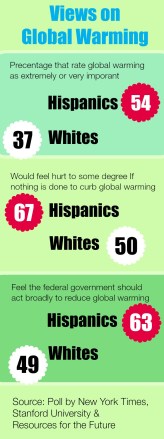 Facts to contemplate and amaze: 1. A high percentage of Latin@s are persuaded that a connection exists between global warming and human activity. 2. A majority of Latin@s feel global warming carries an extreme or very serious potential to affect their lives.
 The article in the New York Times acknowledges that these findings challenge stereotypes about Latin@s, as well as common assumptions that saving the environment is of concern mostly to white liberals.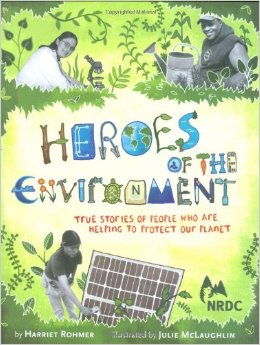
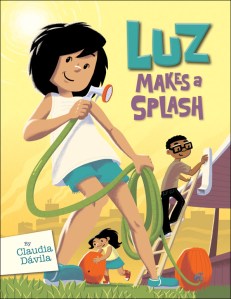 How can young readers learn about something as abstract as water conservation? This graphic novel for elementary grades introduces wise water-usage in a kid-friendly package. It’s part of a two-book series called The Future According to Luz. The companion book is entitled Luz Sees the Light. Luz Makes a Splash is built around an eponymous character and a community of friends and family whose lives are affected in multiple ways by scorching temperatures and drought conditions. Gardens are drying up. So is a city park and Luz’s favorite spring-fed pond. It turns out that a nearby soft-drink company is tapping groundwater to manufacture its cola products, and this contributes to the pond’s receding water level. A group of citizens mobilizes to address the problem. Meanwhile, Luz learns about rain barrels and a natural system for filtering household water used for cooking and washing (gray water). One of the story’s characters converts his sod lawn into a rock garden built around indigenous plants capable of thriving in drought conditions.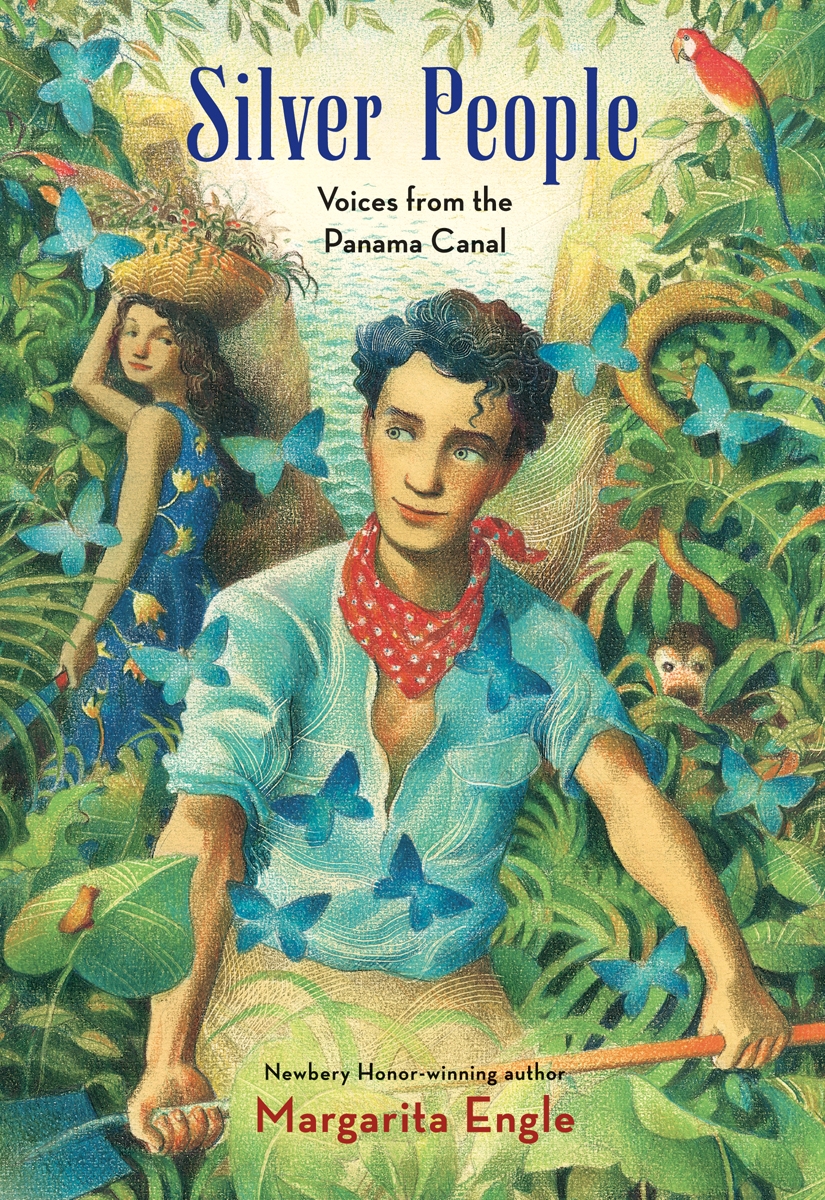

 By Sonia Alejandra Rodriguez
 As important as it is to contest happy endings, it is also important to protect Latino children’s right to happiness. I became more aware of this significance upon giving a presentation on Juan Felipe Herrera’s Super Cilantro Girl where I was asked if the story’s ending undermined Esmeralda’s agency. Super Cilantro Girl tells the story of Esmeralda Sinfronteras and her transformation into a giant green superhero set to rescue her mother from an ICE detention center. Upon learning that her mother has been detained at the border, Esmeralda taps into the power of cilantro and gradually changes into Super Cilantro Girl. Bigger than a bus, taller than a house, and with the power of cilantro and flight, Esmeralda breaks her mother out of the detention center and brings her home. Super Cilantro Girl disrupts the anti-immigration policies that seek to separate her family by becoming bigger, stronger, and more heroic than the system. At the end of the story, however, it turns out that Esmeralda was dreaming and did not change into Super Cilantro Girl nor did she rescue her mother. Despite that, though, Esmeralda’s mother returns. In my presentation, I claimed that Esmeralda’s transformation exemplified how the body can be a site of healing. What does the ending then suggest about Esmeralda’s healing process and agency if her transformation into a superhero was just a dream? It was then suggested that I’d have a more productive reading of Super Cilantro Girl if I talked about it as magical realism and/or science fiction.
 DESCRIPTION OF THE BOOK (from