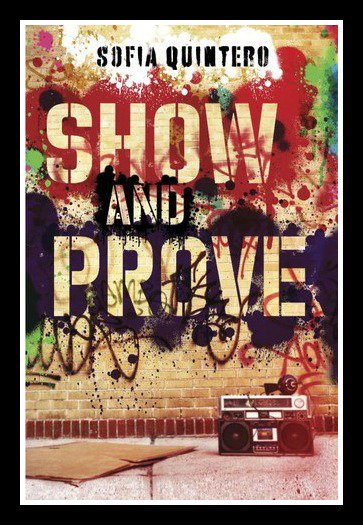
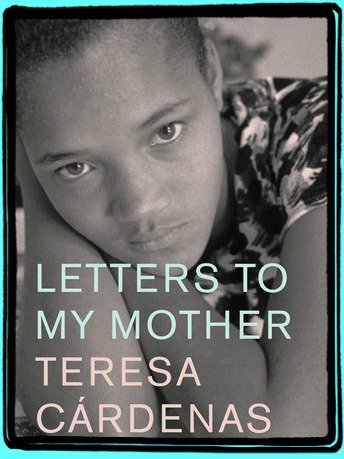
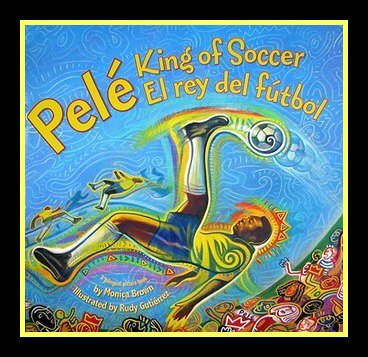
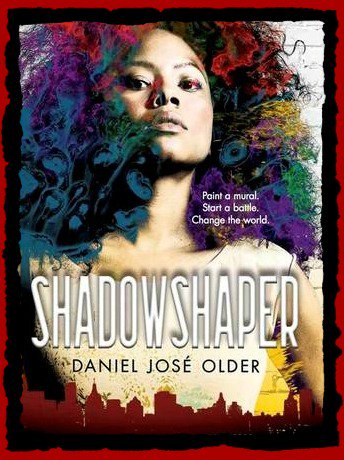
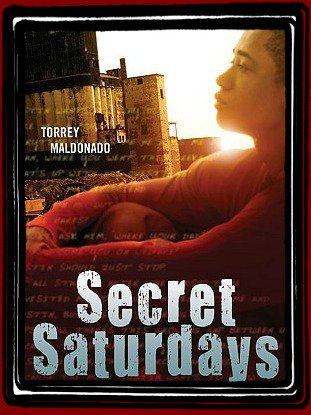
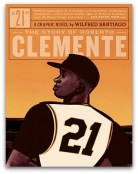
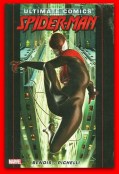
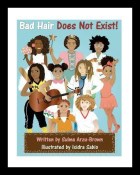
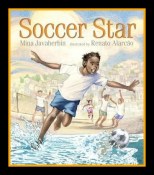
On Tuesday, Edith Campbell, Sujei Lugo, and Guinevere and Libertad Thomas, the sisters behind the Twinja Book Reviews, hosted the most recent #LargeFears Twitter chat. This month’s theme was: “Where are the Afro-Latinxs in American History?” Special guests included Torrey Maldonado, author of Secret Saturdays, Sofia Quintero, author of Show and Prove and Efrain’s Secret, and Robert Liu-Trujillo, a visual artist. The #LargeFears chats started as a continuation of support of diverse books after the publication of Large Fears, a self-published title by Myles E. Johnson and Kendrick Daye, funded through Kickstarter, about a queer black boy facing his greatest fears.
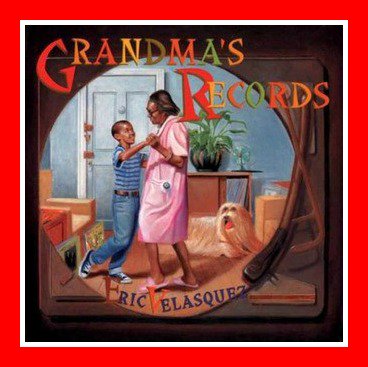
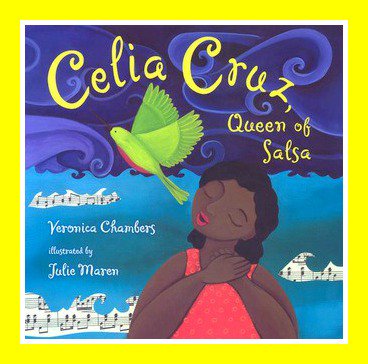
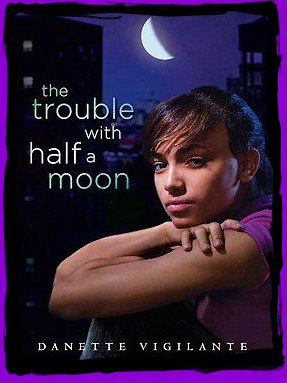
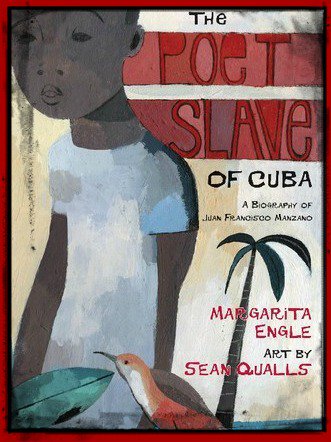
Below is the link to the Storify for the chat and covers of books by/about Afro-Latinxs in honor of Black History Month. Although, these titles should be supported every month of the year, and we vow to do our part by reading and reviewing more of them here.
When I met my husband—who I usually refer to online as the Transboy—I was a teen who’d only recently come out. A few months before, I had, as my best friend describes it, been so deep in the closet I was in Narnia. And with that depth of denial came a lot of homophobic thoughts, some of which, I’m sad to say, became words. When I met the Transboy, I was still shaking out of that, the hangover of my own self-loathing. I now recognize the self-hating place my homophobia had come from, but the habit, the instinct to make jokes every time I remembered I was falling in love with a boy with a female body, trailed me.
Marginalization has the potential to bring people together. It allows us to understand each other, to have empathy for where someone else has come from, and to drive us to stand strong for ourselves and those around us.
But it also has a frightening potential to drive people apart. Marginalization can scare us into being small, or quiet, or mean. And for as often as I’d felt out of place as a Latina, I was even more likely to make these mistakes when I realized I was queer.
The Transboy found a way to love me despite that. He had the patience to call me on the things I said while knowing that they came from a part of me I was, slowly, casting off. As much as he handled his own marginalization with graciousness, he understood the fear behind some of the things I once thought and said.
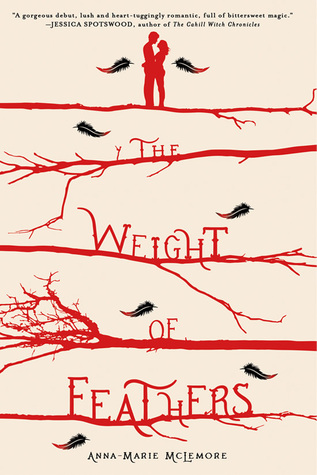
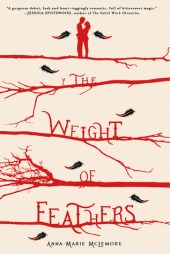
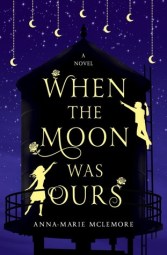
The girls in the books I write make mistakes. Sometimes awful ones, informed by their own prejudices. In THE WEIGHT OF FEATHERS, Lace calls Cluck a racial slur she’s been taught growing up. In my fall 2016 book, WHEN THE MOON WAS OURS, one main character misunderstands the other’s process of coming to terms with his own gender identity. At the heart of what I write are not just characters of color, but characters who go through the very real process of being torn apart and brought together by their own experiences of marginalization.
C.S. Lewis called the beginning of friendship that moment of realizing, “What? You too? I thought I was the only one.” And I believe that. For friendship. For building communities. For falling in love. And for the magic of seeing not only yourself in someone else, but them in you.
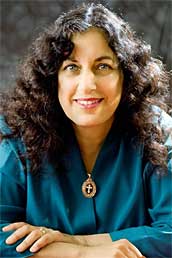
Anna-Marie McLemore was born in the foothills of the San Gabriel Mountains, raised in the same town as the world’s largest wisteria vine, and taught by her family to hear la llorona in the Santa Ana winds. She is a Lambda Literary fellow, and her work has been featured by The Portland Review, Camera Obscura, and the Huntington-USC Institute on California and the West. THE WEIGHT OF FEATHERS, a finalist for the William C. Morris Debut Award, was released in 2015, and her second novel, WHEN THE MOON WAS OURS, is forthcoming from Thomas Dunne Books/St. Martin’s Press in fall 2016. You can find Anna-Marie at annamariemclemore.com or on Twitter @LaAnnaMarie.
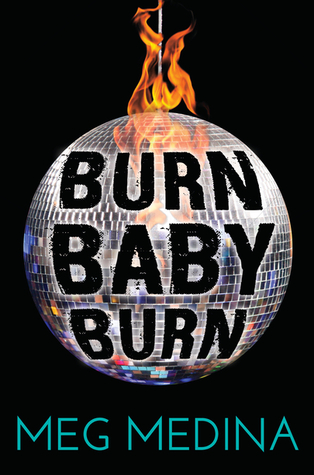
DESCRIPTION OF THE BOOK (from Goodreads): Nora Lopez is seventeen during the infamous New York summer of 1977, when the city is besieged by arson, a massive blackout, and a serial killer named Son of Sam who shoots young women on the streets. Nora’s family life isn’t going so well either: her bullying brother, Hector, is growing more threatening by the day, her mother is helpless and falling behind on the rent, and her father calls only on holidays. All Nora wants is to turn eighteen and be on her own. And while there is a cute new guy who started working with her at the deli, is dating even worth the risk when the killer likes picking off couples who stay out too late? Award-winning author Meg Medina transports us to a time when New York seemed balanced on a knife-edge, with tempers and temperatures running high, to share the story of a young woman who discovers that the greatest dangers are often closer than we like to admit — and the hardest to accept. Burn Baby Burn releases March 8 from Candlewick Press. It has been named a Junior Library Guild Selection and has received a starred review from Kirkus.
MY TWO CENTS: Meg Medina follows up her Pura Belpré winner Yaqui Delgado Wants to Kick Your Ass with another story of a girl in Queens just trying to survive high school and family drama. Burn Baby Burn takes place in the summer of 1977, and the larger struggles of New York City grappling with a serial killer, power outages, and arson parallel the way the protagonist Nora is trying to cope with a threatening older brother, an absent father, and a traditional mother who protects family and men at the cost of everything else. Medina perfectly captures the stifling atmosphere that drives Nora to hide her struggles from her best friend and love interest. I just wanted to give Nora a hug and say please, tell someone about what’s going on at home, but I also understood how her pride and shame drove her decision making. Medina carefully builds the suspense, never taking the easy way out of resolving a conflict. You will be holding your breath by the end of the book, hoping desperately that Nora will triumph.
TEACHING TIPS: The historical setting makes this a good fit for a history or sociology class. Classes studying serial killers, cities in transition, or class and racial tension will find this a compelling read. Medina’s incorporation of the feminist movement and in particular her nod to how it left out women of color is a great place for a class to start a discussion.
photographer, Steve Casanova
ABOUT THE AUTHOR:Meg Medina is an award-winning Cuban American author who writes picture books, middle grade, and YA fiction. She is the 2014 recipient of the Pura Belpré medal and the 2013 CYBILS Fiction winner for her young adult novel, YAQUI DELGADO WANTS TO KICK YOUR ASS. She is also the 2012 Ezra Jack Keats New Writers medal winner for her picture book TIA ISA WANTS A CAR.
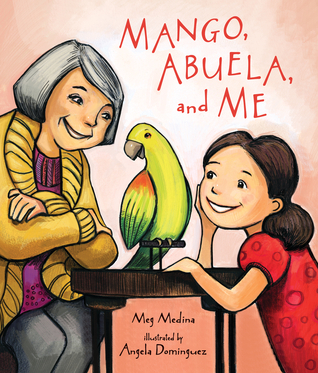
Her most recent picture book, MANGO, ABUELA AND ME, a Junior Library Guild Selection, has earned starred reviews in Booklist and Publishers Weekly, and is included in the 2015 American Booksellers Association’s Best Books for Young Readers Catalog.
Meg’s work examines how cultures intersect through the eyes of young people, and she brings to audiences stories that speak to both what is unique in Latino culture and to the qualities that are universal. Her favorite protagonists are strong girls. In March 2014, she was recognized as one of the CNN 10 Visionary Women in America.In November 2014, she was named one of Latino Stories Top Ten Latino Authors to Watch.
When she is not writing, Meg works on community projects that support girls, Latino youth and/or literacy. She lives with her family in Richmond, Virginia.
FOR MORE INFORMATION about Burn Baby Burn, check your local public library, your local bookstore or IndieBound. Also, check out Goodreads, Amazon, and Barnes & Noble.
Here is the official book trailer for Burn Baby Burn:
Cecilia Cackley is a performing artist and children’s bookseller based in Washington DC where she creates puppet theater for adults and teaches playwriting and creative drama to children. Her bilingual children’s plays have been produced by GALA Hispanic Theatre and her interests in bilingual education, literacy, and immigrant advocacy all tend to find their way into her theatrical work. You can find more of her work at www.witsendpuppets.com.
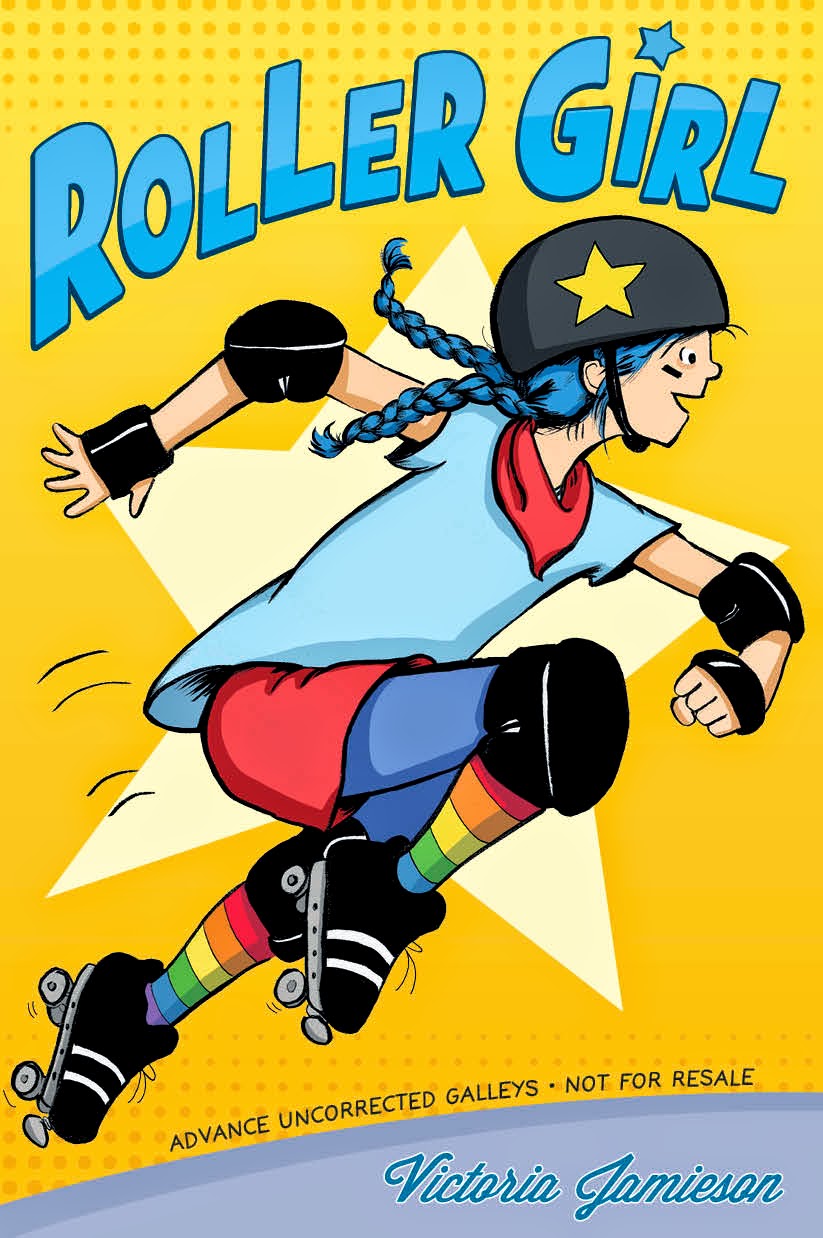
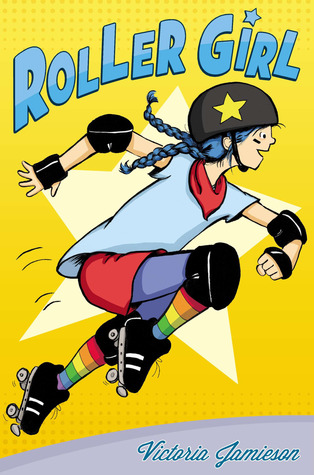
Roller Girl is a recipient of a 2016 Newbery Honor!
FROM THE NEWBERY MEDAL HOME PAGE: Astrid falls in love with roller derby and learns how to be tougher, stronger and fearless. Jamieson perfectly captures the highs and lows of growing up in this dynamic graphic novel.
MY TWO CENTS: Victoria Jamieson’s Roller Girlcaptivated me right off and only grew sweeter on a second reading. In addition to the immersive power of graphic novels, the story of Roller Girl delivers a solid punch: 12-year-old Astrid Vasquez gets hooked on roller derby and devotes herself to the sport while navigating the ups and downs of middle-school friendships.
Astrid’s passion for roller derby ignites when Ms. Vasquez takes Astrid and her best friend, Nicole, to their first derby bout. Afterward, Astrid can talk of nothing but the derby and fails to notice that Nicole doesn’t share her excitement. Come on, how could she not? Check out the theater of it all: the players’ costumes and wild hair colors, the electricity of the crowd, and the take-no-prisoners energy that drives the sport. Astrid even discovers an idol in Rainbow Bite, a star jammer for the Rose City Rollers, who exemplifies roller derby’s ferocity and skill. Astrid loves the fact that there’s nothing girlie or restrained about roller-derby culture, and when she hears about summer camp for junior players, she’s chomping at the bit to sign up. Best friends do everything together, right? This assumption crumbles when Nicole reveals that she’s planning to attend dance camp instead, along with Rachel, Astrid’s one true nemesis from their early elementary days.
With Nicole’s “desertion,” Astrid has to face the first day at derby camp alone. From there, complications abound. Ms. Vasquez is under the impression that Nicole’s mom will give Astrid a ride home at the end of each day’s session. Astrid is afraid to tell her mom that Nicole isn’t participating, as this would lead to all sorts of questions Astrid wants to avoid. As a result, the lies she must tell and the long walks home she must endure only add to the drama of those first grueling weeks at the rink. Did I mention that Astrid discovers she’s a lousy skater?
Despite aching muscles and botched skill drills, Astrid persists and finds new motivations as she enters more deeply into the world of her chosen sport. The camp coaches balance demanding practices with timely pep talks, and Astrid strikes up a friendship with Zoey, a camper her age. Another boost comes in the form of a correspondence with Rainbow Bite that starts when Astrid discovers the star jammer’s locker and begins leaving notes for her. (Rainbow proves a generous celebrity and writes back with inspiring tips.)
None of these triumphs mean that Astrid transforms into a roller derby standout; what matters are the personal victories that she achieves over the course of the summer, including earning the respect of her teammates and figuring out some important things about who she is and what sort of friend she wants to be.
Roller Girl succeeds on multiple levels. Through a lively narrative and a rich visual landscape, it draws readers into the fascinating world of roller derby, often explaining the rules and strategies of a sport unfamiliar to many through clever diagrams and dramatized scenes. Through these invitations to explore the sport, it portrays women and girls as highly capable both physically and intellectually. Readers get a clear sense that women can—and should—take on tough challenges.
In addition, Roller Girl gives us a Latina character comfortable with her ethnic identity and shows us Anglo characters who are equally accepting. Astrid’s Latina background doesn’t even emerge until page 54, and only much later do we learn that the family is Puerto Rican. This information comes across casually, as just another cool detail about the main character. At least this is how Astrid’s new friend Zoey takes the information when Astrid reveals it during a scene in which West Side Story plays in the background.
Astrid says to Zoey, “I’ve seen this movie! My mom made me watch this for an evening of Puerto Rican cultural heritage. Or something.” (At first blush, the idea that an adult puertorriqueña would push this movie as representative of her culture struck me as improbable. I associate West Side Story with racial stereotypes, discriminatory casting—white actors playing the Puerto Rican leads—and the problematic practice of filming lighter-skinned Latino actors in brown-face. But after asking around, I learned that not all Latinos recoil at the legacy of West Side Story, and many view Rita Moreno’s dynamic, Oscar-winning performance as a cause for celebration.)
In general, my sense is that ethnicity may not be central to the story, yet it gives readers additional exposure to a positively framed diverse character who faces the same challenges most 12-year-olds face. In fact, one of the biggest ways that Roller Girl succeeds is in its depiction of Astrid’s emotional journey. It delivers an honest and satisfying ride through many of the complex social and internal upheavals of middle-school life. I particularly like the author’s portrayal of mixed emotions. On one page, a central panel depicts a kindergarten poster of cartoon faces bearing unambiguous expressions. The caption reads: “The feelings were all simple ones, like ‘happy’ and ‘sad.’ They didn’t tell you about feelings that got mixed together like a smoothie.” In the next panel, Astrid contemplates exactly such “mixed together” feelings, the result of running into Nicole after weeks of separation. Astrid is happy to see her former best friend yet sad about the emotional distance that stands between them now. Out of this, she coins a new word, “shad,” a distillation of those contradictory feelings—happy and sad. This moment of acceptance that emotions are complex seems to me a marker that a character is coming of age.
As happens with the best of sports stories, Roller Girl follows a character’s trajectory through brutal training challenges, inevitable setbacks, as well as moments of triumph–and elevates these into something beyond athletic achievement. At twelve, Astrid is finding her way in the world. Some of her falls are literal and happen on the skating rink. Some are relational and emotional, and arrive without the benefit of coaches to teach her how to land injury-free. The important thing is that after each fall, Astrid is learning how to dust herself off and get back into the game.
TEACHING TIPS AND RESOURCES: A major theme of Roller Girl is the troubled landscape of middle-school friendships. Try this exercise with young readers. Assign a “treasure hunt” for episodes in the story that demonstrate the ebb and flow of friendships. Ask students to identify relational missteps that Astrid and other characters make, i.e., jumping to conclusions, not listening, passing judgments, not speaking up; ask them to do a similar search for positive practices that build friendships.
For visual help on grasping the rules of roller derby, check out the video on this page.
One of Astrid’s challenges is figuring out a good derby name. There are rules and traditions that must be observed, as outlined in this guide.
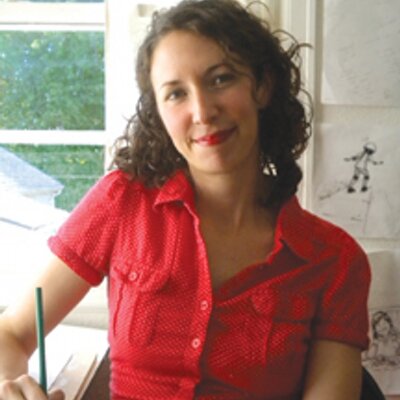
ABOUT THE AUTHOR/ILLUSTRATOR: Pennsylvania native Victoria Jamieson attended the Rhode Island School of Design. Her work history includes a stint as book designer for HarperCollins Children’s Books. She now writes, illustrates, and teaches illustration at Pacific Northwest College of Art in Portland, Oregon, where she also skates in the Rose City Rollers roller-derby league.
Newbie skaters like Astrid could probably use the tips from this video.
Lila Quintero Weaver is the author-illustrator of Darkroom: A Memoir in Black & White. She was born in Buenos Aires, Argentina. Darkroom recounts her family’s immigrant experience in small-town Alabama during the tumultuous 1960s. It is her first major publication. Lila is a graduate of the University of Alabama. She and her husband, Paul, are the parents of three grown children. She can also be found on her own website, Facebook, Twitter and Goodreads.
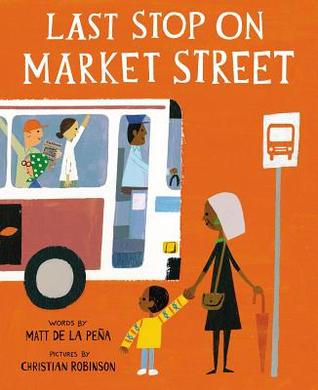
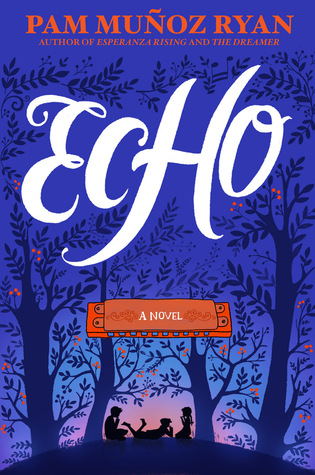
WOW! What a great year for Latin@-themed books and books written/illustrated by Latin@s! I’m sure many of us reacted this way as the results of the ALA Youth Media Awards came in Monday. Matt de la Peña and Christopher Robinson’s Last Stop on Market Street took home the Newbery Medal and was named an Honor book for the Caldecott and Coretta Scott King awards.
AND OUR OWN ASHLEY HOPE PÉREZ’S OUT OF DARKNESS WAS NAMED A PRINTZ HONOR BOOK!!!!! YES, THIS IS IN ALL CAPS AND HAS LOTS OF EXCLAMATION POINTS BECAUSE WE ARE SOOOOOO EXCITED FOR HER!!!!!!!! YAY, ASHLEY!!!!
A HUGE CONGRATULATIONS to all of the winners and honor books.
Here are the winners and honor books by/for/about Latin@s. Click on the covers for more information:
John Newbery Medal for most outstanding contribution to children’s literature:
Newbery Honor Books:
Michael L. Printz Award for excellence in literature written for young adults. The Honor Books included:
Randolph Caldecott Medal for the most distinguished American picture book for children. The Caldecott Honor Books included:
Coretta Scott King (Illustrator) Honor Books included:
Pura Belpré Award (Illustrator) honoring a Latino writer and illustrator whose children’s books best portray, affirm, and celebrate the Latino cultural experience.
Winner:
Honor Books:
Pura Belpré Award (Author) honoring Latino authors whose work best portrays, affirms, and celebrates the Latino cultural experience:
Winner:
Honor books:
Robert F. Sibert Informational Book Award for most distinguished informational book for children.
Winner:
Finalist for the William C. Morris Award for a debut book published by a first-time author writing for teens:
Finalist for the YALSA Award for Excellence in Nonfiction for Young Adults:
Odyssey Award for best audiobook produced for children and/or young adults, available in English in the United States. The Odyssey Honor Recording was:
Alex Awards for the 10 best adult books that appeal to teen audiences. The list included:
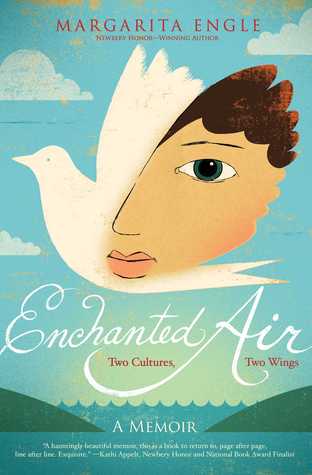
A few months ago, I received a set of wonderful letters from a grandmother and her 10-year-old granddaughter. They were reading Enchanted Air together, discussing it, and using it as a way for the grandma to share her own childhood experiences during the Cold War.
It occurred to me that many Latino families can’t do this, simply because most books by U.S. Latino authors are not available in Spanish. With a few wonderful exceptions such as the works of Pam Muñoz Ryan and Alma Flor Ada, in general only bestsellers by non-Latinos, and a few specialized small press books by Latinos, ever get translated.
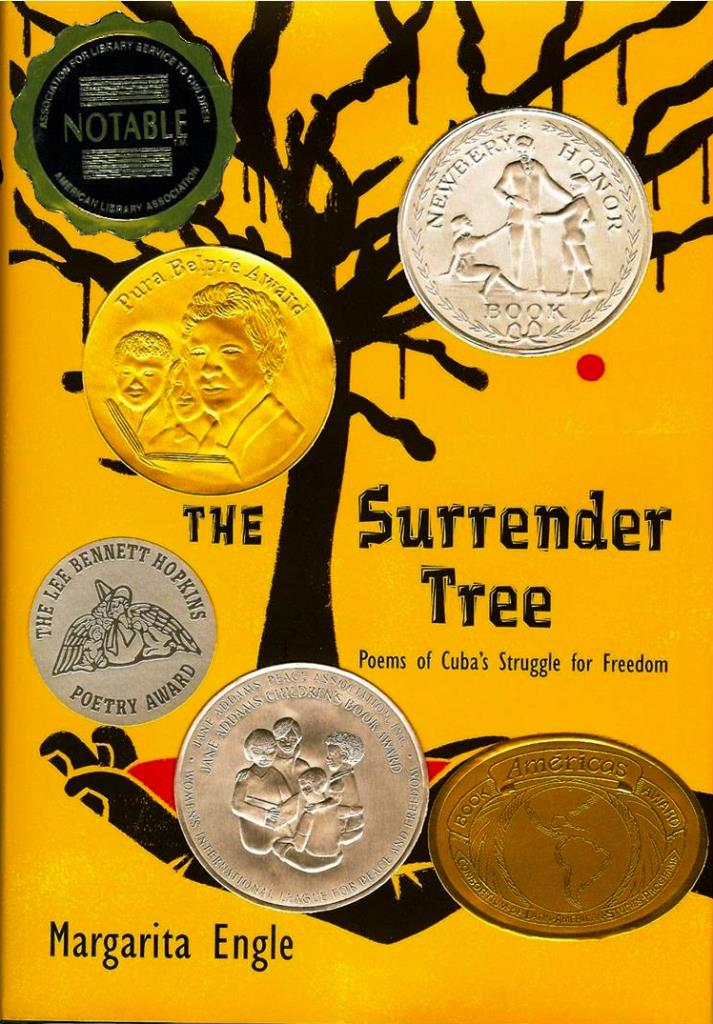
Soon after those heartwarming grandma-granddaughter letters arrived, I visited a Washington, D.C. eighth-grade class where Latino students asked me for books in Spanish. All I had to offer was one of my oldest books, The Surrender Tree/El Arbol de la Rendición, a dual language paperback that resulted from this title’s status as a Newbery Honor winner.
My next school visit was to a rural sixth-grade class in California’s agricultural Central Valley. The students were all Latino, and most spoke English, but teachers informed me that many of the parents and grandparents were not bilingual. The only way those families could participate in their children’s education was in Spanish. Fortunately, the school had a grant to provide a signed copy of The Surrender Tree/El Arbol de la Rendición to each student. Those books will go home and be available to the whole family. That’s no guarantee that parents will read and discuss them, but at least it is a possibility.
The need for bilingual books for older children has been on my mind so much that when I served on a diversity panel at a national teachers’ conference, I answered the question, “What are your wishes for the publishing industry?” with the statement, “I wish for translations.”
I pointed out that fifty million people in the U.S. speak Spanish, and that just because the publishing industry has never figured out how to reach this vast “market,” that doesn’t mean it will never be reached. We can’t give up. Until there are more translations, family literacy in this country will never be complete.
Fortunately, I will soon have another bilingual book. A new and innovative small press called HBE Publishing has set a fall 2016 release date for a middle grade historical verse novel that I wrote in the style of magic realism. There will be both English-only and bilingual options, so that schools or individuals can order their preferred format. I won’t receive any advance, but the royalty will be much higher than the usual 10%, a trade-off I’m happy to make, in exchange for a beautiful bilingual edition that children can share with their abuelitos. Perhaps innovation is what it will take to resolve the problem of too few translations.
Margarita Engle is a prolific author of books for young readers, most recently of Enchanted Air and Drum Dream Girl. She has won countless awards for her work, including the Pura Belpré and the Newbery Honor. Her guest posts on this blog are favorites with readers. Check out her essay on researching and writing the stories of historical heroes. For more information on Margarita’s writing, please visit her official author website.
The same day that this guest post published, Margarita received the 2016 Pura Belpré Author Award for Enchanted Air: Two Cultures, Two Wings. Congratulations, Margarita!
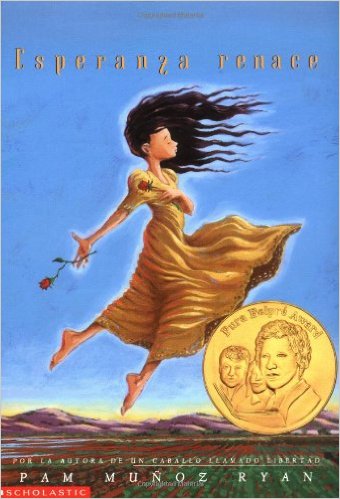
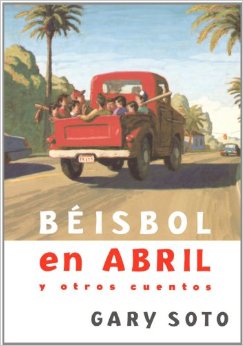
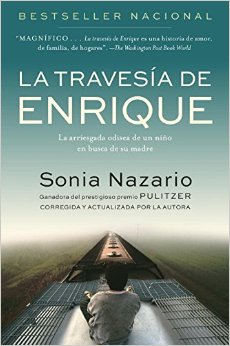
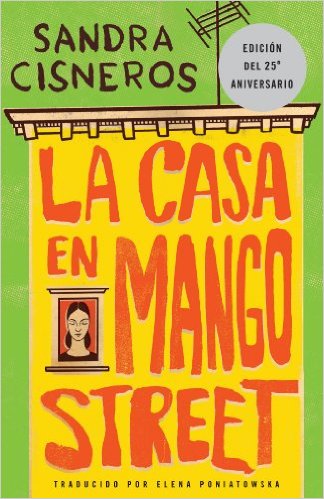
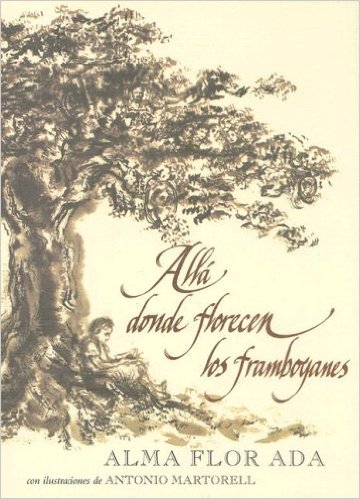
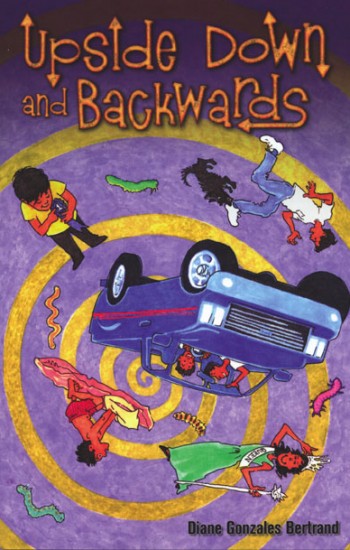
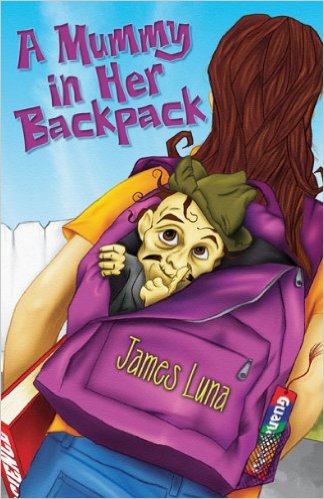
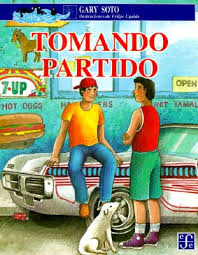
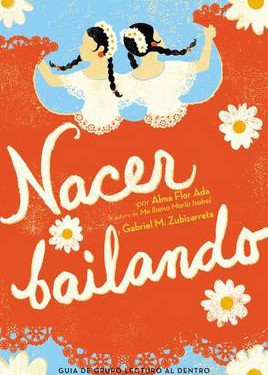
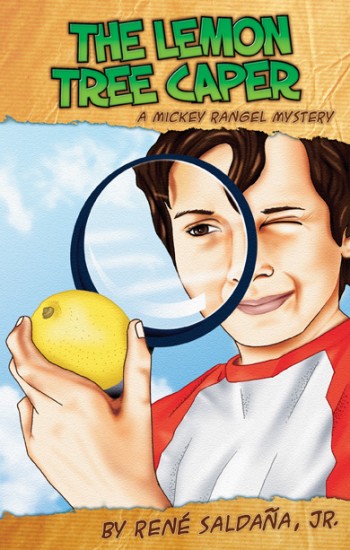
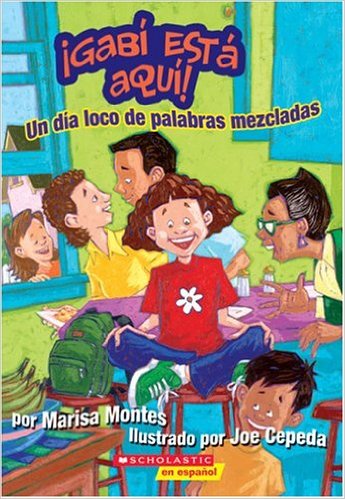
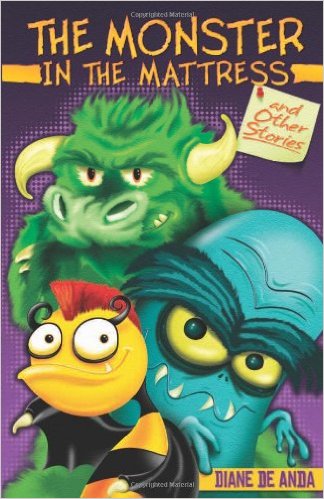
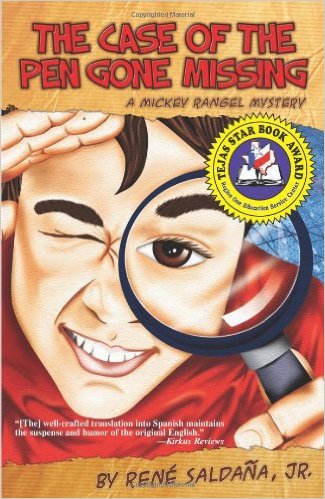
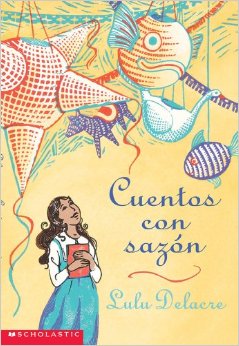
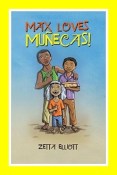
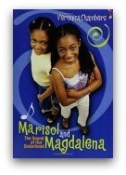
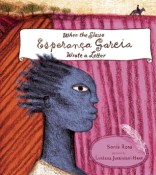
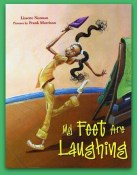
Margarita’s experiences point to the shortage of Latin@-authored Spanish editions for middle-grade readers. When we researched available titles, we came up with the following modest sampler. Help us expand it! In the comments, please tell us about good bilingual MGs or fully Spanish editions that you’ve run across. Remember, we’re not looking for translations of mega bestsellers like the Harry Potter or Diary of a Wimpy Kid series. We’d like to identify books that center on Latin@ characters and themes. Thanks in advance for your suggestions!
Note: Some of the bilingual book covers shown below don’t include their Spanish title.





 When I met my husband—who I usually refer to online as the Transboy—I was a teen who’d only recently come out. A few months before, I had, as my best friend describes it, been so deep in the closet I was in Narnia. And with that depth of denial came a lot of homophobic thoughts, some of which, I’m sad to say, became words. When I met the Transboy, I was still shaking out of that, the hangover of my own self-loathing. I now recognize the self-hating place my homophobia had come from, but the habit, the instinct to make jokes every time I remembered I was falling in love with a boy with a female body, trailed me.
 The girls in the books I write make mistakes. Sometimes awful ones, informed by their own prejudices. In
  Anna-Marie McLemore was born in the foothills of the San Gabriel Mountains, raised in the same town as the world’s largest wisteria vine, and taught by her family to hear la llorona in the Santa Ana winds. She is a Lambda Literary fellow, and her work has been featured by The Portland Review, Camera Obscura, and the Huntington-USC Institute on California and the West.
  Review by Cecilia Cackley
 Cecilia Cackley is a performing artist and children’s bookseller based in Washington DC where she creates puppet theater for adults and teaches playwriting and creative drama to children. Her bilingual children’s plays have been produced by GALA Hispanic Theatre and her interests in bilingual education, literacy, and immigrant advocacy all tend to find their way into her theatrical work. You can find more of her work at