Book Review: Even if the Sky Falls by Mia García


Review by Troi Genders

24218983DESCRIPTION FROM THE PUBLISHER: One midsummer night. Two strangers. Three rules: No real names. No baggage. No phones. A whirlwind twenty-four-hour romance about discovering what it means to feel alive in the face of one of life’s greatest dangers: love.

Who would you be if you had one night to be anyone you want?

Volunteering in New Orleans was supposed to be a change, an escape from the total mess Julie left at home and from her brother’s losing battle with PTSD. But building houses surrounded by her super-clingy team leader and her way-too-chipper companions has Julie feeling more trapped than ever. And she’s had enough.

In a moment of daring, Julie runs away, straight into the glitter, costumes, and chaos of the Mid-Summer Mardi Gras parade—and instantly connects with Miles, an utterly irresistible musician with a captivating smile and a complicated story of his own. And for once, Julie isn’t looking back. Together Julie and Miles decide to forget their problems and live this one night in the here and now. Wandering the night, they dance on roofs, indulge in beignets, share secrets and ghost stories under the stars, and fall in love. But when a Category Two hurricane changes course and heads straight for NOLA, their adventure takes an unexpected turn. And, suddenly, pretending everything is fine is no longer an option.

MY TWO CENTS: Mia García’s debut novel, Even if the Sky Falls is a colorful, emotional book that grabbed me from the first page. Set in New Orleans, the reader feels transported to the French Quarter and Jackson Square as you follow Julie and Miles on their night of throwing caution to the wind. Both characters have intriguing backstories that I wanted more of. I found myself caring not only for Julie but also for her brother Adam, who you learn more about through the course of the novel. Miles seemed at first to be a Don Juan–slick, handsome, and a massive flirt, but throughout the novel, you discover he is much more complex.

Julie is a 16-year-old Puerto Rican girl who travels to New Orleans as part of a youth group trip to rebuild homes in New Orleans. She is doing so to get away from her family issues at home; her brother Adam recently returned from a tour of service and is not quite the same person he was before he left. While rebuilding homes, she sees a van filled with loud, happy people and decides that she is going to leave “Old Julie” behind and explore the city. She finds herself in the middle of Mid-Summer Mardi Gras, where she meets Miles, who is part of the Mid-Summer Boys band, whose music keeps Julie captivated. A New Orleans native, Miles knows the city and its history, so throughout the night, he shows Julie, who he calls Sunshine or Lila, the ins and outs of the “real” New Orleans. They agree to leave all baggage behind, just for one night. What they do not realize, however, is that they are about to fall hard for each other, and their pasts refuse to stay in the past. They also do not realize that a massive storm is heading straight their way, and it will change both of their lives. Both Julie and Miles have issues that they try to suppress, but it is not until the storm is upon them that they finally face what they have been running from.

In the beginning, I thought the storm was cliché, but it matches the character’s developments, especially with Julie and her refusal to share secrets about her past until they fully consume her. There are some religious aspects, mostly with her Abuela Julia, but it did not feel like García was beating me over the head with a Bible. It was also refreshing to have a Puerto Rican character whose heritage is referred to but not the central issue. At several points of the novel, Julie goes back to a time when she was in Puerto Rico on a trip or how her Abuela Julia helped to shape her into the person she is. I was gripping the book as I tried to figure out what the big moments were that both characters were running from, but García did not give them up easily. The big moment for each character hit me like a punch to the gut and made the characters more believable. Overall, the novel has a simple story structure: girl is unhappy with life, girl decides to be reckless, girl meets boy, they fall in love. But, García has given these characters so much depth and so much at stake that it is hard not to feel for them and want to cheer them on as they navigate both New Orleans during a storm and their pasts.

OTHER REVIEW QUOTES:

From School Library Journal: “The plot itself unravels like a hurricane, building and surging along with the storm. The story plateaus and tensions relax during the eye of the storm, but as quickly as the storm returns, so does the building action, which rages on until the final page.”

From Kirkus: “The author’s rich descriptions of New Orleans make the vibrant city come alive, from the music and ghost stories to the vampire lore and delicious beignets…A compelling 24-hour romance that’s as charged as its New Orleans setting.”

From Booklist: “García’s debut is a wrenching, high-stakes exploration of self-discovery. Readers of GayleForman, Sarah Dessen, and E. Lockhart will find themselves engaged by Julie’s quest.”

TEACHING TIPS: I would be somewhat hesitant to teach this in a class, only for some language usage, but I would definitely keep it in a classroom library so that students could check it out! If someone wanted to teach this book, I would definitely front load it with some information about New Orleans, its history, culture, and weather. It is key for the reader to understand the impact of Hurricane Katrina on this city. I was young when Katrina happened, but I know the repercussions are still felt on the city today. Also, I think it would be helpful for students to learn about what happens to soldiers after they come home from war, so they can better connect and sympathize with Adam.

FOR MORE INFORMATION about Even if the Sky Falls, check your local public library, your local bookstore or IndieBound. Also, check out GoodreadsAmazon, and Barnes & Noble.

For a guest post from the author, about the fear and stress of writing about her culture, click here.



5pv_6utvxrzzwbjesfqoku0ic1kqe1dzq1c5cnsydmy
ABOUT THE AUTHOR
: Mia García was born and raised in San Juan, Puerto Rico. She moved to New York, where she studied creative writing at the New School, worked in publishing, and now lives under a pile of to-be-read books. She’s a giant geek with comic book and archery addictions. Even if the Sky Falls is her debut novel. Her second novel, The Year of Everything, is expected to release in winter 2018. You can find her at www.mgarciabooks.com @MGarciaWrites on Twitter and Instagram, as well as on Tumblr at MGarciawrites.tumblr.com.



12119166_10204875618714252_5373585124158767944_nABOUT THE REVIEWER: Troi Genders is a senior at Ball State University studying Secondary English Education. Troi is a self-proclaimed cat-mom, YA and Contemporary enthusiast, and lifelong learner. You can reach her via email at tlgenders@bsu.edu or on twitter at @MissGendersBSU.

 

January 2017 Latinx Book Deals


By Cecilia Cackley

This is a new, monthly post I’ll be writing to keep track of the book deals announced by Latinx writers and illustrators. There are two reasons why I am beginning this series. The first is simply to celebrate the accomplishments of our community and to (hopefully) put these titles on people’s TBR and purchasing lists, even if the books won’t be out for a few years. The other reason is to document whether or not publishers are listening to us when we ask for more book about Latinx communities, written by Latinx writers. Publishers Weekly puts out a digital Rights Report each week, listing around 15 different book deals. How many of them are by Latinx authors? Not enough, in our opinion. Obviously, not all book deals are announced by Publishers Weekly. In addition, I am defining authors as Latinx based on names and the information the Internet gives me.

If I make a mistake or leave someone out, please let me know in the comments.

If you are an agent and you have a Latinx client who just announced a deal, you can let me know on Twitter, @citymousedc.

If you are a Latinx author or illustrator writing for children or young adults, and you just got a book deal, send me a message and we will celebrate with you! Here’s to many more wonderful books in the years to come.

January 31

None.

January 26

Brittany Rubiano at Disney Press has signed Newbery Medalist Matt de la Peña to write an original picture book entitled Miguel and the Grand Harmony, inspired by Disney*Pixar’s forthcoming film, Coco, to be illustrated by Pixar artist Ana Ramírez. A Spanish edition will also be available. Publication is scheduled for October 2017.

Erin Clarke at Knopf has bought world rights to Andrea J. Loney‘s Double Bass Blues, illustrated by Rudy Gutierrez, a picture book celebrating music and family in which a black boy shoulders his beloved double bass from his suburban school to his city neighborhood. Publication is slated for spring 2019.

January 19

T.S. Ferguson at Harlequin Teen has acquired two more novels from YA author Adi Alsaid. The first, Brief Chronicle of Another Stupid Heartbreak, follows a teen relationship columnist as she struggles with writers’ block in the wake of a devastating breakup, and her decision to chronicle the planned breakup of another couple in the summer after they graduate from high school. Publication is slated for summer 2018.

January 12

Claudia Gabel at HC’s Katherine Tegen Books has bought When We Set the Dark on Fire, a debut novel by Tehlor Kay Mejia set at the Medio School for Girls, where young women are trained to become one of two wives assigned to high society men. With revolution brewing in the streets, star student Dani Vargas fights to protect a destructive secret, sending her into the arms of the most dangerous person possible – the second wife of her husband-to-be. It’s slated for winter 2019.

January 10

Tamar Mays at HarperCollins has bought world rights to Bunny’s Book Club author Annie Silvestro‘s (l.) The Christmas Tree Who Loved Trains, the tale of a train-loving tree who, with the help of a little holiday magic, learns to love much more. Paola Zakimi (Secrets I Know) will illustrate; publication is set for fall 2018.

January 5

None.


Cackley_headshotCecilia Cackley is a performing artist and children’s bookseller based in Washington, DC, where she creates puppet theater for adults and teaches playwriting and creative drama to children. Her bilingual children’s plays have been produced by GALA Hispanic Theatre and her interests in bilingual education, literacy, and immigrant advocacy all tend to find their way into her theatrical work. You can find more of her work at www.witsendpuppets.com.

Book Review: Somos Como Las Nubes / We Are Like the Clouds by Jorge Argueta


Reviewed by Sanjuana C. Rodriguez, PhD

28957208DESCRIPTION FROM THE BOOK JACKET: An eloquent and moving account of the tragic migrations of thousands upon thousands of children who are leaving their homes in Central America, often alone, to seek refuge in the United States. Why are they going and how does it feel to be one of them? What is this terrible trip like? What do their hopes and dreams for safety, a new life and a loving reception mean to them?

A refugee from El Salvador’s war in the eighties, Jorge Argueta was born to explain the distressing choice confronting young Central Americans today who are saying goodbye to everything they know because they fear for their lives.

This book is beautifully illustrated by master artist Alfonso Ruano.

MY TWO CENTS: Somos Como Las Nubes/ We are Like the Clouds is a moving collection of bilingual free verse poems. This is one of the few books that I have encountered about the heartbreaking experiences of children who leave their homes to embark on their journey to the United States. This collection of poetry begins with poetry depicting the experiences and sights of the children’s home countries. The poetry then shifts to the journey that children take to get to the United States. The author includes poems that describe the fears of traveling on La Bestia (a fast moving moving train that many migrants use to travel), discuss being accompanied by “coyotes,” and describe children’s feelings as they cross the deserts.  I’ll share one of the most powerful poems about the journey titled “Las Chinamas”. The word Chinamas refers to the border between El Salvador and Guatemala.

When we crossed

the border at Las Chinamas

I saw the river Paz.

Its water runs smiling

between the rocks.

Here the cenzontles (mockingbirds)

never stop singing.


I remembered

our schoolyard,

the gualcalchillas, (small songbirds)

and my teacher

Miss Celia.


I remembered my mother,

my brothers,

my sisters.

Who knows

when I will see them again.

I look at the sky

and think,

we are like the clouds.


What I loved about this book is that there is message of hope in knowing that children are resilient, but the author does not hold back in depicting the heartbreak that goes along with leaving a home country. The book allows the reader to the experience the treacherous journey to the United States through the eyes and wonder of a child. The pictures in this book are also stunningly beautiful. The pictures depict the children’s home countries, families crossing borders, and children laying on the soft sand in the desert. The final poems in the book offer hope. In the poem “Fear,” a mother tells her child in his dream, “This is not a dream, you are in my arms.” The child has arrived to his destination in Los Angeles.

I shed tears when I read this book. It is heartbreaking and it is a poignant reminder that children are children and that there are difficult decisions that children should not have to make. In my opinion, what makes this book even more powerful is that it is written by Jorge Argueta. The author’s note at the beginning of the book shares Jorge’s own experience of fleeing El Salvador and coming to the United States. He shares his inspiration for writing the book by stating, “Like the clouds, our children come and go. Nothing and no one can stop them”.

TEACHING TIPS: This book is an invitation to learn about the harsh realities that children face when they leave their homes and embark on the difficult journey to the United States. It would be a great addition to any classroom library. It would be an excellent book to add to text sets about immigration or refugees. Teachers can also use this book to teach children about writing through difficult situations. It can also be used to show students how illustrations can enhance poetry as this book is beautifully illustrated.

To find Somos Como Los Nubes / We Are Like the Clouds, check your local public library, your local bookstore, or IndieBound. Also, check out GoodreadsAmazon, and Barnes & Noble.


Image result for jorge arguetaABOUT THE AUTHOR: Jorge Tetl Argueta is a celebrated Salvadoran poet and writer whose bi-lingual children’s books have received numerous awards. His poetry has appeared in anthologies and textbooks. He won the America’s Book Award, among other awards for his first collection of poems for children, A Movie in My Pillow. He was the Gold Medal Award winner in the 2005 National Parenting Publications Awards (NAPPA) for Moony Luna/Luna, Lunita Lunera. His other works for children include Xochitl and the Flowers, 2003 America’s Award Commended Title, Trees are Hanging from the SkyZipitioTalking with Mother EarthThe Little Hen in the City and The Fiesta of the Tortillas.


Alfonso RuanoABOUT THE ILLUSTRATOR: Alfonso Ruano was born in 1949 in Toledo, Spain. He studied painting at the School of Fine Arts in Madrid. He has published about 20 books for children and has received multiple awards for his work.



ABOUT THE REVIEWER: Sanjuana C. Rodriguez is an Assistant Professor of Literacy and Reading Education in the Elementary and Early Childhood Department at Kennesaw State University. Her research interests include the early literacy development of culturally and linguistically diverse students, early writing development, literacy development of students who are emergent bilinguals, and Latinx children’s literature. She has published in journals such as Journal of Language and Literacy Education, Language Arts, and Language Arts Journal of Michigan.
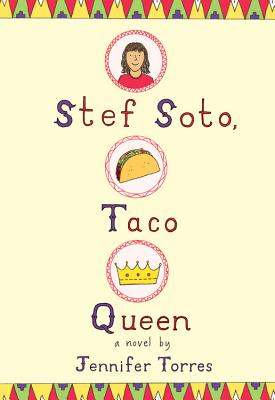
Book Review: Stef Soto, Taco Queen by Jennifer Torres


Reviewed by Caissa Casarez

Stef Soto, Taco Queen CoverDESCRIPTION FROM THE BOOK’S BACK COVER: Estefania “Stef” Soto is itching to shake off the onion-and-cilantro embrace of Tia Perla, her family’s taco truck. She wants nothing more than for Papi to get a normal job and for Tia Perla to be a distant memory. Then maybe everyone at school will stop seeing her as the Taco Queen.

But when her family’s livelihood is threatened, and it looks like her wish will finally come true, Stef surprises everyone (including herself) by becoming the truck’s unlikely champion. In this fun and heartfelt novel, Stef will discover what matters most and ultimately embrace an identity that even includes old Tia Perla.

MY TWO CENTS: Jennifer Torres doesn’t waste any time introducing the readers to Stef and the people in her life, including Papi and her best friend Arthur in the first scene outside of their Catholic middle school. She notices Papi in his taco truck – known as Tia Perla for the rest of the book – and she gets angry because he had originally promised to let her meet him at a nearby gas station. This is the first of many conflicts Stef has with her parents about maturity at the seventh-grade level. The conflicts are about issues that come up in many houses of middle school students.

One of my favorite scenes of the book is in chapter 3, when Stef reminisces about the early stages of Tia Perla being in her family’s life. From what Torres describes as “kitchen-table whispers” about the kinds of beans and salsa it’ll feature (“nothing from a jar,” insists Mami) to learning the origin of the name (Stef’s pick), the entire scene was sweet and a key part of the story. The chapters in the entire book are short but detailed enough for readers of any age to get a glimpse into Stef’s life.

Despite the joy Tia Perla once brought to Stef, she feels anything but joy about the beloved truck as the book goes on. She tries to be nice to former-friend-turned-popular-girl Julia by offering her a ride home in Tia Perla, but Julia turns around and calls Stef the “Taco Queen” behind her back. This comes after Julia makes a scene before the start of their English class by announcing she has tickets to see local pop sensation Viviana Vega in concert. Torres then takes the readers into more of Stef’s life at Saint Scholastica School – trying to fit in and leave Tia Perla in the dust. Stef’s favorite day of the week is Tuesday, which she realizes is not common, because it’s when she has her art class. “And in art class,” Torres writes, “I never hear Mami’s voice telling me I’m too young, or Papi’s nagging me to be careful. I am in charge of the blank piece of paper in front of me, and I can turn it into something as vivid and adventurous or as quiet and calm as I want.” This part of the story stuck out to me because of the way Torres compares making art with wanting independence.

Stef spends every Saturday helping her Papi and Tia Perla during their busiest day of the week. They travel to farmers markets, parks, and other outdoor common areas in their city to feed the crowds with the scrumptious food they’re known for. Even though Papi seems grateful every time Stef helps him out, she still wants nothing to do with Tia Perla, especially when it gets in the way of her independent life she’s trying to create.

During a stop on one of Tia Perla’s routine Saturdays, Stef visits her other best friend, Amanda, after her soccer game. While the two are cooling off with the help of strawberry soda, they listen to the radio and eventually win concert tickets to see Viviana Vega. Stef is cautiously optimistic about her parents letting the two attend the concert alone – until they say no, despite her papi giving her a cell phone she thinks is to check in with them at the concert.

The book then turns its focus to two more complex and meaningful issues previously introduced before Stef’s blowup with her papi. Stef and her classmates decide to work together in a unique way to get more art supplies (hint: a school-wide event is included). And, in a move that impacts Stef more than she realizes, Papi’s business (and Tia Perla) is threatened by new proposed city rules that would impact all food trucks in the area, specifically the taco trucks. Stef seems more mature than others her age when she mentions translating important notes for her papi and others from English into Spanish.

The book ends with a couple of different twists that I didn’t see coming, but I believe both twists worked really well to help bring the story to a close. Stef learns to love all of the parts that make up her identity – even Tia Perla.

Torres does a wonderful job describing the characters and each place they’re in throughout the book. I felt like I was following Stef and her family and friends through their adventures. The book addresses many important topics that may be tough for some kids and families to discuss, but I believe the issues were written in a way that kids can understand. I felt for Stef during some of the scenes with her parents.

There are some basic Spanish words and sentences in the book, most of which are italicized except for one – Orale! That word appears several times in the book with several different meanings, which I loved. It helped set the tone for each of the different chapters, especially when Stef described each way it was written for each scene.

Overall, Stef Soto, Taco Queen is a wonderful read. It’s recommended for kids in grades 4-7 (ages 9-12), but I would suggest it to anyone looking for a story about a girl trying to find herself in this crazy world.

TEACHING TIPS: This book could be used to discuss the idea of working together to help solve problems, especially in the face of adversity. Stef’s art teacher, Mr. Salazar, helped his class raise money to bring in more art supplies, even though he was skeptical about their idea at first. The book could also be used in a way to discuss local politics for students. Not many middle-school students get involved with politics in such a way that Stef did, but I believe the book would be a good way to teach students how to make a difference in their community.

jtorresABOUT THE AUTHOR (from the book’s back cover): Jennifer Torres was 17-years-old–a senior at Alverno High School in Sierra Madre, California—when the first time a story of hers was published in a newspaper. The story was about making tamales with her family, but it was also about love and tradition and growing up. She went on to study journalism at Northwestern University and the University of Westminster. Today, she works as a freelance journalist and is the author Finding the Music, a picture book from Lee & Low. Jennifer lives with her husband and two little girls in central California. Stef Soto, Taco Queen is her debut novel.

BOOK LINKS: Amazon, Barnes & Noble, IndieBound, GoodReads


assertABOUT THE REVIEWER: Caissa Casarez is a proud multiracial Latina and a self-proclaimed nerd. When she’s not working for public television, Caissa loves reading, tweeting, and drinking cold brew. She especially loves books and other stories by fellow marginalized voices. She wants to help reach out to kids once in her shoes through the love of books to let them know they’re not alone. Caissa lives in St. Paul, MN, with her partner and their rambunctious cat. Follow her on Twitter & Instagram at @cmcasarez.

American Stories of Opportunity, Hope, and Ambition: A Guest Post by Author Jennifer Torres


By Jennifer Torres

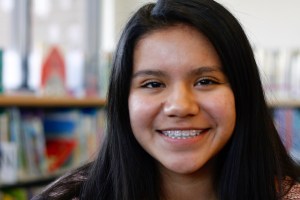
Melissa, an 8th grader who plans to go to MIT and be a college math professor.

Melissa, an 8th grader who plans to go to MIT and become a college math professor.

Escalon is a Spanish word that means “step” or “stepping stone.” It is also a small town in the heart of California’s agricultural Central Valley, surrounded by dairies and almond orchards. Just off Main Street there, across from American Legion Post 263, is the library where Melissa, an eighth grader, volunteers to read to younger children, sometimes in English and sometimes in Spanish.

“I think it’s important to read to kids because they get to know new things when they read a book,” she told me. Melissa’s own favorite books, she said, are mystery and fantasy novels. “It’s like a whole new world.”

Just like Melissa, many of the children who visit the Escalon Library are the sons and daughters of Mexican immigrants, families who saw, in the United States, a step toward opportunity and who courageously took it.

Stef Soto, Taco Queen CoverThose stories are American stories, and I hope that readers will recognize them in Stef Soto, Taco Queen.

The fictional Stef Soto, like millions of very real children in the United States who have immigrant parents, is a first-generation American.

Just like Melissa, Stef sometimes translates for her mom and dad.

Just like Stef, Melissa has parents whose hearts thunder with hope and ambition for their daughter.

“I want her to remember where she comes from, but her future is here,” Melissa’s mom, Adriana, told me in Spanish as she helped her daughter lead an arts-and-crafts project at the library. (She credits the San Joaquin County Office of Education’s Migrant Education department for encouraging her to become an advocate for Melissa’s learning). “I want her to graduate, to go to college, to have a better quality of life.”

She and her husband have encouraged Melissa to begin investigating colleges, to think about what she wants to study, who she wants to be.

“I’ve decided I want to go to the Massachusetts Institute of Technology,” Melissa said, braces glinting. “I think that’s a good one for what I want to do.”

What she wants to do is teach math. When I asked her what grade, she hesitated, sheepish about correcting me.

Finally, she shook her head. “No, I want to be a math professor. Like at a university.”

Just like I did—in a family that includes first-, second-, third- and fourth-generation Americans, as well as some who still live in Mexico—Stef is growing up speaking and listening to a vibrant mix of English and Spanish. We both find comfort in friends and family and warm tortillas, smeared with butter.

And just like all of us, I think, she is trying hard to figure out exactly where she belongs. Too often, for too many, it can feel like a here or there question.

But as I have learned, as students like Melissa remind us, and as characters like Stef discover, our stories are so much richer than that.

“I get to have both cultures,” Melissa said. “And I want people to know that immigrants are people—smart people—who want a better future, and so they came to this country. I think it’s really brave of them.”

jtorresFrom the author’s website: Hi there. I’m Jennifer. I live with my family in California’s Central Valley, and I write stories. I used to work as a newspaper reporter, writing stories about real people, whose lives told us something about our world and maybe about ourselves. Now, I write books for young readers—books with make-believe characters whose stories, I hope, are just as full of life and truth as the real ones.

Check out my picture book, Finding the Music, published by Lee & Low Books, and look out for my debut middle-grade novel, Stef Soto, Taco Queen, coming January 2017 from Little, Brown Books for Young Readers.

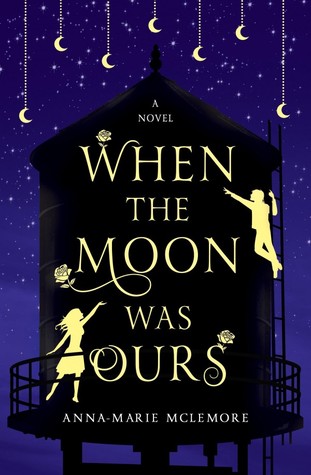
Book Review: When the Moon Was Ours by Anna-Marie McLemore


28220826Reviewed by Elena Foulis

DESCRIPTION OF THE BOOK: To everyone who knows them, best friends Miel and Sam are as strange as they are inseparable. Roses grow out of Miel’s wrist, and rumors say that she spilled out of a water tower when she was five. Sam is known for the moons he paints and hangs in the trees, and for how little anyone knows about his life before he and his mother moved to town. But as odd as everyone considers Miel and Sam, even they stay away from the Bonner girls, four beautiful sisters rumored to be witches. Now they want the roses that grow from Miel’s skin, convinced that their scent can make anyone fall in love. And they’re willing to use every secret Miel has fought to protect to make sure she gives them up.

MY TWO CENTS: When the Moon Was Ours, captures a beautiful love story full of colors, scents, musical prose, and magical realism. Miel and Samir are peculiar children; Miel grows roses from her wrists and Sam paints moons and hangs them in trees around town. Anna-Marie McLemore’s rich narrative walks us through the lives of Miel and Sam, two teenagers with complicated histories. Miel’s fear of water, ghosts, pumpkins, and tormented memories of her mother, are intensified when the town’s rusted water tower falls and water rushes out over the fields and her. It is at this moment that she appears in the town, at the age of five, alone, in a thin nightgown, and bathed in rusted water.  No one knows her or approaches her, except for Moon (Sam), who talks to her and covers her with his jacket. Miel goes home with Sam, but Aracely, the town’s curandera, offers to bring her home and look after her.

This town, like the novel, is full of mystery. There are four beautiful sisters, known as the Bonner sisters, who are thought to be witches. They usually get people to do what they want, and get boys to fall in love with them. They seemingly accept and care for Miel, but are manipulative and cruel to her when they think her flowers can help them get their powers back. The Bonner sisters are not free from gossip, envy, unexpected pregnancies, and secret sexual desires. The readers slowly begin to discover that what makes everyone mysterious—aside  from the growing roses from Miel’s skin—is the world of secrets, half-truths, and distorted memories that each character holds. Hanging throughout the novel is the theme of gender fluidity. The story follows the blooming romance between Miel and Sam, who seem to tend to each other’s pains, desires, and bodily discoveries of unexpected peculiarities. Both Miel and Sam are foreign to the town, but it is Sam who is sometimes the target of discrimination because of the color of his skin and feminine features. Sam tells Miel the story his mother told him about bacha posh, a cultural practice in which families with no sons, dress a daughter as a son, and as an adult, the daughter returns to live as woman. Eventually, we discover how this tradition has impacted Sam’s life. Similarly, we learn about the connection between Sam’s life and Aracely, the town’s healer.

It is clear that the Bonner sisters are white, Miel is Latina, and Sam is Italian-Pakistani, and, although minimal, we can see how they experience life in this town. Las gringas bonitas, as Miel refers to them, are privileged and powerful, while Sam works the Bonner family’s fields. The theme of racial experiences or discrimination is not central to the novel, but it does point us to different lived experiences.

In the end, the novel is about acceptance and love. It is also about the complexity and danger of strict gender roles, and the freedom to live outside of that. For Sam, his assigned name and gender at birth did not match who he had become. The man he had become is the man who Miel loved. It is important to note the author’s personal story at the end of the book. Although she tells us at the beginning that this is a work of fiction, in the end, she explains her personal connection to Miel and Sam’s story. The author grew up listening to La Llorona stories, the weeping woman who, the legend tells, tried to drown her children by the river, and later learned about the story of the bacha posh, a cultural practice in Afghanistan and Pakistan. She also tells us about her marriage to a transgender male.

TEACHING TIPS: Teaching this novel opens up the opportunity to research different legends, traditions, and cultural practices in relation to gender plurality and sexuality. For example, recent stories from India and Mexico about cultures that have embraced a third gender have come to light.  The author’s page offers several links on interviews, music, and essays written about transgender awareness. As a pre-reading activity, teachers can also hold discussions about legends like La Llorona, children’s folk ghost stories, and the differences and similarities between curanderos/healers and witches. Further research into McLemore’s use of colors, scents, and other sensory descriptions can open up discussions about culture, mood, place, and magical realism.

Anna-Marie McLemoreABOUT THE AUTHOR: Anna-Marie McLemore was born in the foothills of the San Gabriel Mountains, raised in the same town as the world’s largest wisteria vine, and taught by her family to hear la llorona in the Santa Ana winds. She is a Lambda Literary Fellow, and her work has been featured by The Portland Review, Camara Oscura, and the Huntington—USC Institute on California and the West. Her debut novel The Weight of Feathers was a Junior Library Guild Selection, a YALSA Best Fiction for Young Adults book, and a William C. Morris YA Debut Award Finalist. When the Moon Was Ours is her second novel. 


headshot2016ABOUT THE REVIEWER: Elena Foulis has a Ph.D. in Comparative Literature and Cultural Studies from the University of Arkansas. Her research and teaching interests include U.S. Latina/o literature, and Digital Oral History. She is currently working on a digital oral history collection about Latin@s in Ohio, which has been published as an eBook titled, Latin@ Stories Across Ohio. She currently lives in Cleveland, Ohio.