An Interview with Author Anna-Marie McLemore about Wild Beauty


By Cecilia Cackley

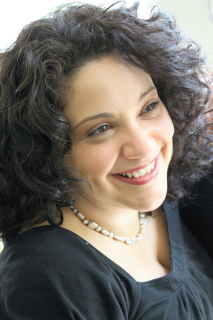
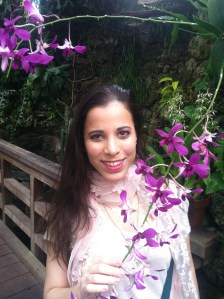
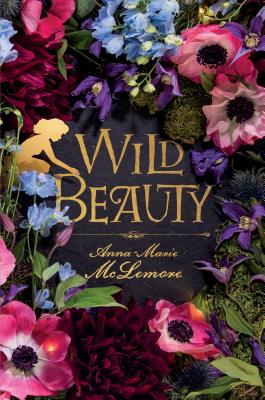
Anna-Marie McLemore‘s lush, sensory YA fiction has been a finalist for the William C. Morris Award and won a Stonewall Honor from the American Library Association. Her new book Wild Beauty (releases tomorrow!) takes place in a magical, predatory garden tended by the women of the Nomeolvides family, so it seemed fitting to have our interview about the book take place in a garden. I met up with McLemore at the National Botanic Garden in Washington, D.C. to look at the various themed rooms (tropical, desert, poisonous plants etc.) and discuss the plants, characters, and world of Wild Beauty. Here is our conversation, edited for clarity.

Anna-Marie McLemore

Q: Can you talk a little about your inspiration for the character Fel and his story?

Anna-Marie McLemore: Without giving too much away, I’ll say this: I started with his history, where he comes from, his family. And the fact that we sometimes don’t hear the stories of what happens when the farms fail, when the harvest dies, what you do when you’re trying to take care of your loved ones. So that’s one side of it. Another is that there’s a brutal history of child immigrants doing dangerous jobs, jobs that are already dangerous if you’re a grown man, and either the people doing the hiring don’t care or they look the other way. But amid that kind of brutality, there’s also family; I wanted to write characters who were looking out for each other even in a place that doesn’t really want them.

Q: It’s a feature of stories categorized as magical realism that the characters accept magic as simply part of regular life. In what way do the characters in Wild Beauty, both from the family that lives in La Pradera and the surrounding town accept magic as part of their world?

AMM: The way the Nomeolvides women tend these gardens, the ways that they and their loves are cursed, that’s accepted as part of the lore of this town. But this book is also about what you get made into by rumor; there’s so much talk about these women, everybody else trying to decide what the truth of them is. In response to all that, the Nomeolvides women become their own community. They make their own space. And I think that’s threatening to many watching them from the outside. But it’s how the women push back against the way people see them as a sideshow attraction, how visitors expect them to perform, to entertain.

Q: And we see that a lot in the real world.

AMM: We do.
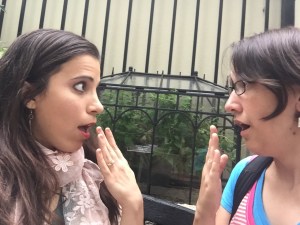
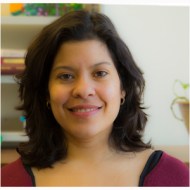
Anna-Marie and Cecilia at a poisonous plants exhibit at the National Botanic Garden in Washington, D.C.

Q: That people who are from marginalized populations—that happens to them more, that if you are not the majority you’re accepted but only in as much as you provide entertainment or only in as much as you can be exploited.

AMM: Exactly, you have a role that you’re expected to play.

Q: How did you choose the flower names for each of the girls?

AMM:  I chose the flowers based on how I pictured these women. Maybe it would have been easier to go for the flower names first and then build the character but I started the other way around. I imagined each girl and then thought, “What is her flower? What is she growing?”

Q: Does the family ever repeat flower names?

AMM: They probably can have the same flower as a relative, but I think, unfortunately, things go so badly for so many of these women that they’re reluctant to repeat names. In this family, repeating a name is, in a sense, to pass on that woman’s legacy.

Q: La Pradera, the magical garden setting is so vivid and distinct. If it had a soundtrack, what sort of music would be on it?

AMM: Because the women living on La Pradera are so different, the gardens’ soundtrack would cover a range—some Lila Downs, Iron & Wine, Poe, Madi Diaz, Wailin Jennys, and some contemporary classical like Einaudi.

Q: If you had a flower name like the characters in this book, which would you choose?

AMM: I love the name Rosa, but in a family of women who grow flowers, I’m not sure I’d want the pressure of being the one who grows roses! I also love lilacs, so I might choose Lila. Then again, after our trip through the dangerous plants exhibit, maybe something like Belladona…

Q: What kind of flower books did you use in your research? Are there books that you would recommend (fiction or non-fiction) to readers who also love flowers?

AMM: Though La Pradera is very much fictional, I based the botany of the estate on a botanical garden in western Canada, so my go-to books were twin volumes called Annuals of British Columbia and Perennials of British Columbia. Both were invaluable references. To readers who love flowers, I recommend checking out a book about the botany of where you live. If you live in a place that has drought, you can learn which plants survive, which are drought-resistant. If you live somewhere with heavy rain, you learn which plants anchor into hillsides so they’re not washed away. Having that kind of interaction with your own landscape, learning the incredible things that are happening under the ground, there’s magic in that.
Q: I know you’ve talked about how you love to visit botanical gardens, which inspired La Pradera. Which gardens would you recommend people try and visit?

AMM: Butchart Gardens in Victoria, British Columbia was a huge inspiration, both in its scope and its beautiful detail. Huntington Library in Los Angeles, in addition to being a museum of books and paintings, has spectacular gardens based on different landscapes. For something closer to home, I recommend local parks, which often have gardens ranging from small and meticulous to wide and sprawling. And the grounds around capitol buildings. The capitol in California, for instance, I think has one of every tree that grows in the state.

I also really like this one [National Botanic Garden in DC] because it’s part garden and part museum; the plants are carefully labeled and there’s so much information posted. And I loved getting to meet up with you here! Thanks for taking me through the orchids and desert gardens and all the gorgeous plants here!

ABOUT THE AUTHOR: Anna-Marie McLemore was born in the foothills of the San Gabriel Mountains and grew up in a Mexican-American family. She attended University of Southern California on a Trustee Scholarship. A Lambda Literary Fellow, she has had work featured by the Huntington-USC Institute on California and the West, CRATE Literary Magazine’s cratelitCamera Obscura’s Bridge the Gap Series, and The Portland Review. She is the author of The Weight of Featherswhich was a Morris Award finalist, When the Moon was Oursa 2017 Stonewall Honor book, and Wild Beauty, which has earned starred reviews from Kirkus, Booklist, and School Library Journal.


Cecilia Cackley is a performing artist and children’s bookseller based in Washington, DC, where she creates puppet theater for adults and teaches playwriting and creative drama to children. Her bilingual children’s plays have been produced by GALA Hispanic Theatre and her interests in bilingual education, literacy, and immigrant advocacy all tend to find their way into her theatrical work. You can find more of her work at www.witsendpuppets.com.
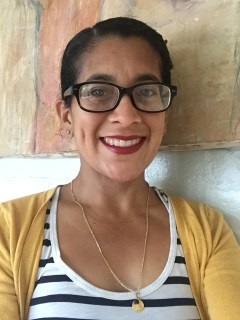
Spotlight on Middle Grade Authors Part 2: Celia C. Pérez


By Cindy L. Rodriguez

This is the second in an occasional series about middle grade Latinx authors. We decided to shine a spotlight on middle grade writers and their novels because, often, they are “stuck in the middle”–sandwiched between and overlooked for picture books and young adult novels. The middle grades are a crucial time in child development socially, emotionally, and academically. The books that speak to these young readers tend to have lots of heart and great voices that capture all that is awkward and brilliant about that time.

Today, we highlight Celia C. Pérez.

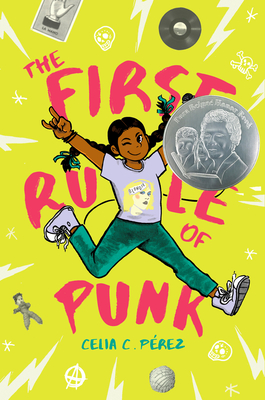
Inspired by punk and her love of writing, Celia C. Pérez has been making zines for longer than some of you have been alive. Her favorite zine supplies are her long-arm stapler, glue sticks, animal clip art (to which she likes adding speech bubbles), and watercolor pencils. She still listens to punk music, and she’ll never stop picking cilantro out of her food at restaurants. Her zines and writing have been featured in The Horn Book MagazineLatinaEl AndarVenus Zine, and NPR’s Talk of the Nation and Along for the Ride. Celia is the daughter of a Mexican mother and a Cuban father. Originally from Miami, Florida, she now lives in Chicago with her family and works as a community college librarian. She owns two sets of worry dolls because you can never have too many. The First Rule of Punk is her first book for young readers.

Celia C. Pérez

Q. Who or what inspired you to become a writer?

A. I’ve loved writing for as long as I can remember. I think for me it just went hand in hand with being a reader. The earliest memory I have of writing something and realizing writing might be something I was good at was when I was in the third grade. All the third graders had to write an essay about what our school meant to us. One essay would be picked and that student would get to read it at our graduation. Mine was chosen. I don’t have the essay anymore and it’s been so long that I can’t remember what Comstock meant to me, but I do remember that it was the first time I felt like perhaps my writing held some power. And as someone who grew up a quiet, shy child of immigrant parents, it really was that sense of power it gave me that kept me writing throughout my life.

Q. Why do you choose to write middle grade novels?

A. I love middle grade books above all others! My fondest memories of my life as a reader start in the later years of elementary school so I have a soft spot for middle grade. I think that age range that middle grade covers (eight or nine to twelve) is such a vibrant and varied period of life. It’s this time of life when kids are teetering between childhood and adolescence and all the contrasts and clashing emotions that are part of those stages. They’re often still full of wonder and curiosity and innocence but also full of difficult questions and realizations about the world around them that aren’t always pleasant. There’s just so much to discover and explore there.

Q. What are some of your favorite middle grade novels?

A. I love the Pacy Lin books by Grace Lin (Year of the RatYear of the Dog, and Dumpling Days); When You Reach Me by Rebecca Stead; Enchanted Air by Margarita Engle; Ninth Ward by Jewell Parker Rhodes. Oldies that are dear to my heart are Jennifer, Hecate, Macbeth, William McKinley, and Me, Elizabeth by E.L. Konigsburg. I love Harriet the Spy by Louise Fitzhugh (and will always associate dumbwaiters and egg creams with her), but I remember especially enjoying Nobody’s Family Is Going to Change. Although, to be honest, I feel like that’s a book I would probably have to reread because she’s a white woman writing an African American family. I also have a soft spot for my earliest favorites like Witch’s Sister by Phyllis Reynolds Naylor, The Witch of Blackbird Pond by Elizabeth George Speare, and the Anastasia Krupnik books by Lois Lowry. I’m always afraid I’m leaving something out, and I likely am.

Q. If you could give your middle-grade self some advice, what would it be?

A. Oh, boy. I have a lot of advice for my middle grade self but let’s start with these:

Keep everything you write even if you think it’s terrible. You’ll be happy you did.

Your voice is worth listening to. Don’t be afraid to express yourself.

You’re a good athlete. Stop reading during P.E. and play!

Q. Please finish this sentence: “Middle grade novels are important because…”

A. Middle grade novels are important because more than any other type of book I believe they give young readers the keys to discovering their place in the world.


Come back on Thursday to see our review of THE FIRST RULE OF PUNK!


photo by Saryna A. JonesCindy L. Rodriguez was a newspaper reporter for The Hartford Courant and researcher at The Boston Globe before becoming a public school teacher. She is now a reading specialist at a Connecticut middle school. Cindy is a U.S.-born Latina of Puerto Rican and Brazilian descent. She has degrees from UConn and CCSU. Her debut contemporary YA novel, When Reason Breaks, released with Bloomsbury Children’s Books (2015). She will have an essay in Life Inside My Mind, which releases 4/10/2018 with Simon Pulse. She can also be found on FacebookTwitter, and Goodreads.

Book Review: Martí’s Song for Freedom/ Martí y sus versos por la libertad written by Emma Otheguy, illus. by Beatriz Vidal


Reviewed by Chantel Acevedo

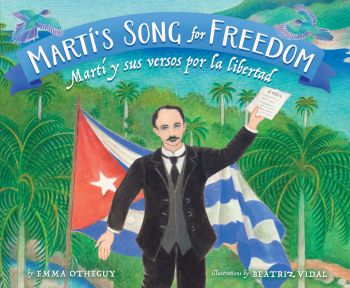
DESCRIPTION OF THE BOOK: As a young boy, Jose Martí traveled to the countryside of Cuba and fell in love with the natural beauty of the land. During this trip he also witnessed the cruelties of slavery on sugar plantations. From that moment, Martí began to fight for the abolishment of slavery and for Cuban independence from Spain through his writing. By age seventeen, he was declared an enemy of Spain and was forced to leave his beloved island. Martí traveled the world and eventually settled in New York City. But the longer he stayed away from his homeland, the sicker and weaker he became. On doctor’s orders he traveled to the Catskill Mountains, where nature inspired him once again to fight for freedom. Here is a beautiful tribute to Jose Martí, written in verse with excerpts from his seminal work, Versos sencillos. He will always be remembered as a courageous fighter for freedom and peace among all men and women.

MY TWO CENTS: Nineteenth century Cuba and New York come alive in the pages of Emma Otheguy‘s Martí’s Song for Freedom/Martí y sus versos por la libertad. Otheguy tells the story of José Martí, Cuban poet and patriot of Cuba’s independence, in prose that feels like verse, in both English and Spanish.

Interspersed throughout are excerpts from Martí’s Versos sencillos, and the effect is a powerful one. Martí himself speaks his story in these moments, affirming with his lyricism what Otheguy has told us–stories of the poet’s childhood, of watching slaves cutting sugar cane, which makes José “shake with rage,” of finding himself in exile in the Catskill Mountains that made him homesick for Cuba, and of his return to Cuba, “like an eagle healed, to join in a new war for independence.”

Otheguy does a wonderful job of capturing the act of writing, which can be difficult to describe. We see Martí’s evolution from pamphleteer to journalist, speechwriter, to poet. The word “inspiration” comes up often, and the sources of that inspiration range from people and their suffering, to people’s excitement, to trees, birds, and of course, swaying palmas reales.

Growing up Cuban-American in Miami, José Martí’s poems were the first I committed to memory. My abuela would “test” me, and I would recite. In Martí’s poems for children, both beauty and soul resided. “Los zapaticos de rosa,” a favorite in my house, was a lesson in humility and generosity, the injustice of poverty, and the innocence of childhood. Would that all children, everywhere, in every language, could learn it! In the bilingual school I attended, we memorized “Cultivo una rosa blanca…” and said it together as a class, like a prayer. When students fought, the teachers would remind us that we were all supposed to be “amigo(s) sincero(s).” So I was delighted to have the opportunity to read Otheguy’s book and share it with my daughters. The language, both in English and Spanish, is accessible. My five year old had no trouble listening to the story. The illustrations by Beatriz Vidal are rich with detail–from the colorful mantillas on the shoulders of women to Cuban tiles on the floor of rooms, to the birds that seem to alight on the text of each page.

Though I’ve heard of Martí all my life, I was surprised to learn of Martí’s time in the Catskills and the grueling work he did in a quarry while in prison, and so the book can be illuminating to readers beyond the elementary school level. Indeed, the battles Martí fought, both rhetorically and physically, and the forces of injustice that worked against him, are conflicts that resonate today across the globe. Reading the book to a child might be followed up by discussions of injustice today, and how the places where we live might resemble Cuba in the nineteenth century. Perhaps more importantly, a discussion of how we might be more like Martí could be a wonderful take-away.

The back cover features an actual portrait of José Martí, and a quote: “And let us never forget that the greater the suffering, the greater the right to justice, and that the prejudices of men and social inequalities cannot prevail over the equality which nature has created.” It is hard to imagine a Cuban childhood sans Martí, or a description of Cuba that does include reference to his influence. But beyond Cuba, Martí’s Song for Freedom/Martí y sus versos por la libertad comes at an important time when even young readers are thinking about how we might make the world a more just place.

WHERE TO GET IT: To find Martí’s Song for Freedom/Martí y sus versos por la libertad, check your local public library, your local bookstore, or IndieBound. Also, check out GoodreadsAmazon, and Barnes & Noble.


ABOUT THE AUTHOR: Emma Otheguy is a children’s book author and a historian of Spain and colonial Latin America. She is a member of the Bank Street Writers Lab, and her short story “Fairies in Town” was awarded a Magazine Merit Honor by the Society of Children’s Book Writers and Illustrators (SCBWI). Otheguy lives with her husband in New York City. Martí’s Song for Freedom/Martí y sus versos por la libertad is her picture book debut. You can find her online at http://www.emmaotheguy.com. Emma’s guest post for this blog provided a fascinating look at her Cuban heritage and her childhood development as a reader.


Photo of Beatriz VidalABOUT THE ILLUSTRATOR: Beatriz Vidal was born in Argentina and attended the Faculty of Philosophy and Humanities of Cordoba University. In New York, she studied painting and design with Ilonka Karasz for several years. During that time, her career as an illustrator began with designs for Unicef cards and record covers. She has illustrated many children’s books, including The Legend of El Dorado, A Library for Juana, Federico and the Magi’s Gift, and A Gift of Gracias. She divides her time between Buenos Aires and New York City.



ABOUT THE REVIEWER: Chantel Acevedo’s novels include Love and Ghost Letters (St. Martin’s Press), which won the Latino International Book Award and was a finalist for the Connecticut Book of the Year, Song of the Red Cloak, a historical novel for young adults, A Falling Star (Carolina Wren Press), winner of the Doris Bakwin Award, and National Bronze Medal IPPY Award, and The Distant Marvels, (Europa Editions), a Carnegie Medal finalist and an Indie Next Pick. Her latest novel, The Living Infinite (Europa Editions), is forthcoming. She is also the author of En Otro Oz (Finishing Line Press), a chapbook of poems. Her short stories, essays and poems have appeared in Prairie Schooner, American Poetry Review, North American Review, and Ecotone, among many others. She earned her MFA at the University of Miami, where she is currently an Associate Professor of English, and advises Sinking City, the MFA program’s literary journal.
A Letter from Young Adult Readers to Latinx Writers About Race, Gender, and Other Issues


By Marilisa Jiménez García with Lehigh Students: Kristen Mejia, Felicia Galvez, Sarah White, Caroline Raney

This Spring 2017, I taught a course at Lehigh University called “Latinx Youth Culture.” The course centered on studying youth literature and culture from the perspective of how past and contemporary Latinx authors depict, and to an extent recover, history and youth protagonists. We also looked at ways in which many popular and award-winning books for Latinx youth, and those depicting Latinx young people and/or youth movements portrayed issues of race, gender, nationalism, and Latin American revolutions. Our reading list included:

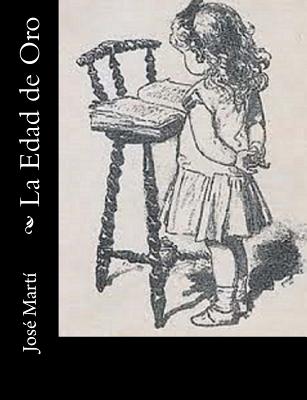
Jose Marti, La Edad de Oro (1899)

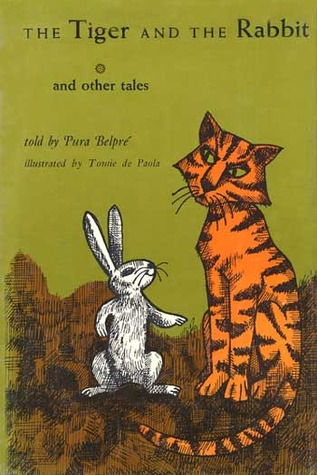
Pura Belpré, The Tiger and the Rabbit (1943)

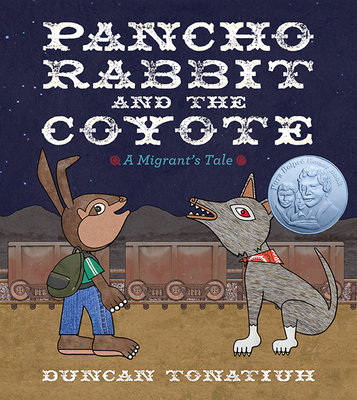
Duncan Tonatiuh, Pancho Rabbit and the Coyote: A Migrant’s Tale (2013)

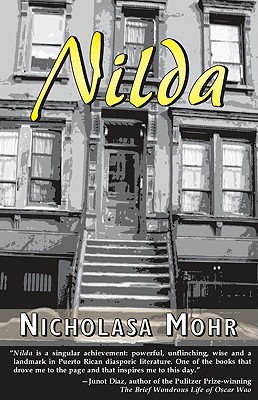
Nicholasa Mohr, Nilda (1973)

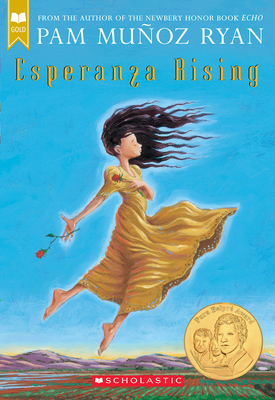
Pam Muñoz Ryan, Esperanza Rising (2000)

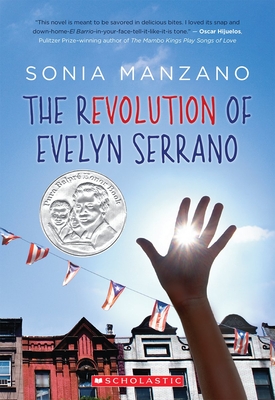
Sonia Manzano, The Revolution of Evelyn Serrano (2013)

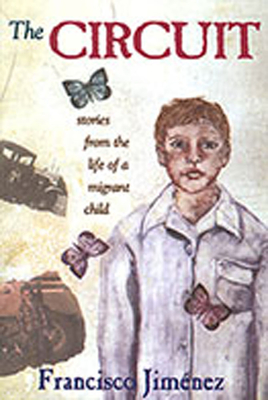
Francisco Jimenez, The Circuit (1997)

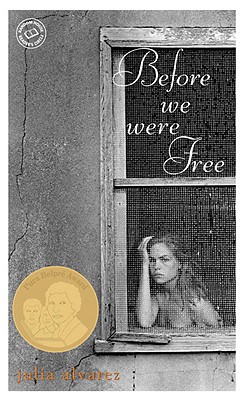
Julia Alvarez, Before We Were Free (2004)

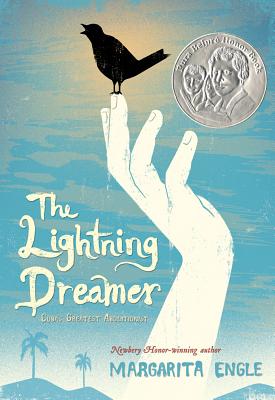
Margarita Engle, The Lightning Dreamer: Cuba’s Greatest Abolitionist (2013)

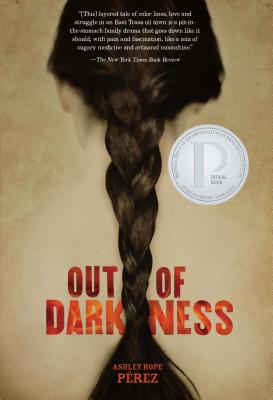
Ashley Hope Perez, Out of Darkness (2015)

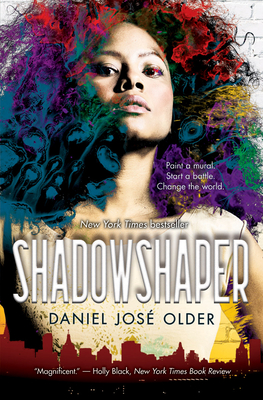
Daniel José Older, Shadowshaper (2015)

    7376995                                    

As a class, we considered how these texts represent the Latinx community, and the history of Latin America and the Caribbean, to young readers, and in some cases, because of the lack of Latinx representation and authors in youth literature, these books may be the only portrayals a young reader may encounter in a book about Latinx people. At the end of the course, I asked students to create suggestions of what they hoped to see in Latinx literature for youth. What follows is a list of suggestions gathered from our collective conversation and survey of Latinx literature for youth, including comments composed by my students for those who are currently writing and those who hope to write for young readers. Students also kept in mind those in publishing and award committees.

Writers and award committees should pay more attention to their own racial and class biases in the Latinx community and internal struggles with anti-blackness. Students noted that many of the protagonists in award-winning and popular books are light-skinned Latinos, while Afro and Indigenous Latinxs characters tend to be marginalized as the supporting characters, in problematic tropes such as the servants and slave characters, and even the bullies. At that point, Daniel José Older’s Shadowshaper was the only prominent young adult novel we could survey with a strong Afro-Latinx protagonist. In terms of race and class privilege, students noted that often protagonists migrating to the U.S. from Latin America were of the upper class in terms of escaping dire circumstances, such as dictatorships. Particularly when it came to representing the Latinx past, and historical moments such as abolitionism in Latin America and the Caribbean and the Mexican Revolution, students noted that light-skinned Latinxs tended to model some of the “white savior tropes” familiar in European culture. As Felicia Galvez, a Lehigh sophomore noted:

“I think culture and race are important. It’s an issue that most Latinx youth are experiencing. To ignore that part and to deny it is wrong. Black characters that writers decide to put in books should not be stereotypical. It’s wrong. Latinxs can be racist. It is not just a U.S. thing. Most of these writers being nominated are privileged and are whiter. It needs to be said because there’s a pattern here. Latinxs are a diverse culture. They come in many different colors. It’s said that we only see the whiter side in the media and in literature. Don’t be afraid to criticize other Latinxs. We want to get our books out, but it shouldn’t come at the cost of someone feeling excluded from the picture or seeing themselves as a stereotypical black person. Or ignoring the suffering that they feel and that their ancestors felt. Writers should try harder to incorporate different perspectives in various ways. Having the main character react to people around them does not make me sympathize with the character. Having the side characters, of African descent, only reacting to the main character who is white is not okay. It’s annoying and sad because it promotes the idea that they need a white savior to help them…”

On researching the American Library Association’s Pura Belpré Medal, junior Caroline Raney, noted, “I was surprised to learn that in a literary genre founded with the goal of being inclusive and celebratory of the Latinx experience, there are still perspectives and backgrounds that are not being recognized. I am not of Latin American descent, so this was my first chance to critically read and analyze a lot of books classified as Latinx literature.” Raney took time to study the trends of the Medal since its founding in 1996, pointing out that a Belpré win may also mean a book is ordered more through libraries and schools, and perhaps more likely to be suggested in curriculum. Raney notes that in the event a Belpré Medal winner contained potentially anti-black and elitist view, then the “normalization of racism and privilege throughout the story may have widespread effects since this book may be the only piece of Latinx children’s literature many young Americans will ever read.”

Raney writes, “I think in the future, it is important to publish more children’s novels about more diverse Latinx backgrounds and perspectives as well as have more critical discussions about race in classrooms so that children can be able to recognize how some books can be problematic. As long as prize-winning Latinx children’s literature features predominantly privileged, white, and Spanish protagonists, the authentic stories of mixed, Afro-Latinx, and indigenous Latinx people living in Latin America and the United States today will be marginalized or even invisible. Including more diverse stories would not only help children see themselves in the novels they read, it could effect change by reducing bias and potentially racism in the future.”

Writers and publishers should make sure they research various perspectives during critical moments of Latin American and Caribbean history, such as the Mexican Revolution, the Cuban Revolution, El Grito de Lares, the Trujillo era in the Dominican Republic. Students also noted a relative silence about how and why those revolutions in Latin America happened, yet much more detail was present about political figures and movements in the U.S. Consider who gets to tell the story. Consider also whether, as Latinx writers, we are relying more on our families’ experiences and not going into research practices which enable us to see multiple perspectives in our home countries. Kristen Mejia, an outgoing senior reflects,

“Unfortunately, the books and authors I had read growing up hadn’t written about my experience about being a second-generation Latina and not being able to speak fluently…Writers should avoid story lines that are not validated within history. When writing a story line that utilizes history in some way, writers MUST DO THEIR HOMEWORK. DO NOT make up stories and events UNLESS there is a note after the novel explaining why this was done. Children grow up reading certain stories [and might believe those] stor[ies] [are] the only experience a [Mexican, a Cuban, etc.] could have at the time. [Many authors seem to rely on their own family’s experiences when recounting history] While many authors do this, and authors should do this, we also need to hold ourselves responsible for what image we are presenting to younger audiences. When utilizing history as a backdrop of a story, it is our duty as underrepresented Latinxs within literature, to use this opportunity to educate our youth. We can help them become more knowledge about their history and the history that our people have faced.”

Writers should consider whether they are truly presenting the consequences of historical events, such as slavery, revolution, and civil rights activism for young readers. Students appreciated when we read experiences that didn’t sugarcoat border-crossing and racial, gender, and sexual violence. Sarah White, a graduate student in American Studies, writes, “Writers should take care to avoid over-generalizations, stereotyping, and romantic/simplistic notions of their subjects. I would like to see stories that speak to current, relevant issues that youth today are dealing with, such as bullying, navigating multi-racial or transnational identities, and how to keep their heritage and culture alive in an era of increasing censorship and violence.”

Mejia notes, “Publishers need to avoid stories that paint difficult life events in a positive manner when in reality, they may always be hard and full of struggle. We need to be more real with our youth. Many young people grow up with an image of difficult times ending up being fine. Unfortunately, this is not everyone’s reality. Not every immigrant makes it across the border alive. Not everyone gets a rags-to-riches story. Our youth deserve more than just a fairy tale.  They deserve to know what they may be faced with in our society and what they can do to prepare themselves for this struggle.”


marilisa_jimenez-garcia1Marilisa Jiménez García is an interdisciplinary scholar specializing in Latino/a literature and culture. She is particularly interested in the intersections of race, gender, nationalism, and youth culture in Puerto Rican literature of the diaspora. Jiménez García also specializes in literature for youth and how marginalized communities have used children’s and young adult texts as a platform for artistic expression, collective memory, and community advocacy. She is working on a book manuscript on the formation of Latino/a literature and media for youth. She has published in venues such as CENTRO Journal, Journal for the History of Childhood and Youth, Latino Studies, and Journal for Adolescent and Adult Literacy. Before joining Lehigh University, Jiménez García held a postdoctoral research appointment as a research associate at the Center for Puerto Rican Studies (CENTRO) at Hunter College, City University of New York (CUNY). She was also an adjunct assistant professor in the Africana/Puerto Rican/Latino Studies department at Hunter College. She is the recipient of a Cultivating New Voices Among Scholars of Color Fellowship from the National Council of Teachers of English (NCTE) and a Best Dissertation Award from the Puerto Rican Studies Association (PRSA). Jiménez García has also completed service projects in New York City public schools and with the Children’s Defense Fund Freedom Schools. She has forthcoming book chapters on the Pura Belpré Medal and intersectionality in ethnic literature for Routledge and Teachers College Press, respectively. Jiménez García completed her Ph.D. in 2012 from the University of Florida.
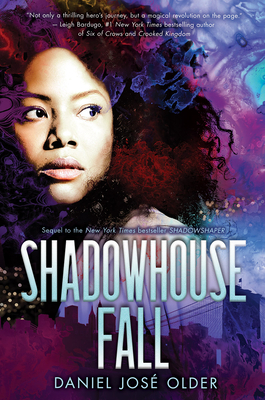
Book Review: Shadowhouse Fall by Daniel José Older

Reviewed by Ashley Hope Pérez

This review of Shadowhouse Fall, book #2 in the Shadowshaper Cypher series, is based on an advance reader’s edition.

DESCRIPTION FROM THE PUBLISHER: The extraordinary sequel to the New York Times bestseller Shadowshaper is daring, dazzling, defiant.

Sierra and her friends love their new lives as shadowshapers, making art and creating change with the spirits of Brooklyn. Then Sierra receives a strange card depicting a beast called the Hound of Light — an image from the enigmatic, influential Deck of Worlds. The shadowshapers know their next battle has arrived.

Thrust into an ancient struggle with enemies old and new, Sierra and Shadowhouse are determined to win. Revolution is brewing in the real world as well, as the shadowshapers lead the fight against systems that oppress their community. To protect her family and friends in every sphere, Sierra must take down the Hound and master the Deck of Worlds… or risk losing them all.

MY TWO CENTSShadowhouse Fall adds depth to the fantasy world first introduced in Older’s acclaimed first YA novel, Shadowshaper. Perhaps more remarkable is how the second book in the series plugs into urgent conversations about racialized violence, white supremacy, and youth activism. Picking up a few months after the events at the end of Shadowshaper, Shadowhouse Fall probes the challenges of leading a secret society once the novelty and adrenaline have worn off—and after the school year begins again. Sierra Santiago’s role as Lucera, leader of the shadowshapers, already requires more energy than she feels she has, and that’s before factoring in complications on the romantic front, a death in the family, and the fatigue that comes from confronting daily racial microaggressions, such as being sent to the principal for diagnosing an instance of white privilege, the dehumanizing experience of passing through metal detectors to enter school, and regular police harassment in public spaces. These challenges intensify further when the appearance of the Deck of Worlds throws the spiritual realm into upheaval and when inappropriate police detention of shadowshapers leads to widespread youth protest.

Although readers are unlikely to share Sierra’s exact configuration of demands, they will relate to the complex dance between the demands of school, family, activism, and spirituality or self-discovery. Sierra’s fatigue and loneliness—even in the midst of her friends—are beautifully rendered, as are the irritability and impulsiveness that sometimes results. (Rendering a character’s struggle honestly without abrading her likability is no small feat.) Older shows that some real allies may be found in conventional figures like the school principal, but he also shows the difficulty of navigating complex, culturally sensitive problems that cannot be shared in school spaces without drawing judgment. There’s a real tenderness and humanity to how Older depicts Sierra as she navigates the difficult emotional territory that comes with the winding down of one romantic interest and the kindling of a new one.

The world of spirits in Shadowhouse Fall gains further particularity and interest from the growing detail about the rise (and fall) of different houses to how Older reveals how the Shadowshapers’ rival spirit house, the House of Light, depends on mythologies of whiteness to bolster its power. Readers drawn to complex, powerful heroines who actually reflect on the consequences of their actions will find much to like in Sierra’s fierce leadership and in her desire to make responsible use of her gifts. I was moved by Older’s tender portrayal of varied connections between spirits and the living.

Here, as in Shadowshaper, the cast of characters is varied and vibrant. The intergenerational, multi-ethnic coalitions that support action in the spirit world and on the streets of Bed-Stuy offer a welcome reprieve from the all-teen world manufactured in many YA novels. Sure, the villains can sometimes seem one-dimensional in their power-hungry myopia, but the density of nuance in characterization more than makes up for this. Older has a knack for evoking cultural particularity and evading stereotype, a talent evident in characterization and in dialogue. Readers encounter a range of English vernaculars, Haitian Creole, Jamaican Patois, and Spanish, and Older strategically breaks down presumed configurations of class and culture. For example, we see a Jamaican attorney deftly navigate multiple registers, making strategic use of his “lawyerly courtroom voice” when needed but electing to speak in Patois in most situations. The intergenerational friendships in the novel highlight the resourcefulness of multi-ethnic communities and the transmission of tactical knowledge.

Just as adults in the novel display their linguistic dexterity in a range of settings, so do Sierra and her friends. Sierra’s voice emerges equally authentically when she is bantering and strategizing with her fellow shadowshapers, sweet-talking a romantic interest, or, speaking truth to power in her AP History class. This latter moment merits a closer look.

Since you asked: I think you’re being defensive. No one wants to represent a whole bunch of other people, but the truth is, we have to do that all the time, and as much as you want to be treated as an individual, we still see all the other teachers who have shut us down and don’t want to talk about things that matter to us. So when you try to tell us to be reasonable, we’re looking at the fact that it’s slavery we’re talking about, possibly the least reasonable thing to happen in this country, and so all these people whose great-grandparents directly benefited from it telling us to be reasonable doesn’t sit well, and we’re tired of being told how to respond.

I plan to hold this mini monologue up in response to anyone who suggests that the novel’s frank engagement with structural inequality and the frequent injustice of the criminal justice system “lacks balance.” It would take a shipping crate full of interventions of the caliber of Shadowhouse Fall to even begin to balance the pervasive practice of centering white experiences, white priorities, and white perspectives that circulate in YA. And anyway, the novel offers powerful examples of what it means to own one’s privilege and act as an ally, from a teacher’s turnaround to the white students who answer to Sierra’s charge to action. (This is a great scene: one character tells another, “You gotta tell the whole world that white kids ain’t cool with this shit either,” and a few chapters later, we see a group of white students show up with a sign that reads, “White Kids Ain’t Cool With This Shit Either.” It’s a moment of humor amidst heightening tensions—“Yo, y’all real literal,” responds one of the shadowshapers–but it also shows the ongoing apprenticeship of allies who wish to act for social justice.)

Shadowhouse Fall centers on the shadowshapers’ growing self-awareness and efforts to develop their gifts to enable effective action in the world of spirits and of streets. Theirs is an example we would all do well to follow.

WHERE TO GET IT: To find Shadowhouse Fall, check your local public library, your local bookstore, or IndieBound. Also, check out GoodreadsAmazon, and Barnes & Noble.


ABOUT THE AUTHORDaniel José Older is the New York Times bestselling author of the Young Adult series the Shadowshaper Cypher (Scholastic), the Bone Street Rumba urban fantasy series (Penguin), and the upcoming Middle Grade sci-fi adventure Flood City (Scholastic). He won the International Latino Book Award and has been nominated for the Kirkus Prize, the Mythopoeic Award, the Locus Award, the Andre Norton Award, and yes, the World Fantasy Award. Shadowshaper was named one of Esquire’s 80 Books Every Person Should Read. You can find his thoughts on writing, read dispatches from his decade-long career as an NYC paramedic and hear his music at http://danieljoseolder.net/, on youtube and @djolder on twitter.


2012AuthorPhoto500pixelsABOUT THE REVIEWER:  Ashley Hope Pérez is a writer and teacher passionate about literature for readers of all ages—especially stories that speak to diverse Latinx experiences. She is the author of three novels, What Can’t Wait (2011) and The Knife and the Butterfly (2012), and Out of Darkness (2015), which won a Printz Honor as well as the Tomás Rivera Book Award and the Américas Book Award. She is working on a fourth novel, Walk It Down, which is forthcoming from Dutton Books. A native of Texas, Ashley has since followed wherever writing and teaching lead her and currently is an assistant professor at The Ohio State University, where she teaches world literatures. Find her on Twitter and Facebook.

Spotlight on Middle Grade Authors Part 1: Margarita Engle


By Cindy L. Rodriguez

This is the first in an occasional series about middle grade Latinx authors. We decided to shine a spotlight on middle grade writers and their novels because, often, they are “stuck in the middle”–sandwiched between and overlooked for picture books and young adult novels. The middle grades are a crucial time in child development socially, emotionally, and academically. The books that speak to these young readers tend to have lots of heart and great voices that capture all that is awkward and brilliant about that time.

Today, we highlight Margarita Engle, a Cuban-American author who is one of the most prolific and decorated writers in Kid Lit.

Margarita Engle

Margarita Headshot

Margarita Engle is the 2017-2019 national Young People’s Poet Laureate, and the first Latino to receive that honor. She is the Cuban-American author of many verse novels, including The Surrender Tree, a Newbery Honor winner, and The Lightning Dreamer, a PEN USA Award recipient. Her verse memoir, Enchanted Air, received the Pura Belpré Award, Golden Kite Award, Walter Dean Myers Honor, Lee Bennett Hopkins Poetry Award, and Arnold Adoff Poetry Award, among others. Drum Dream Girl received the Charlotte Zolotow Award for best picture book text.

Margarita was born in Los Angeles, but developed a deep attachment to her mother’s homeland during childhood summers with relatives. She was trained as an agronomist and botanist. She lives in central California with her husband.

Q. Who or what inspired you to become a writer?

A. I have been writing poetry since I was a small child, so I think my passion for composing verses grew naturally from loving to read. It was not something I consciously decided to try, just something I did the way I ate, slept, and breathed. As a teenager, I did make a conscious decision to try writing fiction, and I began to dream of someday writing a book about the history of Cuba. That finally happened, but not until I was in my 50s. The Poet Slave of Cuba was published in 2006, and The Surrender Tree in 2008, launching a long series of verse novels about Cuban history. By then, I had already published a great deal of poetry, technical botanical and agricultural articles, and a couple of adult novels about modern Cuba, but I have never been happier than when I write for children.

Q. Why do you choose to write middle grade novels?

A. Most of my middle grade novels tend toward the tween end of the age range, perhaps because I was eleven in 1962, at the time of the Missile Crisis. Losing the right to travel to Cuba was a traumatic, surrealistic experience. I believe that a part of myself was frozen at that age, and did not thaw until 1991, when I was finally able to start visiting again. Now, I love to write for children who crave adventure, and still believe in the wonder of nature, children who are not yet embarrassed to love their families, even though they dream of independence.

Q. What are some of your favorite middle grade novels?

A. There are so many! How can I choose? I’ll try, with apologies to all the fantastic authors I’m leaving out. Some of my favorite middle grade books are actually memoirs, rather than fiction. I love Alma Flor Ada’s Island Treasures, Jacqueline Woodson’s Brown Girl Dreaming, and Marilyn Nelson’s How I Discovered Poetry. For fiction, most of my favorite middle grade novels are written in verse: Inside Out and Back Again, by Thanhha Lai, Under the Mesquite, by Guadalupe García McCall, and Words With Wings by Nikki Grimes. I love books that travel to other countries, so I’ll sneak in Solo by Kwame Alexander and A Time to Dance by Padma Venkatraman, even though they lean toward YA. If I had to choose one middle grade prose novel, it would be the very poetic Echo, by Pam Muñoz Ryan.

Q. If you could give your middle-grade self some advice, what would it be?

A. Don’t be so self-critical. It’s okay to be a bookworm. Stop trying to please everyone else. Just be yourself.

Q. Please finish this sentence: “Middle grade novels are important because…”

A. Middle grade novels are important because that is the age when children are imaginative, wonder-filled, curious, and open to learning about the whole world.


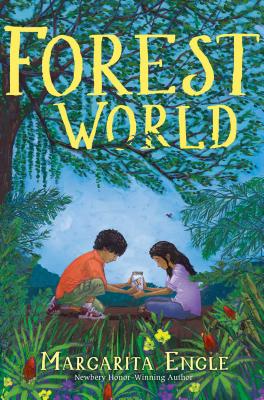
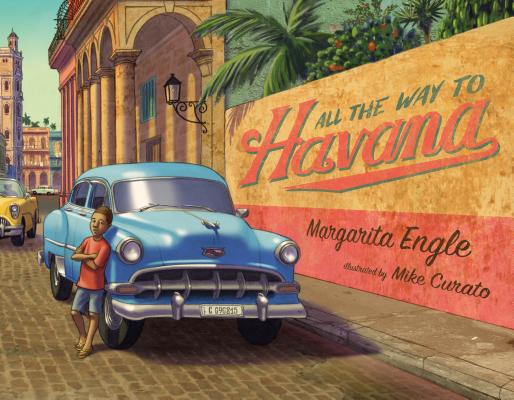
Margarita’s newest verse novel about Cuba is Forest World, and her newest picture books are All the Way to Havana, and Miguel’s Brave Knight, Young Cervantes and His Dream of Don Quixote.

Books forthcoming in 2018 include The Flying Girl, How Aída de Acosta learned to Soar, and Jazz Owls, a Novel of the Zoot Suit Riots.


photo by Saryna A. Jones

photo by
Saryna A. Jones

Cindy L. Rodriguez was a newspaper reporter for The Hartford Courant and researcher at The Boston Globe before becoming a public school teacher. She is now a reading specialist at a Connecticut middle school. Cindy is a U.S.-born Latina of Puerto Rican and Brazilian descent. She has degrees from UConn and CCSU. Her debut contemporary YA novel, When Reason Breaks, released with Bloomsbury Children’s Books (2015). She will have an essay in Life Inside My Mind, which releases 4/10/2018 with Simon Pulse. She can also be found on FacebookTwitter, and Goodreads.