
Reviews by Ruby Jones
MARTA! BIG & SMALL
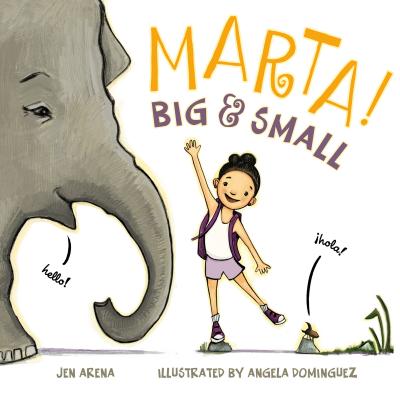 DESCRIPTION OF THE BOOK: Marta is una niña, an ordinary girl . . . with some extraordinary animal friends! As Marta explores the jungle, she knows she’s bigger than a bug, smaller than an elephant, and faster than a turtle. But then she meets the snake, who thinks Marta is sabrosa—tasty, very tasty! But Marta is ingeniosa, a very clever girl, and she outsmarts the snake with hilarious results.
With simple Spanish and a glossary at the end, this fun read-aloud picture book teaches little ones to identify opposites and animals and learn new words.
MY TWO CENTS: Marta is a little girl who is exploring the animals around her. Compared to a horse, Marta is lenta. Compared to a turtle, Marta is rapida. All of this fun catches the eye of an animal that finds Marta sabrosa. Using her cleverness, Marta is able to escape.
Judging by only the title and the beginning of the book, you might be tricked into thinking that Marta! Big & Small is about opposites but you would be wrong! This picture book has an ingenious ending that is actually empowering to little girls….girls can be clever! What I really appreciated was that at the end of the book, there are Spanish to English translations of both Marta’s attributes and also the animals she encounters. Not only that, but the illustrations are very clean but bold and vibrant. It’s a great book for any young reader.
TEACHING TIPS: This book is a great opportunity to learn about opposites and comparing our attributes to the world around us. A good lesson would be comparing our size to various objects like a pencil or a house. Teachers could also review a variety of animals in English and Spanish.
WHERE TO GET IT: To find Marta! Big & Small, check your local public library, your local bookstore, or IndieBound. Also, check out Goodreads, Amazon, and Barnes & Noble.
 ABOUT THE AUTHOR: Jen Arena is a former editorial director at Random House Books for Young Readers. She now writes books for children full time, including 100 Snowmen, a wintry counting story, and Besos for Baby, a bilingual board book of kisses. Her books have been translated into French, Korean, Arabic, and of course, Spanish.
 ABOUT THE ILLUSTRATOR: Angela Dominguez was born in Mexico City, grew up in the great state of Texas, and lived in San Francisco. She’s the author and illustrator of picture books such as Let’s Go, Hugo!;Santiago Stays; Knit Together, and Maria Had a Little Llama, which was an American Library Association Pura Pelpré Honor Book for Illustration. She now writes and creates in her studio in Brooklyn, New York.
THE CHUPACABRA ATE THE CANDELABRA
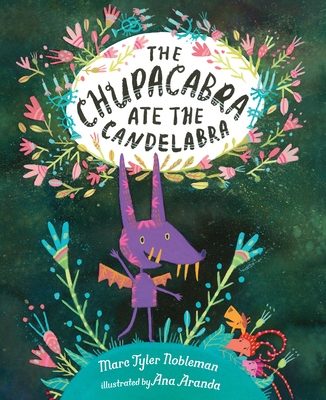 DESCRIPTION OF THE BOOK: Like most goats, Jayna, Bumsie, and Pep’s greatest fear is being eaten for dinner by the legendary chupacabra. (It’s common knowledge that goats are a chupacabra’s favorite food!) One night, tired of living in fear, the impetuous goats whip out their trusty candelabra and head off to find the beast and scare it away before it can find them. Little do they know that candelabras are the chupacabra’s third-favorite food . . . and he isn’t about to stop there. This chupacabra has quite the appetite, and the goats are in for a big surprise!
MY TWO CENTS: The chupacabra loves to eat many, many things. Three little goats hope that it definitely isn’t them! To make make sure they don’t become dinner, goats Jayna, Bumsie and Pep set off to scare the chupacabra before he scares them. When they encounter the continually hungry chupacabra, he devours their candelabra in an instant and demands more. When they are unable to produce more candelabras, the chupacabra eats his second-favorite meal. Finally, when they are unable to satisfy his desires using his third- and second-favorite foods, the chupacabra reveals what his favorite thing to eat is: Goat cheese! The relieved goats merrily proclaim that they have so much goat cheese, he’ll never be hungry again.
The first thing that you notice is this book’s winning feature: it’s beautiful and vibrant illustrations. It is obvious the illustrator was inspired by the colors and history of Mexico. She does a wonderful job of depicting the story line while still interjecting humor and whimsy.
The story line itself, however, has some issues. Mainly, the writing reads rather choppy and forced. I would have much preferred if the chupacabra were more similar to the little old lady who swallowed a fly, where the chupacabra would devour any ridiculous thing including a candelabra. Also, reading this book aloud was very difficult for me as some of the wording didn’t really seem to flow right. Finally, there were some phrases that most kids will fail to get like “the whole enchilada” or words like “cucaracha”.
In the end, the book is a whimsical and funny read, but I was left wishing for more finesse with the storytelling.
TEACHING TIPS: Teachers could definitely use this book to teach the culture and history about the chupacabra, highlighting the place it holds in, not just Latino culture, but throughout the Americas. There could also be a unit on Mexican art, using this book’s illustrations for inspiration. Children could also perform their own little “Three Billy Goats Gruff” version of goats and the chupacabra as a play!
WHERE TO GET IT: To find The Chupacabra Ate the Candelabra, check your local public library, your local bookstore, or IndieBound. Also, check out Goodreads, Amazon, and Barnes & Noble.
 ABOUT THE AUTHOR: Marc Tyler Nobleman is the author of Boys of Steel: The Creators of Superman and Bill the Boy Wonder: The Secret Co-Creator of Batman, which helped correct the credit line of one of the world’s most beloved characters. Formerly a writer for Nickelodeon Magazine and a cartoonist whose work has appeared in over a hundred publication, Marc lives in Maryland. His third-favorite thing to eat is anything banana flavored.

Photo by Feather Weight
ABOUT THE ILLUSTRATOR: Ana Aranda was born and raised in Mexico City, where she first befriended a chupacabra, and she completed her undergraduate studies in illustration in France. She now lives in San Francisco, California, where she has painted murals in the Mission District, for the consulate general of Mexico, and for the prestigious de Young Museum. Her biggest inspirations are her childhood memories, the vibrant colors of Mexico, and music. Her first, second, and their-favorite things to eat are tacos.
 ABOUT THE REVIEWER: Ruby Jones has been working in public libraries since 2007 in various capacities, including Adult & Teen Services technician and webmaster at her current library. She currently lives in Maine with her husband and precocious 2 year old. She continually strives to impart a passion and a sense of fearlessness toward technology, reading and learning for all ages.
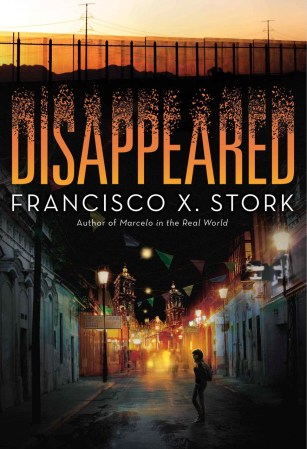

 a creator stay focused on your projects, all the while managing the challenges of depression?
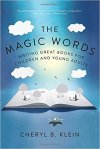 FXS: Finding Cheryl Klein was either a blessing or very fortunate depending on your world view. Writing is both solitary and communal and on the communal side my writing got exactly what it needed when it got Cheryl. Her editorial genius complemented all my writing lacks while allowing me to remain true to my writing voice and my writing vision (and reminding me of that voice and vision when I strayed). Yes, there were many times when the editing process was very hard and even at times discouraging but I never lost faith that Cheryl wanted what was best for the book and for the future reader and that kept me going. What I would like to convey to young writers is that they do all they can to enjoy the actual process of writing, of being alone with the work, and have patience with regards to the results they hope to attain. Those results may or may not come, but the process of creating a work that is beautiful and true is still worth the effort. Most of all, find a way to tell your story that is unique to you. Finding that uniqueness takes a lot of honesty and it takes a lot of practice and all the mistakes and rejections that you get will only make you a better writer and a better person if you see writing not as the publication of a book or the recognition that comes with it but as a way of life you are called to live.
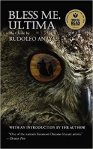 FXS: I’m re-reading Rudolfo Anaya’s Bless me, Ultima. Rudolfo Anaya is in many ways the father of Mexican-American literature and there is so much to learn from him about the presentation of the Mexican-American experience in a novel. One of my favorite books I always recommend to YA writers is The Book Thief by Markus Zusak because, well, there’s an author who found a way to tell an interesting story about a serious situation in a unique way. But I would also encourage YA writers to read all kinds of books, not just YA. Read fiction and non-fiction works that have nothing to do with what you are writing and you will be surprised by how they ultimately do. Read especially those books where the author’s soul touches yours.
 Francisco X. Stork is the author of Marcelo in the Real World, winner of the Schneider Family Book Award for Teens and the Once Upon a World Award; The Last Summer of the Death Warriors, which was named to the YALSA Best Fiction for Teens list and won the Amelia Elizabeth Walden Award; Irises; and The Memory of Light, which received four starred reviews. He lives near Boston with his wife. You can find him online at
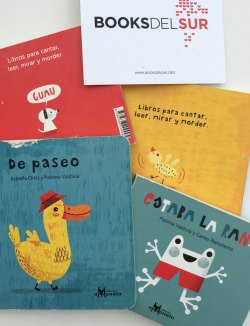 Books del Sur is a one-woman extravaganza of a book company out of Illinois. The owner, Heather Robertson-Devine, is a dual language teacher who saw the need for high-quality, authentic Spanish literature in schools and homes, and began importing titles from Chile. From there, her collection has continued to grow, and now includes the Anti-Princess collection so beloved by author Junot Díaz. We love her Baby Book Bundle. My younger daughter often totes De Paseo around the house in her shopping cart, and both my daughters love to read the entire collection on our daily morning walk. To read more about Books del Sur, click
 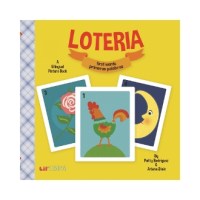 I had first read about Lil’ Libros and their incredible story in Latina magazine, but I hadn’t
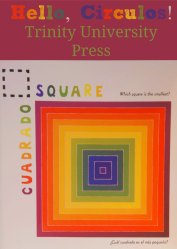 When my younger daughter turned one, we asked for bilingual books. An artist friend of mine came across the Trinity University Press children’s books at the Denver Art Museum, and Hello Círculos is part of our daily reading routine. The book has reproductions of famous art prints and sculptures surrounded by bilingual prompts that spark academic discussion about numbers, shapes, colors – and of course about all of the art. I love that the appendix includes all of the information about the works on each page. The book is board-book style, but would be great for readers even in the high school Spanish classroom as they study works of art and Latin American artists. This book collection from Trinity University Press should be a staple in every bilingual household. To purchase books from the collection, click
 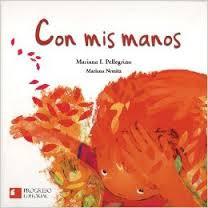 We recently went to our local Denver Public Library branch to check out audiobooks in Spanish. We brought home the 10 that they had, and some were definitely better than others. The best book was Con mis manos, part of a series about the five senses. The book was beautifully illustrated, and read in a manner that was easy for my three year old to follow along. The page chimes were consistent and easy to follow, and the story kept her engaged. Lorito books is another woman-owned business that started with a dream and became reality out of the owner’s house. I’m excited to acquire more Lorito books for my kids. Check out more books
  Christa Jiménez left the bilingual classroom after 15 years and is now the founder of Pura Vida Moms – a website dedicated to bilingual parenting, family travel, recipes, and bicultural and expat living. She’s married to a Costa Rican, and together they have two young bilingual daughters. When she’s not blogging, traveling, parenting, or reading she co-hosts the BilingualWe weekly vlog, applying the latest bilingual education research to the best practices for everyday bilingual parenting. You can find her at
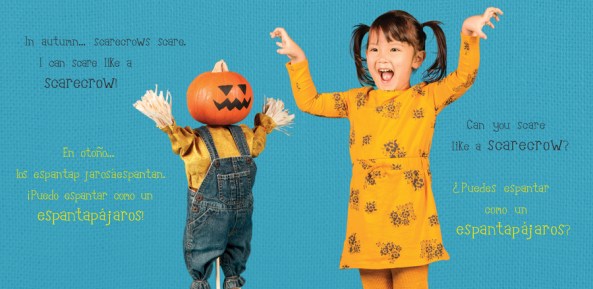
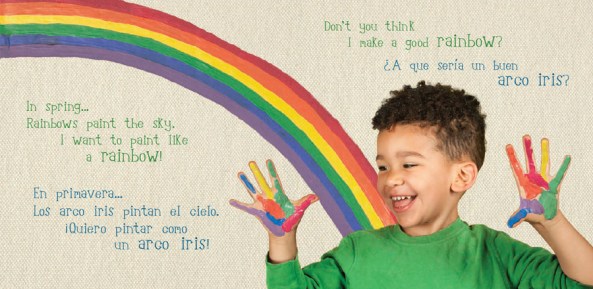
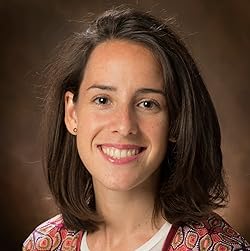 ABOUT THE AUTHOR: Susana Madinabeitia Manso is a Spanish teacher and translator. She received her Masters of Arts at West Virginia University and now teaches Spanish at Miami University.
 ABOUT THE PHOTOGRAPHER: Emily Hanako Momohara is an artist and academic in photography and video arts. She received her Masters in Fine Arts at the University of Kansas and now teaches at the Art Academy of Cincinnati as an Associate Professor.
 ABOUT THE REVIEWER:
 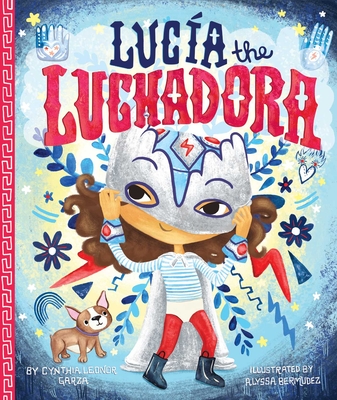 DESCRIPTION OF THE BOOK: Lucía zips through the playground in her cape just like the boys, but when they tell her “girls can’t be superheroes,” suddenly she doesn’t feel so mighty. That’s when her beloved abuela reveals a dazzling secret: Lucía comes from a family of luchadoras, the bold and valiant women of the Mexican lucha libre tradition. Cloaked in a flashy new disguise, Lucía returns as a recess sensation! But when she’s confronted with a case of injustice, Lucía must decide if she can stay true to the ways of the luchadora and fight for what is right, even if it means breaking the sacred rule of never revealing the identity behind her mask. A story about courage and cultural legacy, Lucía the Luchadora is full of pluck, daring, and heart.
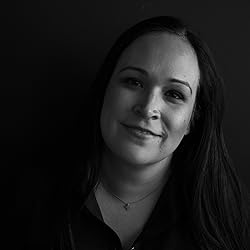 ABOUT THE AUTHOR (from her website): I’m a writer and write all sorts of things. My debut picture book
 ABOUT THE REVIEWER: Sanjuana C. Rodriguez is an Assistant Professor of Literacy and Reading Education in the Elementary and Early Childhood Department at Kennesaw State University. Her research interests include the early literacy development of culturally and linguistically diverse students, early writing development, literacy development of students who are emergent bilinguals, and Latinx children’s literature. She has published in journals such as Journal of Language and Literacy Education, Language Arts, and Language Arts Journal of Michigan.
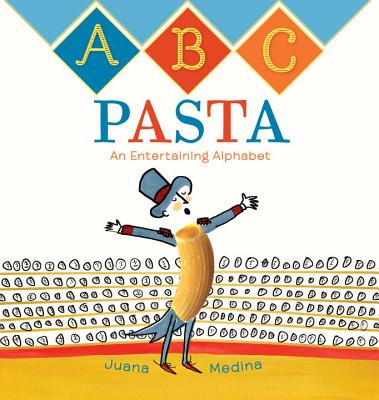 DESCRIPTION OF THE BOOK:
 ABOUT THE AUTHOR:
  ABOUT THE REVIEWER: Cecilia Cackley is a performing artist and children’s bookseller based in Washington DC where she creates puppet theater for adults and teaches playwriting and creative drama to children. Her bilingual children’s plays have been produced by GALA Hispanic Theatre and her interests in bilingual education, literacy, and immigrant advocacy all tend to find their way into her theatrical work. You can find more of her work at
 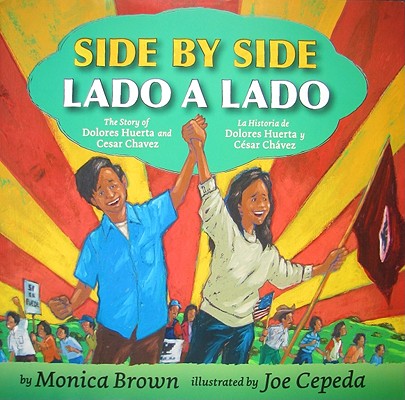 DESCRIPTION FROM THE PUBLISHER: Every day, thousands of farmworkers harvested the food that ended up on kitchen tables all over the country. But at the end of the day, when the workers sat down to eat, there were only beans on their own tables. Then Dolores Huerta and Cesar Chavez teamed up. Together they motivated the workers to fight for their rights and, in the process, changed history.
 ABOUT THE AUTHOR: Monica Brown, Ph.D. is the author of many award-winning books for children, including
 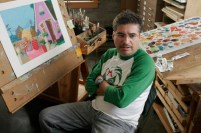 ABOUT THE ILLUSTRATOR: Joe Cepeda is an award-winning illustrator of children’s books who also works in magazine illustration. He lives in California and serves as president of the Society of Illustrators of Los Angeles. For more information, visit his
 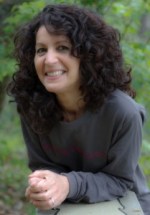 ABOUT THE REVIEWER: Maria is a writer, workshop leader and coach who facilitates The Butterfly Series, a writing and creative arts workshop for women who want to explore what’s next in their life journey. In December 2016, she won 1st place in the 2016 Intergenerational Story Contest for her piece, Family Recipes Should Never be Lost. Her work has appeared in the Apogee Journal, Entropy Magazine, and A Quiet Courage. Her piece Meet me by the River will be published in Deborah Santana’s forthcoming anthology All the Women in my Family Sing (Jan 2018)
  Latinxs in Kid Lit