

All art in this article is by Daniel Comacho for Joelito’s Big Decision/La gran decisión de Joelito by Ann Berlak.
By Ann Berlak
To prepare children and young people to participate in the construction of a more just and joyful future, we must tell them stories that make the invisible visible and unsettle what is taken for granted.
“Everything in the mainstream media suggests that popular resistance is ridiculous…unless it is far away, long ago.”
Solnit (2016)
Poverty is increasing worldwide in the face of unimaginable wealth for the very few. Talk of the public good has been almost silenced, public services are rapidly being privatized and the environment degraded, and we have come to take as normal wars without end. Yet, though largely obscured by mainstream media and by schooling at all levels, movements for climate, racial, and economic justice are sweeping the globe.
Given these realities, what stories should we tell young people to prepare them to participate in social transformation?
Stories that reveal:
- how the decisions and actions of each of us affect the lives and actions of others, often in hidden ways
- how differences of power in the hierarchies of race, class, gender, sexual orientation, and disability—differences that may be initially invisible– affect how we and others experience our lives differently (empathy)
- how to connect the dots between everyday injustices and the social forces that create and sustain them—for example, societal dynamics that create the vast extremes of wealth and poverty
- how ordinary people acting together can create a more just and joyful world
- that joining with others to create a more just future is a joyful life option for each of us
 Aren’t children too young to think about social and political issues? Should we interfere with children’s innocence by prematurely exposing them to the darker sides of life?
Which children are we talking about here? Certainly not those children who already experience despair, who go to bed hungry, whose parents can’t find jobs. Acknowledging these realities means acknowledging the experiences of children and young people who are often marginalized in school and in children’s fiction.
When adults are silent about the social, political, and economic dynamics of society, children internalize the perspectives that dominate public discourse and begin to believe, for example, that people get rich because they are smarter or work harder. They learn to blame “the victim,” and to normalize war, violence, and astounding inequalities.
This is disastrous for privileged children as well as for members of groups that are on the downside of the prevailing power imbalances. Both groups drift toward the belief that this is how things have always been and how they must continue to be, and these convictions become quite resistant to change. As the tree is bent, the tree grows.
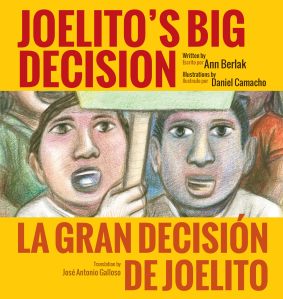 Joelito’s Big Decision/ La gran decisión de Joelito
For thirty years, I taught prospective elementary school teachers. My primary intention was to challenge them to think about what kind of future they wanted to construct through what they taught. What should schooling in their classrooms be for, beyond preparing children to be “college and career ready”?
After I retired, I went back into classrooms as a guest social-justice teacher. This experience reconfirmed my belief that if given any encouragement at all, children and young people will eagerly engage in dialogue about the social, political, and economic issues that surround and shape them.
I also realized that when adults don’t address these issues, children construct their own explanations for what they see around them, and that they weave these from the dominant ideologies of the society. For example, the children I taught had a variety of explanations for how and why some people get rich: They “won the lottery,” “worked hard at school,” “were really smart.” Of course, many also believed the inverse—that people who are poor do not work hard, or are not smart—even when these beliefs conflicted with their own first-hand experiences.
Eventually, I decided to write a storybook for children that would help teachers and parents spark lively conversations like the ones I had as a social-justice teacher, and elicit looks of surprise that conveyed “ah-ha” experiences that are our rewards as teachers. The result is the bilingual, beautifully illustrated and timely Joelito’s Big Decision/ La gran decisión de Joelito. It’s about a boy, a burger, a friendship, and the fight to raise the minimum wage. The book’s illustrator is Daniel Camacho. José Antonio Galloso provided the translation.
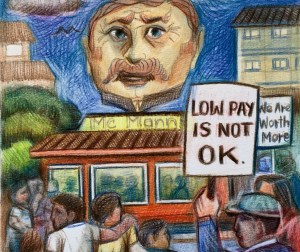 Our book tells the tale of Joelito, who eats dinner at MacMann’s Burger Restaurant with his family every Friday. The story begins one Friday when he finds his best friend Brandon and Brandon’s parents at the restaurant entrance, holding up signs saying, “Low Pay is Not OK,” and “Fight for 15,” and urging the hungry Joelito not to eat at MacMann’s tonight.
Our book explains the sources of income inequality in a way that young children can understand—Brandon’s dad tells Joelito, “I would have to work for 500 years to earn what Mr. MacMann earns in one year” —and shows that people working together are making history today.
Why don’t parents and teachers talk more about economic inequality with children and young people?
The school curriculum is increasingly controlled by the 1%. This control militates against schools teaching children and young people to question the huge discrepancies of wealth and power. Because the structure of our economy offers most people an uncertain economic future, many parents are preoccupied with their children becoming “college and career ready.” Readiness is often reduced to achieving high scores on standardized tests, while preparing children for active citizenship and critical thinking increasingly falls by the wayside.
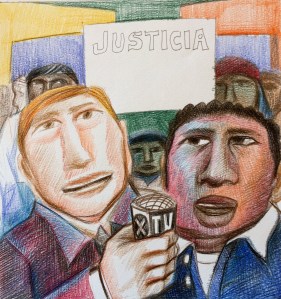 Hope
Hope
We hope that literary gatekeepers—parents, teachers, caregivers, and librarians— will include among the stories that they share with children depictions of ordinary people working together toward a better future. The bookshelves in our classrooms, libraries, and homes are crowded with the tales of solitary heroes and heroines fighting battles in worlds of fantasy, mystery, and historical fiction. Stories of contemporary people in the trenches for social change belong on those bookshelves, too.
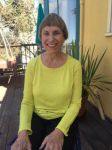 Author Ann Berlak has been a teacher and teacher educator for over fifty years. She envisions schools as places where children learn to become active, caring participants in the creation of a world that works for everyone. Joelito’s Big Decision/La gran decisión de Joelito was selected for the 2016-2017 California Reads list of teacher recommended books. Keep up with current news about Joelito on Facebook.
Illustrator Daniel Camacho lives and works in Oakland, California. His at-home studio is filled with ongoing projects, and is usually open to visitors upon request. He teaches art to elementary and middle school students and works to promote an awareness of Mexican/Latino culture through his participation with the Oakland Museum of California, the Spanish Speaking Unity Council, local public libraries and other community based organizations. Learn more about Daniel from his official website.
Translator José Antonio Galloso was born in Lima, Peru. He is a writer, photographer, and a bilingual teacher with studies in audiovisual communication, Spanish, and writing. He has published poetry and fiction and his works have been included in several anthologies. His photographic work, which he considers an extension of his writing, has been exhibited and published in different galleries, printed media and online. He has been living in the Bay Area since 2002.
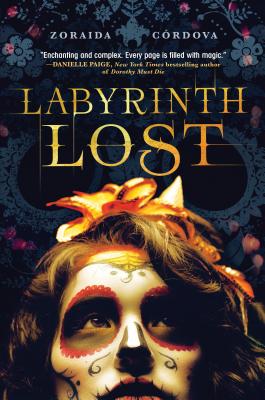 DESCRIPTION FROM THE PUBLISHER: Nothing says Happy Birthday like summoning the spirits of your dead relatives.
 Alex’s journey through Los Lagos feels very classic. The different communities she encounters, each with its own history and strengths and weaknesses, may remind readers of classic adventures like The Odyssey, Dante’s Inferno, and Alice in Wonderland. Every new area of Los Lagos brings a ton of action. Not every writer can create battle scenes so the reader can clearly visualize them without having to re-read. Zoraida is GREAT at this.
 ABOUT THE AUTHOR: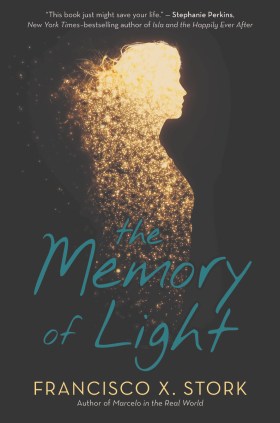
 ABOUT THE AUTHOR: Francisco X. Stork is a Mexican-born author of six novels for young people. Among these is the multiple award-winner Marcelo in the Real World. A graduate of Harvard University and Columbia Law School, he spent much of his law career working in the field of affordable housing. Learn more about Francisco and his books at his
  Lila Quintero Weaver


 When I met my husband—who I usually refer to online as the Transboy—I was a teen who’d only recently come out. A few months before, I had, as my best friend describes it, been so deep in the closet I was in Narnia. And with that depth of denial came a lot of homophobic thoughts, some of which, I’m sad to say, became words. When I met the Transboy, I was still shaking out of that, the hangover of my own self-loathing. I now recognize the self-hating place my homophobia had come from, but the habit, the instinct to make jokes every time I remembered I was falling in love with a boy with a female body, trailed me.
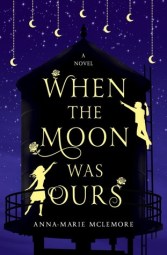 The girls in the books I write make mistakes. Sometimes awful ones, informed by their own prejudices. In
  Anna-Marie McLemore was born in the foothills of the San Gabriel Mountains, raised in the same town as the world’s largest wisteria vine, and taught by her family to hear la llorona in the Santa Ana winds. She is a Lambda Literary fellow, and her work has been featured by The Portland Review, Camera Obscura, and the Huntington-USC Institute on California and the West.
  Drum Dream Girl: How One Girl’s Courage Changed Music by Margarita Engle and Rafael López. This is the inspiring true story of Millo Castro Zaldarriaga, a Chinese Afro Cuban girl enamored with drums. Because tradition in 1930s Cuba prohibits girls from taking up drumming, what Millo achieves by breaking this taboo is even greater than the music she makes. Through their combined art, Engle and López enchantingly encapsulate Millo’s dreams. For our full review, click
 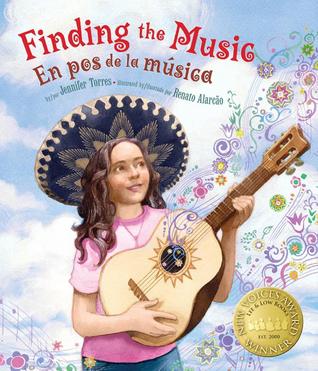 Finding the Music/En Pos de la Música by Jennifer Torres & Renato Alarcão. Before Reyna was born, her abuelito played in a mariachi band. His specialty was the vihuela, a small guitar-like instrument that has since fallen into disrepair. Reyna takes up the quest to get the repairs made. The vihuela becomes a powerful artifact that jump-starts the memory of the past, the important history of the community that tends to be invisible but is so essential to understanding the present. Here’s
  Funny Bones: Posada and His Day of the Dead Calaveras by Duncan Tonatiuh. Nineteenth-century Mexican artist José Guadalupe Posada created now-famous engravings of calaveras, skeletons engaged in everyday activities that have become synonymous with the Day of the Dead. In this picture book, author-illustrator Tonatiuh presents Posada’s life story, complete with background information on contextual events, such as the Mexican Revolution. Read our full
  Growing Up Pedro: How the Martinez Brothers Made It From the Dominican Republic All the Way to the Major Leagues by Matt Tavares. Dominican baseball star Pedro Martinez, who helped lead the Boston Red Sox to a World Series win, got his start with plenty of help from his big brother Ramón. This is a story of brotherhood and of dreaming big and achieving bigger, powerfully illustrated by the author. Here’s
 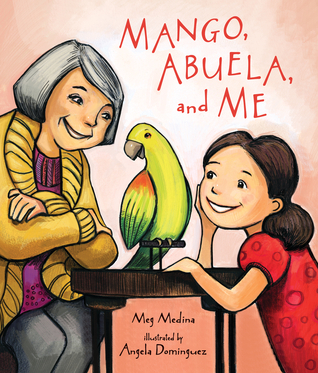 Mango, Abuela, and Me by Meg Medina & Angela Dominguez. Can a grandmother and granddaughter develop a close relationship when one speaks Spanish and the other speaks English? Of course! In Meg Medina’s warm tale of love, patience, and language, Mia and her abuela – along with a parrot named Mango – teach each other more than just words. Angela Dominguez’s rich, clean illustrations amplify this beautiful book. Check out
  Salsa: Un Poema Para Cocinar/A Cooking Poem by Jorge Argueta, Duncan Tonatiuh & Elisa Amado. Argueta has created several bilingual poetry books that celebrate traditional Latin American dishes–including Guacamole, Sopa de frijoles / Bean Soup, and Arroz con leche / Rice Pudding – and Salsa is just as mouth-watering. This story poem creates playful connections between salsa’s vegetable ingredients and the musical instruments that they resemble. Tonatiuh’s signature illustrations bring extra flavor to the mix. Don’t miss
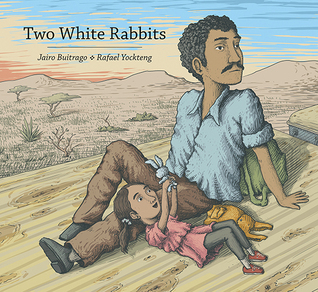 Two White Rabbits by Jairo Buitrago & Rafael Yockteng. A timely and moving picture book, originally published in Spanish, about a father and daughter traveling north towards the U.S. border. From counting what’s around her to meeting people and a “coyote”, this story, told from the child’s point of view, portrays migrant refugees journeys with deep empathy. Check out

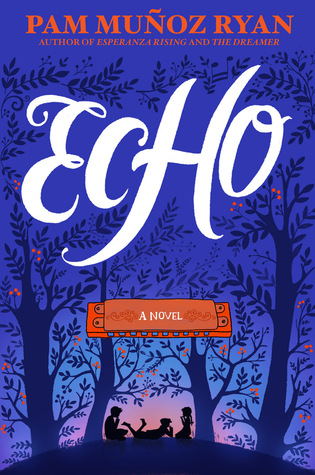 Echo by Pam Muñoz Ryan. Breaking from traditional narrative, this novel traces the connected stories behind a magical harmonica. Using diverse characters that live in far-flung geographical locations, the story introduces less familiar aspects of well-known historical events: laws regarding children with birth ‘defects’ in 1930’s Germany, conditions for orphans during the Depression in the US, and the segregation of schools in California for children of Mexican descent during World War II. Here’s
  Moving Target by Christina Diaz Gonzalez is a middle-grade fantasy thriller starring Cassie Arroyo, a Cuban-American expatriate living in Italy. After Cassie’s father is struck by a hail of bullets, whisked off to surgery, and then vanishes, she discovers that she, not her father, is the main target of the assassins. She then teams up with Asher and Simone to recapture the Spear of Destiny, a medieval artifact mysteriously linked to Cassie’s family line and the reason that her formerly blasé life at a private school is shattered overnight. Here’s
 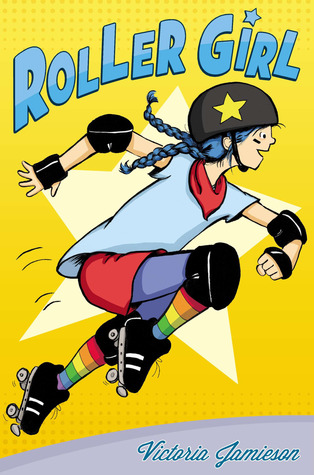 Roller Girl by Victoria Jamieson. In this highly engaging graphic novel, 12-year-old Astrid Vasquez finds her calling on a roller-derby track. Never mind that she brings no skating abilities to her first day of practice, or that her best friend would rather be at ballet camp. With the help of a savvy coach and teammates, and inspiration from a star jammer on the Rose City Rollers pro team, Astrid locates her derby groove. Check out
 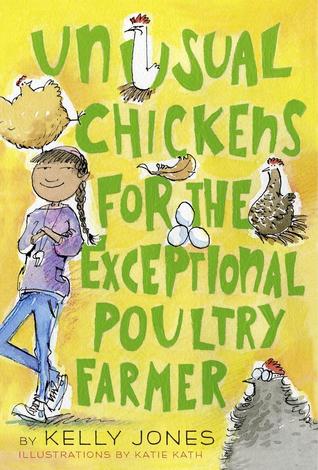 Unusual Chickens for the Exceptional Poultry Farmer by Kelly Jones. Moving from Los Angeles to a farm, Sophie gets quite a surprise when she encounters a cranky chicken with supernatural abilities. It’s easy to love Sophie, the half-Latina main character in this middle grade novel that upgrades the “new girl in town” idea by adding cool, magical chickens and letters from the beyond. Yes, we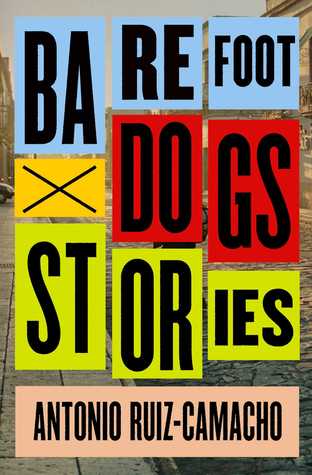
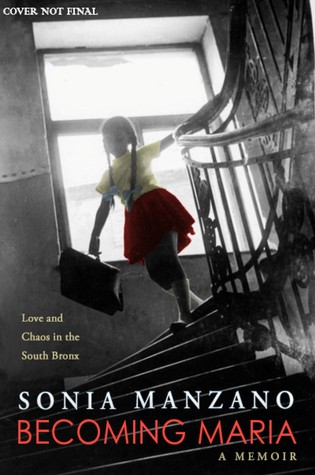 Becoming Maria: Love and Chaos in the South Bronx by Sonia Manzano. Sonia Manzano is an actor widely recognized for her role as Maria on Sesame Street. This memoir provides generations of readers with an opportunity to experience Sonia’s evolution from a young Latina, a puertorriqueña, in the Bronx into a promising performer. She powerfully reveals struggles to reconcile the love and abuse she witnessed in her family life. Don’t miss
 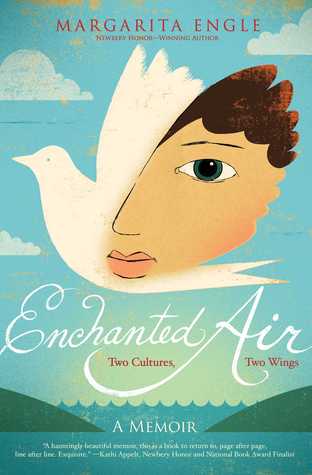 Enchanted Air: Two Cultures, Two Wings: A Memoir, by Margarita Engle. In this personal and deep mirror of her childhood, Engle showcases historical and emotional stories of life between two countries and two cultures. A memoir-in-verse that softly intertwines a love letter to Cuba and life, family, and memories attached to the island. Young readers will get a solid coming-of-age tale of growing up bicultural and the joys and pains found through that journey. Check out
 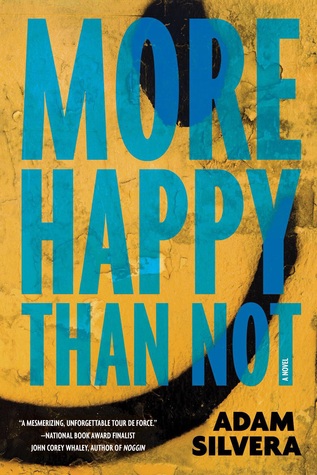 More Happy Than Not by Adam Silvera. Growing up in the Bronx with rough memories of his father’s suicide, Aaron Soto gets by with the help of a supportive girlfriend and a hardworking mom. But the promise of relief from the memories lures him into considering a radical procedure, and there are other self-discoveries to come. This debut novel offers a unique confrontation of race, class and sexuality. The main character is easy to root for in this ever-so-slightly sci-fi story. Read our full review
  Out of Darkness by Ashley Hope Pérez. The 1937 New London, Texas, school explosion—the worst school disaster in American history—serves as the backdrop for this riveting novel about segregation, love, family, and destructive forces beyond the control of its teen characters. The novel opens with the explosion, and then flashes back to show how the characters’ lives intersect before the event. Check out our
 Shadowshaper by Daniel José Older. Sierra Santiago’s expectations of a normal fun summer in Brooklyn flip upside down when supernatural events intrude: zombies, weeping graffiti murals, Caribbean magic. But Sierra is the kind of heroine who makes plans and follows through, is clear-eyed about the shortcomings of people she loves, and takes charge with attitude. Read more of
  Show and Prove by Sofia Quintero. The year is 1983. Blend together teenagers, hip-hop, urban plight, and racial tension; mix in summer camp trips and hanging out with friends, and you arrive at Show and Prove. This is a book about negotiating feelings and mistakes and tragedy. It’s a political book, examining identity and racism and bias in a way that never feels forced. For our full review, go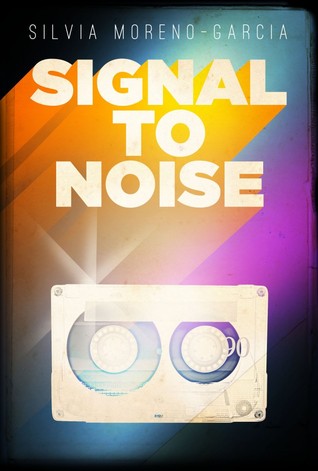
 Surviving Santiago by Lyn Miller-Lachman is the continuing story of the Aguilar family from Miller-Lachman’s novel Gringolandia. In this novel, Tina returns to Chile, which continues to be ruled by the Pinochet dictatorship in 1989. Tina falls in love with a local boy named Frankie, who has dangerous political connections and is a threat to her and her father, Marcelo, an important, targeted voice in the democracy movement. Here’s
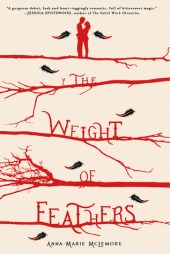
 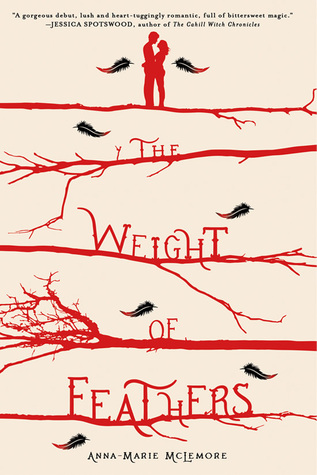 The Weight of Feathers by Anna-Marie McLemore is a 2016 William C. Morris Award finalist for good reason. McLemore’s lyrical prose centers on two traveling performance families, the Corbeaus and Palomas, hated rivals for generations who violently clash whenever they perform in the same town. A dangerous, forbidden romance develops between Lace Paloma and Cluck Corbeau that leads to family secrets revealed and a stunning climax filled with gorgeous magical realism. We will be reviewing the book in February and Anna-Marie will be writing a guest post for us. Check back then! In the meantime, check out
  When Reason Breaks by Cindy L. Rodriguez. On the surface, Emily and Elizabeth share little in common besides 10th-grade lit class and the study of Emily Dickinson’s poetry. But they’re both hovering on the edge of an emotional precipice and one of them will attempt suicide. Set in New England, this captivating novel delivers a strong portrayal of Latin@s and a cast of satisfyingly complex characters from diverse backgrounds. Check out our full review
  Latinxs in Kid Lit