Alma Flor Ada: Always Cuban


Island Treasures FINAL ART“Yo soy un hombre sincero

  de donde crece la palma…”

   –José Martí

During most of my life I have lived outside of Cuba, as part of the Cuban Diaspora, yet my being continues to be rooted in the fertile island where I was born and where I lived as a child, an adolescent, and a young woman.

AFA with braids

Alma Flor

In 1958, during the Batista dictatorship, my father’s dream of helping low-income families own their own homes was thwarted when the soldiers who had bought some of the accessible yet solid houses he had built with such care, refused to make their mortgage payments. Trying to find a solution, my father met with the garrison’s commander. Instead of support, he received a frightening threat that led us to flee to Miami.

At that time, Miami did not have the Latino presence it has today. As I wanted to study Spanish and Latin-American literature, I begged to go study in Mexico City. I was fascinated by the artistic and literary achievements of post-Revolutionary Mexico. However, my parents did not feel comfortable sending me to a country where we knew no one. Instead, they suggested I go to Spain, where my mother had relatives.

Spain became the third country where I lived. While the Franco regime imposed many limitations, I was immensely fortunate to be mentored by some extraordinary professors, Elena Catena, don Alonso Zamora Vicente, and doña María Josefa Canellada, who helped channel my thirst for learning. I will always be grateful for their teaching and their example.

A set of unexpected circumstances led me to Perú, which became the fourth country where I lived. In Cuba, I had delighted in being my parents’ daughter; in Perú I became a mother. In Cuba, I had absorbed my family’s commitment to education; in Perú, I became a teacher. In Cuba, I had learned the key role of education in striving for social justice; in Perú, I studied Paulo Freire’s words and became actively concerned with social issues.

While in Perú, I finished my doctorate degree. The topic of my dissertation led to an appointment as a research scholar at Harvard. There I experienced an exciting cultural milieu comprised of distinguished authors and artists who had left Spain after the Spanish Civil War, including the poet Jorge Guillen. Later, after two years in Lima, I returned to the United States with my children and became involved in several grassroots movements on behalf of social justice and education.

Each of these four countries left a profound imprint on me, as I learned to understand their different worldviews, to enjoy their colors and fragrances, and to love their people. I also learned to rebel against the unjust social conditions suffered by many in each of these places, and also, to admire the resilience, fortitude and creativity of the majority of the people I met, wherever I lived. But always, as the backdrop to all these life experiences, my memories of Cuba continued to nourish my deepest soul.
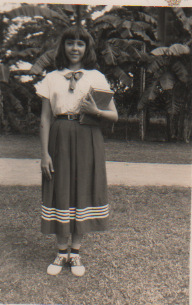
Top

Alma Flor in teen years

As a child, some of my best friends were trees. In the large overgrown gardens of the old historical house where I was born, many different kinds of living creatures inspired me to learn to observe and respect nature. Our colonial city was a microcosm of the larger world; there I learned to listen to those around me and reflect on what I heard. From my family, I learned the values of caring and compassion; kindness and generosity; friendship, knowledge, and justice.

The overgrown gardens have expanded and today I consider the whole planet my home. I continue to marvel at its richness and diversity, including the daily miracles of flower petals and bird feathers. I especially attempt to not remain indifferent to any human experience. Yet, no matter how far my circle of interest may expand, I never feel far from my roots; on the contrary, it is through being nurtured by them, that I can open my heart to everything else.

I learned about immigration from my own family. Both of my grandfathers had immigrated to Cuba from Spain. They each made great efforts to contribute to their new homeland and to defend freedom of thought. My maternal grandfather, Medardo Lafuente Rubio, used his talents for self-expression as a poet, public speaker, educator, and journalist to promote universal human values. During the despotic dictatorship of Machado, he was incarcerated for defending freedom in his newspaper. His time in prison greatly damaged his health and he died not long after his eventual release. My paternal grandfather owned a newspaper and also one of the earliest radio stations in Cuba. His words, whether written or spoken, always defended the value of free independent thinking that had been crushed in his county of birth by Franco’s dictatorship.
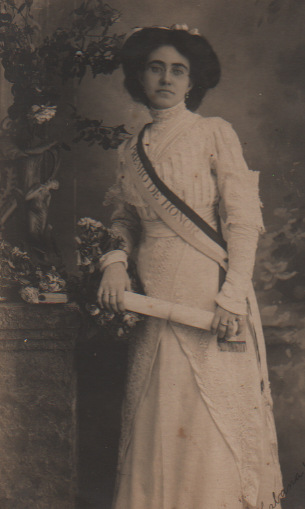
My grandmother on her graduation as a teacher

AFA’s grandmother at graduation from teaching school.

My maternal grandmother, Dolores Salvador, was the strongest influence in my life. Losing her when I was very young filled me with profound nostalgia. In response to the pain of this loss, I sought to protect and nurture my memories of her, as one would a tender plant. And thus I became a storyteller, sharing my stories again and again, sometimes orally, other times in writing, often in silence.

The feelings arising from my own experiences have inspired much of my writing. Even one of my more recent books, Love, Amalia, co-authored with my son Gabriel Zubizarreta, is rooted in the memory of losing my grandmother. Another source of inspiration has been the desire to continue to savor my own children’s childhood.
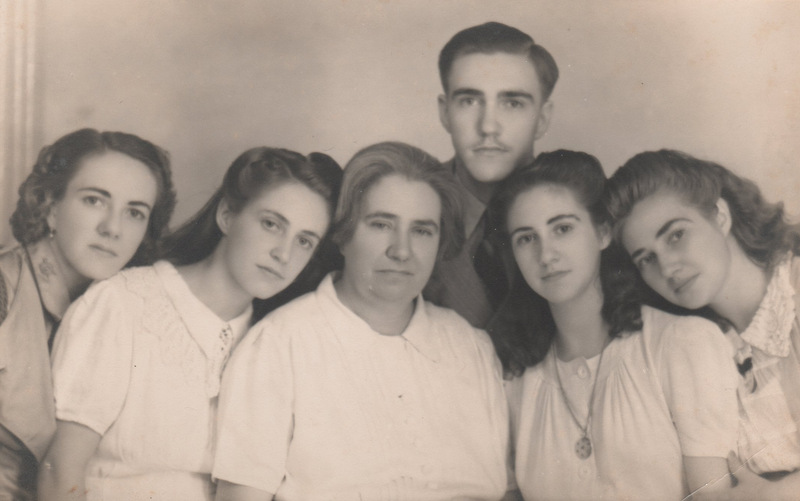
image

AFA’s grandmother, surrounded by her children


I often remind teachers to encourage children to write, as each child has a unique perspective to share. I am very grateful to an editor of The Hungry Mind who many years ago, asked me to contribute one real-life childhood story for his publication. In response, I wrote my first three real-life stories and submitted them to him. He told me kindly that, while he could only publish one, he wanted to encourage me to write a few more. And thus, Where the Flame Trees Bloom was born.

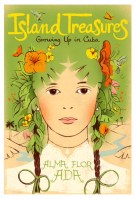
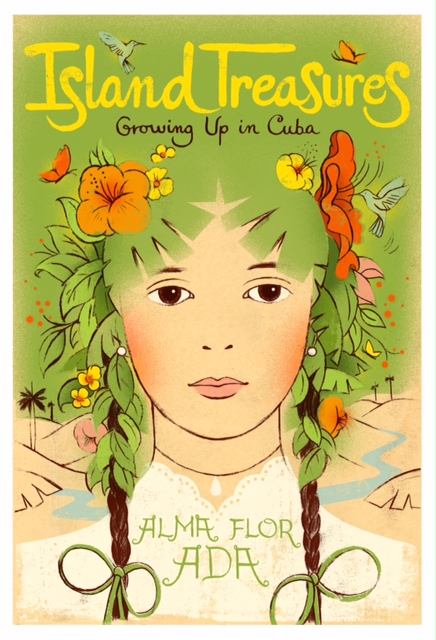
It took the additional encouragement of my dear friend Antonio Martorell, an inspired artist and illustrator, to continue writing the childhood memoirs that became Under the Royal Palms, and which received the Pura Belpré Medal in 2000. More recently, when Simon & Schuster decided to re-print both of these books under one cover, Emma Ledbetter, my supportive editor, welcomed the idea of also including some new stories from my growing-up years in Cuba. Thus Island Treasures has come to be.
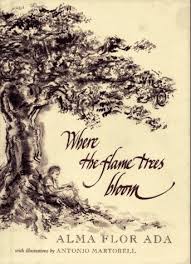
Flame TreesRoyal Palms

Like the mountain springs in Tope de Collantes, in Cuba, whose currents of clear cool water never stop running, all of our memories hold an endless number of sensations, feelings, faces, flavors, aromas, textures, and emotions, if only we are willing to turn inward, to welcome and honor them in some way. It is my hope that as I share my stories with you in Island Treasures, your own awareness of the people who have enriched your life and the moments that have helped shape who you are, will deepen. May you welcome and value your own stories as an intrinsic part of who you are, dear reader, while also rejoicing in who you have become.
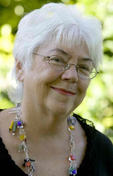
 

Alma Flor AdaAlma Flor Ada has written countless books, most of which do not specify Cuban settings or characters, but which nearly always highlight Latino life. She is an author, educator, scholar, and internationally known speaker. Her life’s work includes advocacy for peace and social justice. A Pro­fes­sor Emerita at the Uni­ver­sity of San Fran­cisco, she is also a for­mer Rad­cliffe Scholar at Har­vard Uni­ver­sity and Ful­bright Research Scholar.

In the world of children’s books, Alma Flor is known for her poetry, narratives, folk­lore and non-fic­tion. She’s the recipient of many prestigious awards, including the Christo­pher Medal, the Pura Bel­pré Medal, the International Latino Book Award, and the Vir­ginia Hamil­ton Award, in recognition of her body of work for children. Learn more at her official website.


Welcome to Cuba Week!


Cuba PearlCuba has been very much on our minds during this year of momentous change and emotional headlines. In a gesture of love and great hope for the Cuban people on both sides of the Straits of Florida, we invited beloved Cuban American children’s writers to speak from their hearts about anything relating to cubanismo. Lucky us: eight authors responded to our invitation with ¡claro que sí!
Guest posts begin tomorrow and continue through next Monday. To whet your appetite, here are some details. You will hear about immigration journeys, life across two cultures, racial identity, remembrances of the Cuba left behind, and the books that sprang from these experiences. Get ready for gorgeous prose from Enrique Flores Galbis; a fresh challenge to publishers from Nancy Osa; nostalgia mixed with humor and biting reality from Guinevere Thomas, Meg Medina, Laura Lacámara, and Christina Díaz González; as well as stirring insights from award-winning poets Alma Flor Ada and Margarita Engle. These authors’ books have enriched young people’s reading lives. For that, and for the perspectives they’ve shared with us, we want to say ¡gracias de todo corazón!

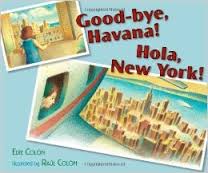
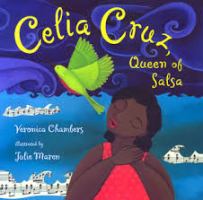
Before we get started on the guest posts, here’s a visual reminder of some glorious children’s books that star Cuban characters and/or settings. Space prevents us from featuring a comprehensive list, but we urge you to add your recommendations in the comments section. To learn more about individual books, click on their cover mages.

Picture Books    

Goodbye Havana Queen of Salsa Martina Mango in Hand

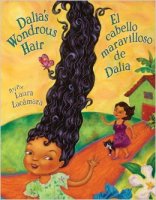
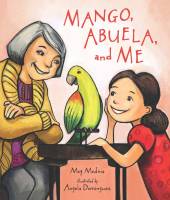
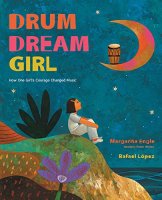
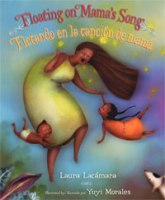
Celia Bossy Gallito Tia Isa  Dalia Cover MANGO_jacket_for_Meg drum dream girl cover floating

Middle-Grade

Island Treasures FINAL ART The Red Umbrella  Oye Celia  Moving Target  My Havana The Wild Book  MountainDog.highrescvr  paperback cover

Young Adult

Cubanita  Tropical Secret    Hurricane dancers notable  Firefly notable  Cuba 15  Down to the Bone   Letters to my mother   Significant Girls  ad6df-yaqui  Surrende Tree Notable  Lightning Dreamer notable  Enchanted Air Poet Slave Dark Dude


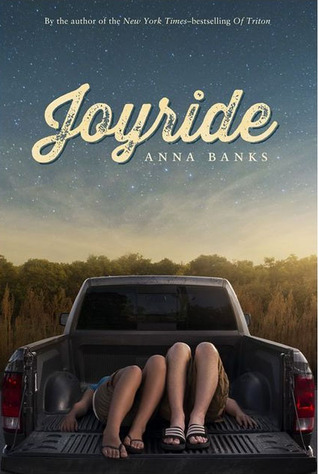
Book Review: Joyride by Anna Banks


22718685By Cindy L. Rodriguez

PUBLISHER’S DESCRIPTIONA popular guy and a shy girl with a secret become unlikely accomplices for midnight pranking, and are soon in over their heads—with the law and with each other—in this sparkling standalone from NYT-bestselling author Anna Banks.

It’s been years since Carly Vega’s parents were deported. She lives with her brother, studies hard, and works at a convenience store to contribute to getting her parents back from Mexico.

Arden Moss used to be the star quarterback at school. He dated popular blondes and had fun with his older sister, Amber. But now Amber’s dead, and Arden blames his father, the town sheriff who wouldn’t acknowledge Amber’s mental illness. Arden refuses to fulfill whatever his conservative father expects.

All Carly wants is to stay under the radar and do what her family expects. All Arden wants is to NOT do what his family expects. When their paths cross, they each realize they’ve been living according to others. Carly and Arden’s journey toward their true hearts—and one another—is funny, romantic, and sometimes harsh.

MY TWO CENTS: In Joyride, Anna Banks creates two easily likable, sympathetic characters who are struggling between wanting to have normal, fun teenage lives and dealing with serious family issues.

Carly Vega is a smart, hard working Mexican-American teen who juggles going to school and working, sometimes until the early morning hours at a convenient store, to help raise enough money to bring her deported, undocumented parents back to the U.S.

Arden is a popular former football star who battles with his violent father in the wake of his sister’s suicide, which has left his mother heavily medicated and despondent.

In the opening scene, Arden pretends to hold up his uncle, Mr. Shackelford, outside the convenient store in an attempt to get him to stop driving drunk. Carly, who is working when this happens, responds by pulling out the store owner’s shotgun and chasing the masked bandit (Arden) off. Arden knows then that Carly is the perfect candidate to be his pranking buddy, a position once held by his sister. Love blossoms as the two spend more time together doing funny, gross things around town that are risky because Arden’s father is the racist local sheriff responsible for deporting Carly’s parents.

Throughout the novel, Carly struggles with competing desires. She wants her family to be intact again and wants to do all she can to help raise the thousands of dollars needed to help them cross the border again. She also wants, however, to do what normal teen girls do, like hang out with her boyfriend and use her money to buy things like new clothes and a laptop computer.

Without giving too much away, I’ll say that this YA contemporary, which tackles serious issues and has heavy doses of romance and humor, also has a plot twist that adds a whole new exciting vibe to the story. Carly and Arden’s relationship is threatened and they end up in a dangerous situation involving law enforcement and the illegal smuggling operation that promises to bring her parents home.

Told in alternating points of view–Carly’s is first person and Arden’s is third–Anna Banks’s Joyride is a page-turner filled with interesting, complex characters who fall in love and find common ground despite economic, racial, and cultural differences.

TEACHING TIPS: Joyride could be an option when teaching about immigration. I’m sure students would have lots of questions about the issues brought up with this book around Carly’s family’s situation. Do people really pay someone to escort loved ones across the border? What are the risks? Is it really that expensive? What happens if they get caught again? How often are American born teens separated from parents who are deported? Reading this novel as a companion to non-fiction research on these issues could offer multiple perspectives and make Carly Vega seem even more “real,” in that her situation is a common one.

ABOUT THE AUTHOR (from her website): NYT Bestselling YA author of The Syrena Legacy series: OF POSEIDON (2012) OF TRITON (2013) OF NEPTUNE (2014). Repped by rockstar Lucy Carson of the Friedrich Agency. I live with my husband and daughter in the Florida Panhandle. I have a southern accent compared to New Yorkers, and I enjoy food cooked with real fat. I can’t walk in high heels, but I’m very good at holding still in them. If you put chocolate in front of me, you must not have wanted it in the first place.


FOR MORE INFORMATION ABOUT Joyride visit your local library or bookstore. Also, check out WorldCat.orgIndieBound.orgGoodreadsAmazon, and Barnes & Noble.

Also, check out the Q&A we did with Anna Banks earlier this week.


Q&A with NYTimes Bestselling Author Anna Banks About JOYRIDE


22718685By Cindy L. Rodriguez

The latest novel by Anna Banks, the New York Times Bestselling Author of the The Syrena Legacy series: OF POSEIDON (2012) OF TRITON (2013) OF NEPTUNE (2014), releases today. JOYRIDE, a contemporary with a Mexican-American main character, is a change for Banks, but you’ll see that she was ready to cleanse her fantasy palette and that the seeds for this particular story were planted years ago.

First, here is a description of the book:

A popular guy and a shy girl with a secret become unlikely accomplices for midnight pranking, and are soon in over their heads—with the law and with each other—in this sparkling standalone from NYT-bestselling author Anna Banks.

It’s been years since Carly Vega’s parents were deported. She lives with her brother, studies hard, and works at a convenience store to contribute to getting her parents back from Mexico.

Arden Moss used to be the star quarterback at school. He dated popular blondes and had fun with his older sister, Amber. But now Amber’s dead, and Arden blames his father, the town sheriff who wouldn’t acknowledge Amber’s mental illness. Arden refuses to fulfill whatever his conservative father expects.

All Carly wants is to stay under the radar and do what her family expects. All Arden wants is to NOT do what his family expects. When their paths cross, they each realize they’ve been living according to others. Carly and Arden’s journey toward their true hearts—and one another—is funny, romantic, and sometimes harsh.

CINDY: This is a genre shift for you after the very successful Syrena Legacy Trilogy. What sparked you to shift gears and write contemporary fiction?

ANNA: Before we begin, I just want to say it is my pleasure and an honor to be here today. Thank you so much for thinking of me. I enjoy your website and am very supportive of its goals and focuses.

JOYRIDE was sort of a palette cleanser between fantasy worlds. I was ready to write a standalone for once, and Carly’s story kept haunting me at night. To be honest, writing something in the real world was more of a challenge because I had stricter boundaries to abide by, and my characters had only their natural abilities to use to get them out of situations. But it was also a pleasure to have those boundaries, because writing characters who had to use their natural resources, to me, made them stronger and more realistic.

CINDY: And while we’re talking genre, JOYRIDE really is a mix of realistic, romance, and thriller. Was this intentional while you were plotting? Did you want to have some twists that are not always typical with a straight contemporary, or is that just where the story went as you were planning?

ANNA: While I was writing JOYRIDE, I didn’t realize I was writing so many twists in it. To me, it seemed like the natural way things would have to go. Of course, I’ve never written contemporary before (and if I’m being honest I don’t read much of it either), so I wasn’t aware there were sort of “rules” to writing a straight contemporary. Now I realize I’ve written this steroidal hybrid, and I hope contemporary readers can move past that and embrace it. Pretty please? :.)

CINDY: Let’s talk about craft for a bit next. You have a dual narrative, but you use a first-person point of view for Carly and a close third-person for Arden. As both a reader and writer, I’m always curious about these kinds of decisions. Why did you decide on this format instead of a dual first-person?

ANNA: This is me recognizing a weakness I have in writing. I can write a strong female heroine in first person, but for the hero, I need to take a step back and put some distance between myself and him, to distinguish my voice from his voice. I don’t want readers as familiar with my hero and his most inner feelings and thoughts in the way writing in first person would give them access to. In fact, I considered writing JOYRIDE from only Carly’s perspective, but Arden was just too funny to put behind stage.

CINDY: The topic of immigration and deportation are complex, often contentious, social and political issues. What made you want to write about the life of a Mexican-American girl whose parents were deported? What kind of research did you have to do? Was it difficult to write outside of your cultural experience?

ANNA: Living in the Florida panhandle, I live and work and play among many Mexican immigrants—both documented and undocumented. When I was a teenager in particular, I worked at a restaurant where there were some undocumented immigrants, and as we became friends, they told me their stories. They told me their anxiety about being deported, about missing their family, about the fear of being separated from the family they’ve established in the United States. It really left an impression on me. As a teen, I wondered what I would do if my parents were deported, if I was here all alone. I guess Carly was planted in my head all those years ago and I didn’t even know it.

I didn’t have much research to do, because I learned it first hand from my friends and coworkers. That you didn’t want to get pulled over because instead of a speeding ticket, you’d get deported. That you didn’t want to attract attention to yourself. That you sent money home as often as you could. That there were people they called coyotes who helped them cross the border and desert, who demanded large sums of money to help them get set up in the United States. That when you cross the border, you cross with what you can carry, and that’s it.

I’m white, and so writing outside my own cultural experience was terrifying. I wanted to do it respectfully and realistically, because I deeply respect the work ethic and the family values of immigrants, and I wanted to share their plight with the world. But sometimes in writing it, I did wonder if it was my place to do so. But I had a story to tell, and I felt it was an important one, so I kept going.

CINDY: Do you plan to write more contemporary YA? Any projects in the works that you can tell us about?

ANNA: Right now I’m working on an Egyptian based fantasy called NEMESIS and its sequel, ALLY. It’s about a princess who possesses the power to create energy who escapes her father, who wishes to weaponzie it, only to be captured by an enemy kingdom where she discovers her powers could be used to fight a terrible plague.

I write when I have a story to tell, and usually my muse takes me across a lot of different genres. As for writing contemporary again—sure, why not? But I have to have a story to tell. If I find myself wanting to add time travel or wormholes in the contemporary, I’d better just set it aside. :.)

How and Why I Wrote My Graphic Memoir

by Lila Quintero Weaver

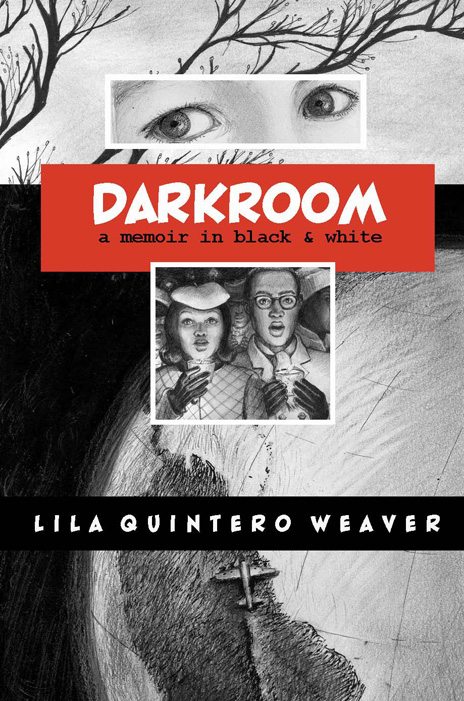
Final CoverreducedLast September at the Comadres and Compadres Writers Conference in Brooklyn, NY, I listened as Daisy Hernandez stated her belief that memoir writing arises from the unanswered questions a writer has about her own life. For me, by contrast, starting a memoir is what led me to realize I had questions.

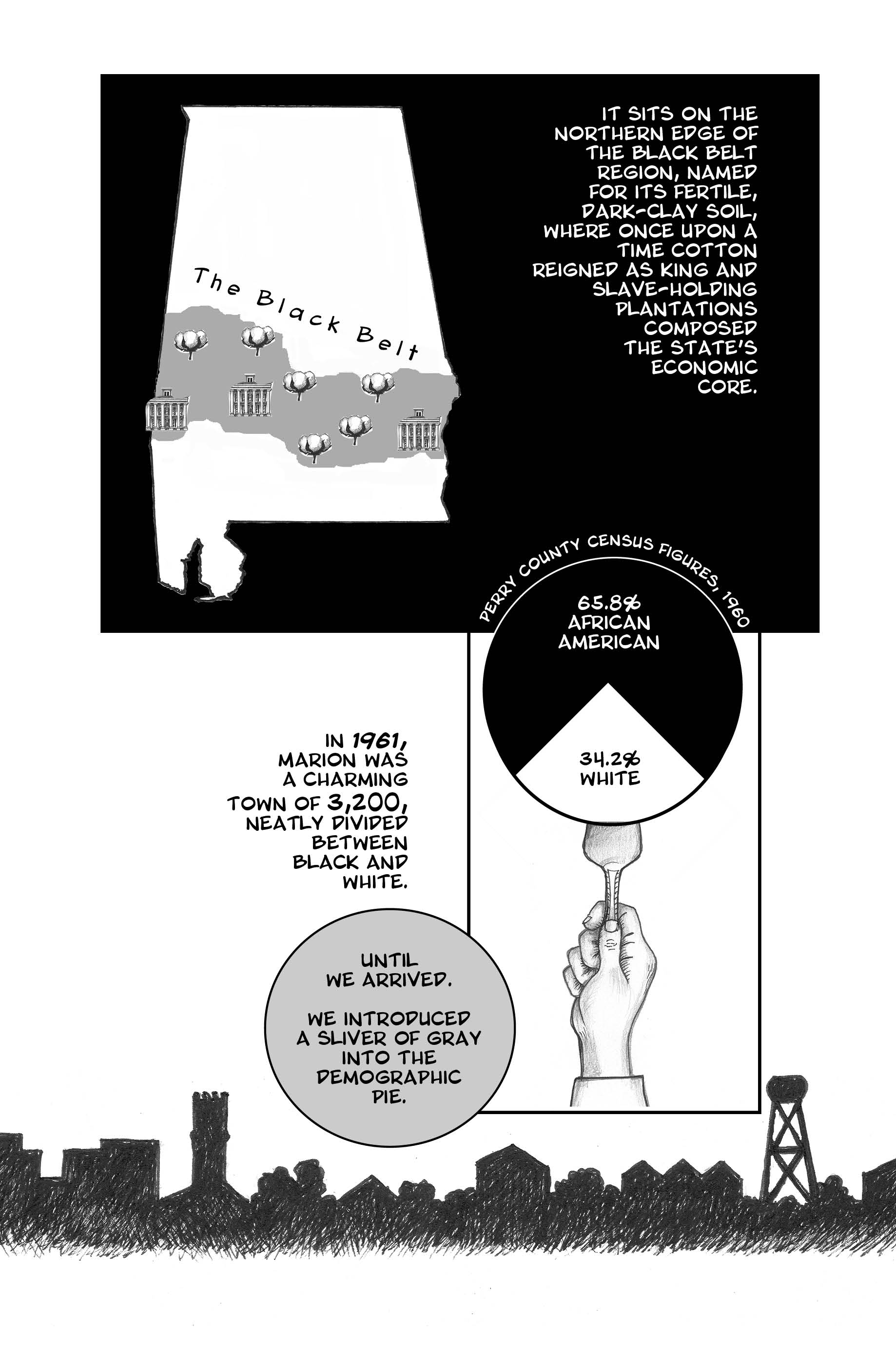
Before beginning my writing journey, it had never occurred to me that there was anything remotely fascinating about my life. I’d grown up as an immigrant child from Argentina in Marion, a tiny dot of a town in the Black Belt region of Alabama, where for most of our 12 years in residence we were the only Latin@s. But then I realized that our isolation at this time and in this place was a story.Demographic pie

How big of a role did this cultural setting, with its legacy of racism, play in making me who I am? That was one of my biggest questions, and eventually, my outsider status and my awakening to racial inequity formed the narrative core of my graphic memoir, Darkroom: A Memoir in Black and White (The University of Alabama Press, 2012).

[Note: All the art in this post is from Darkroom. Click on images to enlarge the view.]

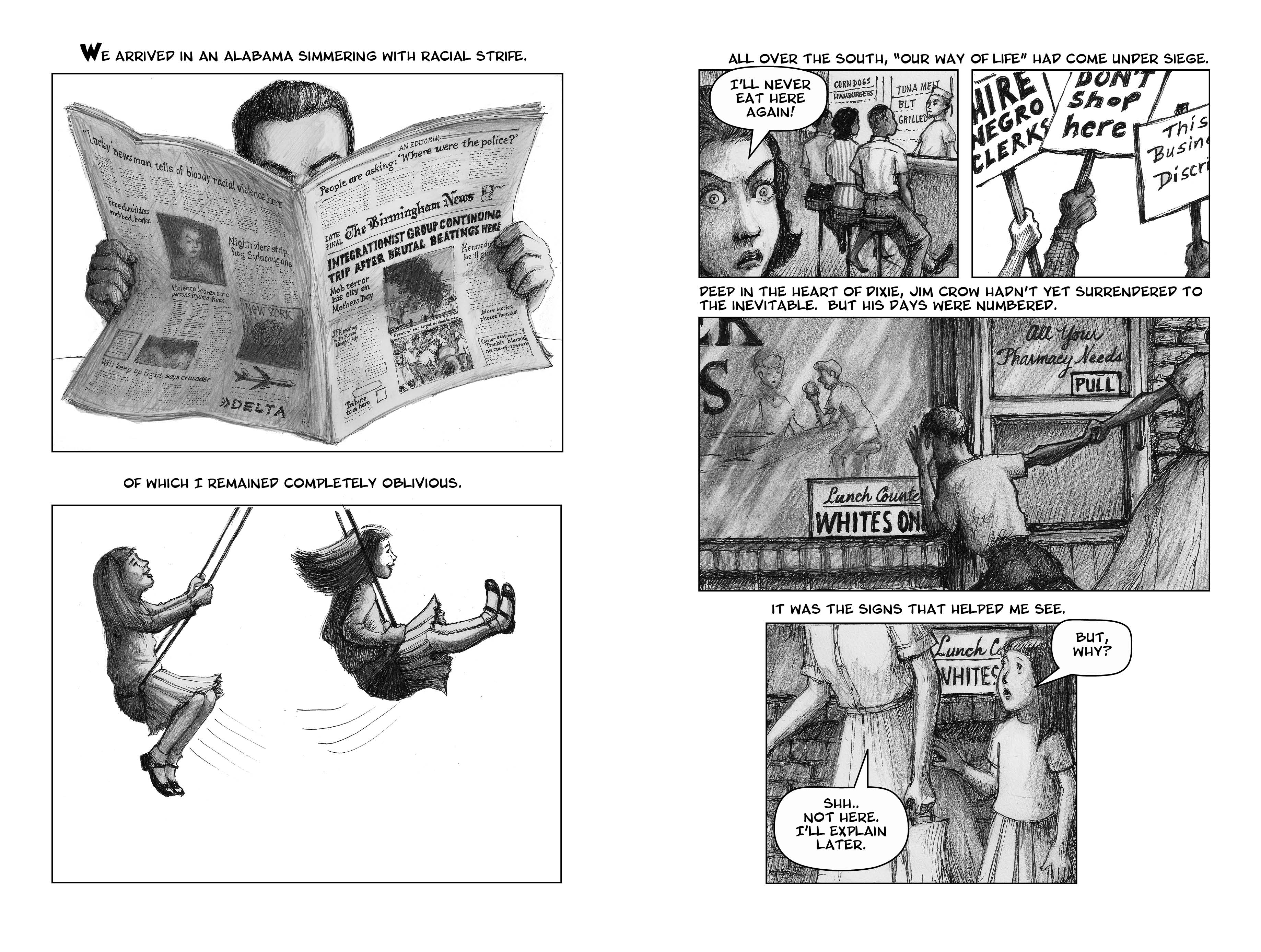
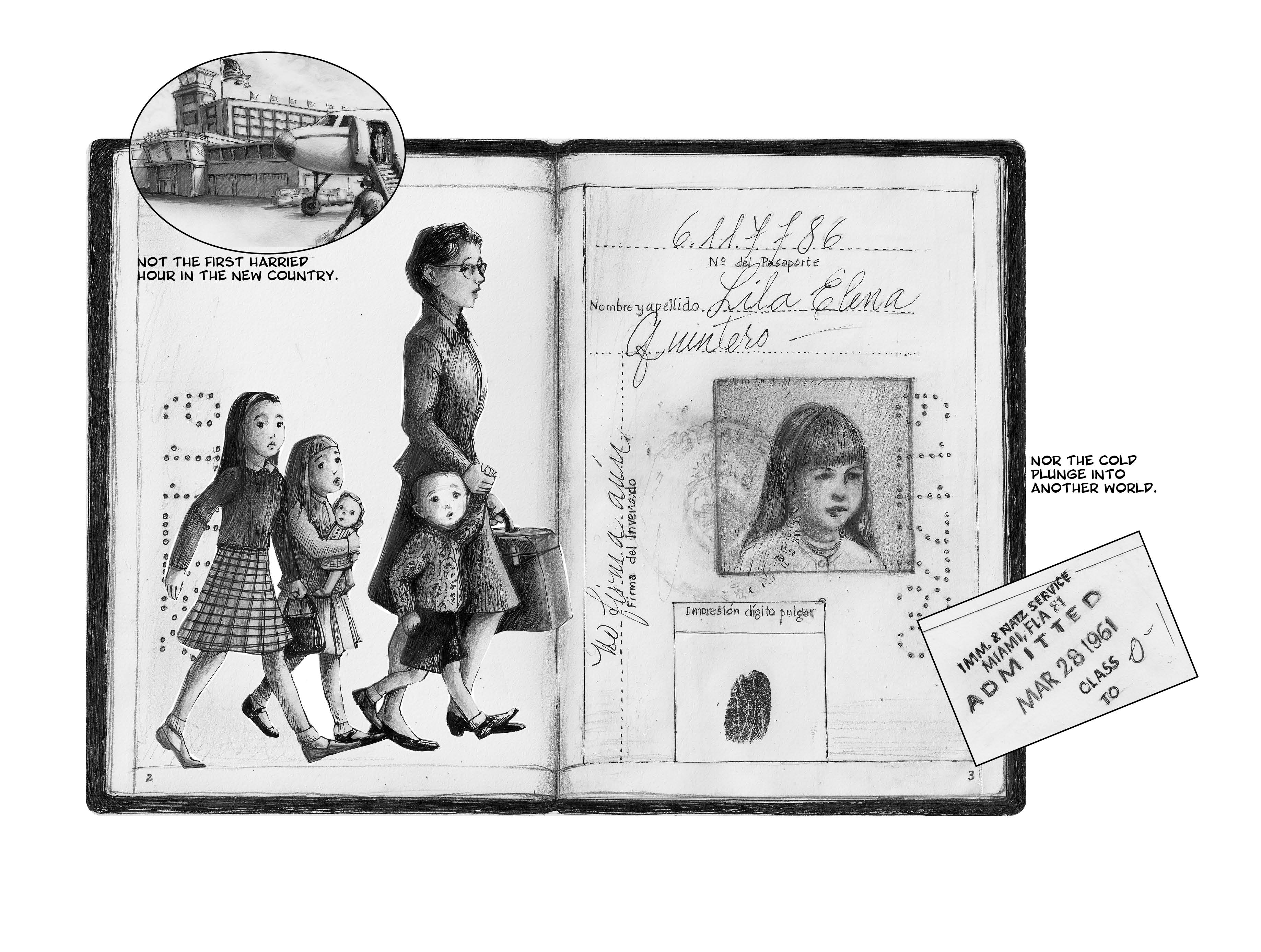
My family’s arrival in Alabama synched up perfectly with several hallmark events in the Civil Rights Movement. We first briefly lived in Birmingham, where within six weeks of our arrival, the Freedom Riders rolled up to the bus depot and into the hands of a vicious mob. Then we moved to Marion, where racial segregation ruled every conceivable setting. Most white people seemed perfectly at home with this arrangement, but it made me deeply uneasy, even at age six.

Whites only

In 1965, African Americans across the Black Belt region were attempting to register as voters, but local officials obstinately barred the way. That February 18th, in Marion’s city square, a white mob clashed with a group of mostly local black protesters, while police stood idly by or participated in the beatings. My father witnessed some of these horrors and so did a host of other citizens, yet none of my teachers ever addressed these events. February 18th and everything surrounding it was quickly swept aside as if it had never happened.

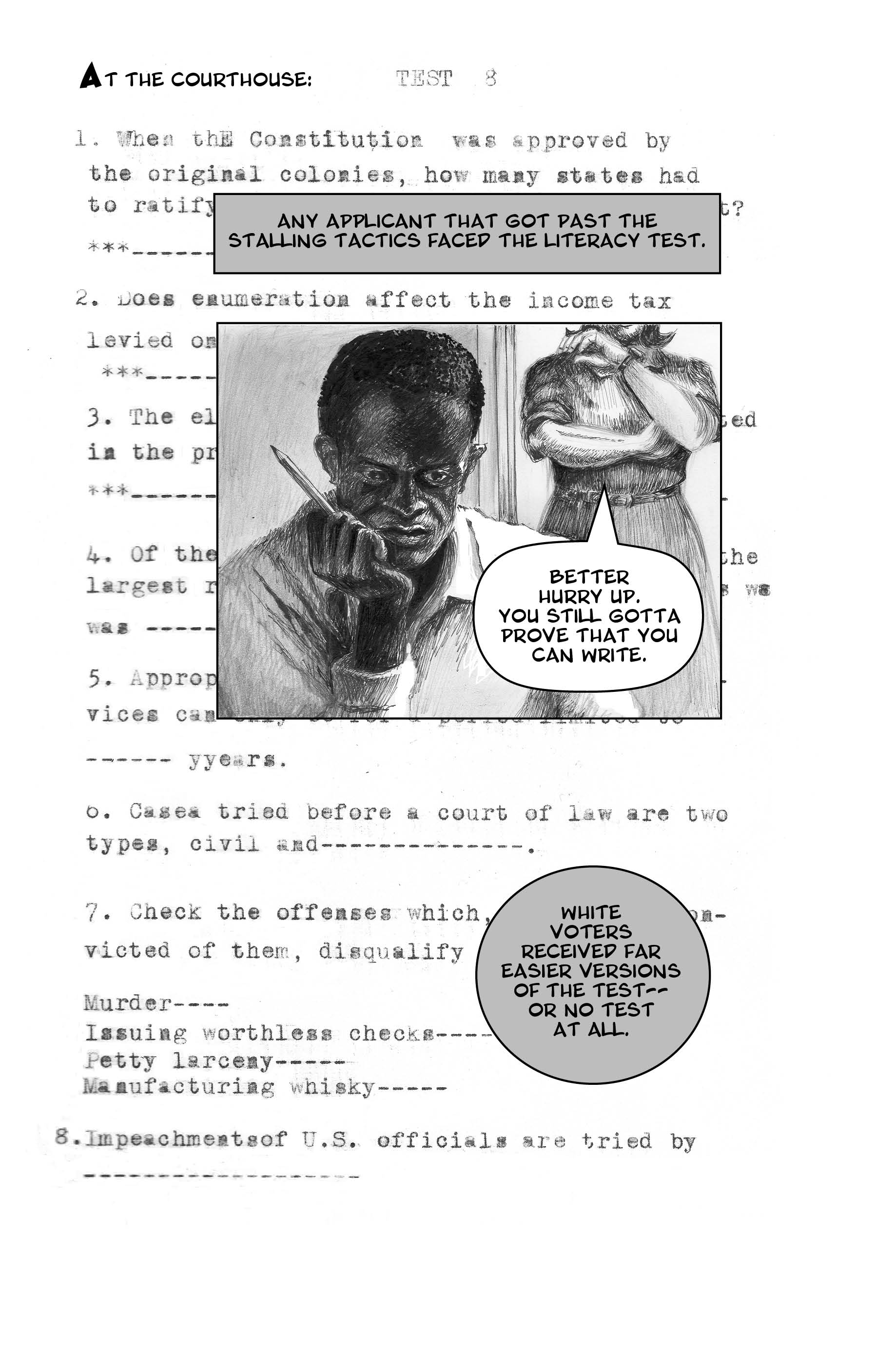
Literacy TestI’d always known that a young black activist had been shot by a state trooper that night, but I’d never actually heard his name—Jimmie Lee Jackson. I did not know that his death—eight days later at Good Samaritan Hospital, in nearby Selma—had triggered Bloody Sunday, which led to the passage of the Voting Rights Act of 1965.

My father died in 1995 before I ever thought to press him for details of what he saw during the violent clash. Among other things, I would have asked how witnessing such brutality at close hand affected his view of America. For decades, the only reason his account of that night didn’t fade from memory completely was because of some home movies he’d taken around the same time. They showed peaceful protest marches in the days leading up to February 18th.

After the Voting Rights Act was signed into law, civil rights activists set their sights on desegregating public schools. This time, I was the eyewitness to history—not that any child understands federal court orders, states’ rights battles, or the long, embittered tug-of-war to sort them out. Those questions would come later.

In 2004, I went back to college to complete my degree. That’s when I started to make up lost ground on the history of my region. The last thing on the checklist before graduating was a senior project.  The graphic memoir Persepolis, by Marjane Satrapi, gave me the idea to combine a written account with images, as an artistic exploration of my family’s immigration journey and the racially troubled times we encountered in our new homeland.

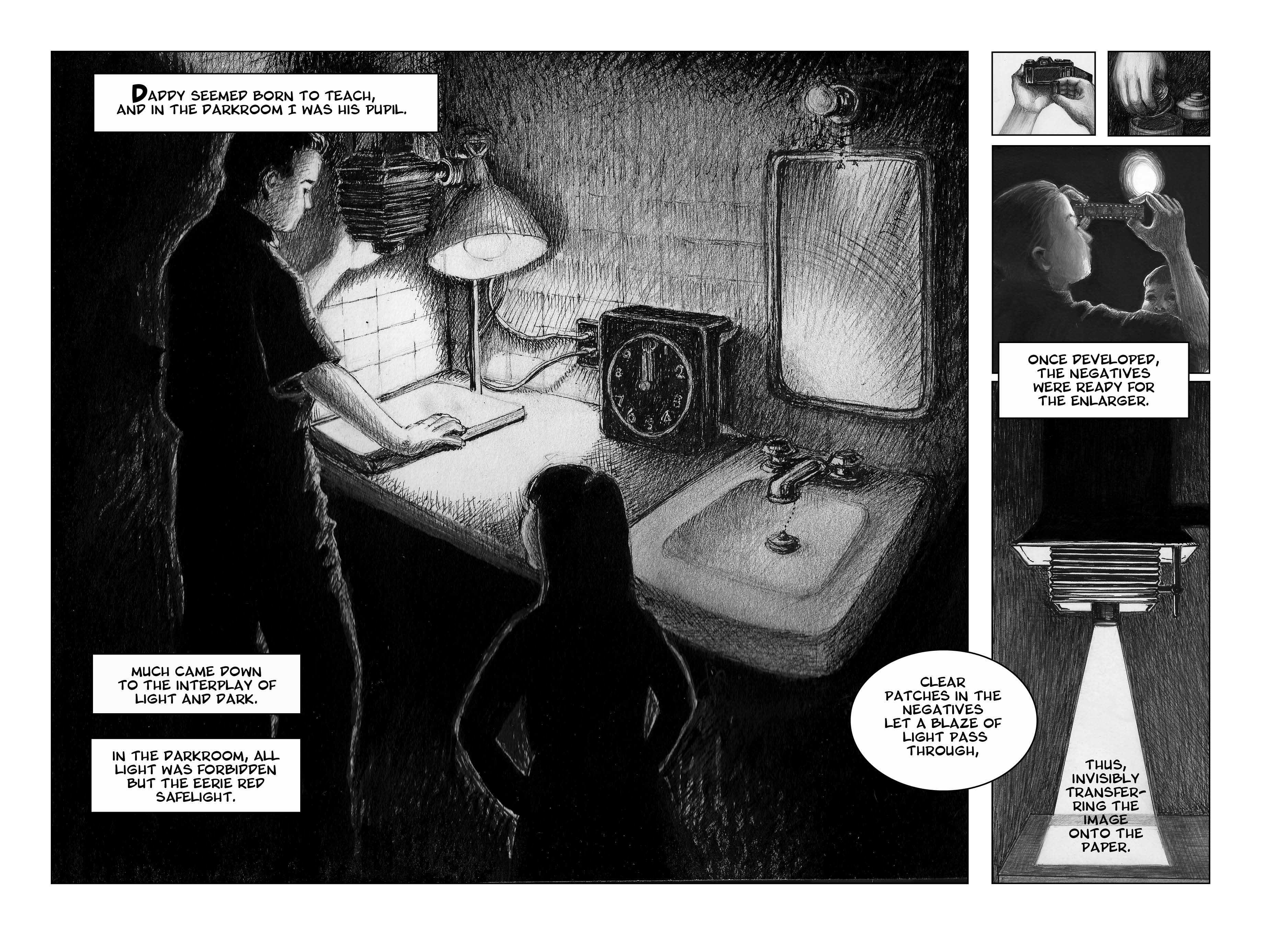
One of my goals was to find out exactly what happened that February night. I also wanted to pay homage to my father’s sideline work as a photographer and the crucial contribution that other photographers, as journalists, made to the Civil Rights Movement.

Darkroom joined spread

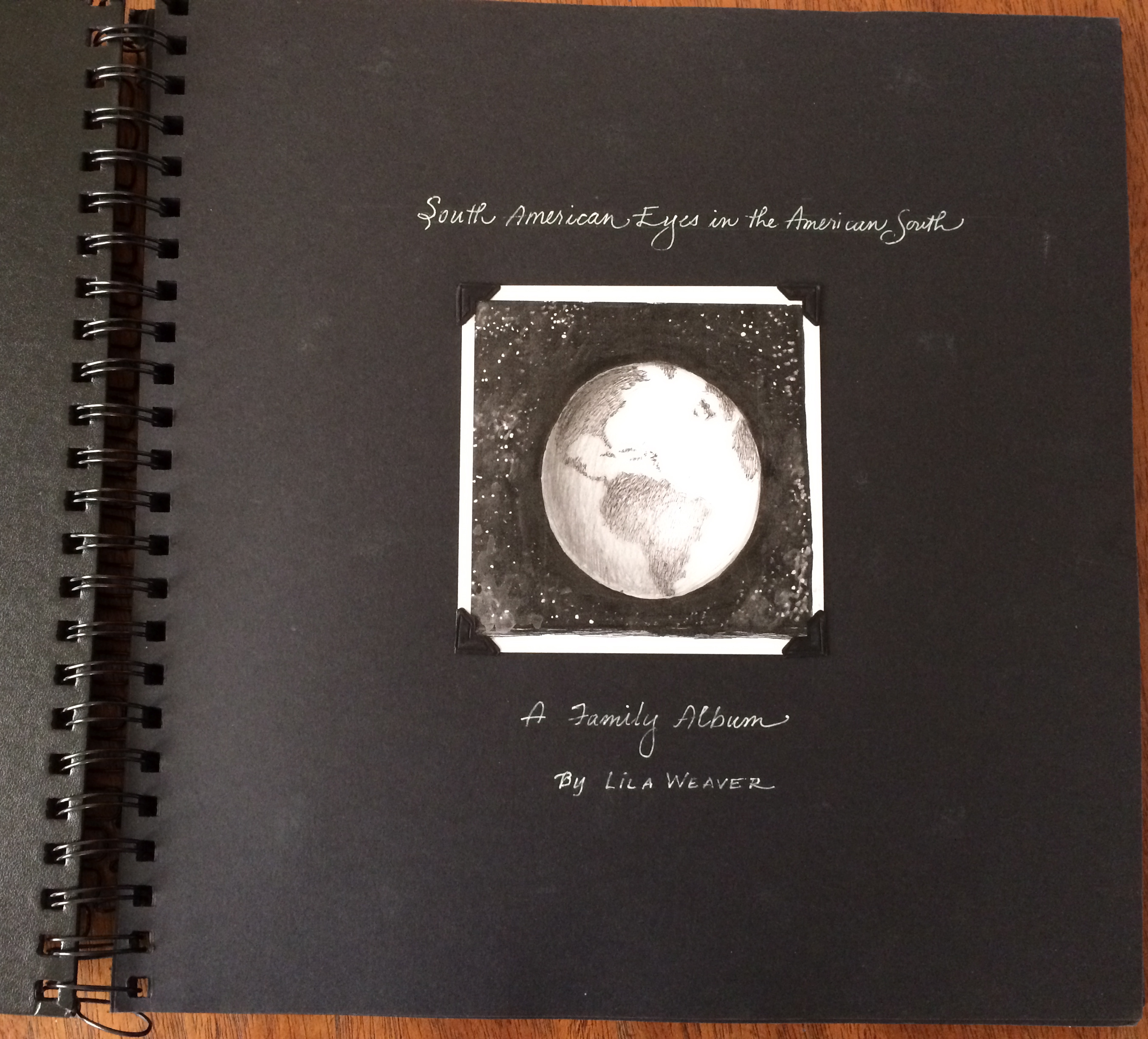
Grabbing the motif of photography helped me unify a complex story through metaphor and add a visual nod to the documenting power of the camera. So this is how my senior project looked: forty pages of drawings and captions, assembled in a photograph album. My drawings stood in for the photos. IMG_0031

At this stage, editors from The University of Alabama Press saw my work and offered me a contract for an expanded version. I said yes before I knew what I was getting into–a project that would consume the next three and a half years of my life.

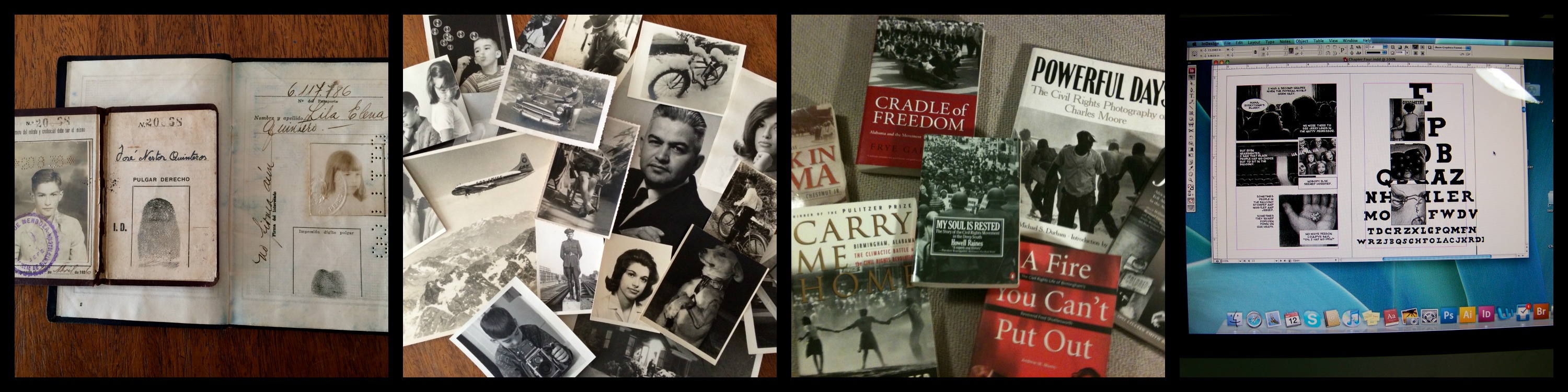
To prepare, I dug down into family memorabilia and photos. I researched the current events of my childhood and gained a degree of perspective that wasn’t possible while the news reports were still fresh.

Darkroom process

One daunting aspect of putting the book together was teaching myself the bare necessities of digital graphics programs. First, I created my drawings traditionally, on paper—more than 500 in all. Then I experimented with different ways of digitally layering the scanned drawings and combining them with text. The effect I was going for was a scrapbook of photos and ephemera.

Passport

When the book launched in 2012, people in far-flung places showed interest in my story, including a publisher in France and college instructors from around the country who placed my memoir on their reading lists. Although I didn’t write the book with young readers in mind, it has also received a welcome in some middle school and high school classrooms.

Throughout this decade, the nation has been celebrating the 50th anniversaries of civil rights milestones. The Selma march has come to life in a major motion picture, and in a graphic novel series co-authored by U.S. Congressman John Lewis. Many eyewitnesses have published their stories, forming a rich tapestry of personal accounts. Teaching Tolerance, a division of the Southern Poverty Law Center, recently produced an instructional film for classrooms about the campaign for voting rights. It’s entitled Selma: The Bridge to the Ballot. It features visual documentation from previously untapped primary sources, including footage from the home movies that my father shot.

Bloody Sunday lies half a century behind us, yet racial tension and violence continue. I sometimes ask myself: what has actually changed? I remember the days of Jim Crow, which are, thankfully, well behind us. Yet, it seems like the passage of fifty years would’ve brought us deeper, more enduring changes.

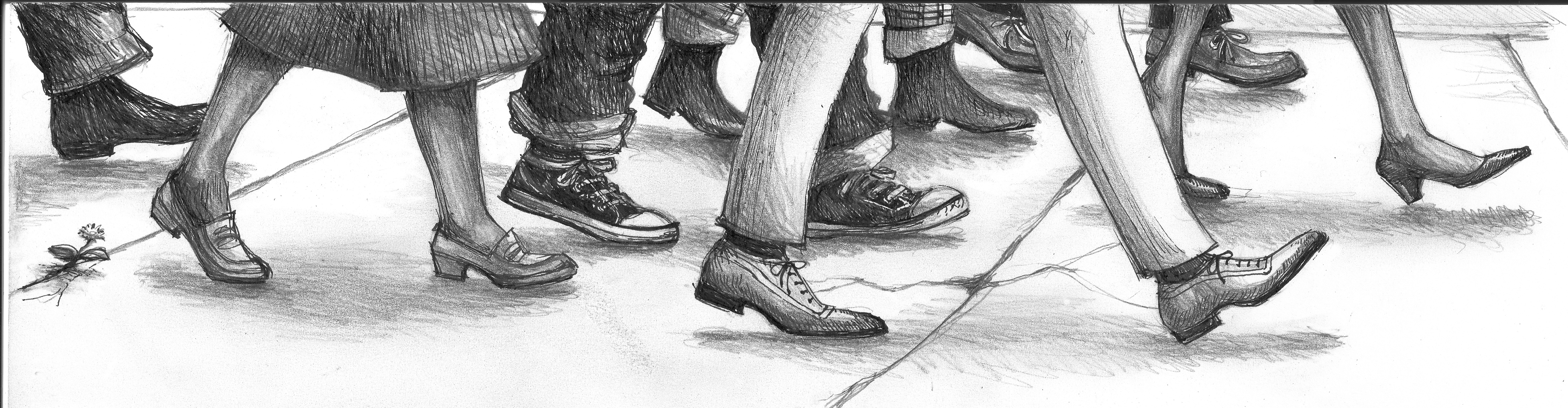
Marching feet for Chpt 8

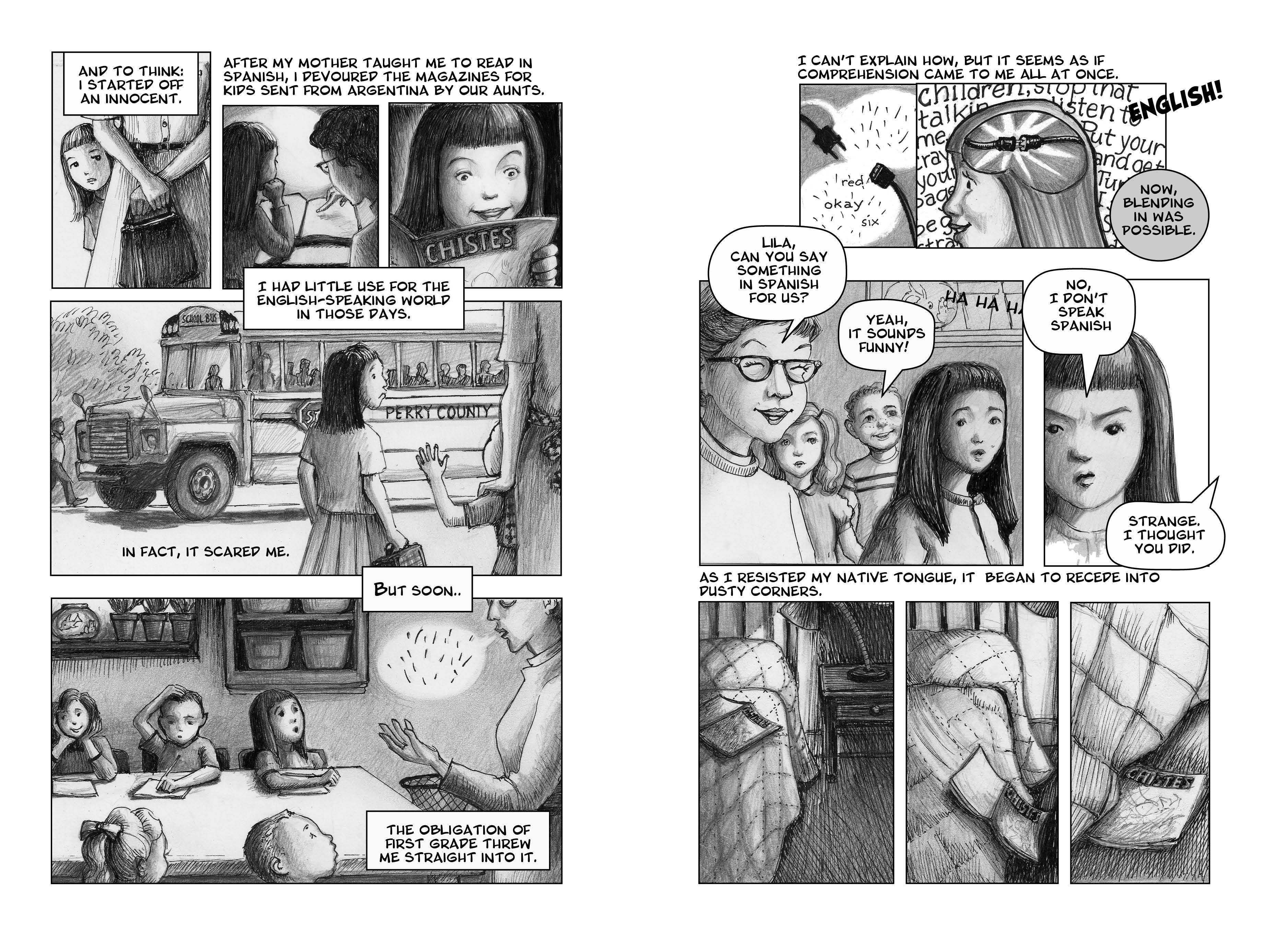
You may be left wondering: where’s the Latino component to my memoir? It’s there, in my initial struggle with learning English—a struggle that soon turned into a childish rejection of Spanish. It’s there, in my family’s generational divide on American culture and how fervently to embrace it.

School bus page

It’s there, in the troublesome fact that my family was spared overt bigotry because in Alabama in the middle of the 20th century, Latin@s were an almost invisible minority that posed little threat. I see this now, through the lens of history. If our immigration journey had taken us to a different region of the U.S., one where Latin@s were openly reviled and denied equality, I would’ve experienced things from a starkly different perspective. I can’t begin to guess what my life’s questions would’ve been then. For that, I turn to the stories of others.

Lila Quintero Weaver is the author-illustrator of Darkroom: A Memoir in Black and White. She’s working on a second book, a middle-grade novel. If Lila’s name looks vaguely familiar, it may be because she’s a regular co-blogger on Latin@s in Kid Lit. You can find her on Twitter, Facebook, and at her official author site.

Guest Post: The Universality of Being an Outsider


by Jacqueline Jules

1956Family

Jacqueline Jules’ family in 1956

In my small Virginia town, like many places in the 1960s south, the first question people asked upon meeting was “What church do you go to?”

As a child, I remember fielding that question from parents of new friends and hearing my mother answer it in grocery stores.

“We’re Jewish,” I would explain politely. “We go to a synagogue.”

The response was generally a startled one. People would stare like I was a new species at the zoo.

“Oh my! I don’t think I’ve ever met a Jewish person before!”

From there, I’d often have to answer a series of questions about my “Jewish Church.”

I had been taught from a young age that I represented my religion. If I was impolite, all Jews would be considered rude. I had to be on my best behavior at all times so that others would not have a reason to dislike Jewish people. On many occasions, I also had to explain why Jews didn’t believe in Jesus and why I wasn’t terrified of going to hell. And the questions were just as likely to come from adults as other children.

Growing up, Christmas and Easter were never seasons of joy for me. They were times when the questions intensified. Why didn’t I celebrate Christmas? Didn’t the Jews kill Jesus? I learned early on that the Christmas spirit did not extend to Jewish children.

To add to my stranger status, my parents were not Southern born. Mom was a Northerner from Rochester, New York. Dad was from Switzerland and spoke with a thick German accent. He came to the US after World War II and was not a citizen when I was born. His name was Otto. In small-town Southern culture, having foreign roots set my family apart even in our tiny Jewish community.

So feelings of being “different” are quite familiar to me. I know what it is like to be the child of an immigrant. To be embarrassed in public when people ask your father to repeat something three times because they can’t understand what he is saying. To hear a parent talk of a homeland missed deeply. To long for relatives abroad who were only a part of our lives through letters and very occasional visits. To feel alone, apart from others who are comfortable in their skin and their surroundings.

Years later, when I took a position as a librarian in an elementary school with a large immigrant population, I identified with my students immediately. I had watched my own father struggle with the English language, which he learned in adulthood, at age 32. To his credit, he became quite fluent, but he still made some mistakes with grammar and pronunciation. Misunderstandings occurred in family conversations when my father did not understand a nuance or a cultural reference. Or we didn’t understand the perspective he was coming from. He didn’t approve of everything American. I recall what fun he made of sliced white bread which he compared to eating a sponge, and how excited he was when we found bakeries that sold French bread. And I remember how much my father hated turkey. He thought it tasted dry and he insisted my mother serve lamb or duck on Thanksgiving. I also remember that he didn’t care for pumpkin pie. In his mind, pies should be filled with fruit, gooseberries in particular.

The first Thanksgiving I taught at Timber Lane Elementary, a Title I school in Fairfax County, Virginia, I noticed right away that my immigrant students were not interested in my Thanksgiving lessons. Up until then, my story times had been received warmly. Seeing that my English-language learners enjoyed repetitive songs and choruses, I had quickly adopted them into my curriculum. My students had enjoyed songs about animals, the seasons, the five senses, etc. Why did they hate my turkey songs?

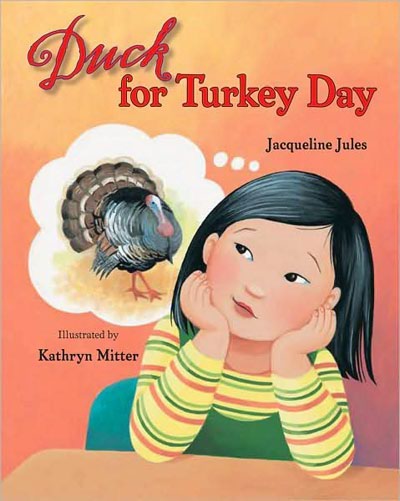
DuckforTurkeyDaybyJJulesA student gently explained: “We don’t have that kind of Thanksgiving dinner in my house.” Suddenly, I stopped being a teacher and returned to my own childhood, where I had been informed that turkey and pumpkin pie were the correct meal choices. These memories led to my first book with Albert Whitman Publishers, Duck for Turkey Day, about young Tuyet, who is worried that her Vietnamese-American family is breaking the rules for Thanksgiving. While the emotions of this book belong to my own childhood, they were deeply shared by the kids I taught. Making my characters Vietnamese-American gave me the opportunity to show how much I identified with my students, along with the universality of the problem. It also made my story current. My experiences as a Jewish child of a German-Swiss in the 1960s south are historical now. While I have shared my Jewish heritage in many of my books, I don’t want everything I write to be limited to my own particular, and not necessarily, universal experiences. Growing up as an outsider myself has naturally made me empathetic to other minorities in America. And it has made me downright indignant that so few children’s books reflect the lives of children who are not white, Christian, and middle-class.

All too often, books with non-majority characters portray their lives as a situation requiring great explanation. As a young Jewish mother in the 1980s, I was annoyed that most Jewish holiday books described traditions in such detail, they read like nonfiction. Not every Christmas story describes the Nativity. Most Easter stories are about bunnies, not the Resurrection. Why can’t Jewish children have light-hearted picture books that celebrate the joy of their culture, too?

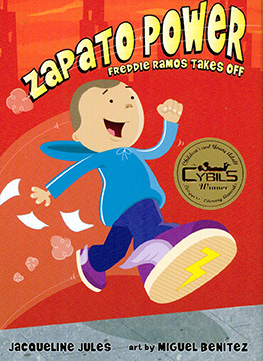
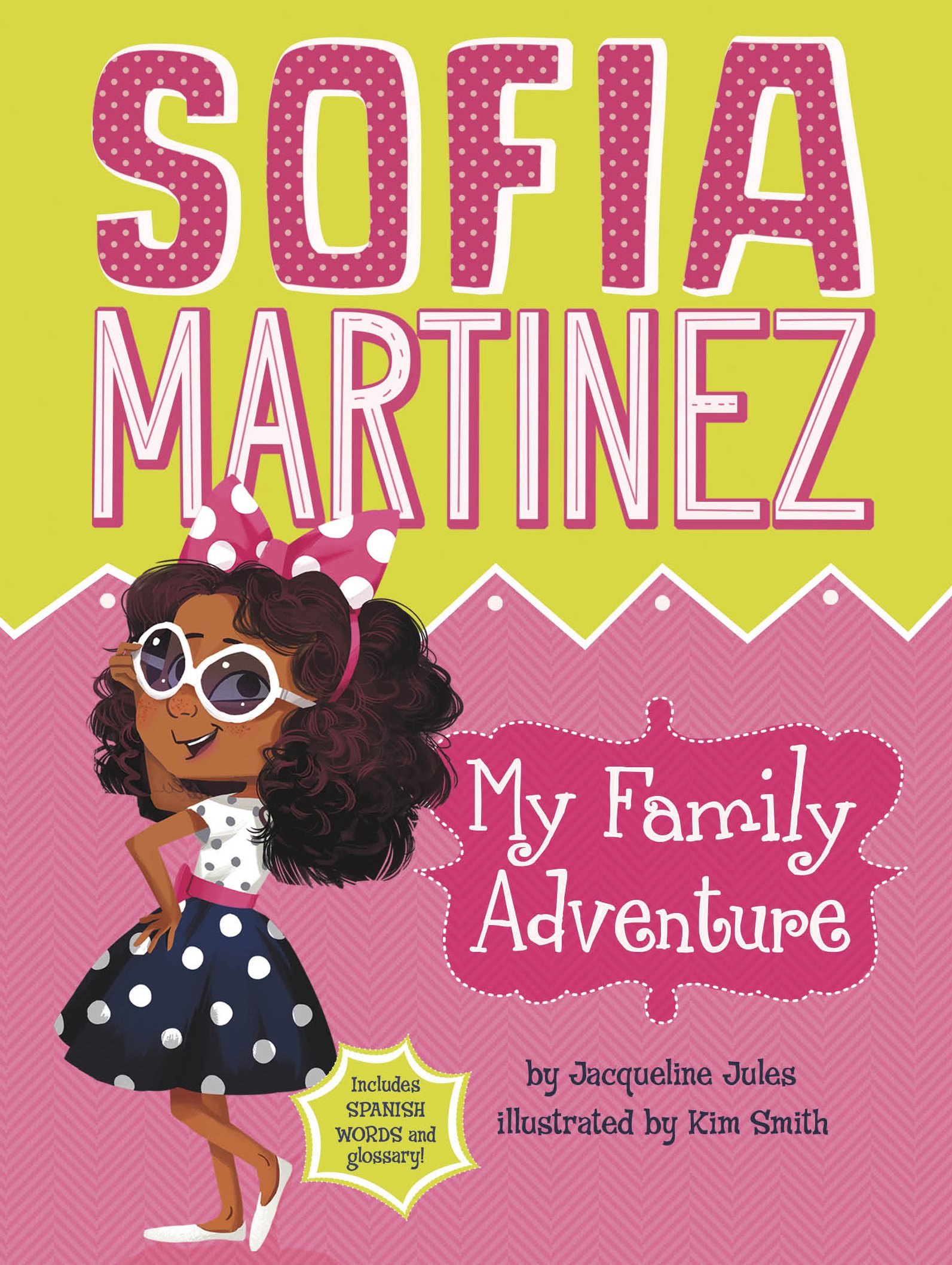
ZapatowithStickerAnd why can’t children of color have books, particularly easy readers, where they see themselves enjoying life? Why is minority status always the problem in a story rather than just one facet of a particular person’s existence? In my Zapato Power books, a chapter book series about a boy with super-powered purple sneakers, the main character, Freddie Ramos, is Latino. He lives an urban apartment life in a close-knit immigrant community, just like most of the students I taught. But that is not the plot of his stories. Freddie is mostly concerned with how he will solve mysteries and be a hero with his super speed. And in my new series, Sofia Martinez, my main character is a spirited Latina who wants more attention from her large, loving family. I taught many Sofias. Her family eats tamales at Christmas. She uses Spanish phrases in her conversations. And she deserves to learn to read with books that show her family life as fun and normal, not a particular ethnic challenge to be overcome.SofiaMartinezFamilyAdventure

Many authors say they write the books they would have liked to see as a child. I do that. But I also write stories I wish I had been able to give my students when I taught—books that show it is okay to be who you are.


JJulesWebPic

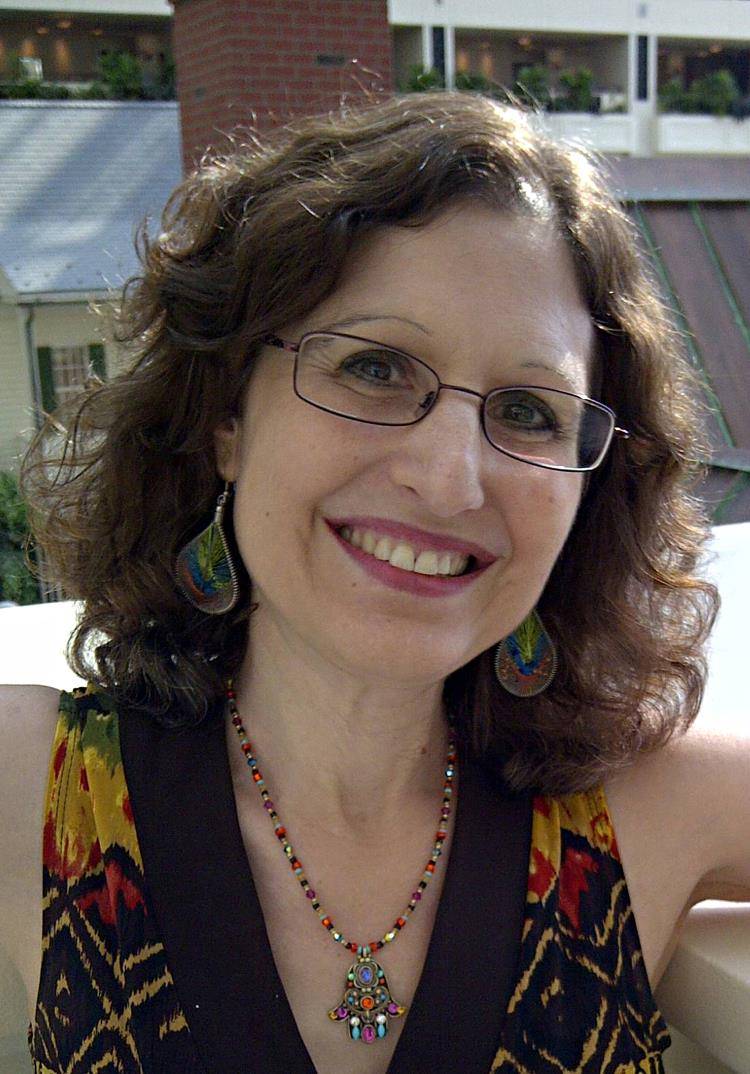
Jacqueline Jules is the award-winning author of 30 books, including No English, Duck for Turkey Day, Zapato Power, Never Say a Mean Word Again, and the recently released Sofia Martinez series. After  many years as a librarian and teacher, she now works full-time as an author and poet at her home in Northern Virginia. Find her on Facebook and at her official author site.