
Reviewed by Romy Natalia Goldberg
Description of the book:
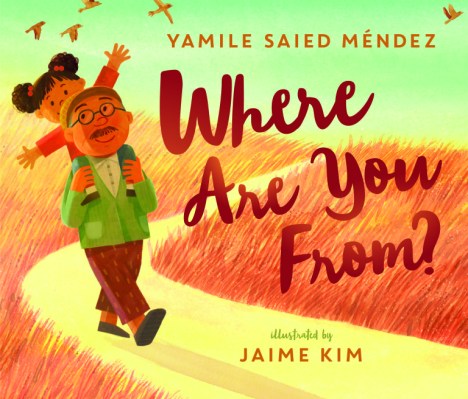
“Where are you from? they ask.” A young girl’s confidence is shaken after increasingly persistent questioning from her peers, teachers and friends’ parents. She turns to Abuelo, her loving grandfather, for answers. “Where am I from?” she asks, knowing he has faced these questions before. Abuelo answers by describing with lyrical beauty her parents’ places of origin. As he speaks, the landscapes around them morph, from the Pampas and Andean peaks of Argentina to the coastline and rainforests of Puerto Rico. But this immersive journey is not powerful enough to quell the doubts instilled by her peers. Echoing their questioning, she insists, “where am I really from?” At this, Abuelo points to his heart. She comes from her family’s love. As he continues, they are joined by a large, joyful family. The sun begins to set as her doubts settle. Surrounded by their unquestioning love, bathed in the light of the afterglow, she is newly confident.
 Released simultaneously in English and Spanish, WHERE ARE YOU FROM? joins a slate of high quality Latinx books dealing with identity and belonging. Additionally, it is one of very few picture books depicting Latinx characters from the Southern Cone.
My two cents:
“Where are you from?” The question implies a progression – where did you begin and where are you going? Though often asked out of sheer curiosity, many times it is a loaded question, one whose answer can be used to justify exclusion and discrimination. The girl’s declaration that she is “from here, from today, same as everyone else” is a request to be treated as an equal, as someone who belongs. Once this request is ignored, she retreats to the family that created her, that asks her to justify nothing. The luminous landscapes with skies full of birds and stars suggest the limitless possibilities Abuelo wants for his granddaughter. Though the soaring landscapes could have felt overwhelming, they exude warmth and reassurance. As educators and parents, is this not how we want our kids to feel?
WHERE ARE YOU FROM? could easily have opened with a scene of overt bullying. Instead, the author and illustrator create a more nuanced scenario. The girl is being questioned by a diverse group of kids and adults, all with facial expressions that range from neutral to kind.
By eliminating a stereotypical “villain,” WHERE ARE YOU FROM offers a more realistic depiction of microaggressions endured by children of color (and children with other noticeable differences, such as accented speech).
One of the things I appreciate the most about this book is that we never circle back to the people who questioned the main character at the start. This is an excellent example of what happens when an “own voices” author is allowed to write from their experience. As adult readers, we know the girl will be asked “where are you from?” countless times and ways throughout her life due to the color of her skin. We know that, for some people, her answers will never be right or good enough. By allowing the girl to find an emotional resolution entirely within the context of her support system, WHERE ARE YOU FROM? sends young readers a powerful message: you do not have to justify your existence to others.
For children of mixed heritage, the question “where are you from?” has the power to generate an additional level of self-doubt. A few spreads into the girl’s journey with Abuelo, readers are lulled into the sense that they know where she is from. When Abuelo takes us from Argentina to Puerto Rico we are challenged to open our minds. Like many children, she is not “from” a single place. Rather than simplify (or flatten, or erase) her heritage, WHERE ARE YOU FROM? invites readers to accept the main character’s complex heritage as something that is beautiful to behold.
Teaching Tips
WHERE ARE YOU FROM? can be used as a prompt for students to explore their heritage. This could be done exclusively as a writing exercise or could incorporate art in the form of illustrations or collage/printed images. Additionally, students could choose who they would like to go on their journey with – would they want to travel through space and time with a family member, as the girl in this book does? Or would they rather choose a historical figure as their guide?
WHERE ARE YOU FROM? naturally lends itself to a nuanced discussion of microaggressions. Students could be prompted to discuss whether they believe the main character’s peers are questioning her out of curiosity or malice. Does that change the effect their constant questioning has on the girl? Do they even have the right to ask this question? And what does it mean that no one was willing to accept the girl’s original answer? However, educators should take care to ensure class discussions do not put undue burden on students of color to share personal experiences of mistreatment.
WHERE ARE YOU FROM? can be a starting point for learning about two very different parts of the Americas. Lessons for younger students could focus on the eco-systems of both regions. Older students can tackle heavier subjects alluded to in the final spreads for each location: the history of colonialism and slavery in Puerto Rico and the human rights abuses of Argentina’s military dictatorship. Lessons on Puerto Rico should also touch on the territory’s relationship to the rest of the United States and Latin America. Like the protagonist, Puerto Rico has a multifaceted background.
Additionally, the vivid verbs featured in WHERE ARE YOU FROM? could be incorporated into a lesson on synonyms and/or creative writing.
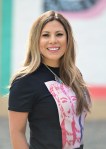 About the author: Yamile Saied Méndez is an Argentine-American who lives in Utah with her Puerto Rican husband and their five kids. An inaugural Walter Dean Myers Grant recipient, she’s also a graduate of Voices of Our Nations (VONA) and the Vermont College of Fine Arts MFA Writing for Children’s and Young Adult program. In this blog post from 2017, she shares with our readers what it was like to study for her MFA. Much has happened since then. Yamille is now a PB, MG, and YA author, and is also part of Las Musas, the first collective of women and nonbinary Latinx MG and YA authors. To learn more, visit Yamile’s website.
 About the reviewer: Romy Natalia Goldberg is a Paraguayan-American travel and kid lit author with a love for stories about culture and communication. Her guidebook to Paraguay, OTHER PLACES TRAVEL GUIDE TO PARAGUAY, was published in 2012 and 2017 and led to work with “Anthony Bourdain: Parts Unknown,” and The Guardian. She is an active SCBWI member and co-runs Kidlit Latinx, a Facebook support group for Latinx children’s book authors and illustrators.
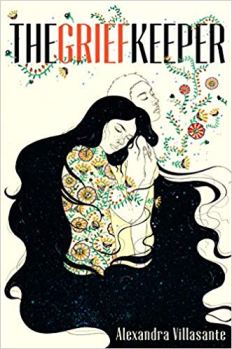
 About the author: Alexandra Villasante holds a BFA in Painting and an MA in Combined Media. She was born in New Jersey to immigrant parents and now lives in Pennsylvania. Learn more about Alexandra’s work and appearances on her
  About the reviewer: Cris Rhodes is a regular contributor to Latinxs in KId Lit. At Texas A&M, she recently completed a Ph.D. in English with an emphasis on Latinx children’s literature. Her research explores the intersections between childhood activism and Latinx identities. In the fall, she will begin an assistant professorship at Shippensburg University.
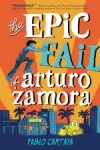 The Epic Fall of Arturo Zamora by Pablo Cartaya
 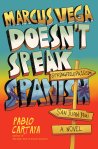 Marcus Vega Doesn’t Speak Spanish by Pablo Cartaya
 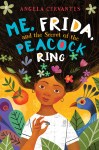 Me, Frida, and the Secret of the Peacock Ring by Angela Cervantes
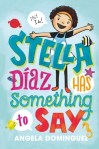 Stella Díaz Has Something to Say by Adriana Dominguez
 Lucky Luna by Diana López
 Love Sugar Magic: A Dash of Trouble by Anna Meriano
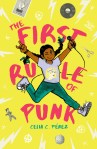 The First Rule of Punk by Celia C. Pérez
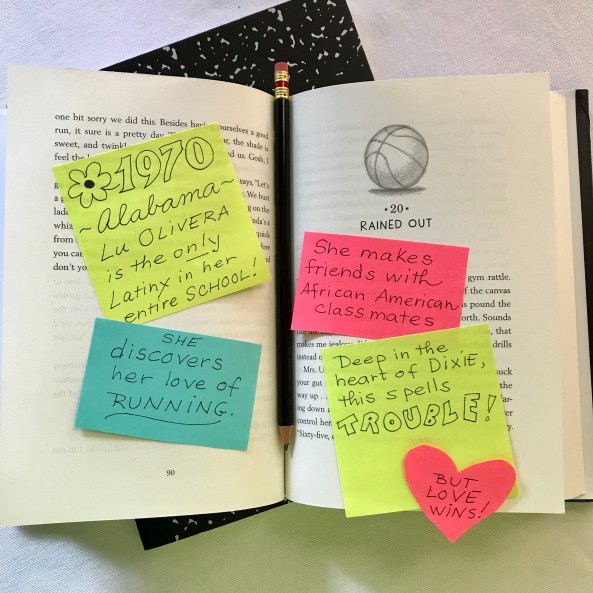
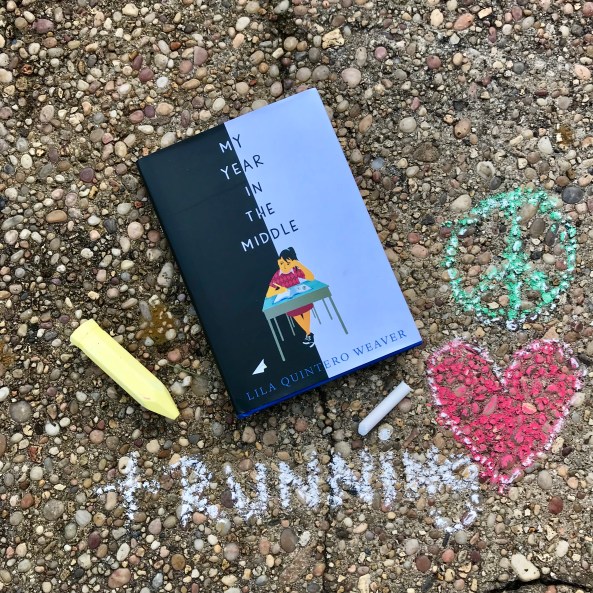
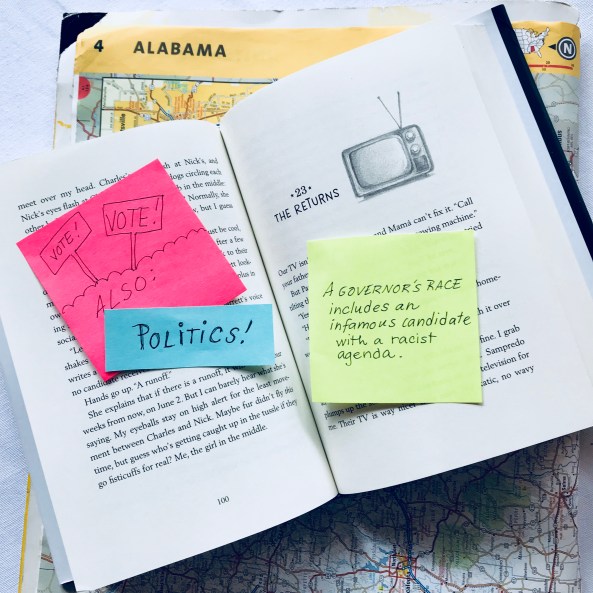
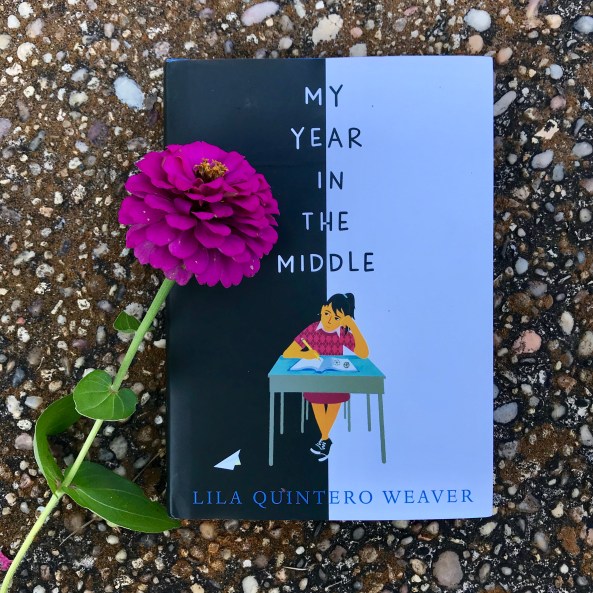
 My Year in the Middle by Lila Quintero Weaver
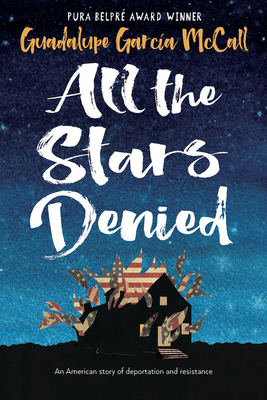 DESCRIPTION OF THE BOOK (from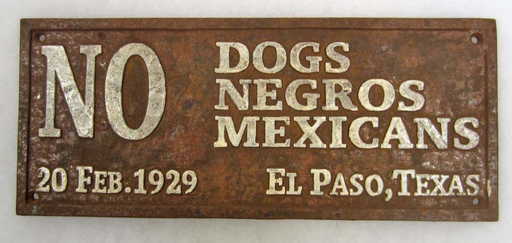

 ABOUT THE AUTHOR (from
  ABOUT THE REVIEWER: Katrina Ortega (M.L.I.S.) is the Young Adult Librarian at the Hamilton Grange Branch of the New York Public Library. Originally from El Paso, Texas, she has lived in New York City for six years. She is a strong advocate of continuing education (in all of its forms) and is very interested in learning new ways that public libraries can provide higher education to all. She is also very interested in working with non-traditional communities in the library, particularly incarcerated and homeless populations. While pursuing her own higher education, she received two Bachelors of Arts degrees (in English and in History), a Masters of Arts in English, and a Masters of Library and Information Sciences. Katrina loves reading most anything, but particularly loves literary fiction, YA novels, and any type of graphic novel or comic. She’s also an Anglophile when it comes to film and TV, and is a sucker for British period pieces. In her free time, if she’s not reading, Katrina loves to walk around New York, looking for good places to eat.
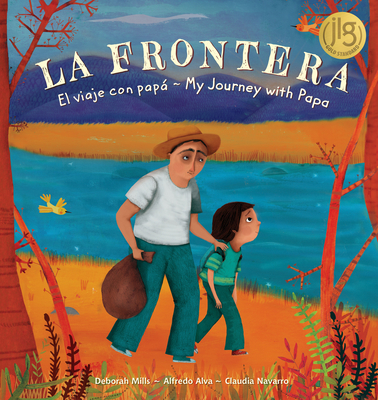 DESCRIPTION OF THE BOOK: Based on a true story! Join a young boy and his father on an arduous journey from Mexico to the United States in the 1980s to find a new life. They’ll need all the courage they can muster to safely cross the border — la frontera — and to make a home for themselves in a new land. Inspired by the childhood immigration experience of co-author Alfredo Alva, this story of perseverance is told in both Spanish and English to empower language-learning. Includes 4 pages of endnotes that unpack facts about Alfredo’s story and other stories like his and borders around the world to help parents and educators talk with children about immigration, resilience, empathy and belonging.
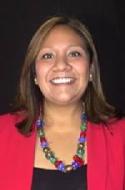 ABOUT THE REVIEWER: Sanjuana C. Rodriguez is an Assistant Professor of Literacy and Reading Education in the Elementary and Early Childhood Department at Kennesaw State University. Her research interests include the early literacy development of culturally and linguistically diverse students, early writing development, literacy development of students who are emergent bilinguals, and Latinx children’s literature. She has published in journals such as Journal of Language and Literacy Education, Language Arts, and Language Arts Journal of Michigan.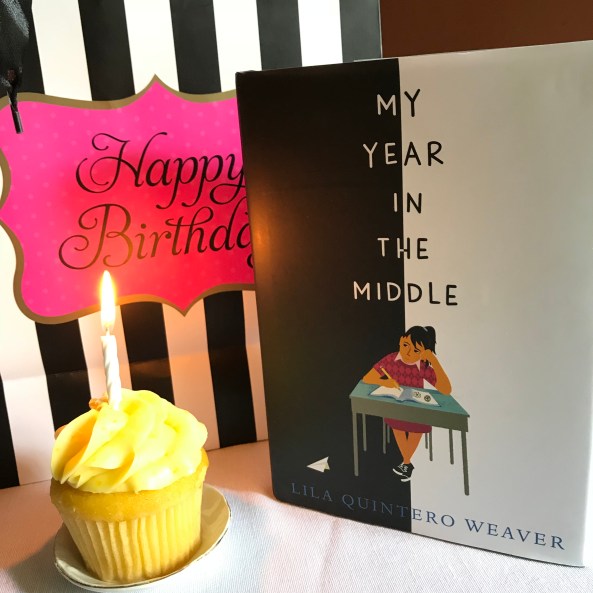


 Latinxs in Kid Lit