Book Review: Gaby, Lost and Found by Angela Cervantes

By Cindy L. Rodriguez
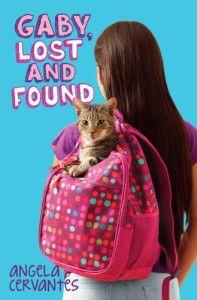
Gaby Lost and FoundDESCRIPTION FROM THE BOOK JACKET: When Gaby Ramirez Howard starts volunteering at the local animal shelter, she takes special pride in writing adoption advertisements. Her flyers help the dogs and cats there find their forever homes: places where they’ll be loved and cared for, no matter what.

Gaby is in need of a forever home herself. Her mother has recently been deported to Honduras and Gaby doesn’t know where to turn. Meanwhile, Gaby’s favorite shelter cat, Feather, needs a new place to live. Gaby would love to adopt her–but if Gaby doesn’t have a place that feels like home to her, how can she help Feather?

MY TWO CENTS: I’m a sucker for stray animals and have more than once scooped up a roaming dog and delivered him to a non-kill animal shelter. So, Angela Cervantes had me from Chapter 1, which places the protagonist Gaby up a tree trying to rescue a cat. From this point on, Cervantes presents Gaby’s story with a great mix of heart-wrenching moments and humor. Some parts of the book are light and soooo middle school–I know; I teach in one–while other parts deal with the more serious issue of deportation and the effects on children when a parent is gone.

Since her mother has been deported to Honduras, Gaby must live with her father, who is ill-equipped to raise a sixth-grade girl. Gaby would much rather live with her best friend Alma and her family. Better yet would be if her mom were able to come back home, but this trip is expensive and dangerous.

Cervantes parallels Gaby’s situation with the sixth-grade class community project at the Furry Friends Animal Shelter. Both the animals and Gaby have less than ideal living arrangements are in need of new permanent homes. During the community service project, Gaby has the special job of writing descriptions of the animals on fliers that will be displayed around town and on the shelter’s website.

Eventually, Gaby writes a flier for herself. In part it reads:

Gaby Ramirez Howard: …Three months ago, my mom was deported, and now I live with my father, who looks at me like I’m just another job he wants to quit. I’m seeking a home where I can invite my best friend over and have a warm breakfast a couple times a week. Waffles and scrambled eggs are my favorite!

GAH! My heart, Angela Cervantes!!

In between the chapters that caused me to clutch my heart and give my daughter random hugs, I literally laughed out loud. Scenes with the four friends–Gaby, Alma, Enrique, and Marcos–are hysterical. In one, Alma, who is trying to train a spirited shelter dog named Spike, tests the commands on the boys. “Back! Down! Sit and stay!” In another scene, three firefighters arrive at the shelter to adopt a dog for the firehouse. Alma says to the other girls, “Let’s go see what’s smoking,” and then the girls nickname each of the cute firefighters: Hottie, Smokey, and Sizzler. Very funny.

If you are a middle school teacher, librarian, or parent, you should have a copy of this book on your shelf. To make it easy for you, Angela Cervantes is giving away a signed copy of Gaby, Lost and Found, along with a poster and T-shirt. Click on the Rafflecopter link here to enter.

TEACHING TIPS: Gaby, Lost and Found could be used in a Language Arts or social studies classroom. In Language Arts, students could track the plot and make predictions along the way about how Gaby’s situation will be resolved. Students could also be creative and write “fliers” for any number of people or things: their siblings, pets, themselves. A social studies could easily use the novel in a unit about the history of immigration in the United States. Ideally, after reading non-fiction texts, students could read a novel-length book–either fiction or narrative nonfiction–that centers on immigration. In addition to Gaby, Lost and Found, teachers could offer books about people from other countries so that students could compare/contrast immigrant experiences.
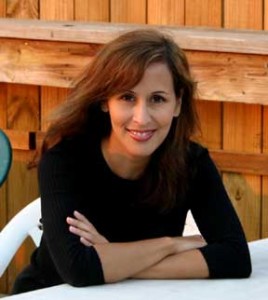
 

Angela Cervantes

AUTHORAngela Cervantes was born and raised in Kansas, with most of her childhood spent in Topeka in the Mexican-American community of Oakland. Angela has a degree in English and an MBA, and she is the co-founder of Las Poetas, a Chicana poetry group that has developed into the Latino Writers Collective. In 2005, her short story, “Pork Chop Sandwiches,” was published in Chicken Soup for the Latino Soul. In  2007, she won third place for Creative Nonfiction in the Missouri Review’s audio competition for her story “House of Women” and Kansas City Voices’ Best of Prose Award for her short story, “Ten Hail Marys.” In 2008, she was recognized as one of Kansas City’s Emerging Writers by the Kansas City Star Magazine.

Gaby, Lost and Found is her first novel.

FOR MORE INFORMATION ABOUT Gaby, Lost and Found visit your local library or bookstore. Also check out worldcat.org, indiebound.org, goodreads.com, amazon.com, barnesandnoble.com, and Scholastic.

Author Angela Cervantes On Publishing & Her Animal-Loving Latina Protagonist

By Cindy L. Rodriguez

Today, we are thrilled to have a Q&A with author Angela Cervantes, who talks about her debut novel, Gaby, Lost and Found (Scholastic), her advice for pre-published writers, and a little about how she crafted a wonderful middle grade novel that’s both funny and heartbreaking. Angela is also super generous and is offering a signed book, a poster, and a T-shirt to one lucky winner. Click on the Rafflecopter link here or at the end of the post to enter!

Gaby Lost and FoundCR: Since this is your debut novel, can you tell us about your publishing journey. Were there any things you did in particular that, in hindsight, you think were particularly helpful as you pursued an agent and book deal? What advice would you give to pre-published writers?

AC: My middle grade novel, Gaby, Lost and Found has been out almost 10 months now, and I’m still learning things about myself and the publishing journey. In the beginning, when I was a simple wanna-be-Kid Lit author with a manuscript, the idea of facing the publishing industry was scary.If you had met me then, I would have told you that I’d rather pick up a hitchhiker with face tattoos than have to face the world of slush piles and soul-less rejection letters.

Eventually, I realized that if I loved my book enough, I had to be willing to take on rejection. After all, the worst things they can do to you is ignore you completely or reject your work. Tough, but big deal. Every writer in the history of the written world has received a rejection or been passed up at some point, right? If they rejected my work, I was in good company.

I could go on and on with advice for pre-published writers. Never pick up hitchhikers with face tattoos! Really, I’ve learned so much. First, I would start with the very basic: If you’re going to go the traditional publishing route, like I did, then you must finish that manuscript. You have to show the agent something fast when they ask for a partial or full manuscript. My second advice is to take that completed manuscript to a writing critique group. Feedback is crucial. I belong to a critique group called the Firehouse Five (although we are six now) and we meet monthly to provide critique to each other’s work. It’s priceless. My final advice, take your writing-group-critiqued and completed manuscript to a local writers’ conference and sign up for a pitch or first pages sessions with an agent. I met my agent through a writer’s conference. She liked my pitch, but made it very clear there was plenty of work to be done on my manuscript before she’d offer representation. I did the work and I was signed. With her guidance, I made more revisions and it was sent off for submission. Soon, the first rejection arrived. It didn’t kill me. A week or so later, I received an offer for my first novel. Yay!

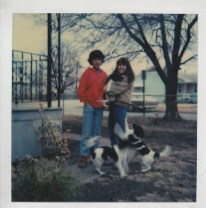
Angela C and brother

From her website: Angela, age 10, with her brother Enrique and their dogs, which were the inspiration for Spike in the novel.

CR: I love how you mixed Gaby’s story with the animals’ stories, how they were both in new situations and looking for new homes. How did you get the idea to address the subject of immigration for a MG audience, using homeless animals as a link to Gaby’s situation?

Thanks, I’m glad you enjoyed it. I really didn’t start with the idea to address the subject of immigration. I’m character-driven in my writing so I started with just Gaby, a funny, smart, and brave girl who is also a serious animal lover like her mom. I think if I had started out subject-driven with the intention to write a book on the issue of immigration, it would have been a much different novel. It would have come across as more lecturing and I don’t like to lecture or be on the receiving end of a lecture. No thank you. And kids don’t want to be lectured to either. At school visits, kids always ask me about deportation, but more in the context of why or how this happened to Gaby. They always tell me that they want Gaby and her mom to be together. They’re invested in Gaby’s happiness. It’s precious.

CR: Even though Gaby is dealing with the serious issue of her mother being away, she is also a “typical” MG girl, laughing and doing silly things with her male and female friends. Was this a conscious decision on your part, to show a range of emotions and not have it be an “issue” book or overly depressing?

AC: It’s funny that you ask that because my original drafts were even more depressing! I pulled a lot out during the revision process because the story was going in all sorts of directions. What got me back on track was again focusing on Gaby and who she was and not what she was going through. Gaby is an eleven year old girl. She loves animals. She loves glitter. She can climb trees and beat the boys at a water balloon fight. Would Gaby be defeated by bullying at school, the loss of her mom, the neglect of her father, and poverty? Or would this young girl rise up, even if she responds with some missteps, and show us what she’s made of? For me that was the only conscious decision on my part in writing this novel. I had to be true to Gaby and not define her by what she was going through, but show where she was going.

CR: Are you an animal lover? Did you have to do any particular research about animal shelters or spend time at one to capture what happens there?

AC: Besides my many years of experience as an animal lover and pet owner, I did visit several local animal shelters for information and inspiration. At the animal shelters, I asked tons of questions, held a lot of cats, wrote a lot of notes and pet a lot of dogs for this book. Why can’t all research be that much fun?

CR: What are you working on now? Can you share what’s next for you?

AC: Sure! I’ve completed my second middle-grade novel and I am now in the throes of revision. Fun stuff! Wish me luck.

Angela Cervantes

Angela Cervantes was born and raised in Kansas, with most of her childhood spent in Topeka in the Mexican-American community of Oakland. Angela has a degree in English and an MBA, and she is the co-founder of Las Poetas, a Chicana poetry group that has developed into the Latino Writers Collective. In 2005, her short story, “Pork Chop Sandwiches,” was published in Chicken Soup for the Latino Soul. In  2007, she won third place for Creative Nonfiction in the Missouri Review’s audio competition for her story “House of Women” and Kansas City Voices’ Best of Prose Award for her short story, “Ten Hail Marys.” In 2008, she was recognized as one of Kansas City’s Emerging Writers by the Kansas City Star Magazine.

Gaby, Lost and Found is her first novel.

Click HERE to enter the giveaway. One winner will receive a signed copy of Gaby, Lost and Found, a poster, and a T-shirt. You can enter for free once each day. A winner will be chosen on Saturday, 5/24/14. Good luck!!

How an Adult White Guy Came to Write About a Latino Teen

By William Hazelgrove

17239293The first question I get is usually: “How could you write in the voice of a thirteen year old Latino boy?” I am about as far as you can get culturally from a young adult Latino just barely hanging on with his mother. But of course, if you are a writer, you are so many people that biographers will never get it straight. It is the same way I wrote in the voice of an old African American man in Tobacco Sticks and in Mica Highways.

Voice is everything. Once you have the voice you have the novel. When I started The Pitcher, I wrote it in third person but quickly realized it would not work that way. It was boring and distant. So I started over and I knew it had to be first person, but who would tell the story? The old pitcher? The mother? No. The boy, Ricky would tell the story. And so I started to play around with his voice. Then I wrote one paragraph:

I never knew I had an arm until this guy calls out, “Hey, you want to try and get a ball in the hole, sonny?” I am only nine, but Mom says, “Come on, let’s play.” This carnival guy with no teeth and a fuming cigarette hands me five blue rubber balls and says I throw three in the hole, then we win a prize. He’s grinning, because he’s taken Mom’s five bucks and figures a sucker is born every minute. This really gets me , because we didn’t have any money after Fernando took off, and he only comes back to beat up Mom and steal our money. So I really wanted to get Mom back something, you know, for her five bucks.

And I had Ricky then. I had the novel. And where that voice came from is anyone’s guess. Maybe it is that kid who messed around in Baltimore City where I grew up. Maybe it was some of the Mexican guys I worked with in security. And the hard times Ricky and his mother go through are my own hard times. And the baseball is my son’s baseball and the coaches and parents are from nine years of being an assistant coach with my son. The immigration issues are from our time.

When I was thinking about writing The Pitcher, I was reading what was going on in Arizona at the time with immigration and the whole stop and ask people for their papers to deport them back to Mexico. When I wrote the mother character Maria I wanted her to have the same outrage that I felt reading about this practice of stopping people and demanding to see their papers. I wanted her to draw the conclusions that this was fundamentally un-American and I wanted her son Ricky to pick up on that especially since he was facing off with a Tea Party mom and her son.

I read a lot of accounts about Dream Kids in this country and how they had made their lives and then were in danger of being deported. That was really how I got the idea of making Ricky a Dream Kid. His mother did come over and make a life and now she was in danger of being deported.

Culturally, I knew Ricky because I know how it feels to be an outsider and to have all the odds stacked against you. Ricky’s dream of becoming an MLB pitcher is my own of becoming a novelist against immense odds.

Then again, maybe it was just Ricky flying around out there waiting to be born. But when The Latina Book Club made it their Monthly Selection or LatinoLA did a story on the immigration issues in the book or I stand up on a stage at the Latino Book Festival in Chicago and read my book that has to be translated to Spanish so the audience can understand what I am saying is…even I wonder how a I came to write a Latino novel.

 I guess I just did.


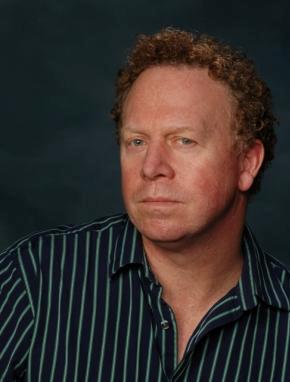
DSC_0020William Hazelgrove is the author of five novels, Ripples, Tobacco Sticks, which hit the National Bestseller List, Mica Highways, Rocket Man and The Pitcher. He was the Ernest Hemingway Writer in Residence where he wrote in the attic of Ernest Hemingway’s birthplace. He has written articles and reviews for USA Today and other publications. He has been the subject of interviews in NPR’s All Things Considered along with features in The New York Times, LA Times, Chicago Tribune, and the Chicago Sun Times, among others. His most recent novel, The Pitcher is a Junior Library Guild Selection. He runs a political cultural blog, The View From Hemingway’s Attic.


What We Talk About When We Talk About Diversity in YA

Or, what does that even mean?


By Zoraida Córdova

Brace yourselves. Here’s another blog post on the lack of diversity in YA. When we bring up these topics the common words I see are FEAR, UNCOMFORTABLE, GUILT.  If a white person brings up the subject then, “who are they to talk about it?” If a POC does it, we’ll be seen as a bunch of angry people. So, Catch 22. I get it. Writing these posts is HARD, but they should be written. Recently one of my favorite authors ever, Jenny Han, tweeted about diversity in YA. The thing is, we need to feel uncomfortable, and like Jenny said, “that’s the risk.”

Screenshot 2014-03-26 16.39.47

ecsaHere’s what you need to know about me. I was born in Ecuador. I moved to Queens, NY when I was 6. Being in America for 20 years makes me American. My public school experience is American. Yet, when people look at me and hear me speak, they are perplexed. Why? You got me.  The “Your English is so good!” “What are you?” “My friend is from Ecuador, do you know LUIS PABLO ESTEBAN SANTIAGO?” Spoiler alert: I don’t.

This difference wasn’t apparent to me from the beginning. Between grades 1-4, I was in bilingual classes. (My Little Mermaid Spanish didn’t get me to the top of the class right away.) All of my classmates had either emigrated from a Latin American country or had Latin American parents. Salvadorian, Peruvian, Puerto Rican, you name it. Guess what, we spoke English. We listened to the Spice Girls. We cut up our bangs like Lindsay Lohan in The Parent Trap. We watched TRL and taped the music videos. We learned the awesome moves to Christina Aguilera’s Genie in a Bottle (She’s half Ecuadorian, BTW). At home, sometimes I’d eat Chef Boyardi ravioli, sometimes I’d have rice and steak and beans.

So when I got to 5th grade, I was placed into the “regular” kids class. English only. Suddenly my friends also included Guyanese, Jamaican, African-American. Guess what, we still listened to shitty New photo 4 (1)Millennium pop and idolized Harriet the Spy.
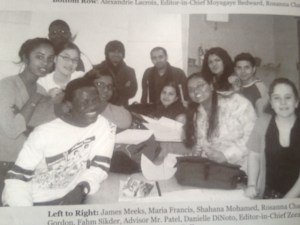
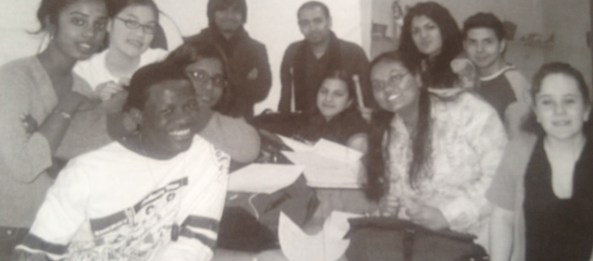
Junior high school and high school were also the same thing. Look at all the shades of brownness! Here are some pictures from my high school yearbook. Spoiler alert: I am still a nerd.

My experience growing up in neighborhoods that are already diverse gives me a different perspective. Could I have used more diverse characters in my current books? Yes. My trilogy centers around a white merman from Brooklyn. His love interest is mixed. His friends are mixed. Merpeople in my world come in all shades. But the answer is still yes. You can always add diverse characters into your books.

photo 3 (1)When people say they’re “afraid” they’re not going to give their “Other” character justice by writing from an experience other than an Anglo-American experience, I call bull. It is scary writing about an experience other than yours. However, unless your character has just moved to Kentucky from a remote town in Panama, then why are you afraid to write the experience of an otherwise straightforward character? Your character can still be named Danilo Cordova and the only research you have to do is “What does a teenage boy like?”

If your character is Nuyorican, then you’d have to do more research. Stereotypes need not apply. Because, here’s a little known secret, not all Latin experiences are the same. No matter where we were born, when we immigrated, where we were raised, we can’t be lumped into the same experience. This is not to say that every YA author should write a novel about how hard it is to grow up being brown, because I did it and my adolescence was pretty “average.”

If you’re writing a fantasy/sci-fi novel and there is not a single non-white person to be found, then my only question is “how come?” Here you have a chance to create a whole new world, where our carefully constructed American ideal of white-only beauty need not apply. When I read YA fantasy novels and the only time race is mentioned is when a new character comes in and has “chocolate” or “earth colored” skin, I just cringe. This mean everyone else I’ve been reading about is white. Not only is that lazy writing, it’s a limited way of thinking about a world that is supposed to be fantastical.

Screenshot 2014-03-26 17.01.57

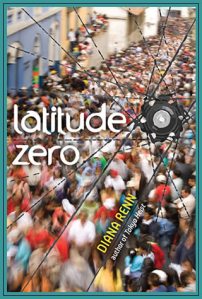
So how do we fix this? Well, lets talk about it. Let’s be friends. Reach out to someone who has a different experience as you. READ. I  to this date have yet to read a YA about a teenage Ecuadorian girl. Not even a slice of life story about a girl who falls in love and there’s a nice cover of them at the beach, or lying down on a lawn. I am, however, excited about Diana Renn’s upcoming YA thriller Latitude ZeroThe book takes place in Boston and in Ecuador. Diana is not Ecuadorian, but she wrote an exciting novel with diverse characters. She reached out and did her research. latitudecover

Here we go back to this FEAR concept. If you throw in a character named Chiquita Bonita in the middle of the scene, and she has hoop earrings and says “Ay, mami,” then you should be afraid because you’re propagating a stereotype. If you describe your Latina girl as “exotic,” “curvaceous,” “spicy,” or “saucy” then you are propagating a stereotype, or making gumbo IDK. If you’re like Britney Spears and equate a Latin male with “the bad boy type,” then you should be afraid because you’re propagating a stereotype. If you as an author can go on Google and research “how to kill someone and get away with it” because “your protagonist needs to know” then you can also try Googling about other American communities that are not your own.

There is a difference between being afraid to write about a culture that is not your own, and consciously creating a two dimensional stereotypical character.

Romeo and Juliet0001

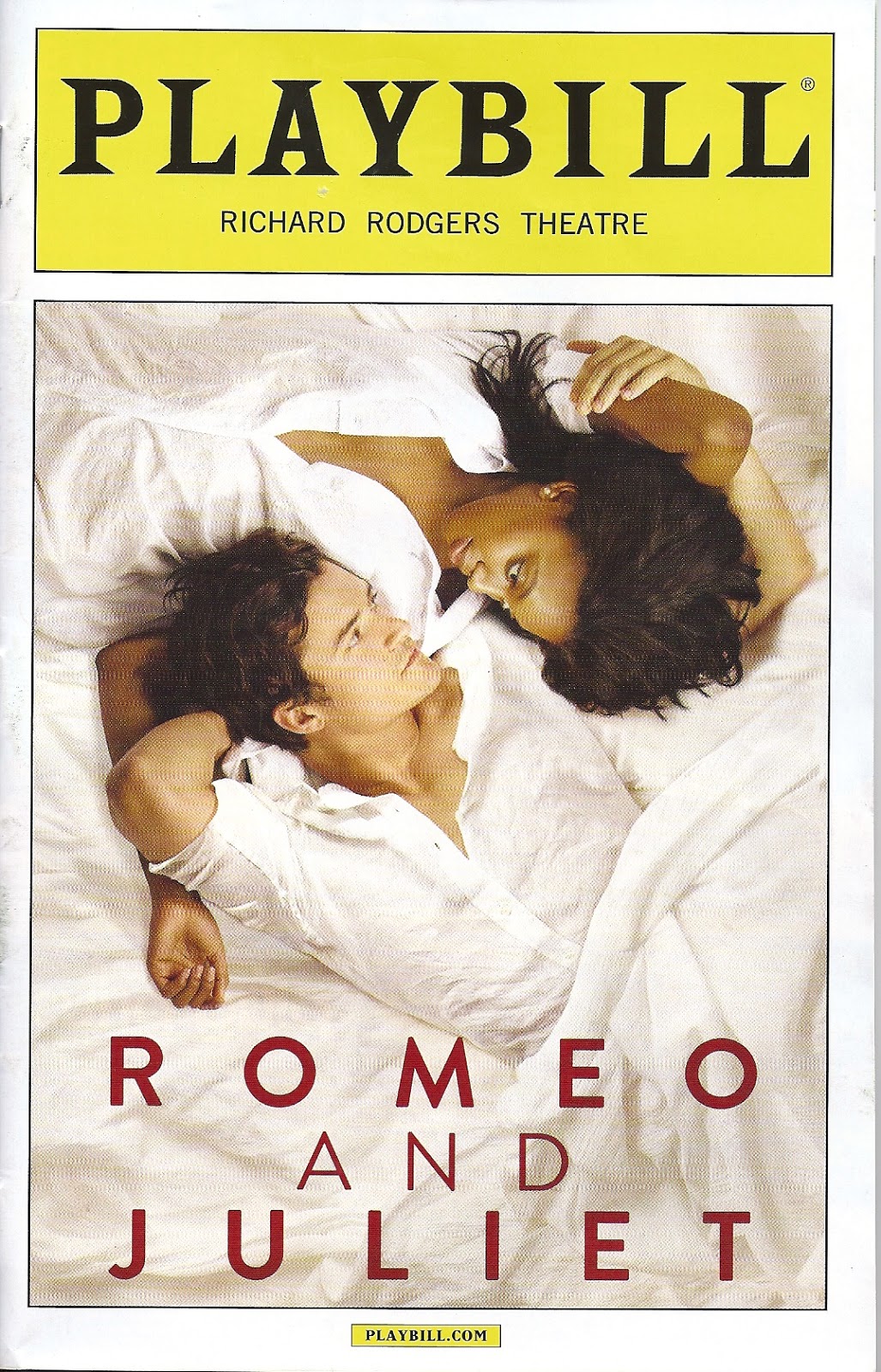
One of my favorite retellings of Romeo & Juliet is the most recent one on Broadway, partially because Orlando Bloom is shirtless but also because Juliet is black. They aren’t divided because of their skin color. This isn’t West Side Story. It’s not that one is brown and from the wrong side of the tracks, and the other one is nice and white, so they can’t be together. This is a story of feuding families that have been feuding so long they can’t even remember why or how it started. It’s that simple.

If you’re worried you’re still propagating a stereotype, then reach out. You’ll make a friend. You’ll learn something new. I am extremely lucky to have had diverse friends. I know that’s not the case for everyone and I know that if you’re not in a big city, chances are the POC in you neighborhood are marginalized. I’m not in Arizona where they’re trying to wipe out Mexican studies. I’m not in a tiny town in Ohio where there is one black kid in the class. I’m in NYC, which isn’t perfect and has a history of putting away their low income minorities to make room for gentrification. But my eyes are extremely open (and I got new glasses today) as to the future we need to create for Young Adult literature. It’s a team effort.

Maybe if we keep making it a point, when we talk about diverse characters in the coming years, it will be more than just a trend; it’ll be the new norm.


Edited: 3/31/14

*** Representation of Latin@s in media has been a personal focus for me.  This is not to say that “diversity” to me means only adding Latin@s to literature. The conversation extends to all marginalized people. Like I said, lets talk about it.

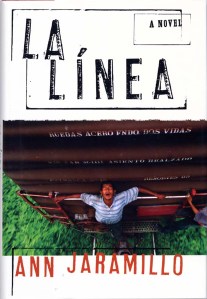
Book Review: La Línea by Ann Jaramillo

La Linea imageBy Lila Quintero Weaver

DESCRIPTION FROM THE BOOK JACKET: When fifteen-year-old Miguel leaves his rancho deep in Mexico to migrate to California across la línea, the border, his life is about to begin. Or so he thinks.

MY TWO CENTS“It’s been six years, eleven months and twelve days since I left to go north across la línea. It’s time for you to come.” So reads the note that Miguel receives from his father on his fifteenth birthday. During the long separation (his mother has also emigrated), Miguel, his grandmother, and sister, Elena, 13, eke out a meager existence in drought-stricken San Jacinto, Mexico. Surely life holds more than this! In the note, Papá instructs Miguel to pay a visit to Don Clemente, the wealthy patrón of the area. Years back, Papá rescued Don Clemente from a house fire. Now the old man repays that debt by funding Miguel’s flight to El Norte.

The arduous journey across la línea involves several modes of travel: by bus, riding the roof of a freight train, and crossing the desert on foot. Miguel encounters a wide array of obstacles en route, including the unwelcome surprise that Elena is along for the journey, too. Despite a series of setbacks, the siblings and a helpful new acquaintance named Javier press on toward their dream. At one point, bandits decimate their resources. At another, Mexican officials send them packing south— all the way to the Guatemalan border, in fact. Next, the trio sneaks a ride north by clambering on the roof of a freight train. The risks involved can’t be overstated. Nicknamed mata gente (people killer), such trains are responsible for dismemberments and deaths, not to mention exposure to cold, heat, and roving bands of ruthless gangs. I won’t even begin to list the perils they encounter in the next leg of the journey, the desert.

I respect the authoritative voice behind this novel. Ann Jaramillo is an ESL instructor with many years’ exposure to the true, and often harrowing, stories of border crossings by Mexicans and Central Americans. Her depiction of the mechanics involved is well informed. She describes life before and during the flight to the United States effectively, and highlights the poverty and bleak opportunities on the Mexican side with convincing detail, within age-appropriate limits.

Readers will encounter frequent terms and phrases in Spanish, not always translated, but whose meanings are usually discernible through context.

TEACHING TIPSTeaching Books offers a detailed curriculum guide for La Línea.

Miguel and Elena’s immigrant journey reflects recent and ongoing sociopolitical conditions. More importantly, they add faces and human emotions to related current events. Students can use this novel as a jumping-off point for the investigation of true immigration stories. They can achieve better understanding of what motivates people to emigrate/immigrate by researching their own family histories, or by comparing the characters’ experiences with that of other Latino and non-Latino settlers of the Americas.

This is a good text for enhancing Spanish vocabulary. It can also be used to increase awareness of rural Mexican customs.

LEXILE: 650

AUTHOR: Ann Jaramillo lives in Salinas, California. La Línea is her first novel. Ms. Jaramillo’s intimate knowledge of the Mexican-American immigrant journey comes through her work as an instructor of English as a Second Language, and her marriage of many years to Luis Jaramillo, a lawyer of Mexican-American heritage who has served migrant farmworkers for decades. In the author’s note, she explains that the inspiration for writing La Línea came from accounts of perilous crossings that her middle-grade students shared with her.

For more information about La Línea visit your local library or bookstore. Also check out WorldCat.orgIndiebound.orgGoodreadsAmazon and Barnes and Noble.

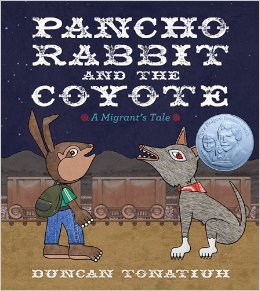
Book Review: Pancho Rabbit and the Coyote: A Migrant’s Tale by Duncan Tonatiuh

Pancho Rabbit coverBy Lila Quintero Weaver

DESCRIPTION FROM THE BOOK JACKET: A young rabbit named Pancho eagerly awaits his papa’s return. Papa Rabbit left two years ago to travel far away north to find work in the great lettuce and carrot fields to earn money for his family. When Papa does not return home on the designated day, Pancho sets out to find him. He packs Papa’s favorite meal—mole, rice and beans, a heap of still-warm tortillas and a jug full of fresh aguamiel—and heads north. He soon meets a coyote, who offers to help Pancho in exchange for some of Papa’s favorite foods. They travel together until the food is gone and the coyote decides he is still hungry…for Pancho!

Award-winning author and illustrator Duncan Tonatiuh brings to light the hardship and struggles facing families who seek to make better lives for themselves by illegally crossing the borders.

MY TWO CENTSWho does not love a fable, beautifully told? Pancho Rabbit and the Coyote is an allegory of migration, simplified for young children and illustrated with highly original art adapted from the style of Mixtec codices.

The adventure begins when Papa and his migrant companions, Señors Ram and Rooster, fail to return at the appointed time. Pancho sneaks off at night to find him. Perils along the journey provide appropriate levels of tension for early readers, but each danger that Pancho faces has a factual counterpart in the experiences of many undocumented Latino immigrants. First, there is—pardon the expression—a wily coyote who promises to guide Pancho to his father.  Children will instinctively realize that this coyote isn’t a true friend. Plus, physical dangers lurk at every turn—snakes, hunger, thirst, a river crossing, a dark tunnel, and a ride on the roof of a train. Most young children will accept these scary moments as tropes of fable and nothing more, helped by the fact that Tonatiuh softens each danger appropriately. For example, when Pancho nearly loses his balance on the roof of the train, the range of dire consequences implied by a fall will escape a child’s notice.

Pancho is a sturdy soul, driven to press through by his burning desire to reunite with Papa. As time goes by, the coyote demands more food from Pancho—food intended for Papa. This mirrors the exploitative nature of many human coyotes, infamous for charging exorbitant sums for their services and not always delivering on their promises. At last, Pancho and the coyote cross the border and spend the night in a hut. When the coyote discovers that Pancho’s food stores are depleted, things go from bad to very bad. “‘In that case,’ said the coyote, ‘I will roast you in the fire and eat you!’” As Pancho cowers in a corner, the huge shadow of a long-fanged coyote looms over him. Shades of Little Red Riding Hood! Just in time, Papa, Señor Rooster and Señor Ram burst into the hut, and the treacherous coyote runs off into the night.

Why were the returning farm workers delayed? “‘A gang of crows attacked us,’ said Señor Rooster. ‘They took the money and gifts we were bringing back to our families and left us stranded in the desert.’” This introduces yet another parallel to reality, the bandits that prey on defenseless immigrants. Back at the rancho, the welcome fiesta goes off without a hitch. The rabbit children beg their father to never leave them again, but he cannot guarantee it. “‘If it doesn’t rain again next year and if there is no food or work on the rancho, what else can I do?’” The children insist they will go with him, but Mamá has a more practical wish. “‘Let’s hope it rains.’”

No discussion of this book can be complete without delving into the art. In a video linked below, Duncan Tonatiuh explains the origins of his style and how meeting immigrants of Mixtec heritage prompted him to adapt the art for contemporary illustration.

Let’s review a few characteristics of Mixtec art:

  • Strong outlines of external and internal shapes
  • Flat colors within those shapes
  • Faces of humans and animals represented in profile
  • Stylized perspective—rugs, tables, other flat surfaces do not recede in space, but appear vertically placed

All of these characteristics are present in Tonatiuh’s art, along with notable adaptations:

  • Modern settings
  • Elements of collage
  • Textured surfaces, sometimes with photographic fidelity
  • Facial expressions that raise emotional content

To elaborate on facial expressions, take note of how variations in characters’ eyes, ears, lips and posture are used to denote sadness, fear, determination, and joy.

To learn more about ancient Mixtec people and their elaborately illustrated manuscripts, see this site

TEACHING TIPSAn author’s note addresses the human issues allegorized in the story of Pancho Rabbit and the rest of the animal characters. There is also a glossary of Spanish terms.

Pancho Rabbit and the Coyote is a fable that can be read on two levels. The average young child will relate to it exactly as it appears on the surface—an enchanting story with animal characters that embark on an adventure. Parents and teachers will have to decide how much to reveal to unsuspecting children about the characters’ human counterparts. Children who have firsthand experience or family stories that parallel the perilous journeys of Pancho Rabbit are much more likely to catch the story’s underlying meaning. A wise teacher will take this into account.

Many young children will be fascinated by the art, which is unique among picture books. Since Tonatiuh has incorporated rich textures into the illustrations, kids may enjoy a treasure hunt based on specific textures. Here is a list of those represented: ram’s wool, coyote and rabbit fur, denim and other textiles, dried chiles, wood grain, brick, corrugated metal roofing, prickly cacti, straw matting, gravel, rubber tire, snakeskin, topsoil, and feathers.

Just because it’s a picture book, there’s no reason that Pancho can’t be enjoyed by older kids, especially artistic teens. If they seem reluctant, show them Duncan Tonatiuh’s TED Talk video, “Life on the Other Side,” embedded in his website. Many teens will conclude that he’s a pretty cool dude, one worth emulating. You’ll also find a touching multi-voice poem recorded by fourth-graders in Texas. It models an excellent approach to getting young migrants or second-generation immigrants talking about their experiences and feelings.

THE AUTHORDuncan Tonatiuh was born in San Miguel de Allende, Mexico. His deep interest in the plight of undocumented immigrants originates in childhood friendships in Mexico and associations he has formed in New York, where he studied art and lives. He is the author-illustrator of other award-winning books, including Diego Rivera: His World and Ours, Dear Primo: A Letter to My Cousin, and a forthcoming book on Sylvia Mendez.

Duncan has earned a chest full of medals and awards for Pancho Rabbit and the Coyote, including:

  • Pura Belpré Author and Illustrator Honor book 2014
  • New York Public Library’s annual Children’s Books list: 100 Titles for Reading and Sharing 2013
  • Kirkus Best Books of 2013
  • Best Multicultural Children’s Books 2013 (Center for the Study of Multicultural Children’s Literature)
  • Notable Children’s Books from ALSC 2014
  • Notable Books for a Global Society Book Award 2014