Book Review: Joan Procter, Dragon Doctor: The Woman Who Loved Reptiles by Patricia Valdez, illus. by Felicita Sala


Review by Dora M. Guzmán

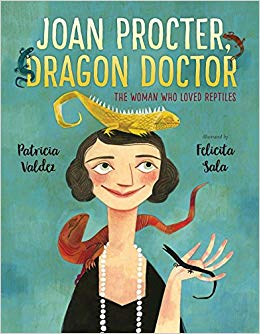
Joan ProcterDESCRIPTION OF THE BOOK:  Back in the days of long skirts and afternoon teas, young Joan Procter entertained the most unusual party guests: slithery and scaly ones, who turned over teacups and crawled past the crumpets….

While other girls played with dolls, Joan preferred the company of reptiles. She carried her favorite lizard with her everywhere–she even brought a crocodile to school!

When Joan grew older, she became the Curator of Reptiles at the British Museum. She went on to design the Reptile House at the London Zoo, including a home for the rumored-to-be-vicious komodo dragons. There, just like when she was a little girl, Joan hosted children’s tea parties–with her komodo dragon as the guest of honor.

With a lively text and vibrant illustrations, scientist and writer Patricia Valdez and illustrator Felicita Sala bring to life Joan Procter’s inspiring story of passion and determination.

Image result for joan procter

Joan Procter

MY TWO CENTS: This picture book encompasses the biography of reptile scientist, Joan Procter. The story begins by contrasting the ‘cold scaly’ interests to her peers, which eventually lead to her passion in science, specifically zoology. Joan proves many people wrong as she goes above and beyond in her work and research, even during the war. Her hard work and effort land her an opportunity to organize a public display of reptiles at the London Zoo, including Komodo dragons. The illustrations vibrate throughout its textured lines and solid colors, especially in the reptiles. Their colors stay true to their nature, yet enhance the illustration to make it fun for children. The author also includes a thorough biography at the end with a bibliography for readers to extend their own research on this phenomenal scientist!

One word-inspirational. Joan found her passion at a young age and proved her worth as a woman scientist. This book follows her journey of finding her reptilian passion and demonstrating perseverance in her personal and professional journey. In this biography, the reader learns about a scientist who not only studies animals, but also diagnoses and treats them to their best health. Overall, a must add to your library and future read alouds for all readers.

TEACHING TIPS: There are a variety of ways to implement this book within your literacy block. In reading, teachers can highlight Joan’s character traits and how it influenced the trajectory of her life events. Readers can also compare other woman scientists and contrast historical events or challenges. The book also provides multiple opportunities to teach rich vocabulary words that describe reptiles and expand knowledge of adjectives.


patricia valdezABOUT THE AUTHOR: Patricia Valdez is a scientist who loves writing for children. She earned her PhD in molecular and cell biology from the University of California, Berkeley, and works at the National Institutes of Health. Originally from Texas, she now lives in the Washington, D.C., area. This is her first picture book. Visit her at PatriciaValdezBooks.com and follow her on Twitter at @Patricia_Writer.


felicita salaABOUT THE ILLUSTRATOR: Felicita Sala is a self-taught artist who studied philosophy at the University of Western Australia. She has worked on several animation projects, but her passion is making picture books. Felicita lives in Rome with her husband and their daughter. Visit her at FelicitaSala.com, FelicitaSala.blogspot.com, and Instagram.com/felicita.sala.


ABOUT THE REVIEWER: Dora M. Guzmán is a bilingual reading specialist for grades K-5 and also teaches college courses in Children’s Literature and Teaching Beginning Literacy. She is currently a doctoral student with a major in Reading and Language. When she is not sharing her love of reading with her students, you can find her in the nearest library, bookstore, or online, finding more great reads to add to her never ending “to read” pile!

Cover Reveal of Juana & Lucas: Big Problemas


Today we are thrilled to share the cover of Juana & Lucas: Big Problemas by Juana Medina!

Juana Medina’s Juana & Lucas, the abundantly illustrated story of a young Colombian girl and her beloved dog, received wide acclaim (and a Pura Belpré Award) when it was published in 2016, with critics praising Medina’s playful interweaving of Spanish and English words, text, and images. Now Juana will return in Juana & Lucas: Big Problemas, due out in May 2019 from Candlewick Books. A description of the new book and the exclusive cover reveal are below!

Description:

When her mami meets someone new, Juana worries that everything will change in a humorous, heartwarming follow-up to the Pura Belpré Award–winning Juana & Lucas.

Juana’s life is just about perfect. She lives in the beautiful city of Bogotá with her two most favorite people in the world: her mami and her dog, Lucas. Lately, though, things have become a little less perfect. Mami has a new hairdo and a new amigo named Luis with whom she has been spending a LOT of time. He is kind and teaches Juana about things like photography and jazz music, but sometimes Juana can’t help wishing things would go back to the way they were before. When Mami announces that she and Luis are getting married and that they will all be moving to a new casa, Juana is quite distraught. Lucky for her, though, some things will never change — like how much Mami loves her. Based on author-illustrator Juana Medina’s own childhood in Colombia, this joyful series is sure to resonate with readers of all ages.

And now for the cover reveal!

Scroll down…

*

*

*

*

SCROLL some more…

*

*

*

*

*

Keeping scrolling…

*

*

*

*

What anticipation!

*

*

*

Ta-da! Here it is!


Photo by Silvia Baptiste

About the author: Juana Medina is a native of Colombia, who studied and taught at the Rhode Island School of Design. Her illustration and animation work have appeared in U.S. and international media. Currently, she lives in Washington, DC, and teaches at George Washington University. As a children’s illustrator, she has received wide acclaim and significant honors, including the 2017 Pura Belpré Medal for Juana & Lucas. Please don’t miss our studio visit with Juana! See more of her  work at her official website.

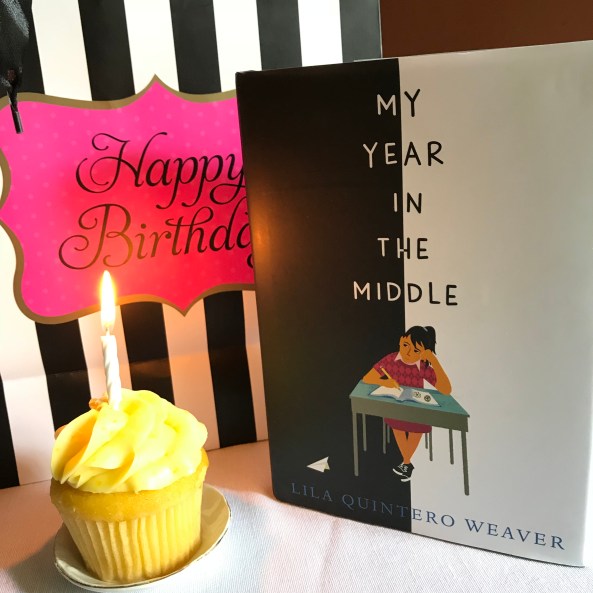
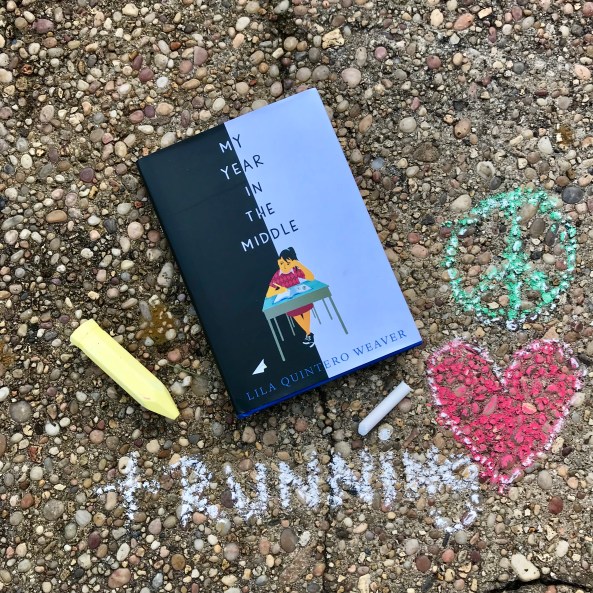
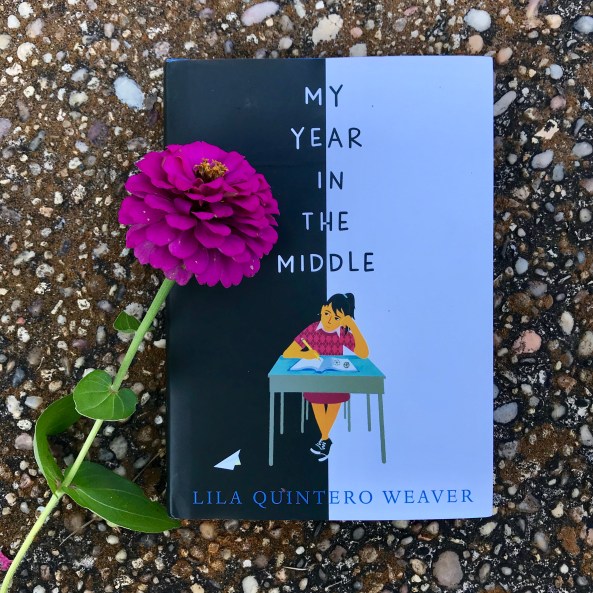
Happy Book Birthday to My Year in the Middle!

Happy book birthday to My Year in the Middle! What you are gazing at is my debut children’s book. It’s a middle-grade novel featuring a 12-year-old Latina character named Lu Olivera— a story of friendship, self-discovery, athletic challenges, and the courage to stand up to racism. 

Here is what Shelf Awareness wrote about My Year in the Middle: “Weaver, who previously published a graphic memoir called Darkroom: A Memoir in Black and White, writes vividly about the spaces in the middle, between black and white. Any reader who has struggled to find a safe and happy place between polarities will appreciate Weaver’s deep understanding of just how difficult–and rewarding–this can be.” (You can read the whole review here.)

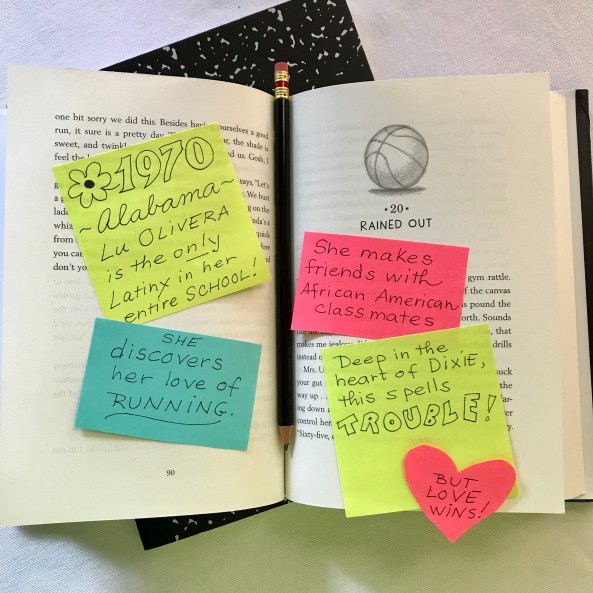
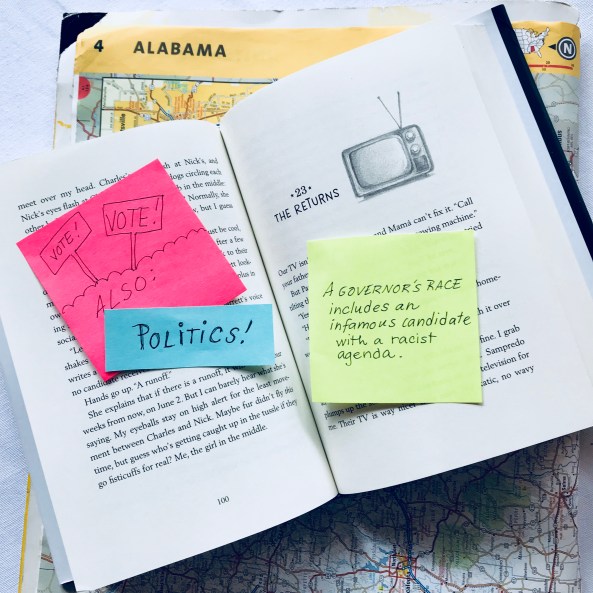
And now, for a quick rundown of the story’s major points, follow this picture essay, complete with sticky notes and chalk dust.  

NOTE: Each chapter starts off with a pencil drawing that I created. I hope young readers enjoy the vintage touches these images bring.


And did I mention there’s running? One day in PE class, it hits Lu that she can run like the blue blazes! Field Day is around the corner—and with it comes the chance to race against a fierce and accomplished competitor.

Racial and political drama is everywhere—in the headlines, at the breakfast table, in the classroom. Based on historical events that I remember from my own youth, the gubernatorial primary playing out in the story’s background serves as a textbook case for nasty elections. Somehow Lu gets caught in this tangle.

Is there romance? Oh yes!

Also: MUSIC. Lots of timeless rock & roll and delicious soul music, just the way Lu and her friends dig it!

Okay, this is only a blitz tour! If you’d like to learn more about the novel itself and the story behind the story, please visit my website. There, you will find extensive information, including a downloadable discussion guide developed by education specialists at Candlewick Press, as well as links to early reviews—plus some My Year in the Middle extras for young readers!

Please ask your librarian to acquire My Year in the Middle for your community or school library! It’s also available for sale at many independent bookstores and all major national booksellers. It’s listed here in Candlewick’s catalog. 

One more thing: I wrote a from-the-heart guest post for Nerdy Book Club. Please check it out by clicking HERE—and while you’re there, enter their giveaway (time sensitive). Each of four winners will receive a copy of My Year in the Middle, plus one of the original art pieces I created for the book. Here’s an advance peek of what winners will receive.


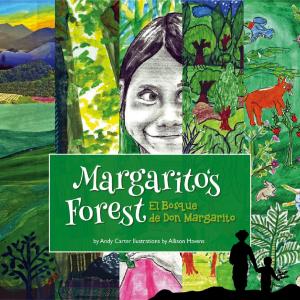
Book Review: Margarito’s Forest/El bosque de don Margarito


Reviewed by Lila Quintero Weaver

PUBLISHER’S DESCRIPTION: Margarito’s Forest, a bilingual book in English and Spanish with excerpts in K’iche’, is based on the life of Don Margarito Esteban Álvarez Velázquez as told by his daughter, Doña Maria Guadalupe. It is a story of Maya culture and wisdom passed from one generation to the next. As the devastating effects of climate change become clear, Don Margarito’s life and the ways of the Maya offer timely wisdom for a planet in peril.

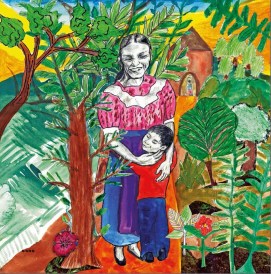
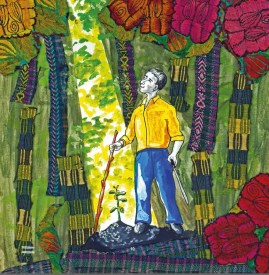
MY TWO CENTS: Margarito’s Forest/El bosque de don Margarito is a nonfiction account of a Guatemalan man’s extraordinary devotion to the forest he loved. In addition to offering a heroic and memorable story, this picture book also enriches the range of Latinx representation in U.S. children’s literature. The story takes place in the central highlands of Guatemala, among the K’iche’ people and includes phrases in the K’iche’ language. Margarito’s Forest also expands the range of truth-telling by taking on a reality I’ve never seen acknowledged in a children’s book: Guatemala’s dirty war, which brought tremendous suffering to many Guatemalans and was especially devastating for the country’s indigenous peoples. The book makes these contributions while focusing on introducing young readers to the late Margarito Esteban Álvarez Velásquez, an unsung warrior for the environment. This humble man dedicated his life to maintaining the forest near his Guatemalan home as a place of nourishment, beauty, and ancestral significance. Don Margarito often labored alone, saving trees even as many others in the region cleared them for the sake of crop cultivation, and his story offers a powerful example of the impact one person can have even when facing obstacles and indifference.

Based on oral histories shared by Don Margarito’s daughter, María Guadalupe Velásquez Tum, the narrative is set up as a conversation between Doña Guadalupe and her young grandson, Esteban. As Doña Guadalupe makes clear, her deep knowledge of the forest came from Don Margarito, who received it as a boy from the village holy man, Don Calixto. By emphasizing this chain of communication, the text also elevates the importance of transmitting family lore and practical wisdom to younger generations. It also offers valuable opportunities to recognize bodies of knowledge and practice that are often marginalized or belittled in mainstream narratives.

Engaging Difficult Histories

As mentioned, the story also touches on a deeply troubling passage in Guatemala’s recent history. For thirty-six years, beginning in 1960, Guatemalans endured a “dirty war” in which government military forces were deployed against citizens. During this protracted horror, indigenous peoples suffered disproportionate losses at the hands of government soldiers, including deaths now classified as genocide. According to the Commission for Historical Clarification, the Guatemalan government often scapegoated Maya communities, and this was the precise fate suffered by the village where Doña Guadalupe and Don Margarito lived. Tragically, when Guatemalan forces raided their home village, Don Margarito was among those killed.

Doña Guadalupe, who witnessed the raid, describes her harrowing experience to Esteban in honest terms, yet sparing details that might disturb young readers: “While your father was still a baby, the army came and destroyed our village. They burnt our homes down to the ground and they dug up our crops.” She and her two children fled to the forest, where her father’s lessons on edible plants and healing herbs proved critical to their survival. Needless to say, this is an age-appropriate version of the story, but as Doña Guadalupe makes clear, Esteban will learn the rest later: “When you are a little older, I will tell you more about those days and the dirty war that tore us apart.” This approach carefully balances honesty with consideration for the age of readers, offering a compelling example of how to speak truthfully to young audiences about difficult topics.

Words and Images

Margarito’s Forest is also interesting in its layered approach to word and image. Incorporating the translation work of multiple contributors across three languages, the book is a multilingual text. English and Spanish sections appear on the same page along with embedded instances of K’iche’. (Adult readers may know this language by its former spelling, Quiché.) Although the presentation of K’iche’ phrases sometimes feels a bit forced and ungainly, its inclusion is a positive step toward unmaking the assumption that Spanish is “the” language of Central America by foregrounding its linguistic diversity. In fact, K’iche’ remains Guatemala’s second most widely spoken language after Spanish, and it is one of numerous surviving members of the Mayan language family.


(Images are the work of Allison Havens, used here by permission from Hard Ball Press)

The illustrations in Margarito’s Forest are multimedia collages by Allison Havens, a native of Chicago who now resides in Guatemala. Her original art is central to each collage and often appears as black-and-white graphite figures framed by a patchwork of full-color elements. The collages incorporate photography, scraps of textiles, and drawings made expressly for the book by children from the village of Saq Ja’.

In sum, Margarito’s Forest offers a tender glimpse into the life of a visionary, a courageous individual who followed his heart and acquired immense wisdom without the benefit of a formal education. Although the story makes clear the tragedy of Don Margarito’s death during the dirty war, it also demonstrates the enduring impact of his passionate devotion to the forest. Thanks to his daughter’s account—and to those who took pains to preserve it—his beautiful legacy lives on as the subject of this absorbing picture book.

MORE INFORMATION:

According to the website for Hard Ball Press, Margarito’s Forest received the following distinctions: Most Inspirational Children’s Book by Latino Book Awards, a Commended Title in the 2017 Américas Award from the Consortium of Latin American Studies Programs, and a Best Book of 2017 by the Bank Street College of Education.

The final pages of the book provide study questions for educators, librarians and parents. There is also a generous author’s note, detailing how the story came to his attention, and a section about the illustrator’s collaboration with the schoolchildren of Don Margarito’s village.

For those using this book with older readers, or for parents and educators who would like to be better prepared to answer young students’ questions, it may be important to engage with the role played by the U.S. in training Guatemala’s military, including in the notorious School of the Americas, a U.S.-backed training site that played a pivotal role in violent repression in Latin America. The commission report on the Guatemalan dirty war specifically identifies the U.S. as a source of extreme and abusive military techniques that had “significant bearing on human rights violations during the armed confrontation.”

For further reading on Latinx activists working to save the environment, see this article.

And don’t miss this post by Marianne Snow Campbell about reading kid lit as an ecocritic.

Finally, experience the beauty K’iche’ as spoken by a native speaker.


Quizás Algo Hermoso: Interview with author F. Isabel Campoy


By Sujei Lugo

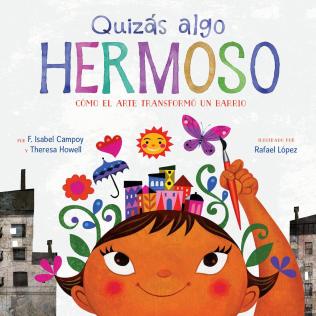
The picture book Maybe Something Beautiful: How Art Transformed a Neighborhood, written by F. Isabel Campoy and Theresa Howell, and illustrated by Rafael López, was published in 2016. Based on a true story about a community art initiative led by Rafael López and his wife, graphic designer and community leader Candice López, the book received rave reviews, won the 2017 Tomás Rivera Book Award, and made our 2016 Favorite Latinx Books list. This inspiring tale, along with its vibrant illustrations, provides tremendous inspiration in the realm of literacy, community, and arts education. Its impact on youth makes it a resource toward engagement and collaboration for teachers, librarians, and community organizers. As a youth librarian, I used Maybe Something Beautiful for a Día de los Niñxs/Día de los Libros program and wrote a post about it, entitled Día Art Bilingual Story Time!    

Last March 2018, a Spanish edition was published under the title Quizás algo hermoso: cómo el arte transformó un barrio. This text is not a translation of the English edition, but a new, original text by F. Isabel Campoy. We had the opportunity to chat with Isabel about Quizás algo hermoso, and we also asked about her work in children’s books and how she stays inspired.
DLkUqfXXcAAlEen

You’ve been publishing children’s books for years. What inspires or fuels you to keep publishing English, Spanish and bilingual titles for our little ones?

The adults who surround the first ten years of any child have complete influence in the development of their intellectual capabilities. The language they hear, the type of interactions they have with their surroundings, the number of experiences they are exposed to, all these are cornerstones in the foundation of their lives. Books do not substitute lived experiences, but they are great complements to them. If a child is read in the language they hear at home. If a child looks at illustrations that invites them to new landscapes, cities, monuments, or people. If children are presented with positive experiences, feelings or actions, those children will grow richer, more capable, more alert and open to learning. That is what fuels me to keep publishing in Spanish, and in English. To give children MORE. More language, more knowledge, more joy. More is always MORE. And children have the amazing ability to build up big brains if we offer them the possibility of learning.

When I was a child, there were very few books published for children, and the ones available had just a few illustrations in black and white. But I had the great fortune to have a father who was subscribed to the National Geographic Magazine since 1940. Those magazines saved me, fueled my imagination, and planted the seed in my heart for knowledge. When I recently published “Alegría, poesía cada día” with National Geographic Magazine I felt that a 70-year circle had been completed. What a joy that was!

I want children to dream the way I did. Very fortunately the book industry now offers many opportunities for great reading experiences.

In 2016 Maybe Something Beautiful: How Art Transformed a Neighborhood published to rave reviews. This year, we have a Spanish edition titled Quizás algo hermoso: cómo el arte transformó un barrio. Why did you choose to write a new, original Spanish text instead of providing a bilingual edition or direct translation?

If you are a balanced bilingual, when you write, in whatever language you are writing, you are being an original writer in that language. Quizás algo hermoso and Maybe Something Beautiful express the same idea in two languages. My co-author Theresa Howell and I worked the manuscript in English for almost three years! Every comma was measured, every expression, every interjection was pondered— while simultaneously I was building its parallel in Spanish. It is a lot of fun!

When a child reads a book, they must find a flawless use of that language, natural expressions, high command on part of the author of the grammar and syntax, a natural flow of meaning. Those are the components of an authentic text.

I wish all children had the opportunity to read and speak more than one language.

All countries in Latin America have speakers in more than one language. In the case of Mexico, for example, over 50 languages other than Spanish are spoken. I find that to be a cultural treasure!
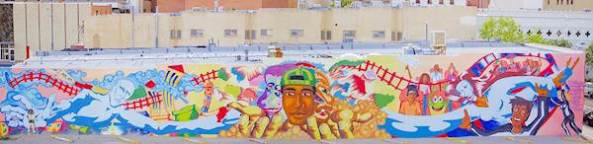
Lead Artist Antonio Lente. Photo by Paul López Albuquerque

Mural in Abuquerque, New Mexico. Lead artist, Antonio Lente. Photo by Paul López


How has the reaction been to both versions of the book by adults and children?

When we chose to write this manuscript, we had one goal: to share a positive community action with readers anywhere. The example set by Rafael and Candice López in San Diego was born out of a true desire for transformation, and they succeeded beautifully. Art was the means and solidarity was the goal. Their example is now being replicated in many places in this country. Rafael’s brushes are magic wands and the world is his canvas!

We have received letters from teachers and their students telling us about how they reacted to the book. There have been real murals painted, and murals on huge brown paper covering school hall walls. There have been little altars with suggestion boxes on how each child imagines the transformation of their environment through art. We have seen pictures of painted river rocks creating paths in gardens, and little paintings, like Mira’s, attached to fences. It is extraordinary what children can imagine, and it is enlightening to listen to them!

Adults have found in this text an example that can be replicated in their own corners of the world. And they are doing it!

Can you talk about the importance of having this story available in Spanish? Do you plan to publish it in other languages?

A couple of months ago we had the great news that the book had been translated into Chinese! That would add at least 300 million possible readers to our book! We are very happy.

I wanted to see this book in Spanish from day one. We were very happy to see it finally printed. The community that the book reflects is a picture of life in many places in the United States. Muralism is a vibrant reflection of Hispanic art. Three internationally known painters in Mexico: Rivera, Orozco and Siqueiros, brought murals to the forefront of artistic expression. Their palette and what they chose to paint reflected the people and the history of Mexico. Writing a book about murals was also paying homage to the lives of our communities, as diverse and multicultural as they are everywhere.
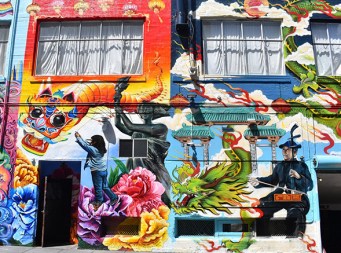
San Francisco

Mural in San Francisco, California. Photo provided by F. Isabel Campoy

Quizás algo hermoso can now be read by parents as well as children whose first language is Spanish. But also, by English-speaking children who are in Dual Language Programs. It is certainly beautiful to see how many more children are becoming bilingual. The two largest languages in this continent, English and Spanish, are embracing each other, providing a better path towards understanding for the new generations.

In your travels, have you seen vivid examples of mural painting that speak to the spirit of a community?

I am drawn to all forms of art. My first visit in every city is to its museums, art galleries, and monuments. In the United States there are famous cities with great murals—for example where I live, in San Francisco. They all depict life in the neighborhood or pride on the diverse cultures of the city. Philadelphia is famous for its murals, and Albuquerque now has miles of fantastic paintings all over the city’s walls. In a book I co-authored with Alma Flor Ada entitled Yes, We Are Latinos!, a book about diversity within the Latino culture, I wrote about the Tower in the Hispanic Cultural Center in Albuquerque, painted by Frederico Vigil. That tower is a fabulous historic overview of Latinos. 
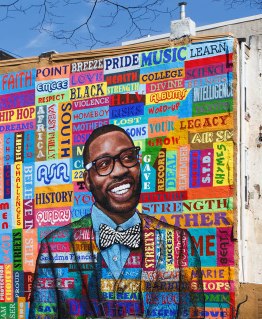
Ernel Martínez. Philadelphiajpg

Mural in Philadelphia, Pennsylvania by artist Ernel Martínez

Also abroad, from El Cairo to London, from Rome to Barcelona, murals are a part of the richness we can find everywhere in the world. You can see some examples on the website for Maybe Something Beautiful www.maybesomethingbeautiful.com.

If you could paint something beautiful, what would it be and in which barrio?

When my friend and children’s book author René Colato Laínez asked this question, I answered: A tree!

Because like them, we have roots that hold us firm in our culture and language, in family and knowledge. Like them, we have a cycle of life, fruits for new generations. Our branches hold the joy of growth; our leaves, the beauty of seasons.

Where is that brush… I’ll start right now!

And about the barrio…. do I need to choose one? Could it be one in every neighborhood where there are people like Rafael and Candice López, ready to transform their reality into something really beautiful?….. Allow me to dream that it is possible!

Thank you very much for inviting me to share with your readers. ¡Un enorme y hermoso abrazo, F. Isabel Campoy! 
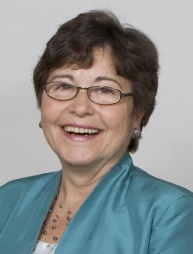
 

Isabel Campoy Headshot

About F. Isabel Campoy: Isabel is the author of over 100 children’s books. She is a recognized scholar devoted to social justice and to promoting diverse books in diverse languages. Isabel is the recipient of the Ramón Santiago and Tomás Rivera Awards, among others. She is a member of the North American Academy of the Spanish Language. www.isabelcampoy.com
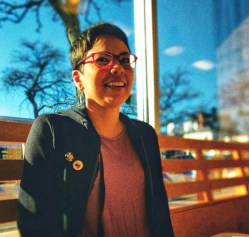


Sujei1About Sujei Lugo:  a former elementary school librarian in Puerto Rico, is a children’s librarian at the Boston Public Library, Connolly Branch. She holds an MLIS from the University of Puerto Rico and is currently a doctoral candidate in LIS at Simmons College, focusing on anti-racism and children’s librarianship. She is an active member of REFORMA, ALA and ALSC (newly minted Board of Directors member). Sujei served on the 2018 Newbery Award Committee and as co-chair of the 2018 ALSC Charlemae Rollins President’s Program. A member of the We’re the People Summer Reading Project. Twitter: @sujeilugo

 

Q&A with Juana Martinez-Neal, author-illustrator of Alma and How She Got Her Name/ Alma y como obtuvo su nombre


By Dora M. Guzmán

Q: First, congratulations on  The Princess and the Pea and receiving the Pura Belpré award. What went through your mind when you first heard the news?

A: Thank you, Dora! And thank you for the opportunity to visit Latinxs in Kidlit once again! I like it here!

The Pura Belpré call… the first thing I thought was this can’t be true, but I had heard “Pura Belpré Committee” so it was true! I couldn’t stop crying, but as the call ended, I started wondering what exactly I had won. It was all a blur. I didn’t want to call back the Committee, so the next morning I watched the livecast to find out.

Q: You’ve illustrated numerous books. What inspired you to write a children’s picture book?

A: While I started illustrating books, it felt like a natural progression to next move to a children’s book as an author-illustrator. Alma was the perfect story to take that step since I knew the story well since it has auto-biographical elements and is based on members of my extended family. Initially, Alma was the story of how I got my name and then the story grew from there.

Making Alma felt bumpy quite a few times, and Stefanie, my agent at Full Circle Literary, always knew how to help me get the story to the next level little by little. It was an exciting time when she was ready to go on submission with both the text and sample artwork. Once the book sold, Mary Lee, my editor at Candlewick, was exactly who I needed to finish making this book. Stefanie continued helping during this stage. She helps me all the time! She is my right arm, leg, and eye.

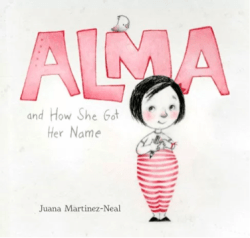
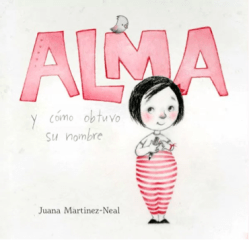
AlmaEnglish   AlmaSpanish

Q: What are the top three tips you’d give future writers looking to write their first picture book?

A: I’m still so new to children’s books that I’m still figuring things out myself! I’ll give myself three tips, and hopefully someone will find them useful.

  1. Write what you know. Alma is exactly that.
  2. It’s never too late to start something new.
  3. Breathe and keep going.

Q: In your author’s message and blog, you describe Alma and How She Got Her Name as an autobiographical story.  Who has left the biggest imprint in your life? How so?

A: This is a hard question to answer. So many people have shaped who I am today, but I will say my parents.

My dad taught me to love Peru and our rich culture, to appreciate art and books, and to enjoy discovering new places. My mom showed me that with determination and drive you can accomplish anything. She believes that no task is too simple or too small. They are all worth doing. She also made me fall in love with words. In the summer, when I was young, if I came to her with the typical “Mooooom, I’m booooreeed!”, she would send me to learn five words from the dictionary. I don’t think I ever passed the letter A, but I learned to appreciate words.

Q: As a child, what book resonated with you the most?

A: Easy answer: El Principito (The Little Prince). I received a copy for my 10th birthday from a friend who lived two houses down. The book changed the way I looked at books. This book spoke directly to me, and made me look at the world in a way I didn’t think was possible.

Q: What is one message you’d give to all the readers of Alma?

A: Learn your story; be proud of where you come from. Celebrate who you are!

I am very proud Alma will release in simultaneous English and Spanish editions, and that I was able to write and now share the book in my two languages. Spanish is my native language since I was born in Peru and moved to the U.S. when I was 24 years old. Like many bilingual children in the U.S., today I use both English and Spanish daily.

Stefanie was sharing with me that one in four children in the U.S. have at least one parent who was born in another country. That’s an enormous part of the population! Those children should be proud of where their families come from and of speaking many languages. It will be a joy to be able to share Alma with children in both of my languages, Alma and How She Got Her Name and Alma y cómo obtuvo su nombre.

9780763693558.int.2

9780763693589.int.2


Q: Do you plan to write more children’s books? Any projects in the works that you can tell us about?

A: I’m happy to say yes! I have another author-illustrator book coming from Candlewick.  I am also illustrating more picture books including Babymoon written by Hayley Barrett (Candlewick 2019) and Swashby and the Sea written by Beth Ferry (Houghton Mifflin Harcourt 2020).

Final words:

¿Cuál es la historia de tu nombre?

¿Qué historia quisieras contar?


ABOUT THE AUTHOR-ILLUSTRATOR: Juana Martinez Neal is an award-winning illustrator and artist. Her passion for art started as a child and led her to study at one of the best schools in fine arts in Peru. Her journey as an illustrator led her to the United States, where she continues to illustrate a variety of children’s books. For updates on her art, follow her on Instagram @juanamartinezn. You can also find her on Twitter: @juanamartinez, Facebook: https://www.facebook.com/juanamartinezneal.illustrator/ and at her official website at http://juanamartinezneal.com/

EDUCATOR RESOURCES:

BOOK REVIEWS:


Dora M. Guzmán is a bilingual reading specialist for grades K-5 and also teaches college courses in Children’s Literature and Teaching Beginning Literacy. She is currently a doctoral student with a major in Reading and Language. When she is not sharing her love of reading with her students, you can find her in the nearest library, bookstore, or online, finding more great reads to add to her never ending “to read” pile!