By Cecilia Cackley
This is the sixth in a series of posts spotlighting Latina illustrators of picture books. Some of these artists have been creating children’s books for many years, while others will have their first book out soon. They come from many different cultural backgrounds, but all are passionate about connecting with readers through art and story. Please look for their books at bookstores and libraries!
Lulu Delacre
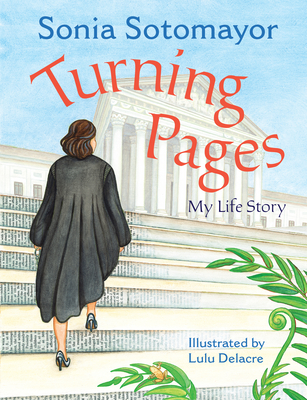
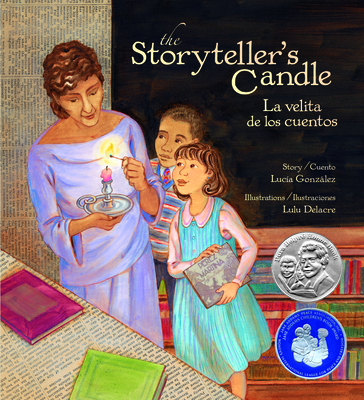
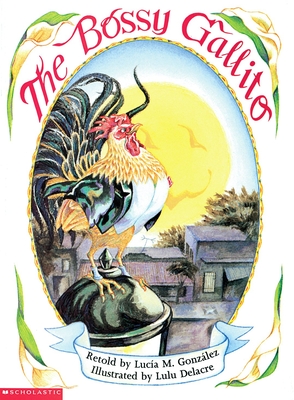
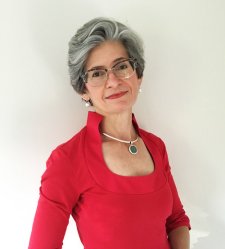 Lulu Delacre is the author and illustrator of many books for young readers, including the Pura Belpré Honor books The Bossy Gallito, Arroró, mi niño, and The Storyteller’s Candle. Originally from Puerto Rico, she now lives and works in Silver Spring, Maryland. Her most recent book is Turning Pages, My Life Story, the picture book autobiography of Supreme Court Justice Sonia Sotomayor.
Q: What or who inspired you to become an artist?
A: Creating art has always brought me to a place of inner stillness, comfort, and peace. That feeling and the encouragement of my family and teachers have inspired me. One of my earliest memories is of drawing on white sheets of paper to the classical music my abuela Elena played in the second floor apartment of that old pink house in Rio Piedras, Puerto Rico. Abuela Elena saved every drawing I made inside her closet until one day the pile grew taller than my four-year-old self! Later, I clearly remember Sister Antonia, my kindergarten teacher, telling my parents in a very serious tone, “Lulu is going to be an artist.” Witnessing this faith in my talent definitely fostered its growth.
Q: Tell us something about your favorite artistic medium–why you like it, when you first learned it, etc.
A: Hmm…this is a difficult question. I say that because I don’t think I truly have a favorite artistic medium. Many illustrators master a medium and stick with it throughout their careers. I thrive in challenging myself to figure out what medium and style each manuscript calls for, which is often a new technique for me. The 39 titles I’ve illustrated include oil paintings, watercolors, color pencil art, collages, oil washes, linocuts, dry soft pastels, graphite drawings, acrylics and mixed media images. It’s thrilling to stretch myself and forge new ground with my artistic endeavors.
Q: Please finish this sentence: “Picture books are important because…”
A:…they are an art form like no other in which the images and words have equal weight in creating a unique experience for the reader. An experience that has the power to delight, move and/or change us.
*
Cecilia Ruíz
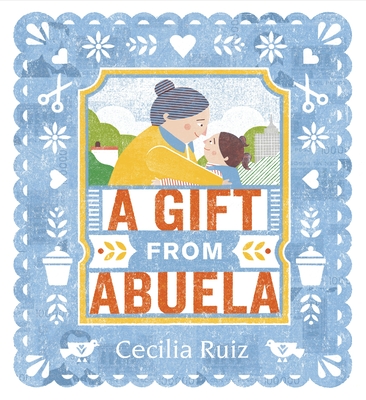
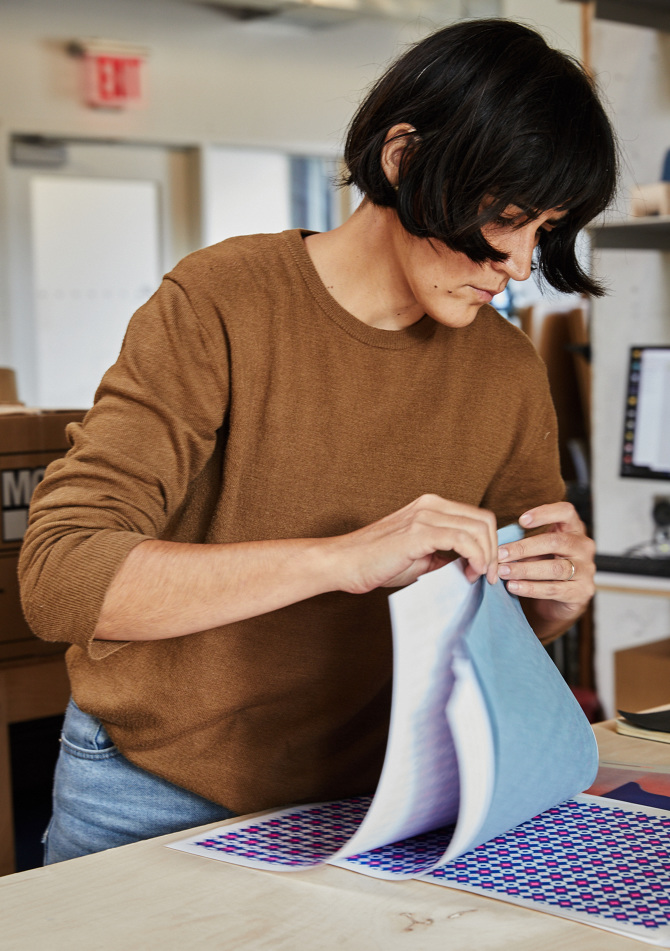 Cecilia Ruíz is an author, illustrator, and designer originally from Mexico City, now living and working in Brooklyn, New York. Her first picture book A Gift From Abuela, was published by Candlewick Press in August 2018.
Q: What or who inspired you to become an artist?
A: I think my biggest influence in becoming a visual artist was my aunt. She is a graphic designer, and when I was little and saw the kind of work she did, I knew right away that I wanted to do the same. I think I went to graphic design school because of her, and that’s how my career path in visual storytelling started.
Q: Tell us something about your favorite artistic medium—why you like it, when you first learned it, etc.
I love printmaking techniques. My first encounter with printmaking was in college in Mexico City. We had a class where we learned screen printing, etching, and linocut carving. I was enamored with the process, the crafty texture, and the charming accidents. It was years later that I discovered that I didn’t need access to a printmaking lab to do it. I started carving erasers and rubber instead of linoleum and printing at home with just a stamp ink-pad. I now do a mix of traditional and digital— technique that I learned and developed while going to grad school at SVA in NY. I carve and print multiple pieces by hand. I then scan all those separate pieces and put them together in Photoshop. I also do the final coloring in Photoshop. This allows me to have the best of the two worlds—the crafty look of printmaking, and the control of the computer.
Q: Please finish this sentence: “Picture books are important because…”
A: They are a door, a window, and a mirror.
*
Yesenia Moises
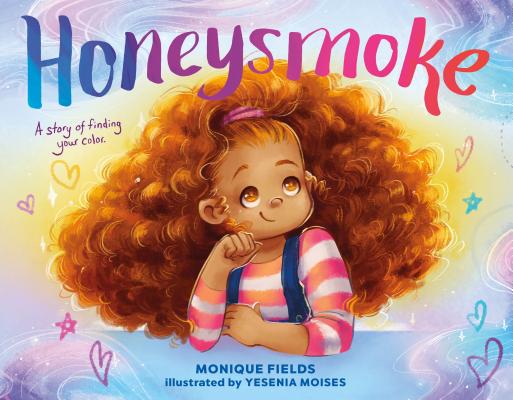
 Yesenia Moises is an Afro-Latina illustrator and freelance toy designer from the Bronx. When she’s not off filling the world with bright and colorful art, her pastimes include playing really silly dating sims and kicking back with her wildly photogenic dog Divo. Her first picture book is Honeysmoke: Finding Your Color by Monique Fields, which will be published by Macmillan in January 2019.
Q: What or who inspired you to become an artist?
A: Growing up I watched a lot of cartoons and I started off drawing because I wanted to draw my favorite characters. I do think a big turning point that got me really wanting to get better at drawing was when I started watching Sailor Moon. I really loved how it was unlike the other shows I was watching in both its plot and the way the characters are portrayed. The show was also what started my interest in anime and continues to inspire my work to this day. Unlike the episodic nature of American cartoons, there was an overarching plot and characters that were developed over the course of a show’s season and not just quick shorts that wouldn’t leave too much room to get invested in them. Sailor Moon was the first time I felt like I could relate to characters in a show and as I found myself wanting to draw better because I wanted to be able to capture all the details in my fan renditions of the character but also to be able to create stories of my own that others could find to be relatable and could invoke the kinds of warm feelings I get when I remember those days. I’m still working on it but for now, I think it’s safe to say that the show really inspired me to want to draw more!
Q: Tell us something about your favorite artistic medium–why you like it, when you first learned it, etc.
A: My favorite medium would have to be watercolor. I don’t often get to use it because a lot of the work I do now involves frequent revisions that would be tough to accomplish as quickly as I can digitally. The medium was something that I picked up on my own back in my high school days. I was really into doing everything traditionally since I couldn’t afford a Wacom tablet and I was addicted to looking up as many tutorials as I could on Deviantart to try and teach myself anything and everything just for the sake of being able to create. Watercolor ended up being the medium that I had the most fun using out of the many things I was trying at the time. I loved how soft and delicate things could look with them and how you could really feel have a physical connection between you, the paper, the paint, and the water (provided you got over the initial learning curve of course.) Last year I took part in Blick Art Materials’ 31 Days of Watercolor Challenge and I really enjoyed applying some of the techniques and color palettes that I’d built up from years of working digitally to a medium where prior to that I’d only ever aimed to have a delicate touch. These days I spent a lot more time working on projects for clients in Photoshop but there’s a special place in my heart for the tactile feeling you get when putting paint to paper that digital art just can’t replicate.
Q: Please finish this sentence: “Picture books are important because…”
A: Picture books are important because they offer a viewpoint that children don’t get to directly see in the world around them. They offer a space of imagination and creativity that helps create a gateway to an early interest in reading and learning which I think is a really important lifelong skill.
 Cecilia Cackley is a Mexican-American playwright and puppeteer based in Washington, DC. A longtime bookseller, she is currently the Children’s/YA buyer and event coordinator for East City Bookshop on Capitol Hill. Find out more about her art at www.ceciliacackley.com or follow her on Twitter @citymousedc

 Tania de Regil was featured in our third Spotlight on Latina Illustrators and this is her American publishing debut. Tania studied fashion design at Parsons School of Design in New York City and finished her studies in her home country of Mexico. Her work as a costume designer in film and television has helped to better grasp the art of storytelling through images. Tania’s illustration work is always filled with interesting details for children to discover. She uses a variety of media in her work, such as watercolor, gouache, color pencils, wax pastels and ink to create richly textured, engaging images. Tania’s debut picture book, Sebastián y la isla Tut, which she both wrote and illustrated, was published in November, 2015 by Macmillan Mexico.

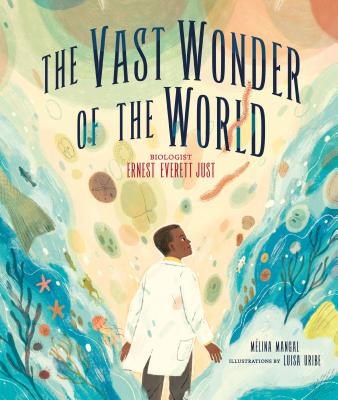 DESCRIPTION OF THE BOOK: Ernest Everett Just was not like other scientists of his time. He saw the whole, where others saw only parts. He noticed details others failed to see. He persisted in his research despite the discrimination and limitations imposed on him as an African American. His keen observations of sea creatures revealed new insights about egg cells and the origins of life.
![eejplaque[1]](https://latinxsinkidlit.com/wp-content/uploads/2019/01/eejplaque1.jpg?w=593)
![vwofwthumb[1]](https://latinxsinkidlit.com/wp-content/uploads/2019/01/vwofwthumb1.jpg?w=593)
![vwotwspread12-13_rough1[1]](https://latinxsinkidlit.com/wp-content/uploads/2019/01/vwotwspread12-13_rough11.jpg?w=593)
![vwotwspread12-13_rough2[1]](https://latinxsinkidlit.com/wp-content/uploads/2019/01/vwotwspread12-13_rough21.jpg?w=593)
![vwotwspread12-13color_flat[1]](https://latinxsinkidlit.com/wp-content/uploads/2019/01/vwotwspread12-13color_flat1.jpg?w=593)
![vwotwspread14-15color_flat_copy[1]](https://latinxsinkidlit.com/wp-content/uploads/2019/01/vwotwspread14-15color_flat_copy1.jpg?w=593)
![vwotwspread30-31color_flat_copy[1]](https://latinxsinkidlit.com/wp-content/uploads/2019/01/vwotwspread30-31color_flat_copy1.jpg?w=593)
![lu_studio[1]](https://latinxsinkidlit.com/wp-content/uploads/2019/01/lu_studio1.jpg?w=593)
![luisa3peq[1]](https://latinxsinkidlit.com/wp-content/uploads/2019/01/luisa3peq1.jpg?w=150&h=200) ABOUT THE ILLUSTRATOR: Luisa Uribe is an illustrator and designer of children’s media. She loves books most of all but has also worked in animation and TV. Her art has been selected for Iberoamerica Ilustra, a catalog that showcases the best work by Spanish-speaking illustrators, and she is the winner of the SOI 2018 Dilys Evans Founder’s Award for The Vast Wonder of the World. She is represented by The Bright Agency. Website:
ABOUT THE ILLUSTRATOR: Luisa Uribe is an illustrator and designer of children’s media. She loves books most of all but has also worked in animation and TV. Her art has been selected for Iberoamerica Ilustra, a catalog that showcases the best work by Spanish-speaking illustrators, and she is the winner of the SOI 2018 Dilys Evans Founder’s Award for The Vast Wonder of the World. She is represented by The Bright Agency. Website:  Super duo Megan and Jorge Lacera make their picture-book debut with this sweet story about family, self-discovery, and the power of acceptance. It’s a delectable tale that zombie and nonzombie fans alike will devour.
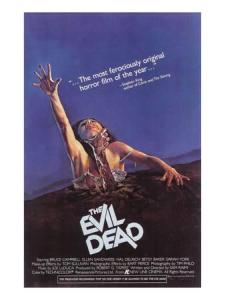
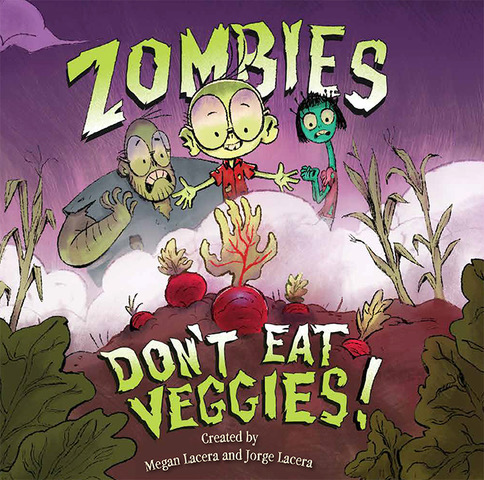
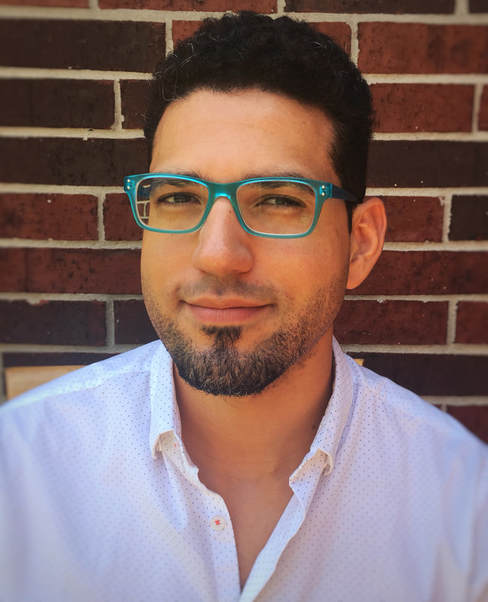 The cover for ZOMBIES DON’T EAT VEGGIES! was a creative collaboration between Lee and Low editor Jessica Echeverria, our art director Ashley Halsey, my wife Megan, and myself. I knew I wanted to capture the spirit of the book without directly referencing a specific moment or scene. A big influence for Megan and me is our love of 80’s horror movies. As a kid, I vividly remember slowly walking down the aisles of my local video rental store (remember those?!), drinking in all of the movie posters and box covers, wondering what in the world the stories could be. I’d go home wishing I could rent all of them at once. I wanted to evoke a similar feeling and sense of intrigue for when kids saw our cover.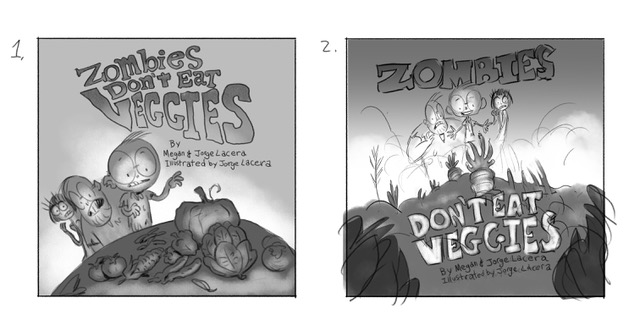
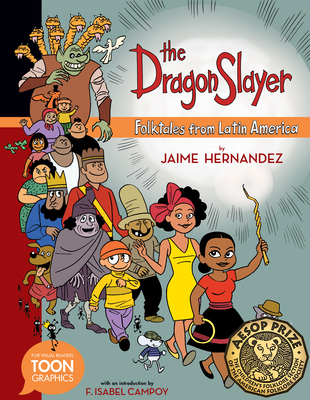 DESCRIPTION OF THE BOOK: How would a kitchen maid fare against a seven-headed dragon? What happens when a woman marries a mouse? And what can a young man learn from a thousand leaf cutter ants? Famed Love and Rockets creator Jaime Hernandez asks these questions and more as he transforms beloved myths into bold, stunning, and utterly contemporary comics. Guided by the classic works of F. Isabel Campoy and Alma Flor Ada, Hernandez’s first book for young readers brings the sights and stories of Latin America to a new generation of graphic novel fans around the world.
 ABOUT THE AUTHOR-ILLUSTRATOR: Jaime Hernandez is the co-creator, along with his brothers Gilbert and Mario, of the comic book series Love and Rockets. Since publishing the first issue of Love and Rockets in 1981, Jaime has won an Eisner Award, 12 Harvey Awards, and the Los Angeles Times Book Prize. The New York Times Book Review calls him “one of the most talented artists our polyglot culture has ever produced.” Jaime decided to create The Dragon Slayer, his first book for young readers, because “I thought it would be a nice change of pace from my usual grown-up comics.” He read through tons of folktales to choose these three. What made them stand out? Maybe he saw himself in their characters. Jaime says, “I’m not as brave as the dragon slayer, but I can be as caring. I’m as lazy as Tup without being as resourceful. I am not as vain as Martina, but I can be as foolish.”
 Isabel Campoy (left, Introduction, “Imagination and Tradition”) and Alma Flor Ada (right, Martina Martinez and Pérez the Mouse) are authors of many award-winning children’s books, including Tales Our Abuelitas Told, a collection of Hispanic folktales that includes Martina Martinez and Pérez the Mouse. Alma Flor says, “My favorite moment in the story is when Ratón Pérez is pulled out of the pot of soup!” As scholars devoted to the study of language and literacy, Alma Flor and Isabel love to share Hispanic and Latino culture with young readers. “Folktales are a valuable heritage we have received from the past, and we must treasure them and pass them along,” Isabel says. “If you do not have roots, you will not have fruits.”
 ABOUT THE REVIEWER: Marcela was born in Brazil and moved to the U.S. at the age of three, growing up in South Florida. She is now the Library Director at Lewiston Public Library in Maine. Marcela holds a Master of Library and Information Science degree from the University of Illinois at Urbana-Champaign, where she Concentrated on community informatics and library services to teens. She is a copy editor for
  Latinxs in Kid Lit