A Conversation with Author-Illustrator Matt Tavares

GROWING UP PEDRO. Text and Illustrations copyright 2015 Matt Tavares. Reproduced by permission of the publisher, Candlewick Press, Inc., Somerville, MA.

GROWING UP PEDRO. Text and Illustrations copyright 2015 Matt Tavares. Reproduced by permission of the publisher, Candlewick Press, Inc., Somerville, MA.

By Lila Quintero Weaver

When author-illustrator Matt Tavares turns his focus on a children’s book topic, beautiful things happen. We love what he did with Growing Up Pedro: How the Martinez Brothers Made It  from the Dominican Republic All the Way to the Major Leagues, a stirring picture book biography of the Dominican baseball great Pedro Martinez and his highly influential brother Ramón. Now we’re turning our focus on Matt himself, a prolific producer of books for kids, who agreed to answer a few of our burning questions.

Latin@s in Kid Lit: Wow, your paintings are magnificent! They’re highly realistic yet deliver much more than faithful representation, in terms of their emotive power and aesthetics. Please tell us about your journey to professional illustration.

Matt: Wow, thank you! That’s certainly what I always try to do, so it’s very nice to hear my pictures described that way. Even if I’m painting a realistic scene, there is always something I can do to heighten it, to go beyond what a photograph might show.
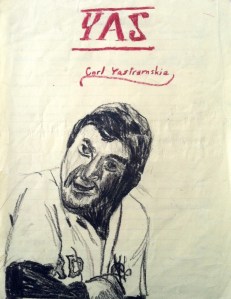
Matt's been drawing since childhood.

Matt’s been drawing baseball figures since childhood.

I’ve always loved to draw. Even when I was 4 or 5 years old, I thought of myself as an artist. I drew all the time, and knew I wanted to be some kind of artist when I grew up. It wasn’t until I was a junior at Bates College that I decided I wanted to illustrate picture books. I wrote and illustrated a picture book as my senior thesis. I spent my whole senior year working on it. After that, things happened pretty quickly- I found an agent who liked it, and she shopped it around to publishers, and found Candlewick Press. They basically asked me to do the whole thing over again with the guidance of an editor and art director, which I happily did. Then in 2000, Zachary’s Ball was published, my first book.
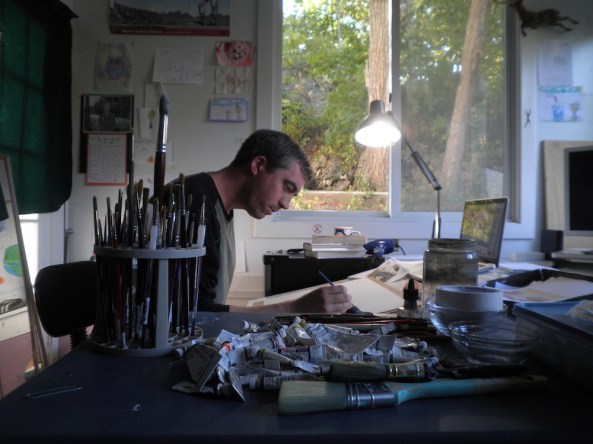
Matt hard at work in his studio

Matt hard at work in his studio

LiKL: You’re not only an illustrator—you also write. Can you walk us through the process of creating a picture book, starting from the idea phase and ending with publication?

Matt: Sure. The beginning part is pretty messy, where I just have all kinds of ideas floating around and I write everything down in my notebook. From there, most of the ideas just wither away, but every now and then one of them grows into something I think I might actually be able to work with.

I always write the words first, then once I figure out how to divide it up into pages, I do rough sketches. And there is always a lot of back and forth between the words and pictures. In a picture book, part of the story will be told with words and part of the story will be told with pictures. Once I start figuring out what the pictures are going to be, I realize I don’t need some of the words.

Once all my sketches are approved by my art director (after a couple rounds of revisions, usually), I start working on the final illustrations. That part usually takes 4 to 6 months. The whole process, from start to finish, can take 9 months to a year, depending on the book. Then once all the illustrations are done, it’s about a year until it comes out in stores.

LiKL: By my count, seven of your published children’s books center on baseball stories, including Growing Up Pedro, your picture-book bio of Dominican major league star Pedro Martinez, which we reviewed in November. What’s your connection to the sport?

Matt: Baseball is just something I’ve always loved. I grew up near Boston and have great memories of going to Fenway Park to watch the Red Sox play. When I was a kid, I was really into collecting baseball cards, watching baseball, playing baseball and wiffle ball. It’s one of the few things that has been a constant in my life from the very beginning. So when I started writing books for kids, baseball was a natural subject. Honestly, I wasn’t a big reader when I was a kid, but I would read anything if it was about baseball. I know there are still kids like that, and I hope they find my books!

LiKL: Speaking of Growing Up Pedro, you must have done a great deal of research on Pedro Martinez’s life and career, not to mention baseball in general and Dominican life. Fill us in.

Matt: This was my fourth baseball biography, but it was the first about a player I actually got to watch play. So this book was very personal for me. I read a lot of interviews and articles, but I also relied on my own memories of being at Fenway when Pedro was pitching. When he was on the mound, Fenway Park transformed into a different place. There was this electricity that surrounded him. I was excited to try to capture that in a book.
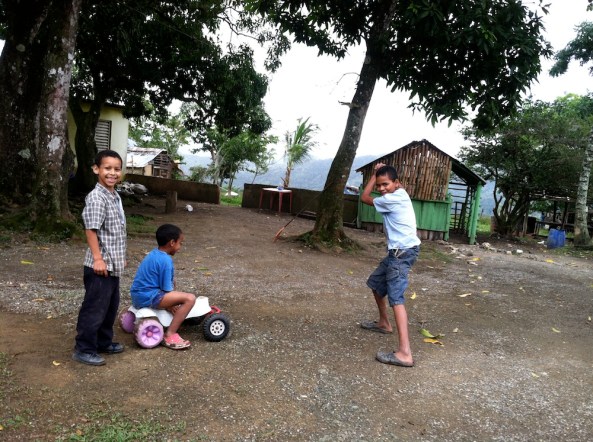
DR1

In the Dominican Republic, local children were happy to pose for photos Matt would use in illustrating Growing Up Pedro.

I also traveled to the Dominican Republic when I was working on Growing Up Pedro, which was amazing. Instead of just finding pictures online, I actually got to go to places that still look how they did when Pedro was a kid. I took tons of pictures. It was incredible to be able to go home after that trip and use all these experiences that were fresh in my mind and put them right into my book. It really helped me feel personally connected to the whole story.

LiKL: On this blog, we highlight excellent kid lit that focuses on Latino/a characters, something you pulled off beautifully in Growing Up Pedro. As far as you can tell, has this picture book expanded your reach into the Latino community?
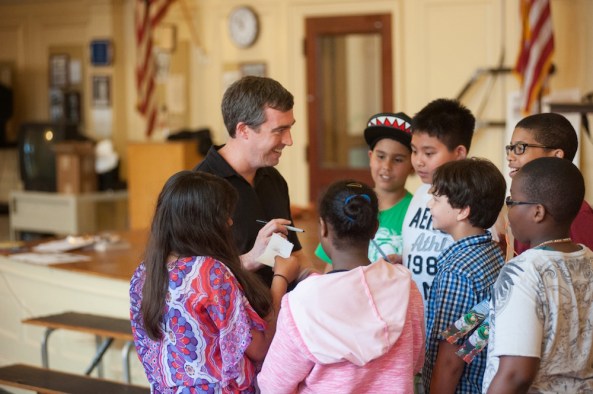
tavares1

Meeting young fans at book events

Matt: Absolutely, and that’s been really great. I was thrilled when I found out Candlewick was going to do a Spanish edition of the book, because I know that Pedro is a hero to millions of Spanish-speaking people. I love knowing that kids can read Pedro’s story in English or Spanish.

It’s such a powerful thing when a kid can see a bit of themselves in a character, and I think a lot of people have made that connection with Pedro. For some kids it’s because he grew up poor, or even just that he was skinny and small. But I think the fact Pedro is Latino definitely helps a lot of Latino/a readers feel more connected to the story.

GROWING UP PEDRO. Text and Illustrations copyright 2015 Matt Tavares. Reproduced by permission of the publisher, Candlewick Press, Inc., Somerville, MA.

GROWING UP PEDRO. Text and Illustrations copyright 2015 Matt Tavares. Reproduced by permission of the publisher, Candlewick Press, Inc., Somerville, MA.

LiKL: Suppose you could hang around the studios of any three illustrators—living or dead—for the purpose of asking questions and observing technique. Who would those illustrators be and why?

Matt: Tough to pick three… I’ll say Chris Van Allsburg, because he’s one of my all-time favorite illustrators, and I would love to watch him work. I would probably just take pictures of all his art supplies then go to the art store and buy all the same stuff. Maurice Sendak, because he was a genius and was always so fascinating in interviews. I never got to meet him. And Jerry Pinkney. I did a book signing with him once, and he was so nice and humble and approachable. He’s been making books for so long, and has had so much success. I’d love to spend some time with him and maybe pick up some good habits.

LiKL: Naturally, we’re curious to know what’s next from Matt Tavares. If you’re free to share, tell us about books already in production, or a project still shiny with wet paint.

Matt: My next book is Crossing Niagara, which is a picture book about The Great Blondin, the first person to walk across Niagara Falls on a tightrope. That comes out in April. Then I have another picture book biography that I illustrated with Candlewick that comes out in Spring 2017, about the first woman pilot. And right now I’m just starting final art for a book I wrote that comes out in Fall 2017. This one is going to be a very new direction for me- it’s fiction, and the main characters are birds. I’m very excited to try something new.
DR2Writer, illustrator, baseball lover! Learn more about Matt Tavares and his books at his official website.
Spotlight on Latina Illustrators Part 1: Angela Dominguez, Juana Medina, and Ana Aranda

By Cecilia Cackley

This is the first in a series of posts spotlighting Latina illustrators of picture books. Some of these artists have been creating children’s books for many years, while others will have their first book out this year. Some of them live in the US, while others live overseas. They come from many different cultural backgrounds, but are all passionate about connecting with readers through art and story. Please look for their books at bookstores and libraries!

Angela Dominguez
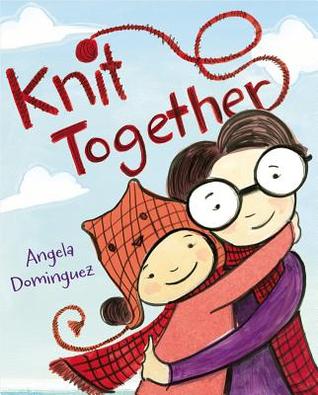
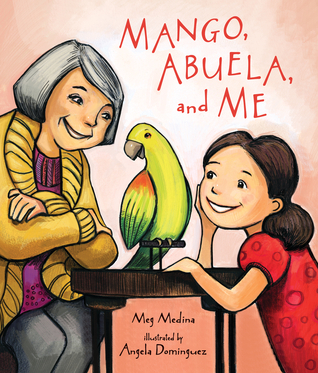
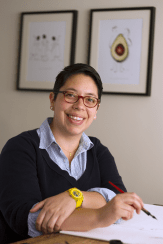
Angela DominguezAngela Dominguez was born in Mexico City, grew up in the great state of Texas, and lived in San Francisco. She’s the author and illustrator of picture books such as Let’s Go Hugo!, Santiago Stays, Knit Together, and Maria Had a Little Llama, which received the American Library Association Pura Belpré Illustration Honor. Recently, she received her second Pura Belpré Honor for her illustrations in Mango, Abuela, and Me written by Meg Medina. Her new books How do you Say?/Como se Dice?  and Marta, Big and Small (by Jen Arena), will both be published later this year. To see more of Angela’s work, visit her website, blog or twitter.
Q: What inspired you to become an artist?

A: Like many of my artist friends, I’ve always liked to draw. Growing up, I was obsessed with books and art in general. I’d spend evenings watching VHS tapes and drawing all night (if I wasn’t doing homework). Still, I didn’t really consider art something I could do professionally until high school. Fortunately, my high school really had a great art program and teachers who were supportive. Then I received a partial scholarship to Savannah College of Art and Design based on my skills and academics. That sort of sealed my fate as a professional artist.

Q: Tell us about your favorite artistic medium.

A: I still love drawing with pencil. It feels so good in my hand. I even love the way a freshly sharpened pencil smells. I also enjoy working with ink especially with a dip pen and brush. I just like how there is less control. It forces you to work boldly and confidently. My last favorite medium is tissue paper. I just really enjoy collage and the texture it produces. It’s really fun to work with all three at the same time. In graduate school when I saw that Evaline Ness worked that way, I was inspired to do it even more!

Q: Please finish the sentence “Picture books are important because…”

A: Picture books are important because they can speak universal truths to people of all ages. They can make you cry and laugh all in the same little book. (Also there are pictures!)

14933584  17245526  22504706  15937128  23153010  25066557  24727082  25688982


Juana Medina

Photo by Silvia Baptiste

Photo by Silvia Baptiste

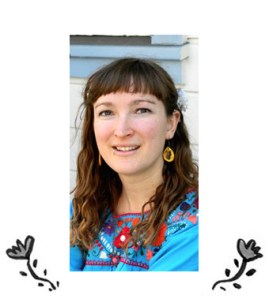
Juana Medina was born in Bogotá, Colombia, where she grew up, getting in a lot of trouble for drawing cartoons of her teachers.

Eventually, all that drawing (and trouble) paid off. Juana studied at the Rhode Island School of Design – RISD (where she has also taught). She has done illustration & animation work for clients in the U.S., Latin America, & Europe.

She now lives in Washington, DC. where she teaches at George Washington University. Juana draws and writes stories from a big and old drafting table, in an even older -but not much bigger- apartment.  Juana is the illustrator of the picture book Smick! by Doreen Cronin. Her new books 1 Big Salad: A Delicious Counting Book and Juana and Lucas will be published later this year. You can find out more about Juana on her website and blog.

Q: What inspired you to become an artist?

A: I grew up in a family where pretty much everyone had some kind of artistic outlet; my grandfather was a great draftsman, my grandma was a fantastic carpenter, my aunt a potter… everyone found a way to use arts as a way to express themselves, so it took me a while to realize not everyone in the world did this! Moreover, I went to a school that valued arts very much. So for the longest time, I thought art was just one more fabulous aspect of being human. I didn’t think of art or my ability to draw as super powers; they were simply an added feature, almost as a bonus language. Now that I recognize not everyone draws, I have dedicated a lot of time to using this ability as best as possible, to tell stories.

Q: Tell us about your favorite artistic medium.

A:  Ink is one of my favorite mediums, because I find it very expressive. I enjoy the high contrast between the stark white paper and the very dark black ink; it makes it very exciting to see lines and traces -almost magically- appear on the page.

Q: Please finish the sentence “Picture books are important because…”

A:  Picture books are important because they don’t require more than visuals -and a handful of words- to understand a story. And understanding a story can lead to a shared experience with those who have also read the book. This not only serves for entertainment purposes, but allows us to learn about other people’s feelings, struggles, and dreams. Picture books also allow us to see the world through a different point of view and they tend to teach us things we perhaps didn’t know about, like how people live in villages we’ve never visited, or what dinosaurs used to eat, or how giant squids live in the darkest, deepest waters in the ocean, all valuable lessons to be learned.

22522295


Ana Aranda

Ana ArandaAna Aranda was born and raised in Mexico City, where she studied design. From there, she moved to France, where she lived for three years while doing her undergraduate studies in illustration. Ana now lives in San Francisco thanks to a grant from the Mexican Fund for Culture and Arts (FONCA). Her biggest inspirations are her childhood memories, the vibrant colors of Mexico, and music. Her work focuses on transforming the every day into fantastical situations, and often includes images from nature and whimsical creatures. Ana’s work has been featured in different galleries and museums in the United States, France, Mexico and Italy. In San Francisco, she has painted murals in the Mission District, for the Consulate General of Mexico, and for the prestigious de Young Museum. Ana’s illustrations can be found in picture books published in France and Italy. Some of her forthcoming titles include “J’ai Mal à Mon Écorce” (Éditions du Jasmin, France, 2015). She also illustrated ¡Celebracion! by Susan Middleton Elya, coming in 2016 and The Chupacabra ate the Candleabra by Marc Tyler Nobleman, coming in 2017.

Q:  What inspired you to become an artist?

A: When I was a little girl, I lived in a colorful city in Mexico called Cuernavaca, also known as the “City of Eternal Springtime”. My childhood memories in this city full of flowers always inspire me to create colorful and joyful pieces for children of all ages.

I have also been very inspired by my family, teachers, Mexican muralists and printmakers, growing up learning about women artists such as Remedios Vario and Leonora Carrington.

Q: Tell us about your favorite artistic medium.

A: I first learned to use acrylics when I was around 14 years old and fell in love with it! Since then I’ve been playing with bright colors and mixing that technique with others such as pigments, scratchboards, etc. I’m in love with color and finding how every color can be part of an emotional experience.

Q: Please finish this sentence: “Picture books are important because…”

Ana Aranda Cover


A: Picture books are important because they help you travel to different worlds!


Books to Check Out:

Dominguez, Angela. Lets Go Hugo

Dominguez, Angela. Maria Had a Little Llama

Dominguez, Angela. Santiago Stays

Dominguez, Angela. Knit Together

Medina, Meg. Mango, Abuela and Me

Brown, Monica. Lola Levine is NOT Mean!

Elya, Susan Middleton. ¡Celebracion!  (coming Fall 2016)

Cronin, Doreen. Smick!

Medina, Juana. 1 Big Salad: A Delicious Counting Book (coming Summer 2016)

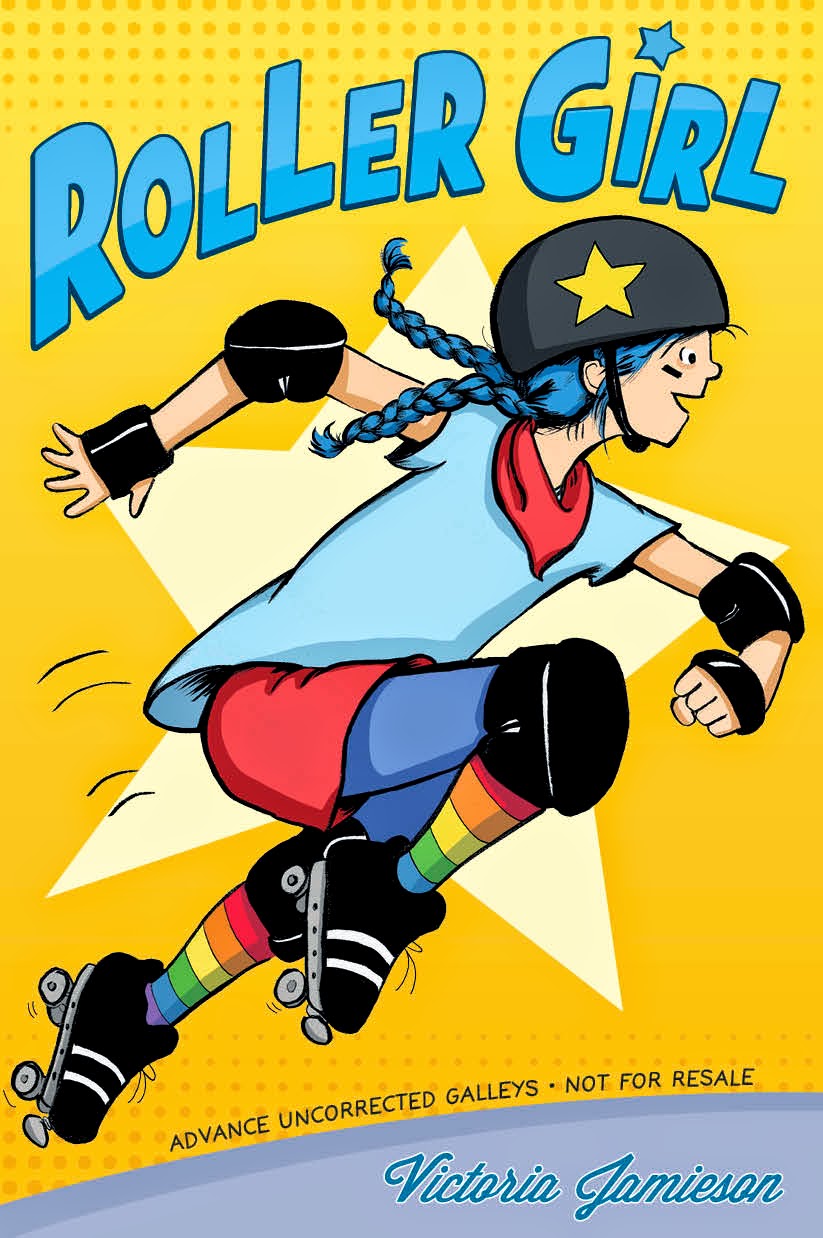
Book Review: Roller Girl by Victoria Jamieson

RollerGirlCVR

Reviewed by Lila Quintero Weaver

Roller Girl is a recipient of a 2016 Newbery Honor!

FROM THE NEWBERY MEDAL HOME PAGE: Astrid falls in love with roller derby and learns how to be tougher, stronger and fearless. Jamieson perfectly captures the highs and lows of growing up in this dynamic graphic novel.

MY TWO CENTS:  Victoria Jamieson’s Roller Girl captivated me right off and only grew sweeter on a second reading. In addition to the immersive power of graphic novels, the story of Roller Girl delivers a solid punch: 12-year-old Astrid Vasquez gets hooked on roller derby and devotes herself to the sport while navigating the ups and downs of middle-school friendships.
Astrid’s passion for roller derby ignites when Ms. Vasquez takes Astrid and her best friend, Nicole, to their first derby bout. Afterward, Astrid can talk of nothing but the derby and fails to notice that Nicole doesn’t share her excitement. Come on, how could she not? Check out the theater of it all: the players’ costumes and wild hair colors, the electricity of the crowd, and the take-no-prisoners energy that drives the sport. Astrid even discovers an idol in Rainbow Bite, a star jammer for the Rose City Rollers, who exemplifies roller derby’s ferocity and skill. Astrid loves the fact that there’s nothing girlie or restrained about roller-derby culture, and when she hears about summer camp for junior players, she’s chomping at the bit to sign up. Best friends do everything together, right? This assumption crumbles when Nicole reveals that she’s planning to attend dance camp instead, along with Rachel, Astrid’s one true nemesis from their early elementary days.
With Nicole’s “desertion,” Astrid has to face the first day at derby camp alone. From there, complications abound. Ms. Vasquez is under the impression that Nicole’s mom will give Astrid a ride home at the end of each day’s session. Astrid is afraid to tell her mom that Nicole isn’t participating, as this would lead to all sorts of questions Astrid wants to avoid. As a result, the lies she must tell and the long walks home she must endure only add to the drama of those first grueling weeks at the rink. Did I mention that Astrid discovers she’s a lousy skater?

Despite aching muscles and botched skill drills, Astrid persists and finds new motivations as she enters more deeply into the world of her chosen sport. The camp coaches balance demanding practices with timely pep talks, and Astrid strikes up a friendship with Zoey, a camper her age. Another boost comes in the form of a correspondence with Rainbow Bite that starts when Astrid discovers the star jammer’s locker and begins leaving notes for her. (Rainbow proves a generous celebrity and writes back with inspiring tips.)

None of these triumphs mean that Astrid transforms into a roller derby standout; what matters are the personal victories that she achieves over the course of the summer, including earning the respect of her teammates and figuring out some important things about who she is and what sort of friend she wants to be.

Roller Girl succeeds on multiple levels. Through a lively narrative and a rich visual landscape, it draws readers into the fascinating world of roller derby, often explaining the rules and strategies of a sport unfamiliar to many through clever diagrams and dramatized scenes. Through these invitations to explore the sport, it portrays women and girls as highly capable both physically and intellectually. Readers get a clear sense that women can—and should—take on tough challenges.

In addition, Roller Girl gives us a Latina character comfortable with her ethnic identity and shows us Anglo characters who are equally accepting. Astrid’s Latina background doesn’t even emerge until page 54, and only much later do we learn that the family is Puerto Rican. This information comes across casually, as just another cool detail about the main character. At least this is how Astrid’s new friend Zoey takes the information when Astrid reveals it during a scene in which West Side Story plays in the background.

Astrid says to Zoey, “I’ve seen this movie! My mom made me watch this for an evening of Puerto Rican cultural heritage. Or something.” (At first blush, the idea that an adult puertorriqueña would push this movie as representative of her culture struck me as improbable. I associate West Side Story with racial stereotypes, discriminatory casting—white actors playing the Puerto Rican leads—and the problematic practice of filming lighter-skinned Latino actors in brown-face. But after asking around, I learned that not all Latinos recoil at the legacy of West Side Story, and many view Rita Moreno’s dynamic, Oscar-winning performance as a cause for celebration.)

In general, my sense is that ethnicity may not be central to the story, yet it gives readers additional exposure to a positively framed diverse character who faces the same challenges most 12-year-olds face. In fact, one of the biggest ways that Roller Girl succeeds is in its depiction of Astrid’s emotional journey. It delivers an honest and satisfying ride through many of the complex social and internal upheavals of middle-school life. I particularly like the author’s portrayal of mixed emotions. On one page, a central panel depicts a kindergarten poster of cartoon faces bearing unambiguous expressions. The caption reads: “The feelings were all simple ones, like ‘happy’ and ‘sad.’ They didn’t tell you about feelings that got mixed together like a smoothie.” In the next panel, Astrid contemplates exactly such “mixed together” feelings, the result of running into Nicole after weeks of separation. Astrid is happy to see her former best friend yet sad about the emotional distance that stands between them now. Out of this, she coins a new word, “shad,” a distillation of those contradictory feelings—happy and sad. This moment of acceptance that emotions are complex seems to me a marker that a character is coming of age.

As happens with the best of sports stories, Roller Girl follows a character’s trajectory through brutal training challenges, inevitable setbacks, as well as moments of triumph–and elevates these into something beyond athletic achievement. At twelve, Astrid is finding her way in the world. Some of her falls are literal and happen on the skating rink. Some are relational and emotional, and arrive without the benefit of coaches to teach her how to land injury-free. The important thing is that after each fall, Astrid is learning how to dust herself off and get back into the game.

TEACHING TIPS AND RESOURCES: A major theme of Roller Girl is the troubled landscape of middle-school friendships. Try this exercise with young readers. Assign a “treasure hunt” for episodes in the story that demonstrate the ebb and flow of friendships. Ask students to identify relational missteps that Astrid and other characters make, i.e., jumping to conclusions, not listening, passing judgments, not speaking up; ask them to do a similar search for positive practices that build friendships.

For visual help on grasping the rules of roller derby, check out the video on this page.

One of Astrid’s challenges is figuring out a good derby name. There are rules and traditions that must be observed, as outlined in this guide.

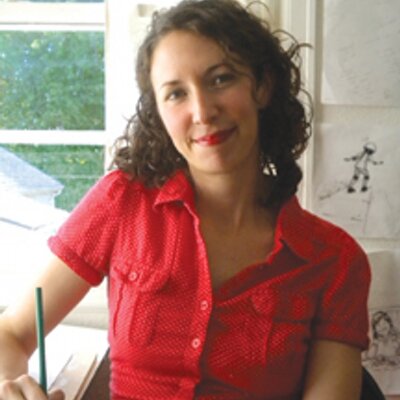
AuthorPhoto_VictoriaJamieson_LoRes_400x400ABOUT THE AUTHOR/ILLUSTRATOR: Pennsylvania native Victoria Jamieson attended the Rhode Island School of Design. Her work history includes a stint as book designer for HarperCollins Children’s Books. She now writes, illustrates, and teaches illustration at Pacific Northwest College of Art in Portland, Oregon, where she also skates in the Rose City Rollers roller-derby league.


Newbie skaters like Astrid could probably use the tips from this video.


IMG_1291Lila Quintero Weaver is the author-illustrator of Darkroom: A Memoir in Black & White. She was born in Buenos Aires, Argentina. Darkroom recounts her family’s immigrant experience in small-town Alabama during the tumultuous 1960s. It is her first major publication. Lila is a graduate of the University of Alabama. She and her husband, Paul, are the parents of three grown children. She can also be found on her own websiteFacebookTwitter and Goodreads.

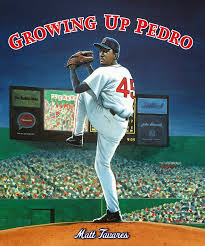
Book Review: Growing Up Pedro by Matt Tavares

Growing Up Pedro


Reviewed by Lila Quintero Weaver

FROM THE BOOK JACKET: Before Pedro Martinez pitched the Red Sox to a World Series championship, before he was named to the All-Star team eight times, before he won the Cy Young Award three times, he was a kid from a place called Manoguayabo in the Dominican Republic. Pedro loved baseball more than anything, and his brother Ramón was the best pitcher he’d ever seen. He dreamed of the day he and his brother could play together in the major leagues. This is the story of how that dream came true. Matt Tavares has crafted a fitting homage to a modern-day baseball star that examines both his improbable rise to the top of his game and the power that comes from the bond between brothers.

MY TWO CENTS: The author-illustrator Matt Tavares makes beautiful picture books, many of which explore stories from baseball. His sports biographies for young readers include Henry Aaron’s Dream, There Goes Ted Williams, and Becoming Babe Ruth. In Growing Up Pedro, Dominican major league pitcher Pedro Martinez takes a turn in the spotlight. At the peak of Martinez’s brilliant career, he pitched for the Boston Red Sox. In 2004, his performance in Game 3 helped the team capture a long-sought World Series championship. Martinez’s story abounds with tall achievements, but there are other, smaller points of inspiration in his journey, and this combination makes him an ideal hero for kid readers.

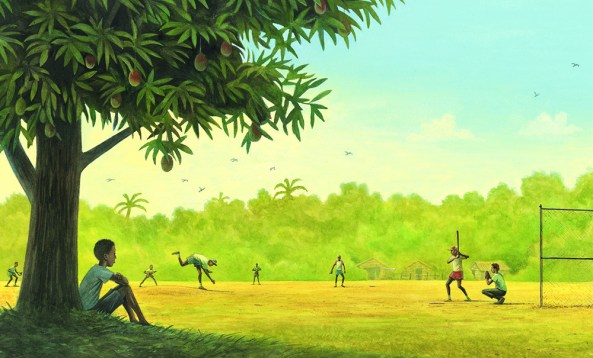
Just as the title implies, Growing Up Pedro traces Martinez’s rise to baseball glory back to childhood years. As the story begins, young Martinez sits on the sidelines, riveted by his older brother Ramón’s ability to fire fastballs. Ramón is good—really good—but even as he pursues his own baseball dreams, Ramón takes the time to teach Pedro everything he knows about pitching. Sometimes they practice their aim on mangos, still clinging to the branches. When Ramón is drafted by the Los Angeles Dodgers, Pedro continues honing his skills on his own and ultimately captures the attention of U.S. talent scouts. After he joins his brother in Los Angeles, Pedro faces new challenges. He must work hard to prove himself to critics who consider him too small-framed to succeed as a major-leaguer. Before it’s all over, Martinez perfects a 97-mph fastball, wins the prestigious Cy Young Award multiple times, captures a World Series title, and lands a spot in the National Baseball Hall of Fame.

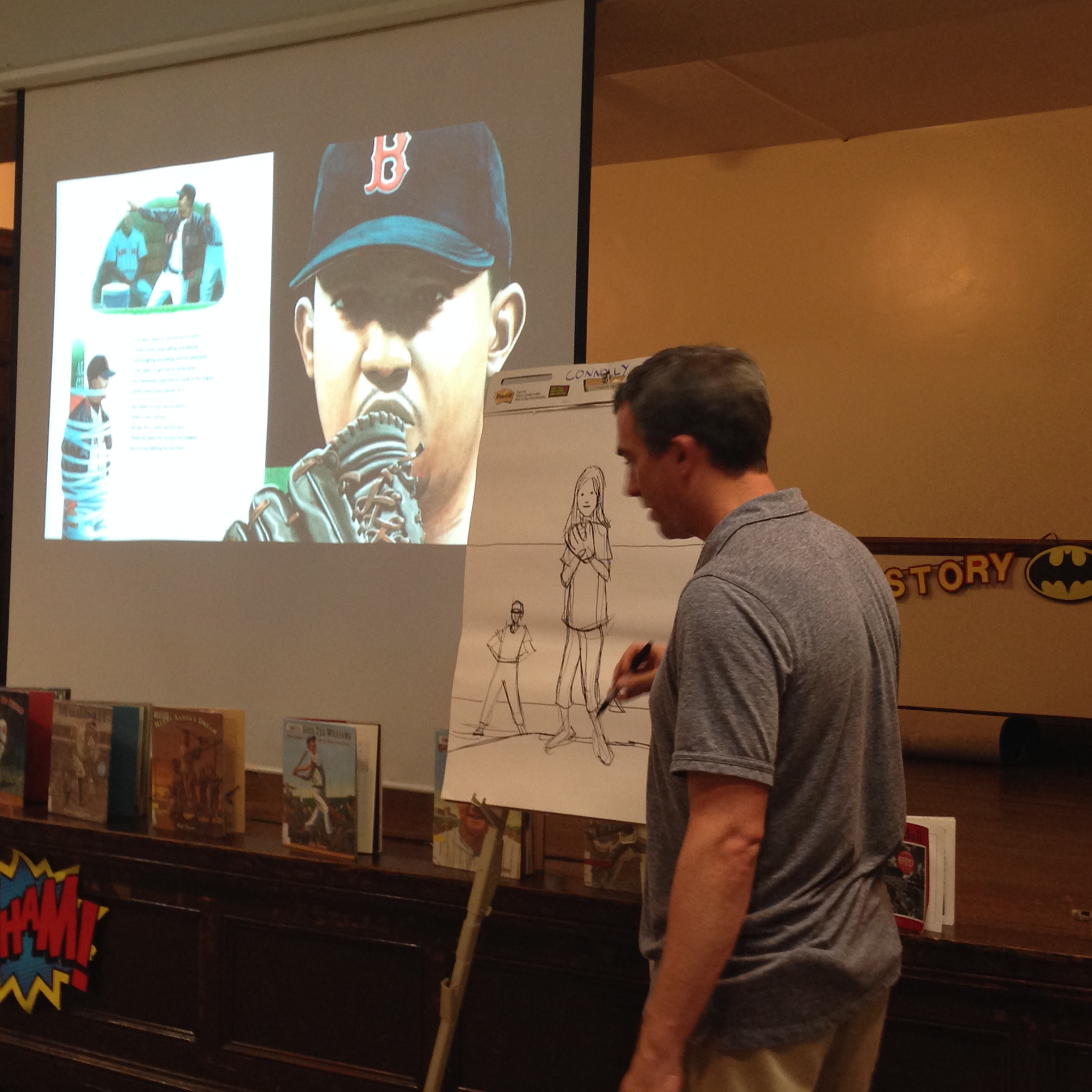
Matt Tavares shares about Growing Up Pedro during a library visit. Photo credit: Sujei Lugo

Growing Up Pedro succeeds on multiple levels. First, it’s a story of dreaming big and achieving bigger. The narrative emphasizes that talent plus hard work make it possible for this young boy to rise out of obscurity and poverty. In one illustration, Pedro is shown alone, practicing outdoors at sunset. With Ramón already in the United States, Pedro’s internal drive to excel is what keeps him going, throwing pitch after pitch in the dying light.

As already noted, this picture book offers a warm portrayal of the family bonds that carry both brothers into the ranks of professional sports. One vignette shows them dreaming aloud: “At night, they lie awake, two to a mattress, and talk about what they will do when they are millionaires.”

Growing Up Pedro also gives satisfying glimpses of rural Caribbean life, and it drives home the importance of baseball in the Dominican culture. At Campo Las Palmas, a Dodgers’ facility in the Dominican Republic, dozens of boys go through the thirty-day tryout alongside Pedro.

Matt Tavares’s illustrations command attention. The soft colors of his landscapes suggest sunshine diffused by tropical humidity. Mountains draped in lush vegetation fill the backdrops of the Dominican scenes. In the second part of the story, Pedro’s world switches to baseball stadiums packed with cheering fans, dressed in Red Sox team colors. One powerful illustration zooms in on Martinez’s face as he stands at the pitcher’s mound. His eyes contain supreme focus and reflect years of devotion to his sport. The accompanying text reads: “…when it is his turn to pitch, Pedro is very serious. All day, he is quiet and focused. When he takes the mound, he imagines he is a lion fighting for his food.” (This image is available for viewing on the author’s website, linked below in his bio.)

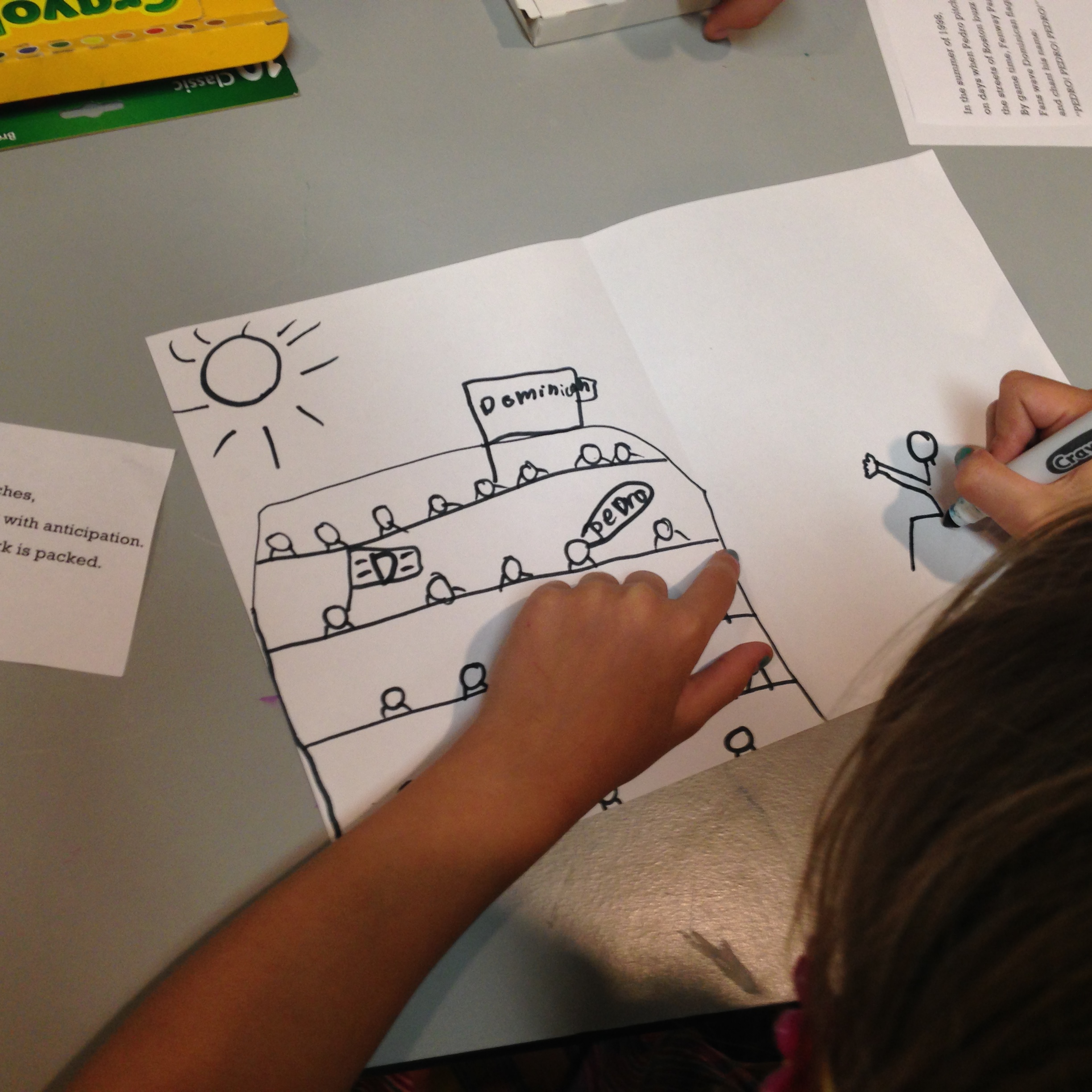
Kids respond to Matt's art with baseball illustrations of their own, Photo credit: Sujei Lugo

Kids respond to Matt’s art with baseball illustrations of their own. Photo credit: Sujei Lugo

Toward the end of the book, the narrative circles back around to the Dominican Republic. When an injured Pedro nevertheless pitches and sends the Red Sox into the American League Championship Series, Tavares’s paintbrush fills in scenes of celebration on the home front, where fans gather in front of television sets to watch Pedro. Following his success, “people dance in the streets. Kids tie scraps of metal to their bikes and ride through the darkness. Sparks light up the night like fireworks.” This is a transcendent moment that extends the hero’s journey into something bigger than himself, into a victory for all his people and for other dreamers, near and far.

Matt Tavares is a prolific writer and illustrator of children’s books. His work has received starred reviews and high honors, including three Parents’ Choice Gold Awards, six Oppenheim Gold Seal Awards, and an International Reading Association Children’s Book Award. Matt’s original artwork has been exhibited at major museums. He’s a popular speaker and presenter to adult and child audiences alike. Visit his official website to learn more.

TEACHING RESOURCES:

Visit Pedro Martinez’s page on the National Baseball Hall of Fame site.

The Dominican Republic boasts a jaw-dropping number of players in the ranks of professional baseball. This website provides an informative chart.

Watch a highlights video of Martinez pitching a 17-strikeout game in 1999.


IMG_1291Lila Quintero Weaver is the author-illustrator of Darkroom: A Memoir in Black & White. She was born in Buenos Aires, Argentina. Darkroom recounts her family’s immigrant experience in small-town Alabama during the tumultuous 1960s. It is her first major publication. Lila is a graduate of the University of Alabama. She and her husband, Paul, are the parents of three grown children. She can also be found on her own websiteFacebookTwitter and Goodreads.

Growing Up Cuban: Laura Lacámara and Meg Medina

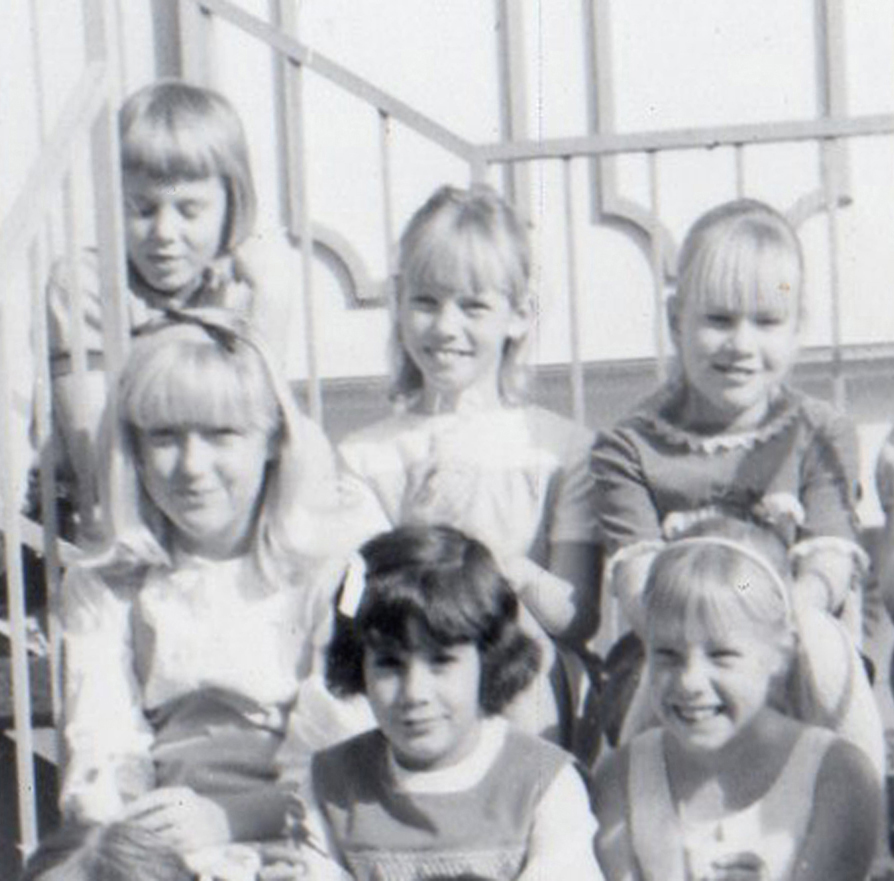
Photo of me & blond girls from class

My Cuban Evolution

By Laura Lacámara

Growing up Cuban-American in suburban Southern California, I teetered back and forth between feeling different, like I didn’t belong, and feeling exotic and special.

The feeling different part came mostly when I was little.

We spoke Spanish at home, while all my friends spoke English.

We ate lechón (roast pork), black beans, and plantains on Christmas eve (nochebuena), instead of turkey, stuffing, and yams on Christmas night.

Then, there was that same embarrassing question asked by all my friends who came over to the house: “Why are your parents fighting?”

“They are not,” I would respond, “they are just talking about what they want for dinner.”

In high school, being Cuban meant getting an easy “A” in Spanish. By the end of high school, being a Spanish-speaking Cuban had gone from totally embarrassing to super cool. I was the “exotic” one among my group of white suburban friends. (I knew I wasn’t really exotic, but I didn’t contradict them because I liked feeling special!)

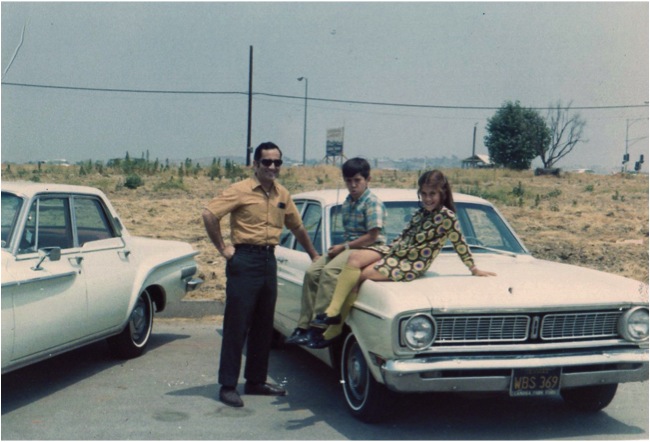
Me on hood of carFinally, in college, came exploring my roots, and ultimately embracing (and being proud of!) my Cuban-American identity.

Of course, the whole Cuban roots and identity thing comes with the inevitable responsibility to comment on Fidel Castro.

So, when asked that obligatory question by my white, non-Cuban friends: “Don’t you think it’s great that Castro’s revolution has given every Cuban citizen access to a pair of shoes and an education?”

Rather than launching into a big political discussion about the whole embargo thing (which I am totally in favor of lifting, by the way), I now offer the following joke:

“Comrades, what are the three great successes of the revolution? Healthcare, education, and sports. What are the three failures? Breakfast, lunch, and dinner.”

Politics aside, being Cuban remains a very personal thing for me. Sometimes it has felt like missing pieces I can only catch glimpses of here and there, but never quite own.

As a Cuban-American author writing stories inspired by growing up in my Cuban family, I’ve been able to explore some of these pieces and the quality of what Cuba, or being Cuban means to me.

Yes, I have lived in the U.S. most of my life, and I can express myself (verbally and on paper) better in English than in Spanish.

But, deep-down, that Spanish-speaking part of me, the one that finds “home” in a plate of black beans and rice with a slice of my mom’s homemade flan, will always be Cubana!

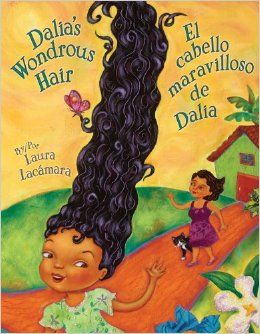
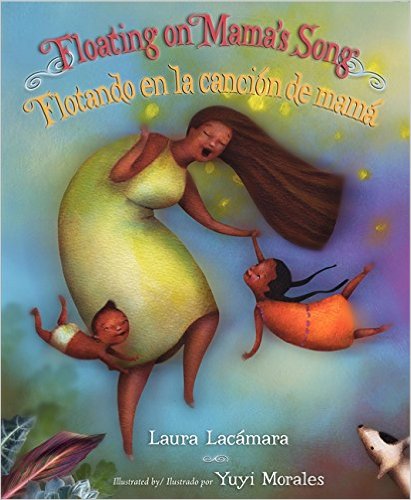
Dalia Cover    Floating

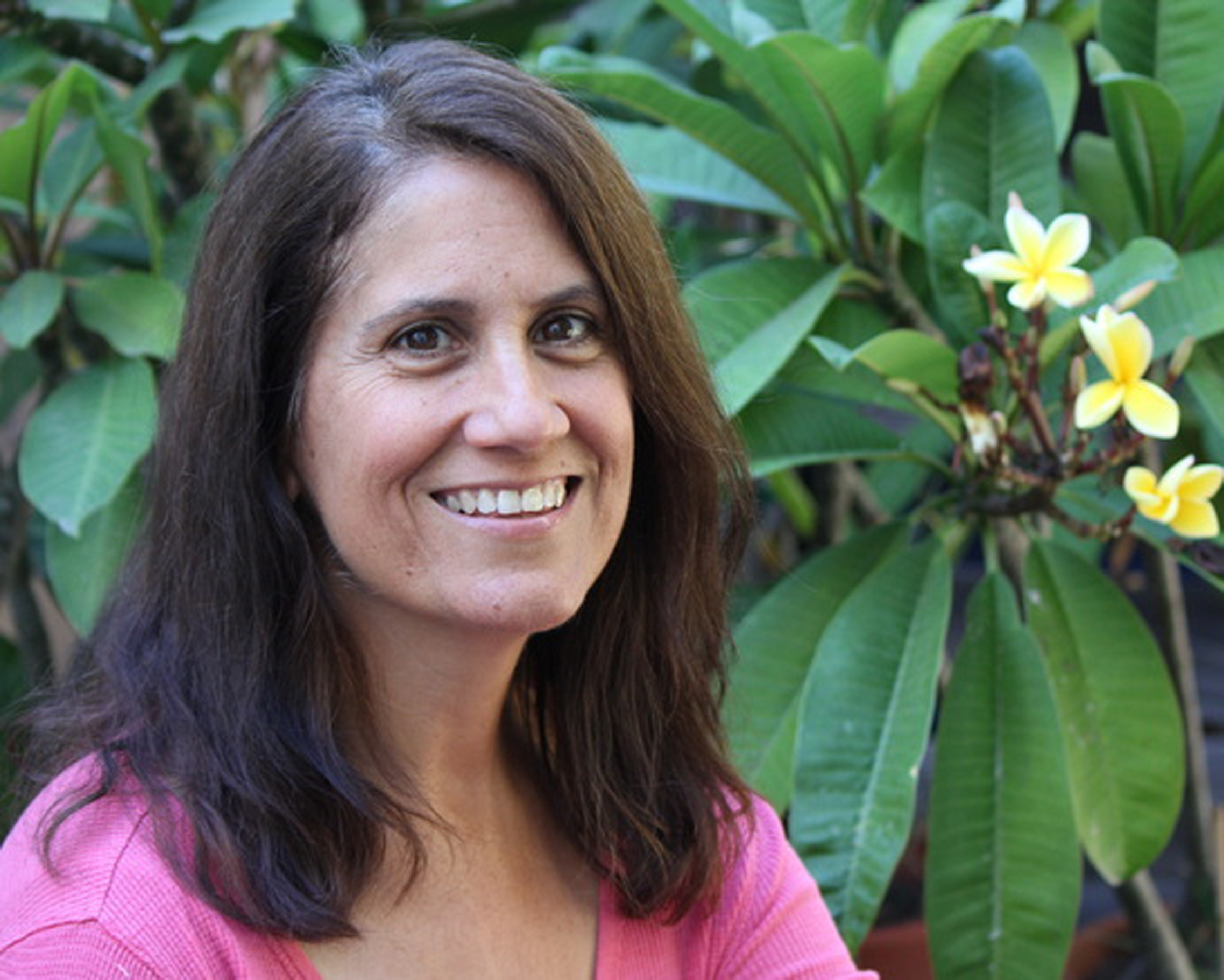
Laura_photo_2015-300 dpiCuban-born Laura Lacámara is the award-winning author and illustrator of Dalia’s Wondrous Hair / El cabello maravilloso de Dalia (Piñata Books), a bilingual picture book about a clever girl who transforms her unruly hair into a vibrant garden.

Laura also wrote Floating on Mama’s Song / Flotando en la canción de mamá, a bilingual picture book inspired by her mother, who was an opera singer in Havana. Illustrated by Yuyi Morales and published by HarperCollins, Floating on Mama’s Song was a Junior Library Guild Selection for Fall 2010 and was a Tejas Star Book Award Finalist for 2011-2012.

You can learn more about Laura’s work at her official website.


Cheeseburger by Day, Guayaba by Night

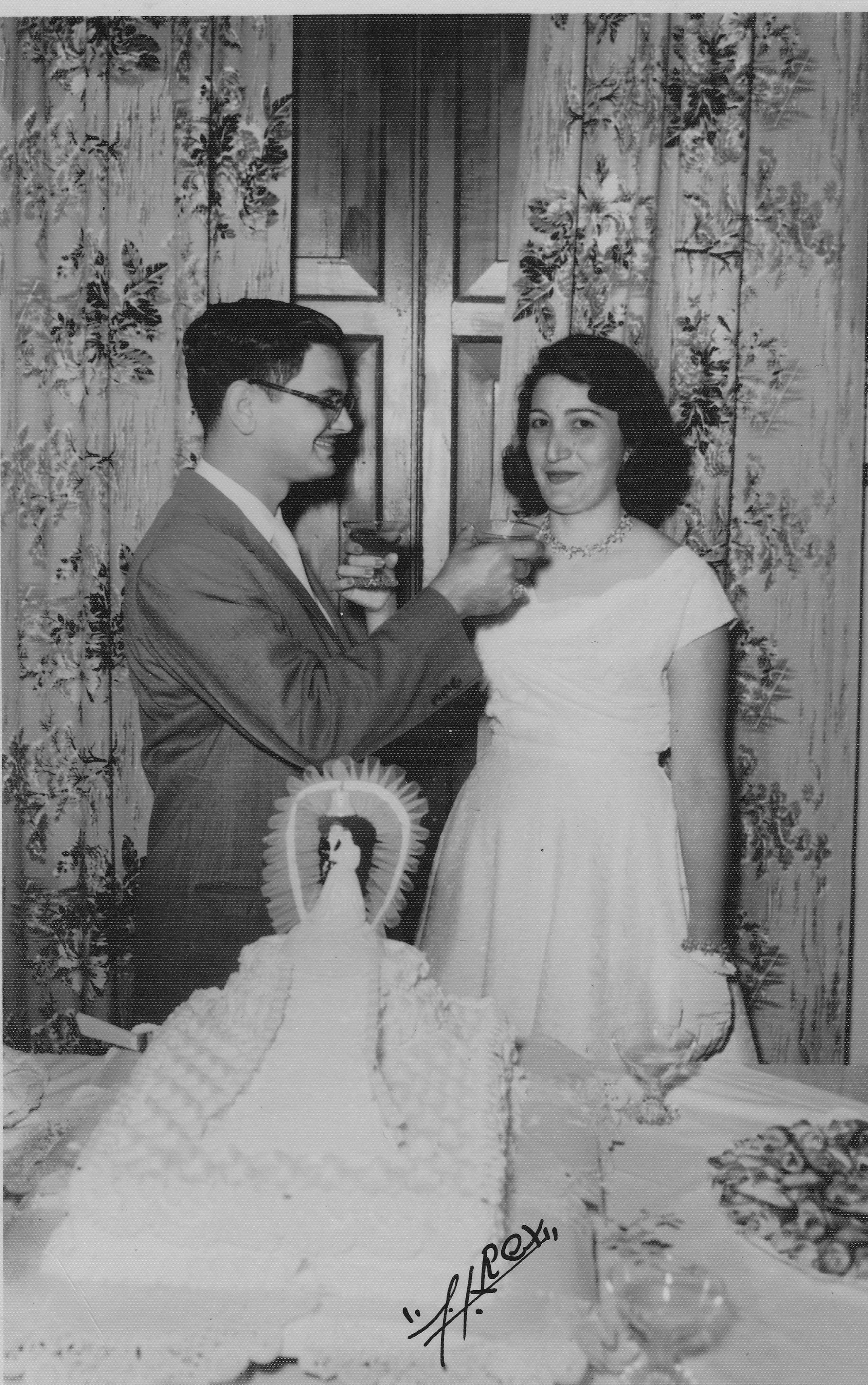
Juan Medina and LIdia Metauten wedding_NEW copy

Meg Medina’s parents at their wedding

By Meg Medina

My parents left Cuba as part of the political exodus in the early sixties. I was the first person in my family born in the United States. I learned Spanish from my mother and English from Romper Room. I grew up biculturally: Cheeseburger by day, guayaba by night, so to speak. All to say that I find that I am Cuban to Americans. To Cubans, I am from the US.

When I consider Cuba, I can only rely on black and white photos and on dreamlike stories – perhaps even the obsessions – of my family. I cut my teeth listening to yarns about a place where you wore only a sweater in the winter, where mangos the size of softballs were heavy with sweetness. It was a place of rivers and beautiful ocean waters where you could see your toes. It was the place of tobacco on their fingertips, a place where my family was happiest and the place that broke their hearts.

Image 7

Two of Meg’s relatives on the streets of Havana

My own memories are these: Months of waiting for letters to arrive on thin airmail paper and my aunt’s voice reading the words aloud. A box of old photographs that arrived decades later, the images bored through by insects, and how those photos made my old mother cry. The odd catch in my chest when I see how dire need somehow got recycled into kitschy tourists waving from the seats of classic American cars.

People often ask: “Have you been to Cuba?”

I have never set foot on the island, but in a way, I have been there every day of my life. But how do we talk about Cuba as phantom limb? And, more important, how do we knit ourselves back together – los de aquí y los de allá – and move forward in search of new and better times?

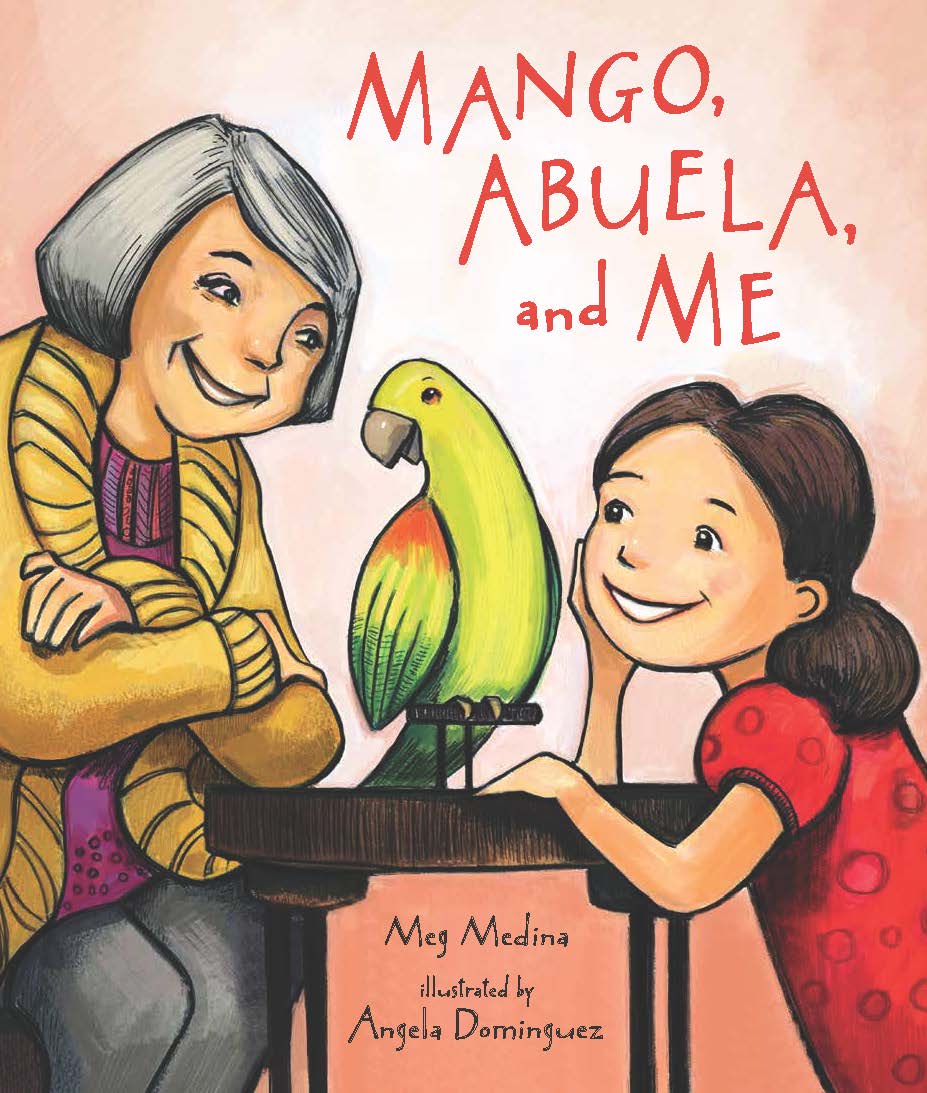
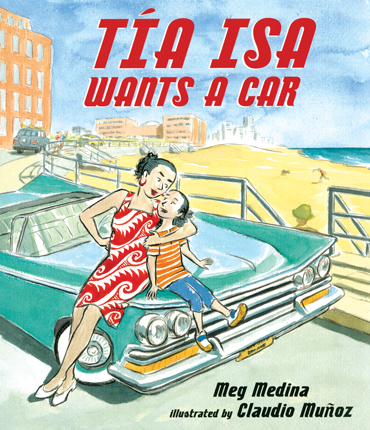
 MANGO_jacket_for_Meg  Tia Isa

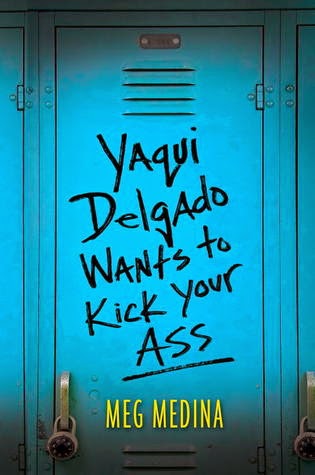
ad6df-yaquiMeg Medina is an award-winning Cuban American author who writes picture books, middle grade, and YA fiction.

She is the 2014 recipient of the Pura Belpré medal and the 2013 CYBILS Fiction winner for her young adult novel, Yaqui Delgado Wants to Kick Your Ass. She is also the 2012 Ezra Jack Keats New Writers medal winner for her picture book Tia Isa Wants a Car.

Photo credit: Petite Shards Productions

Petite Shards Productions

Her most recent picture book, Mango, Abuela, and Me, a Junior Library Guild Selection, has earned starred reviews in Booklist and Publishers Weekly, and  is included in the 2015 American Booksellers Association’s Best Books for Young Readers Catalog.

Meg’s other books are The Girl Who Could Silence the Wind, a 2012 Bank Street Best Book and CBI Recommended Read in the UK; and Milagros: Girl From Away.

Read a wonderful write-up on the Cuban inspiration of Meg’s newest book, Mango, Abuela and Me, at her blog, where you can also find information on her speaking schedule and much more.

How and Why I Wrote My Graphic Memoir

by Lila Quintero Weaver

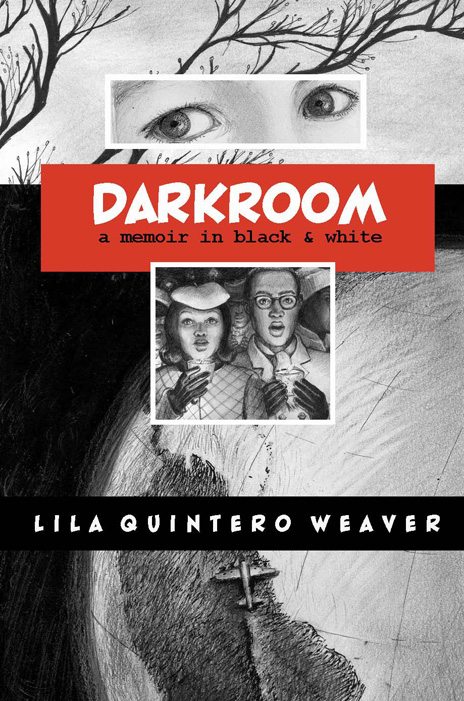
Final CoverreducedLast September at the Comadres and Compadres Writers Conference in Brooklyn, NY, I listened as Daisy Hernandez stated her belief that memoir writing arises from the unanswered questions a writer has about her own life. For me, by contrast, starting a memoir is what led me to realize I had questions.

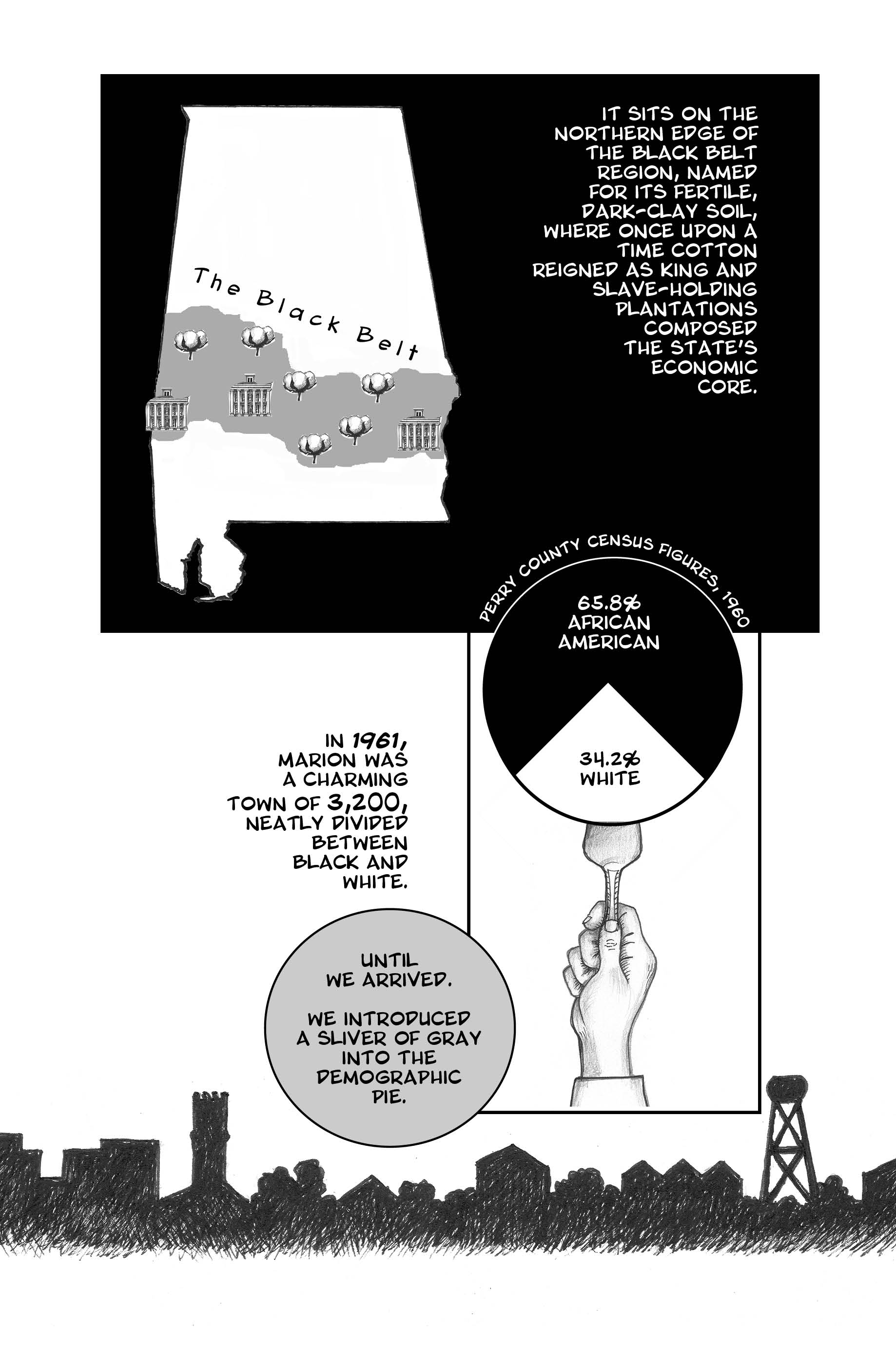
Before beginning my writing journey, it had never occurred to me that there was anything remotely fascinating about my life. I’d grown up as an immigrant child from Argentina in Marion, a tiny dot of a town in the Black Belt region of Alabama, where for most of our 12 years in residence we were the only Latin@s. But then I realized that our isolation at this time and in this place was a story.Demographic pie

How big of a role did this cultural setting, with its legacy of racism, play in making me who I am? That was one of my biggest questions, and eventually, my outsider status and my awakening to racial inequity formed the narrative core of my graphic memoir, Darkroom: A Memoir in Black and White (The University of Alabama Press, 2012).

[Note: All the art in this post is from Darkroom. Click on images to enlarge the view.]

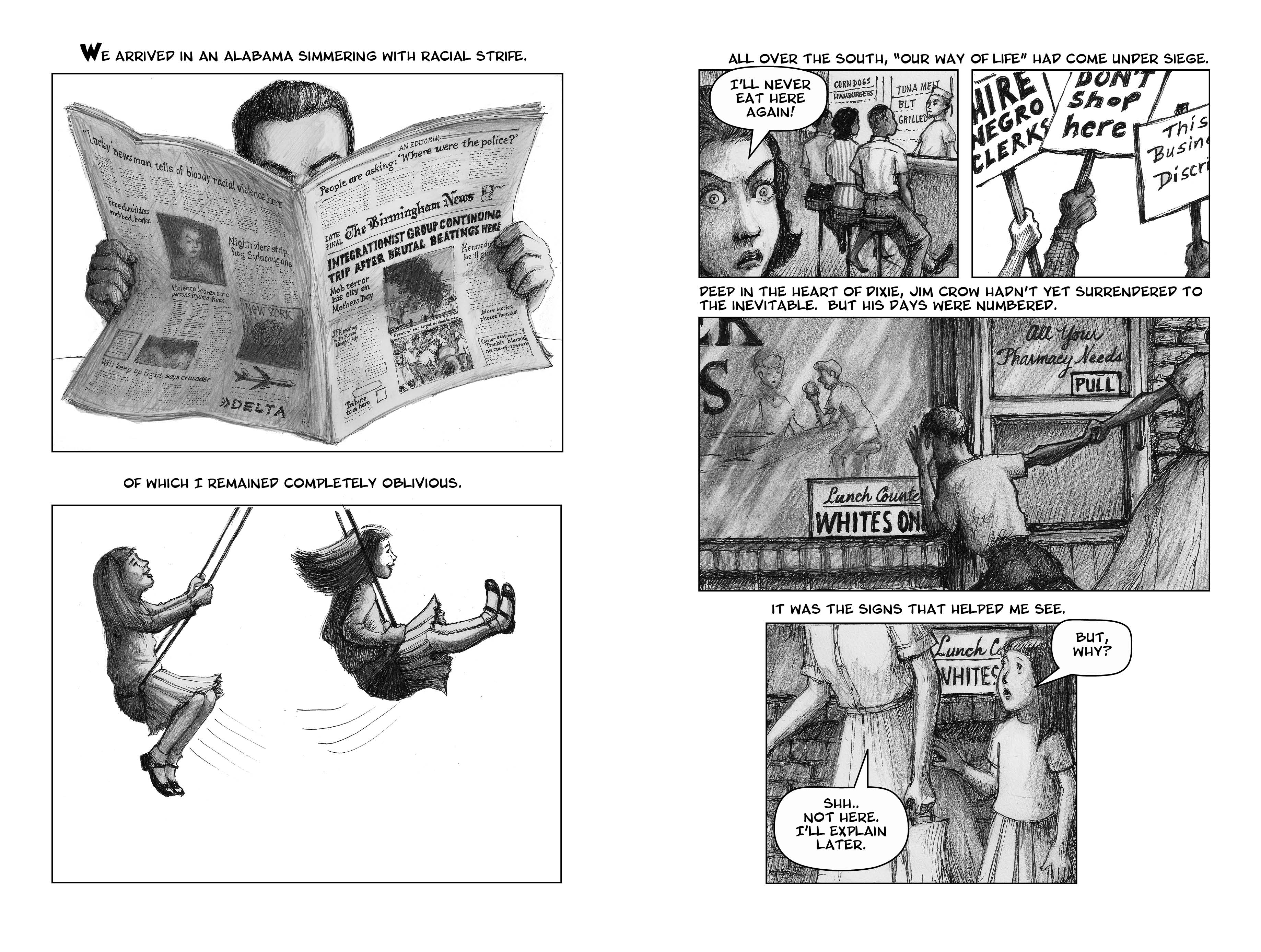
My family’s arrival in Alabama synched up perfectly with several hallmark events in the Civil Rights Movement. We first briefly lived in Birmingham, where within six weeks of our arrival, the Freedom Riders rolled up to the bus depot and into the hands of a vicious mob. Then we moved to Marion, where racial segregation ruled every conceivable setting. Most white people seemed perfectly at home with this arrangement, but it made me deeply uneasy, even at age six.

Whites only

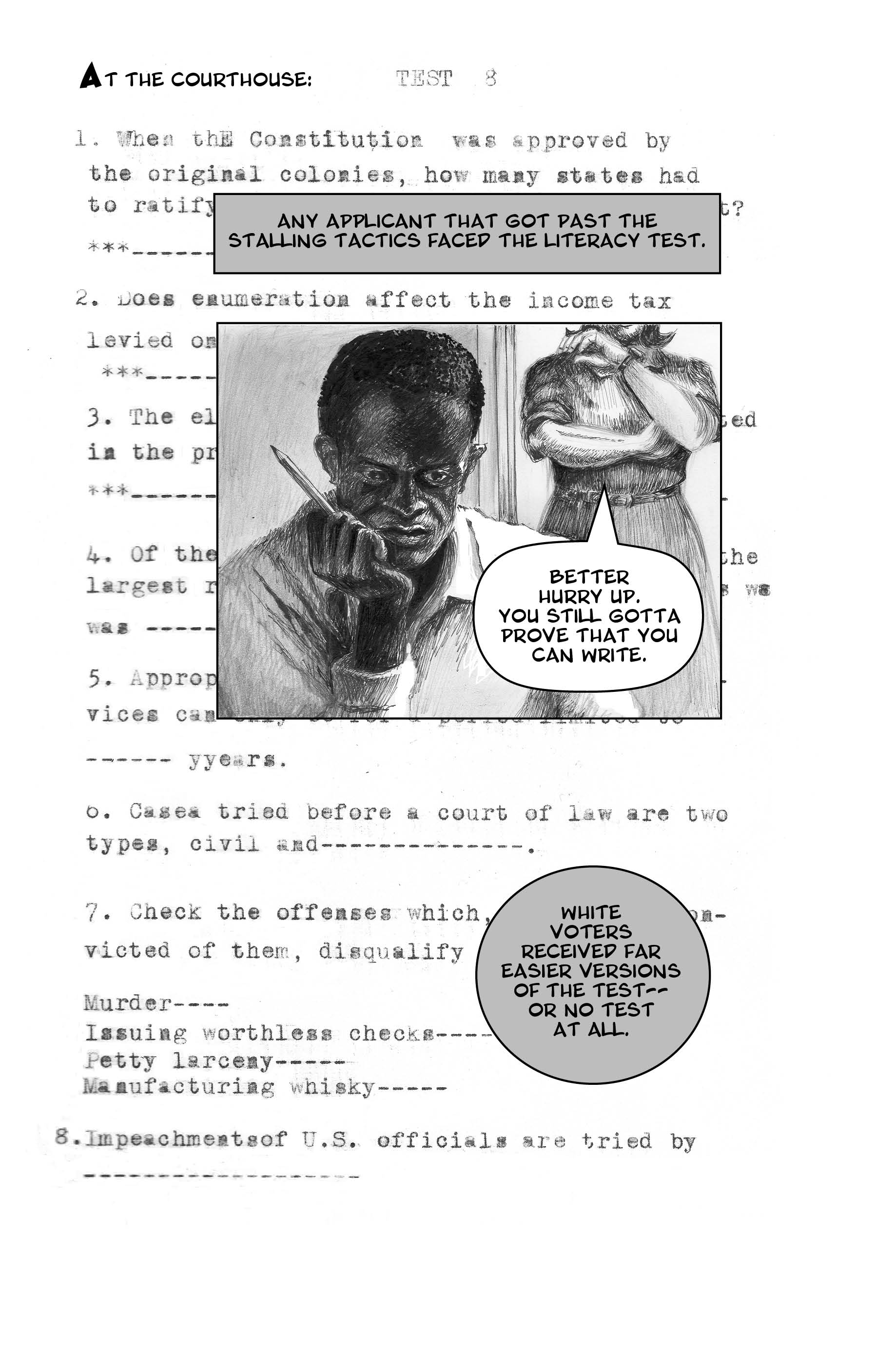
In 1965, African Americans across the Black Belt region were attempting to register as voters, but local officials obstinately barred the way. That February 18th, in Marion’s city square, a white mob clashed with a group of mostly local black protesters, while police stood idly by or participated in the beatings. My father witnessed some of these horrors and so did a host of other citizens, yet none of my teachers ever addressed these events. February 18th and everything surrounding it was quickly swept aside as if it had never happened.

Literacy TestI’d always known that a young black activist had been shot by a state trooper that night, but I’d never actually heard his name—Jimmie Lee Jackson. I did not know that his death—eight days later at Good Samaritan Hospital, in nearby Selma—had triggered Bloody Sunday, which led to the passage of the Voting Rights Act of 1965.

My father died in 1995 before I ever thought to press him for details of what he saw during the violent clash. Among other things, I would have asked how witnessing such brutality at close hand affected his view of America. For decades, the only reason his account of that night didn’t fade from memory completely was because of some home movies he’d taken around the same time. They showed peaceful protest marches in the days leading up to February 18th.

After the Voting Rights Act was signed into law, civil rights activists set their sights on desegregating public schools. This time, I was the eyewitness to history—not that any child understands federal court orders, states’ rights battles, or the long, embittered tug-of-war to sort them out. Those questions would come later.

In 2004, I went back to college to complete my degree. That’s when I started to make up lost ground on the history of my region. The last thing on the checklist before graduating was a senior project.  The graphic memoir Persepolis, by Marjane Satrapi, gave me the idea to combine a written account with images, as an artistic exploration of my family’s immigration journey and the racially troubled times we encountered in our new homeland.

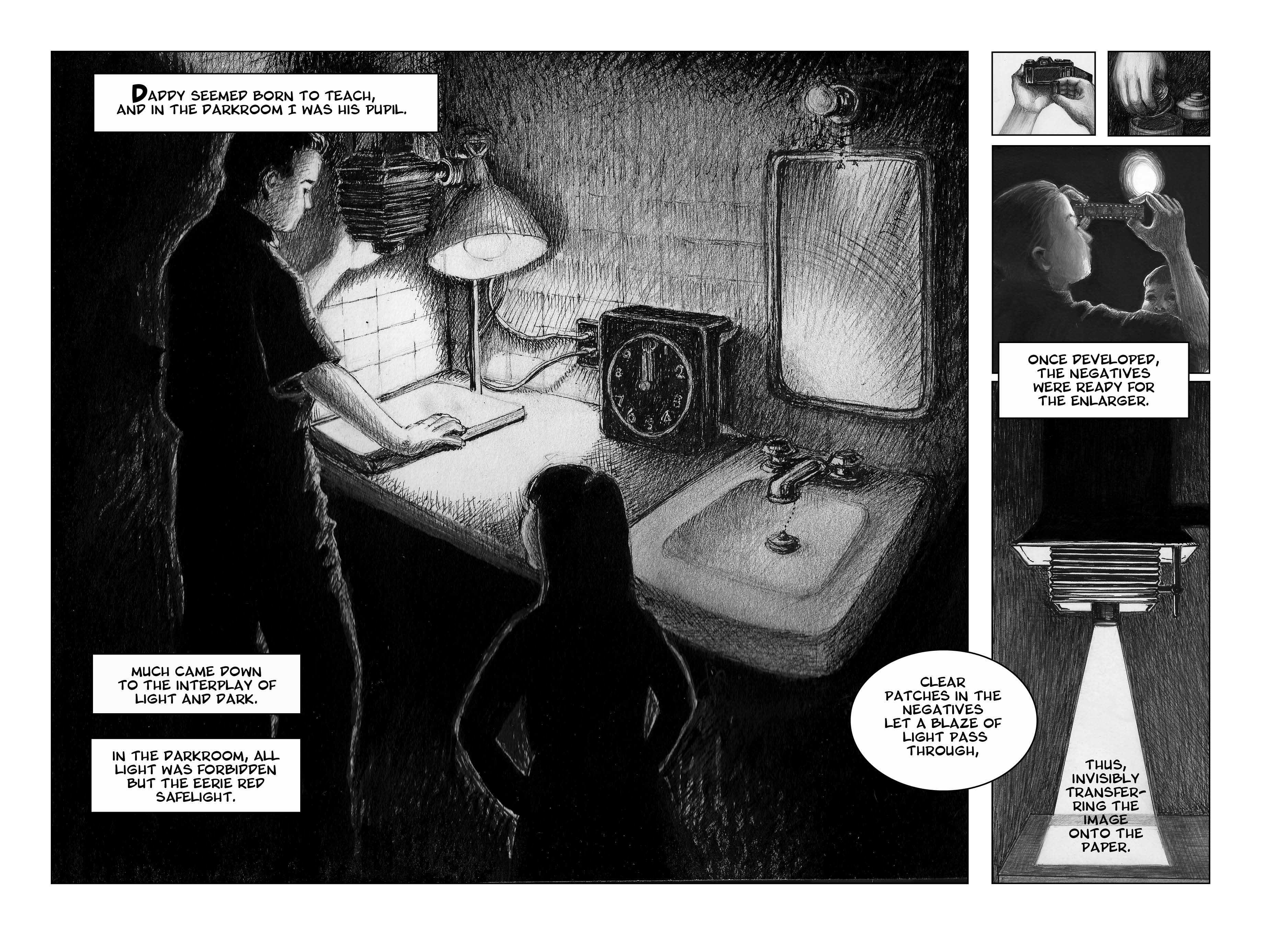
One of my goals was to find out exactly what happened that February night. I also wanted to pay homage to my father’s sideline work as a photographer and the crucial contribution that other photographers, as journalists, made to the Civil Rights Movement.

Darkroom joined spread

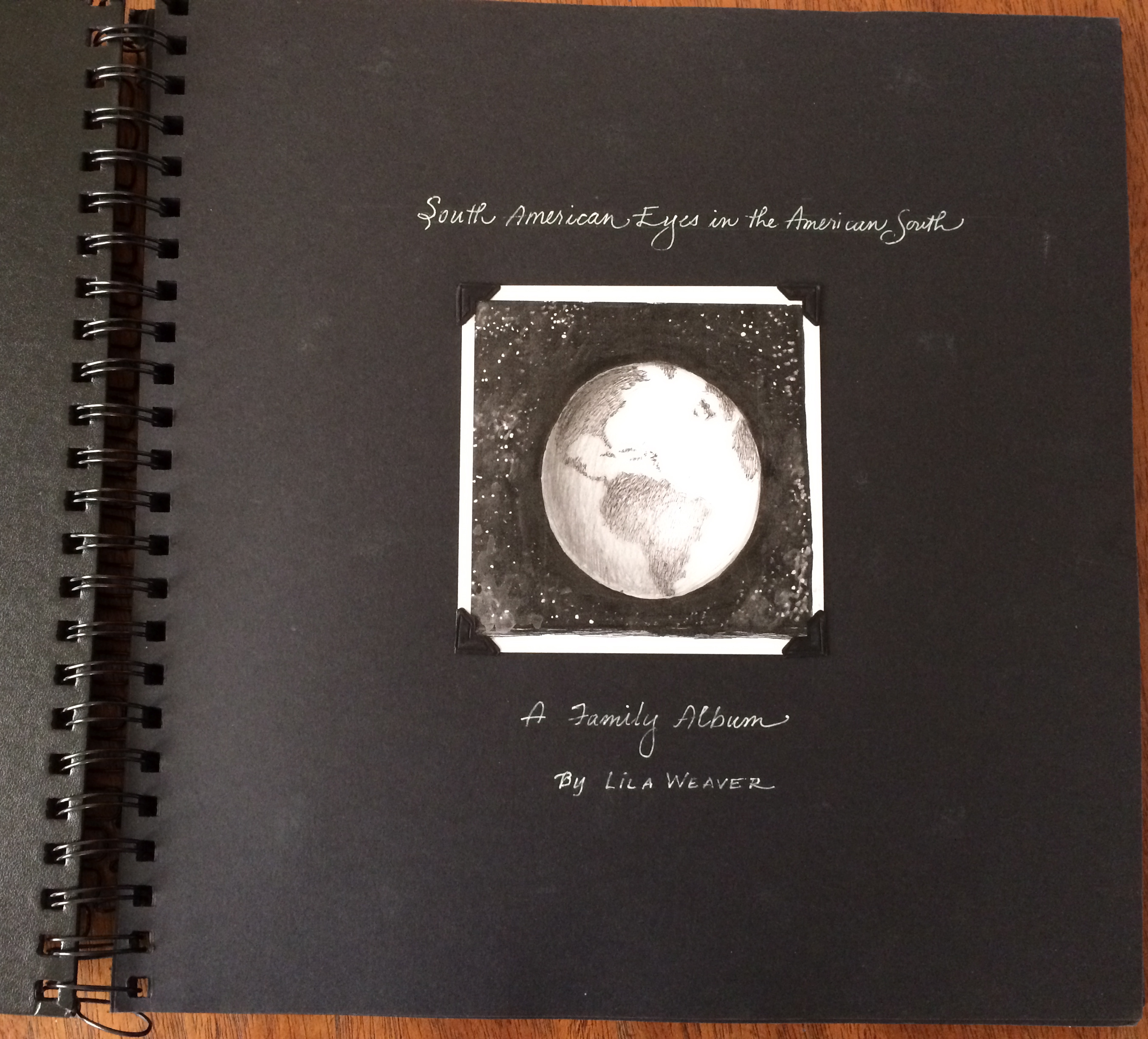
Grabbing the motif of photography helped me unify a complex story through metaphor and add a visual nod to the documenting power of the camera. So this is how my senior project looked: forty pages of drawings and captions, assembled in a photograph album. My drawings stood in for the photos. IMG_0031

At this stage, editors from The University of Alabama Press saw my work and offered me a contract for an expanded version. I said yes before I knew what I was getting into–a project that would consume the next three and a half years of my life.

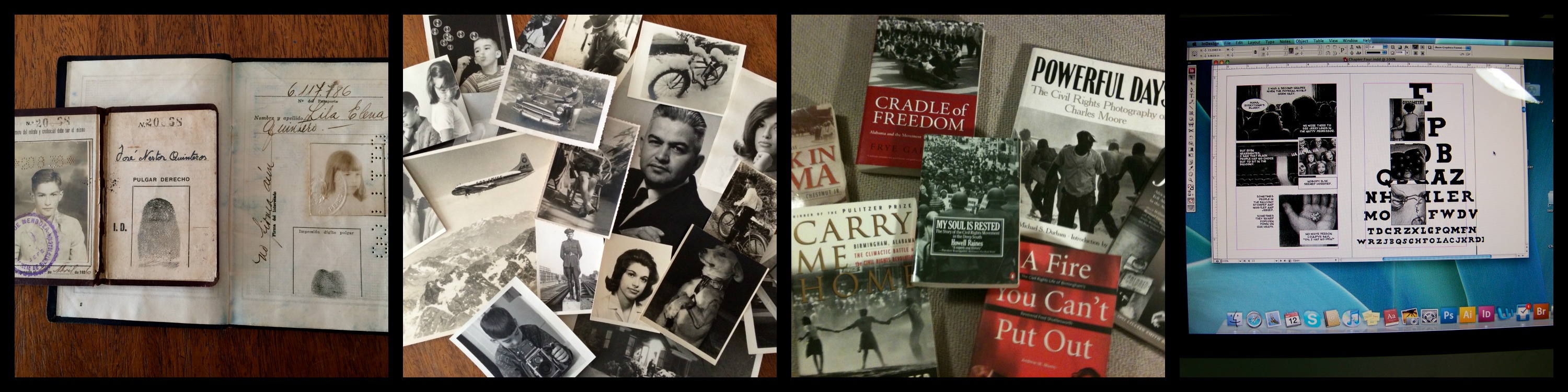
To prepare, I dug down into family memorabilia and photos. I researched the current events of my childhood and gained a degree of perspective that wasn’t possible while the news reports were still fresh.

Darkroom process

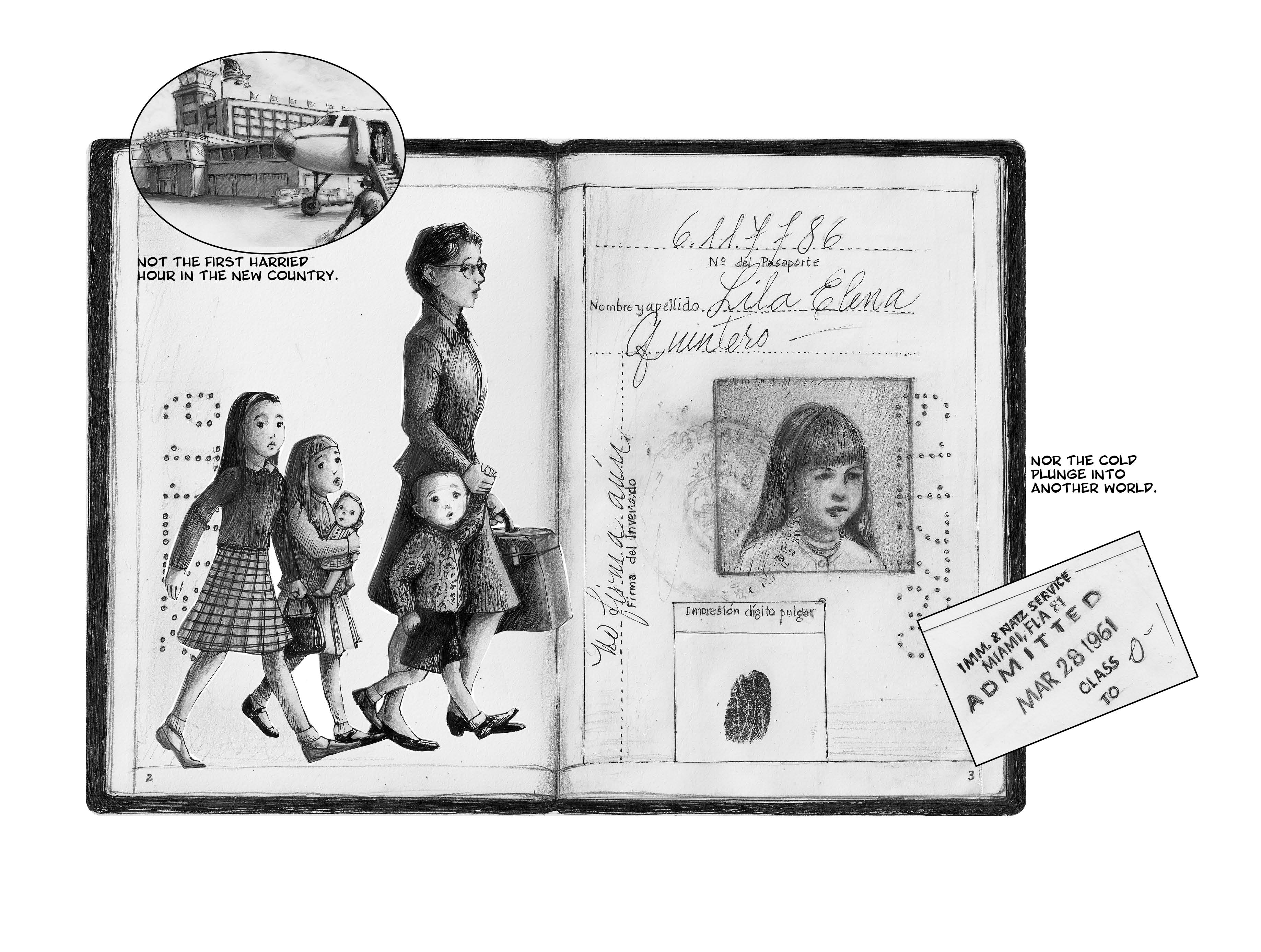
One daunting aspect of putting the book together was teaching myself the bare necessities of digital graphics programs. First, I created my drawings traditionally, on paper—more than 500 in all. Then I experimented with different ways of digitally layering the scanned drawings and combining them with text. The effect I was going for was a scrapbook of photos and ephemera.

Passport

When the book launched in 2012, people in far-flung places showed interest in my story, including a publisher in France and college instructors from around the country who placed my memoir on their reading lists. Although I didn’t write the book with young readers in mind, it has also received a welcome in some middle school and high school classrooms.

Throughout this decade, the nation has been celebrating the 50th anniversaries of civil rights milestones. The Selma march has come to life in a major motion picture, and in a graphic novel series co-authored by U.S. Congressman John Lewis. Many eyewitnesses have published their stories, forming a rich tapestry of personal accounts. Teaching Tolerance, a division of the Southern Poverty Law Center, recently produced an instructional film for classrooms about the campaign for voting rights. It’s entitled Selma: The Bridge to the Ballot. It features visual documentation from previously untapped primary sources, including footage from the home movies that my father shot.

Bloody Sunday lies half a century behind us, yet racial tension and violence continue. I sometimes ask myself: what has actually changed? I remember the days of Jim Crow, which are, thankfully, well behind us. Yet, it seems like the passage of fifty years would’ve brought us deeper, more enduring changes.

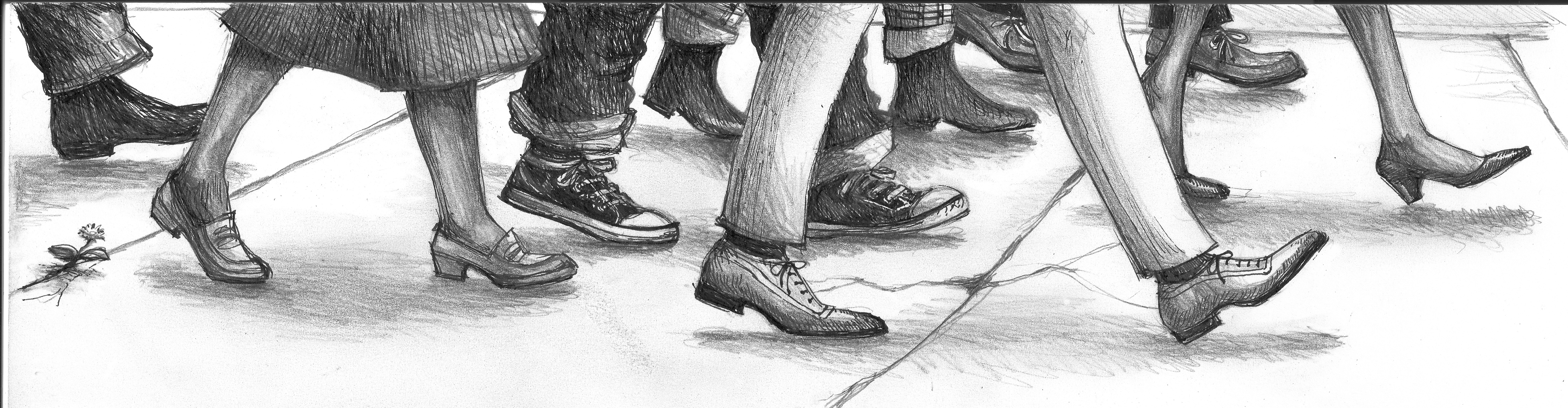
Marching feet for Chpt 8

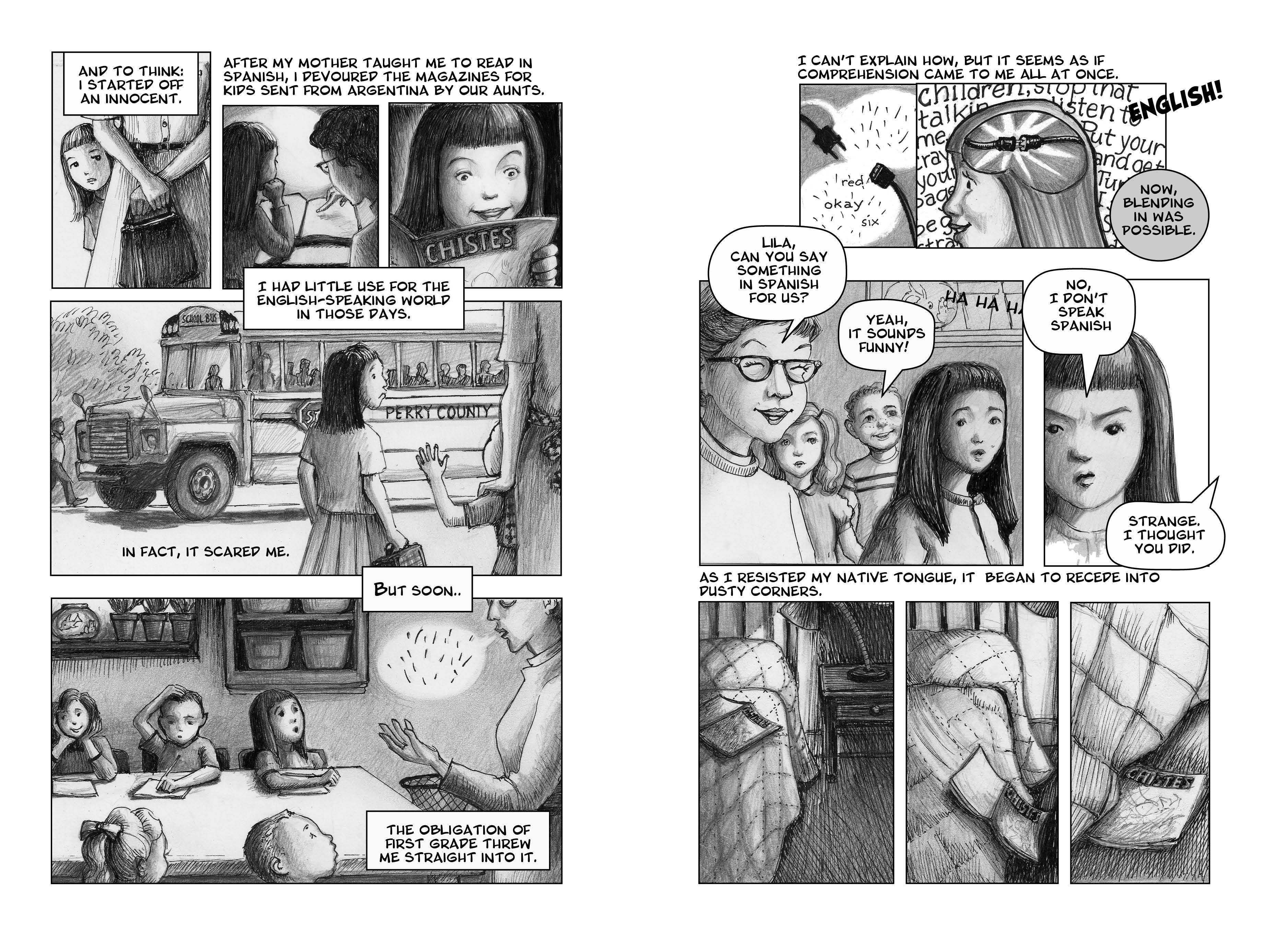
You may be left wondering: where’s the Latino component to my memoir? It’s there, in my initial struggle with learning English—a struggle that soon turned into a childish rejection of Spanish. It’s there, in my family’s generational divide on American culture and how fervently to embrace it.

School bus page

It’s there, in the troublesome fact that my family was spared overt bigotry because in Alabama in the middle of the 20th century, Latin@s were an almost invisible minority that posed little threat. I see this now, through the lens of history. If our immigration journey had taken us to a different region of the U.S., one where Latin@s were openly reviled and denied equality, I would’ve experienced things from a starkly different perspective. I can’t begin to guess what my life’s questions would’ve been then. For that, I turn to the stories of others.

Lila Quintero Weaver is the author-illustrator of Darkroom: A Memoir in Black and White. She’s working on a second book, a middle-grade novel. If Lila’s name looks vaguely familiar, it may be because she’s a regular co-blogger on Latin@s in Kid Lit. You can find her on Twitter, Facebook, and at her official author site.