Book Reviews: Luis Paints the World, A Surprise for Teresita, and Maybe Something Beautiful


Reviews by Dora M. Guzmán

The following books are a wonderful addition to any classroom library, as well as reading about how art inspires young artists and the beauty of waiting. One teaching tip is to use Luis Paints the World and A Surprise for Teresita to compare and contrast the main characters and their response to the act of waiting. Teachers can also use Maybe Something Beautiful and Luis Paints the World to compare and contrast how the main characters use art to express their current feelings to themselves and the community. Also, teachers can use all three books to compare and contrast characters and other story elements, but most of all for young readers to experience inspirational and impacting characters and stories.


MAYBE SOMETHING BEAUTIFUL
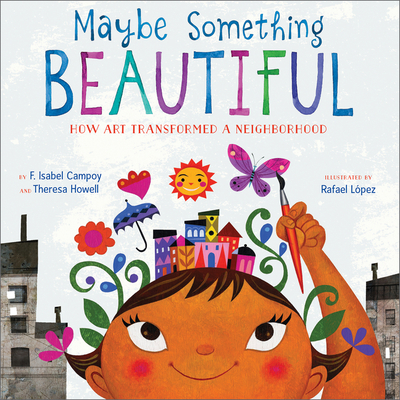
Maybe Something Beautiful CoverDESCRIPTION OF THE BOOK: What good can a splash of color do in a community of gray? As Mira and her neighbors discover, more than you might ever imagine! Based on the true story of the Urban Art Trail in San Diego, California, Maybe Something Beautiful reveals how art can inspire transformation—and how even the smallest artists can accomplish something big. Pick up a paintbrush and join the celebration!

MY TWO CENTS: A realistic fiction picture book in lyrical writing based on a true story, this book paints a picture of a diverse community coming together as artists to liven up the town, and their interpersonal relationships. Mira, a little girl, is an artist who decides to share her paintings with her neighbors. Soon after, the color fulfills the community’s craving for life. Neighbors begin to also contribute their ideas to the town through murals and other creative expressions like dancing, Suddenly, a gray old town turns into a warm, colorful community.

I absolutely loved this book, especially the main character, Mira. She is young, but she contributed a transformative gift to her town by sharing her paintings. Great contrast in the illustrations while Mira literally brings color and life to a gray world. This picture book depicts an essential component of a community, which is to share our joys and contributions to further enhance our lives and surroundings.

TEACHING TIPS: A great read aloud for all ages, especially those in elementary schools (K-5). When reading, teachers can:

  • focus on retelling
  • model similes and metaphors
  • use it as a writing mentor text for descriptive words and language
  • analyze the use of onomatopoeia
  • describe how the illustrations support the text

The possibilities are endless!

isabel-campoyABOUT THE AUTHORS (from the book)Isabel Campoy is an author, anthologist, translator, and bilingual educator who has won many awards for her professional contributions. Her many accolades include ALA Notables, the San Francisco Library Award, the Reading the World Award from the University of San Francisco, the NABE Ramón Santiago Award, the International Latino Children’s Book Award, and nine Junior Library Guild selections. She is a member of the North American Academy of Spanish Language. She lives in Northern California.


THERESA HOWELLTheresa Howell is a children’s book author and editor with many bilingual books to her credit. Mutually inspired by Rafael Lopez’s efforts to transform communities through art, they combined their talents in the lyrical text of Maybe Something Beautiful. She lives in Colorado.


ABOUT THE ILLUSTRATOR: Rafael López is both the illustrator of this book and the inspiration for the character of the muralist. He was born and raised in Mexico, a place that has always influenced the vivid colors and shapes in his artwork. He now creates community-based mural projects around the world and illustrates award-winning children’s books. Rafael López divides his time between Mexico and San Diego, California.


A SURPRISE FOR TERESITA / UNA SORPRESA PARA TERESITA
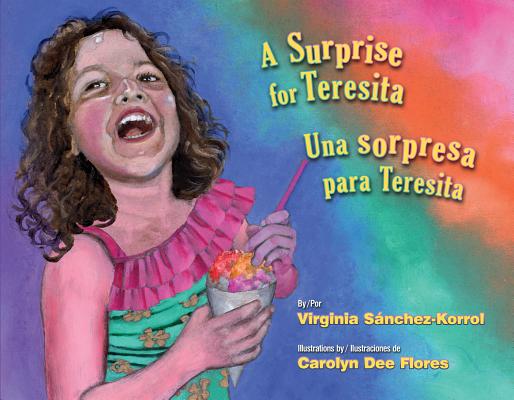
A Surprise for Teresita CoverDESCRIPTION OF THE BOOK: In this bilingual picture book for young children, seven-year-old Teresita anxiously awaits her Tio Ramon, who has promised her a special surprise for her birthday.

MY TWO CENTS: This realistic fiction picture book in a bilingual English/Spanish text format is about a girl, Teresita, anticipating her uncle, Tio Ramon, and her birthday gift. As Teresita goes about her day, she meets other neighbors who are also anticipating her uncle’s famous snow cones. Soon after, her Tio Ramon arrives and not only shares his refreshing snow cones, but did not forget about Teresita’s unique birthday gift!

The main character, Teresita, is every child on their birthday, experiencing the anticipation of a birthday gift, but more importantly anticipating the visit of a loved one. The book also focuses on the joy that her uncle brings to the community, so the anticipation is shared between Teresita and the community. It reminds me of numerous memories of waiting for the raspados, paletas, and elotes. The moment when Tio Ramon arrives is an endearing moment for the reader and Teresita. Great character description throughout the story!

TEACHING TIPS: A great book to use for a read aloud at any age, especially elementary aged students. Reading and writing focuses can also include retelling, predicting, analyzing character feelings and/or traits, modeling narrative structure and writing.
Virginia Sánchez KorrolABOUT THE AUTHOR: Virginia Sánchez-Korrol is a Professor Emerita at Brooklyn College, CUNY. She is co-editor of the three volume Latinas in the United States and when she is not working on history brooks, she writes a blog for the Huffington Post.


ABOUT THE ILLUSTRATOR: Carolyn Dee Flores is a computer analyst turned rock musician turned children’s illustrator who loves experimenting with unconventional art equipment and art mediums. She has won numerous awards. She is currently serving as the Illustrator Coordinator for the Southwest Texas Chapter of the Society of Children’s Book Writers and Illustrators and mentor for the We Need Diverse Books movement.

For more information about Carolyn, check out this post, one in a series that highlights Latina illustrators.


LUIS PAINTS THE WORLD
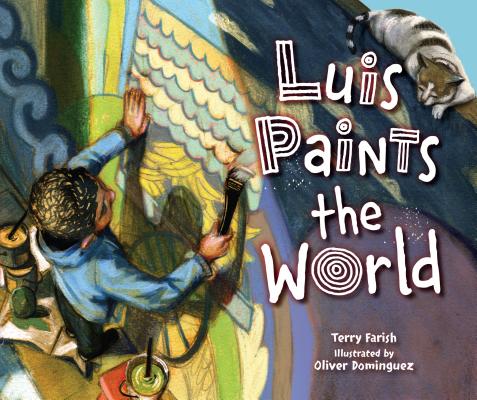
Luis Paints the World CoverDESCRIPTION OF THE BOOK: Luis wishes Nico wasn’t leaving for the Army. To show Nico he doesn’t need to go, Luis begins a mural on the alleyway wall. Their house, the river, the Parque de las Ardillas—it’s the world, all right there. Won’t Nico miss Mami’s sweet flan? What about their baseball games in the street? But as Luis awaits his brother’s return from duty, his own world expands as well, through swooping paint and the help of their bustling Dominican neighborhood.

MY TWO CENTS: A sweet story between Luis and his brother, Nico, who is deploying to another country through the Army. The reader can sense the sadness and helplessness in Luis convincing his older brother, Nico, to stay home. Luis is then inspired to paint a mural in order to show the world to his brother. While Nico’s departure is inevitable, Luis continues to paint and add to the mural, which then also inspires his mom and neighbors to add to the mural. The descriptive language changes throughout the seasons and is reminiscent of the unknown arrival of a loved one in the armed forces. Loved the story format and the thinking process behind Luis’s mural additions. Art truly was Luis’s form of therapy and measure of time of when his brother will come back home.

TEACHING TIPS: A great book to read aloud to any aged students, especially in the elementary grades. Readers can also focus on certain reading skills like retelling, questioning, and predicting throughout the story. Writers can focus on writing skills like narrative writing and adding descriptive language and adding dialogue.
Image result for terry farishABOUT THE AUTHOR: Terry Farish’s picture books, novels, and nonfiction works often focus on immigrant and refugee populations, informed by her early work for the Red Cross in Vietnam and continual research. Terry presents literacy programs for the New Hampshire Humanities Council, and she received the New England Reading Association 2016 Special Recognition Award for Outstanding Contributions to Literacy. She lives in Kittery, Maine.


ABOUT THE ILLUSTRATOR: Oliver Rodriguez was born and raised in Miami, where his family settled after leaving Columbia. As a child, Oliver loved the way illustrations could bring a story to life. He received his BFA in Illustration from the Ringling College of Art and Design in 2008 and has illustrated multiple picture books. He lives in Florida with his wife, two dogs, and a collection of unique hats.
 

img_0160

ABOUT THE REVIEWER: Dora is a bilingual reading specialist for grades K-3 and also teaches an undergraduate college course in Children’s Literature. When she is not sharing her love of reading with her students, you can find her in the nearest library, bookstore, or online, finding more great reads to add to her never ending “to read” pile!
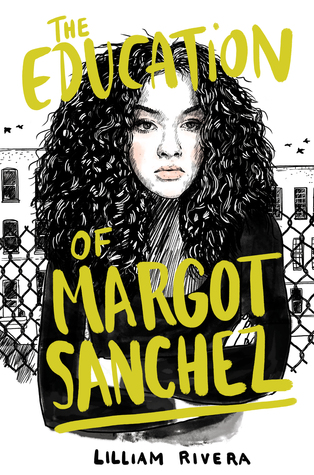
Book Review: The Education of Margot Sanchez by Lilliam Rivera

Reviewed by Elena Foulis

26594801DESCRIPTION OF THE BOOK:

Things/People Margot Hates:
Mami, for destroying her social life
Papi, for allowing Junior to become a Neanderthal
Junior, for becoming a Neanderthal
The supermarket
Everyone else

After “borrowing” her father’s credit card to finance a more stylish wardrobe, Margot Sanchez suddenly finds herself grounded. And by grounded, she means working as an indentured servant in her family’s struggling grocery store to pay off her debts. With each order of deli meat she slices, Margot can feel her carefully cultivated prep school reputation slipping through her fingers, and she’s willing to do anything to get out of this punishment. Lie, cheat, and maybe even steal. Margot’s invitation to the ultimate beach party is within reach and she has no intention of letting her family’s drama or Moises—the admittedly good looking but outspoken boy from the neighborhood—keep her from her goal.

MY TWO CENTS: It is no surprise that life, for a teenage girl, is complicated: trying to fit in, finding purpose, inspiration, friends, and dealing with family dynamics. Add to all of this, growing up bicultural! We meet Margot Sanchez, our Puerto Rican protagonist, spending the summer working at her father’s bodega in the Bronx, as punishment for using her father’s credit card without his permission. We quickly find out about Margot’s family dynamics; her family sent her to a prep school to give her a better education and a brighter future—for herself and the family. Her brother, Junior, is a college drop-out who now works in Papi’s bodega and is expected to take over the business in the future. Both Papi and Mami want the best for their children and operate under traditional Latinx gender values that allow Junior to easily occupy the public space, drink, smoke, and be sexually active, while Margot cannot.

Margot’s understanding of her own place in society is complicated by her parents’ decision to send her to a prep school. She quickly begins to change her look, part of her identity, and adopt those of Camille and Serena—white, rich classmates who often treat Margot as a project by giving her fashion tips, relationship advice, and suggesting that it was perfectly fine to “borrow” her father’s credit card to shop for clothes that were clearly beyond her family’s budget.

In The Education of Margot Sanchez, Rivera tackles issues of peer pressure, family expectations, gender bias, and community. While Margot has several people in her life who are constantly suggesting what she should look like, how she should act, and what she should do, Moises, a local community activist, and Elizabeth, her childhood friend, are the people that make her face her own insecurities, question her sense of belonging, and deal with her constant desire to fit in with her prep school values. Rivera walks us through Margot’s summer of “real” life education, full of lies, sex, and betrayal.

Although the novel hints at a romance between Moises and Margot, their interaction is one that helps her grow, accept herself, and understand how her community is being negatively impacted by gentrification and big corporations moving in; in fact, even her own family business is feeling the change. Throughout the story, Margot learns about her family’s shortcomings and how unhealthy family traditions and cultural norms can push each of them to make wrong choices.

As I was reading this book, I could almost hear my teenage daughters say, “Get over it, Margot! Quit listening to Camille and Serena!” Because Margot, quite frankly, is annoyingly desperate for their approval. Yet, we also see that Margot is trying not to be an outcast at her new school and does anything to be accepted by the popular girls, including stealing. Rivera helps us see that teenagers, although subject to peer pressure, also have the capacity to change, re-invent themselves, ask for forgiveness and restore relationships.

TEACHING TIPS: The Education of Margot Sanchez can be used to teach about public vs private education, formal education vs life/street education, and, although minimal, the values of different Latinx families.  It is also an opportunity to talk about family relationships, love, friendship, and gentrification—this last topic is a current trend, happening in many mid-size to large cities across the United States. Who experiences gentrification? Are “clean up” the neighborhood projects always negative or positive? How can people who face gentrification organize? What communities typically experience gentrification? What minority groups? Only minority groups? Research on these topics can add value to class discussion and can help further understand this present day issue affecting our communities.

FOR MORE INFORMATION about The Education of Margot Sanchez, check your local public library, your local bookstore or IndieBound. Also, check out GoodreadsAmazon, and Barnes & Noble.


Hi-res image. Photo by Julian Sambrano Jr. 

Photo by Julian Sambrano Jr.

ABOUT THE AUTHOR (from her website): Lilliam Rivera is an award-winning writer and author of The Education of Margot Sanchez, a contemporary young adult novel forthcoming from Simon & Schuster on February 21, 2017. She is a 2016 Pushcart Prize winner and a 2015 Clarion alumni with a Leonard Pung Memorial Scholarship. She has been awarded fellowships from PEN Center USA, A Room Of Her Own Foundation, and received a grant from the Elizabeth George Foundation. Her short story “Death Defiant Bomba” received honorable mention in Bellevue Literary Review’s 2014 Goldenberg Prize for Fiction, selected by author Nathan Englander. Lilliam was also a finalist for AWP’s 2014 WC&C Scholarship Competition.


headshot2016ABOUT THE REVIEWER: Elena Foulis has a Ph.D. in Comparative Literature and Cultural Studies from the University of Arkansas. Her research and teaching interests include U.S. Latina/o literature, and Digital Oral History. She is currently working on a digital oral history collection about Latin@s in Ohio, which has been published as an eBook titled, Latin@ Stories Across Ohio.
 

Latinxs and the MFA: A Chat with Emerging Writer Yamile Saied Méndez

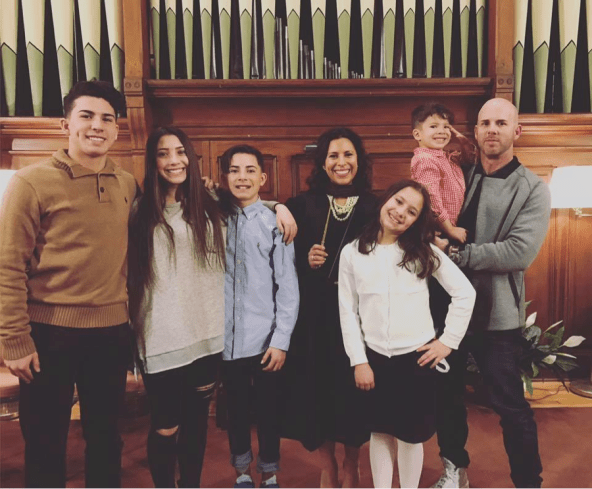
ysmfamily

Writer Yamile Saied Méndez, surrounded by her family

Many aspiring writers look to MFA programs as the surest path to refining their writing skills. Yamile Saied Méndez, a native of Argentina who resides in Utah, is a recent graduate of the Vermont College of Fine Arts MFA in Writing program (VCFA). We were delighted to chat with her about her experiences.

LKL: Let’s get some background. When and how did you catch the writing bug?

Yamile: I’ve always loved stories and books. It wasn’t until my grandfather died, when I was six years old, that I wanted to tell my own stories. True to my writing process (which I recognized much later in life), the story simmered in my mind for a couple of years. I finally put my experiences and feelings on paper when the story had taken total possession of me, and I couldn’t go one more day without telling it.

So I wrote about a princess named Joanna who went out to find a cure for her grandfather’s cancer.

From my beginnings, my writing has been a tool to explore what’s happening in my life and the world around me, although my stories aren’t technically autobiographical. I write about third-culture children, sports, my beloved city of Rosario, life in small-town Utah, spirituality, etc.

Writing has always been a part of my life, but I never thought I could one day be a writer. I left Argentina at age nineteen to attend Brigham Young University, where I majored in International Economy. But during those years, I learned Portuguese and eventually became a translator. I devoured books from the library. When my children were born, I savored the books I didn’t have in my childhood (like Where the Wild Things Are, Ferdinand, and Good Night Moon, among others).

When my own stories started taking full possession of me, and I couldn’t go another day without telling them, I started writing. After the birth of my fourth child, I decided that I wanted to share my writing with the world. I rolled up my literal sleeves and started my writing apprenticeship.

LKL: Before VCFA, what types of self-directed activities or writing classes did you utilize to develop your craft?

Yamile: NaNoWriMo was the catalyst that sent the proverbial writing stone rolling for me. I was very active in the blogging community, and on November 6th, 2007, I read a casual comment about a novel-writing challenge. I headed over to the NaNoWriMo website, signed up, and started writing a story that had been germinating in my mind for a while and I hadn’t even noticed. The euphoria of typing The End is addictive, and after the first time, I couldn’t stop.

I wrote every day and learned there was much more to writing than pouring words on the page. I found books on self-editing, story structure, character development, and eventually, the publishing industry. With the help of my critique group (the Sharks and Pebbles, whose name originated from this spoof), finished a manuscript and queried it without apparent success. Some agents who rejected my piece were very encouraging, and that was all I needed to stay motivated.

I attended my first writers conference, LDS Storymakers, which is the largest writing conference in Utah, and entered the first-chapter contest. My entry won the first place in the Young Adult category, which told me I was on the right track.

I also attended the Writing and Illustrating for Young Readers conference and workshop, organized and directed by VCFA alumna and award-winning author Carol Lynch Williams, and my life changed forever. At WIFYR I workshopped with Ann Dee Ellis, Martine Leavitt, and Cynthia Leitich-Smith. After savoring this yearly feast on craft and art, I wanted more. I knew Martine and Cynthia taught at VCFA, and when my fifth child was one-year-old (and in my mind, capable of surviving without me during the ten-day residency periods), I applied to the program.

LKL: Please share about your experiences with your MFA, starting with the decision to apply. How did you choose VCFA? What are some of the factors you would recommend for other writers to consider?

Yamile: I had looked into VCFA for years, but my four children were very young, my husband had (and still has) a very demanding job, and I didn’t think I had the skills required for such an intensive program. I perused the website nightly, and when I turned to the Acknowledgements page of a favorite book and read the author’s dedication and/or gratitude to VCFA, and its faculty and student body, my desire to apply intensified.

One day I realized that time kept going, and that my children were growing up quickly. If I wanted to pursue advanced education, now was the time. Fortunately, my husband was very encouraging. After all, I had supported him when he pursued his MBA degree and as he advanced in his career. Armed with my family’s support, I applied. When the acceptance letter arrived, I was thrilled.

LKL: Take us into the world of an MFA student. What were some of the turning points or eureka moments for you as a writer?

Yamile: In my first semester, I learned to be a flexible writer. I’d already written two MG novels before VCFA, and I was determined to write YA during my two years as a student. With my first advisor, I wrote YA, but I also wrote poetry, picture books, early readers, and my favorite surprise: short stories. Exploring with the format allowed me to study plot and story structure. It taught me to make my words count. Two of my YA projects were born of short stories. The experience was illuminating in regards to my own writing process. Another thing I valued from the beginning was being open to critique, but also trusting my writerly instincts. In our graduation ceremony, VCFA Thomas Christopher Greene told us graduates that we had earned a Master’s degree over our own writing. To trust this authority. I remind myself of this lesson daily.

yamile-daughterLKL: During your enrollment, you were also busy with family life. Could you share some tips for getting the most from classwork while also meeting everyday demands?
Yamile: As I flew back home from my first residency, I considered the work load for each of the five packets ahead of me that semester (40 pages of creative writing, 2 critical essays, an annotated bibliography of ten to fifteen books, and a detailed letter to my advisor), and I was overwhelmed.

How in the world was I ever going to do it all?

I learned to prioritize. I put myself on a schedule that started much earlier than my children’s so I could have uninterrupted writing time. With my kids in school, I had almost three hours of sacred morning writing time (I still do most of my writing during the morning when the kids are at school). Still, my obligations didn’t fit into 24 hours.

I learned to say no. I didn’t volunteer at the kids’ schools as much (or at all during my third semester). I gave up TV.

I also had obligations to my agent, my freelance writing job, and my church. I reached a point in which I put my writing, my family, my obligations ahead of my health. I started learning (I’m still learning this) to maximize my time so I could sleep a full night. I learned simple recipes, and my children helped with household chores. When they saw my dedication to my school work, my family teamed up to help me meet my deadlines. We read my “homework” before bedtime. We listened to audiobooks in the car. The kids brought me books from their school libraries to help with essays or research. Again, I also learned how to be a flexible writer. I wrote or read during halftime at soccer matches or long dance competitions. I did “character studies” during carpool (15 year-old boys will say the funniest things when they believe the driver can’t hear them). I learned to let go of things I couldn’t control, like the sea of Legos in the playroom. These habits prepared me for the writing life after the MFA. Nowadays, although I don’t have an advisor waiting for my packet, I have an agent waiting for my revision. A VCFA friend and I became accountability partners. It helps to have someone cheering for me and celebrating accomplishments at the end of a busy week.

The MFA was a family affair, and I couldn’t have done it without the support of so many friends and family.

LKL: A few years ago, Junot Díaz wrote a stinging essay about the experiences of people of color at various MFA programs. On its website, VCFA makes a strong commitment to diversity. In your view, how well do they honor this promise?

fellowlatinas

Yamile with fellow Latinas at VCFA

Yamile: I’m embarrassed to confess I didn’t know Junot Díaz until my first semester advisor assigned me one of his short stories. The beauty, honesty, and clarity of Junot’s words stunned me. My perception of my world, my writing, my country, and myself changed dramatically. I measured all I learned against my new perception of what it means to be a POC in a graduate program.

At VCFA, the student body is still not diverse enough. The staggering price of tuition and room/board is a deterrent to many POC applicants. VCFA is trying to mitigate the financial burden by granting scholarships (The Angela Johnson Scholarship for New Students of Color or Ethnic Minority established by literary agent Barry Goldblatt).

As far as the faculty goes, VCFA boasts an incredible roll of award-winning stars with ties to diverse communities: Cynthia Leitich-Smith, Uma Krishnaswami, An Na, Will Alexander, Daniel José Older, Kekla Magoon, and Shelley Tanaka, among others.

The rest of the faculty is invested in diversity and the promotion of writers from marginalized communities. Workshops and lectures are sensitive to the importance of inclusion and supporting marginalized voices. Alumni POC are wonderful role models and mentors. In the admissions department, prospective, current, and past students have a super champion in Ann Cardinal, a self-declared Gringa-Rican.

To summarize my answer, yes, VCFA honors their commitment to diversity, and they continue to strive to better serve the interests of all students, especially writers of color.

LKL: What advice would you give to aspiring Latinx writers about considering a creative writing program or preparing to enroll in one?

Yamile: I’m a strong advocate for education. However, I’d advise people to consider the motivations for pursuing a MFA.

Is it to take a shortcut on publication or success?

Keep in mind that there aren’t any promises for either publication or success even for VCFA MFA holders.

Is it to teach?

An MFA will provide the writer with better opportunities to teach at a university level, since it’s a terminal degree.

Is it to improve their craft?

You could also acquire these tools on your own, or by attending conferences and workshops. But during a structured program, you will be committed to do your work every day, no matter what.

Is it for the community?

At VCFA, I made personal connections with fellow students, faculty, and alumni, some of whom graduated years before I even started. The VCFA family is a tight-knit group, and I’m honored to be part of it.

Also, consider your financial situation.

Lastly, look into your heart. I always wanted to be a writer, but I felt I needed to study something practical, and that’s how I ended up studying economics. My love for writing and reading never waned though, so when I had the chance, I chose VCFA. I wonder how my story would have been different if I’d gone with my heart years ago.

If a writing program is what you want to do, then go for it.

LKL: Now that you’re an MFA grad, what’s next? What are you working on?

Yamile: I finished VCFA with a portfolio of exciting material. I’m revising an MG story about a girl, the star of an all-boy fútbol team. When she gets her period and gets kicked off the team, she goes on to earn a spot in a girls’ team, and to fight for the National Championship. For my critical thesis, I wrote on the importance of portraying girls’ puberty in middle grade, and following on the heels of that, this story has been fun and empowering to write. Eleven-year-old me would have loved it.

I’m also working on a story I call it my gender-bender Hamilton meets Joan D’Arc–my love letter to refugees and immigrants everywhere.

Next spring, I’m teaching a diversity class at Storymakers, and I applied to Junot Díaz’s VONA workshop, because education never ends.

LKL: Finally, permit us to show off a little on your behalf. You had an amazing 2015: You were named a finalist in Lee and Low’s New Voices Award. You secured a literary agent. You enrolled at VCFA. At some point, We Need Diverse Books named you a recipient of its inaugural Walter Deans Myers Grant. Wow! What has the Walter Dean Myers grant meant to your writing career? Tell us how 2015 fits into the story of where you’ve come from—and where you see yourself going—as a writer.

Yamile: The validation I felt after winning the New Voices Honor, and being chosen as an inaugural Walter Dean Myers Grant recipient was the fuel I needed to keep me motivated and engaged in learning as much as I could at VCFA. To think that I taught myself how to read and write English with a bilingual dictionary! I’m inspired to keep working towards publication, to tell the stories that I wanted to read as a child and that also reflect the reality of a large portion of the population of our country. My dream is to visit schools to tell children like my own that their voices matter. I’m excited for the future generation and the stories they’ll produce.

Keep up with Yamile on her website, where she blogs about the writing life, or on Twitter: @yamilesmendez. 


Book Review: Stef Soto, Taco Queen by Jennifer Torres


Reviewed by Caissa Casarez

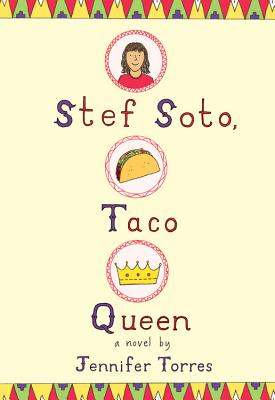
Stef Soto, Taco Queen CoverDESCRIPTION FROM THE BOOK’S BACK COVER: Estefania “Stef” Soto is itching to shake off the onion-and-cilantro embrace of Tia Perla, her family’s taco truck. She wants nothing more than for Papi to get a normal job and for Tia Perla to be a distant memory. Then maybe everyone at school will stop seeing her as the Taco Queen.
But when her family’s livelihood is threatened, and it looks like her wish will finally come true, Stef surprises everyone (including herself) by becoming the truck’s unlikely champion. In this fun and heartfelt novel, Stef will discover what matters most and ultimately embrace an identity that even includes old Tia Perla.

MY TWO CENTS: Jennifer Torres doesn’t waste any time introducing the readers to Stef and the people in her life, including Papi and her best friend Arthur in the first scene outside of their Catholic middle school. She notices Papi in his taco truck – known as Tia Perla for the rest of the book – and she gets angry because he had originally promised to let her meet him at a nearby gas station. This is the first of many conflicts Stef has with her parents about maturity at the seventh-grade level. The conflicts are about issues that come up in many houses of middle school students.

One of my favorite scenes of the book is in chapter 3, when Stef reminisces about the early stages of Tia Perla being in her family’s life. From what Torres describes as “kitchen-table whispers” about the kinds of beans and salsa it’ll feature (“nothing from a jar,” insists Mami) to learning the origin of the name (Stef’s pick), the entire scene was sweet and a key part of the story. The chapters in the entire book are short but detailed enough for readers of any age to get a glimpse into Stef’s life.

Despite the joy Tia Perla once brought to Stef, she feels anything but joy about the beloved truck as the book goes on. She tries to be nice to former-friend-turned-popular-girl Julia by offering her a ride home in Tia Perla, but Julia turns around and calls Stef the “Taco Queen” behind her back. This comes after Julia makes a scene before the start of their English class by announcing she has tickets to see local pop sensation Viviana Vega in concert. Torres then takes the readers into more of Stef’s life at Saint Scholastica School – trying to fit in and leave Tia Perla in the dust. Stef’s favorite day of the week is Tuesday, which she realizes is not common, because it’s when she has her art class. “And in art class,” Torres writes, “I never hear Mami’s voice telling me I’m too young, or Papi’s nagging me to be careful. I am in charge of the blank piece of paper in front of me, and I can turn it into something as vivid and adventurous or as quiet and calm as I want.” This part of the story stuck out to me because of the way Torres compares making art with wanting independence.

Stef spends every Saturday helping her Papi and Tia Perla during their busiest day of the week. They travel to farmers markets, parks, and other outdoor common areas in their city to feed the crowds with the scrumptious food they’re known for. Even though Papi seems grateful every time Stef helps him out, she still wants nothing to do with Tia Perla, especially when it gets in the way of her independent life she’s trying to create.

During a stop on one of Tia Perla’s routine Saturdays, Stef visits her other best friend, Amanda, after her soccer game. While the two are cooling off with the help of strawberry soda, they listen to the radio and eventually win concert tickets to see Viviana Vega. Stef is cautiously optimistic about her parents letting the two attend the concert alone – until they say no, despite her papi giving her a cell phone she thinks is to check in with them at the concert.

The book then turns its focus to two more complex and meaningful issues previously introduced before Stef’s blowup with her papi. Stef and her classmates decide to work together in a unique way to get more art supplies (hint: a school-wide event is included). And, in a move that impacts Stef more than she realizes, Papi’s business (and Tia Perla) is threatened by new proposed city rules that would impact all food trucks in the area, specifically the taco trucks. Stef seems more mature than others her age when she mentions translating important notes for her papi and others from English into Spanish.

The book ends with a couple of different twists that I didn’t see coming, but I believe both twists worked really well to help bring the story to a close. Stef learns to love all of the parts that make up her identity – even Tia Perla.

Torres does a wonderful job describing the characters and each place they’re in throughout the book. I felt like I was following Stef and her family and friends through their adventures. The book addresses many important topics that may be tough for some kids and families to discuss, but I believe the issues were written in a way that kids can understand. I felt for Stef during some of the scenes with her parents.

There are some basic Spanish words and sentences in the book, most of which are italicized except for one – Orale! That word appears several times in the book with several different meanings, which I loved. It helped set the tone for each of the different chapters, especially when Stef described each way it was written for each scene.

Overall, Stef Soto, Taco Queen is a wonderful read. It’s recommended for kids in grades 4-7 (ages 9-12), but I would suggest it to anyone looking for a story about a girl trying to find herself in this crazy world.

TEACHING TIPS: This book could be used to discuss the idea of working together to help solve problems, especially in the face of adversity. Stef’s art teacher, Mr. Salazar, helped his class raise money to bring in more art supplies, even though he was skeptical about their idea at first. The book could also be used in a way to discuss local politics for students. Not many middle-school students get involved with politics in such a way that Stef did, but I believe the book would be a good way to teach students how to make a difference in their community.

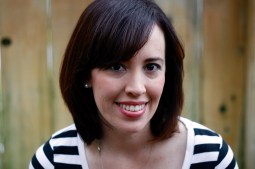
jtorresABOUT THE AUTHOR (from the book’s back cover): Jennifer Torres was 17-years-old–a senior at Alverno High School in Sierra Madre, California—when the first time a story of hers was published in a newspaper. The story was about making tamales with her family, but it was also about love and tradition and growing up. She went on to study journalism at Northwestern University and the University of Westminster. Today, she works as a freelance journalist and is the author Finding the Music, a picture book from Lee & Low. Jennifer lives with her husband and two little girls in central California. Stef Soto, Taco Queen is her debut novel.
BOOK LINKS: Amazon, Barnes & Noble, IndieBound, GoodReads


assertABOUT THE REVIEWER: Caissa Casarez is a proud multiracial Latina and a self-proclaimed nerd. When she’s not working for public television, Caissa loves reading, tweeting, and drinking cold brew. She especially loves books and other stories by fellow marginalized voices. She wants to help reach out to kids once in her shoes through the love of books to let them know they’re not alone. Caissa lives in St. Paul, MN, with her partner and their rambunctious cat. Follow her on Twitter & Instagram at @cmcasarez.
American Stories of Opportunity, Hope, and Ambition: A Guest Post by Author Jennifer Torres


By Jennifer Torres

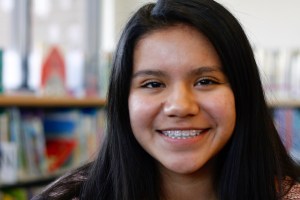
Melissa, an 8th grader who plans to go to MIT and be a college math professor.

Melissa, an 8th grader who plans to go to MIT and become a college math professor.

Escalon is a Spanish word that means “step” or “stepping stone.” It is also a small town in the heart of California’s agricultural Central Valley, surrounded by dairies and almond orchards. Just off Main Street there, across from American Legion Post 263, is the library where Melissa, an eighth grader, volunteers to read to younger children, sometimes in English and sometimes in Spanish.

“I think it’s important to read to kids because they get to know new things when they read a book,” she told me. Melissa’s own favorite books, she said, are mystery and fantasy novels. “It’s like a whole new world.”

Just like Melissa, many of the children who visit the Escalon Library are the sons and daughters of Mexican immigrants, families who saw, in the United States, a step toward opportunity and who courageously took it.

Stef Soto, Taco Queen CoverThose stories are American stories, and I hope that readers will recognize them in Stef Soto, Taco Queen.

The fictional Stef Soto, like millions of very real children in the United States who have immigrant parents, is a first-generation American.

Just like Melissa, Stef sometimes translates for her mom and dad.

Just like Stef, Melissa has parents whose hearts thunder with hope and ambition for their daughter.

“I want her to remember where she comes from, but her future is here,” Melissa’s mom, Adriana, told me in Spanish as she helped her daughter lead an arts-and-crafts project at the library. (She credits the San Joaquin County Office of Education’s Migrant Education department for encouraging her to become an advocate for Melissa’s learning). “I want her to graduate, to go to college, to have a better quality of life.”

She and her husband have encouraged Melissa to begin investigating colleges, to think about what she wants to study, who she wants to be.

“I’ve decided I want to go to the Massachusetts Institute of Technology,” Melissa said, braces glinting. “I think that’s a good one for what I want to do.”

What she wants to do is teach math. When I asked her what grade, she hesitated, sheepish about correcting me.

Finally, she shook her head. “No, I want to be a math professor. Like at a university.”

Just like I did—in a family that includes first-, second-, third- and fourth-generation Americans, as well as some who still live in Mexico—Stef is growing up speaking and listening to a vibrant mix of English and Spanish. We both find comfort in friends and family and warm tortillas, smeared with butter.

And just like all of us, I think, she is trying hard to figure out exactly where she belongs. Too often, for too many, it can feel like a here or there question.

But as I have learned, as students like Melissa remind us, and as characters like Stef discover, our stories are so much richer than that.

“I get to have both cultures,” Melissa said. “And I want people to know that immigrants are people—smart people—who want a better future, and so they came to this country. I think it’s really brave of them.”

jtorresFrom the author’s website: Hi there. I’m Jennifer. I live with my family in California’s Central Valley, and I write stories. I used to work as a newspaper reporter, writing stories about real people, whose lives told us something about our world and maybe about ourselves. Now, I write books for young readers—books with make-believe characters whose stories, I hope, are just as full of life and truth as the real ones.

Check out my picture book, Finding the Music, published by Lee & Low Books, and look out for my debut middle-grade novel, Stef Soto, Taco Queen, coming January 2017 from Little, Brown Books for Young Readers.

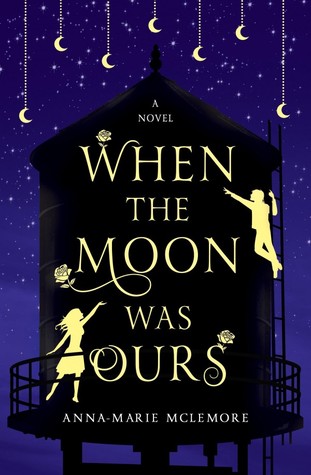
Book Review: When the Moon Was Ours by Anna-Marie McLemore


28220826Reviewed by Elena Foulis

DESCRIPTION OF THE BOOK: To everyone who knows them, best friends Miel and Sam are as strange as they are inseparable. Roses grow out of Miel’s wrist, and rumors say that she spilled out of a water tower when she was five. Sam is known for the moons he paints and hangs in the trees, and for how little anyone knows about his life before he and his mother moved to town. But as odd as everyone considers Miel and Sam, even they stay away from the Bonner girls, four beautiful sisters rumored to be witches. Now they want the roses that grow from Miel’s skin, convinced that their scent can make anyone fall in love. And they’re willing to use every secret Miel has fought to protect to make sure she gives them up.

MY TWO CENTS: When the Moon Was Ours, captures a beautiful love story full of colors, scents, musical prose, and magical realism. Miel and Samir are peculiar children; Miel grows roses from her wrists and Sam paints moons and hangs them in trees around town. Anna-Marie McLemore’s rich narrative walks us through the lives of Miel and Sam, two teenagers with complicated histories. Miel’s fear of water, ghosts, pumpkins, and tormented memories of her mother, are intensified when the town’s rusted water tower falls and water rushes out over the fields and her. It is at this moment that she appears in the town, at the age of five, alone, in a thin nightgown, and bathed in rusted water.  No one knows her or approaches her, except for Moon (Sam), who talks to her and covers her with his jacket. Miel goes home with Sam, but Aracely, the town’s curandera, offers to bring her home and look after her.

This town, like the novel, is full of mystery. There are four beautiful sisters, known as the Bonner sisters, who are thought to be witches. They usually get people to do what they want, and get boys to fall in love with them. They seemingly accept and care for Miel, but are manipulative and cruel to her when they think her flowers can help them get their powers back. The Bonner sisters are not free from gossip, envy, unexpected pregnancies, and secret sexual desires. The readers slowly begin to discover that what makes everyone mysterious—aside  from the growing roses from Miel’s skin—is the world of secrets, half-truths, and distorted memories that each character holds. Hanging throughout the novel is the theme of gender fluidity. The story follows the blooming romance between Miel and Sam, who seem to tend to each other’s pains, desires, and bodily discoveries of unexpected peculiarities. Both Miel and Sam are foreign to the town, but it is Sam who is sometimes the target of discrimination because of the color of his skin and feminine features. Sam tells Miel the story his mother told him about bacha posh, a cultural practice in which families with no sons, dress a daughter as a son, and as an adult, the daughter returns to live as woman. Eventually, we discover how this tradition has impacted Sam’s life. Similarly, we learn about the connection between Sam’s life and Aracely, the town’s healer.

It is clear that the Bonner sisters are white, Miel is Latina, and Sam is Italian-Pakistani, and, although minimal, we can see how they experience life in this town. Las gringas bonitas, as Miel refers to them, are privileged and powerful, while Sam works the Bonner family’s fields. The theme of racial experiences or discrimination is not central to the novel, but it does point us to different lived experiences.

In the end, the novel is about acceptance and love. It is also about the complexity and danger of strict gender roles, and the freedom to live outside of that. For Sam, his assigned name and gender at birth did not match who he had become. The man he had become is the man who Miel loved. It is important to note the author’s personal story at the end of the book. Although she tells us at the beginning that this is a work of fiction, in the end, she explains her personal connection to Miel and Sam’s story. The author grew up listening to La Llorona stories, the weeping woman who, the legend tells, tried to drown her children by the river, and later learned about the story of the bacha posh, a cultural practice in Afghanistan and Pakistan. She also tells us about her marriage to a transgender male.

TEACHING TIPS: Teaching this novel opens up the opportunity to research different legends, traditions, and cultural practices in relation to gender plurality and sexuality. For example, recent stories from India and Mexico about cultures that have embraced a third gender have come to light.  The author’s page offers several links on interviews, music, and essays written about transgender awareness. As a pre-reading activity, teachers can also hold discussions about legends like La Llorona, children’s folk ghost stories, and the differences and similarities between curanderos/healers and witches. Further research into McLemore’s use of colors, scents, and other sensory descriptions can open up discussions about culture, mood, place, and magical realism.

Anna-Marie McLemoreABOUT THE AUTHOR: Anna-Marie McLemore was born in the foothills of the San Gabriel Mountains, raised in the same town as the world’s largest wisteria vine, and taught by her family to hear la llorona in the Santa Ana winds. She is a Lambda Literary Fellow, and her work has been featured by The Portland Review, Camara Oscura, and the Huntington—USC Institute on California and the West. Her debut novel The Weight of Feathers was a Junior Library Guild Selection, a YALSA Best Fiction for Young Adults book, and a William C. Morris YA Debut Award Finalist. When the Moon Was Ours is her second novel. 


headshot2016ABOUT THE REVIEWER: Elena Foulis has a Ph.D. in Comparative Literature and Cultural Studies from the University of Arkansas. Her research and teaching interests include U.S. Latina/o literature, and Digital Oral History. She is currently working on a digital oral history collection about Latin@s in Ohio, which has been published as an eBook titled, Latin@ Stories Across Ohio. She currently lives in Cleveland, Ohio.