Book Review: Super Cilantro Girl by Juan Felipe Herrera


1016493By Sonia Alejandra Rodriguez

DESCRIPTION FROM THE BOOK JACKET: What happens when a small girl suddenly starts turning green, as green as a cilantro leaf, and grows to be fifty feet tall? She becomes Super Cilantro Girl, and can overcome all obstacles, that’s what! Esmeralda Sinfronteras is the winning super-hero in this effervescent tale about a child who flies huge distances and scales tall walls in order to rescue her mom. Award-winning writer Juan Felipe Herrera taps into the wellsprings of his imagination to address and transform the concerns many first-generation children have about national borders and immigrant status. Honorio Robledo Tapia has created brilliant images and landscapes that will delight all children.

MY TWO CENTS: Upon learning that her mother has been detained at the border, Esmeralda Sinfronteras transforms into a superhero to rescue her mother from ICE. She uses the power of cilantro to grow taller than a house, with hair longer than a bus, and skin so green it could have only come from cilantro. Super Cilantro Girl flies to the border, climbs the dark and dreary detention center to her mother’s window, and simply picks her up and puts her in her pocket and they fly home.  The ICE agents are so mesmerized by the power of cilantro that they do not notice or prevent Super Cilantro Girl from rescuing her mother.  The next morning, Esmeralda makes a huge discovery about her and her mother.

Author Juan Felipe Herrera and illustrator Honorario Robledo Tapia have created a magnificent children’s book about the transformative power of imagination. Esmeralda is emblematic of the many children who have been separated from their families due to unjust and xenophobic immigration laws. Herrera and Tapia go beyond common debates about immigration to give a face and a voice to the children impacted. Esmeralda gains the power and courage she needs to confront ICE from the environment around her. Her grandmother and the land serve as vessels for alternative knowledge that guide Esmeralda through her journey. Furthermore, Herrera’s and Tapia’s reclamation of the color green juxtaposes Esmeralda’s power with the cultural and social power of the “green card.”  In Esmeralda’s imagination, her power is much stronger than anything ICE or a green card could ever have.

There are several ways to read race, gender, and class into this story in order to come up with a thorough analysis of how immigration impacts Latina/o children and their families. What I appreciate most about Herrera’s children’s book is that hope and empowerment are central to the narrative. Giving Esmeralda superpowers reveals the possibility for change that manifests from a child’s imagination. Super Cilantro Girl encourages children to dream, hope, and fight for their rights even if it means going against an entire state apparatus like ICE.

TEACHING TIPS: Super Cilantro Girl can be taught thematically by focusing on issues of (im)migration.  The story’s emphasis on alternative healing methods is resonant of Gloria Anzaldua’s Prietita and the Ghost Woman and Friends from the Other Side. All three texts pay particular attention to holistic healing methods that include using nature as a resource. This is especially important because it allows the children protagonists to gain empowerment from their environments—much in the same way that Esmeralda finds power in cilantro.

Focusing on the superhero theme presents an opportunity to connect art activities with reading. Yuyi Morales’s Niño Wrestles the World prompted the creation of Niño masks to accompany the story—something similar can be done with Herrera’s Super Cilantro Girl.  The relationship between social justice and superheroes in this story can be addressed by asking students to draw and imagine their own superhero. Students can imagine what a superhero in or from their community might look like or students can find inspiration from their community to create a superhero. Xavier Garza’s Charro Claus and the Tejas Kid is another excellent example of a child protagonist using his culture and community to be heroic.

There are several Latino kid’s books that focus on lucha libre that will pair wonderfully with Super Cilantro Girl. Lucha libre connects superhero-like characters with fantasy and reality and that can generate a powerful conversation about superheroes in our communities and culture as well as how children and youth can be their own heroes. Morales’s Niño Wrestles the World and Xavier Garza’s Lucha Libre: The Man in the Silver Mask are a few examples that tell stories about children and luchadores.

FOR MORE INFORMATION about Super Cilantro Girl,  visit your local library or bookstore. Also check out worldcat.orgindiebound.orggoodreads.comamazon.com, and barnesandnoble.com.


headshotSonia Alejandra Rodríguez has been an avid reader since childhood. Her literary world was first transformed when she read Rudolfo Anaya’s Bless Me, Última as a high school student and then again as a college freshman when she was given a copy of Sandra Cisneros’s The House on Mango Street. Sonia’s academic life and activism are committed to making diverse literature available to children and youth of color. Sonia received her B.A. in English from the University of Illinois at Urbana-Champaign. She is currently a PhD candidate at the University of California, Riverside, where she focuses her dissertation on healing processes in Latina/o Children’s and Young Adult Literature.

Juventud Press, a New Indie Publisher, Will Focus on Latin@ MG & YA

cropped-fcoverAs a reader of this blog, you know what we’re up against. Nearly 5,000 children’s and YA books were published in 2012, but only 1.5% of those titles featured Latin@s. Given the historical inequities our community has faced—which have resulted in our kids’ educational struggles, low average reading level, and high drop-out rate—it is more important than ever that children of diverse cultural backgrounds have access to books in which they see themselves reflected.

Since 2011, the 501(c)(3) non-profit Valley Artist Outreach has worked to promote the artistic expression of disaffected youth in the colonias of South Texas and of artists whose work touches on issues of import to the community. As part of that work, VAO’s publishing wing has released several anthologies, notably ¡Juventud! Growing up  on the Border, a collection of YA stories and poems edited by René Saldaña, Jr. and Erika Garza-Johnson that features the work of David Rice, Xavier Garza, Jan Seale, Guadalupe García McCall, Diana Gonzales Bertrand and many others.

Stemming from the success of that book, VAO is proud to announce Juventud Press, an exciting new imprint seeking to bring diverse books to young readers often marginalized by traditional publishing. Juventud Press will release three to four middle-grade and young-adult titles a year, with an eye toward expanding into children’s literature in the near future. Written by and/or featuring Latin@ characters and settings, these books will help contribute to the recent surge in diversity in kid lit.

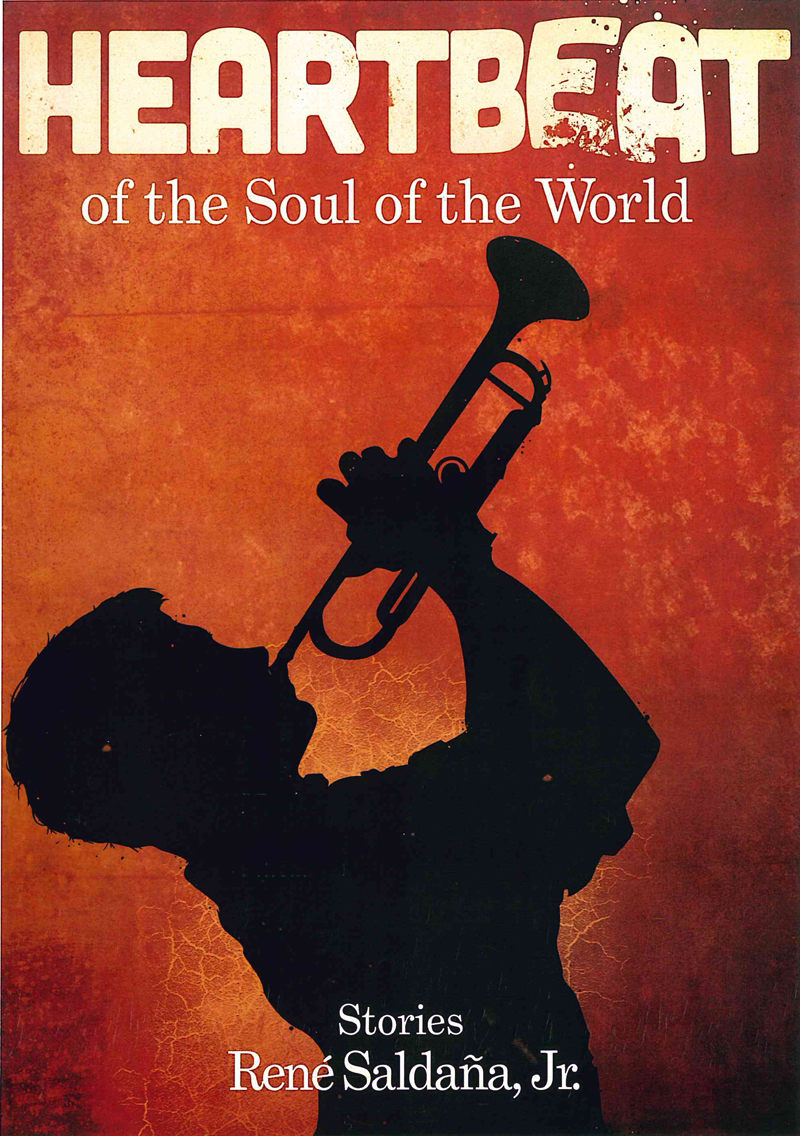
Heartbeat coverOur first title will be Heartbeat of the Soul of the World, a new short-story collection by René Saldaña, Jr., author of books such as The Jumping Tree and The Whole Sky Full of Stars. A vital book that explores the ins and outs of Latin@ adolescence along the border, Heartbeat is a flagship publication that encapsulates the values and mission of Juventud Press.

In addition, we seek to promote the voices of up-and-coming writers of diverse YA literature by establishing the Nueva Voz Award, which will select a winner each summer from among manuscripts submitted by unsigned, un-agented writers. The winner of the award will receive a $500 advance and standard publishing contract, and her/his book will be published in the fall of that same year.

To be competitive even in the field of independent small presses, we need the initial capital to produce high quality, visually engaging books.

We are asking for pledges through Kickstarter. Each one comes with a fantastic reward, so please take a look: https://www.kickstarter.com/projects/1780116159/juventud-press-launch

These start-up funds will secure the visual artists needed for covers, underwrite website design, cover the deployment of the Nueva Voz Award, and purchase initial publicity for the imprint.

Please consider backing this worthwhile project that will add to the flowering of diversity in publishing for our youth.

Thanks!

The Editorial Board of Juventud Press

José Mélendez, René Saldaña, Jr., and David Bowles

How and Why I Wrote My Graphic Memoir

by Lila Quintero Weaver

Final CoverreducedLast September at the Comadres and Compadres Writers Conference in Brooklyn, NY, I listened as Daisy Hernandez stated her belief that memoir writing arises from the unanswered questions a writer has about her own life. For me, by contrast, starting a memoir is what led me to realize I had questions.

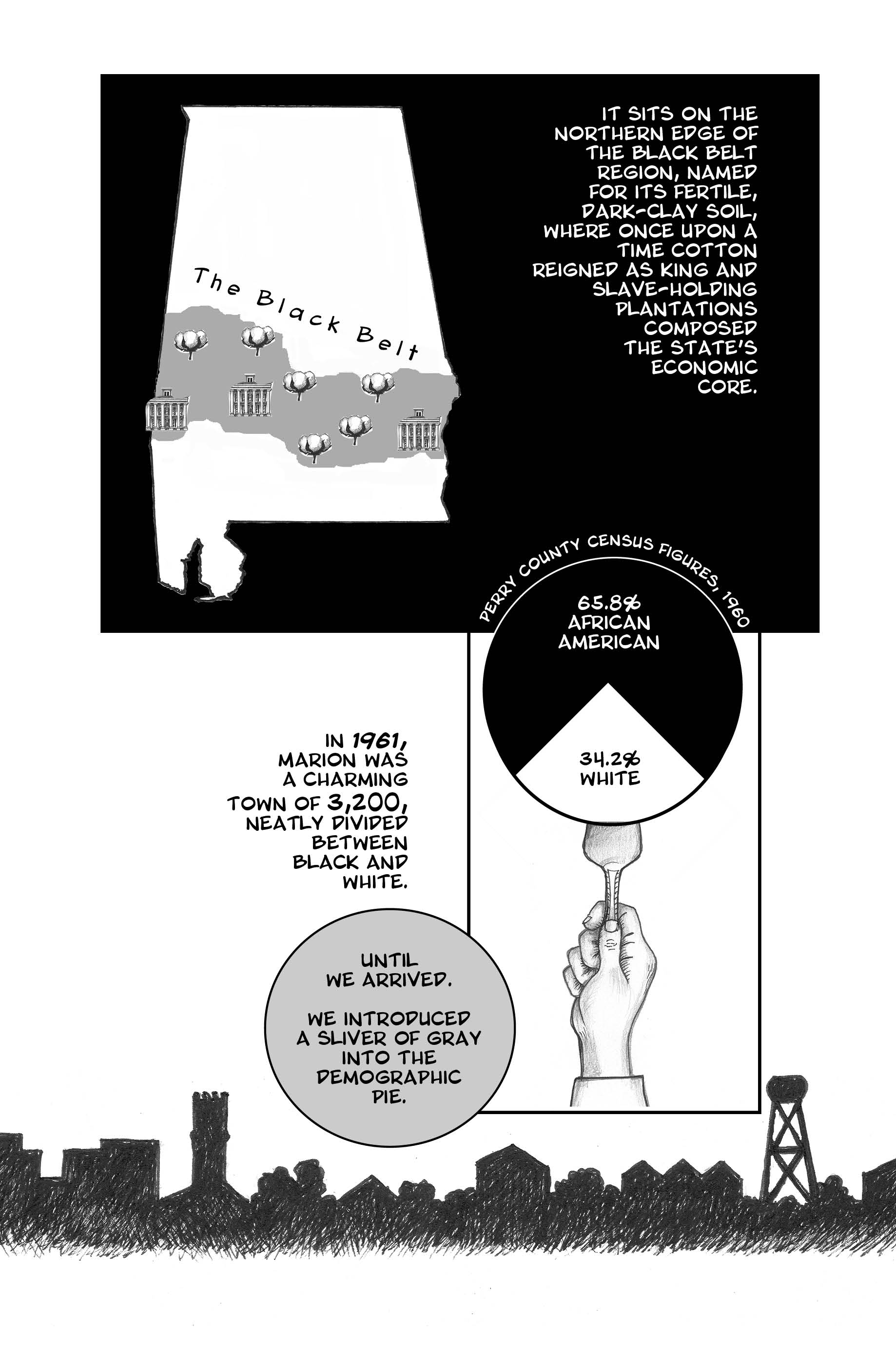
Before beginning my writing journey, it had never occurred to me that there was anything remotely fascinating about my life. I’d grown up as an immigrant child from Argentina in Marion, a tiny dot of a town in the Black Belt region of Alabama, where for most of our 12 years in residence we were the only Latin@s. But then I realized that our isolation at this time and in this place was a story.Demographic pie

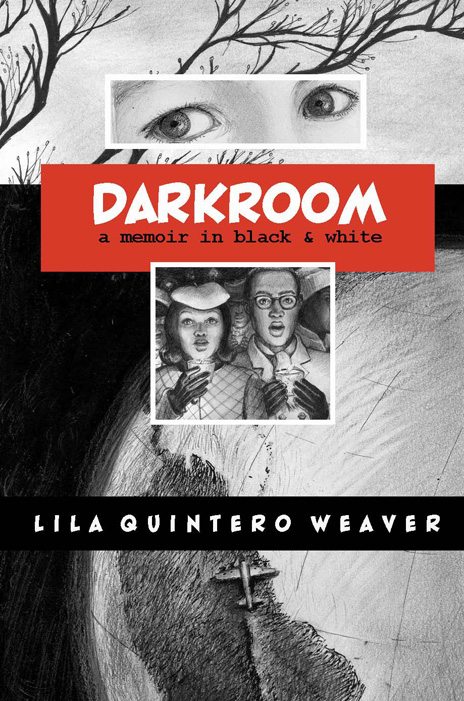
How big of a role did this cultural setting, with its legacy of racism, play in making me who I am? That was one of my biggest questions, and eventually, my outsider status and my awakening to racial inequity formed the narrative core of my graphic memoir, Darkroom: A Memoir in Black and White (The University of Alabama Press, 2012).

[Note: All the art in this post is from Darkroom. Click on images to enlarge the view.]

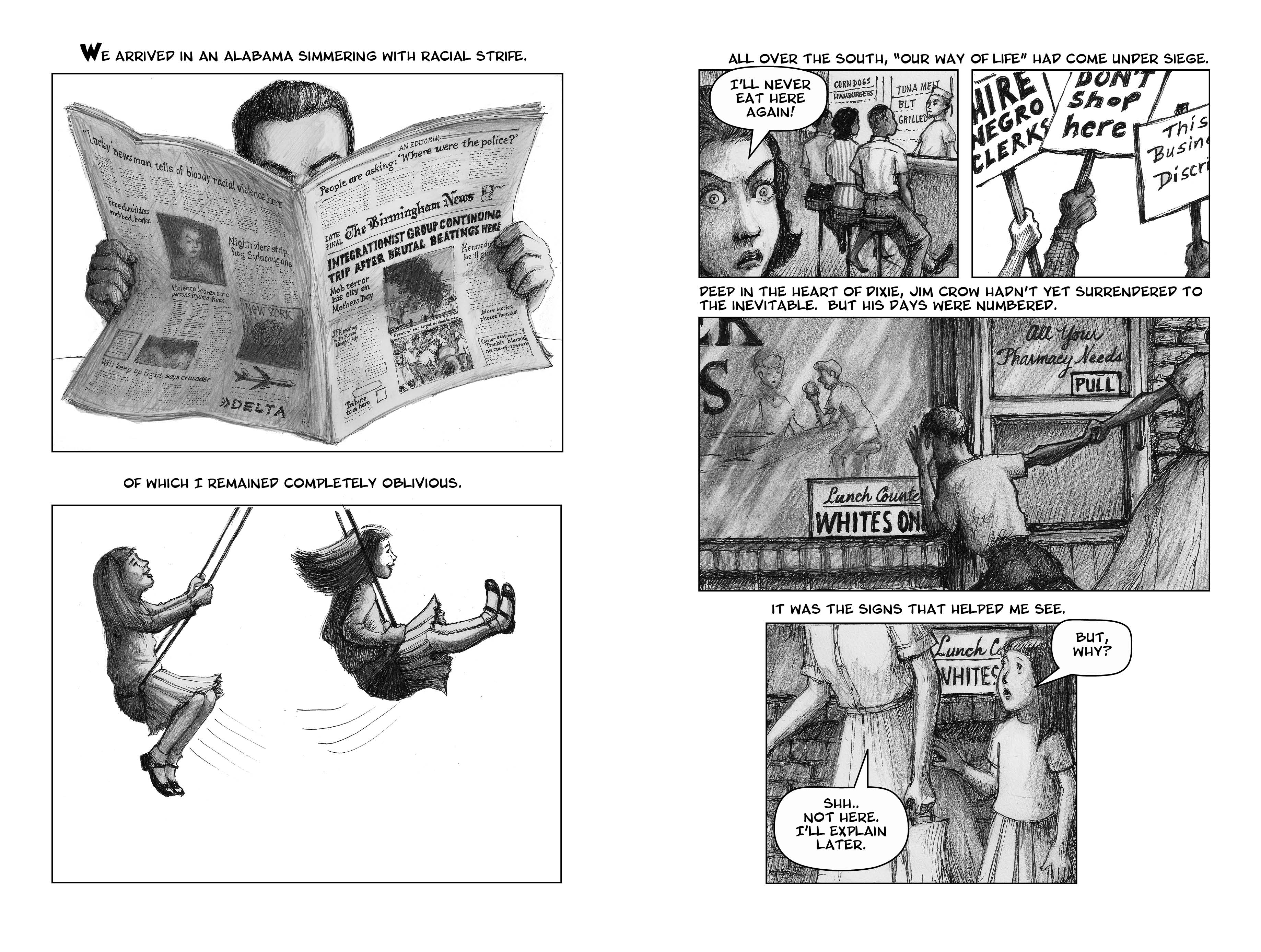
My family’s arrival in Alabama synched up perfectly with several hallmark events in the Civil Rights Movement. We first briefly lived in Birmingham, where within six weeks of our arrival, the Freedom Riders rolled up to the bus depot and into the hands of a vicious mob. Then we moved to Marion, where racial segregation ruled every conceivable setting. Most white people seemed perfectly at home with this arrangement, but it made me deeply uneasy, even at age six.

Whites only

In 1965, African Americans across the Black Belt region were attempting to register as voters, but local officials obstinately barred the way. That February 18th, in Marion’s city square, a white mob clashed with a group of mostly local black protesters, while police stood idly by or participated in the beatings. My father witnessed some of these horrors and so did a host of other citizens, yet none of my teachers ever addressed these events. February 18th and everything surrounding it was quickly swept aside as if it had never happened.

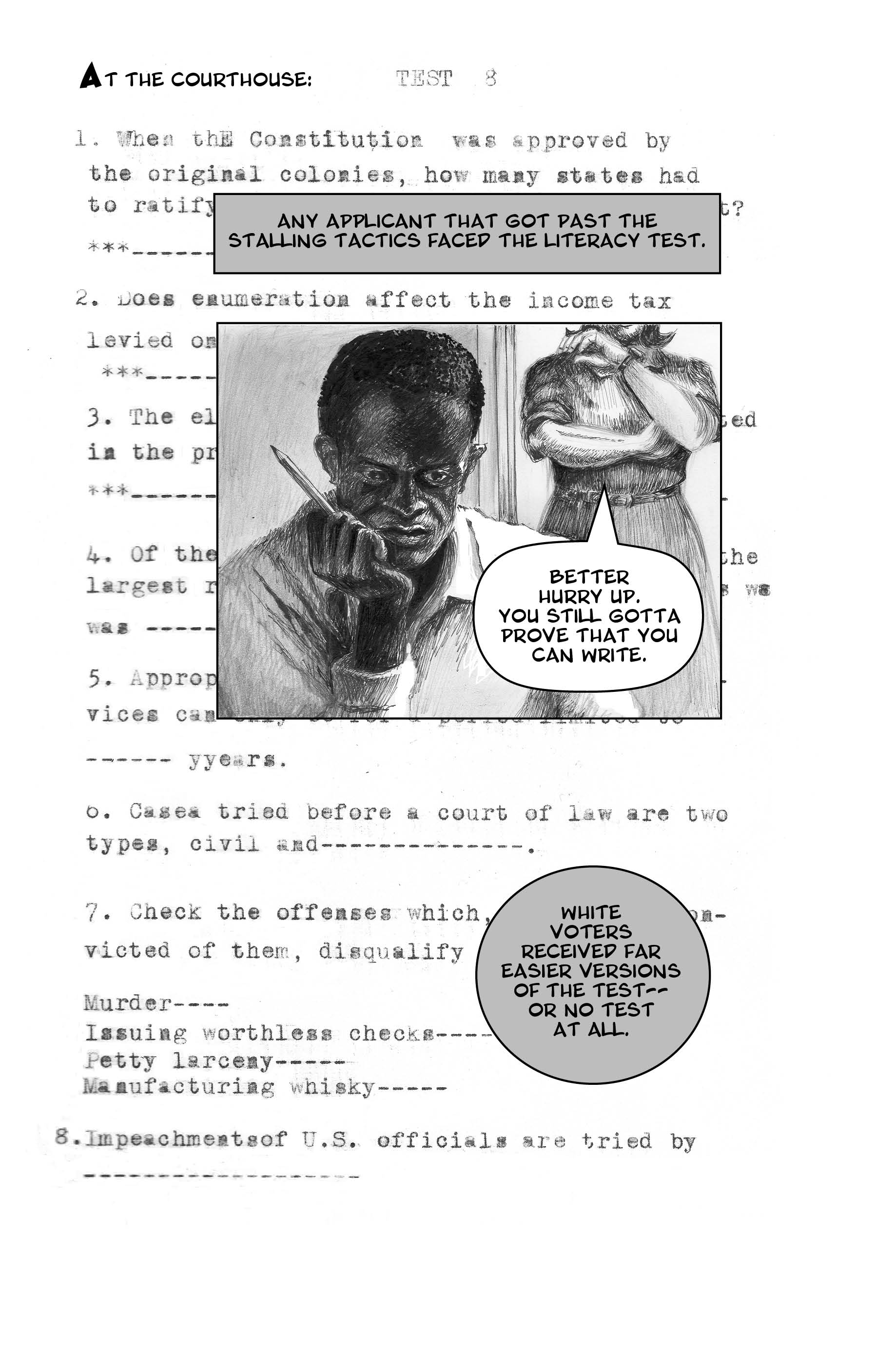
Literacy TestI’d always known that a young black activist had been shot by a state trooper that night, but I’d never actually heard his name—Jimmie Lee Jackson. I did not know that his death—eight days later at Good Samaritan Hospital, in nearby Selma—had triggered Bloody Sunday, which led to the passage of the Voting Rights Act of 1965.

My father died in 1995 before I ever thought to press him for details of what he saw during the violent clash. Among other things, I would have asked how witnessing such brutality at close hand affected his view of America. For decades, the only reason his account of that night didn’t fade from memory completely was because of some home movies he’d taken around the same time. They showed peaceful protest marches in the days leading up to February 18th.

After the Voting Rights Act was signed into law, civil rights activists set their sights on desegregating public schools. This time, I was the eyewitness to history—not that any child understands federal court orders, states’ rights battles, or the long, embittered tug-of-war to sort them out. Those questions would come later.

In 2004, I went back to college to complete my degree. That’s when I started to make up lost ground on the history of my region. The last thing on the checklist before graduating was a senior project.  The graphic memoir Persepolis, by Marjane Satrapi, gave me the idea to combine a written account with images, as an artistic exploration of my family’s immigration journey and the racially troubled times we encountered in our new homeland.

One of my goals was to find out exactly what happened that February night. I also wanted to pay homage to my father’s sideline work as a photographer and the crucial contribution that other photographers, as journalists, made to the Civil Rights Movement.

Darkroom joined spread

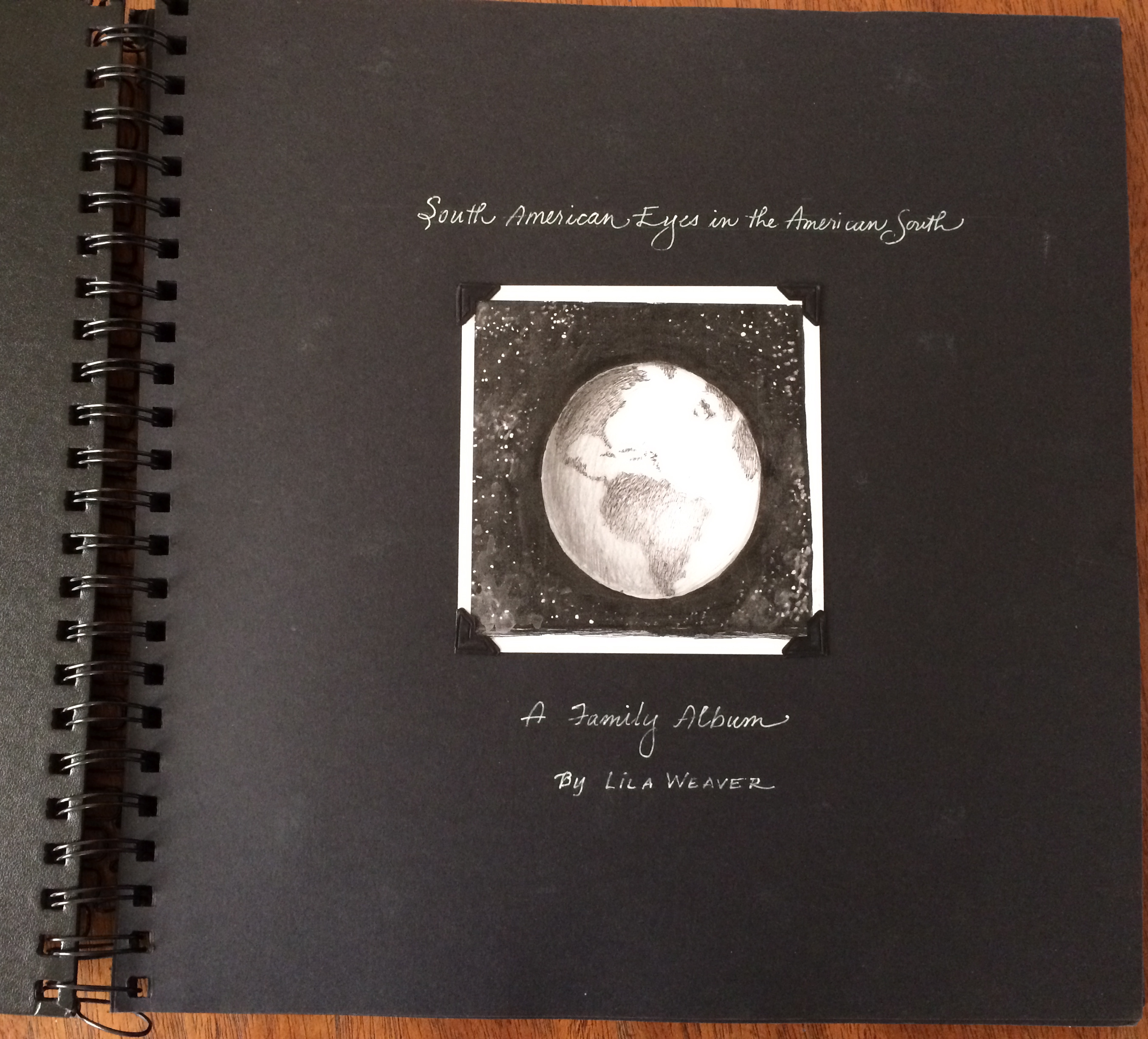
Grabbing the motif of photography helped me unify a complex story through metaphor and add a visual nod to the documenting power of the camera. So this is how my senior project looked: forty pages of drawings and captions, assembled in a photograph album. My drawings stood in for the photos. IMG_0031

At this stage, editors from The University of Alabama Press saw my work and offered me a contract for an expanded version. I said yes before I knew what I was getting into–a project that would consume the next three and a half years of my life.

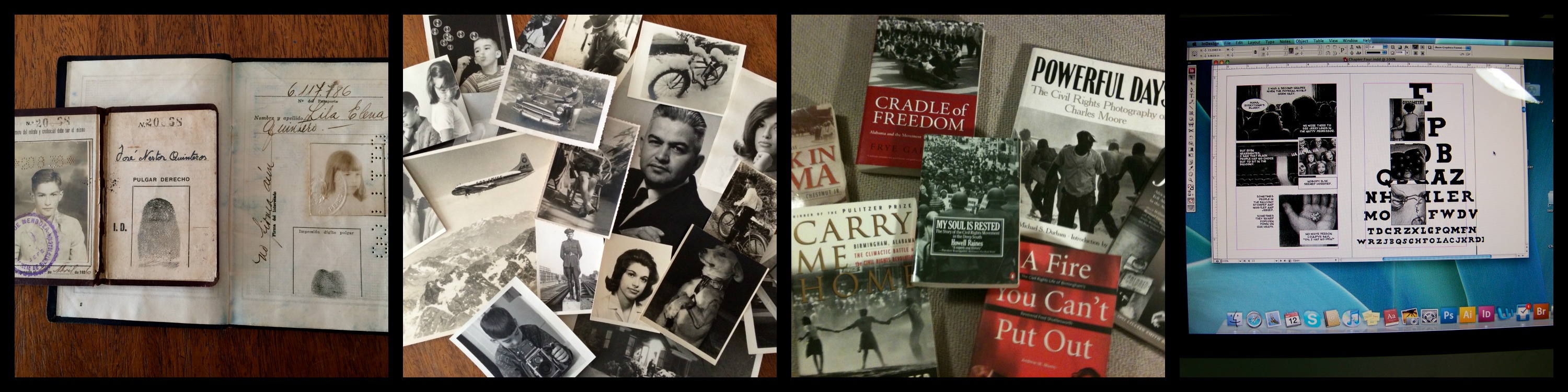
To prepare, I dug down into family memorabilia and photos. I researched the current events of my childhood and gained a degree of perspective that wasn’t possible while the news reports were still fresh.

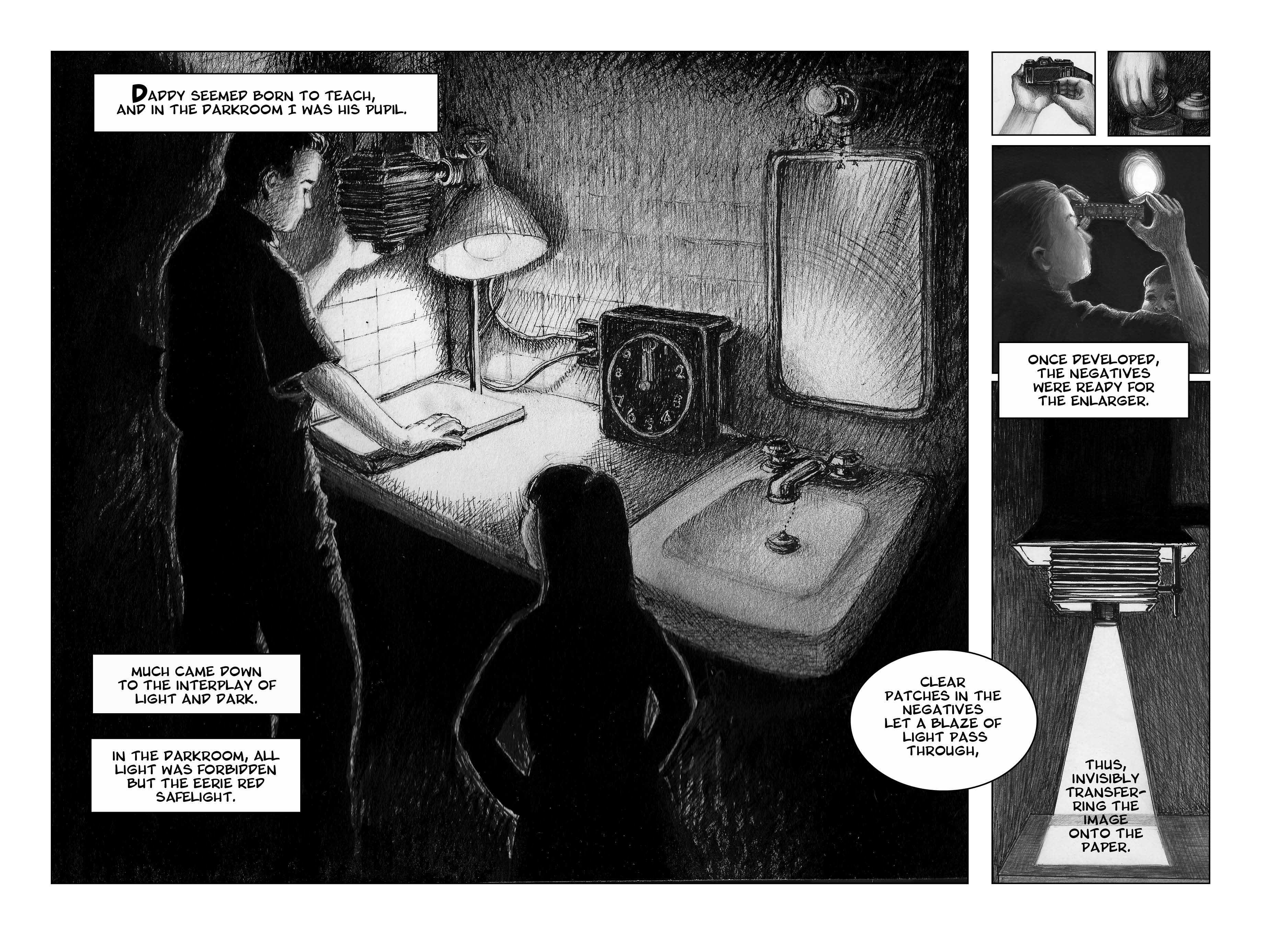
Darkroom process

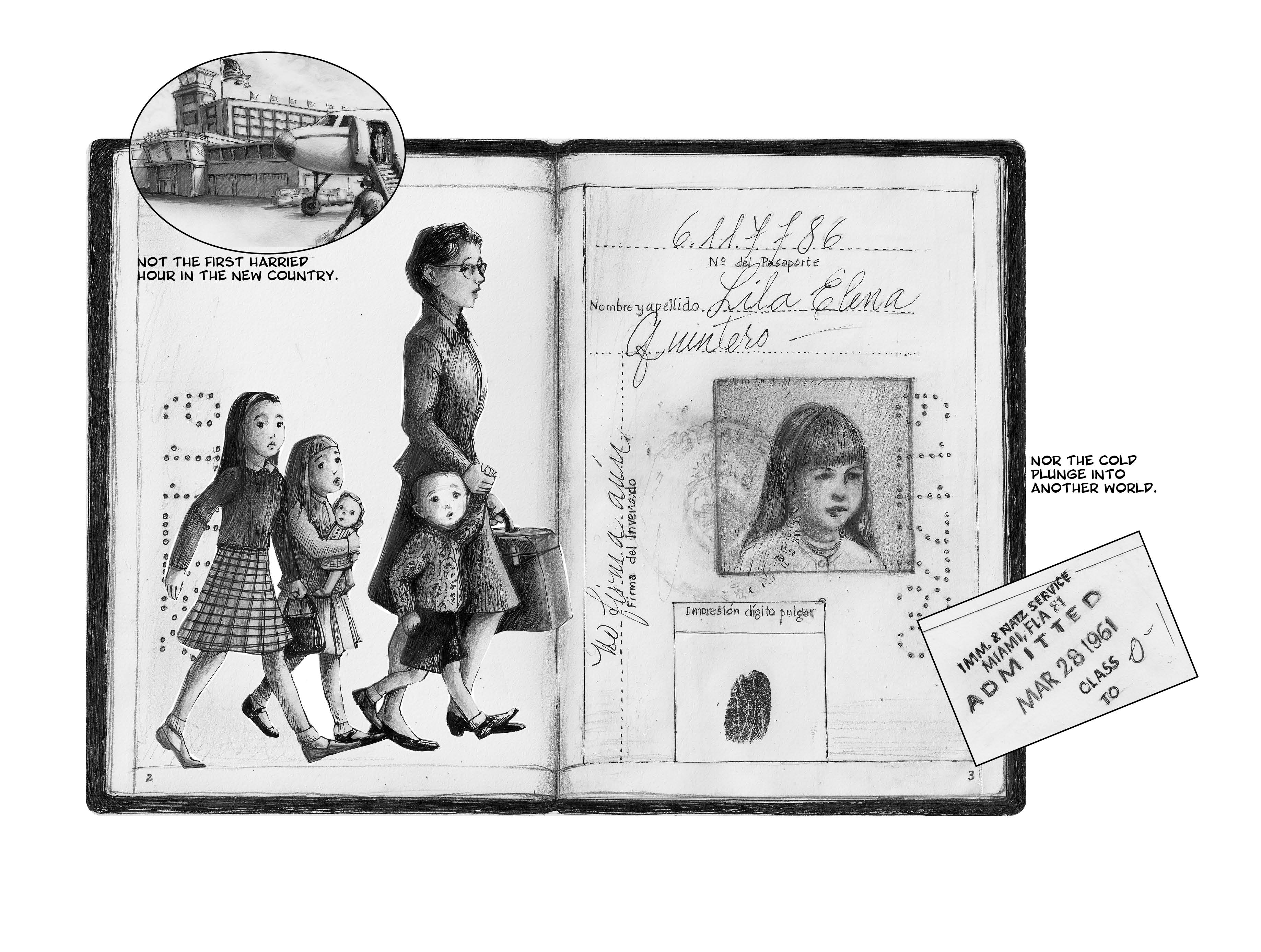
One daunting aspect of putting the book together was teaching myself the bare necessities of digital graphics programs. First, I created my drawings traditionally, on paper—more than 500 in all. Then I experimented with different ways of digitally layering the scanned drawings and combining them with text. The effect I was going for was a scrapbook of photos and ephemera.

Passport

When the book launched in 2012, people in far-flung places showed interest in my story, including a publisher in France and college instructors from around the country who placed my memoir on their reading lists. Although I didn’t write the book with young readers in mind, it has also received a welcome in some middle school and high school classrooms.

Throughout this decade, the nation has been celebrating the 50th anniversaries of civil rights milestones. The Selma march has come to life in a major motion picture, and in a graphic novel series co-authored by U.S. Congressman John Lewis. Many eyewitnesses have published their stories, forming a rich tapestry of personal accounts. Teaching Tolerance, a division of the Southern Poverty Law Center, recently produced an instructional film for classrooms about the campaign for voting rights. It’s entitled Selma: The Bridge to the Ballot. It features visual documentation from previously untapped primary sources, including footage from the home movies that my father shot.

Bloody Sunday lies half a century behind us, yet racial tension and violence continue. I sometimes ask myself: what has actually changed? I remember the days of Jim Crow, which are, thankfully, well behind us. Yet, it seems like the passage of fifty years would’ve brought us deeper, more enduring changes.

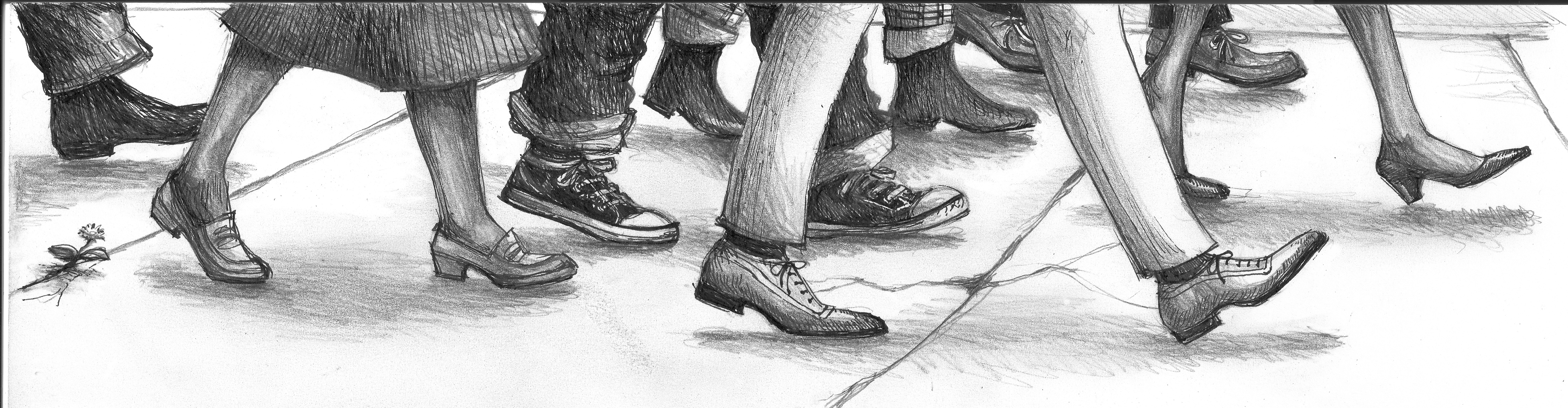
Marching feet for Chpt 8

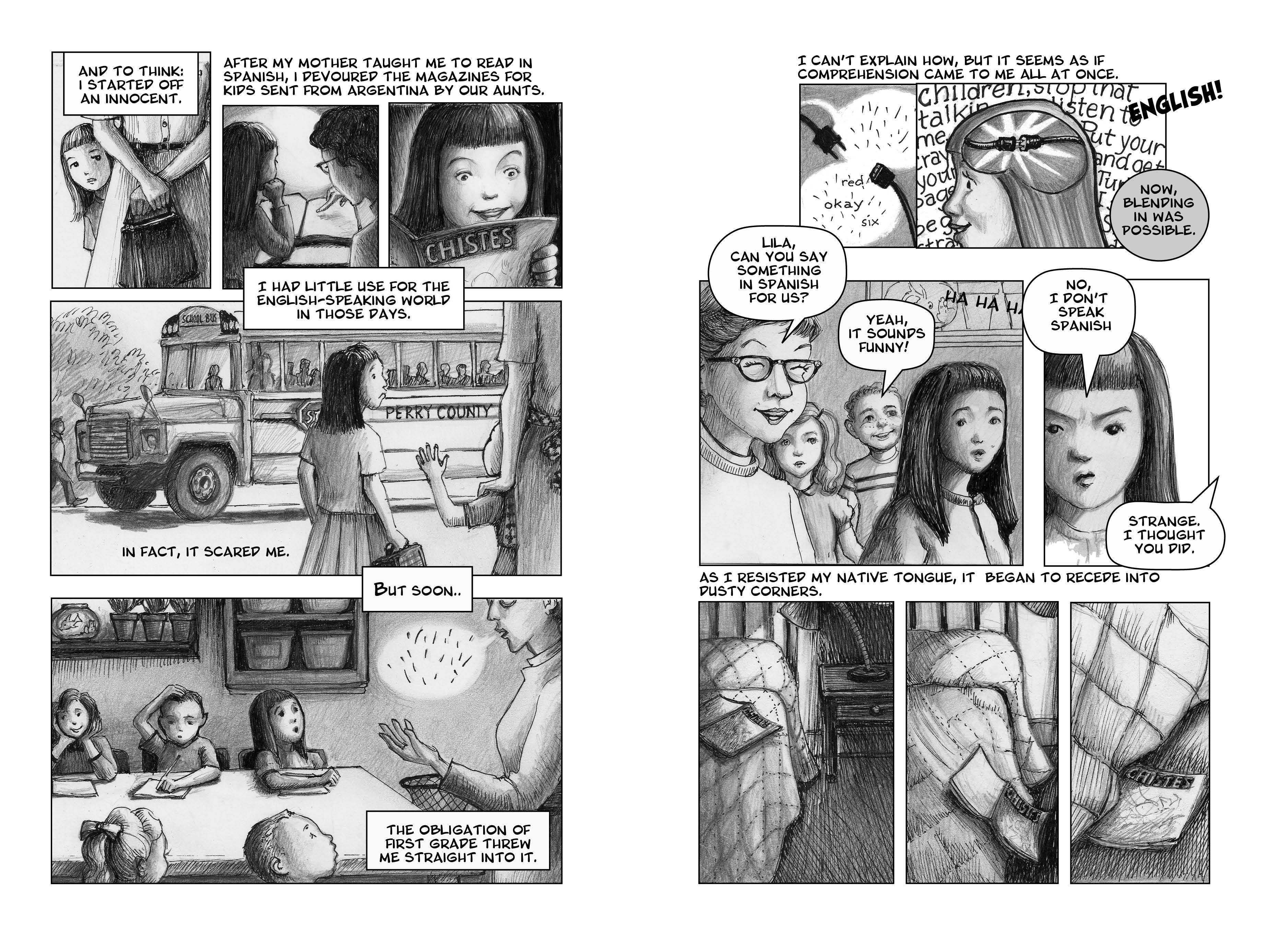
You may be left wondering: where’s the Latino component to my memoir? It’s there, in my initial struggle with learning English—a struggle that soon turned into a childish rejection of Spanish. It’s there, in my family’s generational divide on American culture and how fervently to embrace it.

School bus page

It’s there, in the troublesome fact that my family was spared overt bigotry because in Alabama in the middle of the 20th century, Latin@s were an almost invisible minority that posed little threat. I see this now, through the lens of history. If our immigration journey had taken us to a different region of the U.S., one where Latin@s were openly reviled and denied equality, I would’ve experienced things from a starkly different perspective. I can’t begin to guess what my life’s questions would’ve been then. For that, I turn to the stories of others.

Lila Quintero Weaver is the author-illustrator of Darkroom: A Memoir in Black and White. She’s working on a second book, a middle-grade novel. If Lila’s name looks vaguely familiar, it may be because she’s a regular co-blogger on Latin@s in Kid Lit. You can find her on Twitter, Facebook, and at her official author site.

Book Review: Hostage (The Change #2) by Rachel Manija Brown and Sherwood Smith


23899848By Eileen Fontenot

DESCRIPTION FROM GOODREADS: Welcome back to Las Anclas, a frontier town in the post-apocalyptic Wild West. In Las Anclas, the skull-faced sheriff possesses superhuman strength, the doctor can speed up time, and the squirrels can teleport sandwiches out of your hands.

In book one, Stranger, teenage prospector Ross Juarez stumbled into town half-dead, bringing with him a precious artifact, a power no one has ever had before, and a whole lot of trouble — including an invasion by Voske, the king of Gold Point. The town defeated Voske’s army, with the deciding blow struck by Ross, but at a great cost.

In Hostage, a team sent by King Voske captures Ross and takes him to Gold Point. There he meets Kerry, Voske’s teenage daughter, who has been trained to be as ruthless as her father. While his friends in Las Anclas desperately try to rescue him, Ross is forced to engage in a battle of wills with the king himself.

MY TWO CENTS: Even more gripping than the first of this series, Hostage takes us right back to the aftermath of Voske’s attack on our intrepid band of superhuman teens, which caused the death of a much-respected adult leader. We are introduced to a new player in this book, the daughter of Voske, the series’ main antagonist. The authors do a tremendous job of telling us about Kerry, who is smart, capable and raised to assess challengers and exploit their weaknesses.

Just as I began to dislike this new character, the authors begin chapters from her point of view. We see her life under her parents’ restrictive rule, and her love for her boyfriend, Santiago, softens her image. I came to root for Kerry, for her to find her own way in life and to make positive choices in her life, rather than negative ones. We also get to see how things are run in Gold Point, part of Voske’s kingdom. And it’s not pretty.

One of the main themes of this book was trust. Characters were thrust into various life-or-death situations, with only another to depend upon. And sometimes this other person wasn’t exactly the most trustworthy individual. Tracing the elaborate, yet tenuous, agreements made between unlikely partners became a bit of a challenge. I also liked the message that it’s OK to follow your own path, especially when you disagree with the way your family is behaving.

And because there are still several mysteries to be solved in the last couple of books, and a character I hope makes a big resurgence, I look forward to future volumes. The authors plan to release two more books in this series, and I can’t wait to see how these characters grow and change with each other. I read this on my Kindle, but Manija Brown says a paper copy of Hostage will be released in March, according to GoodReads.

RECOMMENDATIONS: As a young adult librarian, I would suggest this series to teens who love post-apocalyptic fantasy worlds who also want to see themselves reflected in the characters. The series is incredibly diverse; the main characters are all people of color and LGBT characters are also well represented. The authors are wonderful showing readers the depth of their familial connections through details dropped in throughout the action, which is plentiful.

For a book club pick, I would ask participants to discuss the role trust played in these characters’ choices. Teens could also talk about who they trust in their own lives and why. What would they share with their closest friends and family? What would make them lose trust in their loved ones?

AUTHORS:

Paraphrased From Goodreads: Rachel Manija Brown is the author of all sorts of stories in all sorts of genres. She has produced a memoir, All the Fishes Come Home to Roost: An American Misfit in India, and she has also written television, plays, video games, and a comic strip meant to be silk-screened on to a scarf. In her other identity, she is a trauma/PTSD therapist. She writes urban fantasy for adults under the name of Lia Silver.

From cahreviews.blogspot.com: Sherwood Smith began her publishing career in 1986, writing mostly for young adults and children. Smith studied in Austria for a year, earning a master’s in history. She worked many jobs, from bartender to the film industry, then turned to teaching for twenty years, working with children from second grade to high school. To date she’s published over forty books, nominated for several awards, including the Nebula, the Mythopoeic Fantasy Award, and an Anne Lindbergh Honor Book.

FOR MORE INFORMATION ABOUT Hostage (The Change #2) visit your local public library, your local bookstore, barnesandnoble.com, amazon.com or goodreads.com.

Eileenfontenot headshot Fontenot is a recent graduate of Simmons College Graduate School of Library and Information Science in Boston. She works at a public library and is interested in community service and working toward social justice. A sci-fi/fantasy fan, Eileen was formerly a newspaper writer and editor.

Guest Post: The Universality of Being an Outsider


by Jacqueline Jules

1956Family

Jacqueline Jules’ family in 1956

In my small Virginia town, like many places in the 1960s south, the first question people asked upon meeting was “What church do you go to?”

As a child, I remember fielding that question from parents of new friends and hearing my mother answer it in grocery stores.

“We’re Jewish,” I would explain politely. “We go to a synagogue.”

The response was generally a startled one. People would stare like I was a new species at the zoo.

“Oh my! I don’t think I’ve ever met a Jewish person before!”

From there, I’d often have to answer a series of questions about my “Jewish Church.”

I had been taught from a young age that I represented my religion. If I was impolite, all Jews would be considered rude. I had to be on my best behavior at all times so that others would not have a reason to dislike Jewish people. On many occasions, I also had to explain why Jews didn’t believe in Jesus and why I wasn’t terrified of going to hell. And the questions were just as likely to come from adults as other children.

Growing up, Christmas and Easter were never seasons of joy for me. They were times when the questions intensified. Why didn’t I celebrate Christmas? Didn’t the Jews kill Jesus? I learned early on that the Christmas spirit did not extend to Jewish children.

To add to my stranger status, my parents were not Southern born. Mom was a Northerner from Rochester, New York. Dad was from Switzerland and spoke with a thick German accent. He came to the US after World War II and was not a citizen when I was born. His name was Otto. In small-town Southern culture, having foreign roots set my family apart even in our tiny Jewish community.

So feelings of being “different” are quite familiar to me. I know what it is like to be the child of an immigrant. To be embarrassed in public when people ask your father to repeat something three times because they can’t understand what he is saying. To hear a parent talk of a homeland missed deeply. To long for relatives abroad who were only a part of our lives through letters and very occasional visits. To feel alone, apart from others who are comfortable in their skin and their surroundings.

Years later, when I took a position as a librarian in an elementary school with a large immigrant population, I identified with my students immediately. I had watched my own father struggle with the English language, which he learned in adulthood, at age 32. To his credit, he became quite fluent, but he still made some mistakes with grammar and pronunciation. Misunderstandings occurred in family conversations when my father did not understand a nuance or a cultural reference. Or we didn’t understand the perspective he was coming from. He didn’t approve of everything American. I recall what fun he made of sliced white bread which he compared to eating a sponge, and how excited he was when we found bakeries that sold French bread. And I remember how much my father hated turkey. He thought it tasted dry and he insisted my mother serve lamb or duck on Thanksgiving. I also remember that he didn’t care for pumpkin pie. In his mind, pies should be filled with fruit, gooseberries in particular.

The first Thanksgiving I taught at Timber Lane Elementary, a Title I school in Fairfax County, Virginia, I noticed right away that my immigrant students were not interested in my Thanksgiving lessons. Up until then, my story times had been received warmly. Seeing that my English-language learners enjoyed repetitive songs and choruses, I had quickly adopted them into my curriculum. My students had enjoyed songs about animals, the seasons, the five senses, etc. Why did they hate my turkey songs?

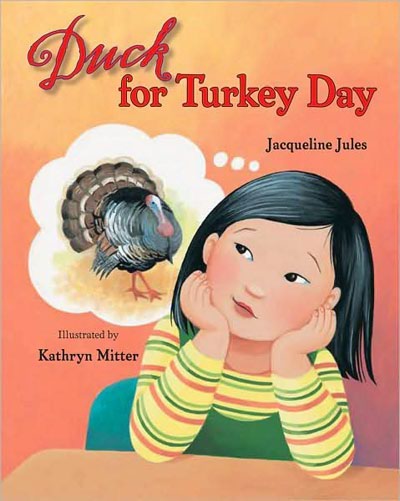
DuckforTurkeyDaybyJJulesA student gently explained: “We don’t have that kind of Thanksgiving dinner in my house.” Suddenly, I stopped being a teacher and returned to my own childhood, where I had been informed that turkey and pumpkin pie were the correct meal choices. These memories led to my first book with Albert Whitman Publishers, Duck for Turkey Day, about young Tuyet, who is worried that her Vietnamese-American family is breaking the rules for Thanksgiving. While the emotions of this book belong to my own childhood, they were deeply shared by the kids I taught. Making my characters Vietnamese-American gave me the opportunity to show how much I identified with my students, along with the universality of the problem. It also made my story current. My experiences as a Jewish child of a German-Swiss in the 1960s south are historical now. While I have shared my Jewish heritage in many of my books, I don’t want everything I write to be limited to my own particular, and not necessarily, universal experiences. Growing up as an outsider myself has naturally made me empathetic to other minorities in America. And it has made me downright indignant that so few children’s books reflect the lives of children who are not white, Christian, and middle-class.

All too often, books with non-majority characters portray their lives as a situation requiring great explanation. As a young Jewish mother in the 1980s, I was annoyed that most Jewish holiday books described traditions in such detail, they read like nonfiction. Not every Christmas story describes the Nativity. Most Easter stories are about bunnies, not the Resurrection. Why can’t Jewish children have light-hearted picture books that celebrate the joy of their culture, too?

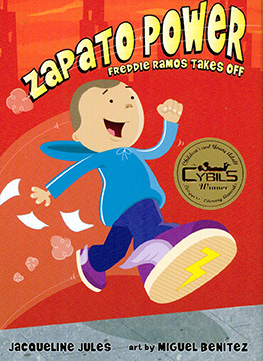
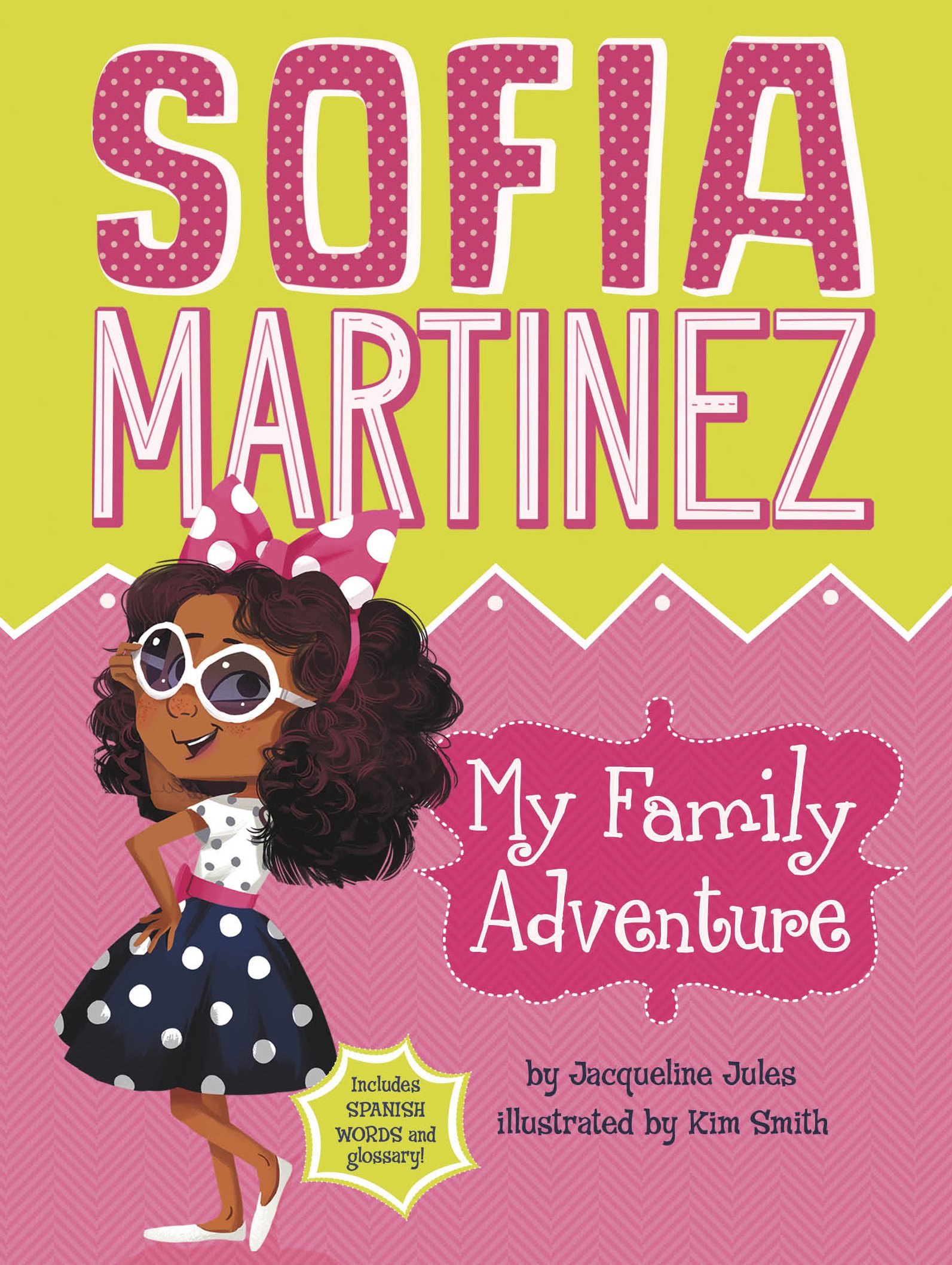
ZapatowithStickerAnd why can’t children of color have books, particularly easy readers, where they see themselves enjoying life? Why is minority status always the problem in a story rather than just one facet of a particular person’s existence? In my Zapato Power books, a chapter book series about a boy with super-powered purple sneakers, the main character, Freddie Ramos, is Latino. He lives an urban apartment life in a close-knit immigrant community, just like most of the students I taught. But that is not the plot of his stories. Freddie is mostly concerned with how he will solve mysteries and be a hero with his super speed. And in my new series, Sofia Martinez, my main character is a spirited Latina who wants more attention from her large, loving family. I taught many Sofias. Her family eats tamales at Christmas. She uses Spanish phrases in her conversations. And she deserves to learn to read with books that show her family life as fun and normal, not a particular ethnic challenge to be overcome.SofiaMartinezFamilyAdventure

Many authors say they write the books they would have liked to see as a child. I do that. But I also write stories I wish I had been able to give my students when I taught—books that show it is okay to be who you are.


JJulesWebPic

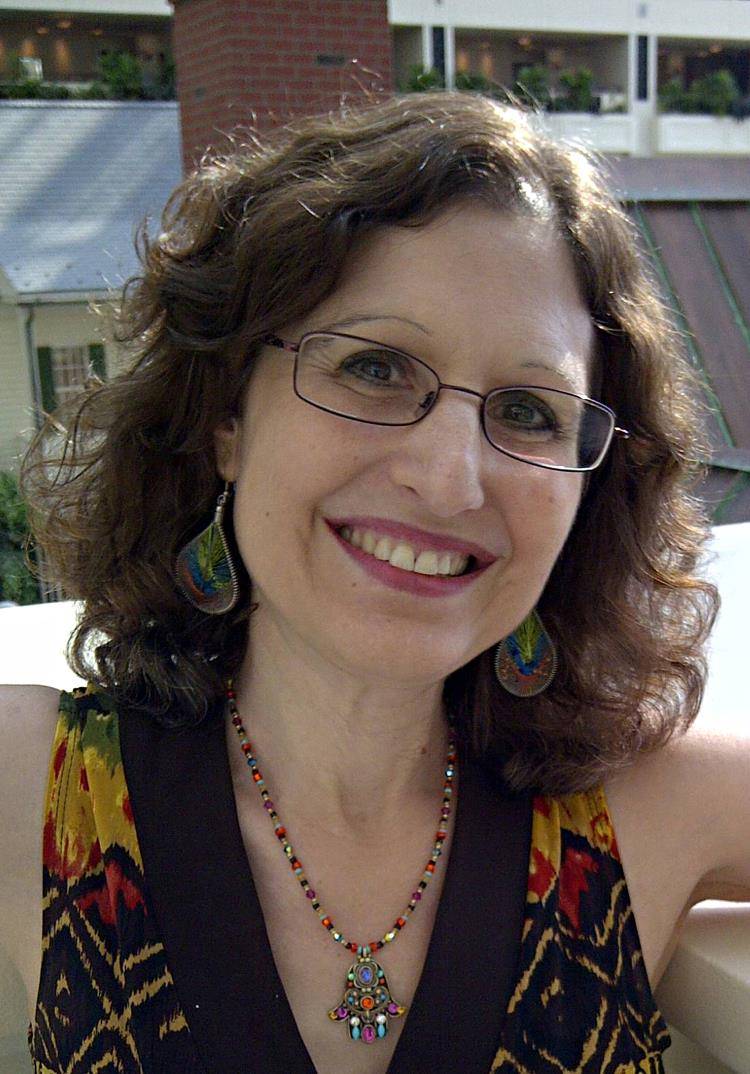
Jacqueline Jules is the award-winning author of 30 books, including No English, Duck for Turkey Day, Zapato Power, Never Say a Mean Word Again, and the recently released Sofia Martinez series. After  many years as a librarian and teacher, she now works full-time as an author and poet at her home in Northern Virginia. Find her on Facebook and at her official author site.


A Frank Remembrance of My ALA Midwinter Experience

 By Sujei Lugo

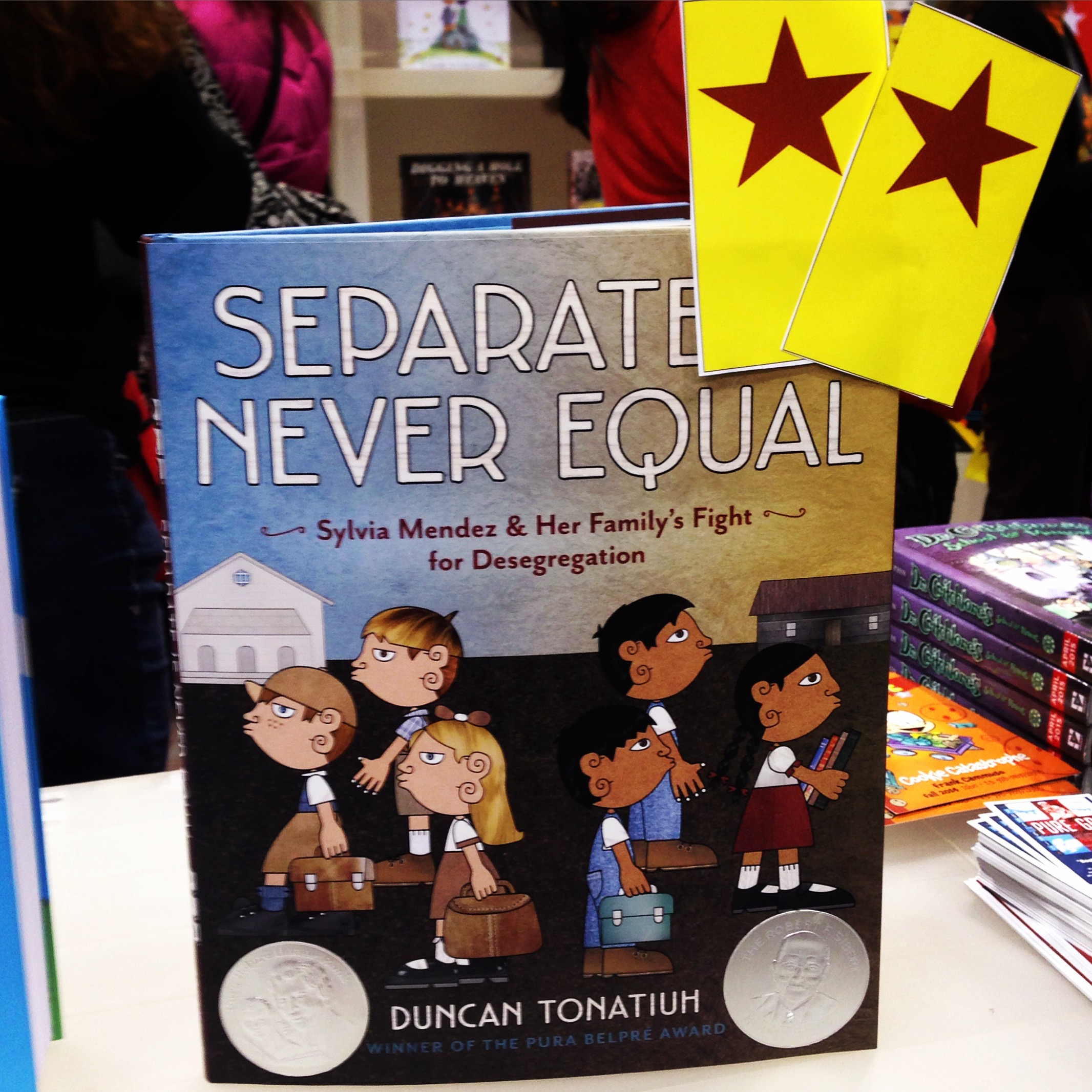
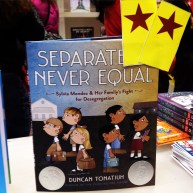
SEPARATE IS NEVER EQUAL by Duncan Tonatiuh, Pura Belpré Illustrator Honor Book & Sibert Informational Honor Book

SEPARATE IS NEVER EQUAL by Duncan Tonatiuh, Pura Belpré Illustrator Honor Book & Sibert Informational Honor Book

Several days ago, I had the opportunity to attend the 2015 American Library Association (ALA) Midwinter Meeting & Exhibits Conference (#alamw15), held in Chicago. My main reasons for attending the conference were to meet with my dissertation committee, attend REFORMA (The National Association to Promote Library & Information Services to Latinos and the Spanish Speaking) meetings and discuss and collaborate with fellow Reformistas about ongoing projects and events. My presence in Chicago and #alamw15 also drove me to participate in and attend events and engage in conversations with fellow bloggers, librarians, educators, authors, publishers, and supporters of children’s and young-adult literature.

In this post I want to share with you about the sessions and events that I took part in and some reflections on my overall experience at the conference.

On Friday, January 30, 2015, the Association for Library Service to Children (ALSC), along with the Children’s Book Council (CBC) hosted Day of Diversity: Dialogue and Action in Children’s Literature and Library Programming. I was not able to attend because this was an invitation-only event, but I followed the conversation through tweets, then afterward in blog posts reflecting on that day. The purpose of the event was to “discuss strategies for ensuring that all children have access to diverse literature and library programming.” Although great remarks were given by the keynote speaker, former ALA and REFORMA president Dr. Camila Alire; Día founder, author, and storyteller Pat Mora; former ALA Offices for Literacy & Outreach Services Director Satia Orange; and Native authors and authors of color, the overall impression was that it felt like a Diversity 101 event. Based on social media commentaries and subsequent talks, the event lacked real discussions about systemic problems, White privilege and anti-racist approaches to children’s literature. These conversations are long overdue in children’s librarianship and the publishing industry, and it is a pity that events where these conversations should happen do not embrace that challenge. Great recaps and reflections were posted by Debbie Reese, Edith Campbell, Zetta Elliott, Sarah Park, Don Tate, Maya Christina Gonzalez and Jason Low.

The REFORMA meetings and events were a great experience to get to know fellow Latino/a and Chicano/a librarians, educators and authors, immerse myself in committee work and projects, and finally meet people whose work I have admired for years. These gatherings were among the most welcoming spaces I’ve attended in my professional career in the United States. They also are dealing with serious issues regarding not only Latino populations in the United States, but Latin American immigrants as well.
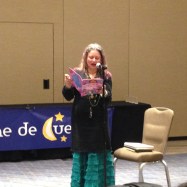
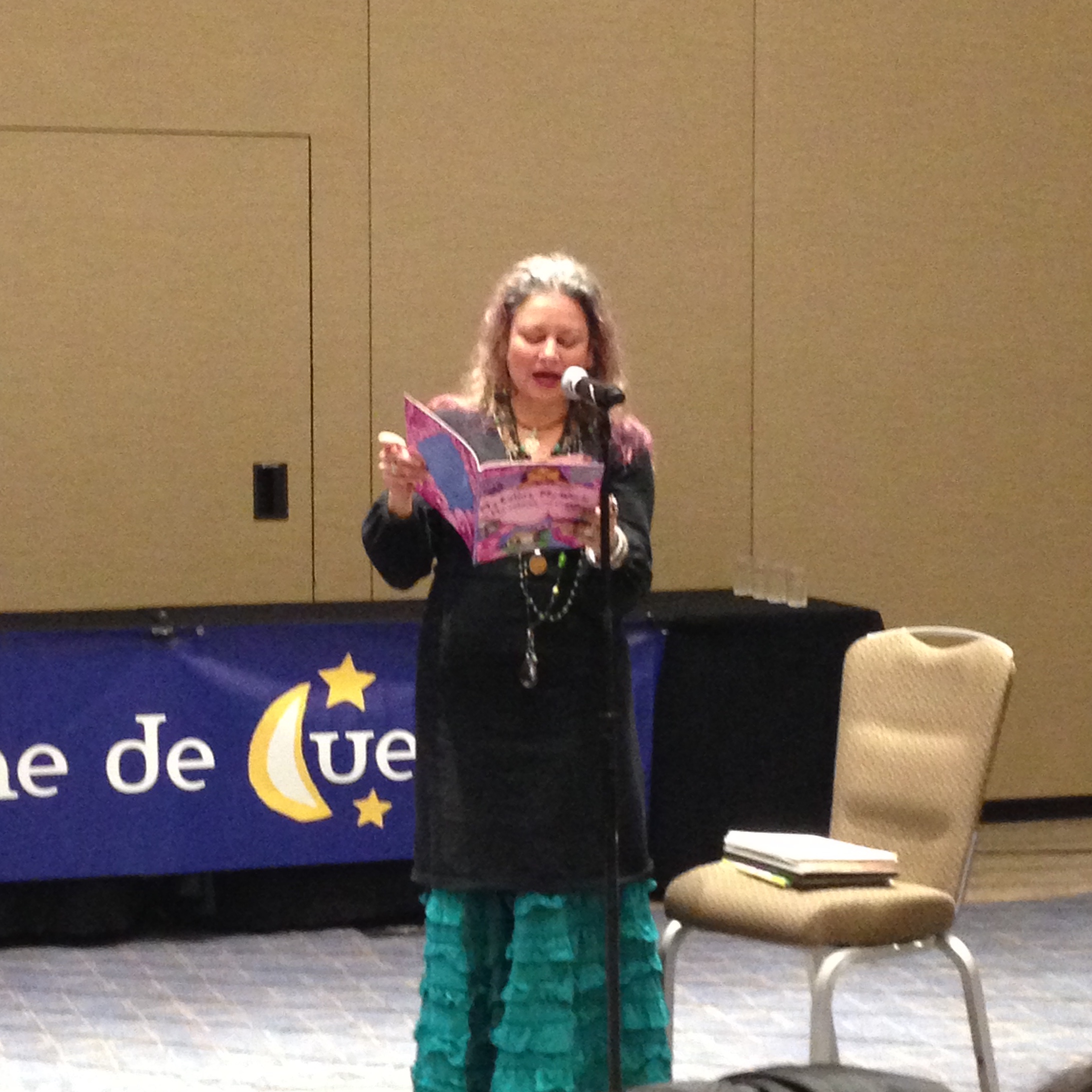
Maya Christina Gonzalez reading MY COLORS, MY WORLD/MIS COLORES, MI MUNDO during Noche de Cuentos

Maya Christina Gonzalez reading MY COLORS, MY WORLD/MIS COLORES, MI MUNDO during Noche de Cuentos

A great example of this is the Children in Crisis Project. With this project, REFORMA delivers blankets, books, and backpacks to children held in detention centers near the border. The children, many as young as two years old, are unaccompanied refugee minors crossing the border, mainly from El Salvador, Guatemala, and Honduras. Their journey crossing the border, many to reunite with family in the U.S. and to escape state and local violence, must be seen as a humanitarian crisis, and care needs to be given to focus on the social, emotional, informational, and legal needs of these children. As the co-chair of REFORMA’s Children in Crisis Task Force, Oralia Garza de Cortés said, “this project is like an underground railroad of books to our most vulnerable children.” REFORMA is currently partnering with nonprofits to continue to enhance efforts to help and support our children. (Here is a link that informs about ways to help, collaborate with, and donate to the Children in Crisis Project.)

On Saturday night, REFORMA celebrated its traditional Noche de Cuentos, an evening filled with stories, people, and warmth. The night was enlivened by author, storyteller, and librarian Lucía González, and Latino children’s literature and literacy consultant Oralia Garza de Cortés. Both women have been great supporters of Latino children’s literature for decades and contributed immensely to diversity in children’s librarianship. Lucía is also the author of the bilingual picture book The Storyteller’s Candle, about the life and impact of Pura Belpré’s work in New York, its Puerto Rican community in 1920’s-30s, and bilingual children’s librarianship. Oralia is the co-founder of the Pura Belpré Award, named after the Puerto Rican author, folklorist, and first Latina librarian of the New York Public Library. In “Noche de Cuentos” they both showcased their talent for sincere and engrossing storytelling. It was proof of how important preserving and telling our stories are. “That’s how stories get around, you tell them,” said Lucía, after finishing the tale of Blanquita and Her Wild Ducks, giving us a powerful reminder of how the voices that are constantly silenced, marginalized, and misrepresented will always find ways to amplify and give strength to their communities through storytelling. This was affirmed many times during the night: Pat Mora read poems and brought us charm and joy, and Maya Christina González read her picture books and told us that “kids need to know we are part of nature, and we belong here.” More emphasis on the power of our stories came when Jasmin Cardenas, a local storyteller, told us that “if we tell stories, this would be a better place.” Claudia Guadalupe Martinez shared the importance of community building, as portrayed in her YA novel, Pig Park. With its focus on stories, people, marginalized voices, powerful voices, and community support for each other, Noche de Cuentos was a much-needed intergenerational event.

While #alamw15 focused more on meetings, the exhibit hall, and the Youth Media Awards, several additional sessions were offered. I attended the Ignite Session on Saturday and was looking forward to seeing the presentations of two fellow librarians, tweeps, and overall great supporters of diversity in children’s literature–Angie Manfredi and Edith Campbell. In her presentation, “20 Kids/Teens Titles to Diversify Your Collection Today,” Angie gave fast book talks about diverse children’s and young-adult books that librarians can add to their collection. From the Latino holiday picture book T’was Nochebuena to the middle grade all-black cast book The Zero Degree Zombie Zone, she gave her audience a glimpse of diverse titles that reflect an intersection of different identities and backgrounds. Her energy and enthusiasm encouraged people to not only state that “We Need Diverse Books,” but that we need to buy them and promote them in our libraries and bookstores. (You can see the slides to her presentation here.)

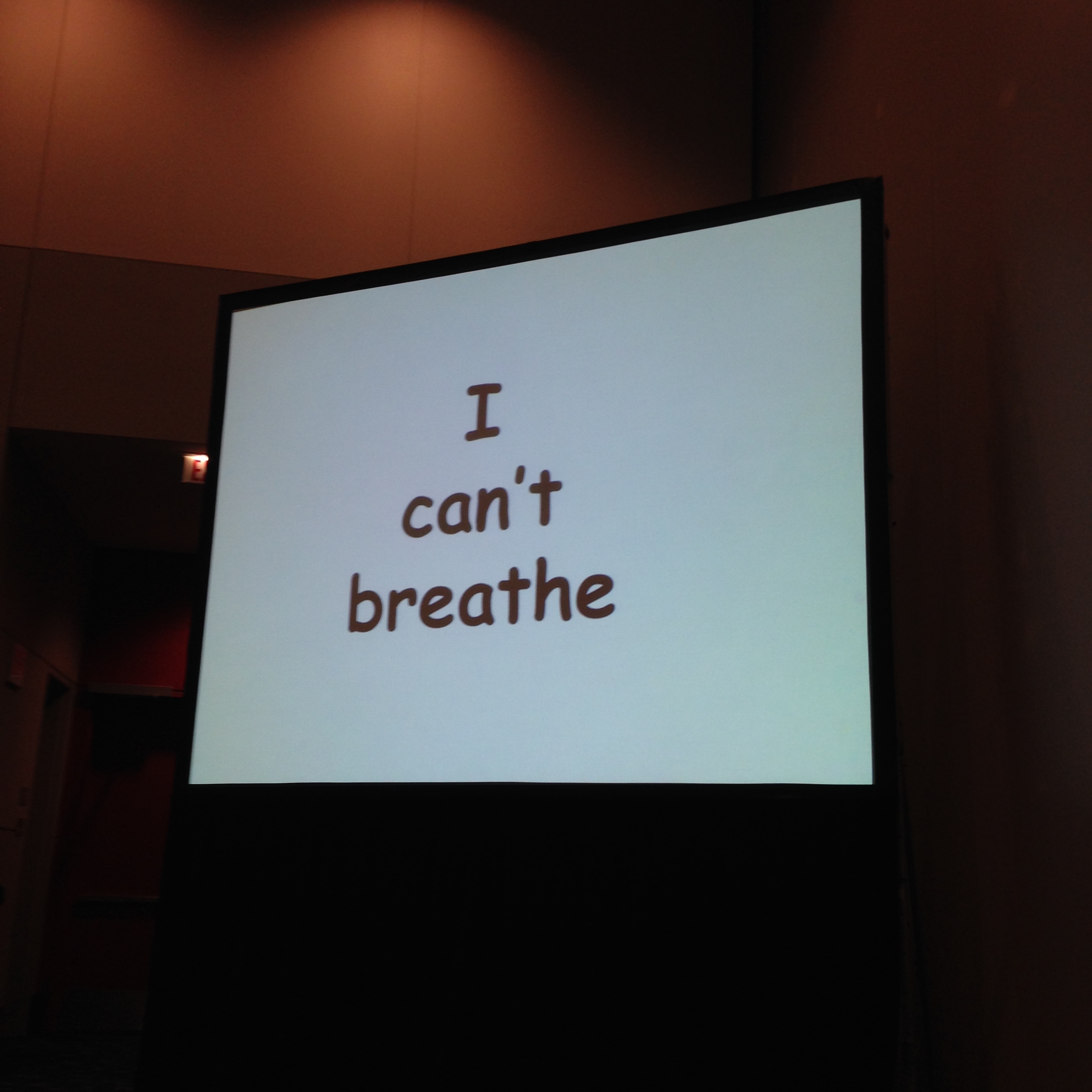
Slide of Edith Campbell's The Kids Are Not All White presentation

Slide of Edith Campbell’s The Kids Are Not All White presentation

The closing presentation of the Ignite Session was Edith’s “The Kids Are Not All White.” She started out by giving numbers and percentages demonstrating how children’s literature is not representative of our children’s population. She leaned toward a reflection and call to action to truly make efforts to be inclusive in our libraries. She challenged the view that diverse books are only for kids of color, and the status quo in books that shows us “who we were, but not who we can be.” Edith addressed language diversity, too, calling on us to include titles written in other languages in our collections, and titles that intersect income, gender, and race. She also emphasized the need to rethink views about self-publishing and technology, and how they are fertile spaces for those who are traditionally marginalized. Both presentations fit well within the different conversations about diversity and children’s literature that were happening at #alamw15. Because it was an Ignite session with a broad audience, they were “preaching” outside the usual crowd, to an audience that included academic and adult services librarians that may not have otherwise been aware of the attention being given to White privilege and diversity in publishing around the #kidlit world.

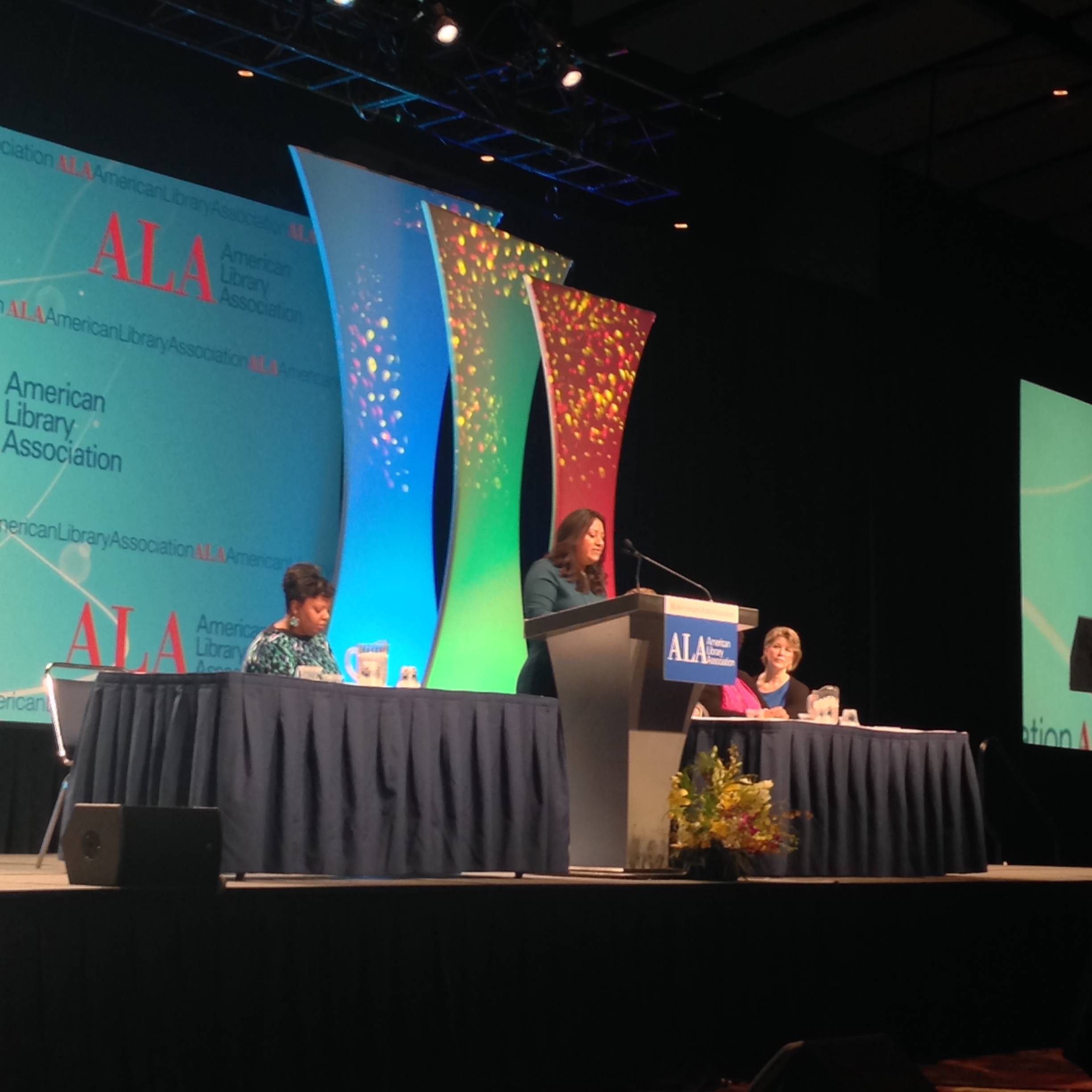
As we all know, the most talked about event of #alamw15 was the Youth Media Awards. This was my first time attending the awards, which I usually watch on my computer through a livestream. Early that morning, attendees, overwhelmingly White, started gathering and lining up to enter the room. Although I was, like them, excited to see who the winners and honorees of such a widely followed event in the world of U.S. children’s literature would be, I used the opportunity to engage in conversations, view people’s reactions, and note the racial/ethnic background of those deciding the award-worthy books of the year. As awards were presented to books by/about people of color and people with disabilities, the crowd kept clapping joyfully as a sign of approval that diverse titles were being recognized. (For a full list of winners visit: ALA Youth Media Award Winners and for a list of Latino/a authors and illustrators winners and honorees, here is our recap.)

As people were applauding and celebrating the diversity of winning titles, I was thinking how great it was to see those book covers on that big screen, and how those that had overlooked them during the year were now finally going to at least read about them and maybe even bring them to their libraries and classrooms. You see, the fact is that we’ve always been publishing great award-worthy titles, but they are continually neglected by the children’s literature world. While people were applauding, I was thinking about recent comments I’d heard that Brown Girl Dreaming shouldn’t win the Newbery, since she had already won the National Book Award. I wondered if similar things were said when a White author’s book had won the National Book Award. This, along with other observations and conversations, led me to question the celebratory spirit around me. Was the applause like that scene from The Boondocks’ “Garden Party” episode, where everything Huey says White people around him seem obligated to applaud and praise?
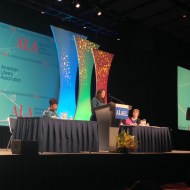
Silvia Cisneros, REFORMA president, presenting the Pura Belpré Award in English and Spanish

Silvia Cisneros, REFORMA president, presenting the Pura Belpré Award in English and Spanish

As I sat in the room, I heard some audience members complaining about the use of Spanish during the Pura Belpré Awards, an award that celebrates Latino children’s literature and is co-sponsored by REFORMA. As the morning unfolded, I watched the almost all-White committee members stand up, some wearing “Trust the Process” t-shirts. Toward the end of the awards, someone said that apparently there were finally good diverse titles this year, since they won awards. The implication was that the lack of award-winning diverse titles in years past was an indication that Latinos, Asians, Native, and Black people had never published GREAT books throughout those years.

When I finally exited the room, I approached Pat Mora (walking away by herself) to congratulate her for her work and her Mary Hill Arbuthnot Honor Lecture Award. While talking to her, I was surprised and angry that no other person approached her to congratulate her. This woman has been an influential force in children’s literature, and she had just won an award recognizing her marvelous work. That work includes being the founder of Día, an official annual celebration that has been sponsored and championed by ALA. I realized that most people there had no idea who she was. The same people that were applauding inside the room as her picture was displayed on the big screen, as soon as her award was announced? The same people that sometimes state their “concern” of how we need to bring more authors, illustrators, and librarians of color to these events and into our field?

I introduced myself to her (in Spanish), and as we started talking, the first thing she said to me was: “Nada ha cambiado” (Nothing has changed). Words that stayed in my mind as I reflected upon my experience walking through the exhibit halls.

Nada ha cambiado.

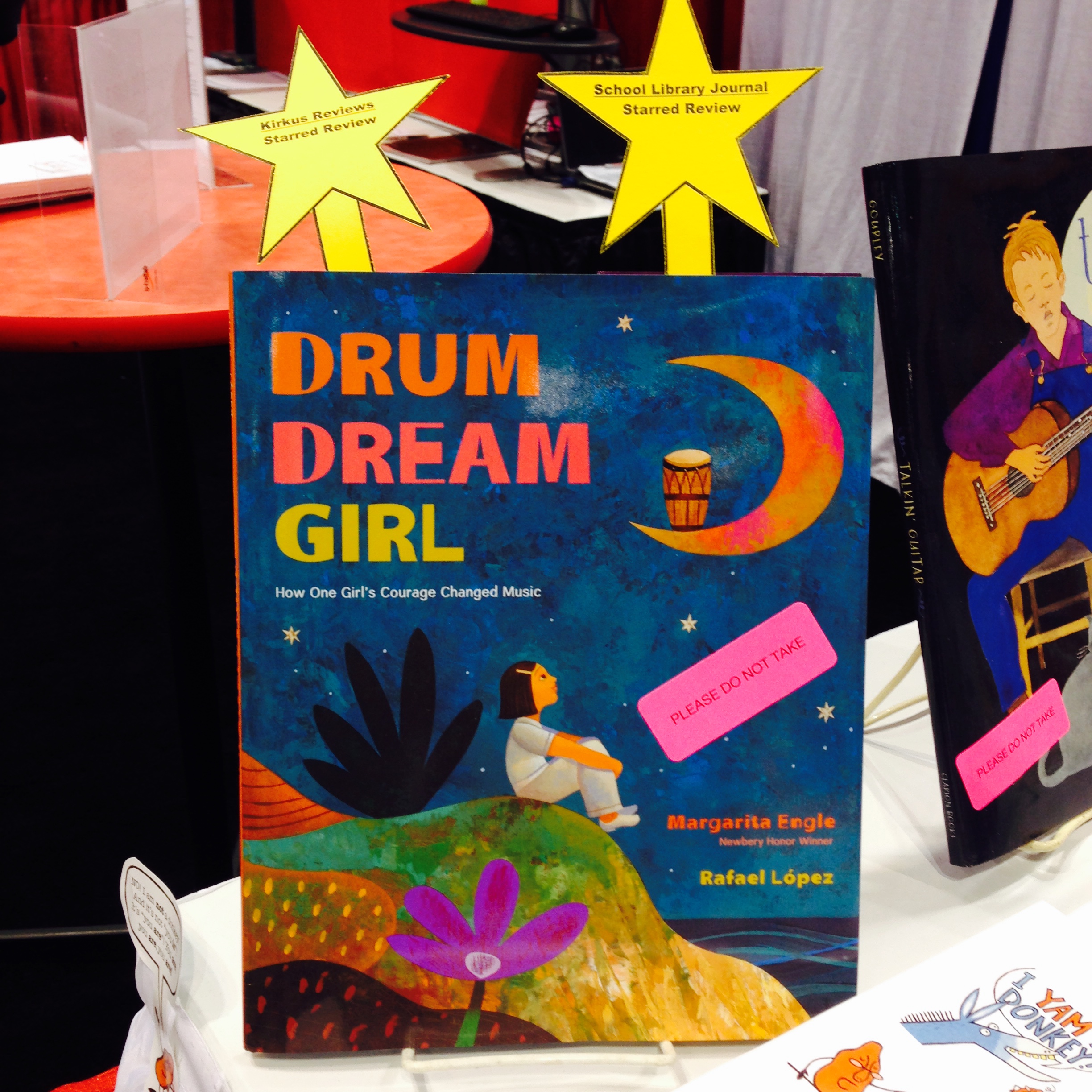
The exhibit hall is a place where publishers, authors, and library businesses display new products, highlight new titles, and give away promotional materials and advanced reader’s copies (ARCs). The layout of the exhibit hall speaks volumes about the power centers: the amount of floor space that the big publishing houses occupy tells us how much of the exhibit floor they own. This is obvious. Fees paid for space in the exhibit hall in any convention generate revenue for the organization that sets up the event. Simply put, the big publishers with their marketing budgets, will obviously have a higher visibility than small publishers, but it still feels uncomfortable that smaller publishers are marginalized on the floor of an event organized by/for librarians that work in libraries that serve a diverse society. As I walked through the exhibit hall, my approach was to find Latino children’s and young-adult books and children’s books in Spanish. Among the sea of book covers with bears, puppies, and White girls at the Scholastic booth, I saw, in the far back, one of my most anticipated YA books of 2015, Shadowshaper, by Daniel José Older. I asked the publisher’s rep if she had a copy of it to give away. In the booth were stacks and stacks of other titles, prominently placed, evident that they were being heavily promoted by the publisher. As I strolled down those aisles I was surprised to see a large stack of ARCs of Pam Muñoz Ryan’s Echo. They were going fast as librarians took copies. Minutes later, I approached a big publisher’s representative and asked her what Latino children’s books they had. She replied that they only carry “good” books. The look on my face and the two Latino books I had in my hands, no doubt, pushed her to follow her response with: “You already have those. Those are the good ones.”
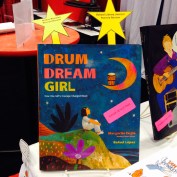
DRUM DREAM GIRL: HOW ONE GIRL'S COURAGE CHANGED MUSIC, written by Margarita Engle and illustrated by Rafael López

DRUM DREAM GIRL: HOW ONE GIRL’S COURAGE CHANGED MUSIC, written by Margarita Engle and illustrated by Rafael López

Despite that conversation (and it was only one of many), I can say that I found several Latino children’s books, but in a low percentage compared to books by White people, about White people, and bears. Was I able to find a couple of Latino/a books, because I was looking for them? Because I recognize and know the titles, covers, authors and illustrators? Could people who had no idea Latino/a writers and illustrators exist, see their books? Were they displayed in a way such that people who don’t know about them could see, browse, and then buy them?

Another thing that caught my attention was that indie presses that publish stories by Native authors and authors of color were not packed with people. At their book signings, there were no lines of people waiting to meet the authors. This called to mind René Saldaña’s post: Forgive Me My Bluntness: I’m a Writer of Color and I’m Right Here In Front of You: I’m the One Sitting Alone at the Table. I was honored to meet Erika T. Wurth, author of Crazy Horse’s Girlfriend (Debbie Reese’s review); Isabel Quintero, author of Gabi, a Girl in Pieces (our review by Sonia Alejandra Rodriguez); J.L. Powers, author of Colors of the Wind: The Story of Blind Artist and Champion Runner George Mendoza; and Lee Byrd, co-founder of Cinco Puntos Press.

Wurth, Quintero, Powers, and Byrd are among the many people with whom I had great conversations. I am among a growing number of people who support their work. In my many interactions and conversations, we laid out common ground and talked about how White privilege and institutionalized racism in children’s literature and publishing have always been a systemic issue. Privilege and power go across the publishing industry, book reviewing, librarianship, education, and media. We need more than diverse books. We need opportunities at places like library conferences to create awareness about privilege and power. In our work as bloggers, we must review and promote books by writers who are of marginalized populations. We must point to their accurate reflections of those populations. But we must also call out stereotypical and racist content in children’s books overall, and we must name White privilege when we see it. Yep, there’s a hell of a lot to do.

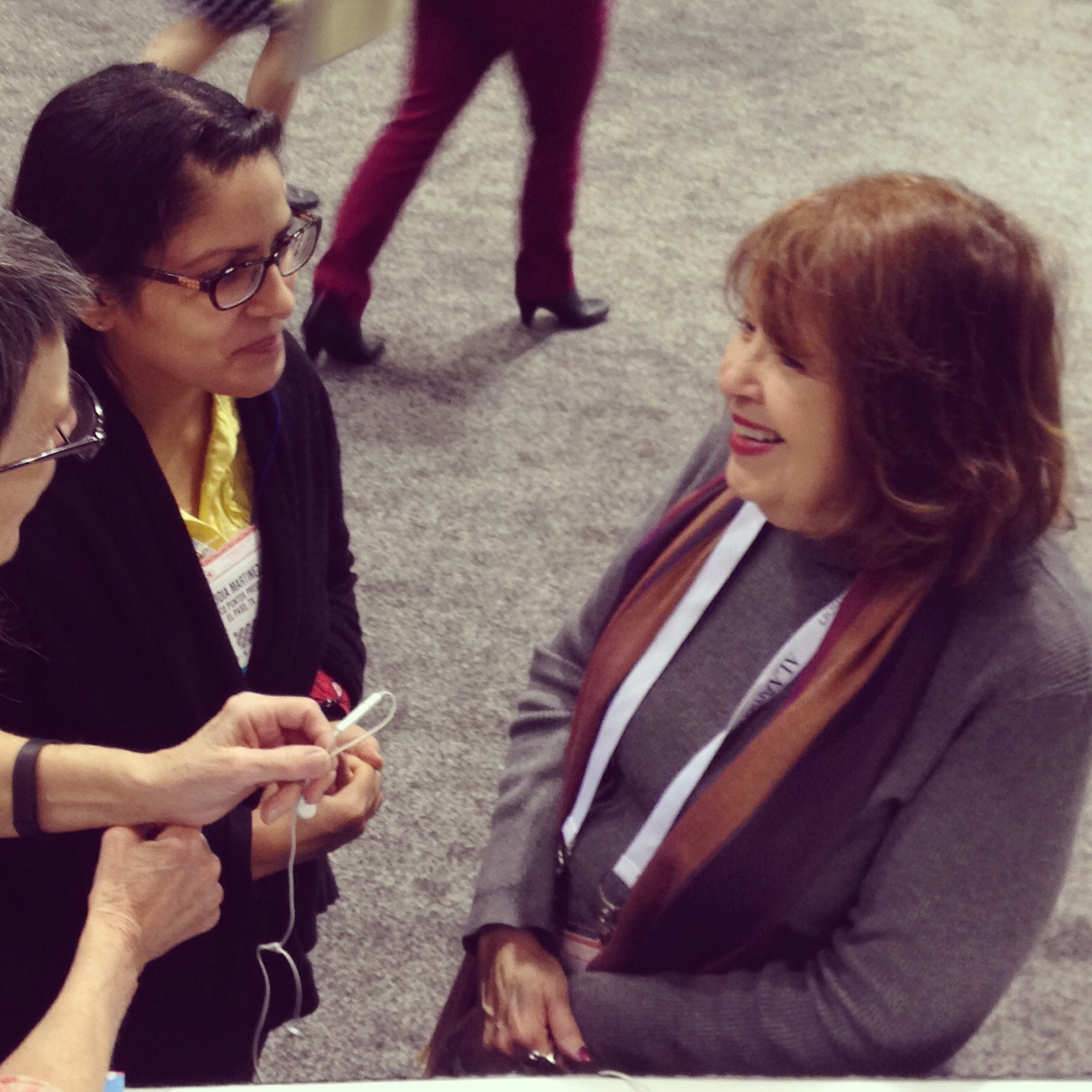
Pan Dulce: Lee Byrd from Cinco Puntos Press interviews Claudia Guadalupe Martinez (author of PIG PARK) and Pat Mora (author of CANTA, CHICO BRAVO, CANTA) talking about their books, growing up in El Paso, Texas. Full interview: https://www.youtube.com/watch?v=e-yf9v_WTME&feature=youtu.be

Pan Dulce: Lee Byrd from Cinco Puntos Press interviews Claudia Guadalupe Martinez (author of PIG PARK) and Pat Mora (author of CANTA, CHICO BRAVO, CANTA) talking about their books, growing up in El Paso, Texas.

Full interview: Pan Dulce #4


*Note:
The upcoming major event for REFORMA and Latino children’s literature is the Pura Belpré Award 20th Anniversary Celebración that’s going to be held in Orlando, Florida at the 2016 ALA Annual Conference. I attended the Task Force meeting; there are great plans ahead to celebrate past award winners and honorees, and a wide selection of Latino children’s books as well. More information to come! Check out how you can help and support this gran celebración.
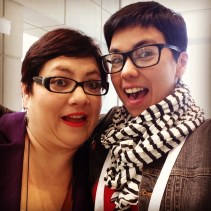
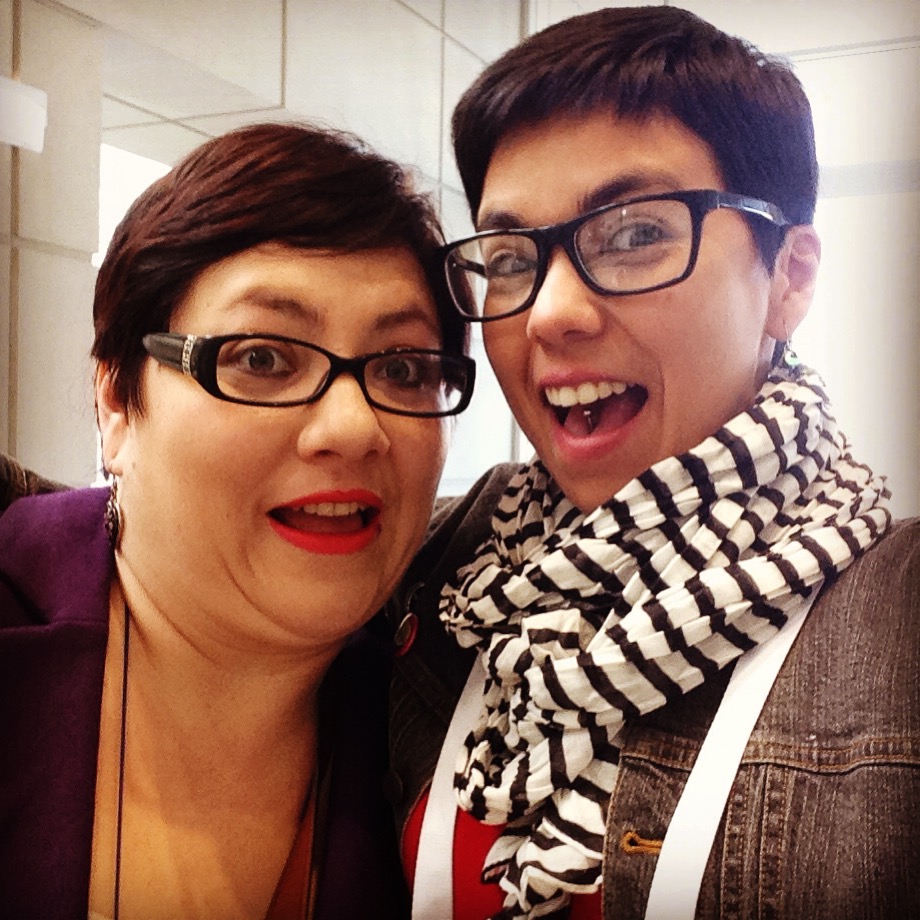
With Isabel Quintero, author of GABI, A GIRL IN PIECES, winner of the William C. Morris Award (Young Adult Debut Award)
With Isabel Quintero, author of GABI, A GIRL IN PIECES, winner of the William C. Morris Award (Young Adult Debut Award)

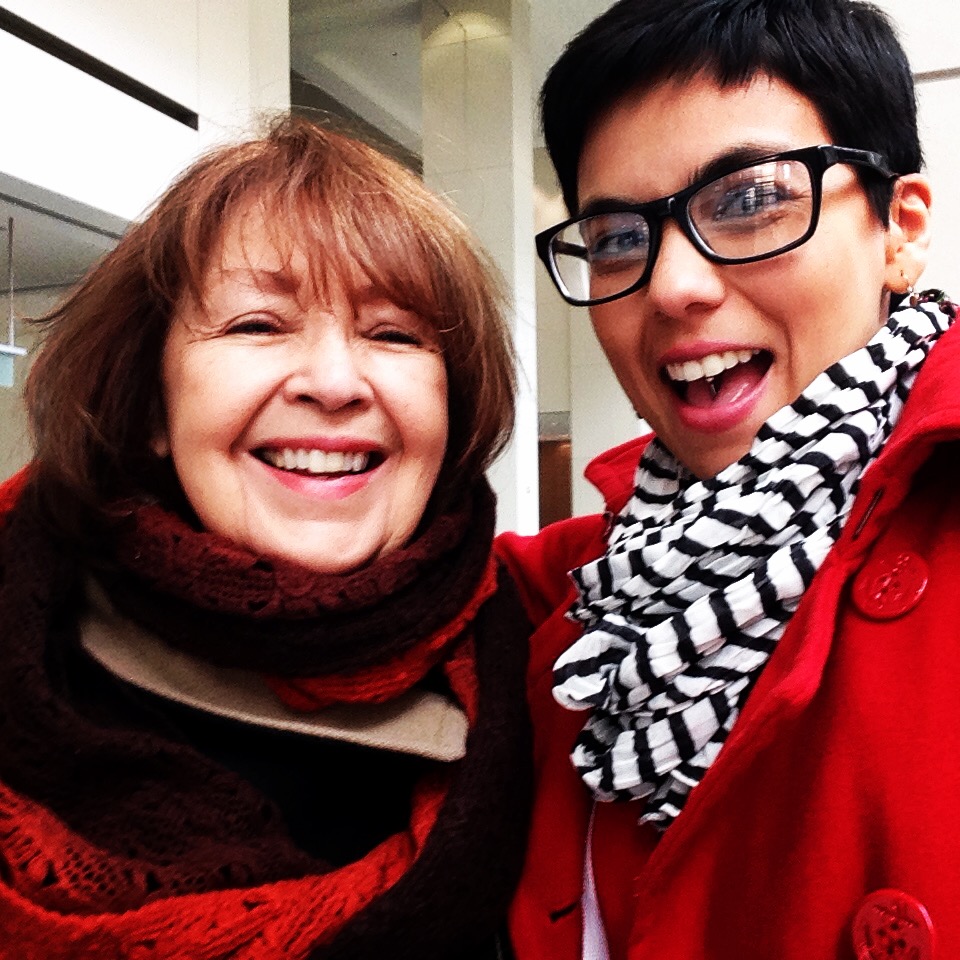
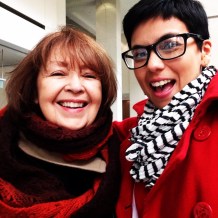
With Pat Mora. Such an honor to finally meet her.

With Pat Mora. Such an honor to finally meet her.