

Latinxs in Kid Lit: Tell us about yourself as a child reader. How do those experiences color your impressions of the books you read now?
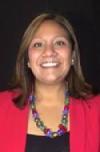
Sanjuana Rodriguez
Sanjuana Rodriguez is Assistant Professor of Literacy and Reading Education in the Elementary and Early Childhood Department of Kennesaw State University. I attended kindergarten through second grade in Mexico, where I was born. Since most of my reading there was in workbooks, my first memories of actual books was after we moved to the United States, where I read as a way to learn English. I vividly remember searching the library for books that included Latinx characters. There were only a handful, including a biography of Gloria Estefan, which I read about 100 times. This is partly why I developed an interest in books by and about Latinx. My own background taught me the importance of kids seeing their experiences reflected in texts.
Cris Rhodes is a lecturer in English, who recently completed her doctorate in literature. My mom was an elementary school teacher, so she knew the importance of reading to my twin sister and me. Because of this, I became an avid reader. I read and reread the Josefina American Girl series. She was the first character I encountered who looked like me, and I used to put on traditional dresses to pretend I was her. As an adult, I’ve revisited those books and am sad to say they’re pretty awful, as far as representation goes. Now, when I do research on representation, I keep my child-reader self in the back of my mind. That little girl deserved better, so I let that inform how I read and advocate for the many excellent Latinx children’s books available today.
Mark Oshiro, the author of Anger is a Gift, is also the driving force behind the website Mark Does Stuff. I started reading at a very young age, and after reading almost everything in my school library, I moved on to my local branch. But few books had characters like me. Prior to high school, I recall only Bless Me, Ultima, which I have not revisited in a long time. Reading The House on Mango Street, at 14, is what made me realize that people like me could be in a novel. It’s one of the most important books in my life.
Katrina Ortega is the young adult librarian at the Hamilton Grange Branch of the New York Public Library. As a child, I was just as avid a reader as I am today. My first experience with Latinx characters didn’t come until high school, when I was assigned to read Bless Me, Ultima. Before that, I was only exposed to Latinx characters through books published in Mexico, read to me by my mom. I was never exposed to characters who came from similar situations as my own—Mexican-Americans whose families had lived in the U.S. for generations— and my view of “normal” book characters was very different from what I saw in my own life. Looking at some of the books currently available, I cannot imagine how much more I might’ve related to characters who looked like me or lived in environments like the one in which I grew up.
LiKL: What is your reviewing process like? Do you take notes throughout your reading time? Are there sticky flags involved? Are there sticky fingers involved (because: sugary snacks)?
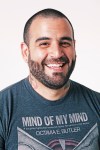
Mark Oshiro
Mark: For my Mark Does Stuff reviews, I record myself while reading, so no note-taking there! But for publications like Latinxs in KidLit, I do take notes. What stands out? Which parts do I want to comment on? I keep track of my thoughts and how they develop as I experience the text. Those transitions can often be the coolest part of reading.
Sanjuana: My first step is to read the book just for fun! As I reread, I begin to think about my impressions of the text. My last step is to see what resources already exist online that teachers or librarians may find helpful.
Katrina: I read through the book first, then write down my initial thoughts about characters, setting, plot-lines, and go back through certain parts to read them more closely. My style of reading is such that I sometimes get completely consumed by the story and forget to stop and write things down.
Cris: I bookmark important moments and quotations with sticky flags as I go, but I also tend to have a document open on my computer or phone where I type out some rough sentences and thoughts that may make it into the final review. I end up Frankensteining these notes together after finishing the book.
LiKL: Your work as an educator, youth librarian, scholar of children’s literature, or author of books for young readers is bound to affect your work as a reviewer. Help us understand the professional perspective you bring to the evaluation of texts.
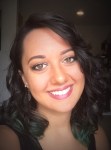
Cris Rhodes
Cris: It’s really hard to turn off my scholarly training when I’m reading, so whatever I consume is filtered through that lens. I always have questions running through the back of my mind: How might this book be approached from a critical standpoint? Does feminist theory apply? Queer theory? Trauma studies? Sometimes those questions don’t make it into a review. Regardless, they’re always present, even if on the periphery, and they generate other modes of analysis that do come out in the reviews.
Katrina: The area I live and work in is a predominantly Latinx community. One of my main responsibilities as a teen/young-adult librarian is making sure the youth I work with find content to which they can relate. This doesn’t mean characters have to be from Harlem or the Bronx, although that definitely is a huge selling point. Instead, the books I suggest must have genuine and honest characters, situations, and conversations. When I review a book, I ask myself, “Is this believable? Would a teen say something like that or behave in that way?” Authenticity in the representation of characters and situations is super important.
Sanjuana: My work as an elementary teacher shapes the work I do as a reviewer. I am always thinking about how texts could be used in the classroom and how those books can facilitate conversations, particularly around difficult or controversial issues, such as immigration. In my current role, working with pre-service teachers, one of my goals is introducing them to books they’re unlikely to encounter in their field-experience classrooms. I want them to see the value of diverse characters and experiences in books, which they will hopefully include in their own future classroom libraries.
Toni Margarita Plummer is an award-winning writer of short stories, who has also worked in publishing. I was an acquiring editor for many years, meaning I was the one always hoping for good reviews for my titles, for those one or two golden lines I could put up online or on the paperback. I think the best reviews accurately describe what the book is about, place it in context, and highlight the successes and shortcomings of the work, all toward the end of helping readers to discover books they will enjoy. That is what I try to give in my reviews, along with those few golden lines of praise someone can pluck.
LiKL: Let’s draw up a wish list for authors and publishers. Which genres, storylines, locations, representations, or other considerations do you pine for in books for children or teens?
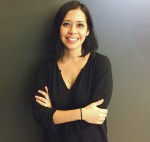
Katrina Ortega
Katrina: I love reading stories about the border. It’s where I grew up, and writers like Guadalupe Garcia McCall and Benjamin Alíre Saenz take me back to the desert and open skies of West Texas. I also love reading fantasy that is Latinx-character centric. The Brooklyn Brujas series by Zoraida Córdova is by far my favorite. In addition, I’d love to read more about Latinx families that have been living in the United States for generations, like mine has—families that have sprawled across the country, and their stories of traversing back and forth.
Mark: More Afro-Latinx rep is super important to me. I’m always on the lookout for more rep of queer Latinx, LGBT Latinx, and ace Latinx!!! The tradition I write in deals with the difficulties Latinx people face, historically and in our present time. But these days, I am also super into fluffy beach reads. I want some big Latinx rom-com YAs. Soon. I may be writing one myself!
Cris: As a Latina who grew up in a rural area with no other Latinxs besides those I was related to, I want more stories like that–more diverse Latinx experiences represented. We need more queer Latinx stories, more Latinxs who don’t speak Spanish, more Latinxs living outside of big cities, more Latinxs who don’t have large, extended families. We also need to make being Latinx not a plot point—I love books where being Latinx is incidental to what’s going on.
Sanjuana: I see a need for more books that represent diversity in the immigration experience, as well as more bilingual texts that reflect the growing number of multilingual students in schools.
LiKL: Now let’s flip the coin. What are your reading pet peeves? Specify the tired tropes, stereotypes, or overused plot machinations that cause you to roll your eyes—or to slam a book shut.
Cris: In continuation of my previous answer, I’m tired of books that homogenize the Latinx experience, even if they don’t mean to do so. Not all Latinxs act, live, and think the same way. I encounter certain plot lines over and over: barrio life, single-parent homes, racism and xenophobia. That’s not to say these things aren’t valid experiences or necessary for a certain readership.
Mark: My reading pet peeves? Writers using a very easily solved misunderstanding to fuel their plot. Plots that could be solved by people just TALKING to one another. Also, Latinx drug lords. I’ll roll my eyes at the inevitable ICE or US border story written by a white person, with an attitude of “how can this possibly happen in our country?” Spoiler alert: it’s been happening for far, far longer than this past year.
Sanjuana: I don’t like to read books that paint a perfect picture of the world. I believe that literature should represent current realities and issues that children and teens are grappling with.
Katrina: My biggest pet peeve? When authors use Spanish in their characters’ dialogue, but then repeat the dialogue in English. It drives me up the wall to have to read the same thing twice!
LiKL: What is your current hot read and which books are at the top of your to-be-read list?

Toni Margarita Plummer
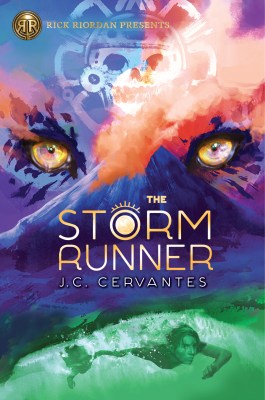
Toni: I am reading Roshani Chokshi’s Aru Shah and the End of Time, from the new Rick Riordan Presents imprint at Disney. Naturally, I am eager to read the imprint’s forthcoming Latinx titles by J.C. Cervantes and Carlos Hernandez. I think it’s so exciting that children will be invited to explore Latinx mythology through these books! I also still need to read I Am Not Your Perfect Mexican Daughter by Erika L Sánchez and The Poet X by Elizabeth Acevedo.
Sanjuana: This a list of books currently on my desk ready to be read: Amal Unbound by Aisha Saeed, Dear Martin by Nic Stone, Another Brooklyn by Jacqueline Woodson, The First Rule of Punk by Celia C. Pérez ( I know that I’m late reading this one!). Picture books I can’t wait to read and share with kids: The Day you Begin by Jacquline Woodson, Dreamers by Yuyi Morales, and Imagine by Juan Felipe Herrera.
Mark: Just read Gabby Rivera’s Juliet Takes a Breath and it was just as stunning as I’d thought it would be. I’m about to read and review the newest Anna-Marie McLemore, and then am eager to start The Resolutions by Mia García!
Cris: My current “hot read” is any book I’m using for my dissertation, but I’m particularly enjoying digging into Celia C. Pérez’s The First Rule of Punk. My current TBR is anything I’m not using for my dissertation! I’m very excited to dive into Zoraida Cordova’s Brooklyn Brujas series. I recently began Lila Quintero Weaver’s My Year in the Middle, and there are some rad looking anthologies that have been recently released!
Katrina: I just finished Javier Zamora’s Unaccompanied, a semi-autobiographical (or so it seems) account of the journey north from Central America, written in verse. It’s heartbreaking and redemptive and beautifully put together.
Our warmest thanks to the reviewers who participated in this roundtable discussion! We’ll continue the conversation in the next installment.
 DESCRIPTION OF THE BOOK: In this delicious forest, the bears are made of rectangular brownies, the goldfinches are triangles of lemon tart, and the butterflies are oval jelly beans. What child could resist learning shapes from such delectable creatures as these? Collage artist Juana Medina has outdone herself with this array of tooth-achingly sweet animal desserts that come in all shapes and sizes.


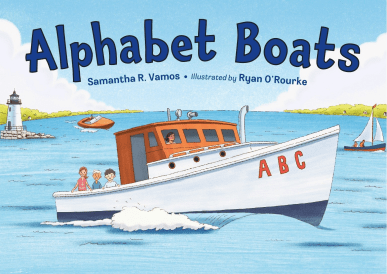 DESCRIPTION OF THE BOOK: Discover twenty-six types of vessels, from the more common–canoe and motorboat–to the unusual–umiak and Q-boat. Just like in Alphabet Trucks and Alphabet Trains, colorful art includes the letters of the alphabet hidden (and not-so-hidden) in supporting roles in the illustrations. The text features familiar as well as unusual boats from around the world, packing in tons of instant kid appeal, and upper and lowercase letters are integrated into the action of the art rather than solely in the typography. Back matter includes age-appropriate facts about each featured boat.
 ABOUT THE AUTHOR: Samantha R. Vamos is the author of Alphabet Trains, Alphabet Trucks, and The Cazuela That the Farm Maiden Stirred, a Pura Belpré Illustrator Honor Book. Samantha and her family live in Northern California. Samantha’s favorite boats are the iceboat and the Very Slender Vessel.
  ABOUT THE ILLUSTRATOR: Ryan R. O’Rourke illustrated Alphabet Trains, Alphabet Trucks, and Eight Days Gone by Linda Reynolds. He both wrote and illustrated Bella Lost and Found. His art has appeared in galleries, newspapers, and magazines. Including a weekly illustration for the Boston Globe Magazine. Ryan lives in New Hampshire.


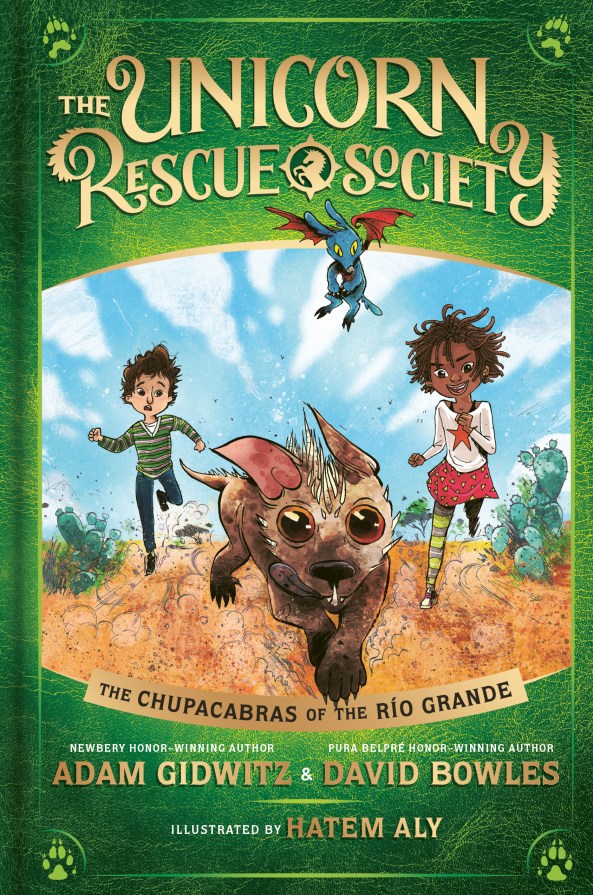
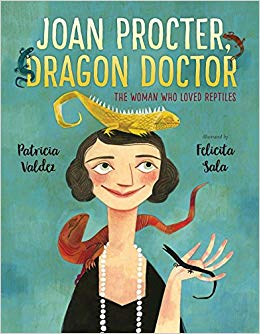 DESCRIPTION OF THE BOOK: Back in the days of long skirts and afternoon teas, young Joan Procter entertained the most unusual party guests: slithery and scaly ones, who turned over teacups and crawled past the crumpets….
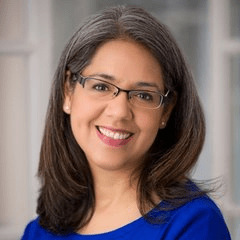 ABOUT THE AUTHOR: Patricia Valdez is a scientist who loves writing for children. She earned her PhD in molecular and cell biology from the University of California, Berkeley, and works at the National Institutes of Health. Originally from Texas, she now lives in the Washington, D.C., area. This is her first picture book. Visit her at
  ABOUT THE ILLUSTRATOR: Felicita Sala is a self-taught artist who studied philosophy at the University of Western Australia. She has worked on several animation projects, but her passion is making picture books. Felicita lives in Rome with her husband and their daughter. Visit her at
  ABOUT THE REVIEWER: Dora M. Guzmán is a bilingual reading specialist for grades K-5 and also teaches college courses in Children’s Literature and Teaching Beginning Literacy. She is currently a doctoral student with a major in Reading and Language. When she is not sharing her love of reading with her students, you can find her in the nearest library, bookstore, or online, finding more great reads to add to her never ending “to read” pile!
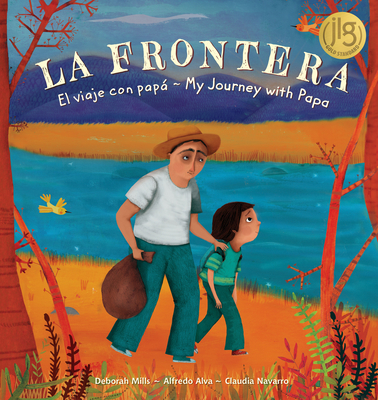 DESCRIPTION OF THE BOOK: Based on a true story! Join a young boy and his father on an arduous journey from Mexico to the United States in the 1980s to find a new life. They’ll need all the courage they can muster to safely cross the border — la frontera — and to make a home for themselves in a new land. Inspired by the childhood immigration experience of co-author Alfredo Alva, this story of perseverance is told in both Spanish and English to empower language-learning. Includes 4 pages of endnotes that unpack facts about Alfredo’s story and other stories like his and borders around the world to help parents and educators talk with children about immigration, resilience, empathy and belonging.
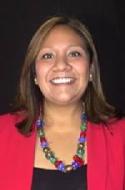 ABOUT THE REVIEWER: Sanjuana C. Rodriguez is an Assistant Professor of Literacy and Reading Education in the Elementary and Early Childhood Department at Kennesaw State University. Her research interests include the early literacy development of culturally and linguistically diverse students, early writing development, literacy development of students who are emergent bilinguals, and Latinx children’s literature. She has published in journals such as Journal of Language and Literacy Education, Language Arts, and Language Arts Journal of Michigan.
 By Cecilia Cackley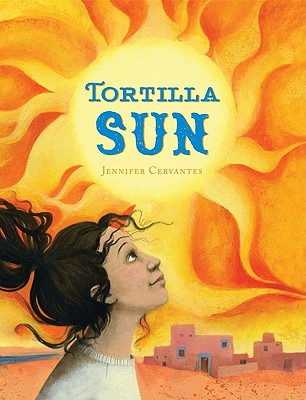
 ABOUT THE AUTHORAbout the author: Jen Cervantes is an award-winning children’s author. In addition to other honors, she was named a New Voices Pick by the American Booksellers Association for her debut novel, Tortilla Sun. The Storm Runner‘s sequel, entitled The Fire Keeper, is slated for release in 2019. Keep up with Jen’s books and appearances at her
  ABOUT THE INTERVIEWER: Cecilia Cackley is a performing artist and children’s bookseller based in Washington DC, where she creates puppet theater for adults and teaches playwriting and creative drama to children. Her bilingual plays have been produced by GALA Hispanic Theatre and her interests in bilingual education, literacy and immigrant advocacy all tend to find their way into her theatrical work. Learn more at
  Latinxs in Kid Lit