The Road to Publishing


Where do you find yourself along the road to publishing?

Check all that apply:

__Shopping for a vehicle

__Mapping a route

__Calling for roadside service

road signs

Image from Creative Commons

__Arriving at your destination

Let’s say this is your first publishing quest. How nice if you could enjoy the ride and worry less about breakdowns and wrong turns. We know how you feel. Over the coming weeks, our posts will provide tips for the rewarding, but arduous journey toward seeing your book in print.

To get things rolling, please enjoy a few insights from our experiences:

What made you realize THIS was the book you wanted to share with the world?

Zoraida: I had been working on some contemporary stories about a young Ecuadorian girl (we were very similar), but it just wasn’t going anywhere. Then one day after wanting to read a mermaid fantasy with action and cute boys, I decided to start writing the story myself. It is true what “they” say: you have to write the story you want to read.

Stephanie: I’ll apply this question to my upcoming series, Betting Blind and its sequel, Out of Aces, which will be pubbing in 2015. Both books were inspired by my youth in Las Vegas. I lived on my own at sixteen in a colorful, funny, sleazy, interesting city. It gave me a lot to write about.

Cindy: I am a visual person, so I “saw” the opening scene in my head long before I knew how the entire story would unfold. I was in the middle of a master’s program and had no real plans to be a novelist although writing a book was always in the back of my mind. I tried mentally to set aside this “daydream,” but it wouldn’t leave me alone. One night, although dead tired, I was compelled to write out the scene. After that, I had to keep going. The basics of the story–teens, teaching, depression, Emily Dickinson–are all familiar to me.

What’s on your recommended-reading list for all things publishing?

Ashley: Many things helped me on the journey to professionalization, but none was more crucial than agent and editor Noah Lukeman’s excellent little e-book, How to Write a Great Query Letter. Lukeman’s advice cuts straight to the heart, and once I revised my query letter (about 7 times!) according to his advice, I started getting requests for partial and complete manuscripts.

Zoraida: When I was in high school, Bird by Bird, by Anne Lamott was my writing bible. I haven’t read it in years, but I always think about it when I’m working on a novel. I recommend it to anyone who asks.

Stephanie: For more soul-feeding, encouraging material, especially for those who also teach writing, I recommend Wallace Stegner’s On Teaching and Writing Fiction. He writes with candor and clarity about the rejections, the wait time, and all the other thorns in the path to publication, but ultimately his message is really encouraging.

Lila: Mary Kole’s Writing Irresistible KidLit is a solid resource. The bulk is about craft, but you’ll also find advice on querying and approaching agents. I also tune into reliable blogs and newsletters. You can’t go wrong with the Society of Children’s Book Writers and Illustrators.  

Cindy: I searched online for most of my information. The places I found most helpful were: SCBWI, YALitChat, YA Highway, and Query Tracker. SCBWI and YALitChat introduced me to critique groups, regional and national conferences, and other people like me chasing the dream. YA Highway is a popular site with loads of information about the process provided by writers. Query Tracker is a free–FREE!–online database of agents and editors. This is what I used to find agents to query and to keep track of my process– when a query was sent, what was the response, etc. It was a great resource and led me to my wonderful agent, Laura Langlie.

On our Facebook page, Samantha Villarreal asked: “Is it best to have an agent? Are the major publishing companies actively searching for Latino children’s lit or is it better to try smaller companies that focus on Latino lit?”

Ashley: I would say yes to the agent question. Whether you aspire to ultimately publish with a larger publisher or with a smaller press like Cinco Puntos or Arte Público, an agent can help you manage the decision-making and handle the business side of things. Later, we’ll be sharing more on how we connected with our agents and publishers.

Lila: I can vouch for the fact that it’s possible to break in without an agent.  My book was published through an academic press. Within six months of its release, the exposure that the book brought me led to contact with an agent.

Cindy: To seek an agent or not, to aim for big or small publishers, or to self-publish are all personal decisions based on your strengths and needs. From the start, I knew I wanted an agent and would pursue traditional publishing. I had no experience or connections in the publishing world, and I had little confidence in my abilities to produce and promote my own novel as a self-publisher. For these reasons, I decided I would do the writing and rely on an experienced agent and editor to guide me through the rest of the process.

Have agents and editors preserved your artistic vision?

Zoraida: My agent, Adrienne Rosado, is very encouraging. Even though I’m sure she gets an ulcer every time I say, “I have an idea…” My editor at Sourcebooks Fire, Aubrey Poole, is great at looking at my fantasy world and asking the questions I don’t ask. And she pushes my hero in the right direction. We’re working on the last book in the trilogy and I’m excited for the final product.

Stephanie: My editor has been completely supportive of my artistic vision. She’s never asked me to make changes I disagreed with, and she has always left the final decision in my court. We’ve worked on three books–soon to be four–together, and I love the smooth partnership we’ve developed.

Cindy: As a first time writer, I can say the search for an agent and editor is like literary e-harmony. You put yourself out there and wait until you find the perfect match for you and your project. Both my agent and editor loved my story, which is why they both said, “yes.” That’s what you want and need–an agent and editor who fully support your choice of subject matter and your writing style. They need to love it because they will be wedded to it–and you–for a long time during the publishing process.

Suppose your efforts to capture an agent’s interest haven’t gone anywhere: what then?

Cindy: Analyze what may not be “right.” Is the writing as good as it can be? Is the query the best you could do? Are you aware of what the agents and editors are looking for when you are querying? Then I would say go to a conference, have a one-on-one, join a critique group…do something you’re not already doing.

Image from Creative Commons

Image from Creative Commons

So now we’re off on a roll. Join us in the coming weeks as we bring you more advice from agents, editors, and other authors traveling the road to publishing. AND, we would love to hear from you! What has your journey taught you?

Las Calaveras Todas Blancas Son* Or What is the Day of the Dead?


By Zoraida Córdova

The Day of the Dead is a Mexican holiday that takes place on November 1st (All Soul’s Day) and November 2nd (All Saint’s Day), and celebrates, even plays with, the dead. Its roots are a mixture of Orthodox Catholicism and pre-Hispanic traditions of prayers and material offerings. Catholics all over the world celebrate these two days, but Mexico takes it to another level. Instead of just celebrating the saints and martyrs, entire altars are built for deceased family members. There’s food and drinks and sugar skulls and singing. It’s like a big family reunion, only your grandmother’s ghost is invited as well. It is colorful and loud; the opposite of what you think of when visiting cemeteries.**

So, what does the Day of the Dead have to do with you, Zoraida?

Now, I’m a third-party observer here. Although, in Ecuador, they do make a purple drink called “colada morada” (made of some sort of blackberry and purple maize) specifically for this time of year. My Ecuadorian family is Catholic, but I’ve always considered myself a practicing agnostic (it’s not a real thing, but sure). I suck at memorizing prayers, and yet every time I pass a cemetery I cross myself. I don’t associate with any religion, and yet, I’ve always been drawn to this particular celebration.

It could be that I’m not drawn to the religious aspects of this celebration, but to the dead themselves. It’s a little macabre, I know, but hang with me here. Ever since I was little I loved ghost stories. I thought La Llorona (the weeping woman/Latina banshee figure) was real the same way most kids think the Easter Bunny is real. I sang to old salsa songs about skeletons (see blog post title). I am fascinated by death, and you know what? So are a lot of people who are not Catholic or Mexican.

What do you mean?

Well, go to your nearest book store and browse. How many bestsellers do you see featuring vampires and ghosts and zombies? I know, it’s not the same as a religious celebration honoring your dead loved ones. But I do believe that we are drawn to death and the undead, and all of the mystery it holds.

Then, think about other religions that have ceremonies/feasts to celebrate their dead. In Chinese culture, the seventh month is called “ghost month,” when the dead come to walk among the living*** In Korea, Chuseok is a holiday when people return to their ancestral hometowns.**** It’s like a combination of Thanksgiving and the Day of the Dead. And these are the only ones I’ve heard about. I can only imagine the others.

And what does this have to do with kidlit?

Loads! Look at these titles.

9607766    13418252    865499

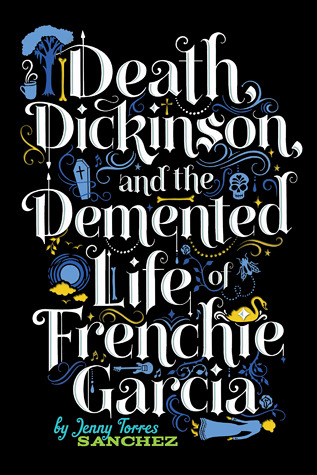
The Tequila Worm     Death, Dickinson, and the Demented Life of Frenchie Garcia     The House of Hades (The Heroes of Olympus, #4)

From twin sisters finding a way to contact each other post mortem, to a skeleton boy who makes friends with the living, to a young girl dealing with her grandfather’s death, to demigods conquering the physical manifestations of death, the Day of the Dead has made its way into our literature.

No matter what we believe in or where we come from, at the end of the day, we can all relate to loss. It’s sad and powerful and it connects us at a very basic level.

Do you celebrate the Day of the Dead? And if you don’t, do you have a similar tradition? Share it with us in the comments!

* http://www.youtube.com/watch?v=pezwkyaW51A Las Calaberas by Lisandro Meza

** The Skeleton at the Feast: The Day of the Dead in Mexico by Elizabeth Carmichael and Chloe Sayer

*** I first read this in House of Hades by Rick Riordan (it’s true).

**** http://www.allkpop.com/article/2013/09/a-detailed-explanation-of-chuseok-1#axzz2igWmLmCK

Comadres y Compadres: A Guest Blogger Reports

By Yadhira Gonzalez-Taylor

An eclectic group of writers, editors, and publishers, most of Latino heritage, gathered at Las Comadres y Compadres 2nd Annual Writers Conference at Medgar Evers College in Brooklyn on Saturday, October 5, 2013.

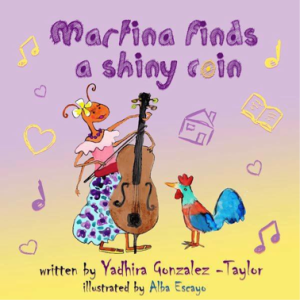
I am fairly new to creative writing, having just published an illustrated children’s book, Martina Finds a Shiny Coin. I networked, made new friends, and was impressed with the panels, which offered a wealth of information for writers at any stage of their writing careers. Panels ranged from self-publishing to presenting quality proposals for agents and major publishing houses. They had great craft shops on creating literature of all genres and for all ages.

The conference focused on the need for Latin@ literature and how Latin@s are underrepresented as an ethnic group in this industry. We live in the most diverse nation in the world, yet we are underrepresented in the stories we read to ourselves and our children and grandchildren. Even more alarming is the fact that, in the age of diversity and equal opportunity employment, we are underrepresented in the editing, publishing, and promotional arms of the literary industry.

At the conference, representatives from Random House, editors, and small press publishers all seemed to have the same message for the aspiring and published authors—there is an open invitation to produce quality material that suits the beautiful blend that is the Latino culture. Latin@ writers of all genres are invited to produce quality fiction, nonfiction, memoir, and children’s literature geared toward a population that is thriving and growing more each day in the United States.

As a writer and attorney working with at risk-youth in New York City, I see it as my Martina Shiny Coinresponsibility to produce this literature.

As a mother of three children, I have felt frustrated at not finding literature that reflects them or me. By pure coincidence, what began as an afternoon project with my five-year-old became a retelling of my very favorite Caribbean folktale, La Cucarachita Martina y el Raton Perez. One day, my husband asked me if there were any Puerto Rican folktales I could share with her, and immediately la cucarachita Martina came to mind. I heard it a thousand times growing up and even participated in my kindergarten class’s rendition of the fable/folktale.

I frequently told my daughter the original version, or at least what I remembered of it, that my grandmother recited to me when I was growing up in rural Caguas, Puerto Rico. When we traveled to my grandmother’s funeral in 2011, my daughter, then three, asked me if a tiny house nestled in the mountains was Martina’s. Of course, I told her it was, but explained that Martina was very busy and could not have visitors.

After telling the story many times, we sat and rewrote it, adding all sorts of ideas that popped into our heads. We made Martina a cellist because my daughter is a cellist. We made her an avid reader, and a dancer, and a singer of bomba y plena. We sent Martina on a journey of self-discovery after she found the shiny coin. We based Martina’s world in my world, the place where I lived for many years, Parcelas Viejas, in El Barrio Borinquen, Caguas, PR.

The book carries the folktale’s original message of self-acceptance no matter what. The story also sends the message to appreciate all gifts, not just the ones that make you look good. Of course, this is not just a message for Latin@ children but for all children!

In addition to writing Latin@ children’s literature, I am also compelled to seek out and promote contemporary authors who are producing similar literature.

It is a fact that communities thrive economically when residents invest in local business. There are many ways to do this, including visiting small bookstores like La Casa Azul in El Barrio NYC, which caters to our cultural needs. Other ways include supporting and attending Latin@ author readings and signings, or donating to, or volunteering for literary organizations like Las Comadres or any other non-for-profit organization that furthers the mission of promoting Latin@ literature.

We must commit to investing in Latin@ literature for our own sake and the literacy of our children.

YadhiraYadhira Gonzalez-Taylor is a public service attorney working with at-risk youth in NYC. Before working with young people she worked as prosecutor for Bronx County.  Martina Finds a Shiny Coin is her first children’s book. It was illustrated by Alba Escayo, a Spanish Artist who has ancestral roots in Cuba. Yadhira lives with her family in New York.  Follow her on twitter at @ygonzaleztaylor or Martina the character on twitter at @martinascoin.

Through Reading, Anything Is Possible

For our first set of posts, each of us will respond to the question: “Why Latin@ Kid Lit?” to address why we created a site dedicated to celebrating books by, for, or about Latin@s.

By Cindy L. Rodriguez

Our house was an oasis in the Chicago neighborhood crumbling around us. The house on the left was torn down after Old Man Louie died. The building on the right was bulldozed after some kids set it on fire. Inside our little haven, my parents encouraged me to read. Through books, I left that neighborhood to meet interesting characters in beautiful places who were struggling with life, love, and purpose, and who were trying to become free mentally, physically, or spiritually.

My parents moved us into better neighborhoods. Books moved me into a broader world of ideas and possibilities. A love for literature has made all the difference in my life. Now, I teach and write because I want children from all kinds of backgrounds to realize that, through literacy, anything is possible.

This may sound naïve, simplistic, or overly optimistic, but I honestly believe it.

I understand the challenges young people face because I’ve worked with middle and high school students for thirteen years. I’ve met the tattooed freshman girl whose education was interrupted because her mom had to move from place to place. At age fourteen, she had the reading level of a sixth grader. But guess what? She earned all As and Bs, joined a sport, and quickly became a leader in our school.

I’ve met the sixteen-year-old freshman boy who earned an in-school suspension for verbally and physically confronting a female teacher during the first week of school. He continued to struggle, earning Ds and Fs in his classes. But guess what? He read a book independently for the first time ever. He said he knew the teachers cared about him, and once he came to talk to me, tears streaming down his face after his girlfriend broke up with him via text message. He had made a collage with movie tickets and other mementos for their one-year anniversary that would never happen.

I’ve also met the jaded seventh-grade boy who asked me straight-out one day, “Why are you the only minority teacher in our school?”

All of these students are young Latin@s. They need safe places, trusted people to talk to, and answers to their questions. As a teacher who sees them for forty-five minutes a day, I do my best, and one of the most significant things I can do is encourage them to read. I can’t solve their problems at home or with their friends, but I can pass along my belief—given to me by my parents—that literacy is important and life-changing.

I want my students to develop the skills needed for academic and professional success. I also want them to enjoy a lifetime of beautiful places and interesting characters. I want them to have access to lots and lots of books with characters who look, speak, and act like them. Previous posts have outlined why it’s crucial for readers to “see themselves” in literature. But I also want them to see beyond their current selves. I want them to see realistic and fantastical futures.  I want them to realize anything is possible.

Yes, you can be a U.S. Supreme Court Justice. Here, read a picture book about Sonia Sotomayor.

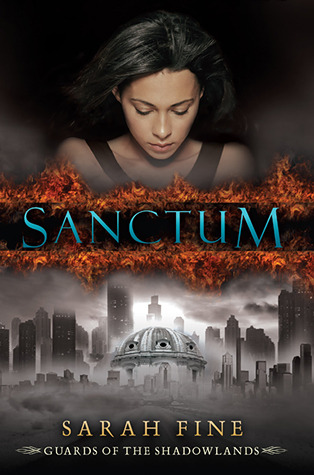
Yes, you can “escape” for a while and travel through the depths of the afterlife to save your best friend’s soul. Here, read Sanctum by Sarah Fine.

Yes, you can be a civil rights activist. Here, read biographies about César Chávez and Delores Huerta.

In the very distant future, if you discover you are a clone created to keep someone else alive, remember this: you will still have an identity and choices. For now, though, question whether science fiction will someday become nonfiction. Here, read The House of the Scorpion by Nancy Farmer.

Yes, you will survive your teen years. More than that, you will thrive. You’ll learn about love and family and friendship and acceptance and perseverance and integrity. Here, read Margarita Engle, Alex Sanchez, René Saldaña, Jr., Gary Soto, and Guadalupe Garcia McCall.

I’m involved with Latin@s In Kid Lit because I believe all children should have books in their hands, even when they’re too young to turn the pages, and they should all be told again and again, “Oh, the places you’ll go.”

Sonia Sotomayor: Supreme Court Justice    Dolores Huerta: A Hero to Migrant Workers    The House of the Scorpion (Matteo Alacran, #1)    Sanctum (Guards of the Shadowlands, #1)    Buried Onions   Bait

Give Kid Lit Readers a Broad Range with Real Characters


For our first set of posts, each of us will respond to the question: “Why Latin@ Kid Lit?” to address why we created a site dedicated to celebrating books by, for, or about Latin@s.

By Ashley Hope Pérez

Like Stephanie, my personal commitment to Latin@ lit comes from my work with teens. Much of my energy as a high school English teacher in Houston went to finding ways to make reading and writing an authentic, meaningful, and empowering part of my students’ lives.

I spent a lot of time scouring our school library and talking to my reluctant readers about what they wanted in a book. No big surprise: a lot of them wanted a book that reflected their experiences in a way that would ring true. We had plenty of successes, but there were a number of students for whom it seemed that the gateway book—that critical read that would persuade them of all that words can do—was missing.

“I want a book that shows how my life really is,” I heard over and over. “Not just somebody brown, but somebody real,” one student insisted. And, “please, I can’t stand it when they make it seem like if you just get into college, you’ve got it made.” That last bit came from one of my top-performing seniors, an impressive scholar by all accounts but also a young woman who had few illusions about the conflicting demands she would be facing in the coming years.

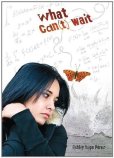
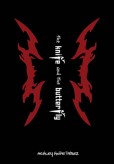
My students—aware of my aspirations to “one day” write a novel—began to recommend (okay, insist, pester, badger) that I write the book that they were looking for, and they were both my inspiration and the first readers of What Can’t Wait. Similarly, The Knife and the Butterfly began with writing exercises I was using to give a group of freshmen in a summer school English class a way of responding to the news coverage of a deadly gang fight a few miles away. In my third novel (watch for it in 2015 from Carolrhoda Lab), I take my concern with Latin@ experiences in a new direction by bringing them to the history of my native East Texas. I explore Hispanic experiences in the primarily black-and-white world of 1930s East Texas through the story of a school explosion, family secrets, an interracial romance between a Mexican American girl and a black boy, and the pressures created by Texas’s three-fold segregation system (black, white, and “Mexican” schools existed in many places). The third novel is going to be something different from my contemporary fiction, for sure, but it’s still written with my students in mind. I like to think that it’s the kind of book that would persuade my students to think about how past experiences scar the present—and what we do to mark loss and begin healing.

It matters quite a lot to me that Latin@ lit avoid the trap of making an “issue” of ethnicity, as Zoraida pointed out. Ethnicity was a non-issue for my students, not because they lived in such a multicultural world (Zoraida’s experience) but in fact because their world was relatively homogeneous; most of the kids in the Southeast Houston neighborhood where I taught were from working class families with roots in Mexico. Even my students who weren’t bilingual regularly heard Spanish and had strategies for managing the interconnections of Spanish and English in their community.

I don’t include glossaries in my novels, as I discuss here, because my books are first and foremost for my kids—and because I believe in the resourcefulness of other readers who come along. All of that to say: writing for my kids felt urgent back when I started What Can’t Wait, and it still does today. But Latin@s in Kid Lit has a broader mission than featuring Latin@ YA: we’re about highlighting awesomeness by, for, and about Latin@s for kids of all ages, including younger readers.

When I have the chance to talk with librarians or teachers about book selection, I often beg them first to make sure their collection goes well beyond the default “diversity” titles. Book selections for younger children should go beyond portrayals of special holidays, for example. I often caution teachers about resorting too quickly to the “minority celebrity” of the hour when attempting to diversify their reading lists.

By the time my (mostly Latin@) students reached my senior English class, most of them had read The House on Mango Street—in part or in whole—a half dozen times. That was because Cisneros’ (wonderful!) and widely discussed book had become synonymous with “Latino experience” in the minds of well-meaning teachers who had little additional knowledge of Latin@ lit, and they didn’t look beyond it when making choices for their classrooms.

The absence of a broad selection of diverse titles can reinforce students’ feelings of exclusion and general disengagement from the world of books. By contrast, offering students (whatever their background) a broad range of literature can generate a lot of excitement.

I, for one, am all for excitement! In future posts, I hope to contribute to the conversation by offering my two cents on what’s happening in the world of Latin@ YA and also by highlighting some of my Latin@ kidlit reading adventures with my son, Liam Miguel.

More from me soon!

Ashley

P.S. Since I talk a lot about how I came to focus on Latin@ experiences in my fiction, I’ve cribbed some of this post from a past feature I did at STACKED , another blog that YA fans and librarians should have on their radar.

Writing and Reading Latino/a Kid Lit is for Everyone, Not Just Latin@s


For our first set of posts, each of us will respond to the question: “Why Latin@ Kid Lit?” to address why we created a site dedicated to celebrating books by, for, or about Latin@s.

By Stephanie Guerra

I teach children’s literature at Seattle University, and each quarter, my students discuss issues of voice and agency in children’s literature. We take up questions such as: What constitutes authenticity in multicultural children’s literature? Who has the “right” to write from various cultural, racial, gender, or ethnic perspectives? It’s wonderful and fascinating to see the debates that arise. Some of my students argue that for literature to be “authentic,” authors should be insiders of the groups they’re portraying. Others feel that intermarriage or long-term residency within a given group is adequate. Still others believe that fiction should be judged on its own merits, apart from the qualifications or attributes of the author.

by Stephanie Guerra

by Stephanie Guerra

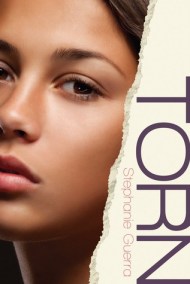
I’m in the “fiction should be judged on its own merits” category, and my first novel (TORN, 2012), is written from the perspective of a biracial Latina teen. I’m not Latina. I married into this last name, which migrated from Spain to Italy so many centuries ago that the Guerra family (my husband’s) identifies as Italian. I am of Italian, Irish, Croatian, and German descent. I chose to attempt a Latina character in honor of a dear friend who expressed to me some of the complexities of her biracial identity.

While each reader must be his or her own judge of whether I captured the biracial experience, the writing itself was a joy, and many teens have expressed that the book meant something to them. In crafting characters from other cultural, ethnic, and racial groups, I believe we’re called to expand our understanding and love of the people we’re trying to depict. It worked this way for me. So this is half of my answer to Why Latin@ Kid Lit?: because I believe writing it and reading it is for everyone, not just Latin@s.

The second reason I care to promote Latin@ Kid Lit is because of my work with incarcerated teens. My academic research is focused on building literacy with at-risk teens, and I’ve encountered study after study demonstrating that readers need the chance to “see themselves” in at least some of the books they read.

I teach creative writing at a juvenile correctional facility, and my students are largely black, white, and Latin@. They respond enthusiastically to fiction about Latin@ characters and culture, and I would love to find more of this material, especially books which are accessible, fast-paced, and of high literary quality. In particular, I’d like to see more Latin@ fiction that falls outside the street lit category. (Street lit, also called urban lit, gangsta lit, and hip-hop lit, is edgy fiction set in urban neighborhoods and featuring gritty topics like drug use, prostitution, gangs, etc.)

In this blog, I hope to provide resources for the many teachers and librarians serving Latin@ teens. I especially want to speak to non-Latin@ adults. I know how it feels to be a cultural outsider teaching cultural insiders. It’s easy to feel awkward or presumptuous discussing racial and cultural issues with students of color, but I don’t think it’s the best way to serve our students. We can and should connect with them on this issue, especially if they indicate a desire to do so. We should work to find literature that speaks to them, and we should find ways to talk about that literature—or to listen respectfully. Latin@ kid lit is a gift we can give children, teens, and ourselves.