Latin@s in Kid Lit is Now on Pinterest!

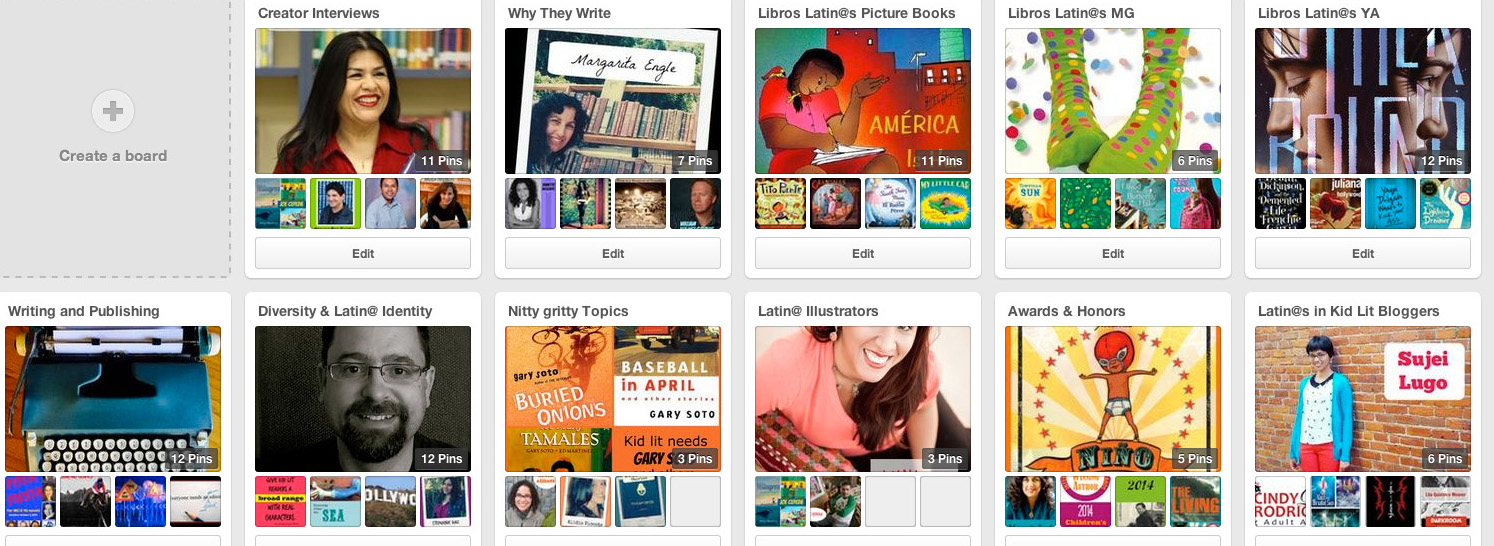
Pinterest-logoGood news! Latin@s in Kid Lit is on Pinterest!

Come have a look at our just-hatched boards. They’re growing day by day!

Please follow us and share our pins. If you have boards on Pinterest related to Latin@ kid lit, we’d love to follow you too and re-pin from your wealth of book covers, author highlights, writing tips, and literacy promotions, just to name a few categories. This is one more way that we can help each other widen the reach of Latin@ kid books!

Pinterest Screen Grab

Forgive Me My Bluntness: I’m a Writer of Color and I’m Right Here In Front of You: I’m the One Sitting Alone at the Table

By René Saldaña, Jr.

I’ve avoided writing this piece long enough. Number one reason is that politically I’m a conservative, and the last thing I want to do is to appear as though I’m playing the race card. Which I’m not, though it might look like it. Doing so’s a cheap and underhanded thing to do. So I don’t. Second reason: what I’m tossing out there can be dangerous to my career as a writer, I’ve been told, because of who I’m aiming it at: the very folks who buy my books, or won’t due to my brazenness: librarians and fellow educators, my bread and butter. (I trust in the educator, though, enough to know that if we are about anything we are about growth through honest self-reflection; it’s my hope that this piece will serve as a catalyst for such). Third reason: during my own reflection over the last couple of years, mulling over whether I should or shouldn’t put this observation to paper, one of the cons was that maybe it’s just sour grapes I’m dishing. Ultimately, it’s not. Not even just a little.

My sincere desire is to talk from the heart, to share this heavy load I’ve been carrying, and to reciprocate. I’ll do my part to take on the equally heavy burden librarians and educators have been carrying for far too long. To, arm in arm, move in a direction upward when we’re talking about race, in particular race in children’s and YA publishing, a hot topic to be sure.

8334361Let me tell you a story: I’m attending a librarians’ convention. I’ve been asked to sit on a panel or two, and at this point in my story I’ve met those obligations. Like happens at these functions, as a writer with a new book under my belt (best I can remember it’s A Good Long Way published by Piñata Books, an imprint of Arte Público Press), I’m also committed to sit for an hour at a table to sign copies of my latest. This is a very awkward thing for me to do. I really don’t like this part of my job. I mean, really, who am I? I’m not a top-tier author, and so I realize I won’t get the throngs of fans begging for my signature. (I found this out while sitting at another table, this one in D.C. at the National Book Festival in 2005, and I happened to be sitting next to Mary Pope Osborne, whose line was unimaginably long; I had to ask my wife, who was pushing our son in a stroller, and my sister-in-law to act as my line). Talk about eating humble pie. I get it. If a couple of teachers or librarians line up for my signature I count myself the most fortunate writer in the world. This time is no different from other times. I’m resolved to sit my time out, and if I get that librarian or two, I’ll make it a point to let them know how lucky I am to meet them.

I truly feel that way. My love for libraries and librarians goes back a long, long way. Back to when I was checking out the Hardy Boys, Nancy Drew, and Little House on the Prairie during my elementary school years, and later books on UFOs, lost treasures, and the book that kept me in the reading act, Piri Thomas’s Stories from El Barrio during middle school, and throughout high school and college, to this day even, visiting our public library with my children. Along with my parents and a small handful of teachers, I owe librarians the bulk of my reading life. This is why, in the end, I feel I need to write this essay: I owe librarians dearly.

So, back to the story: I’m sitting there with Arte Público’s representative, and I do get the one or two curious librarians who ask about my work. I could tell them that I’ve published three other books with Random House, that I’ve published several short stories in several anthologies edited by Gallo, Springer, and Scieszka, but I don’t. The only book that matters to me is the one I just published. It’s my favorite book. Not my favorite because it is my most recent. It’s really and truly my favorite of all the titles I’ve published to date. I love A Good Long Way for so many reasons, but that’s the stuff for another essay. These librarians are kind and buy a copy for their collections, are already thinking of which students will benefit from this book most (and it’s not just Latino kids they’re telling me about).

From the time I sat, I’ve taken notice of the author two tables down from me. I actually just presented with her. Undeniably a rock star in the field. The kind of author for whom I’d stand in line to get her autograph. I know her personally, too. She’s a genuinely awesome person. I’ve used her work in my graduate adolescent lit classes. My students love her. I understand why these librarians are in line to get her signature and for a chance at a word or two, maybe a picture if time allows.

What I don’t get, though, is that not a one of these librarians in this other author’s line chances to look up in my direction, not that I can tell from my time at the table, anyhow. Not a one notices that just two tables down is another writer, one of color, a conversation that has been pushed to the fore recently? The Myers’ father and son team each wrote brilliant editorials for the New York Times (in the middle of me writing and rewriting this piece, wouldn’t you know it? The world of children’s and YA writing is shaken to the foundation at the news of Walter Dean Myers’ death and among his last acts was to force us to have this difficult conversation, so thanks to him). Others like Monica Olivera have added to that conversation in a blogpost on NBC Latino, The folks over at Lee & Low have ably challenged us to consider the state of children’s and YA publishing regarding race. Lee & Low on Twitter, especially, has rocked that boat. But it was a discussion we were having back then, too. Albeit mostly amongst ourselves, we writers and publishers and teachers and librarians of color. So it’s been brewing a long enough time.

So, what I’ve heard librarians say over the last decade and a half on my visits is that there are so many Latino children, and how unfortunate that there are so few Latino authors publishing books for them. “Just look at how excited these kids get,” they tell me, “to find one of their own publishing books.” It’s true, they do get excited to meet writers of color; I’ve seen it with my own eyes, heard it with my own ears. As a side note: I’ve also seen kids jump for joy at meeting white authors.

Can you tell I’m purposely going off on rabbit trails? I’m avoiding getting to the point again.

But whatever. There’s an urgency. We need to get beyond this hurdle. We need to courageously speak about race. Confront it head on. We’re told this also by U.S. Attorney General Eric Holder in one of his early speeches at the outset of his work for the Obama administration. We must face our shortcomings if we are to get to that place Dr. King dared us to dream about alongside him.

Anyway, these librarians have told me that there is so little of this material, and what there is of it is so hard to find.

Okay, I’m jumping in, confronting, being courageous, mostly trusting my readers to know I’m out for all our best interests, and especially for those we serve, our students: so,

NO! this material is not hard to find.

Simply look up and two tables down from where you’re standing, there I am. At that point in my career I’ve got some six books to my name. There. I. Am.

And if you think I’m an idiot, especially now that I’m telling you this, then do this other thing and you’ll know I’m right: walk up and down those aisles that usually are nowhere near the major publishers, the ones relegated to the edges of the main floor. They’re the small, independent presses. The outliers, in so many ways. You’ll know them because they’re the ones who don’t give out ARCs or free copies of books. Not because they don’t want to but because it’s not in their budgets to do so. Take 20 minutes per stall, look through their catalogues, their titles. For goodness’ sakes, talk to the reps, who are usually the publishers and editors themselves (when it’s not both of them, it’s either Bobby or Lee Byrd of Cinco Puntos Press manning their booth), and these reps will explain clearly what they have for you and your readers. They’re eager, as eager as you and I, to help all children reach their reading potential. Next, buy from them directly. Come ready with cash, checks, or cards. They’ll take any method of payment.

I’m not saying that the Bigs don’t publish authors of color. They obviously do. Random House has me and several other Latinos on their list. So has Dial. Scholastic. Little, Brown. S&S. Etc. They publish Black writers, and Asian writers. The difference is, though, that the smaller presses focus all their attention on writers of color, so they are experts at it. Arte Público Press/Piñata Books is one. Another is Cinco Puntos Press out of El Paso (of Sammy and Juliana in Hollywood fame but before that a picture book titled The Story of Colors by Subcomandante Marcos with magnificent illustrations by Domitila Domínguez, a book I’ve yet to find shelved in the libraries I’ve visited, even in deep South Texas where the majority of the population is Latino, Mexican American, and Mexican to be exact). Lee & Low, that sometime ago acquired Children’s Book Press and that recently started Shen Books, a new imprint that “focuses on introducing young readers to the cultures of Asia,” is yet another. The list of them, admittedly short—nevertheless, these few presses publish nothing but books by and about people of color. For all readers, but in particular readers of color.

The books are there.

All you have to do is to look for them.

And when you think you’ve found them all, look again. Because we’re still writing the books, publishers big and small are still publishing them. All we need is for you to look and look and look again until you can’t look no more, which likely means you’ve retired and you’re no longer pushing books into kids hands formally. But a librarian is a librarian is a librarian. You’ll be giving books to kids any chance you get ’til the day you die.

This is why I know I can write a piece like this, harsh as it might seem: because you’re educators first and foremost. And you’ll forgive me my bluntness. But we are not the focal point of this conversation, our children are. So we are either proactive and talk and then do, or we stand in the way of the progress necessary. Let’s be the former.
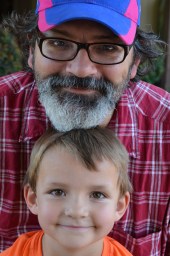
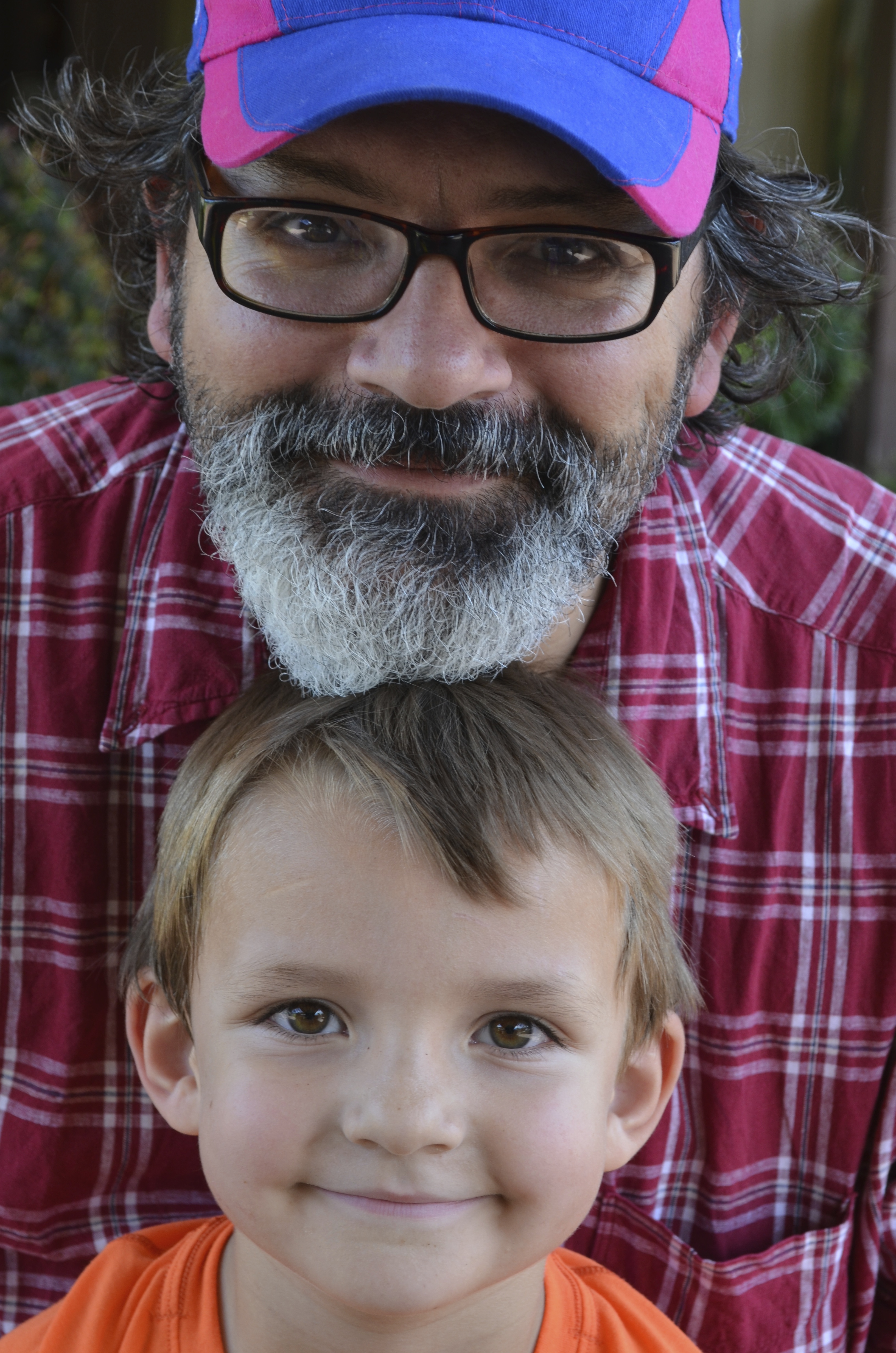
Rene Saldana

René Saldaña, Jr., is the author of the bilingual picture book Dale, dale, dale: Una fiesta de números/Hit It, Hit It, Hit It: A Fiesta of Numbers. He’s an associate professor of Language and Literature in the College of Education at Texas Tech University in West Texas. He’s also the author of several books for young readers, among them The Jumping Tree, Finding Our Way: Stories, The Whole Sky Full of Stars, A Good Long Way, and the bilingual Mickey Rangel detective series. He can be reached at rene.saldana@sbcglobal.net.

Q&A with Pura Belpré Award Winning Author Guadalupe Garcia McCall

By Lila Quintero Weaver

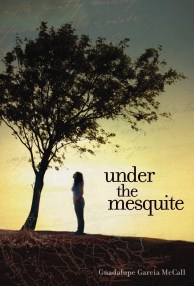
otherUNDERTHEMESQUITEtentativefrontcover3-18-10We’re excited to host a conversation with acclaimed author Guadalupe Garcia McCall. Her first book, Under the Mesquite, won the 2012 Pura Belpré Award and was a finalist for the William C. Morris Debut Award. Her newest work is Summer of the Mariposas, a rich work of fantasy fiction doubly inspired by Homer’s The Odyssey and the mythology of Mexico.

Lila: Guadalupe, congratulations on your wonderful writing career! Welcome to Latin@s in Kid Lit! Let’s get started with a question you’ve probably heard before:

Under the Mesquite is a powerfully intimate coming of age story told in verse. It’s a quiet book. On the other hand, Summer of the Mariposas is a high-energy road trip full of other-worldly characters and action scenes. Describe the paths that led to these diverse creative choices.

Guadalupe: Interestingly enough, both books were born out of my classroom experiences. Under the Mesquite came about because I was teaching my students how to write poetry. I wrote for them, as a way of modeling how easy and accessible poetry is if they focus on using their memories to write poems full of life’s experiences. After many years of teaching poetry (and collecting my little poems in my poetry unit folder), I realized that I had a good size collection of poems about my childhood which I could submit for publication. With the help of Emily Hazel, my editor at Lee & Low Books, that collection eventually evolved into Under the Mesquite.

After Under the Mesquite, I was bouncing around ideas for my next book, not really committed to anything, when one of my female students made the comment that all the books we read in class (we were studying Homer’s Odyssey) were about men—men having adventures, men defeating monsters, and men becoming heroes. This really upset my female students, and on her way out of my classroom, that same young lady told her friend, “It’s not fair. We need our own Odyssey!”

And that was it. That was my “light bulb” moment. Actually, it was more like a giant, blinding spotlight cast over a dark, neglected corner of our classroom that I couldn’t ignore as I drove home that afternoon. My girls were right. They needed to see themselves in literature. They needed their own stories to show the world that they are strong, and courageous, and smart. So I took out the sticky notes and started plotting out a Girl-Power adventure story using the Hero’s Journey just for them, for my “muchachas.” But as I worked on it, something else came to mind. Why use the same old Greek gods and monsters? Why not use our own mythology? We have just as many great characters to choose from in Mexican lore. And so it began, the frenzied scribbling and joyous giggling that comes when you first start plotting out a story—the discovery, the freedom, the breakthroughs—it’s all very intoxicating! I have to admit, I had a lot of fun writing Summer of the Mariposas because I knew my girls were hungry to read something like it.

Lila: Along with its supernatural elements, Summer of the Mariposas carries an understated but clear message of feminine strength and resilience. You force your characters to confront family challenges and heartbreaks. What do you hope to give young readers through this story?

FINALmariposas_cover_loGuadalupe: When I started writing Summer of the Mariposas, I wanted to tell a fun female story. However, I also knew I wanted to showcase the strength and resilience that it takes for a young lady to come of age and embrace womanhood in our society. I wanted young girls to believe in themselves and trust that a female is just as equipped to take care of herself and her loved ones as her male counterpart. That they are lacking nothing—that all young ladies have the courage to take life by force and the wisdom to attain their goals.

Lila: I’m sure you’ve been attuned to the recent conversation on diversity in literature, especially in children’s and YA publishing, which has stirred up a lot of media attention. One article quoted Matt de la Peña as saying, “Where’s the African American Harry Potter or the Mexican Katniss?” As a Latina writer, you must have well-formed opinions on this topic. What are your concerns? And what are your dreams for diversity in kid lit?

Guadalupe: Matt and I must be on the same wavelength because I asked a similar question about a year and a half ago, and I posted it on Facebook in a conversation with my publisher about gaps in children’s literature. We were talking about genre-specific gaps, and I asked a question along the lines of “Where is the Mexican-American Johnny Tremain?” I think it is very important that we start answering these questions. Not with words, but through action.

Listen, this fence is about to crumble. It’s got so many holes in it. The change in the face of our nation (diversity in our classrooms) is not forthcoming. The Change is here. The Change is upon us. We “have” diverse classrooms—and our students are missing the sound of their voice in the narratives available to them. It’s too late to “think” about it or “research” it or “plan” for it. No. It’s time to take action. Publishers need to be addressing the fact that there are not enough diverse children’s and YA books to fill the huge gaps in children’s literature. They need to be actively seeking out new and existing talent and publishing the books that will fill those gaps.

Lila: In addition to authoring books with strong Latino themes, you’ve also taught middle school (and now high school) in Texas. What are your thoughts about turning young Latinos into readers and writers?

Guadalupe: There is this great attitude in South Texas, especially along the Rio Grande Valley, border area, and that is that books are amazing and that their creators, namely authors, are ROCK STARS! The teachers, administrators, district personnel, and especially the community have made it their mission to make books and their creators accessible to children. They seek out grants and special programs and make every concerted effort to continue to feature books and their authors in their schools. They see reading and writing as the greatest assets, the most important tools in their children’s toolbox. I really admire that. I wish that was the case with every teacher, every administrator, every district, and every community in the world. Life would be sweet if we were all about education. I know that I’m being very naive here (with all the other problems to be solved in the world), but I do truly believe in building life-long learners through reading and writing! Reading and writing make up the foundation of learning, and a good book can draw a child in as well as any electronic gadget if presented in the right light, with the right attitude, and with the same attention corporations give to marketing video games, apps, and cell phones. It would mean flipping a Goliath of a paradigm on its ear, and the willingness to take on the fight, but it can and should be done, for our children’s sake!

Lila: Let’s get practical. You work a full-time job and yet somehow manage to write complex novels. What are the habits that help you produce? Is there a piece of writing advice that a mentor gave you which still rings true? What have you discovered on your own that guides you in attacking a new project?

Guadalupe: My habits? Well, I sit down every day to tap at those keys. Sometimes I take a cup of coffee to the porch and write as the sun rises on the weekends. Sometimes, I write the minute I get home from work. And sometimes, I pull over on the side of the road and write in my vehicle on the way to the grocery store because I don’t want to lose that terrific line. Most often, though, I get up in the middle of the night and write in my jammies because that’s when my brain wants to create.

Whatever the case may be, it’s important for me to write every day, to “touch the work every single day!” I heard that somewhere, or maybe I read it. I’m not sure which, but it’s very true. I find that the longer I stay away from writing, the harder it is to get back in the groove of it. It’s like being an athlete. If you don’t keep working out, you lose muscle, and you won’t win any races or bring any trophies home if you don’t work out every day. So this is the advice I pass on to my students,” Work out those writing muscles every day. Read. Write. Read. Write. Read. Write. Oh, and don’t be afraid to catch the latest movie or keep up with your favorite TV show. It’s good research! ”

Lila: Speaking of new projects, you must be working on something. What can you share about it?

Guadalupe: I am working on a YA historical set in Texas during the Mexican Revolution, after the discovery of the Plan de San Diego and all the strife and conflicts of that time period on this side of the border. It’s something that is very close to my heart because I think it’s an important time in “our history” that hasn’t been explored or talked about much in our classrooms. The maltreatment and persecution of Mexican Americans in South Texas during that time is either ignored or glossed over in our textbooks and there is literally little to nothing in YA fiction that touches on the struggles Hispanics experienced during that devastating time period in American history. I really can’t share too much of the plot except to say that it is my attempt at filling in a gap and answering the questions, “Where is the Mexican-American Johnny Tremain? Where is our historical perspective, our ancestral Mexican-American voice?”


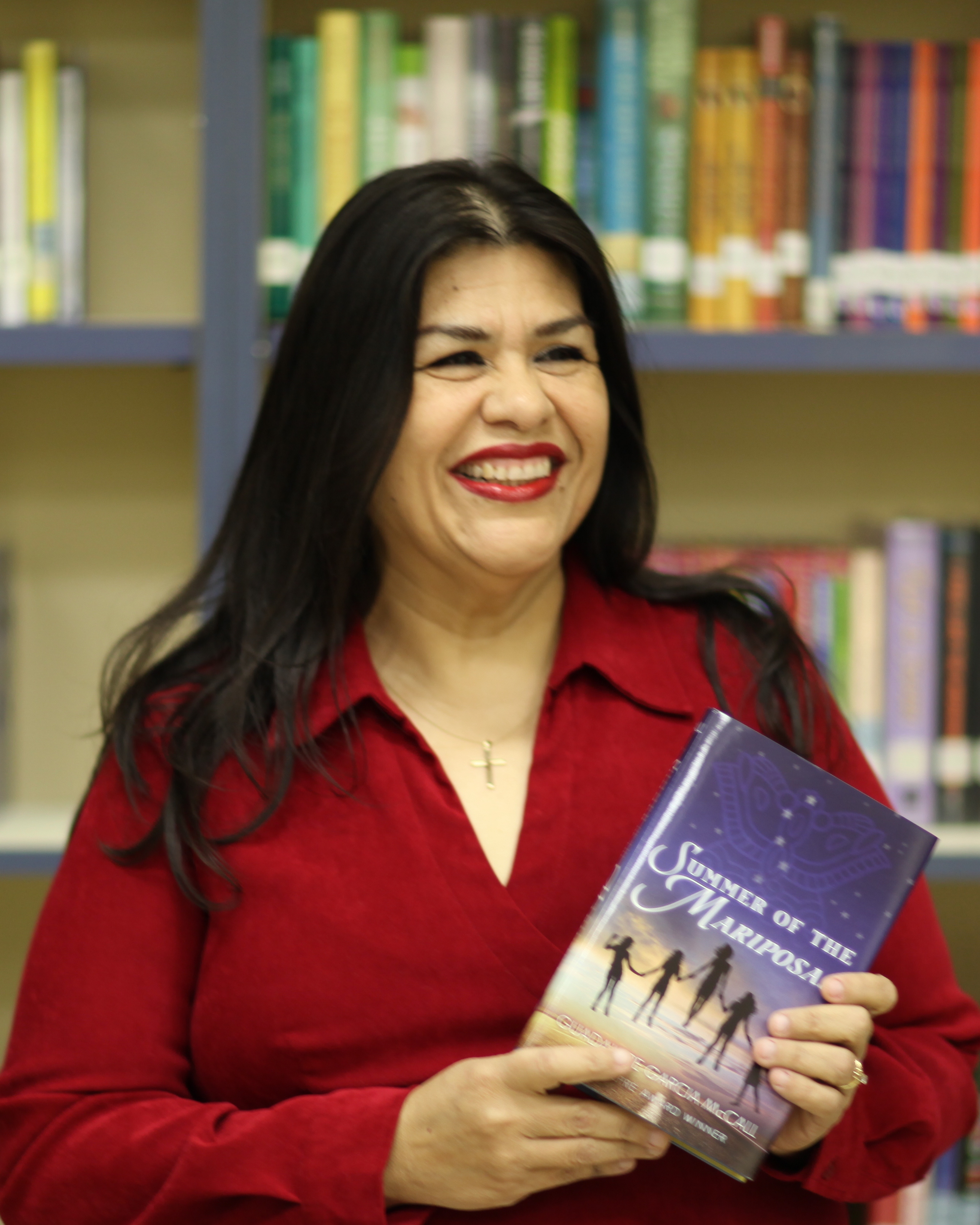
IMG_2964 (2)Guadalupe Garcia McCall is the author of Under the Mesquite (Lee & Low Books), a novel in verse. Under the Mesquite received the prestigious Pura Belpre Author Award, was a William C. Morris Finalist and received the Ellen Hopkins Promising Poet Award, the Tomas Rivera Children’s Book Award, and was included in Kirkus Reviews’ Best Teen Books of 2011 among many other honors and accoladesHer second novel, Summer of the Mariposas (Tu Books, an imprint of Lee & Low Books), won a Westchester Young Adult Fiction Award, was an Andre Norton Award for Young Adult Science Fiction and Fantasy Finalist, and was included in the 2013 Amelia Bloomer Project List, the Texas Lone Star Reading List, and the 2012 School Library Journal’s Best Books of the Year.

Her poems for adults have appeared in more than twenty literary journals across the country and abroad, and her poems for children are included in The Poetry Friday AnthologyThe Poetry Friday Anthology for Middle School, and The Poetry Friday Anthology for Science. Ms. Garcia McCall was born in Piedras Negras, Coahuila, Mexico. She immigrated with her family to the United States when she was six years old and grew up in Eagle Pass, Texas (the setting of both her novels and most of her poems). She is currently a high school English teacher in the San Antonio area and lives in Somerset with her husband, Jim, 2 dogs (Baxter and Blanca), 1 cat (Luna), and her two (of three) college age sons, Steven and Jason.

Cover Reveal for When Reason Breaks, a 2015 Young Adult Debut

.

By Cindy L. Rodriguez

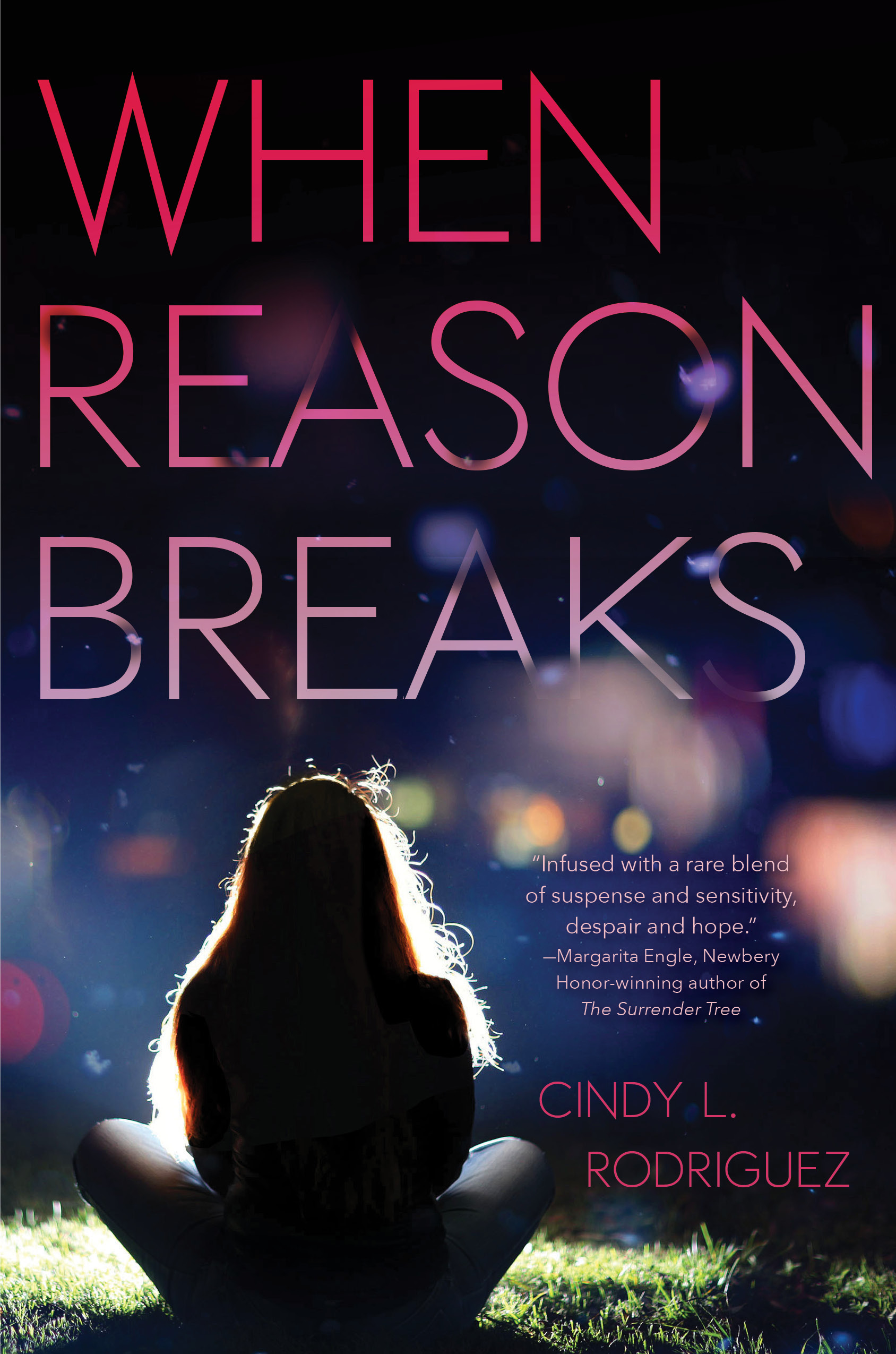
I’m really excited to reveal the cover for my debut novel, When Reason Breaks, which will be published 2/10/2015 by Bloomsbury USA Children’s Books. I’m equally thrilled to share it here because one of the main characters is Latina and the first blurb the novel received is from the wonderful, generous, super-talented Margarita Engle.

Before you scroll down to see the cover, here’s a description of the novel:

A Goth girl with an attitude problem, Elizabeth Davis must learn to control her anger before it destroys her. Emily Delgado appears to be a smart, sweet girl, with a normal life, but as depression clutches at her, she struggles to feel normal. Both girls are in Ms. Diaz’s English class, where they connect to the words of Emily Dickinson. Both are hovering on the edge of an emotional precipice. One of them will attempt suicide. And with Dickinson’s poetry as their guide, both girls must conquer their personal demons to ever be happy.

In an emotionally taut novel with a richly diverse cast of characters, readers will relish in the poetry of Emily Dickinson and be completely swept up in the turmoil of two girls grappling with demons beyond their control.

An extra tidbit for any big-time Emily Dickinson fans: Almost all of the characters represent a real person from ED’s life. Emily and Elizabeth represent Dickinson herself, sharing personal traits and experiences. Tomás Bowles represents Thomas Wentworth Higginson and Samuel Bowles, two important men in ED’s life, etc. You’ll have to read more in the author’s note!

So, now for the cover……………

*

*

*

*

Keep scrolling…(I was told to build suspense. Isn’t this suspenseful?)

*

*

*

*

TA-DA!!!!

*

*

*

*

WhenReasonBreaks_Comp

I love it for lots of reasons! The dark and light, focused and unfocused elements symbolize what the characters experience with their emotional and mental health issues. Same with how the letters start out solidly colored and then fade. Not seeing the girl’s face is also perfect since it’s a mystery as to which of the two girls attempts suicide. And here is the full quote from Margarita Engle, which will be included in its entirety on the back cover:

When Reason Breaks is infused with a rare blend of suspense and sensitivity, despair and hope. The poetic spirit of Emily Dickinson shines through the gloom of daily struggles faced by modern teens, as they discover the possibilities where they dwell.”

I’m so excited to share my debut novel with the world–starting now with a giveaway! One winner will receive a signed ARC of When Reason Breaks. Click on the Rafflecopter link below to enter. I’ll choose a winner in a week!

a Rafflecopter giveaway

CindyRodriguez150For more information about me and/or my debut novel, check out my website. You can also find me here on the About Us page and on Facebook, Twitter, and Goodreads.

When Reason Breaks is available for pre-order here:

Indiebound Barnes and Noble | Amazon Powell’s Book Depository | Books-A-Million

2014 Reading Challenge: June

Participants in our 2014 Latin@s in Kid Lit Reading Challenge are out of control in the best possible way! Take a look at the variety of books that were read in June, which happens to be the half-way point of the challenge. Now would be a great time to join us or renew your commitment to the challenge, which is to read one book a month that is written by a Latin@ author (any subject) or a book written by anyone that has Latin@ characters, themes, settings, etc. You’re not required to review–only read and enjoy and let us know what you have read! If you do post a review somewhere, we will link it to the book covers below. If you choose not to review, we will link the covers to Goodreads. For July, you may want to consider some of the new winners of the International Latino Book Awards.

6413788 16043528 13436375 9757257 18166935 13482750 8585924  17286899 18048909 15814459 11387515 862908 8811369 6789056  14740980 240298 465967  13610203  2282907  6084038  4080320  15953630  17171578  8455432  16057383  18654377  10351733  18654384  1861037  52390 1139921  18148193  321133  3308853  15791044  11129790  12921673313233169587  688161  1807231  424182  640476  15893258  2429455

The 2014 International Latino Book Awards Winners!!

Below are the first place winners of the 16th Annual International Latino Book Awards in the children’s, youth, and young adult categories. If you click on the images, you will be taken to Goodreads, Barnes and Noble, or Amazon for more information. The Awards are produced by Latino Literacy Now, an organization co-founded by Edward James Olmos and Kirk Whisler, and co-presented by Las Comadres para las Americas and Reforma, the National Association to Promote Library and Information Services to Latinos. The Awards were announced this past weekend, on June 28, in Las Vegas as part of the ALA Conference. For the complete list, which includes adult fiction, nonfiction, and second place and honorable mention winners, click hereCONGRATULATIONS TO ALL OF THE WINNERS!!

Best Latino Focused Children’s Picture Book: English

18296043

Best Latino Focused Children’s Book: Spanish or Bilingual

17265250  19483940

Best Children’s Fiction Book: English

Best Children’s Fiction Picture Book: Bilingual

17940785

Best Children’s Fiction Picture Book: Spanish

17802285

Best Children’s Nonfiction Picture Book

13610203

Best Educational Children’s Picture Book: English

15791044

Best Educational Children’s Picture Book: Spanish or Bilingual

Hola! Gracias! Adios!

Most Inspirational Children’s Picture Book: English

18371476

Most Inspirational Children’s Picture Book: Spanish or Bilingual

Pink Firetrucks

Best Youth Latino Focused Chapter Book

10436183  16670129

Best Youth Chapter Fiction Book: English

17166339

Best Youth Chapter Fiction Book: Spanish or Bilingual

Best Youth Chapter Nonfiction Book

Most Inspirational Chapter Book

The Adventures of Chubby Cheeks: The Pro Quest

Best Young Adult Latino Focused Book: English

15769992

Best Young Adult Latino Focused Book: Spanish or Bilingual

Los Pájaros No Tienen Fronteras by Edna Iturralde

Best Young Adult Fiction Book: English

15798660

Best Young Adult Fiction Book: Spanish or Bilingual

La Guarida de las Lechuzas by Antonio Ramos Revillas

Best Young Adult Nonfiction Book

Best Educational Young Adult Book

Most Inspirational Young Adult Book

15769992

Best Book Written by a Youth: English

15020431

Best Book Written by a Youth: Spanish or Bilingual

  Serendipity, Poems About Love in High School

Best Children’s Picture Book Translation: Spanish to English

17465058

Best Children’s Picture Book Translation: English to Spanish

Best Chapter/Young Adult Book Translation: English to Spanish

El Gusano de Tequila

Best First Book: Children’s and Youth