 By Sujei Lugo
The Latinxs in Kid Lit at the Library series is an occasional feature of this blog, featuring interviews with children’s library workers. In these interviews, we highlight the work librarians do for Latinx children’s literature, especially in libraries that serve Latinx communities. In case you’d like to catch up on previous posts, you can find links to them below this article.
In this new entry, we talk with Yesenia Villar-Villalobos, a Mexican-American children’s librarian in Los Angeles, California.
Sujei: Tell us a bit about your background and identity.
Yesenia: I’m a first-generation Mexican-American, born and raised in East Los Angeles, California. My parents immigrated to the U.S. from Mexico, and raised seven children on menial salaries. While I grew up in poverty, I was nearly an adult before I began to realize the true disparity of resources and opportunities that existed among my high school peers. However, what my parents couldn’t provide for me materially was far less significant than the perseverance and resilience they modeled while struggling to cover the family’s most basic of necessities. In fact, on my path to higher education I lacked an academic role model. Yet, my parents instilled in me what I truly needed: a willingness to endure hardship and uncertainty in order to achieve a goal.
Growing up in East Los Angeles, I never placed much emphasis on my ethnic identity. Everyone around me was Latinx, mostly Mexican, so it wasn’t something I felt the need to address. However, now that I have entered the library world and function as a minority among my colleagues, I recognize the significance of my identity. I encompass a degree of cultural competency and lived experience that many of my colleagues do not. Because of this, I strive diligently to model cultural competency and advocate for more equitable services to Latinxs.
Sujei: What’s your current position, which type of library do you work in, and what is the demographic of the community?
Yesenia: I’m currently the children’s librarian for the Los Angeles Public Library (LAPL) at the Robert Louis Stevenson Branch Library in Boyle Heights. According to 2010 U.S. Census data, our community is 97.7% Hispanic or Latino, 86.5% of which are Mexican. Of the adults ages 25 and over, 38.6% have less than a 9th-grade education. It’s a highly dense working-class community with 71.1% of renter-occupied housing and also of large family sizes, with 14.8% of homes occupied by seven or more residents. The median income is $37,472, and the median income for families is $38,632, an alarmingly low figure considering how large families are.
Sujei: The librarians we’ve interviewed for this series often highlight their childhood reading experiences, including the impact of public libraries. What were your experiences like?
Yesenia: Books were not something we had in our home. From a young age I developed a love of reading, but I never had the resources to explore books at home. Repeatedly, I would find myself reading cereal boxes, shampoo bottles, and the weekly church flyer. Once, in first grade, I sneaked a textbook out of class and read it cover-to-cover at home before discreetly returning it to the classroom.
I wasn’t introduced to public libraries until sixth grade when a homework assignment required me to venture to my local public library. Neither my dad nor I had any knowledge about how a public library functioned or what resources were available there. At that time, the library-card application required a social security number. As an undocumented person who had been deported on multiple occasions in his early years in the U.S., my dad initially refused to fill out the application. But I begged and pleaded with him to get me a library card, and he finally gave in.
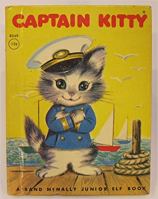 That public library card remained unused until eighth grade, when I was sent to the counselor’s office for turning in a book report on a preschool-level book. Back then, the only book I had access to was Captain Kitty by Godfrey Lynn and Elizabeth Webbe, which I had bought at a yard sale for 10 cents. The counselor decided that since I frequently completed in-class assignments early, I would be allowed to visit the school library during class time. I had attended this school for nearly four years, and this was the first time I’d realized we had a library. That’s where I picked up a copy of Blubber by Judy Blume, because that was what a classmate was reading.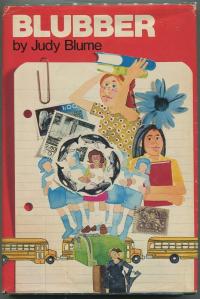
I never looked back. I read every book by Judy Blume in our school library. Then I started sneaking out of the house to visit the public library. I would take my backpack, check out as many Judy Blume books as I could fit in it, and then sneak back into my house. I devoured book after book in secret. I went to a third library in search of more Judy Blume books, but then realized I had read them all. I was devastated. At that time, I didn’t know librarians existed. I didn’t know I could ask questions or seek suggestions. I simply roamed the library aimlessly. Fortunately, I continued to find books to enjoy and became a lifelong reader.
Sujei: How can public libraries be more welcoming and engaging for Latinx immigrant families?
Yesenia: Cultural competency is severely lacking in library services. This is not something that can be taught in a single class or workshop, or through training. It takes ongoing effort to learn the customs of a community and find effective ways to communicate with them. This goes beyond speaking the same language. It requires attention to the dialect they use, the interests they share, and their spoken and unspoken needs. For example, when librarians translate materials at our branch, we involve the entire staff to ensure that the translations reflect the languages our patrons use. Spanish translations are plentiful—and there are so many ways to say the same phrase—but is that the phrase our patrons use?
Being relatable is key to extending a welcoming environment. When a branch is located in a community predominated by immigrants, we have to adopt the framework that public libraries may be a foreign concept for some patrons. As librarians, we are fully aware of the power a library offers toward improving the living standards of a community. But if the community is unaware, or worse, fearful of stepping inside the confines of a government building, what good does it serve?
This is why I practice a type of guerrilla outreach, placing myself in situations outside the library where Latinxs congregate. I provide information in a visually appealing, linguistically relevant, and non-threatening format. I approach people face-to-face and leave myself open to questions. I don’t over-hype our services, since I’m fully aware of our limitations, but I do offer information in a way that entices the community to at least walk into the building. Additionally, I sometimes conduct programming outdoors, as an outreach tool to emphasize that the library is here to serve everybody, and that everybody is welcome.
The programs I conduct are meant to involve the entire family. Because of large family sizes and limited access to childcare, I envision the entire family working as a unit to create, assemble, and invent. For example, a program I created three years ago using do-it-yourself slime continues to be my most popular family program. It regularly attracts from 100-200 participants. By using inexpensive household items, we allow kids, teens, parents, and even grandparents to engage in hands-on science and create their own toys in an incredibly fun manner.
Sujei: What are some of the challenges you’ve faced as a Latinx woman pursuing a career in children’s librarianship?
Yesenia: Some common themes that my Latina colleagues and I encounter are a lack of resources, limited cultural expectations, and the lack of representation.
Let’s start with education. Even though I performed well during my entire K-12 schooling, I never considered college as an option, since I never imagined it financially possible. I began working at the age of 15, and by the time I was 18, I held the position of assistant manager at a retail store. I was earning a salary comparable to that of my parents, but was bored. I went to my local community college and inquired about taking classes. At the time, I had no intention of pursuing a degree, but simply wanted to continue learning. One day when I asked my mom for a ride to school, she asked, “ What are you going to school for? You’re pretty enough to get married.” This was the first time I realized the cultural expectations that my family had for me. Despite my intelligence, I was merely a woman.
After taking the assessment test at the East Los Angeles Community College (ELAC) I got placed in honors classes. While others doubted my capabilities, I began to believe in them. Then, when a financial-aid representative spoke to my honors class about financial aid, higher education started to feel like a more realistic opportunity. While I still hadn’t envisioned a degree as the end goal, I loved to learn and continued to attend school off-and-on while employed full-time. After three years, my counselor notified me that I had enough credits to transfer to a 4-year university for my bachelor’s degree. I had no idea what he was talking about; I had never heard of a bachelor’s degree. But I went home, looked it up in my dictionary and decided I would pursue it.
Having never considered a profession, I was torn about what to pursue. Teacher? Social worker? Then one morning I woke up and the word “librarian” literally flew out of my mouth! It was so clear, I could see it right in front of my eyes. The library had made such a profound difference in my life. It had opened my eyes to new experiences and opportunities. No doubt my avid reading had improved the writing skills that placed me in the honors class that made going to college a real possibility. As I researched librarianship as a profession, I quickly discovered that it required a master’s degree. It was at that moment that I began to take my academic ambitions seriously. I enrolled in the California State University of Los Angeles (CSULA) with a major in Liberal Studies and a minor in Women’s Studies. I focused my education on the history of minorities in the U.S.— specifically, on the political and socio-economic conditions that hinder minorities from pursuing a higher education. I educated myself about the experiences faced by people like my parents, who are undocumented, under-educated, monolingual, and economically disadvantaged.
When I began library school at the University of California Los Angeles (UCLA) I was astonished by the lack of diversity. For the first time, my status as a Latina became center stage. Unknowingly, I was one of the few students interested in the information needs of Latinxs. I didn’t apply to UCLA with the intention of becoming an advocate for Latinxs and Spanish-speakers, but this is what developed through my experiences and research interests. Since then, I have encountered mentors that have helped me navigate through the library world and enhance my skills and abilities. While the number of Latinas in librarianship may still be low, I have encountered women who empower and elevate one another other to strive for success.
Sujei: Where does your library acquire Latinx children’s books, bilingual books and Spanish- language books? Which places to get books do you recommend?
Yesenia: Obtaining relevant Spanish literature is a challenge. Spanish publications by Latinx authors often print on such a short run that unless you learn about them immediately, you may lose the opportunity to purchase them for your collection. Additionally, the Latinx community is vast and the vernacular varies from country to country and region to region. In our library system there is a department dedicated to creating the list of Spanish materials available for purchase. We order materials from that list, and never get the opportunity to examine them first. More often than not, we’re unable to read reviews before purchasing.
I prefer to purchase my Spanish materials in person. In Los Angeles there is a children’s bookstore that sells only materials in Spanish, and which come from countries all over Latin America. It’s called La Librería and it displays books from each country individually. As a librarian, I’m able to select materials in the dialect that best suits my community. In my opinion, this is the greatest children’s bookstore for Spanish materials in Los Angeles, and possibly, California. Although small in size, the selection is so great that I wonder why anyone would buy Spanish books elsewhere. Also, the staff is kind, passionate, and knowledgeable.
Sujei: Your favorite Latinx children’s books?
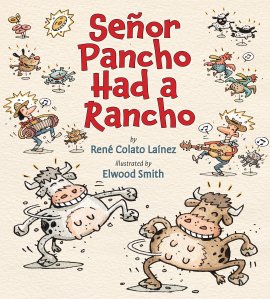
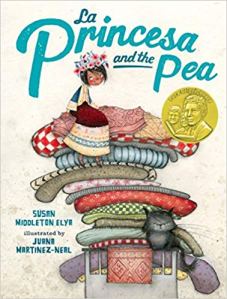
Yesenia: I relate to books that reflect my Mexican-American culture. I speak Spanglish, so I prefer to read books that incorporate both English and Spanish. At my bilingual storytimes, in addition to alternating between books written in English and in Spanish, I also read books written in Spanglish. Some of my favorites include Señor Pancho Had a Rancho, written by René Colato Laínez and illustrated by Elwood Smith, and La Princesa and the Pea, written by Susan Middleton Elya and illustrated by Juana Martinez-Neal.
Explore our other interviews in this series, linked below. AND, if you’re a library worker serving a Latinx community and would like to share your experiences through an interview, we invite you to contact us!
María F. Estrella, Cleveland Public Library
Angie Manfredi, Los Alamos County Public Library
Crystal Brunelle, Northern Hills Elementary School, Onalaska, Wisconsin
Patricia Toney, San Francisco Public Library
 About the interviewer: Sujei Lugo was born in New Jersey and raised in her parents’ rural hometown in Puerto Rico. She earned her Master’s in Library and Information Science degree from the Graduate School of Information Sciences and Technologies at the University of Puerto Rico and is a doctoral candidate in Library and Information Science at Simmons College, focusing her research on anti-racist children’s librarianship. She has worked as a librarian at the Puerto Rican Collection at the University of Puerto Rico, the Nilita Vientós Gastón House-Library in San Juan, Puerto Rico, and the University of Puerto Rico Elementary School Library. Sujei currently works as a children’s librarian at the Boston Public Library. She is a member of REFORMA (The National Association to Promote Library Services to Latinos and the Spanish-speaking), American Library Association, and Association of Library Service to Children. Sujei can also be found on Twitter, Letterboxd and Goodreads.

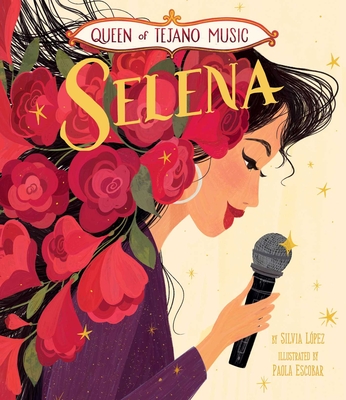 DESCRIPTION OF THE BOOK: Selena Quintanilla’s music career began at the age of nine when she started singing in her family’s band. She went from using a hairbrush as a microphone to traveling from town to town to play gigs. But Selena faced a challenge: People said that she would never make it in Tejano music, which was dominated by male performers. Selena was determined to prove them wrong.
 ABOUT THE AUTHOR: (from the dust jacket) A Cuba native raised in Miami, Silvia López holds degrees in English, library science, and educational technology. Her career as a children’s librarian at schools and public libraries spans over three decades. She is a published author of books for children, including biographies and picture books such as Just Right Family: An Adoption Story, and a collaboration with Italian artist Guido Daniele, Handimals: Animals in Art and Nature. Also, her digital book, Zuzuncito: Un Cuento del Pájaro Abeja Cubano, was named Best Children’s Picture eBook of 2017 by the International Society of Latino Authors.
 ABOUT THE REVIEWER: Emily R. Aguiló-Pérez is an Assistant Professor of English (Children’s Literature) at West Chester University of Pennsylvania. Her teaching and research are in the areas of children’s literature (particularly Latinx literature), girlhood studies, and children’s cultures. Currently her research examines representation in transitional chapter books that feature Latinx characters. In addition, she is managing editor of Anansesem: The Caribbean Children’s Literature Magazine. She has presented on Latinx children’s books at various conferences and has served on children’s book award committees such as the 2018 Pura Belpré Award. At present, she is part of the Pennsylvania Center for the Book’s “A Baker’s Dozen” committee.
 Q. Who or what inspired you to become a writer?
 ABOUT THE AUTHOR: R
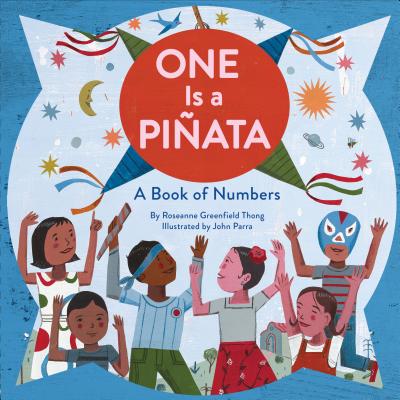
 ABOUT THE ILLUSTRATOR: John Parra is an award-winning illustrator, designer, teacher, and fine art painter whose work is avidly collected. John’s books have received starred reviews and have appeared on the Texas Library Association’s 2×2 Reading List. He has received the SCBWI Golden Kite Award for Illustration, the International Latino Book Award for Best Children’s Book Illustrations, and a Pura Belpré Illustrator Honor for Gracias/Thanks, written by Pat Mora. Find out more about him on his website
  ABOUT THE REVIEWER: Dora M. Guzmán is a bilingual reading specialist for grades K-5 and also teaches undergraduate and graduate courses in Children’s Literature and Teaching Beginning Literacy. She is also a current doctoral student in NLU’s EDD Teaching and Learning Program with an emphasis on Reading, Language, and Literacy. When she is not sharing her love of reading with her students, you can find her in the nearest library, bookstore, or online, finding more great reads to add to her never-ending “to read” pile!
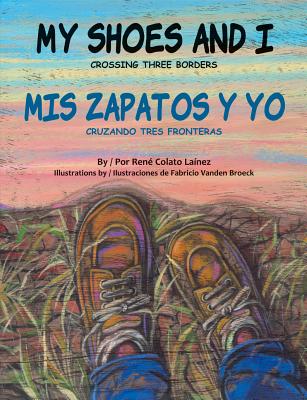 DESCRIPTION OF THE BOOK: Young René’s mother has sent him a new pair of shoes from the United States. He loves his new shoes. “They walk everywhere I walk. They jump every time I jump. They run as fast as me. We always cross the finish line at the same time.”
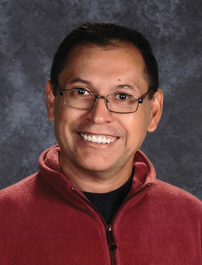 ABOUT THE AUTHOR (from his
 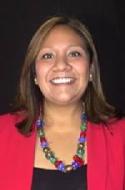 ABOUT THE REVIEWER: Sanjuana C. Rodriguez is an Assistant Professor of Literacy and Reading Education in the Elementary and Early Childhood Department at Kennesaw State University. Her research interests include the early literacy development of culturally and linguistically diverse students, early writing development, literacy development of students who are emergent bilinguals, and Latinx children’s literature. She has published in journals such as Journal of Language and Literacy Education, Language Arts, and Language Arts Journal of Michigan.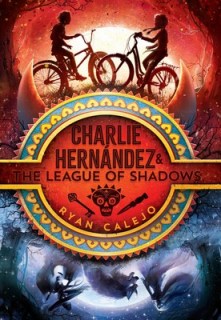
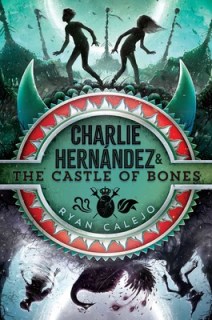
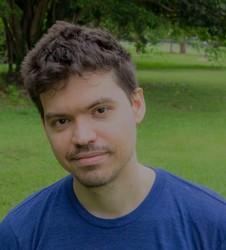 Ryan: I’ll admit, growing up, I did feel a similar disconnect. I fell in love with reading at a very early age, but back then there just wasn’t a whole lot of MG fiction featuring Latinx protagonists. I remember wondering why none of the characters in any of the books I read ever spoke Spanish, or even a little Spanglish, which, by the way, is the official language down here in South Florida—just kidding . . . sort of.
 Latinxs in Kid Lit