Happy Hanukkah from Latinos in Kid Lit!

by Zoraida Córdova

Happy Hanukkah!

Stockphoto.com

Hanukkah is the eight-day festival of light celebrated during the beginning in the Jewish month of Kislev.

Let’s get serious for a minute. I wanted to do some research about the intersection between Latino and Jewish people.

Latinos and Jewish histories have been intertwined for a long time, and most of it is full of wrong-doing by part of the Spanish. There’s the horrific moment in Spanish history when in 1492 the king of Spain ordered Jewish people to convert or to leave or be put to death. (Why don’t we learn from history?) Because of this, many Jews did convert to Catholicism to stay in their homes. In 2008, a study showed that 20 percent of men in Spain have Sephardic ancestry. In the Latin Americas, those who did go over to the New World kept their faith hidden. More recently, there was the immigration, asylum, refuge, and forced displacement of Jewish people during and after World War II. Thousands of refugees and Nazi camp survivors were able to find homes in South American countries though others barred their entry due to anti-Semitism.

During a visit to Ecuador in my teens, I remember driving past a Jewish home. How could I possibly know that they are Jewish? They had a beautiful Star of David in a mosaic on the outside gate. I say gate, but I mean a wall. Homes are mostly made of cement in Ecuador because of the humidity. Anyway, the neighbors largely mysticized them because they mainly kept to themselves. We have this perception of Jewish people as being separate. But when we spend the entire history of the WORLD marginalizing and trying to convert a group of people, and taking away their lives and rights, how can we even begin to call ourselves neighbors and allies? Today there is still a lack of intersectionality between minority groups and Jewish people.

Meanwhile, I keep thinking about how Jewish culture has enriched Latin culture. As a kid, I listened to lots of salsa music because of my mom and grandma. They listened to the Fania All Stars religiously. There was this guy nicknamed “El Judio Maravilloso” which translates to “The Marvelous Jew.” His name was Larry Harlow and his love and study of Afro-Cuban music spawned some of the best salsa we have. If you love Celia Cruz, she sang a beautiful version of Hava Nagila. For more on the Latino-Jewish music connection, listen to this NPR podcast: Bagels and Bongos. Music has a way of bringing people together.

This brings me to books. As we mix cultures and religions, where is the representation of the growing Latino-Jewish community? I have Ecuadorian-Jewish cousins. My friend (Jewish) and his wife (Bolivian) are celebrating their daughter’s first Hanukkah. They need books that show her different identities. When we talk about representation and diversity, we have to mean it. Latino-Jewish history is steeped in a painful past, but our present has wrought some excellent music and literature. And we need more. Here are eight books, by or about Jewish-Latinos, to get your started.


“My name is Marisol McDonald, and I don’t match. At least, that’s what everyone tells me.”
Marisol McDonald has flaming red hair and nut-brown skin. Polka dots and stripes are her favorite combination. She prefers peanut butter and jelly burritos in her lunch box. And don’t even think of asking her to choose one or the other activity at recess–she’ll just be a soccer playing pirate princess, thank you very much. To Marisol McDonald, these seemingly mismatched things make perfect sense together.
Unfortunately, they don’t always make sense to everyone else. Other people wrinkle their nose in confusion at Marisol–can’t she just be one or the other? Try as she might, in a world where everyone tries to put this biracial, Peruvian-Scottish-American girl into a box, Marisol McDonald doesn’t match. And that’s just fine with her.
A mestiza Peruvian American of European, Jewish, and Amerindian heritage, renowned author Monica Brown wrote this lively story to bring her own experience of being mismatched to life.

Goodreads * Amazon * B&N *


When Isobel is invited to Aunt Luisa’s for Hanukkah, she’s not sure what to expect. Aunt Luisa has recently arrived from Mexico. “At Aunt Luisa’s you’ll get to celebrate the Hanukkah Moon,” Isobel’s father promises. Isobel’s days at Aunt Luisa’s are filled with fun and surprises — a new camera, a dreidel pinata filled with sweets, and a mysterious late night visit to welcome the luna nueva, the new moon that appears on Hanukkah. An unusual Hanukkah story with a multi-cultural focus, this title celebrates a little-known custom of the Latin-Jewish community.

Goodreads * Amazon * B&N 


Jalapeno bagels are the delicious coming together of two cultures as the son of a Jewish baker and his Mexican wife decides what to bring to school for International Day. This warm story, illustrated by rich watercolors, comes complete with recipes for all the items that Pablo helps his parents make. Full color.
Goodreads * Amazon * B&N 


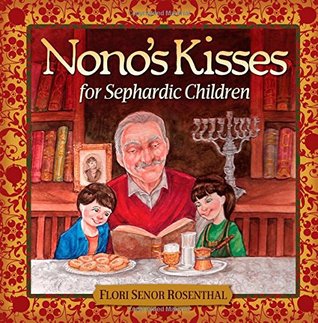
“Nono’s Kisses for Sephardic Children” is Flori Senor Rosenthal’s first of the Legacy and Literacy Scholastics Series. The book contains beautiful illustrations representing Ladino phrases. It was written to teach and encourage the usage of the Ladino language to children between the ages of 4 and 9. However, all ages will enjoy it and find it useful. Ladino or Judeo-Spanish is the language of Sephardic Jews. According to the United Nations, it is an endangered language. With each Ladino phrase found in the book, there is a question relating to its picture. This question, engages the parent and child into conversation. Ladino vocabulary words, pronunciations and English translations are provided to be used in these and other conversations and games between parents and their children. To make the learning experience even more fun, there is a hidden butterfly, in every illustration, to be found by the child. Ms. Senor Rosenthal’s father inspired her to write “Nono’s Kisses for Sephardic Children”. She wrote it to honor a tradition known specifically to Sephardic Jews. The book is an extraordinary teaching and learning tool for Ladino, and the Sephardic culture. However, those interested in the Spanish language and its history will also find this book interesting. Ms. Senor Rosenthal believes that her series will spark renewed interest in the Ladino language with the goal of having it removed from the endangered language list.

Goodreads * Amazon * B&N 


Lola Levine likes writing in her diario, sipping her mom’s cafe con leche, eating her dad’s matzo ball soup, and playing soccer with her team, the Orange Smoothies. So what if she doesn’t always fit in?

Lola is fierce on the field, but when a soccer game during recess gets too competitive, she accidentally hurts her classmate Juan Gomez. Now everyone is calling her Mean Lola Levine! Lola feels terrible, but with the help of her family, her super best friend, Josh Blot, and a little “pencil power,” she just might be able to turn it all around.

Goodreads * Amazon * B&N 


An eleven-year-old’s world is upended by political turmoil in this “lyrically ambitious tale of exile and reunification” (Kirkus Reviews) from an award-winning poet, based on true events in Chile.

Celeste Marconi is a dreamer. She lives peacefully among friends and neighbors and family in the idyllic town of Valparaiso, Chile—until one day when warships are spotted in the harbor and schoolmates start disappearing from class without a word. Celeste doesn’t quite know what is happening, but one thing is clear: no one is safe, not anymore.

The country has been taken over by a government that declares artists, protestors, and anyone who helps the needy to be considered “subversive” and dangerous to Chile’s future. So Celeste’s parents—her educated, generous, kind parents—must go into hiding before they, too, “disappear.” Before they do, however, they send Celeste to America to protect her.

As Celeste adapts to her new life in Maine, she never stops dreaming of Chile. But even after democracy is restored to her home country, questions remain: Will her parents reemerge from hiding? Will she ever be truly safe again?

Accented with interior artwork, steeped in the history of Pinochet’s catastrophic takeover of Chile, and based on many true events, this multicultural ode to the power of revolution, words, and love is both indelibly brave and heartwrenchingly graceful.

Goodreads * Amazon * B&N


Emily is a Jewish girl from the suburbs of New York. Her mother has family in Puerto Rico, but Emily has never had contact with them—- ever. Then Emily’s grandmother dies and Emily is forced to go to the Caribbean for her funeral. Buttoned-up Emily wants nothing to do with her big, noisy Puerto Rican family, until a special person shows her that one dance can change the beat of your heart.

Goodreads * Amazon * B&N 


Shirin is an Iranian princess; Ingrid, a German-Canadian eccentric; and Vivien, a Cuban-Jewish New Yorker culinary phenom. The three are roommates at a Swiss boarding school, where they spend their summers learning more than French and European culture. As the girls’ paths cross and merge—summers together, school years separate—they navigate social and cultural differences and learn the confusing and conflicting legacies of their families’ pasts. In the spirit of The Sisterhood of the Traveling Pants, Shirin, Ingrid, and Vivien grow together even when they are apart, forming unbreakable bonds along the way.

Goodreads * Amazon * B&N *


317988_632439229822_92623787_nZoraida Córdova was born in Guayaquil, Ecuador, where she learned to speak English by watching Disney’s The Little Mermaid and Michael Jackson’s Moonwalker on repeat. Her favorite things are sparkly like merdudes, Christmas, and New York City at night. She is the author ofThe Vicious DeepThe Savage Blue, The Vast and Brutal Sea, Luck on the Line, Love on the Ledgeand Life on the Level.

Drum Dream Girl Story Walk: A Literary Stroll Around My Neighborhood


By Sujei Lugo

My public library has been collaborating with a local non-profit community organization for more than 10 years, and when I started working there as the children’s librarian earlier this year, one of my plans was to continue building our relationship with this non-profit. This organization offers youth development programs meant to engage young people in a variety of activities including community organizing, advocacy, and educational programs. The majority of the programs focus on Afro-Latino dance, music, and community-theatre workshops and classes. I’ve invited participants, mainly Afro-Latino teens, to offer workshops and put on performances at my library. Such activities help them to develop leadership skills and give them a sense of empowerment and visibility in their community.

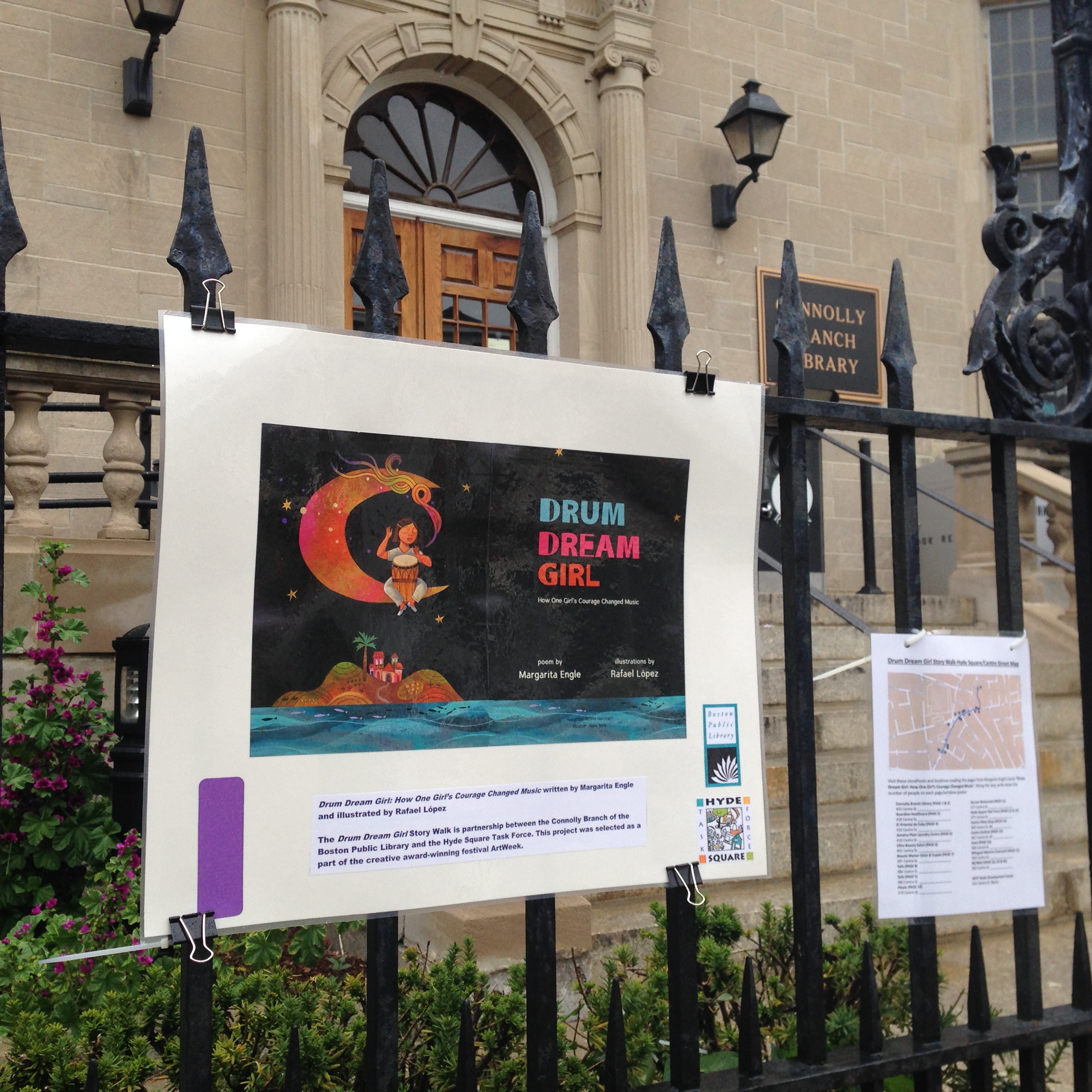
Drum Dream Girl Story Walk page 1 and map located at the library entrance

Drum Dream Girl Story Walk page 1 and map located at the library entrance

A couple of months ago, I contacted their arts and cultural programs director to discuss a great new picture book, Drum Dream Girl: How One Girl’s Courage Changed Music, by Margarita Engle and Rafael López. This book seemed like ideal material to adapt into a play. Not long after that conversation, the organization’s special-projects manager stopped by my library and we had an informal chat about future collaborations. We wanted to work together on programming that would connect my library with their youth community center, located just five blocks away. This is when I shared my idea for a story walk, which seemed like a perfect way to integrate the community, cover the physical area between both buildings, and support literacy initiatives. She loved the idea, and it fit our mutual vision, for the following reasons: A. our community has a huge Latin@ population with lots of Latin@-owned businesses; B. a group of Afro-Latina teen drummers is active in the non-profit; C. my obsession and support for Latino children’s literature; and D. the Cuban restaurants in our neighborhood seemed like a natural tie-in for Drum Dream Girl in the context of a story walk.

Now we needed to move to the fun part: the planning.

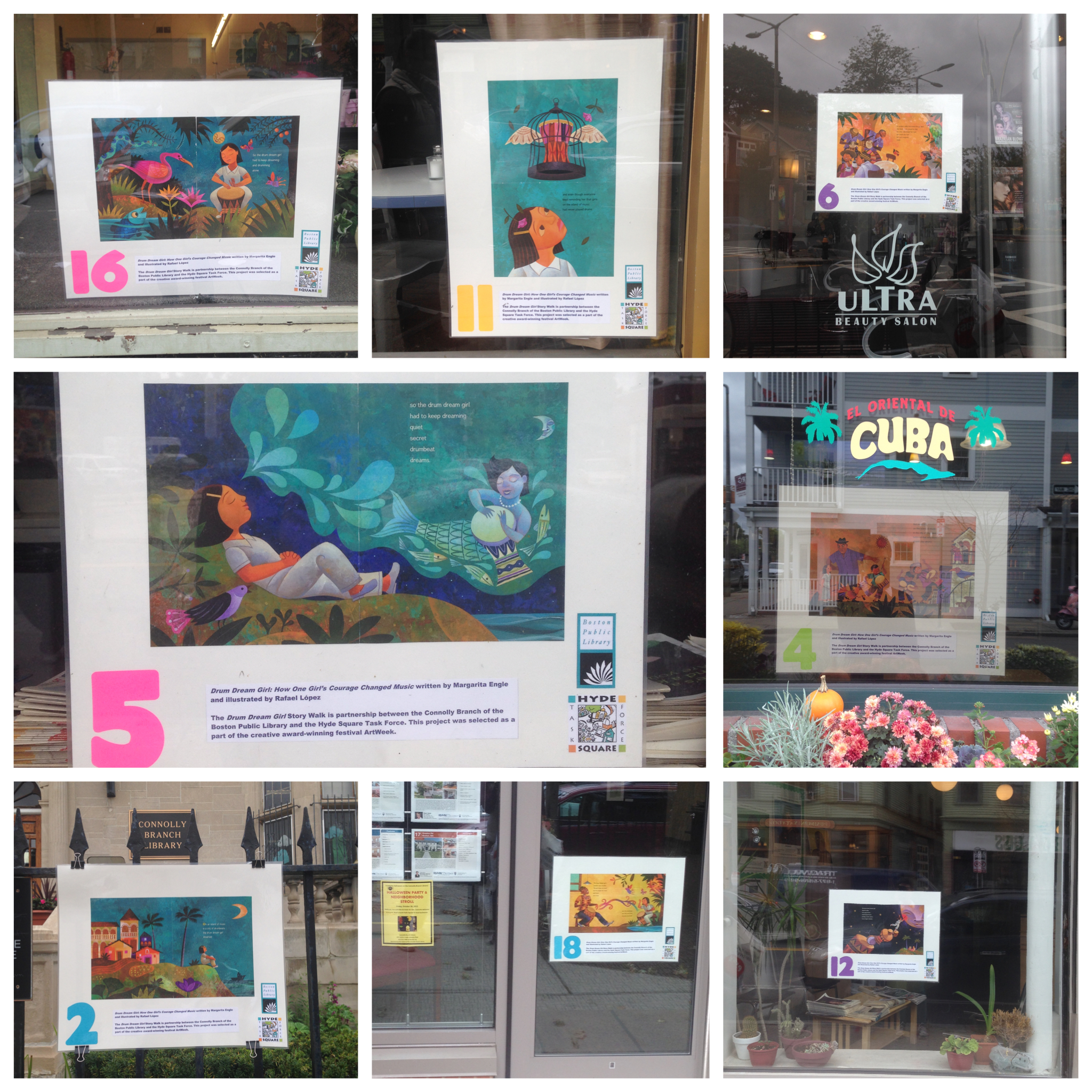
First, we identified and contacted local businesses and organizations to talk about our story walk idea and our interest in incorporating them into the program. We explained that we were going to take a picture book, create poster boards for each page, and post them in storefront windows. Participants would walk down the street from the library to the youth community center, and following a Drum Dream Girl Story Walk map, they would read the page displays along the route. Community members responded enthusiastically, from “Eso está genial. Todo sea por la biblioteca y los niñ@s,” to “That’s so cool. Of course we are in.” Using their storefront windows was a great way to integrate them into our story walk. In the neighborhood surrounding the library, 90% of the businesses and organizations are locally owned and they include a significant number of non-profit endeavors. What’s more, 11 out of the 15 storefront participants turned out to be Latin@-owned businesses. Once they agreed to take part in the walk, we created a map containing the street addresses of each storefront and the corresponding page number(s) from the book located at each address.

Next came the creation of the story pages which would be posted in the windows. A successful story walk works best when using a picture book with a simple, easy-to-follow narrative, featuring single page illustrations, and minimal text. In this case, we made allowances for Rafael López, who paints some of the most beautiful illustrations in children’s literature, but which are usually double-page spreads. This posed a bit of a challenge. We first purchased three copies of the book, since we needed to use actual pages and not scans or photocopies. Then, using an X-acto knife, a pair of scissors, and a lot of patience, I carefully separated and cut the pages. This was done using two copies of the book, to ensure the display of all pages, front and back. (The third copy was a backup, in case of errors.) To maintain the look of the full spreads,  I carefully rejoined separated pages with hidden adhesive tape. Using glue sticks, I attached the pages to poster boards and added a prepared label containing the book’s title, the author’s and illustrator’s names, the correct page number, and the names of the sponsoring library and community organization. The final step was to trim and laminate each poster board.

From beauty salons to Cuban restaurants and health centers, the Drum Dream Girl Story Walk boards

From beauty salons to Cuban restaurants and health centers, the Drum Dream Girl Story Walk boards


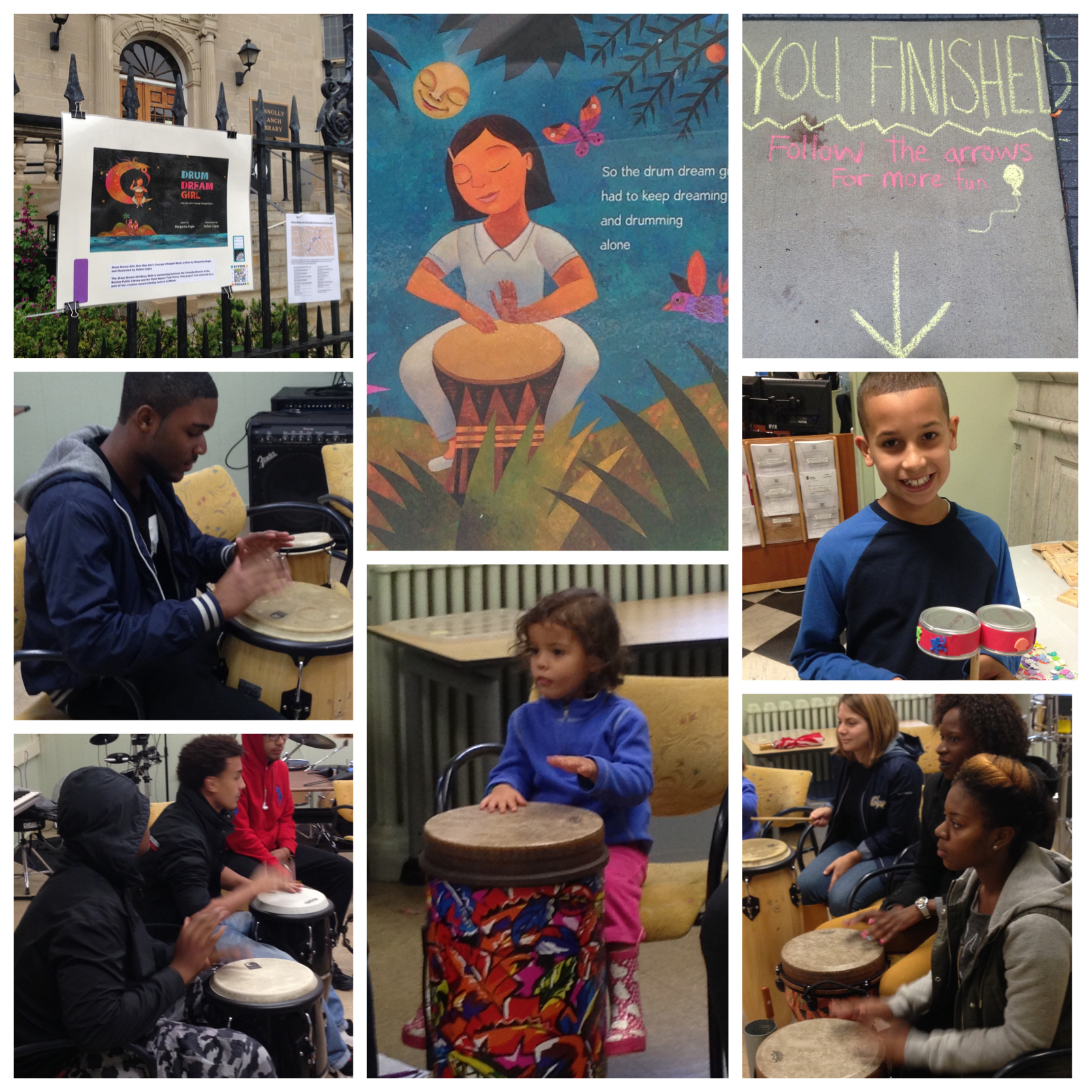
For our story walk inauguration, we selected a Saturday morning. The actual story walk was designed to be read independently, which allowed families and individuals to follow the story at their own pace. They would pick up a map at the library, walk down the main street reading each story poster, and end up at the youth community center where related activities were being offered. To enhance the reading experience, we encouraged kids to jot down certain details of the story, such as the number of people they saw on each poster, which quickly turned into a game for them and increased their attentiveness. Since this book is about an Afro-Latina drummer, several activities were music-related. At a craft table, children created their own drums, maracas, and other instruments, using recycled materials. In a separate room, story-walk readers had the opportunity to participate in a drumming workshop conducted by Latina teen drummers. These activities brought an already wonderful book to life, and provided a way to celebrate the power of music as well as elements of Latino heritage.  The publisher was kind enough to furnish a few copies of the book, which were given out as prizes to the first kids that finished the story walk.

The Drum Dream Girl Story Walk was up for a two-week period. During this time, patrons stopped by the library to pick up maps, children flocked to the crafts area to make musical instruments, and many picked up a copy of the book, while others shared their excitement about how well the story walk integrated their community. A copy of the map was located outside, at the front of the library, so that even during our closed hours, anyone interested could follow the story on their own. A lot of people who knew nothing about the program enjoyed the story as they passed through the neighborhood, leading to greater awareness about the story walk, the library, the community, and of course, the courageous Cuban girl who changed a piece of music history.

Drum dreamers

Drum dreamers


The Drum Dream Story Walk was a great event to plan and implement in an urban setting, and although it took time and patience to create the poster boards, I would definitely do it again. Alternative programs like this contribute to breaking down the physical barriers that often exist between a library and the community it serves, and also tighten relationships with local groups, businesses, and library patrons. I foresee future story walks in my library work, using diverse picture books and bilingual titles. I also intend to invite school classes and local groups to form story-walk read-alouds. And let’s not forget that music and art-making activities enhance the story-walk experience and help bring a book to life in memorable ways.


SujeiLugoSujei Lugo was born in New Jersey and raised in her parents’ rural hometown in Puerto Rico. She earned her Master’s in Library and Information Science degree from the Graduate School of Information Sciences and Technologies at the University of Puerto Rico and is a doctoral candidate in Library and Information Science at Simmons College, focusing her research on Latino librarianship and identity. She has worked as a librarian at the Puerto Rican Collection at the University of Puerto Rico, the Nilita Vientós Gastón House-Library in San Juan, Puerto Rico, and the University of Puerto Rico Elementary School Library. Sujei currently works as a children’s librarian at the Boston Public Library. She is a member ofREFORMA (The National Association to Promote Library Services to Latinos and the Spanish-speaking), American Library Association, and Association of Library Service to Children. She is the editor of Litwin Books/Library Juice Press series on Critical Race Studies and Multiculturalism in LIS. Sujei can also be found on Twitter, Letterboxd and Goodreads.

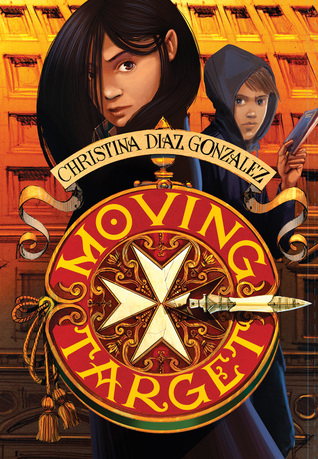
Book Review + Giveaway: Moving Target by Christina Diaz Gonzalez

Moving Target 2

Reviewed by Lila Quintero Weaver

DESCRIPTION OF THE BOOK:

What if you could control destiny?

Cassie Arroyo’s world is ripped apart when her father vanishes. What could anyone possibly want with a middle-aged art history professor? But there’s no doubt that he’s being chased by a dangerous organization called the Hastati—and Cassie is their next target.

Cassie learns that she is a descendant of an ancient bloodline that enables her to use the Spear of Destiny: an object that in the right hands can shape the future, and in the wrong hands destroy it. But the spear has been missing for years. It seems that the Hastati will do whatever it takes to control it—and if they can’t find the spear itself, they’ll go after the ones who can use it.

On the run, with only her best friend, Simone, to help her, Cassie must stay one step ahead of the Hastati as she tries to decipher the clues that will lead her to the spear. Her life—and the fate of the world—depend on it.

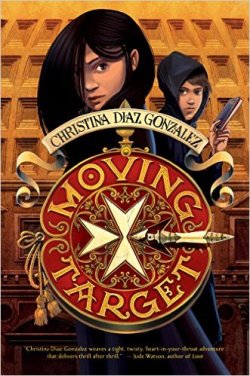
MY TWO CENTSMoving Target is a middle-grade fantasy thriller starring Cassie Arroyo, a Cuban-American expatriate living in Italy. It’s the first in a series, with the sequel scheduled to release next fall. The plot rides on the journey of three teen characters: Cassie, her friend Simone, and Asher. Asher is the nephew of Brother Gregorio, the monastic figure who provides shelter to Cassie after her father is struck by a hail of bullets, whisked off to surgery, and then vanishes, as far as his daughter can tell. When Cassie discovers that she, not her father, is the main target of the assassins, she teams up with Asher and Simone to recapture the Spear of Destiny, a medieval artifact mysteriously linked to Cassie’s family line and the reason that her formerly blasé life at a private school is shattered overnight. In their quest, the kids must decode cryptic clues, navigate secret tunnels, hitch rides with sketchy characters, and elude menaces by the dozens, including the lurking possibility of betrayal from people entrusted with their care.

The setting for Moving Target is Rome and its surrounding countryside. It’s the perfect backdrop for a contemporary story with ancient implications, one that pairs narrow alleyways with Vespas, and Italian Renaissance art with cell-phone-dependent teenagers—not to mention gun-toting assassins. These combinations feel familiar and cinematic, since many of us have acquired such mental images from the world of high-adventure movies. Christina Diaz Gonzalez seems comfortable in the realm of taut intrigue. Her previous novels capture similarly tense life-and-death stories set The Red Umbrellaagainst vivid backdrops. The Red Umbrella takes place in revolution-era Cuba, with threats encroaching on the main character’s family before and after she and her brother escape to the United States, courtesy of the Pedro Pan airlift. In A Thunderous Whisper, the plot bristles with espionage and Thunderous whispermortal danger: the main character’s father fights in the Spanish Civil War, and the family loses everything in the Nazi bombing of Guernica, their hometown. The intensity remains in Moving Target, but here the author replaces history with fantasy, drawing liberally on religious iconography, mythology and elements of the supernatural.

Cassie Arroyo may be Latina, but as a plot-driven novel, Moving Target’s focus is on adventurous twists and turns. Cassie’s ethnicity remains mostly in the background, although Spanish dialogue and cultural references do occasionally find their way into the picture. In the thriller genre, where protagonists tend to be Anglo by default, books like Moving Target help to normalize the presence of Latina characters in all types of stories, even fantasy thrillers. This is something to applaud.

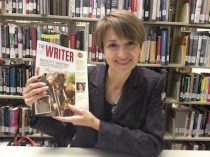
Christina GonzalezChristina Diaz Gonzalez is the award-winning author of The Red UmbrellaA Thunderous Whisper, and Moving Target. Her books have received numerous honors and recognitions including the American Library Association’s Best Fiction for Young Adults, the Florida Book Award, the Nebraska Book Award, a Notable Social Studies Book and the International Literacy Association’s Teacher’s Choice Award.  She speaks to students across the country about writing, the importance of telling their stories and the value of recognizing that there is a hero in each one of us. Visit her website at www.christinagonzalez.com for further information.

Check out Christina’s recent guest post for this blog’s Cuban series here.


IMG_1291Lila Quintero Weaver is the author-illustrator of Darkroom: A Memoir in Black & White. She was born in Buenos Aires, Argentina. Darkroom recounts her family’s immigrant experience in small-town Alabama during the tumultuous 1960s. It is her first major publication. Lila is a graduate of the University of Alabama. She and her husband, Paul, are the parents of three grown children. She can also be found on her own websiteFacebookTwitter and Goodreads.


ENTER HERE TO WIN A COPY OF MOVING TARGET, PLUS A POSTER, BOTH SIGNED BY CHRISTINA DIAZ GONZALEZ.


Christina Diaz Gonzalez’s MOVING TARGET Stars a Latina Action-Adventure Heroine

The final Hunger Games movie, Mockingjay Part 2, raked in $75.8 million over the holiday weekend, landing in the number one spot for the second weekend. One article reported the action adventure has made $440.7 million worldwide so far and is inching closer to $3 billion total for the series. Yet, few novels depict Latin@ main characters in action adventures. We’ll pause here to highlight a few, which would make great holiday gifts for your action-loving young reader:

23202520  The Culling (The Torch Keeper, #1)  Sanctum (Guards of the Shadowlands, #1)  17571252

And, this summer, one more title was added to the list: Moving Target, a middle grade featuring a young Latina caught in a Divinci-Code-like European adventure. On Thursday, we will post a review of the novel by Christina Diaz Gonzalez, who is also giving away a signed copy of the novel and a poster. See the link at the end of this post to enter. First, though, read what Christina had to say about her inspiration for Moving Target.

Christina Diaz Gonzalez: While growing up, I loved action/adventure stories where the hero went on a quest or a mission and often had to fight villains in order to fulfill their destiny. Whether these stories were in books, TV, or movies there was one thing that was always true… none of the heroes ever looked or sounded quite like me. Years passed (many, many years) and today there are still very few heroes that reflect the diversity of today’s readers.

23734473So, when I came up with the idea of writing my own action/adventure novel (that has been described as  “Percy Jackson meets Da Vinci Code with a dash of Indiana Jones”) it only seemed natural that the main character would be someone my ten year-old self would have loved to see as the heroine. That was when the character of Cassie Arroyo first popped into my head. She’s an American girl with a Hispanic background (like me) who discovers that she is part of an ancient bloodline that is connected to the legendary Spear of Destiny (this part is definitely not like me). In the story, there are riddles to decipher, mysteries to solve, and assassins to evade… all the things that I loved to read about when I was kid. (Okay, who am I kidding? I STILL love to read about all that stuff!) And one of the best parts about writing this story (which is part of a series) is that it’s another small step forward in the general realization that heroes come in all shades and ethnicities.

So buckle up and enjoy a thrilling ride with a brand new heroine… the smart, courageous, and Latina, Cassie Arroyo.


Christina GonzalezChristina Diaz Gonzalez is the award-winning author of The Red UmbrellaA Thunderous Whisper, and Moving Target. Her books have received numerous honors and recognitions including the American Library Association’s Best Fiction for Young Adults, the Florida Book Award, the Nebraska Book Award, a Notable Social Studies Book and the International Literacy Association’s Teacher’s Choice Award.  She speaks to students across the country about writing, the importance of telling their stories and the value of recognizing that there is a hero in each one of us. Visit her website at www.christinagonzalez.com for further information.

Check out Christina’s recent guest post for this blog’s Cuban series here.

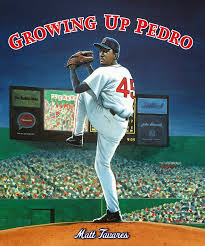
Book Review: Growing Up Pedro by Matt Tavares

Growing Up Pedro


Reviewed by Lila Quintero Weaver

FROM THE BOOK JACKET: Before Pedro Martinez pitched the Red Sox to a World Series championship, before he was named to the All-Star team eight times, before he won the Cy Young Award three times, he was a kid from a place called Manoguayabo in the Dominican Republic. Pedro loved baseball more than anything, and his brother Ramón was the best pitcher he’d ever seen. He dreamed of the day he and his brother could play together in the major leagues. This is the story of how that dream came true. Matt Tavares has crafted a fitting homage to a modern-day baseball star that examines both his improbable rise to the top of his game and the power that comes from the bond between brothers.

MY TWO CENTS: The author-illustrator Matt Tavares makes beautiful picture books, many of which explore stories from baseball. His sports biographies for young readers include Henry Aaron’s Dream, There Goes Ted Williams, and Becoming Babe Ruth. In Growing Up Pedro, Dominican major league pitcher Pedro Martinez takes a turn in the spotlight. At the peak of Martinez’s brilliant career, he pitched for the Boston Red Sox. In 2004, his performance in Game 3 helped the team capture a long-sought World Series championship. Martinez’s story abounds with tall achievements, but there are other, smaller points of inspiration in his journey, and this combination makes him an ideal hero for kid readers.

Just as the title implies, Growing Up Pedro traces Martinez’s rise to baseball glory back to childhood years. As the story begins, young Martinez sits on the sidelines, riveted by his older brother Ramón’s ability to fire fastballs. Ramón is good—really good—but even as he pursues his own baseball dreams, Ramón takes the time to teach Pedro everything he knows about pitching. Sometimes they practice their aim on mangos, still clinging to the branches. When Ramón is drafted by the Los Angeles Dodgers, Pedro continues honing his skills on his own and ultimately captures the attention of U.S. talent scouts. After he joins his brother in Los Angeles, Pedro faces new challenges. He must work hard to prove himself to critics who consider him too small-framed to succeed as a major-leaguer. Before it’s all over, Martinez perfects a 97-mph fastball, wins the prestigious Cy Young Award multiple times, captures a World Series title, and lands a spot in the National Baseball Hall of Fame.

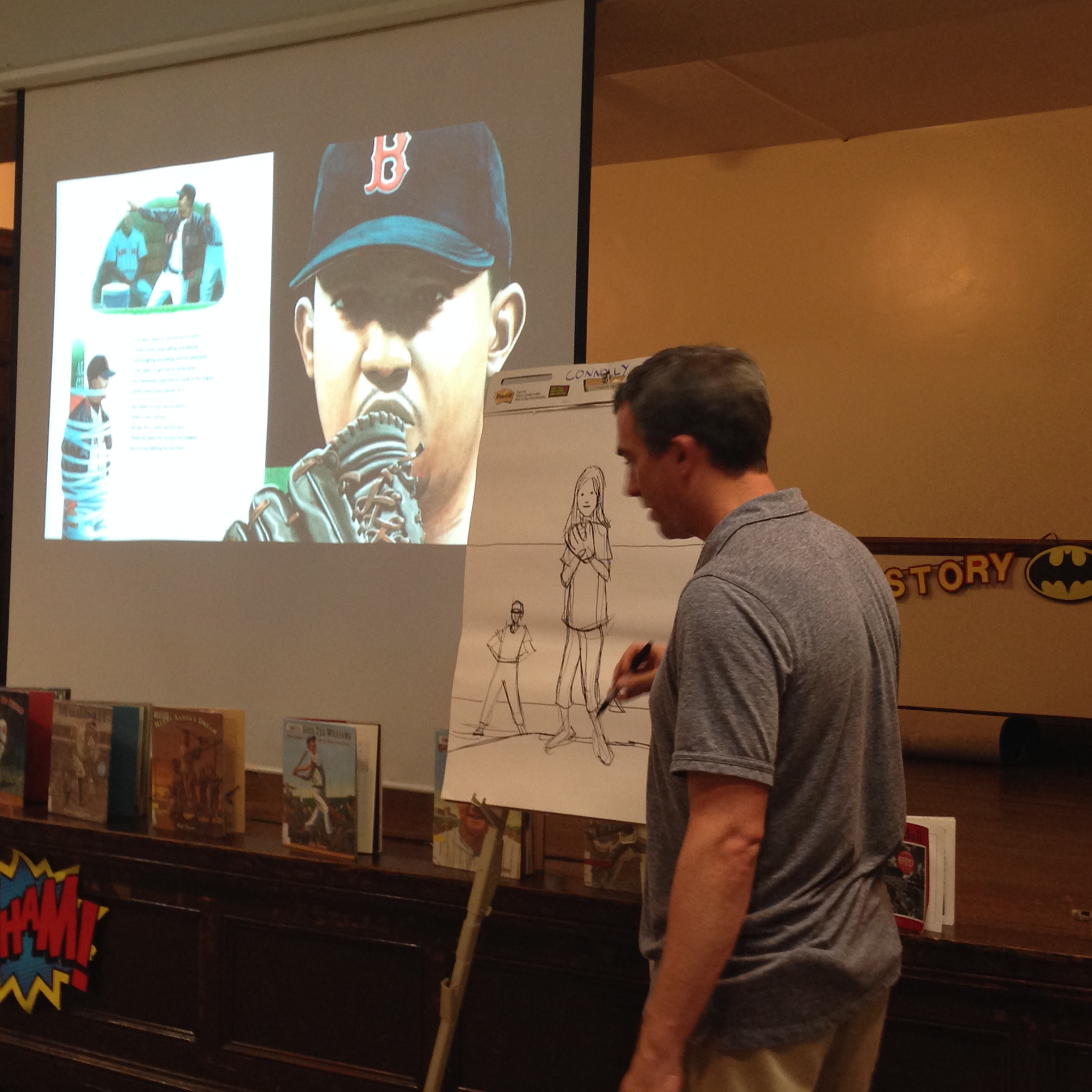
Matt Tavares shares about Growing Up Pedro during a library visit. Photo credit: Sujei Lugo

Growing Up Pedro succeeds on multiple levels. First, it’s a story of dreaming big and achieving bigger. The narrative emphasizes that talent plus hard work make it possible for this young boy to rise out of obscurity and poverty. In one illustration, Pedro is shown alone, practicing outdoors at sunset. With Ramón already in the United States, Pedro’s internal drive to excel is what keeps him going, throwing pitch after pitch in the dying light.

As already noted, this picture book offers a warm portrayal of the family bonds that carry both brothers into the ranks of professional sports. One vignette shows them dreaming aloud: “At night, they lie awake, two to a mattress, and talk about what they will do when they are millionaires.”

Growing Up Pedro also gives satisfying glimpses of rural Caribbean life, and it drives home the importance of baseball in the Dominican culture. At Campo Las Palmas, a Dodgers’ facility in the Dominican Republic, dozens of boys go through the thirty-day tryout alongside Pedro.

Matt Tavares’s illustrations command attention. The soft colors of his landscapes suggest sunshine diffused by tropical humidity. Mountains draped in lush vegetation fill the backdrops of the Dominican scenes. In the second part of the story, Pedro’s world switches to baseball stadiums packed with cheering fans, dressed in Red Sox team colors. One powerful illustration zooms in on Martinez’s face as he stands at the pitcher’s mound. His eyes contain supreme focus and reflect years of devotion to his sport. The accompanying text reads: “…when it is his turn to pitch, Pedro is very serious. All day, he is quiet and focused. When he takes the mound, he imagines he is a lion fighting for his food.” (This image is available for viewing on the author’s website, linked below in his bio.)

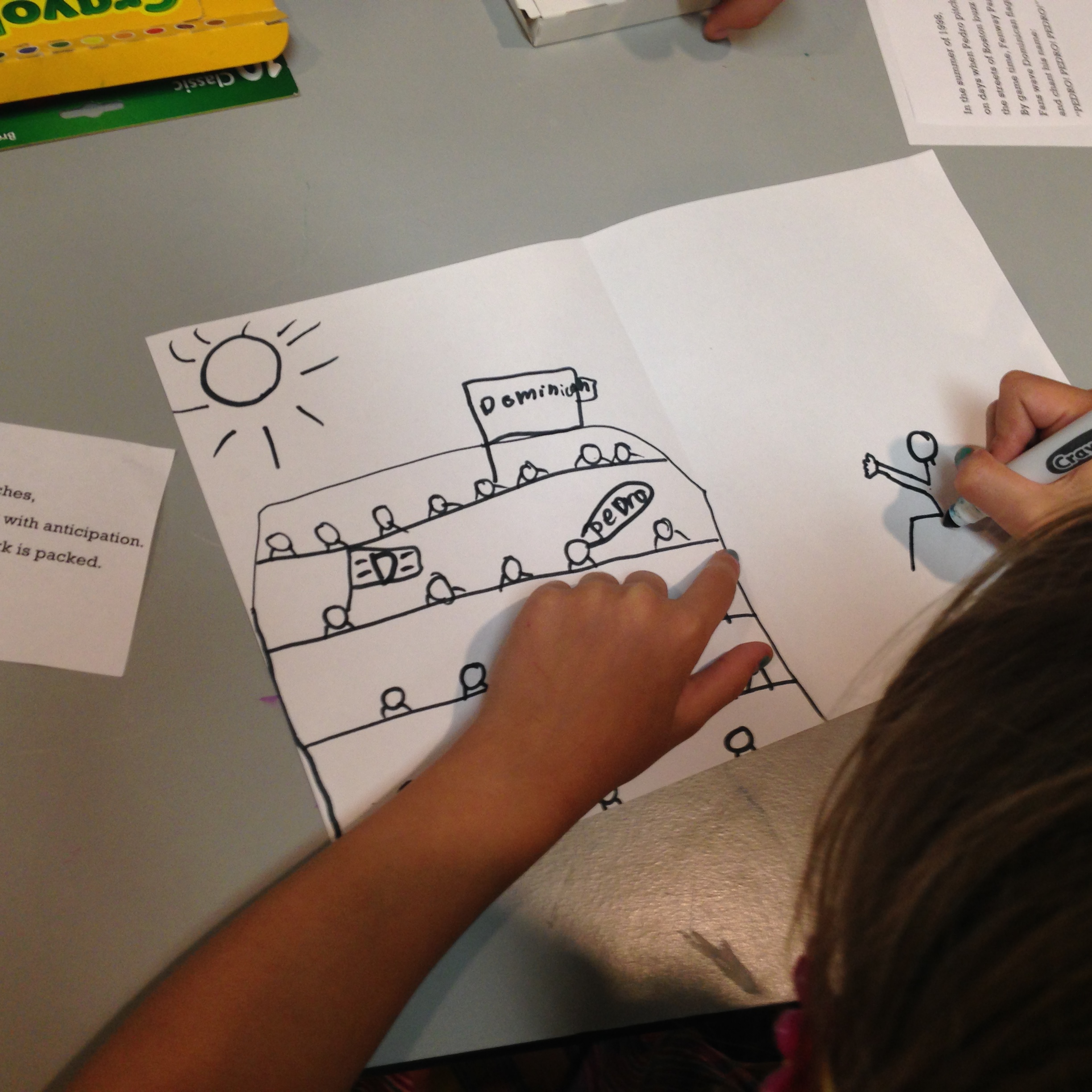
Kids respond to Matt's art with baseball illustrations of their own, Photo credit: Sujei Lugo

Kids respond to Matt’s art with baseball illustrations of their own. Photo credit: Sujei Lugo

Toward the end of the book, the narrative circles back around to the Dominican Republic. When an injured Pedro nevertheless pitches and sends the Red Sox into the American League Championship Series, Tavares’s paintbrush fills in scenes of celebration on the home front, where fans gather in front of television sets to watch Pedro. Following his success, “people dance in the streets. Kids tie scraps of metal to their bikes and ride through the darkness. Sparks light up the night like fireworks.” This is a transcendent moment that extends the hero’s journey into something bigger than himself, into a victory for all his people and for other dreamers, near and far.

Matt Tavares is a prolific writer and illustrator of children’s books. His work has received starred reviews and high honors, including three Parents’ Choice Gold Awards, six Oppenheim Gold Seal Awards, and an International Reading Association Children’s Book Award. Matt’s original artwork has been exhibited at major museums. He’s a popular speaker and presenter to adult and child audiences alike. Visit his official website to learn more.

TEACHING RESOURCES:

Visit Pedro Martinez’s page on the National Baseball Hall of Fame site.

The Dominican Republic boasts a jaw-dropping number of players in the ranks of professional baseball. This website provides an informative chart.

Watch a highlights video of Martinez pitching a 17-strikeout game in 1999.


IMG_1291Lila Quintero Weaver is the author-illustrator of Darkroom: A Memoir in Black & White. She was born in Buenos Aires, Argentina. Darkroom recounts her family’s immigrant experience in small-town Alabama during the tumultuous 1960s. It is her first major publication. Lila is a graduate of the University of Alabama. She and her husband, Paul, are the parents of three grown children. She can also be found on her own websiteFacebookTwitter and Goodreads.

Love Letter to a Classic: Esperanza Rising by Pam Muñoz Ryan

imageThe award-winning classic Esperanza Rising turns 15 this year! Here’s how one reader traces the book’s emotional and historical connections to her family’s story.

By Monica Ayhens

I could have used Esperanza in the third grade. Seven years old, parents divorced, missing my dad the long weeks and months in between visits, sharing the back room with my little sister in our Nana and Grandpa’s house. Before the divorce, my Nana used it for storage. After we moved in, my sister and I were another thing kept safe, nestled between a dresser that held baubles and trinkets little girls couldn’t help but covet and the floor to ceiling bookshelves crammed with Westerns and mysteries my Nana loved. We were (and still are) the bibliophiles of my family, and between tantalizing peeks at Audrey Rose and the teetering stacks I lugged home from the school library, books became my refuge and escape.

But the characters in the stories never looked much like me, or my family. The immigrant story that captured my attention was one of Swedish-American farmers in Minnesota and the Great Plains. I knew my Nana’s parents had come from Mexico, but I had no idea how or when. It was easier for me to recount Laura Ingalls Wilder’s tales of sugar snow than my great-grandparents’ journeys from Chihuahua to Southern California in the first decades of the twentieth century.

Langechildren2

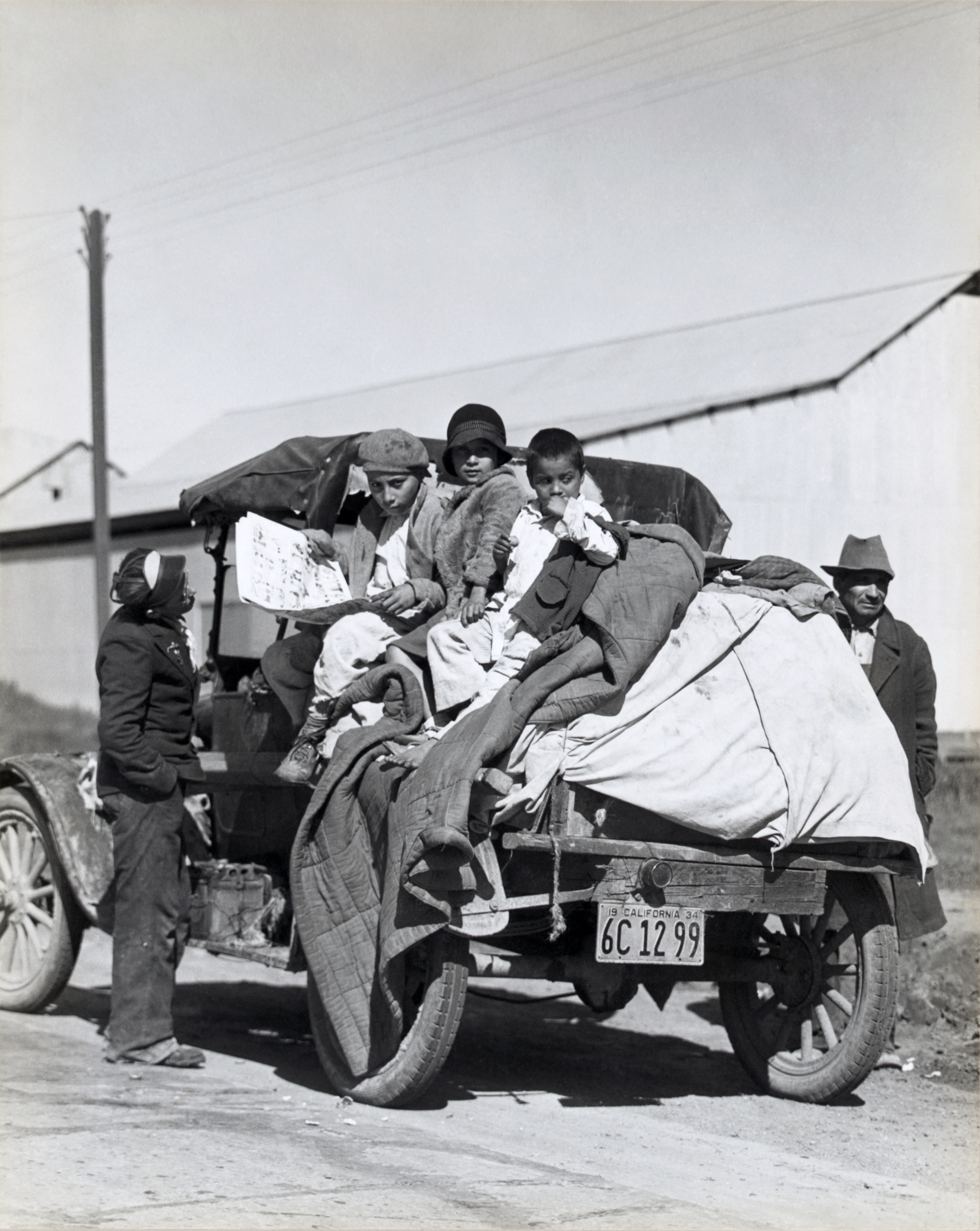
Mexican migrant workers in California, 1935, Photo by Dorothea Lange, Library of Congress

It wasn’t until my early thirties that I was tired of the vague narrative of my family’s origins, and I began asking my Nana, in earnest, about her parents. About growing up in California’s orchards and fields, picking fruit with her parents and siblings in the long summers. About hating prune plums because she picked them so much.  About the teachers who were astonished at my Nana’s intelligence and eagerness to learn, because she was the daughter of a Mexican foreman, after all.

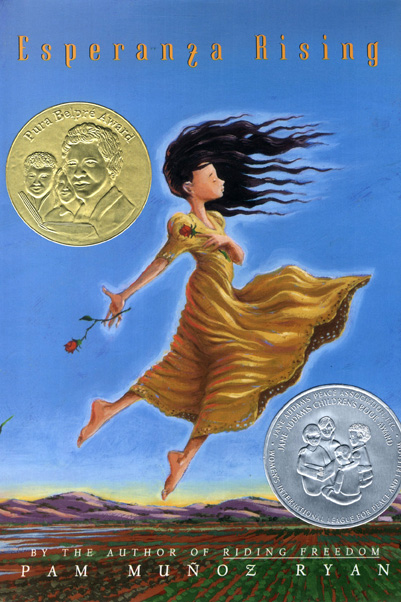
EsperanzaJacket72 copy 2It was in the midst of this long journey of rediscovery that Esperanza fell into my life, a welcome break from studying for Ph.D exams. I nestled on the couch with the slender volume, and in those comfortable hours, Esperanza’s story wove into my own. When Esperanza and her mother crocheted, I felt the warmth of the handmade blankets my Nana made for each of her grandchildren. When Esperanza railed against the injustices against brilliant girls with the wrong color of skin, I felt a surge of anger toward the teacher who sold my Nana and her classmates short. I wondered if my great-grandparents, who were devoutly patriotic but never naturalized, ever felt the fear of deportation as the Depression made their lives, and Esperanza’s, more precarious.

Esperanza Rising was my Nana’s story, her sisters’ and mother’s story. Perhaps if more people knew it, especially those who aren’t Esperanza’s granddaughters and grandsons, they would realize this story is an American one. And perhaps then they would look on the Esperanzas fleeing the violence of our own time with compassion. For a well-told and much needed story helps us all rise above ignorance and fear.

Monica Ayhens is a Ph.D candidate in British naval history at the University of Alabama. She’s an avid knitter and enthusiastic traveler.

BOOK DESCRIPTION

Esperanza Ortega possesses all the treasures a girl could want: dresses; a home filled with servants in Mexico; and the promise of one day presiding over El Rancho de las Rosas. But a tragedy shatters that dream, forcing Esperanza and her mother to flee to Arvin, California and settle in a farm camp. There, they confront the challenges of work, acceptance, and economic difficulties brought on by the Great Depression.

–From the author’s website

TEACHING RESOURCES

Edsitement provides a comprehensive curriculum guide for teaching Esperanza Rising to 6-8th graders.

Using photographs from the era taken by the celebrated photographer Dorothea Lange, here is a series of classroom exercises geared toward exploring living conditions and cultural life in the migrant camps, as depicted in Esperanza Rising.  

Reading Rockets hosted an informative video interview with Pam Muñoz Ryan that includes commentary on Esperanza Rising and how Pam began her writing career.

The cover of Esperanza Rising bears a gorgeous illustration by artist Joe Cepeda. In an interview on this blog, Joe discussed his involvement in the project and what it has meant to be associated with such an iconic character.

 Explore what the Goodreads community says about Esperanza Rising.