Celebrate Earth Day By Reading Kid Lit Books As An Ecocritic

By Marianne Snow Campbell

Earth Day is here again!  It’s a time to honor the natural world that surrounds us, consider how we can take better care of the environment, and take action keep our planet healthy and beautiful. In schools, many teachers and students will join together to read and discuss books with environmentalist lessons – The Lorax, The Great Kapok Tree, a variety of picture books about recycling and picking up litter. Last year, Lila Quintero Weaver shared a beautiful post about books celebrating “Latin@ Heroes of the Planet” and other “Earth Day-friendly books with Latin@ connections.” I love the strong messages that these texts carry and believe that they should play a prominent role in educating children about conservation and ecology.

However, reading literature with overt lessons about the earth isn’t the only method for learning about environmentalism. There’s another, somewhat subtler, approach – ecocriticism. Ecocriticism is a form of literary analysis that investigates how literature depicts nature and, ideally, inspires readers to take action to keep the natural environment healthy. But it’s not just for literature scholars – kids of all ages can be ecocritics, too!

To start an ecocritical analysis, choose a book that depicts nature but isn’t about ecological themes like conservation, recycling, and saving the earth.  For example, I like to use Maya Christina González’s Call Me Tree / Llámame árbol, a poetic, bilingual picture book that celebrates the strength and beauty of trees, as well as humans’ connections with these majestic plants.

Throughout the book, the narrator, a child, embodies nature by pretending to be a tree. They begin as a seed nestled in the earth. Slowly, they sprout from the earth and stretch toward the sky, just like a young sapling. As the child/tree grows, they are joined by other children, who also identify as diverse, strong, leafy forest residents:

“Trees!

More and more trees

Trees and trees

Just like me!


¡Árboles!

Más y más árboles

Árboles y árboles

¡Iguales a mí!”

To explore a book like Call Me Tree / Llámame árbol with an ecocritical lens, young readers can ponder questions (adapted from Dobie, 2011) that facilitate thinking about nature and readers’ relationship with the earth:

  • How do the author and illustrator depict nature in this text?
  • What is/are the relationship/s between humans and nature in this text?
  • What does this text tell you about nature?
  • Do you agree with this text’s representation of nature?  Why or why not?
  • Does this text make you want to do something to help the environment?  Why or why not? What do you want to do, and how can you accomplish these goals?

Let’s apply those questions to Call Me Tree / Llámame árbol. When I consider these questions in relation to this book, I’m filled with awe and gratitude for the trees that surround me. I love how González depicts trees and humans as equals. In both the text and the illustrations, she presents children and trees as one and the same; people are trees, and trees are people. Nature isn’t a commodity for us to consume. This representation makes me rethink my responsibility for the environment and how I should treat nature as I want to be treated. Trees care for me by cleaning the air, providing shade, and sharing their beauty, so shouldn’t I do more to care for trees? Even though Call Me Tree isn’t about conservation, it certainly makes me want to do my part to respect and sustain the natural world.

Doing ecocriticism can benefit kids in a variety of ways. By analyzing and evaluating representations of nature in texts, they’ll flex their critical thinking muscles. Moreover, ecocriticism’s blending of environmental science and literary studies can help science lovers get more into literature (and vice versa). Also, readers who enjoy expressing themselves creatively can take ecocritical analysis a step further by creating their own nature poetry, art, music, and drama.

 The best news? There are tons of literature by Latinx and Latin American authors that kids can explore with an ecocritical lens. Below are some great books for readers of all ages that feature various types of nature motifs. (Special thanks to Lila Quintero Weaver, Sonia Alejandra Rodriguez, Cindy L. Rodriguez, and Cecilia Cackley for their rich contributions to this list of suggested books!)

Picture Books

It’s Our Garden (George Ancona)

Kids get their hands dirty and grow food for their community in this nonfiction tale about a school garden.


Prietita and the Ghost Woman / PRIETITA Y LA LLORONA
(Gloria Anzaldúa, Maya Christina Gonzalez)

Prietita wanders the South Texas woods seeking a medicinal plant for her ailing mother.  What will happen when she meets la Llorona?

Domitila y el mar (Nina Basich, Teresa Martínez)

After receiving a postcard from her uncle, who’s vacationing at the beach, Domitila can’t get the sea out of her head. (Text in Spanish.)

Domitila

I Know the River Loves Me / Yo sé que el río me ama (Maya Christina Gonzalez)

Can a child and a river be best friends?  Of course!

Talking with Mother Earth / Hablando con Madre Tierra (Jorge Argueta, Lucía Angela Pérez)

In this sumptuous collection of poetry, Argueta explores his childhood connections with the earth.

Chavela and the Magic Bubble (Monica Brown, Magaly Morales)

Magical bubble gum takes Chavela back in time to visit a grove of sapodilla trees and the people who harvest their chicle in Playa del Carmen, Mexico.

Middle Grades Books

Silver People: VOICES OF THE PANAMA CANAL (Margarita Engle)

This collection of poems about the construction of the Panama Canal is narrated not only by humans, but also by animals and plants.

The Dreamer (Pam Muñoz Ryan)

As an adult, Chilean poet Pablo Neruda often incorporated nature into his work.  This account follows the young Neruda (born Ricardo Eliécer Neftalí Reyes Basoalto) and his encounters with the natural world.

Esperanza Rising (Pam Muñoz Ryan)

Forced off of their wealthy ranch in Mexico, Esperanza and her mother immigrate to California to work the land.

Where the Flame Trees Bloom (Alma Flor Ada)

Natural imagery permeates Alma Flor Ada’s stories of her childhood in Cuba.

My Ocean: A Novel of Cuba (Enrique Pérez Díaz)

Struggling to understand why friends and family are leaving Cuba for the United States, Enrique seeks solace and comfort in the ocean.

3364012

Young Adult Books

Under the Mesquite (Guadalupe García McCall)

Wrestling with her mother’s cancer diagnosis and the responsibility of caring for her siblings, Lupita seeks refuge and resilience in the shade of a tree.

The Vicious Deep (Zoraida Córdova)

Nature meets fantasy!  Tristan has always loved the water – a love that begins to make sense when he discovers that he’s heir to an underwater kingdom.

Out of Darkness (Ashley Hope Pérez)

The East Texas woods are a place of safety for Naomi and Wash as they cope with violence and racism.

.

.

MarianneMarianne Snow Campbell is a doctoral student at The University of Georgia, where she researches nonfiction children’s books about Latin@ and Latin American topics and teaches an undergraduate course on children’s literature. Before graduate school, she taught pre-K and Kindergarten in Texas, her home state. She misses teaching, loves critters, and can also be found on Twitter and Facebook.
 

Celebrating Pura Belpré Award Winners: Spotlight on Julia Alvarez


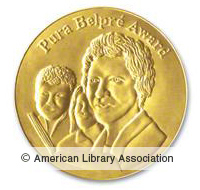
PuraBelpreAwardThe Pura Belpré Awards turns 20 this year! The milestone will be marked on Sunday, June 26, from 1:00-3:00 p.m. during the 2016 ALA Annual Conference in Orlando, FL. According to the award’s site, the celebration will feature speeches by the 2016 Pura Belpré award-winning authors and illustrators, book signings, light snacks, and entertainment. The event will also feature a silent auction of original artwork by Belpré award-winning illustrators, sales of the new commemorative book The Pura Belpré Award: Twenty Years of Outstanding Latino Children’s Literature, and a presentation by keynote speaker Carmen Agra Deedy

Leading up to the event, we will be highlighting the winners of the narrative and illustration awards. Today’s spotlight is on Julia Alvarez, the winner of the 2004 Pura Belpré Narrative Award for Before We Were Free and the 2010 Narrative Award for Return to Sender.

Reviews by Cindy L. Rodriguez

BEFORE WE WERE FREE

DESCRIPTION FROM THE PUBLISHER: Anita de la Torre never questioned her freedom living in the Dominican Republic. But by her 12th birthday in 1960, most of her relatives have emigrated to the United States, her Tío Toni has disappeared without a trace, and the government’s secret police terrorize her remaining family because of their suspected opposition of el Trujillo’s dictatorship.

Using the strength and courage of her family, Anita must overcome her fears and fly to freedom, leaving all that she once knew behind.

From renowned author Julia Alvarez comes an unforgettable story about adolescence, perseverance, and one girl’s struggle to be free.

MY TWO CENTS: Anyone who has read Julia Alvarez’s adult novels will enjoy the connections made in Before We Were Free to How the Garcia Girls Lost Their Accents and In the Time of the Butterflies. In Before We Were Free, Alvarez explores the Trujillo dictatorship in the Dominican Republic through the eyes of Anita de la Torre, a 12-year-old girl in 1960 whose family slowly reduces in number during the novel. Some, like her cousins, the Garcias, flee the country, while others go missing or are arrested. In the beginning, Anita has little knowledge of politics and the underground movement to assassinate Trujillo. In fact, at the start of the novel, Anita looks to El Jefe’s picture at times when she needs strength. She slowly becomes more aware that life under Trujillo has become increasingly dangerous for many, including her own family members who are a part of the movement to kill the dictator.

One moment of shocking clarity comes when Trujillo attends a party and becomes attracted to her fifteen-year-old sister. The family goes into emergency mode and manages to get her sister out of the country before Trujillo can take her in every sense of the word. Anita’s increased understanding leaves her confused and literally shocked into silence. The once-talkative girl slips into silence, at times even forgetting words that were once simple and familiar. When Anita and her mother go into hiding after Trujillo’s assassination, she writes in her diary, but then erases the pages in case the secret police raid the home. She literally cannot say or write anything because of fear. At some point, Anita decides to write and not erase–or be erased. She wants someone to know she existed if she were ever taken away by the police.

Throughout the novel, Alvarez often refers to wings, birds, and flying in connection with the Mirabal sisters, the “Butterflies” who were murdered, and the fight for freedom that continued through Anita’s family and others. Anita not only takes flight from her home, but has to learn how to free herself internally, to spread her wings and fly despite her grief of losing family and everything she considered home.

A masterful storyteller, Alvarez makes a complex political situation accessible to younger readers through Anita, who faces political drama alongside normal 12-year-old milestones, like getting her period and having a first crush. Alvarez also sprinkles the narrative with other issues that she does not delve into deeper, but could be discussion starters for book clubs and students. For example, Anita’s family employs a black, superstitious Haitian maid. While she is loved like family, this dynamic should spark conversation about race and class issues within Latin American countries. Another example is when Anita begins school in New York City. She is placed in the second grade, despite her age, and her teacher calls her “Annie Torres.” This scene is like a one-two punch to the gut and should be examined further. Mental health is another issue touched upon that warrants further discussion. Anita talks about feeling empty and numb, and her mother takes tranquilizers to calm her nerves. The reader gets the idea that living under such conditions and surviving when family members did not will require years of emotional and psychological recovery.

TEACHING TIPS: Before We Were Free is a great option to include in a historical fiction unit in Language Arts or as a fictional option in a Social Studies class learning about different types of governments, Latin America, or under a theme such as “the fight for freedom.” Students often learn about the colonists’ fight against the British, but rarely learn about more recent struggles for democracy in other countries. The relationship between Haiti and the Dominican Republic could be explored, as well as the ideas mentioned above. Anita’s character development should be traced and analyzed, paying close attention to what triggers each of her changes and what finally prompts her to have the courage to embrace her new life.

RESOURCES:

Review from Vamos a Leer

Educator Guide from Vamos a Leer

Reader’s Guide from Penguin Random House


RETURN TO SENDER:

DESCRIPTION FROM THE PUBLISHER: After Tyler’s father is injured in a tractor accident, his family is forced to hire migrant Mexican workers to help save their Vermont farm from foreclosure. Tyler isn’t sure what to make of these workers. Are they undocumented? And what about the three daughters, particularly Mari, the oldest, who is proud of her Mexican heritage but also increasingly connected to her American life. Her family lives in constant fear of being discovered by the authorities and sent back to the poverty they left behind in Mexico. Can Tyler and Mari find a way to be friends despite their differences?

In a novel full of hope, but with no easy answers, Julia Alvarez weaves a beautiful and timely story that will stay with readers long after they finish it.

MY TWO CENTS: Although Before We Were Free and Return to Sender are set in different countries, they have similarities. In Return to Sender, Mari and her family are migrant workers on a Vermont dairy farm. She encounters a mix of acceptance and scorn from her classmates, the townspeople, and even Tyler, at first. The chapters are shared between Mari (first person, often written in letters) and Tyler (third person), who reveals that he is confused about being a proud, patriotic American and knowing that his father is breaking the law by hiring undocumented workers. In addition to dealing with the varied reactions of the locals, Mari’s family worries about the whereabouts of her mother, who returned to Mexico but is supposed to be on her way back via a coyote. She has been unreachable, however, for several months. The family is also under constant threat of deportation. Complicating matters, Mari was born in Mexico, while her two younger sisters were born in the United States, which splits their feelings about where is home and how they would feel if they needed to return to Mexico.

Like Anita in Before We Were Free, Mari ends up in hiding and writing in a diary, after a raid by the U.S. Immigration and Customs Enforcement ends with her parents being arrested. Also like Anita, Mari needs to find her voice and, in her case, she has to find the courage to speak on behalf of her family to government officials. Read together, students could explore the different reasons for immigration, as the families in the two novels come to the United States for different reasons–political asylum versus employment–yet the underlying reason is always the same–more opportunities for their children.

Things that struck me as odd were Mari’s heavy accent (I listened to the audio book), her lack of understanding of English “sayings,” and her fond memories of Mexico, considering she moved to the U.S. when she was 4 and has attended American schools. Based on my experience with ELL students, these details would have made more sense if Mari had been in the U.S. for only a few years, not the majority of her life.

Still, Return to Sender does a great job of offering various viewpoints on immigration and migrant workers on struggling American farms, and I like that Alvarez places her migrant workers in Vermont, where the author lives, as we most often read and hear about migrant workers in border states.

TEACHING TIPS: As mentioned above, students could read both novels and compare/contrast the characters and their experiences, as both face personal, familial, and political challenges. Return to Sender also allows students to learn more about immigration and migrant workers, particularly in New England. The title was taken from a real government operation to find and deport migrant workers, so students can research that particular policy while reading this fictional account. Both books also lend themselves to deep questions about freedom, rights, and who has access to these.

RESOURCES:

Educators guide from Random House

TeachingBooks.net has interviews and several links with more information about Alvarez and her work.


Jilia Avaraz receiving a medal from Barack ObamaABOUT THE AUTHOR: Julia Alvarez is an award-winning writer of poetry, essays, and novels and short stories for children and adults. Alvarez was born in New York City, but her family returned to the Dominican Republic when she was three months old. Her family became involved with the underground movement against dictator Rafael Trujillo. They left the country and returned to New York City in 1960. She graduated with a bachelor’s degree from Middlebury College and earned her master’s in creative writing from Syracuse University. She is currently the writer in residence at Middle College and runs a sustainable coffee farm/literacy center in the Dominican Republic.

Her novels for adults include How the Garcia Girls Lost Their Accent, In the Time of Butterflies, iYo!In the Name of Salomé, and Saving the World. Her books for children include How Tía Lola Came to Visit/Stay, Before We Were Free, Finding Miracles, and Return to Sender. Alvarez has won numerous awards for her work, including the Pura Belpré and Américas Awards for her books for young readers, the Hispanic Heritage Award in Literature, and the F. Scott Fitzgerald Award for Outstanding Achievement in American Literature. In this picture, she is receiving the National Medal of the Arts from the National Endowment of the Arts, presented by President Barack Obama.

Book Review: Nothing Up My Sleeve by Diana López


Reviewed by Marianne Snow Campbell

DESCRIPTION FROM THE PUBLISHER: Sixth graders Dominic, Loop, and Z stumble upon a new magic shop in town and can’t wait to spend their summer mastering cool tricks to gain access to the Vault, a key holders-only back room bound to hold all kinds of secrets. And once they get in, they set their sights even higher: a huge competition at the end of the summer. They work on their card tricks, sleights, and vanishing acts, trying to come up with the most awesome routines possible….Problem is, the trip is expensive, and it’s money that each guy’s family just doesn’t have.
To make things worse, the shop-owners’ daughter, Ariel (who just so happens to be last year’s competition winner), will do anything to make sure the boys don’t come out on top. Even pit them against one another. Will they make it to the competition? And if so, at what cost?

Diana López, author of Confetti Girl and Ask My Mood Ring How I Feel, offers a story that’s just the right mix of heart, high jinks, and a bit of magic.

MY TWO CENTS: There’s a reason that magic trick kits sell so well at toy stores. Lots of kids love the thrill of stage magic – practicing illusions until they’re just right, creating mystery with visual puzzles, and tricking others with sleights of hand. Performing magic can help build kids’ confidence and give them a sense of agency when they might otherwise feel powerless. That’s certainly the case for Dominic, Loop, and Z, three friends who venture into the world of illusion at Conjuring Cats, the new magic store in Victoria, Texas. Each of the boys is facing a quandary that makes him feel powerless. Dominic’s parents are divorced and refuse to speak to each other, which frustrates him to no end. Meanwhile, Loop just found out that his father is actually his stepfather, and Z, the youngest child in a large family, always feels invisible. Their new magical hobby, however, leads to a summer of discovery that none of the friends expect.

One of the most valuable lessons I took away from Nothing Up My Sleeve is that hobbies are important. Once Dominic, Loop, and Z get involved in magic, they blossom. Sure, they encounter struggles along the way – jealousy, in-fighting, money troubles, family drama – but these difficulties only cause the boys to grow cognitively, socially, and emotionally. The teacher in me loves how practicing magic stimulates their critical thinking skills as they write patter (“what a magician says while performing a trick,” p. 134) for their routines and synthesize new tricks by putting their own personal spins on classic illusions. Really smart stuff! As the friends puzzle through magic, you can see how clever each boy is in his own way. This is the beauty of hobbies – kids expressing their intelligence and creativity through fun, personally meaningful activities.

OK, enough with the nerdy teacher musings. Another quality that I love about Diana López’s books is their attention to character development, and Nothing Up My Sleeve doesn’t disappoint. With magic as the backdrop, she conjures three well-rounded, realistic characters who face struggles and earn triumphs just like any real kid might. López creates a strong balance between the boys’ magical endeavors and their personal and home lives that gives this book the perfect blend of excitement and real world relevance.

Furthermore, I have to stress how much it means to me that López sets this book (and her other books) in South Texas. Catching references to places I know – Victoria, Refugio, Corpus Christi, and Houston – made me smile. Like me, a lot of young readers appreciate it when stories are set near their homes. A familiar setting can create a comfortable feeling, which, in turn, can make a book even more personally meaningful and engaging. With so many books, movies, and TV shows set in well known locales like New York and Los Angeles, it’s refreshing to find home in the pages of a book. Thank you, Ms. López for an enjoyable, relatable read!

TEACHING TIPS: As I read through Nothing Up My Sleeve, I couldn’t help thinking what a wonderful summer reading book it would be. Dominic, Loop, and Z’s adventures take place during the summer, and I can easily imagine kids soaking up this book on languid afternoons in June, July, and August. If you teach upper elementary or middle grades, consider putting it on your summer reading list.

Nothing Up My Sleeve is also an excellent book for classroom use. López fills her writing with various literary elements, which makes the book a solid model for student writing. Two particular elements that she focuses on in this book are metaphor – drawing comparisons between magic tricks and problems the boys face – and alternate perspectives. Each chapter assumes a different point, making the story richer and more complex. Unpacking these literary devices with students and encouraging them to incorporate the devices into their own pieces can really help them hone their creative writing skills.

Photo credit: Todd Yates

Photo credit: Todd Yates

ABOUT THE AUTHOR: A former middle school teacher, Diana López has written several books for children, young adults, and adults, including Confetti Girl, Ask My Mood Ring How I Feel, Choke, and Sofia’s Saints. Her writing has also been featured in the anthologies Hecho en Tejas and You Don’t Have a Clue: Latino Mystery Stories for Teens. In 2004, she received a writing fellowship from the Texas Commission for the Arts and the Alfredo Cisneros del Moral Foundation, and Emporia State University honored Confetti Girl with the William Allen White Award in 2012. She teaches literature and creative writing at the University of Houston—Victoria and serves as managing director for Centro Victoria, an organization that celebrates Mexican-American literature and culture. To learn more about her work, you can visit her website or check out her Twitter.


MarianneMarianne Snow Campbell is a doctoral student at The University of Georgia, where she researches nonfiction children’s books about Latin@ and Latin American topics and teaches an undergraduate course on children’s literature. Before graduate school, she taught pre-K and Kindergarten in Texas, her home state. She misses teaching, loves critters, and can also be found on Twitter and Facebook.

Poetry in the Lives of Children and Young Adults


By Dr. Sonia Alejandra Rodriguez

“Before you go further,/ let me tell you what a poem brings,/ first, you must know the secret,/ there is no poem/ to speak of, it is a way to attain/ a life without boundaries”

— from “Let Me Tell You What a Poem Brings by Juan Felipe Herrera

I have been teaching creative writing to middle school and high school students in and outside of traditional classroom spaces for about five years now. For the most part, I have found that despite the need for these creative spaces, they are too hard to come by. My purpose in each teaching space is to create a safe space where youth can use their lived experiences, their communities, and their imagination as inspiration to find their voices—alongside teaching them a skill or two about creative writing. My favorite part of teaching creative writing is the opportunity to listen to youth tell their stories. When I start my classes, I always let youth know that I was undocumented when I was their age, and with high school students, I might reveal that I grew up around domestic violence. I don’t share these personal facts for any shock factor but because there’s still a dangerous misconception that people like me—and like my students—are not writers. The lack of representation and diversity in books available in K-12 classrooms impacts whether children and young adults understand their experiences as valuable and whether they can see themselves as agents of their own stories. In other words, not seeing ourselves represented in what we read while in school influences the value we give to our personal experiences and whether we consider ourselves worthy enough to write our own stories. Most of the work that I do in each teaching space is about undoing the fallacies of who can be a writer and what stories can be told.

I enjoy teaching poetry most of all because, at first, youth are very hesitant about reading and writing poetry because it’s “too hard” to understand or there are “too many rules” to follow, but they are then surprised and even excited when we read poems by the likes of Francisco X. Alarcon, Pat Mora,  or Juan Felipe Herrera. I’m sure what surprises them is that these poems are about tortillas, abuelas, or about barrios like the ones in which they live. The idea here is not to essentialize their Latinx experiences, or their experiences as children of color for that matter, but stories about cultural foods, grandmas, immigration, class, and the like still resonate with children and young adults of color for a reason. Even if they are exposed to writers of color in their classrooms, students and teachers alike are constantly battling the negative messages youth receive about their cultural, ethnic, and class background. Because of this, it’s refreshing and empowering for youth to hear stories they can relate to in hopes that they do will want to share their own stories.

Poetry usually becomes the favorite outlet for many of my students, especially after I tell them that they can write poetry without needing to follow any rules. Poetry has become a safe way for my students to unleash their dreams, their pain, and their imaginations without necessarily revealing the truth about any of the above. Imagery, metaphors, similes, and symbols are very powerful tools for youth to process their experiences without needing to name their afflictions if they don’t want to. On the other hand, poetry is the perfect vessel for them to say what they want with little stress from conventional English grammar rules. Believe it or not, complete sentences, subject-verb agreement, and punctuation can be real bummers. I have had the most hesitant of 6th grade boys write poems about video games, boogers, balls, or about how stupid 6th grade is. And I encourage those types of poems because those, too, are important stories. There are certainly other students that can relate to poetry about video games and the dreadfulness that is 6th grade. In the same vein, I have had students reveal that they struggle with depression, that they don’t like the color of their skin, that they are embarrassed by their parent’s broken English, that they or a family member are undocumented or have been deported. I don’t ever ask students to write about their deepest, darkest secrets. I often give them the option to make something up if they don’t want to write about themselves. But more often than not, students share these personal stories without prompting because they need to. In my poetry sessions[i], I try to give students the opportunity to say what they can’t say aloud in hopes that they may “attain a life without boundaries.”

How to Use Poetry in Latinx Children’s Literature to Encourage Children and Youth to Read/Write Poetry

For elementary and middle school students, I often start off with Francisco X. Alarcón’s poetry for children because they are fun, culturally relevant, and bilingual (English/Spanish). Alarcón has many wonderful books of poetry for children but I use the “The Magical Cycle of the Seasons Series,” which includes Iguanas in the Snow: And Other Winter Poems, Laughing Tomatoes: And Other Spring Poems, From the Bellybutton of the Moon: And other Summer Poems, Angels Ride Bikes: And Other Fall Poems, because it allows me to use the five senses to describe how each season manifest itself in a student’s community.


For example, Alarcón’s poem “Dream,” in Laughing Tomatoes: And Other Summer Poems, is about gardens everywhere and everyone helping to plant gardens. When teaching this poem, I first ask the youth to read the poem aloud. I like to ask different students to read the same poem several times so that we can hear different intonations and discuss if emphasizing different words in the poem changes its meaning. I do the same with the Spanish version of the poem. I then talk about which of the five senses the poem uses to tell the story. I ask students to point to specific lines in the poem to support their arguments. We then move into a group discussion about gardens, their purposes, where we might see them, and if they have one of their own. Depending on the group, I might ask them to write in free verse about the gardens in their homes/communities or to imagine their own garden. If the youth or group needs more structure, I might ask them to write an acrostic or cinquain poem about gardens or a garden related subjects. To close out the session, I often ask students to share their poems, or we might try to mime or sing the poem. When there’s not enough time to go into that much detail with the poem, I read the poem with the youth, ask them what they think the poem is about, and ask them to write their own poem about their garden, a garden they’ve seen, or why there should or shouldn’t be more gardens in their communities. Maya Christina Gonzalez’s beautiful illustrations also present an opportunity for students to create additional garden paintings, drawings, or an entirely new poem based on the illustrations.

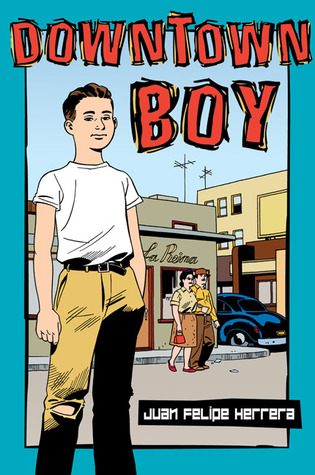
For older students I often refer to Juan Felipe Herrera’s novel in verse Downtown Boy. More often than not, we focus on the young main character Juanito to discuss issues such as discrimination in school, immigration, gender roles, masculinity and femininity, diabetes, family, and more. If I have an opportunity to teach the entire novel, then I often create poetry portfolios with my students where we pick a broader theme like identity, culture, and/or community that will thread throughout all their poems.  If I don’t have enough time to cover the entire novel, then I usually pick the poems that will best represent the student population or the poem with which they can connect to the most.
For example, Downtown Boy opens with Juanito’s cousin trying to coerce him into boxing Sweet Pea Price. Juanito is new to San Francisco and wants to make friends but his father has advised him against fighting. Juanito will need to decide if he will fight or not. When teaching this poem, I ask students to read this poem aloud; we then discuss Juanito’s character traits and the overall voice of the poem. I brainstorm with my students about times they might have been in a similar predicament. Because this poem uses dialogue, I encourage my students to include two different voices. If the youth have finished their poems, I might ask them to share their work. With older students, I like to encourage revisions and workshopping each other’s poems in order to improve our writing and to learn from one another.

Poetry in Action

The following poems were written by young poets in my creative writing classes. Kimberly Alvarez is currently a sophomore in high school in Riverside, California. Naomi Lara is currently a 6th grader in an elementary in Chicago, Illinois. Jennifer Alvarez is currently a senior in high school in Riverside, California. I’m grateful for their words and for their permission to share them here.

Dream[ii].

by Kimberly Alvarez

At Night,

I look up at the ceiling.

Bare.

NO DREAMS

Anywhere.

At midnight,

I’m sound asleep

In Paradise

Floating.

Free. Away.

I don’t want to wake up.

Until my eyes just…

Open,

Like a curtain beside me

When the wind comes through

At 5:00 a.m…

I hear my dad getting ready for

Work.

I can tell he didn’t choose that

Job or this life for himself

Or my family.

I see through him

Through his eyes,

To his soul.

It may seem…

COLD

but in reality

I can feel,

Feel the warmth

When I look into his eyes,

To his soul.

They change color. His eyes.

With him. His mood.

¿Porque? Why?

Can’t he be as warm as his soul is..

Dream.

I always do

Of him,

Of my family,

Finally happy together.

Put back together

Like a puzzle.

I always wonder

What my family would

Be like without

Dreams.

At morning,

When I get up

It all flows down

Goes down like a giant wave

Drowning my dreams

And pulling them down

At night,

I look up at the ceiling

All of my dreams,

Are floating

Up, wandering

On the ceiling

Waiting for the rest

Of my dreams to

Join them

And

Soon…

They will

Become

One BIG dream.

Un Gran Sueño.


It All Changed

By Noemi Lara

Happy girl, good friends

Big house

She should have cherished those moments

For they would be gone too soon

She looked up at the moon

Little did she know everything was about to change

Her mom and dad were acting strange

They told her they needed to arrange a meeting to see new houses.

Their new house has mouses

The neighborhood was foul

She couldn’t help but growl

She grew older

And things got colder

Her friends were bolder

Her parents would fight

It gave her a fright

She fought with all her might

But all she would see was the night

Oh how it all changed


My California[iii]

By Jennifer Alvarez

My California is fun times at Lake Perris.

Running into the water but jumping back when you feel the ice

cold water.

In those rare but amazing visits to see my “best cousin forever”

in Fontana.

Laughing, fighting, hugging, and talking until the next three

months when we reunites.

It is those two times going to Big Bear.

Snowman on the roof of my dad’s car, attempting to bring it back

home to show it to my friends.

It is the  multiple times driving to Moreno Valeey to Walmart with my sister.

Music blaring, singing along with smiles on our faces.

It is the sisterly bonding we had going to the Moreno Valley

Mall.

But mostly, my California are memories with the people I love.


[i] Currently I teach poetry as a Teaching Artist with ElevArte Community Studio, an arts organization in Chicago. “Word Up,” is a pilot program funded by ElevArte and the Poetry Foundation to create a safe space for underrepresented youth to learn about and write poetry. I visit a local elementary school once a week to teach, read, and write poetry with two 6th grade classes. I have worked closely with their awesome teacher, Ms. Delta Cervantes, to create a poetry curriculum that also meets common core standards. The 6th graders are presently working on spoken word projects.

[ii] Dream was first published in 2012 in a youth anthology, R’side of the Story, out of the Youth Opportunity Center in Riverside, California

[iii] My California was published in 2013 in R’side of the Story


FullSizeRender (1)Dr. Sonia Alejandra Rodriguez’s research focuses on the various roles that healing plays in Latinx children’s and young adult literature. She currently teaches composition and literature at a community college in Chicago. She also teaches poetry to 6th graders and drama to 2nd graders as a teaching artist through a local arts organization. She is working on her middle grade book. Follow Sonia on Instagram @latinxkidlit

Spotlight on Latina Illustrators Part 3: Sara Palacios, Claudia Rueda, and Tania de Regil


By Cecilia Cackley

This is the third in a series of posts spotlighting Latina illustrators of picture books. Some of these artists have been creating children’s books for many years, while others will have their first book out this year. Some of them live in the US, while others live overseas. They come from many different cultural backgrounds, but all are passionate about connecting with readers through art and story. Please look for their books at bookstores and libraries!

Interview answers from Claudia Rueda and Tania de Regil have been translated from Spanish.

Sara Palacios

Sara Palacios is an illustrator from Mexico. She studied Graphic Design at Universidad Autónoma Metropolitana, Mexico DF, School of Design, INBA  (National Institute of Fine Arts) Mexico DF, and Universidad del Claustro de Sor Juana, Mexico DF. She studied illustration at Academy of Art University, San Francisco CA, where she has been part-time faculty since 2014. She received the Pura Belpré Honor for illustration in 2012 and is the illustrator of the Marisol McDonald series by Monica Brown for Lee & Low, as well as numerous other books. Her newest picture book, One Big Family (written by Marc Harshman) will be published by Eerdmans Books for Young Readers later this year.

Q: What inspired you to become an artist?

A: I always liked to draw, but I didn’t know that illustrators even existed until I was pursuing my Graphic Design degree in Mexico. I was invited to an illustration exhibition. That was the first time I became aware of what illustration was. I was in awe! and I knew that’s what I wanted to do. The same friend who invited me to the exhibition told me that one of the illustrators was looking for somebody to help him. My friend encouraged me to go to the interview and show my drawings and I got the job! I started washing brushes and cutting paper until little by little I was taught to paint in watercolor. That job was my first school of illustration and I’ve been doing that ever since. After finishing my degree in Mexico I went on to study for my BFA and MFA in illustration in the US.

Q: Tell us about your favorite artistic medium.

A: I don’t really have a favorite medium. The first technique I ever learned was watercolor and for years that was the only medium I used until I started working toward my BFA at the Academy of Art in San Francisco. Through the classes, I began using gouache, acrylics , pastels, the computer etc. At first, I was afraid of mixing one technique with another, but I started experimenting on my own and I realized that what works best for me is mixed media. I also like collage, so all my illustrations are done with mixed media now. I use everything from colored pencils, watercolor, markers, gouache, digital. I don’t think I can just pick one technique.

Q: Please finish the sentence “Picture books are important because…”

A: They can bring some magic to children and adults alike.

12629258  17940785


Claudia Rueda

Image result for claudia rueda
Claudia Rueda
 is a Colombian picture book author, New York Times Best Seller illustrator and a 2016 Hans Christian Andersen award nominee. Her books have been published throughout North America, Europe and Asia and have been translated into more than ten different languages. In the United States, she is best known as the illustrator of the series Here Comes theCat by Deborah Underwood. Her concept books for young readers have been published in Spanish by the publisher Oceano Travesia.

Q: What inspired you to become an artist?

A: I have always liked to draw, like all kids. And I’ve always liked to imagine things and create stories, also like kids when they are playing. Basically, when it was time to put away the colored pencils and imagination to become ‘grown up’ I decided not to do it.

Q: Tell us about your favorite artistic medium.

A: Graphite pencil on white paper is my favorite medium. The capacity for expression in the strokes, it’s simplicity and versatility goes very well with my creative process.

Q: Please finish the sentence “Picture books are important because…”

A: The combination of visual narration with the verbal enriches the experience of reading and allows the story to happen in the mind of the reader that combines the two languages.

18349512  18701595  23281875  25361885


Tania de Regil

taniadrTania de Regil is an author and illustrator from Mexico City. When she was five, she moved to Stockholm, Sweden with her family, where she discovered her love of reading and decided that she wanted to be a professional author some day. Tania studied fashion design at Parsons School of Design in New York City and finished her studies in her home country of Mexico. Her work as a costume designer in film and television has helped to better grasp the art of storytelling through images. Tania’s illustration work is always filled with interesting details for children to discover. She uses a variety of media in her work, such as watercolor, gouache, color pencils, wax pastels and ink to create richly textured, engaging images. Tania’s debut picture book, Sebastián y la isla Tut, which she both wrote and illustrated, was published in November, 2015 by Macmillan Mexico.

Q: What inspired you to become an artist?

A: When I was a girl, my family and I went to live in Sweden. Since I didn’t know the language, what helped me the most was reading. My teacher gave me lots of books and among them were books by Roald Dahl, illustrated by Quentin Blake. In that moment, I fell in love completely with the stories and illustrations and I decided that one day I would be a great writer and illustrator like them. I was eight years old.

Q: Tell us about your favorite artistic medium.

A: I like watercolor a lot because I can never have complete control over it. It’s a medium full of surprises and makes it much more expressive and fun to use. I also like to mix it with other materials like colored pencil, oil pastels, gouache and ink. I liked to always continue experimenting with new materials but the basis of all my illustrations is watercolor.

Q: Please finish the sentence “Picture books are important because…”

A: They take you to worlds where the imagination never ends.


Books to Look For:

Brown, Monica. Marisol McDonald Doesnt Match

Brown, Monica. Marisol McDonald and the Clash Bash

Harshman, Marc. One Big Family

Rueda, Claudia Is it big or is it little?

Thong, Roseanne Greenfield. Twas Nochebuena

Underwood, Deborah. Here Comes the Easter Cat

Underwood, Deborah. Here Comes Santa Cat

Underwood, Deborah Here Comes Valentine Cat

Book Review: Allie, First At Last by Angela Cervantes


Allie, First At Last (1)Reviewed by Marianne Snow Campbell

FROM ANGELA CERVANTES’S WEBSITE: Allie Velasco wants to be a trailblazer. A trendsetter. A winner. No better feeling exists in the world than stepping to the top of a winner’s podium and hoisting a trophy high in the air. At least, that’s what Allie thinks…. she’s never actually won anything before. Everyone in her family is special in some way—her younger sister is a rising TV star; her brother is a soccer prodigy; her great-grandfather is a Congressional Medal of Honor winner. With a family like this, Allie knows she has to make her mark or risk being left behind.  She’s determined to add a shiny medal, blue ribbon, or beautiful trophy to her family’s award shelf. When a prestigious school contest is announced, Allie has the perfect opportunity to take first —at last. There’s just one small snag… her biggest competition is also her ex–best friend, Sara. Can Allie take top prize and win back a friend — or is she destined to lose it all?

MY TWO CENTS: Fifth grade can be a tough year – it certainly was for me.  As kids approach and enter adolescence, many begin to grapple with who they are and who they want to be. Meanwhile, they may fall out with longtime friends who are going through the same transitions. While experiencing these growing pains and periods of uncertainty, kids can find comfort in books. Reading about characters who are undergoing the same journeys and struggles can help young readers see that they’re not alone – it’s normal to feel out of place and unsure of oneself.

Allie Velasco is a fifth-grader trying her best to discover her identity and make her mark on the world around her. For Allie, that means being the best at something – not that she’s sure what that something is. While her siblings excel at acting, soccer, and community service, her mother has been voted Best News Anchor of the Year, and her great-grandfather is a war hero, Allie is keenly seeking out her niche and putting a lot of pressure on herself to “succeed.”

Frankly, I wish Allie, First at Last had existed when I was in fifth grade. Although it’s been a couple of decades since I experienced my own tween tribulations, it was almost therapeutic to revisit that stage of my life through Allie. And I’m certain there are plenty of young readers out there today who will relate to her as well. This book is sure to appeal to kids who are “finding themselves,” having friend problems, or feeling eclipsed by siblings.

But don’t go thinking that this book is all sadness and doubt! Angela Cervantes fills the pages with humor that’s sharp with hints of snark and sarcasm, but never mean. For example, Allie and her best friend write a song about her cat called “It’s Not Easy Being Fluffy.” I approve. Also, although Allie faces challenges and insecurities, she still demonstrates strength and self confidence by assertively confronting rude kids in her class, nurturing a loving relationship with her sister and bisabuelo, and demonstrating a deep, natural appreciation for her Mexican-American roots. A great role model indeed.

TEACHING TIPS AND RESOURCES:  Allie, First at Last would be a perfect choice for a middle-grade classroom book club. Teachers can provide students with a list of books (including this one), and students can then choose which book they’d like to read, form small groups with classmates who chose the same book, enjoy, and discuss. With its highly relevant themes and humor, Allie is certain to be a hit, and kids can make it their own as they connect it to their lives and respond collaboratively. Educators should be sure to stock this volume in their classroom libraries and media centers for self-selected reading time. There’s nothing like a fun, engrossing book for motivating kids to read!

Also, be sure to check out Angela Cervantes’s teacher resources, available on her website. She’s created printer-friendly activity sheets with writing prompts for both Allie, First at Last and her previous novel, Gaby, Lost and Found.  The prompts present great ideas for journaling, in-class discussions, and even research projects.  Enjoy!

Angela CervantesABOUT THE AUTHOR: Angela was born and raised in Kansas. Most of her childhood was spent in Topeka, Kansas living in the Mexican-American community of Oakland. Her family also spent a lot of time in El Dorado and Wichita visiting a slew of aunts, uncles and cousins on weekends.

Angela graduated from the University of Kansas (Go Jayhawks!) with a degree in English. After KU, she moved to Brownsville, Texas. In Brownsville, Angela was introduced to the music of Selena, ceviche, and learned to two-step. After Brownsville, Angela moved to Guadalajara, Mexico, where for two years she taught High School English and literature. In 2003, Angela returned to Kansas City, completed an MBA, co-founded Las Poetas, an all-female poetry group, and began working at an international children’s organization.

In 2005, Angela’s short story, “Pork Chop Sandwiches” was published in Chicken Soup for the Latino Soul. In 2007, she won third place for Creative Nonfiction in the Missouri Review’s audio competition for her story “House of Women” and Kansas City Voices’ Best of Prose Award (Whispering Prairie Press) for her short story, “Ten Hail Marys”. In 2008, she was recognized as one of Kansas City’s Emerging Writers by the Kansas City Star Magazine. In 2014, she was named one of the Top Ten New Latino Authors to Watch by LatinoStories.Com.

Angela’s first novel, Gaby, Lost and Found [Scholastic Press; 2013], won Best Youth Chapter Fiction Book in the International Latino Book Awards. Angela’s second middle-grade novel, Allie, First At Last, will be released Spring 2016. See FAQs about the author.

WE ARE GIVING AWAY A HARDCOVER OF ALLIE, FIRST AT LAST BY ANGELA CERVANTES, WHICH OFFICIALLY RELEASES 3/29/16.

CLICK HERE TO LINK TO THE RAFFLECOPTER GIVEAWAY!


MarianneMarianne Snow Campbell is a doctoral student at The University of Georgia, where she researches nonfiction children’s books about Latin@ and Latin American topics and teaches an undergraduate course on children’s literature. Before graduate school, she taught pre-K and Kindergarten in Texas, her home state. She misses teaching, loves critters, and can also be found on Twitter and Facebook.