
By Cindy L. Rodriguez
This is the first in an occasional series about middle grade Latinx authors. We decided to shine a spotlight on middle grade writers and their novels because, often, they are “stuck in the middle”–sandwiched between and overlooked for picture books and young adult novels. The middle grades are a crucial time in child development socially, emotionally, and academically. The books that speak to these young readers tend to have lots of heart and great voices that capture all that is awkward and brilliant about that time.
Today, we highlight Margarita Engle, a Cuban-American author who is one of the most prolific and decorated writers in Kid Lit.
Margarita Engle

Margarita Engle is the 2017-2019 national Young People’s Poet Laureate, and the first Latino to receive that honor. She is the Cuban-American author of many verse novels, including The Surrender Tree, a Newbery Honor winner, and The Lightning Dreamer, a PEN USA Award recipient. Her verse memoir, Enchanted Air, received the Pura Belpré Award, Golden Kite Award, Walter Dean Myers Honor, Lee Bennett Hopkins Poetry Award, and Arnold Adoff Poetry Award, among others. Drum Dream Girl received the Charlotte Zolotow Award for best picture book text.
Margarita was born in Los Angeles, but developed a deep attachment to her mother’s homeland during childhood summers with relatives. She was trained as an agronomist and botanist. She lives in central California with her husband.
Q. Who or what inspired you to become a writer?
A. I have been writing poetry since I was a small child, so I think my passion for composing verses grew naturally from loving to read. It was not something I consciously decided to try, just something I did the way I ate, slept, and breathed. As a teenager, I did make a conscious decision to try writing fiction, and I began to dream of someday writing a book about the history of Cuba. That finally happened, but not until I was in my 50s. The Poet Slave of Cuba was published in 2006, and The Surrender Tree in 2008, launching a long series of verse novels about Cuban history. By then, I had already published a great deal of poetry, technical botanical and agricultural articles, and a couple of adult novels about modern Cuba, but I have never been happier than when I write for children.
Q. Why do you choose to write middle grade novels?
A. Most of my middle grade novels tend toward the tween end of the age range, perhaps because I was eleven in 1962, at the time of the Missile Crisis. Losing the right to travel to Cuba was a traumatic, surrealistic experience. I believe that a part of myself was frozen at that age, and did not thaw until 1991, when I was finally able to start visiting again. Now, I love to write for children who crave adventure, and still believe in the wonder of nature, children who are not yet embarrassed to love their families, even though they dream of independence.
Q. What are some of your favorite middle grade novels?
A. There are so many! How can I choose? I’ll try, with apologies to all the fantastic authors I’m leaving out. Some of my favorite middle grade books are actually memoirs, rather than fiction. I love Alma Flor Ada’s Island Treasures, Jacqueline Woodson’s Brown Girl Dreaming, and Marilyn Nelson’s How I Discovered Poetry. For fiction, most of my favorite middle grade novels are written in verse: Inside Out and Back Again, by Thanhha Lai, Under the Mesquite, by Guadalupe García McCall, and Words With Wings by Nikki Grimes. I love books that travel to other countries, so I’ll sneak in Solo by Kwame Alexander and A Time to Dance by Padma Venkatraman, even though they lean toward YA. If I had to choose one middle grade prose novel, it would be the very poetic Echo, by Pam Muñoz Ryan.
Q. If you could give your middle-grade self some advice, what would it be?
A. Don’t be so self-critical. It’s okay to be a bookworm. Stop trying to please everyone else. Just be yourself.
Q. Please finish this sentence: “Middle grade novels are important because…”
A. Middle grade novels are important because that is the age when children are imaginative, wonder-filled, curious, and open to learning about the whole world.
Margarita’s newest verse novel about Cuba is Forest World, and her newest picture books are All the Way to Havana, and Miguel’s Brave Knight, Young Cervantes and His Dream of Don Quixote.
Books forthcoming in 2018 include The Flying Girl, How Aída de Acosta learned to Soar, and Jazz Owls, a Novel of the Zoot Suit Riots.
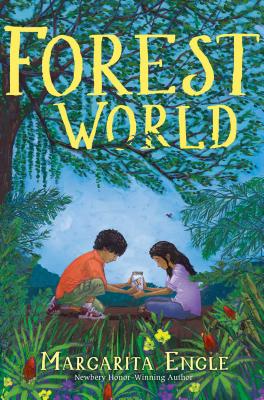


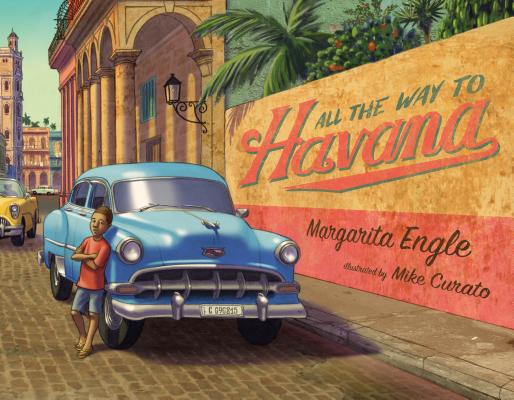
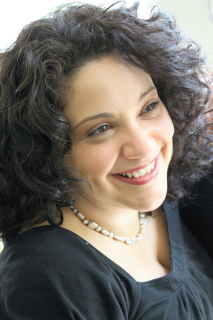
photo by
Saryna A. Jones
Cindy L. Rodriguez was a newspaper reporter for The Hartford Courant and researcher at The Boston Globe before becoming a public school teacher. She is now a reading specialist at a Connecticut middle school. Cindy is a U.S.-born Latina of Puerto Rican and Brazilian descent. She has degrees from UConn and CCSU. Her debut contemporary YA novel, When Reason Breaks, released with Bloomsbury Children’s Books (2015). She will have an essay in Life Inside My Mind, which releases 4/10/2018 with Simon Pulse. She can also be found on Facebook, Twitter, and Goodreads.
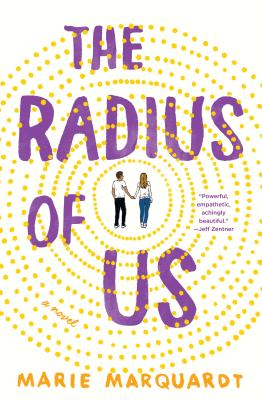 DESCRIPTION OF THE BOOK: Ninety seconds can change a life ― not just daily routine, but who you are as a person. Gretchen Asher knows this, because that’s how long a stranger held her body to the ground. When a car sped toward them and Gretchen’s attacker told her to run, she recognized a surprising terror in his eyes. And now she doesn’t even recognize herself.
 ABOUT THE REVIEWER: Elena Foulis has a Ph.D. in Comparative Literature and Cultural Studies from the University of Arkansas. Her research and teaching interests include U.S. Latina/o literature, and Digital Oral History. She is currently working on a digital oral history collection about Latin@s in Ohio, which has been published as an eBook titled, Latin@ Stories Across Ohio. She currently lives in Cleveland, Ohio.
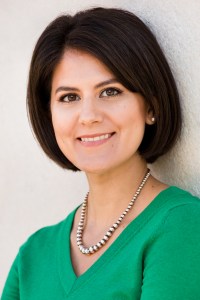 By Emma Otheguy
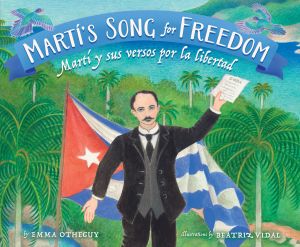 My debut picture book, Martí’s Song for Freedom, is a biography of Cuban poet and national hero José Martí, but it is more importantly the story of the connections he made between Latin America and the United States, of how he loved Cuba while living in New York. This book honors Martí’s activism and his fight for justice, and it also tells the story of how Martí learned to go outside-over-there: how he found in the sighing pine trees the sound of the Cuban palmas reales he missed so much, how he lessened the distance between Cuba and New York. He came from everywhere and was on the road to every place, he knew how to dip under the sky and over the sea, how to close the gaps between divided worlds. He used poetry and passion to accomplish it. He too, would know about picture books, and his story is for every child who learns to share and hold our diverse cultures together.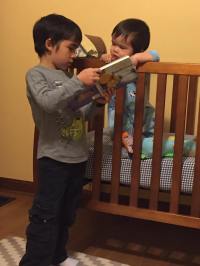
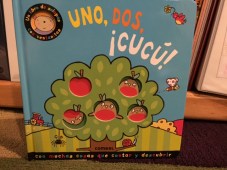
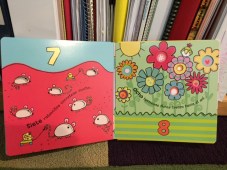


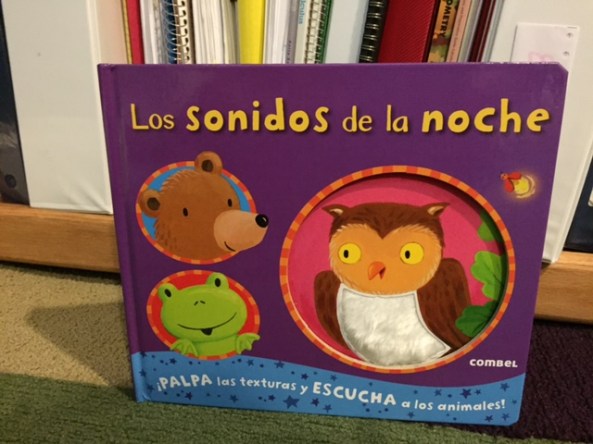
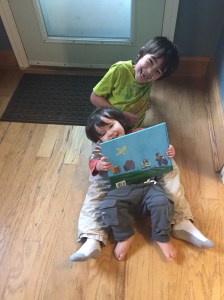
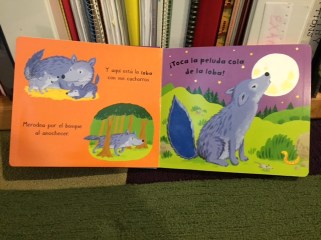 WHAT WE LOVE ABOUT IT: This is a book with something for everyone. Ethan Andrés loves the furry critters, and Liam Miguel “helps” his brother press the sound buttons. I don’t know if it’s the night sounds or the tickle of his brother’s hand on his, but the experience always gets Ethan giggling. I’m not usually a fan of books or toys that make noise, but these sounds are pleasant and last a reasonable duration.
 ABOUT THE REVIEWER:
  Cecilia Cackley is a performing artist and children’s bookseller based in Washington, DC, where she creates puppet theater for adults and teaches playwriting and creative drama to children. Her bilingual children’s plays have been produced by GALA Hispanic Theatre and her interests in bilingual education, literacy, and immigrant advocacy all tend to find their way into her theatrical work. You can find more of her work at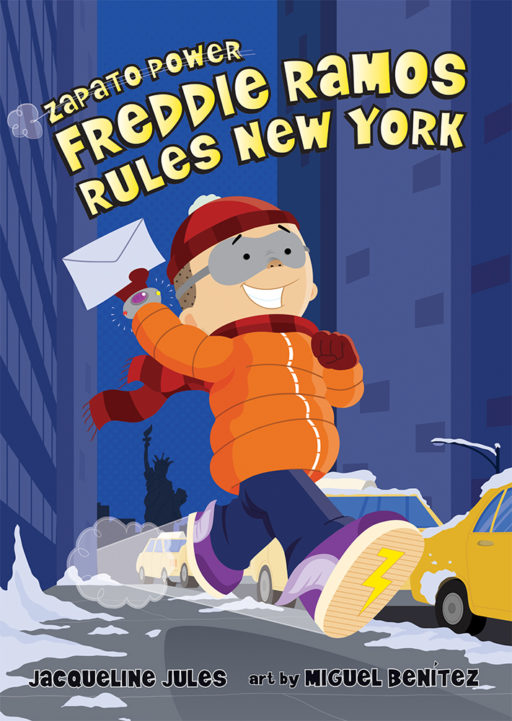
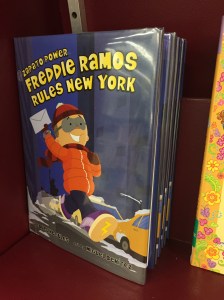
 Jacqueline Jules is the award-winning author of more than twenty children’s books, many of which were inspired by her work as a teacher and librarian. She is also an accomplished poet. When not reading, writing, or teaching, Jacqueline enjoys taking long walks, attending the theater, and spending time with her family. She lives in Northern Virginia.
 Latinxs in Kid Lit