Spotlight on Middle Grade Authors Part 5: Angela Cervantes


By Cindy L. Rodriguez

This is the fifth in an occasional series about middle grade Latinx authors. We decided to shine a spotlight on middle grade writers and their novels because, often, they are “stuck in the middle”–sandwiched between and overlooked for picture books and young adult novels. The middle grades are a crucial time in child development socially, emotionally, and academically. The books that speak to these young readers tend to have lots of heart and great voices that capture all that is awkward and brilliant about that time.

Today, we highlight Angela Cervantes.
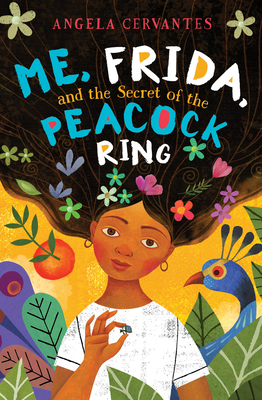
Her latest middle grade novel, Me, Frida, and the Secret of the Peacock Ring releases tomorrow!! Go get this book with the beautiful cover and awesome premise. Here’s a little more about it:

A room locked for fifty years.
A valuable peacock ring.
A mysterious brother-sister duo.
Paloma Marquez is traveling to Mexico City, birthplace of her deceased father, for the very first time. She’s hoping that spending time in Mexico will help her unlock memories of the too-brief time they spent together.
While in Mexico, Paloma meets Lizzie and Gael, who present her with an irresistible challenge: The siblings want her to help them find a valuable ring that once belonged to beloved Mexican artist Frida Kahlo. Finding the ring means a big reward — and the thanks of all Mexico. What better way to honor her father than returning a priceless piece of jewelry that once belonged to his favorite artist. But the brother and sister have a secret. Do they really want to return the ring, or are they after something else entirely?

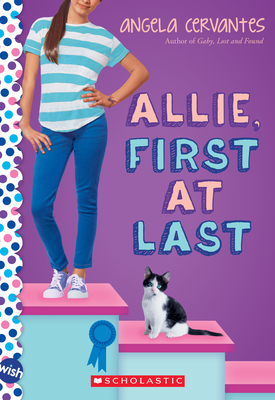
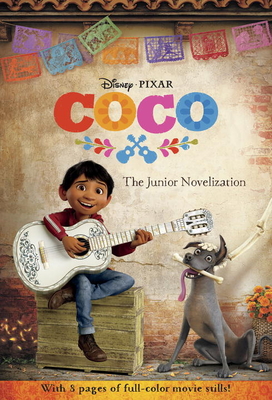
And now more about Angela: She is the beloved and award-winning author of several middle grade fiction novels. Her first novel, Gaby, Lost and Found, was named Best Youth Chapter book by the International Latino Book Awards and a Bank Street College of Education’s Best Books of 2014. Angela’s second middle grade novel, Allie, First At Last, received a starred-review from Kirkus and was a finalist for Florida’s Sunshine State Young Readers Award. Angela’s next middle-grade novel is the junior novelization of Disney Pixar’s animated film, Coco, was released in October 2017. Angela’s fourth novel, Me, Frida and the Secret of the Peacock Ring, will be released by Scholastic on March 27, 2018.

Angela Cervantes

Q. Who or what inspired you to become a writer?

A. My love for books inspired me to be a writer. Books were my first friends, and I relied on them to get me through some tough times, like my parents’ divorce, the loss of my abuelos, and issues around poverty. At an early age, I decided that I wanted to tell stories about girls like me. There’s nothing else I’ve ever wanted to be in my life.

Q. Why do you choose to write middle grade novels?

A. It was my agent, Adriana Domínguez at Full Circle Literary who diagnosed me with a promising voice for middle grade fiction. Once I let that soak in, I knew she was right. I dived head-first, and I’m so happy I did, because I love middle grade novels and writing for middle grade students.

Q. What are some of your favorite middle grade novels?

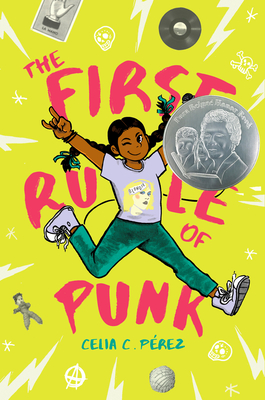
A. How much time do you have? There are so many! Growing up, I was obsessed with the Narnia Chronicles by C.S. Lewis. They are still my all-time favorite books. More recently, I’m a big fan of Rita Williams-Garcia. Her books, One Crazy Summer and P.S. Be Eleven are amazing. Other faves that I’ve read recently include Amina’s Voice by Hena Khan; The Smoking Mirror (Book One) by David Bowles; Out of My Mind by Sharon M. Draper; Inside Out and Back Again by Thanhha Lai; Brown Girl Dreaming by Jaqueline Woodson and The First Rule of Punk by Celia Pérez. I also love, love, love Under the Mesquite by Guadalupe García McCall.

Q. If you could give your middle-grade self some advice, what would it be?

A. Don’t throw away your stories. They’re not stupid. Someday, you’ll wish you could read them again. 🙂

Q. Please finish this sentence: Middle grade novels are important because…

A. Middle grade novels are important because young people need a safe place to let their dreams, curiosities and imagination play.


photo by Saryna A. Jones

Cindy L. Rodriguez was a newspaper reporter for The Hartford Courant and researcher at The Boston Globe before becoming a public school teacher. She is now a reading specialist at a Connecticut middle school. Cindy is a U.S.-born Latina of Puerto Rican and Brazilian descent. She has degrees from UConn and CCSU. Her debut contemporary YA novel, When Reason Breaks, released with Bloomsbury Children’s Books (2015). She will have an essay in Life Inside My Mind, which releases 4/10/2018 with Simon Pulse. She can also be found on FacebookTwitter, and Goodreads.

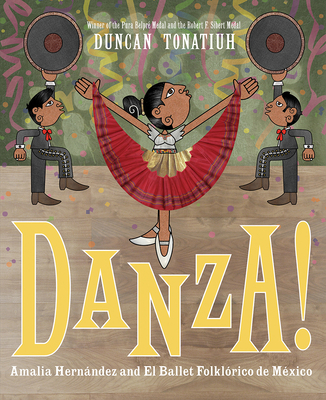
Book Review: Danza!: Amalia Hernández and El Ballet Folklórico de México by Duncan Tonatiuh


Review written by: Sanjuana C. Rodriguez

DESCRIPTION FROM THE COVER: As a child, Amalia Hernández saw a pair of dancers in the town square. The way they stomped and swayed to the rhythm of the music inspired her. She knew one day she would become a dancer.

Amalia studied ballet and modern dance under the direction of skilled teachers who had performed in world-renowned dance companies. But she never forgot the folk dance she had seen years earlier. She began traveling through the Mexican countryside witnessing the dances of many regions, and she used her knowledge of ballet and modern dance to adapt the traditional dances to the stage. She founded her own dance company, a group that became known as El Ballet Folklórico de México.

Using his signature illustration style, inspired by the ancient art of the Mixtecs, award-winning author and illustrator Duncan Tonatiuh tells the story of Amalia Hernández and the formation of the Flokloric Ballet, one of the most famous and successful dance companies in the world.

MY TWO CENTS: Danza!: Amalia Hernández and El Ballet Folklórico de México tells the story of Amalia Hernández and the dance company that she founded. The description of Amalia’s life is told in a straightforward way and her story in enhanced by the beautiful illustrations. Amalia’s story of hard work, passion, and dedication is inspiring to read. Duncan Tonatiuh is intentional in mentioning the way that Amalia learned about the regions in which she danced. Through his storytelling, Tonatiuh details how Amalia Hernández took great care to learn about the regions of Mexico that she would be representing in her performances, “Ami began to travel to villages all around the country to learn as much as she could about the area’s traditional dances. She read about the history of each place and talked with elders.” This is important because it shows how Amalia tried to honor the traditions and people that she was representing in her productions.  The book details how Amalia’s dance company became famous in Mexico and around the world through representing the traditional dances inspired by the different regions in Mexico. The book also details how El Ballet Folklórico de México continues to perform every week and has been doing so for the past 50 years.

Through this book, Tonatiuh introduces us to an important historical figure who may not be well known. He introduces readers to Amalia and in doing so, he describes her importance in Mexico and the world. While discussing Amalia’s impact and legacy, Tonatiuh states that “She made the folkloric dances of Mexico known around the world, and she encouraged people of Mexican origin to feel pride in their roots and in their traditional dances”. This book highlights someone who was not only excellent in her field, but was also proud of her cultural heritage.

Tonatiuh’s signature illustrations, based on pre-Columbian Mexican art are a masterpiece! The pictures depict the traditional dances that Amalia’s dance company performed. The illustrations are colorful, fun, and bold. In particular, the movement of the dancers is done in such a way that readers able to see the movement in the different dances.

The back of the book offers more information about Amalia Hernández in the author’s notes. Here, Tonatiuh details some of the hardships and difficulties that Amalia experienced in establishing her dance company.  The book also offers an index, glossary, and sources where readers can get more information about the topic.

Prior to reading this book, I was not familiar with Amalia or the dance company that she worked to establish. As I read the text, I began to ask myself about Mexican historical figures, particularly women and the lack of representation of Mexican women in texts. This book is a great introduction to a woman who had a passion, worked hard to achieve her goals, was immensely proud of her Mexican heritage, and who sought to share Mexico’s rich history with the world through dance. I am providing some links that can help readers become familiar with Amalia and El Ballet Folklórico de México. There were several stories written about her after Google honored her with a doodle in September 2017 after what would have been her 100th birthday.

Amalia Hernandez’s 100th Birthday

https://www.google.com/doodles/amalia-hernandezs-100th-birthday

Amalia Hernandez, the revolutionary Mexican dance pioneer, gets a Google Doodle salute

https://www.washingtonpost.com/news/comic-riffs/wp/2017/09/19/amalia-hernandez-the-revolutionary-mexican-dance-pioneer-gets-a-google-doodle-salute/?utm_term=.f7ae40043cf4

 Website for El Ballet Floklórico de México

http://www.balletfolkloricodemexico.com.mx

WHERE TO GET IT: To find Danza! Amalia Hernández and El Ballet Folklórico de México, check your local public library, your local bookstore, or IndieBound. Also, check out GoodreadsAmazon, and Barnes & Noble.


ABOUT THE AUTHOR/ILLUSTRATOR: Duncan was born in Mexico City and grew up in San Miguel de Allende. He graduated from Parsons The New School for Design and from Eugene Lang College in New York City in 2008. His work is inspired by Ancient Mexican art, particularly that of the Mixtec codex. His aim is to create images that honor the past, but that address contemporary issues that affect people of Mexican origin on both sides of the border. His book Pancho Rabbit and the Coyote: A Migrant’s Tale is the winner of the 2014 Tomás Rivera Mexican American children’s book award. It is also the first book to receive two honorable mentions, one for the illustrations and one for the text, from the Pura Belpré Award for a work that best portrays, affirms, and celebrates the Latino cultural experience in children’s books. The book was featured in USA Today, The Chicago Sun, The Houston Chronicle among other major publications because it deals with the controversial topic of immigration. His book Diego Rivera: His World and Ours won the 2012 Pura Belpré illustration award. It also won the 2012 Tomás Rivera. His first book Dear Primo: A Letter to My Cousin received an honorable mention from the Pura Belpré Award in 2011. It was named an Americas Award Commended Title and a Notable Book for a Global Society list.
 

ABOUT THE REVIEWER: Sanjuana C. Rodriguez is an Assistant Professor of Literacy and Reading Education in the Elementary and Early Childhood Department at Kennesaw State University. Her research interests include the early literacy development of culturally and linguistically diverse students, early writing development, literacy development of students who are emergent bilinguals, and Latinx children’s literature. She has published in journals such as Journal of Language and Literacy Education, Language Arts, and Language Arts Journal of Michigan.
Cover Reveal for Bookjoy Wordjoy by Pat Mora and illus. by Raul Colón


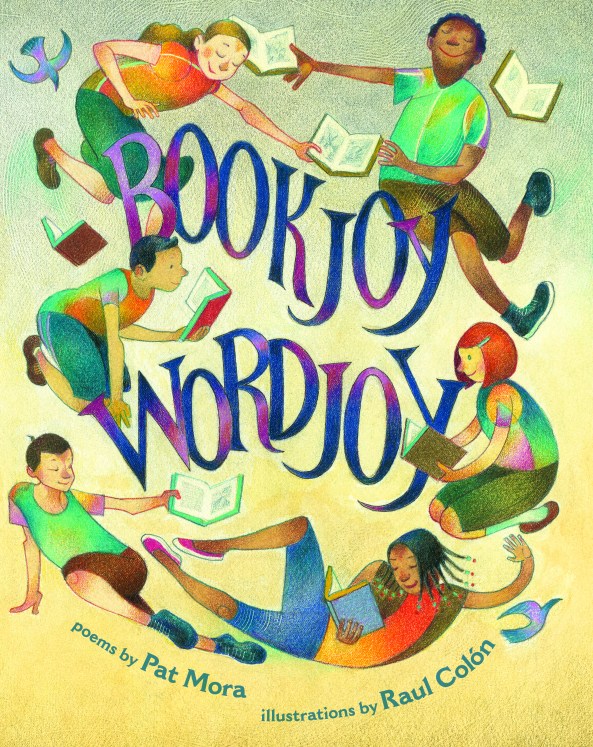
We are so excited to host a cover reveal for Lee & Low’s upcoming spring title from two of the biggest names in the Latinx children’s book community: Pat Mora and Raul Colón. Their new book, called Bookjoy, Wordjoy is the third collaboration between these two award-winning book creators. First, let’s take a quick look at their two previous collaborations. Click on the cover images for more information:

Dona Flor: A Tall Tale About a Giant Woman with a Great Big Heart   


Now, here’s some information about their new book, which releases May 15, 2018:

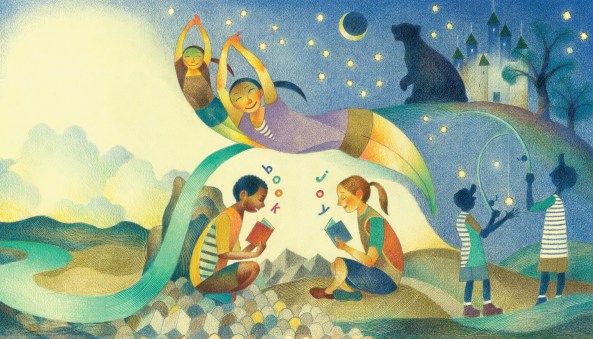
Whether we are collecting words, reading favorite books in the library, celebrating holidays, writing poems, sharing secrets, or singing a jazzy duet, words and books can take us on wonderful adventures and bring us joy. Poet Pat Mora has brought together a collection of her poems that celebrates engaging with words and books in all these ways and more. Vivid illustrations by Raul Colón bring the poems to life and interpret the magic of the language with captivating images in a style influenced by Mexican muralists. Together the poems and illustrations are sure to inspire creative wordplay in readers of all ages.

We can read, you and I,
see letters become words,
and words become books . . .
You and I read, round and round,
bookjoy around the world.

Before we reveal the cover, the wonderful crew at Lee & Low have provided us with some insight on how Raul Colón created his illustrations. ARTISTS: This is for you! Insight from one of the greatest Latinx illustrators!

Raul Colón worked with watercolors on paper and Prismacolor pencils to complete these illustrations. He started the visuals with a light yellow watercolor wash on white paper. When it dries, he pencils in the full drawing, then continues with a watercolor that’s usually applied in sepias and golden brown tones. The next step is to etch a few lines onto the paper in the proper areas. Finally, the “real” and final colors are rendered with multiple layers of color pencils.

.

Now for the cover reveal!

Scroll down!

*

*

*

*

*

*

*

*

Keep scrolling!

*

*

*

*

*

*

*

*

Building suspense….almost there!

*

*

*

*

*

*

*

TA-DA!

.
.
BOOKJOY FC hi res
 .

 And here’s a bonus inside illustration:

 .
spread 30-31
 .

Bookjoy, Wordjoy releases May 15, 2018 (Lee & Low). You can pre-order it at IndieboundAmazon, and Barnes & Noble, among other places.


Pat MoraABOUT THE AUTHOR (From her website): 2018 promises to be a happy poetry year for Pat. Lee and Low Books is publishing her fourth poetry collection for young readers, Bookjoy, Wordjoy, illustrated by the talented Raúl Colón. The University of Arizona Press will publish her seventh adult poetry collection, Encantado: Desert Monologues. Pat’s other poetry collections for children are This Big SkyConfetti, and Yum! ¡MmMm! ¡Qué Rico! Pat also wrote two collections for young adults, Dizzy in Your Eyes: Poems about Love written in the voices of teens, and My Own True Name.

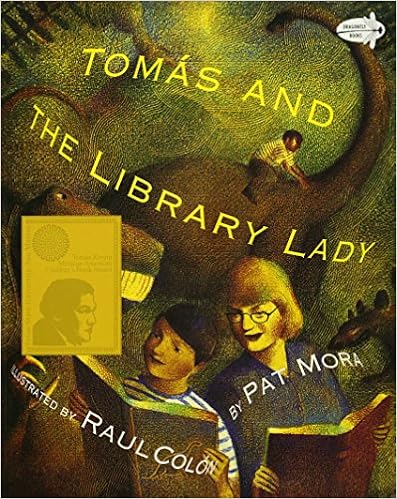
Pat has published more than thirty-five award-winning children’s books. Her recent books include The Remembering Day, El Día de los Muertos and Water Rolls, Water Rises/El agua rueda, el agua sube. Among her other children’s books, many available in Spanish or bilingual editions, are Doña Flor: A Tall Tale about a Giant Woman with a Great Big Heart and Tomás and the Library Lady.

She has published three books of adult nonfiction Zing! Seven Creativity Practices for Educators and Students, a writing memoir and innovation guide; House of Houses, a family memoir; and Nepantla: Essays from the Land in the Middle. Her adult poetry inclues six collections.

Pat’s honors include the Lon Tinkle Award for Lifetime Achievement from the Texas Institute of Letters, the Virginia Hamilton Literary Award, and she delivered the May Hill Arbuthnot Lecture. She’s a lifetime member of the United States Board on Books for Young People (USBBY), an honorary member of the American Library Association, received National Leadership (Kellogg Foundation) and Poetry Fellowships (NEA), and honorary doctorates from North Carolina State University and SUNY Buffalo.

With her daughter, Libby Martinez, Pat wrote I Pledge Allegiance and Bravo, Chico Canta! Bravo! A literacy advocate excited about sharing what she calls “bookjoy,” in 1996, she founded Children’s Day, Book Day, in Spanish, El día de los niños, El día de los libros, “Día.” Pat and her partners including the American Library Association and First Book nationally promote this year-long initiative of creatively linking all children and families to books and establishing annual April Children’s Day, Book Day celebrations. Pat’s Book Fiesta captures this bookjoy spirit. April 30, 2018 is the 22nd anniversary of this initiative.

Born in El Paso to a loving, bilingual family, Pat lives in Santa Fe. She’s grateful for her three children, her enthusiastic four-year-old granddaughter, her husband, anthropology professor Vern Scarborough, and her readers. A former teacher, university administrator, museum director, and consultant, Pat is a popular speaker about creativity, inclusivity and bookjoy. She is always working on new books.


Image result for raul colon illustrator biographyABOUT THE ILLUSTRATOR (From The National Center for Children’s Illustrated Literature website): Colón was born in New York City in December of 1952 and moved with his parents in the 1960s to Caguas, Puerto Rico, where he studied commercial art. In 1978 Colón made Florida his home, working at an educational television center designing everything from puppets to short animated films. In 1988 the artist settled with his family in New City, New York and began a freelance career. Today, Colón continues to be a versatile and acclaimed illustrator whose work has appeared in important national publications.

An award-winning illustrator of over thirty books for children, Colón was chosen to illustrate Dr. Jill Biden’s Don’t Forget, God Bless Our Troops as well as Frank McCourt’s bestselling Angela and the Baby Jesus, both from Paula Wiseman Books. The industry has recognized Colón with a Golden Kite Award, two Pura Belpré Award, a gold and silver medal from the Society of Illustrators, included twice in the NY Public Library’s 100 titles for Reading and Sharing; and been a two-time recipient of The Tomas Rivera Mexican American Children’s Award.

Colón uses very unique techniques in his artwork to create texture and rich, deep colors. The illustrations are done on watercolor paper and combine watercolor washes, etching, and the use of colored pencils and litho pencils. Colón himself explained his technique for the illustrations in Angel and the Baby Jesus. “I began with textured watercolor paper. I added a wash of golden undertone watercolor. On top of that I drew the image – sketched it – and then added the middle tones. There are about 5 to 8 washes on top of each other. I then used colored pencils to make the texture of the paper come out. I also use a scratchboard instrument appropriately called a “scratcher” to draw down through the layers.”

Colón currently resides in New City, NY with his family.

¡Felicidades! to the 2018 Pura Belpré Award Winners and Honor Books

Image result for congratulations

Congratulations to the authors and illustrators who were honored at the American Library Association’s Midwinter conference!

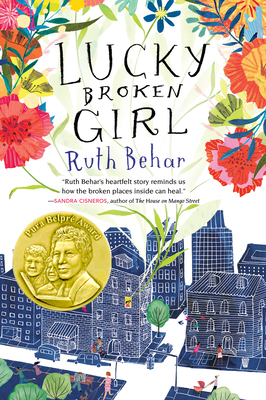
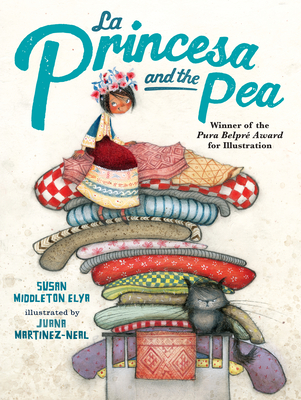
The newest Pura Belpré Awards went to Ruth Behar for Lucky Broken Girl and Juana Martinez-Neal for her illustrations in La Princesa and the Pea.

Click on the links below to get more information on the creators and their work!

Spotlight on Latina Illustrators (including Juana Martinez-Neal)

The Road to Publishing: Juana Martinez-Neal on Landing an Agent

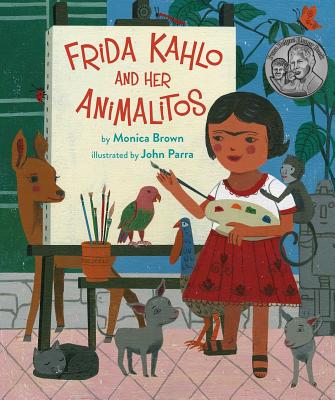
In the Studio with John Parra

Spotlight on Middle Grade Authors: Pablo Cartaya

Spotlight on Middle Grade Authors: Celia C. Pérez

Pura Belpré Award (Author) honoring Latino authors whose work best portrays, affirms, and celebrates the Latino cultural experience. Click on the cover images to see our review of the title or to get more information.

Winner:

Lucky Broken Girl Cover

Honor books:


Pura Belpré Award (Illustrator) honoring a Latino writer and illustrator whose children’s books best portray, affirm, and celebrate the Latino cultural experience. Click on the cover images to see our review of the title or to get more information.

Winner:

Honor Books:


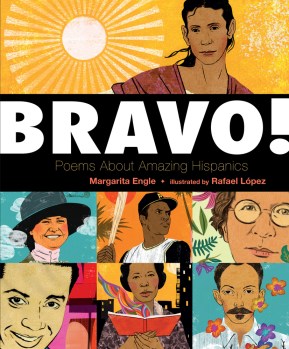
Book Review: Bravo! Poems About Amazing Hispanics by Margarita Engle, illus. by Rafael López


Reviewed by Lila Quintero Weaver

FROM THE BOOK JACKET: Musician, botanist, baseball player, pilot—the Hispanics featured in this collection come from many different backgrounds and from many different countries. Celebrate their accomplishments and their contributions to collective history and a community that continues to evolve and thrive today!

Poems spotlight Aida de Acosta, Arnold Rojas, Baruj Benacerraf, César Chávez, Fabiola Cabeza de Vaca, Félix Varela, George Meléndez Wright, José Martí, Juan de Miralles, Juana Briones, Julia de Burgos, Louis Agassiz Fuertes, Paulina Pedroso, Pura Belpré, Roberto Clemente, Tito Puente, Tomás Rivera, and Ynés Mexia.

MY TWO CENTS: This beautiful and memorable picture book once again showcases the partnership of creative luminaries Margarita Engle and Rafael López, following their award-winning collaboration on Drum Dream Girl. In Bravo!, Engle’s eighteen poems and López’s accompanying illustrations highlight notable Hispanics with strong connections to the United States. Some subjects are Puerto Ricans, while many are Latinx notables from the U.S. mainland. Quite a few came to its shores as immigrants, exiles, or refugees. A few are world-famous, like Tito Puente, César Chávez, and Roberto Clemente, but most are not. In fact, some individuals whose thrilling achievements should have earned them a prominent place in history have yet to receive their due, such as Cuban American Aída de Acosta, the world’s first woman pilot. (I eagerly anticipate the March 2018 release entitled The Flying Girl: How Aída de Acosta Learned to Soar, a picture book by Margarita Engle illustrated by Sara Palacios, which should go a long way toward filling that gap.)

The profiles are arranged chronologically, and each featured individual receives a double-page treatment consisting of a brief poem and a portrait illustration. The first spot belongs to Juan de Miralles (1713-1780), a Cuban supporter of the American Revolution, whose intervention helped save George Washington’s troops from scurvy. The final selection is Tomás Rivera (1935-1984), an influential teacher, poet, and University of California chancellor, who was also one of Margarita Engle’s creative-writing professors.

As with her novels in verse, Engle presents the stories of the characters through first-person-voiced poems that draw attention not only to that individual’s contributions to society, but also to the passions that drove them to action.

As mentioned earlier, most of these historical figures are not widely recognized. For example, how many readers in the U.S. are familiar with poet Julia de Burgos (1914-1953), who advocated for her native Puerto Rico’s independence? In “My River of Dreams,” we learn of her poverty-stricken childhood and the natural world that she loved, as well as the heart of her advocacy:

I struggled to become a teacher

and a poet, so I could use words

to fight for equal rights for women,

and work toward meeting

the needs of poor children,

and speak of independence

for Puerto Rico.

Another selection, “Wild Exploration,” profiles Ynés Mexia (1870-1938), highlighting Mexía’s botanical studies in Mexico and South America, but also bringing out her bicultural origins, the anguish she suffered as the child of warring parents, and the fact that she discovered her true calling later in life than most:

But when I’m all grown up and really quite old,

I finally figure out how to feel useful,

Enjoying the adventure of a two-country life.

As with all eighteen of the profiled subjects, we can learn more about Ynés Mexía in the supplement “Notes About the Lives,” which explains that her career as a botanist began at age fifty-five and led to the discovery of five hundred new species.

In his bold, graphic portraits, Rafael López signals each person’s setting and historical period through carefully selected details in their apparel, the background scenery, and through visual symbolism that enriches the poetic text. One noteworthy example is in the profile of Félix Varela (1788-1853), an exiled Cuban priest whose ministry in New York focused on newly arrived Irish immigrants. In his portrait, Varela wears a clerical collar and holds an olive branch in his right hand, signifying the pacifism that set him at odds with his countrymen in Cuba. On the opposite page, a smaller and simply rendered three-leaf clover pays homage to Varela’s Irish parishioners.

Readers familiar with Margarita Engle, whose poetry often elevates the work of unsung Latinas, will not be surprised that the collection includes seven noteworthy women. In addition, a generous proportion of those featured are of African or indigenous ancestry, and this diversity is satisfyingly represented in López’s stunning portrait work. By showcasing extraordinary, yet under-represented achievers, Bravo! enhances their visibility and sends an affirming message to girls and children of diverse racial and ethnic backgrounds. With that said, this collection would have felt more complete if it offered a wider representation of ancestral lands. Among the eighteen profiles, there are no Dominicans, and only one of each from Central America and South America. (Editors, please take note that Latinx people represent a broad sweep of nations and cultures.) Perhaps in recognition of the impossible task of selecting just eighteen subjects, a supplement at the back of the book entitled “More and More Amazing Latinos” provides a list of over twenty more Latinx achievers. These include Tony Meléndez, a Nicaraguan American guitarist; Adriana Ocampo, a Colombian American planetary geologist for NASA; and Jaime Escalante, a teacher of mathematics from Bolivia.

Bravo! Poems About Amazing Hispanics is a jewel of a picture book. It offers children an introductory glimpse of important historical figures they may never otherwise hear about. And let’s face it: adults will learn a great deal from these pages, too. As members of the Latinx community, these history-makers represent a rich variety of educational and economic backgrounds, an impressive array of careers and causes, as well as a diverse range of racial and ethnic legacies. Taken together, the tributes in this beautiful book point to the depth, complexity, and durability of Hispanic contribution to culture, innovation, civic advances, and many other components of life in the United States.

ABOUT THE AUTHOR: Margarita Engle is the national Young People’s Poet Laureate, and the first Latino to receive that honor. She is the Cuban-American author of many verse novels, including The Surrender Tree, a Newbery Honor winner, and The Lightning Dreamer, a PEN USA Award winner. Her verse memoir, Enchanted Air, received the Pura Belpré Award, Golden Kite Award, Walter Dean Myers Honor, and Lee Bennett Hopkins Poetry Award, among others. Drum Dream Girl received the Charlotte Zolotow Award for best picture book text. For more information, visit Margarita’s website.

 

ABOUT THE ILLUSTRATOR: Rafael López, who was born in Mexico City, is an internationally recognized illustrator and artist. A children’s book illustrator, he won the 2016 Pura Belpré medal from the American Library Association for his illustrations for Drum Dream Girl and the 2010 Pura Belpré medal for Book Fiesta. In 2012, he was selected by the Library of Congress to create the National Book Festival poster. He has been awarded the 2017 Tomás Rivera Children’s Book Award, three Pura Belpré honors and two Américas Book Awards. The illustrations created by López bring diverse characters to children’s books and he is driven to produce and promote books that reflect and honor the lives of all young people. Learn more on his website.
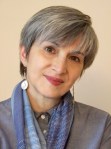


ABOUT THE REVIEWERLila Quintero Weaver is the author-illustrator of Darkroom: A Memoir in Black & White. She was born in Buenos Aires, Argentina. Darkroom recounts her family’s immigrant experience in small-town Alabama during the tumultuous 1960s. It is her first major publication and will be available in Spanish in January 2018. Her next book is My Year in the Middle, a middle-grade novel scheduled for release in July 2018 (Candlewick). Lila is a graduate of the University of Alabama. She and her husband, Paul, are the parents of three grown children. She can also be found on her own websiteFacebookTwitter and Goodreads.

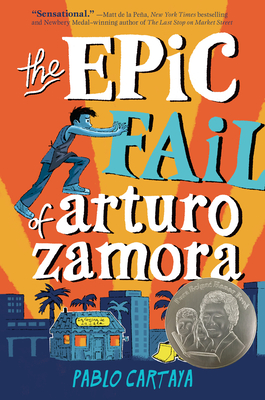
Book Review: The Epic Fail of Arturo Zamora by Pablo Cartaya


Review by Jessica Agudelo

DESCRIPTION OF THE BOOK: Save the restaurant. Save the town. Get the girl. Make Abuela proud. Can thirteen-year-old Arturo Zamora do it all or is he in for a BIG, EPIC FAIL? For Arturo, summertime in Miami means playing basketball until dark, sipping mango smoothies, and keeping cool under banyan trees. And maybe a few shifts as junior lunchtime dishwasher at Abuela’s restaurant. Maybe. But this summer also includes Carmen, a poetry enthusiast who moves into Arturo’s apartment complex and turns his stomach into a deep fryer. He almost doesn’t notice the smarmy land developer who rolls into town and threatens to change it. Arturo refuses to let his family and community go down without a fight, and as he schemes with Carmen, Arturo discovers the power of poetry and protest through untold family stories and the work of José Martí.

MY TWO CENTS: Much to my delight, there were a number of titles released in 2017 that filled me with pride and transported me back to my days as a middle school book worm. The Epic Fail of Arturo Zamora was among them. Arturo’s story possesses familiar hallmarks of coming of age tales, a first crush, a crummy summer job as a dishwasher (albeit at his family’s beloved restaurant, La Cocina de la Isla), and self-discovery. With equal measures of humor and heart, Pablo Cartaya’s middle grade debut is sure to leave readers anxious for an invite to the Zamora family Sunday dinners. What truly makes The Epic Fail special, though, is how Cartaya burnishes deeper themes like family, community, gentrification, and cultural identity with nuance and irresistible charm.

When Wilfrido Pipo, a villainous real estate developer, saunters into Canal Grove looking to build a luxurious high rise, Arturo and his family fear the move will drastically alter their Miami neighborhood. Pipo intends to buy the city-owned lot next to La Cocina, which the Zamoras also planned to bid on, hoping to expand their restaurant. In order to convince community members to back his development plan, Pipo throws fancy events and raffles off all-expenses-paid trips. Arturo senses Pipo’s duplicitous nature and is spurred into action by Vanessa, his activist cousin, and Carmen, his new crush. Together, they hatch plans, one involving a Hulk disguise, to further investigate Pipo’s shady background and resist his ambitions. Gentrification and activism are timely topics, but their weightiness can feel overwhelming and disheartening, especially in light of news about Dreamers, to name one example. Cartaya does his best to impart readers with some hope. Arturo and his family picket and attend public forums at city hall, actions which, whatever the ultimate result, display a sense of agency, a power Arturo realizes he possesses.

At one protest, Vanessa holds a picket sign reading “Family is Community-Community is Family,” a succinct summation of two overarching themes. For Cartaya, family is not just those related by blood, but those with whom you choose to spend time, and sometimes, inadvertently share space. We readily throw longtime friends under the family umbrella, but Cartaya implores readers to consider neighbors, even the most eccentric among them, as members of our extended families. La Cocina itself is an extension of the family’s dining room, where an array of regulars eat, local businesses build partnerships (the restaurant buys its meat and greens from area vendors), and everyone is welcome.

Cartaya’s portrayal of an ample list of secondary characters is one of his greatest successes. He depicts a variety of personalities using distinct and vivid details, bringing the community of Canal Grove to life. Whether it is Arturo’s best friend Bren, a hopeless dork perpetually trying to look and sound like Pitbull, or Aunt Tuti, who has a penchant for dramatics, but is a fierce defender of her family, readers will surely recognize at least one, if not many, of Cartaya’s characters. Arturo may be the hero of the story, but it is the people around him who inspire his actions and give his mission purpose. His fight to save the family restaurant is also a fight for the preservation of his hometown, a love he shares with the people of his community, who, in turn, make that community a place worth loving. In one passage, Arturo wonders where Pipo’s own family might be, “All that success and I never heard him talk about anyone who he cared about.” Arturo’s realization reminded me of Harry Potter’s own assessment of Voldemort in Order of the Phoenix, whom he pities for being equally rootless. A poignant message about community that traverses Hogwarts and Canal Grove.

As Arturo’s Abuela’s health declines, she gives Arturo a box of photos and letters from his Abuelo, which reference the poet José Martí. The poet is a link to his grandfather and his Cuban heritage. Arturo is pulled in by Martí, a figure emblematic of embracing multiple cultures and causes. Growing up in the U.S. has resulted in Arturo’s imperfect Spanish, and yet, he “sometimes used Spanish words when English words couldn’t fully explain what I needed to say.” Although awkward in many aspects of his life, Arturo moves through his multitudes with spectacular ease. The narrative of struggling to balance cultural identities has shifted. Of course, stories about cultural struggle are necessary, but it was wonderful to see Arturo just be himself. It allowed me to let out a deep breath I didn’t realize I was holding in.

I could go on and on about The Epic Fail of Arturo Zamora. How touched I was by the depictions of Abuela’s tenderness, his mom’s quiet struggle becoming matriarch of the family, Arturo’s admiration for Carmen’s colorful braces, and of course, the food (recipes included as backmatter). This novel was a true joy to read from beginning to end. A rare feat, even in children’s literature.

ABOUT THE AUTHOR: Pablo Cartaya is the author of the acclaimed middle-grade novel, The Epic Fail of Arturo Zamora (Viking, 2017); Marcus Vega Doesn’t Speak Spanish (Viking, 2018); and two forthcoming titles in 2019 and 2020 also to be published by Viking. He is a Publisher’s Weekly “Flying Start” and has received starred reviews from Kirkus, Booklist, and Publisher’s Weekly. For his performance recording the audiobook of his novel, Pablo received an Earphone Award from Audiofile Magazine and a Publisher’s Weekly Audiobooks starred review. He is the co-author of the picture book, Tina Cocolina: Queen of the Cupcakes (Random House, 2010), a contributor to the literary magazine, Miami Rail; the Spanish language editorial, Suburbano Ediciones; and a translator for the poetry chapbook, Cinco Poemas/Five Poems based on the work of poet Hyam Plutzik. Pablo visits schools and universities throughout the US and currently serves as faculty at Sierra Nevada College’s MFA in Creative Writing. http://www.pablocartaya.com / Twitter: @phcartaya
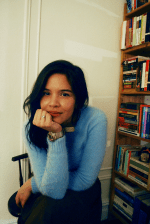
 

J_AgudeloABOUT THE REVIEWER: Jessica Agudelo is a Children’s Librarian at the New York Public Library. She has served on NYPL’s selection committee for its annual Best Books for Kids list, and is currently a co-chair for the 2018 list. She contributes reviews of English and Spanish language books for School Library Journal and is a proud member of the Association of Library Services to Children and REFORMA (the National Association to Promote Library and Information Services to Latinos and Spanish Speakers). Jessica is Colombian-American and was born and raised in Queens, NY.