A Conversation with Author-Illustrator Matt Tavares

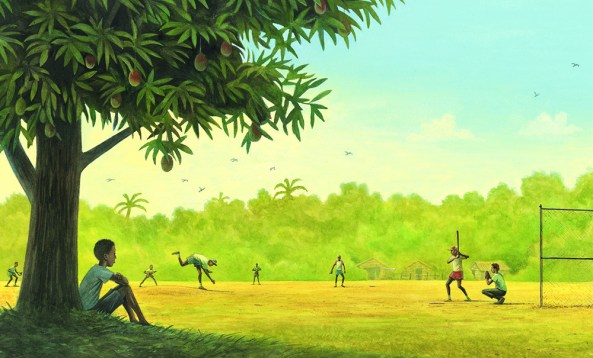
GROWING UP PEDRO. Text and Illustrations copyright 2015 Matt Tavares. Reproduced by permission of the publisher, Candlewick Press, Inc., Somerville, MA.

GROWING UP PEDRO. Text and Illustrations copyright 2015 Matt Tavares. Reproduced by permission of the publisher, Candlewick Press, Inc., Somerville, MA.

By Lila Quintero Weaver

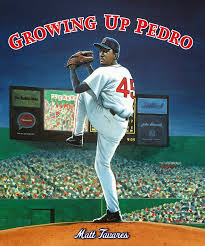
When author-illustrator Matt Tavares turns his focus on a children’s book topic, beautiful things happen. We love what he did with Growing Up Pedro: How the Martinez Brothers Made It  from the Dominican Republic All the Way to the Major Leagues, a stirring picture book biography of the Dominican baseball great Pedro Martinez and his highly influential brother Ramón. Now we’re turning our focus on Matt himself, a prolific producer of books for kids, who agreed to answer a few of our burning questions.

Latin@s in Kid Lit: Wow, your paintings are magnificent! They’re highly realistic yet deliver much more than faithful representation, in terms of their emotive power and aesthetics. Please tell us about your journey to professional illustration.

Matt: Wow, thank you! That’s certainly what I always try to do, so it’s very nice to hear my pictures described that way. Even if I’m painting a realistic scene, there is always something I can do to heighten it, to go beyond what a photograph might show.
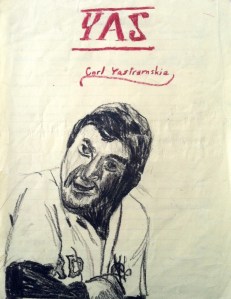
Matt's been drawing since childhood.

Matt’s been drawing baseball figures since childhood.

I’ve always loved to draw. Even when I was 4 or 5 years old, I thought of myself as an artist. I drew all the time, and knew I wanted to be some kind of artist when I grew up. It wasn’t until I was a junior at Bates College that I decided I wanted to illustrate picture books. I wrote and illustrated a picture book as my senior thesis. I spent my whole senior year working on it. After that, things happened pretty quickly- I found an agent who liked it, and she shopped it around to publishers, and found Candlewick Press. They basically asked me to do the whole thing over again with the guidance of an editor and art director, which I happily did. Then in 2000, Zachary’s Ball was published, my first book.
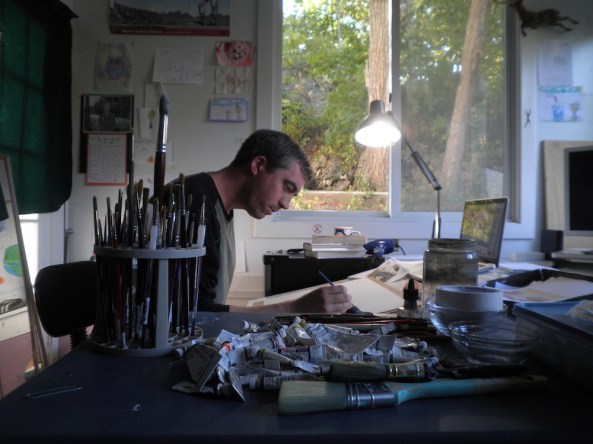
Matt hard at work in his studio

Matt hard at work in his studio

LiKL: You’re not only an illustrator—you also write. Can you walk us through the process of creating a picture book, starting from the idea phase and ending with publication?

Matt: Sure. The beginning part is pretty messy, where I just have all kinds of ideas floating around and I write everything down in my notebook. From there, most of the ideas just wither away, but every now and then one of them grows into something I think I might actually be able to work with.

I always write the words first, then once I figure out how to divide it up into pages, I do rough sketches. And there is always a lot of back and forth between the words and pictures. In a picture book, part of the story will be told with words and part of the story will be told with pictures. Once I start figuring out what the pictures are going to be, I realize I don’t need some of the words.

Once all my sketches are approved by my art director (after a couple rounds of revisions, usually), I start working on the final illustrations. That part usually takes 4 to 6 months. The whole process, from start to finish, can take 9 months to a year, depending on the book. Then once all the illustrations are done, it’s about a year until it comes out in stores.

LiKL: By my count, seven of your published children’s books center on baseball stories, including Growing Up Pedro, your picture-book bio of Dominican major league star Pedro Martinez, which we reviewed in November. What’s your connection to the sport?

Matt: Baseball is just something I’ve always loved. I grew up near Boston and have great memories of going to Fenway Park to watch the Red Sox play. When I was a kid, I was really into collecting baseball cards, watching baseball, playing baseball and wiffle ball. It’s one of the few things that has been a constant in my life from the very beginning. So when I started writing books for kids, baseball was a natural subject. Honestly, I wasn’t a big reader when I was a kid, but I would read anything if it was about baseball. I know there are still kids like that, and I hope they find my books!

LiKL: Speaking of Growing Up Pedro, you must have done a great deal of research on Pedro Martinez’s life and career, not to mention baseball in general and Dominican life. Fill us in.

Matt: This was my fourth baseball biography, but it was the first about a player I actually got to watch play. So this book was very personal for me. I read a lot of interviews and articles, but I also relied on my own memories of being at Fenway when Pedro was pitching. When he was on the mound, Fenway Park transformed into a different place. There was this electricity that surrounded him. I was excited to try to capture that in a book.
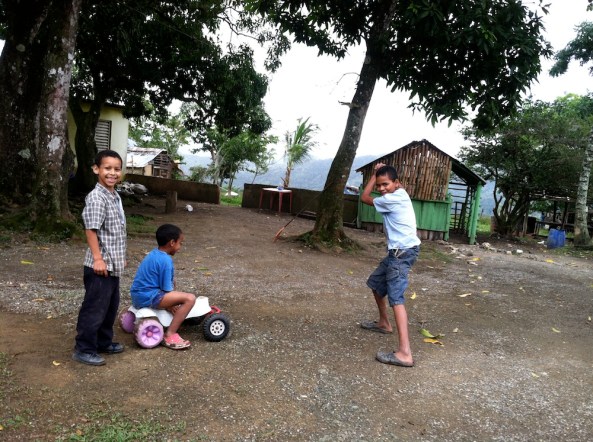
DR1

In the Dominican Republic, local children were happy to pose for photos Matt would use in illustrating Growing Up Pedro.

I also traveled to the Dominican Republic when I was working on Growing Up Pedro, which was amazing. Instead of just finding pictures online, I actually got to go to places that still look how they did when Pedro was a kid. I took tons of pictures. It was incredible to be able to go home after that trip and use all these experiences that were fresh in my mind and put them right into my book. It really helped me feel personally connected to the whole story.

LiKL: On this blog, we highlight excellent kid lit that focuses on Latino/a characters, something you pulled off beautifully in Growing Up Pedro. As far as you can tell, has this picture book expanded your reach into the Latino community?
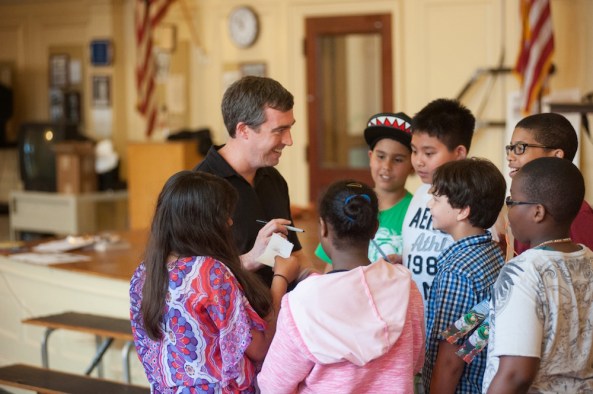
tavares1

Meeting young fans at book events

Matt: Absolutely, and that’s been really great. I was thrilled when I found out Candlewick was going to do a Spanish edition of the book, because I know that Pedro is a hero to millions of Spanish-speaking people. I love knowing that kids can read Pedro’s story in English or Spanish.

It’s such a powerful thing when a kid can see a bit of themselves in a character, and I think a lot of people have made that connection with Pedro. For some kids it’s because he grew up poor, or even just that he was skinny and small. But I think the fact Pedro is Latino definitely helps a lot of Latino/a readers feel more connected to the story.

GROWING UP PEDRO. Text and Illustrations copyright 2015 Matt Tavares. Reproduced by permission of the publisher, Candlewick Press, Inc., Somerville, MA.

GROWING UP PEDRO. Text and Illustrations copyright 2015 Matt Tavares. Reproduced by permission of the publisher, Candlewick Press, Inc., Somerville, MA.

LiKL: Suppose you could hang around the studios of any three illustrators—living or dead—for the purpose of asking questions and observing technique. Who would those illustrators be and why?

Matt: Tough to pick three… I’ll say Chris Van Allsburg, because he’s one of my all-time favorite illustrators, and I would love to watch him work. I would probably just take pictures of all his art supplies then go to the art store and buy all the same stuff. Maurice Sendak, because he was a genius and was always so fascinating in interviews. I never got to meet him. And Jerry Pinkney. I did a book signing with him once, and he was so nice and humble and approachable. He’s been making books for so long, and has had so much success. I’d love to spend some time with him and maybe pick up some good habits.

LiKL: Naturally, we’re curious to know what’s next from Matt Tavares. If you’re free to share, tell us about books already in production, or a project still shiny with wet paint.

Matt: My next book is Crossing Niagara, which is a picture book about The Great Blondin, the first person to walk across Niagara Falls on a tightrope. That comes out in April. Then I have another picture book biography that I illustrated with Candlewick that comes out in Spring 2017, about the first woman pilot. And right now I’m just starting final art for a book I wrote that comes out in Fall 2017. This one is going to be a very new direction for me- it’s fiction, and the main characters are birds. I’m very excited to try something new.
DR2Writer, illustrator, baseball lover! Learn more about Matt Tavares and his books at his official website.
#LargeFears Chat: Where are the Afro-Latinxs in American History?


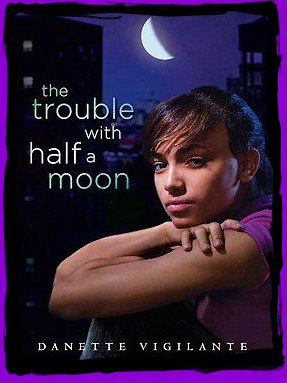
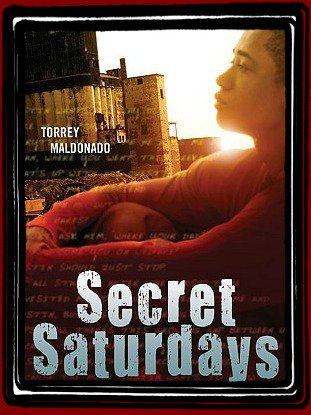
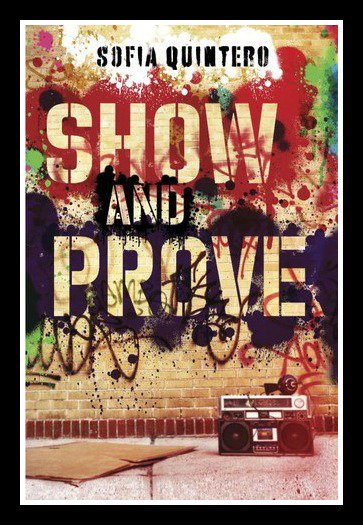
On Tuesday, Edith Campbell, Sujei Lugo, and Guinevere and Libertad Thomas, the sisters behind the Twinja Book Reviews, hosted the most recent #LargeFears Twitter chat. This month’s theme was: “Where are the Afro-Latinxs in American History?” Special guests included Torrey Maldonado, author of Secret Saturdays, Sofia Quintero, author of Show and Prove and Efrain’s Secret, and Robert Liu-Trujillo, a visual artist. The #LargeFears chats started as a continuation of support of diverse books after the publication of Large Fears, a self-published title by Myles E. Johnson and Kendrick Daye, funded through Kickstarter, about a queer black boy facing his greatest fears.

Below is the link to the Storify for the chat and covers of books by/about Afro-Latinxs in honor of Black History Month. Although, these titles should be supported every month of the year, and we vow to do our part by reading and reviewing more of them here.

https://storify.com/Dos_Twinjas/where-are-the-afro-latinx-in-american-history


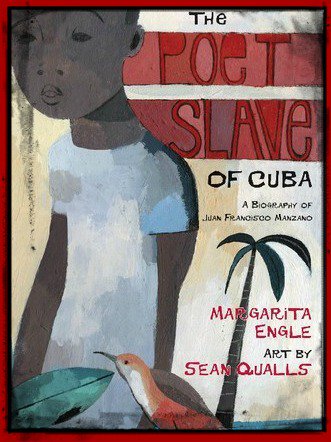
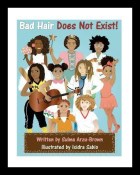
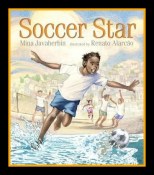
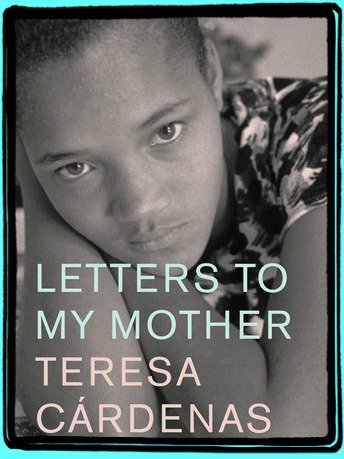
         AfroLatinx1 AfroLatinx4 AfroLatinx8 AfroLatinx11 AfroLatinx23AfroLatinx13 AfroLatinx14 AfroLatinx15 AfroLatinx16 AfroLatinx17 AfroLatinx18 AfroLatinx19 AfroLatinx20 AfroLatinx21 AfroLatinx22

Drum Dream Girl Story Walk: A Literary Stroll Around My Neighborhood


By Sujei Lugo

My public library has been collaborating with a local non-profit community organization for more than 10 years, and when I started working there as the children’s librarian earlier this year, one of my plans was to continue building our relationship with this non-profit. This organization offers youth development programs meant to engage young people in a variety of activities including community organizing, advocacy, and educational programs. The majority of the programs focus on Afro-Latino dance, music, and community-theatre workshops and classes. I’ve invited participants, mainly Afro-Latino teens, to offer workshops and put on performances at my library. Such activities help them to develop leadership skills and give them a sense of empowerment and visibility in their community.

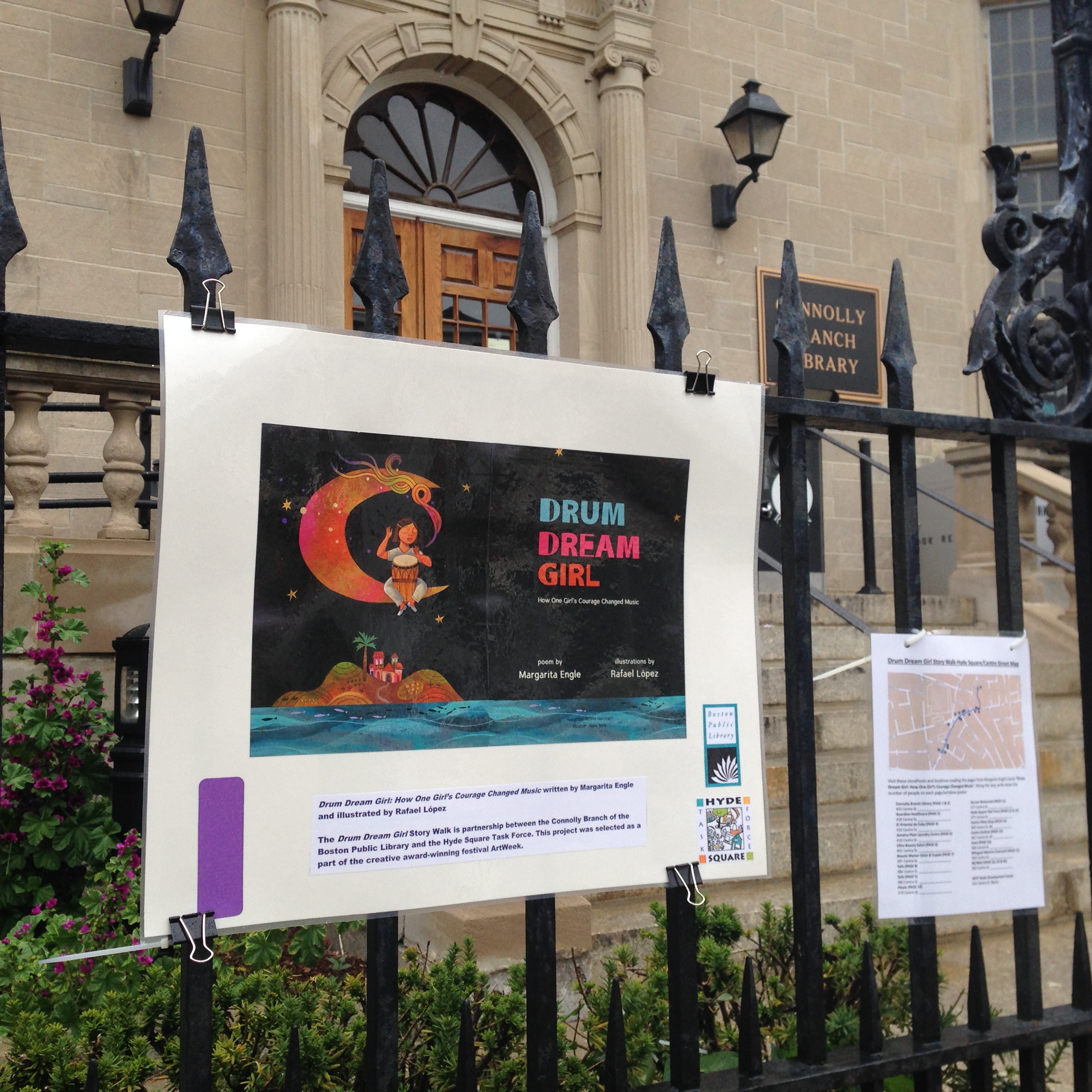
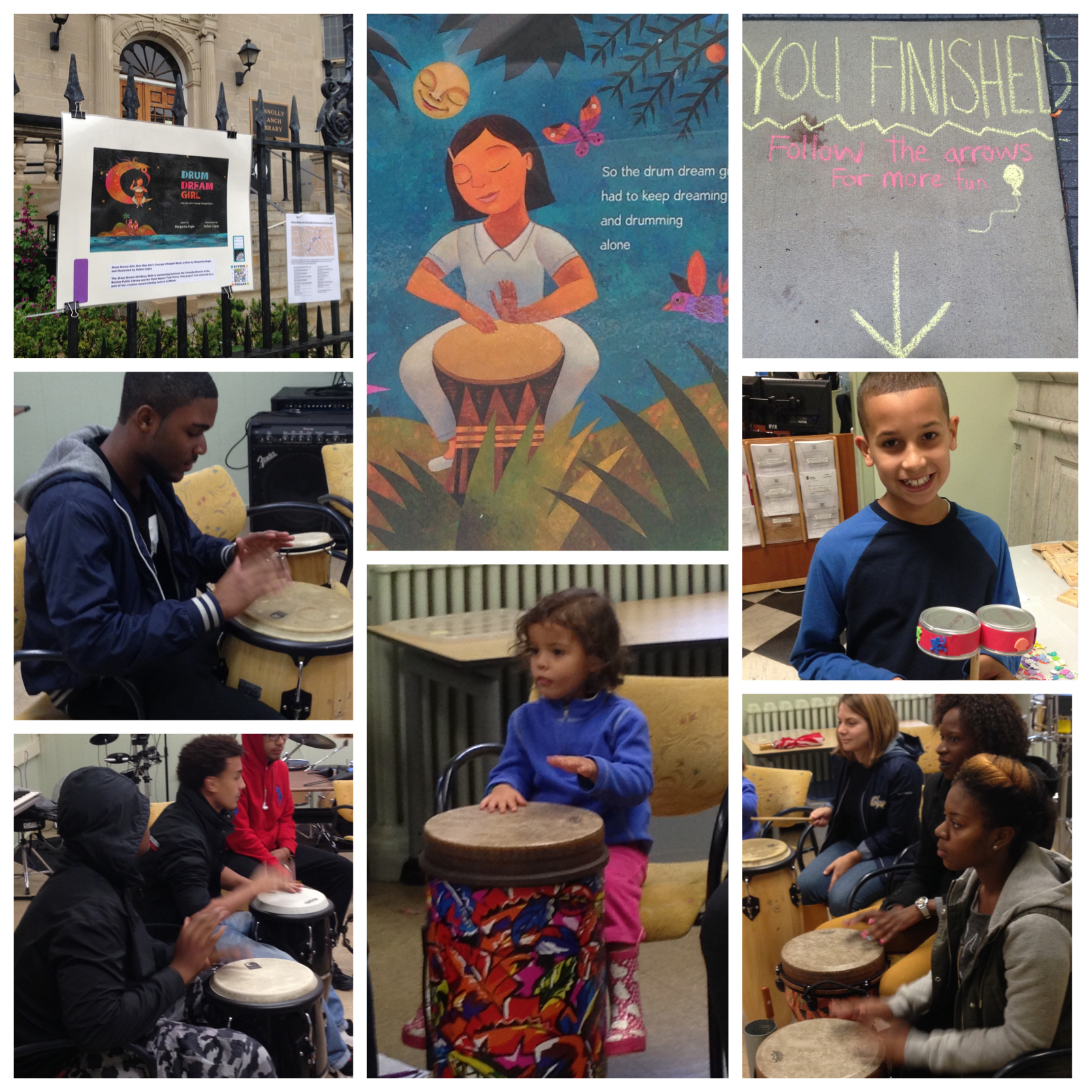
Drum Dream Girl Story Walk page 1 and map located at the library entrance

Drum Dream Girl Story Walk page 1 and map located at the library entrance

A couple of months ago, I contacted their arts and cultural programs director to discuss a great new picture book, Drum Dream Girl: How One Girl’s Courage Changed Music, by Margarita Engle and Rafael López. This book seemed like ideal material to adapt into a play. Not long after that conversation, the organization’s special-projects manager stopped by my library and we had an informal chat about future collaborations. We wanted to work together on programming that would connect my library with their youth community center, located just five blocks away. This is when I shared my idea for a story walk, which seemed like a perfect way to integrate the community, cover the physical area between both buildings, and support literacy initiatives. She loved the idea, and it fit our mutual vision, for the following reasons: A. our community has a huge Latin@ population with lots of Latin@-owned businesses; B. a group of Afro-Latina teen drummers is active in the non-profit; C. my obsession and support for Latino children’s literature; and D. the Cuban restaurants in our neighborhood seemed like a natural tie-in for Drum Dream Girl in the context of a story walk.

Now we needed to move to the fun part: the planning.

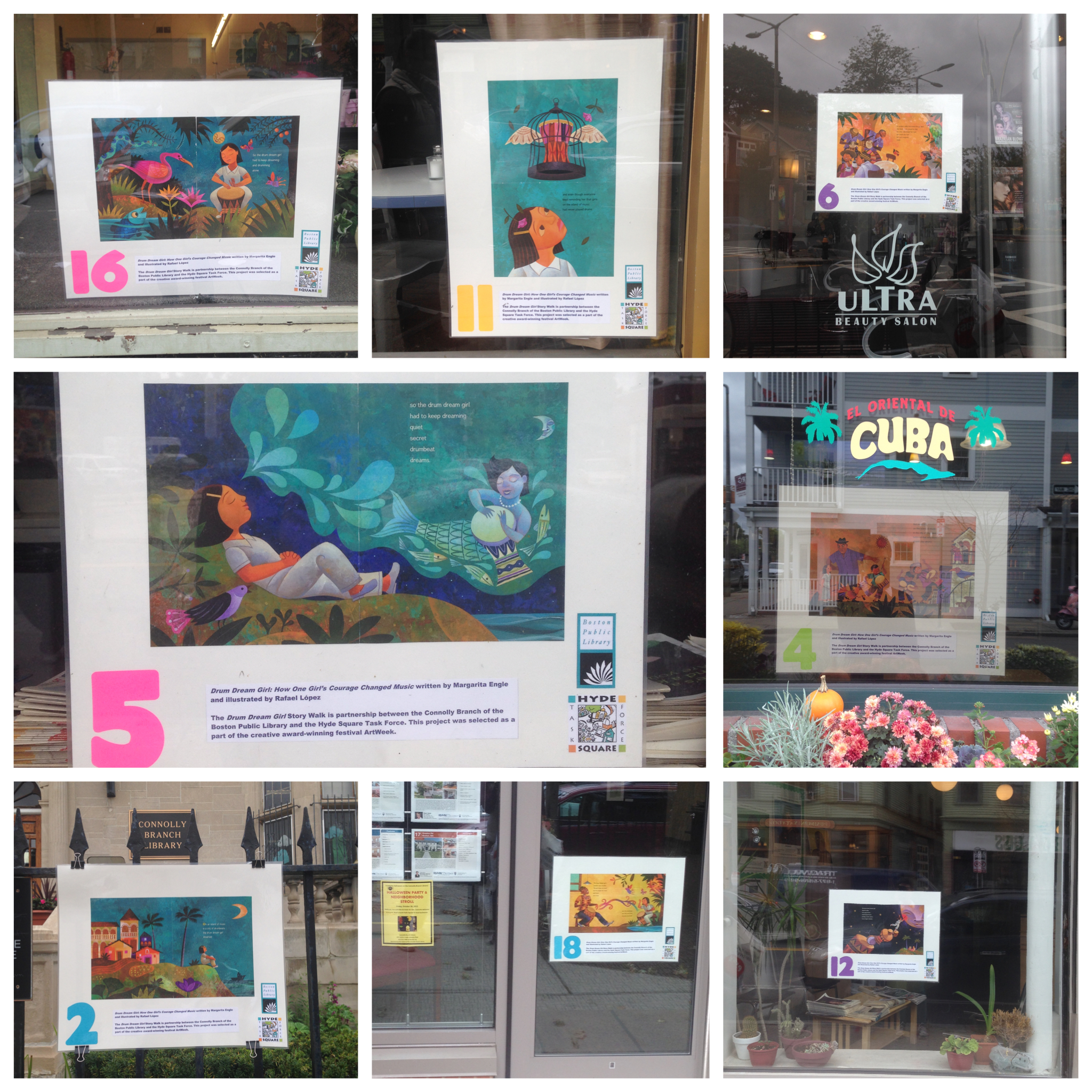
First, we identified and contacted local businesses and organizations to talk about our story walk idea and our interest in incorporating them into the program. We explained that we were going to take a picture book, create poster boards for each page, and post them in storefront windows. Participants would walk down the street from the library to the youth community center, and following a Drum Dream Girl Story Walk map, they would read the page displays along the route. Community members responded enthusiastically, from “Eso está genial. Todo sea por la biblioteca y los niñ@s,” to “That’s so cool. Of course we are in.” Using their storefront windows was a great way to integrate them into our story walk. In the neighborhood surrounding the library, 90% of the businesses and organizations are locally owned and they include a significant number of non-profit endeavors. What’s more, 11 out of the 15 storefront participants turned out to be Latin@-owned businesses. Once they agreed to take part in the walk, we created a map containing the street addresses of each storefront and the corresponding page number(s) from the book located at each address.

Next came the creation of the story pages which would be posted in the windows. A successful story walk works best when using a picture book with a simple, easy-to-follow narrative, featuring single page illustrations, and minimal text. In this case, we made allowances for Rafael López, who paints some of the most beautiful illustrations in children’s literature, but which are usually double-page spreads. This posed a bit of a challenge. We first purchased three copies of the book, since we needed to use actual pages and not scans or photocopies. Then, using an X-acto knife, a pair of scissors, and a lot of patience, I carefully separated and cut the pages. This was done using two copies of the book, to ensure the display of all pages, front and back. (The third copy was a backup, in case of errors.) To maintain the look of the full spreads,  I carefully rejoined separated pages with hidden adhesive tape. Using glue sticks, I attached the pages to poster boards and added a prepared label containing the book’s title, the author’s and illustrator’s names, the correct page number, and the names of the sponsoring library and community organization. The final step was to trim and laminate each poster board.

From beauty salons to Cuban restaurants and health centers, the Drum Dream Girl Story Walk boards

From beauty salons to Cuban restaurants and health centers, the Drum Dream Girl Story Walk boards


For our story walk inauguration, we selected a Saturday morning. The actual story walk was designed to be read independently, which allowed families and individuals to follow the story at their own pace. They would pick up a map at the library, walk down the main street reading each story poster, and end up at the youth community center where related activities were being offered. To enhance the reading experience, we encouraged kids to jot down certain details of the story, such as the number of people they saw on each poster, which quickly turned into a game for them and increased their attentiveness. Since this book is about an Afro-Latina drummer, several activities were music-related. At a craft table, children created their own drums, maracas, and other instruments, using recycled materials. In a separate room, story-walk readers had the opportunity to participate in a drumming workshop conducted by Latina teen drummers. These activities brought an already wonderful book to life, and provided a way to celebrate the power of music as well as elements of Latino heritage.  The publisher was kind enough to furnish a few copies of the book, which were given out as prizes to the first kids that finished the story walk.

The Drum Dream Girl Story Walk was up for a two-week period. During this time, patrons stopped by the library to pick up maps, children flocked to the crafts area to make musical instruments, and many picked up a copy of the book, while others shared their excitement about how well the story walk integrated their community. A copy of the map was located outside, at the front of the library, so that even during our closed hours, anyone interested could follow the story on their own. A lot of people who knew nothing about the program enjoyed the story as they passed through the neighborhood, leading to greater awareness about the story walk, the library, the community, and of course, the courageous Cuban girl who changed a piece of music history.

Drum dreamers

Drum dreamers


The Drum Dream Story Walk was a great event to plan and implement in an urban setting, and although it took time and patience to create the poster boards, I would definitely do it again. Alternative programs like this contribute to breaking down the physical barriers that often exist between a library and the community it serves, and also tighten relationships with local groups, businesses, and library patrons. I foresee future story walks in my library work, using diverse picture books and bilingual titles. I also intend to invite school classes and local groups to form story-walk read-alouds. And let’s not forget that music and art-making activities enhance the story-walk experience and help bring a book to life in memorable ways.


SujeiLugoSujei Lugo was born in New Jersey and raised in her parents’ rural hometown in Puerto Rico. She earned her Master’s in Library and Information Science degree from the Graduate School of Information Sciences and Technologies at the University of Puerto Rico and is a doctoral candidate in Library and Information Science at Simmons College, focusing her research on Latino librarianship and identity. She has worked as a librarian at the Puerto Rican Collection at the University of Puerto Rico, the Nilita Vientós Gastón House-Library in San Juan, Puerto Rico, and the University of Puerto Rico Elementary School Library. Sujei currently works as a children’s librarian at the Boston Public Library. She is a member ofREFORMA (The National Association to Promote Library Services to Latinos and the Spanish-speaking), American Library Association, and Association of Library Service to Children. She is the editor of Litwin Books/Library Juice Press series on Critical Race Studies and Multiculturalism in LIS. Sujei can also be found on Twitter, Letterboxd and Goodreads.

Book Review: Growing Up Pedro by Matt Tavares

Growing Up Pedro


Reviewed by Lila Quintero Weaver

FROM THE BOOK JACKET: Before Pedro Martinez pitched the Red Sox to a World Series championship, before he was named to the All-Star team eight times, before he won the Cy Young Award three times, he was a kid from a place called Manoguayabo in the Dominican Republic. Pedro loved baseball more than anything, and his brother Ramón was the best pitcher he’d ever seen. He dreamed of the day he and his brother could play together in the major leagues. This is the story of how that dream came true. Matt Tavares has crafted a fitting homage to a modern-day baseball star that examines both his improbable rise to the top of his game and the power that comes from the bond between brothers.

MY TWO CENTS: The author-illustrator Matt Tavares makes beautiful picture books, many of which explore stories from baseball. His sports biographies for young readers include Henry Aaron’s Dream, There Goes Ted Williams, and Becoming Babe Ruth. In Growing Up Pedro, Dominican major league pitcher Pedro Martinez takes a turn in the spotlight. At the peak of Martinez’s brilliant career, he pitched for the Boston Red Sox. In 2004, his performance in Game 3 helped the team capture a long-sought World Series championship. Martinez’s story abounds with tall achievements, but there are other, smaller points of inspiration in his journey, and this combination makes him an ideal hero for kid readers.

Just as the title implies, Growing Up Pedro traces Martinez’s rise to baseball glory back to childhood years. As the story begins, young Martinez sits on the sidelines, riveted by his older brother Ramón’s ability to fire fastballs. Ramón is good—really good—but even as he pursues his own baseball dreams, Ramón takes the time to teach Pedro everything he knows about pitching. Sometimes they practice their aim on mangos, still clinging to the branches. When Ramón is drafted by the Los Angeles Dodgers, Pedro continues honing his skills on his own and ultimately captures the attention of U.S. talent scouts. After he joins his brother in Los Angeles, Pedro faces new challenges. He must work hard to prove himself to critics who consider him too small-framed to succeed as a major-leaguer. Before it’s all over, Martinez perfects a 97-mph fastball, wins the prestigious Cy Young Award multiple times, captures a World Series title, and lands a spot in the National Baseball Hall of Fame.

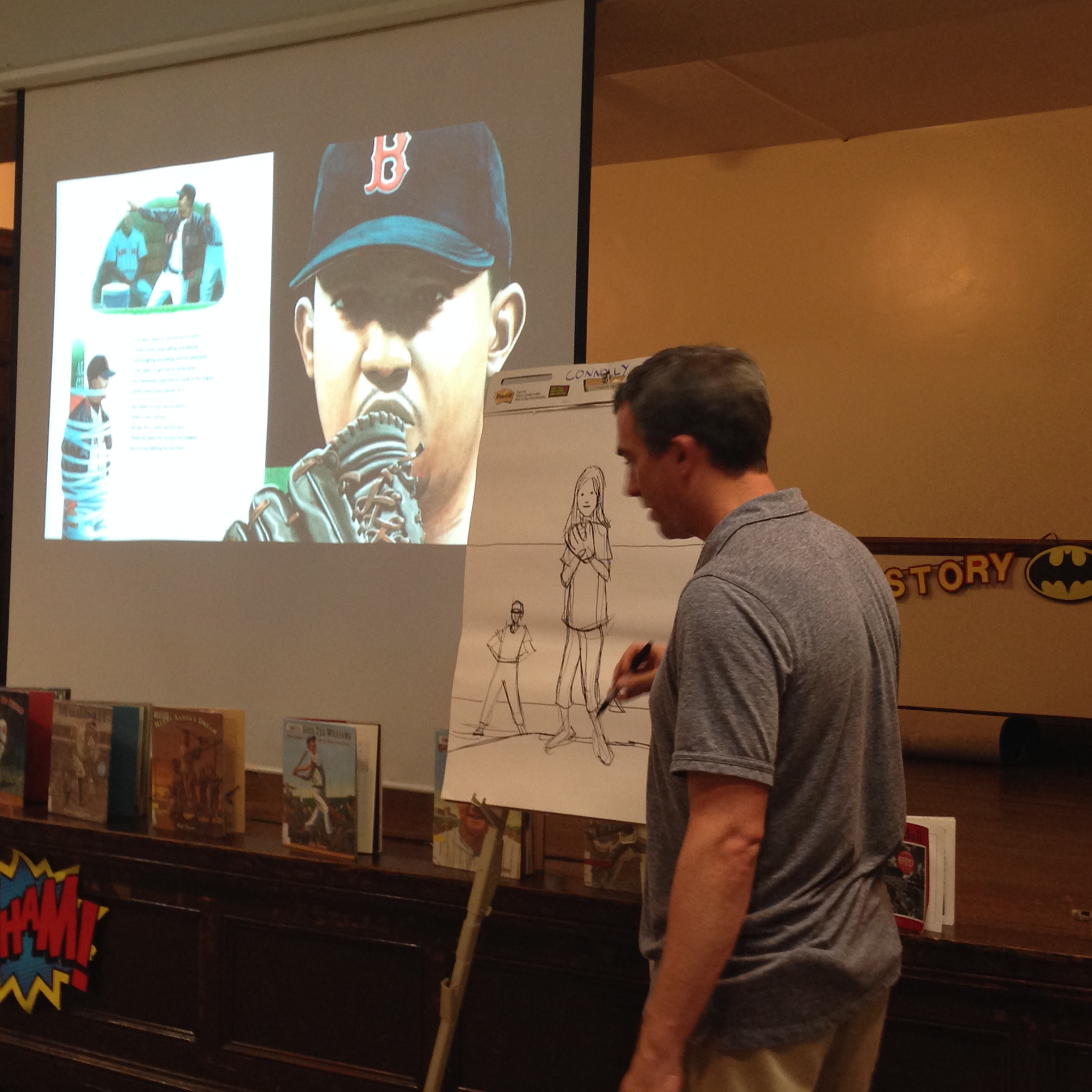
Matt Tavares shares about Growing Up Pedro during a library visit. Photo credit: Sujei Lugo

Growing Up Pedro succeeds on multiple levels. First, it’s a story of dreaming big and achieving bigger. The narrative emphasizes that talent plus hard work make it possible for this young boy to rise out of obscurity and poverty. In one illustration, Pedro is shown alone, practicing outdoors at sunset. With Ramón already in the United States, Pedro’s internal drive to excel is what keeps him going, throwing pitch after pitch in the dying light.

As already noted, this picture book offers a warm portrayal of the family bonds that carry both brothers into the ranks of professional sports. One vignette shows them dreaming aloud: “At night, they lie awake, two to a mattress, and talk about what they will do when they are millionaires.”

Growing Up Pedro also gives satisfying glimpses of rural Caribbean life, and it drives home the importance of baseball in the Dominican culture. At Campo Las Palmas, a Dodgers’ facility in the Dominican Republic, dozens of boys go through the thirty-day tryout alongside Pedro.

Matt Tavares’s illustrations command attention. The soft colors of his landscapes suggest sunshine diffused by tropical humidity. Mountains draped in lush vegetation fill the backdrops of the Dominican scenes. In the second part of the story, Pedro’s world switches to baseball stadiums packed with cheering fans, dressed in Red Sox team colors. One powerful illustration zooms in on Martinez’s face as he stands at the pitcher’s mound. His eyes contain supreme focus and reflect years of devotion to his sport. The accompanying text reads: “…when it is his turn to pitch, Pedro is very serious. All day, he is quiet and focused. When he takes the mound, he imagines he is a lion fighting for his food.” (This image is available for viewing on the author’s website, linked below in his bio.)

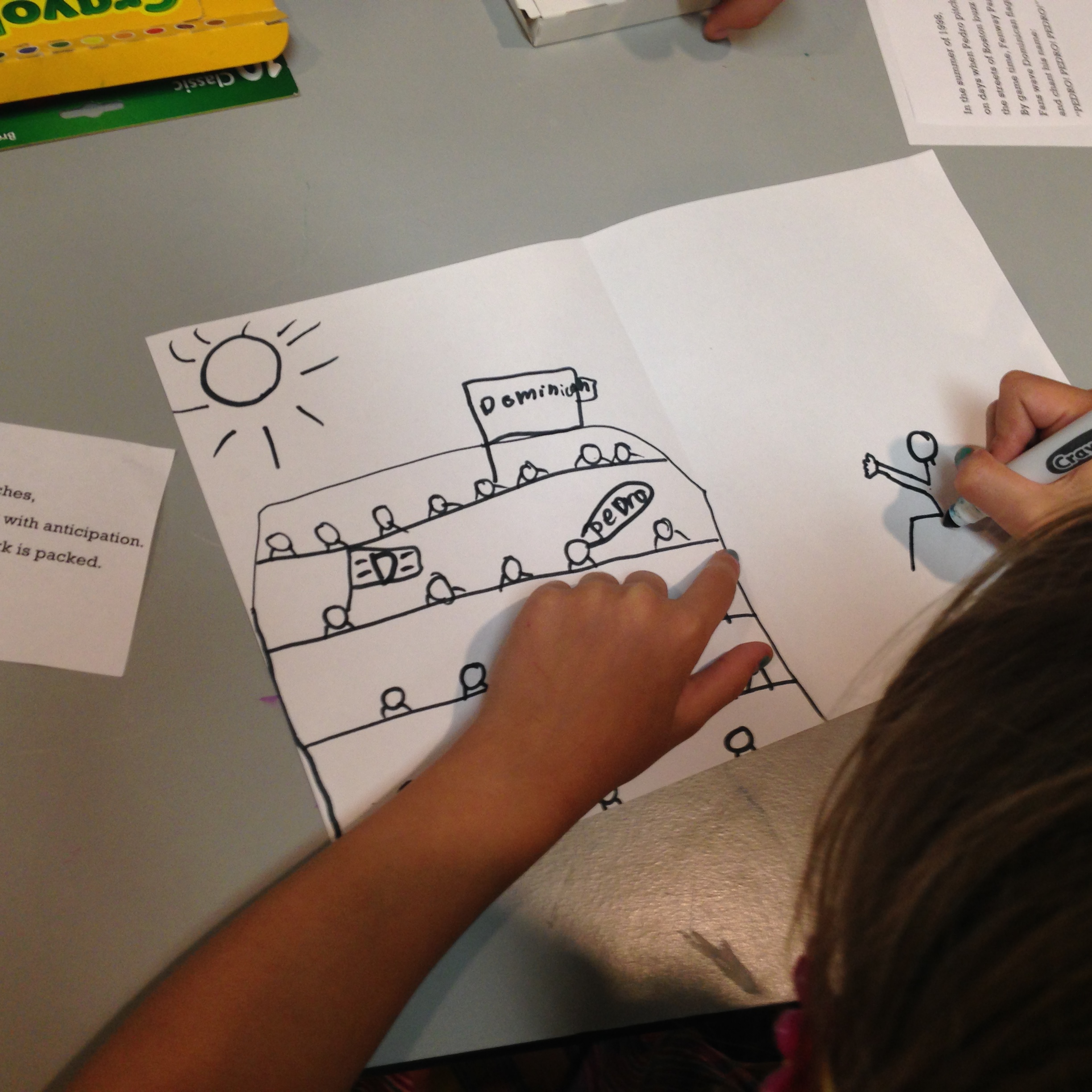
Kids respond to Matt's art with baseball illustrations of their own, Photo credit: Sujei Lugo

Kids respond to Matt’s art with baseball illustrations of their own. Photo credit: Sujei Lugo

Toward the end of the book, the narrative circles back around to the Dominican Republic. When an injured Pedro nevertheless pitches and sends the Red Sox into the American League Championship Series, Tavares’s paintbrush fills in scenes of celebration on the home front, where fans gather in front of television sets to watch Pedro. Following his success, “people dance in the streets. Kids tie scraps of metal to their bikes and ride through the darkness. Sparks light up the night like fireworks.” This is a transcendent moment that extends the hero’s journey into something bigger than himself, into a victory for all his people and for other dreamers, near and far.

Matt Tavares is a prolific writer and illustrator of children’s books. His work has received starred reviews and high honors, including three Parents’ Choice Gold Awards, six Oppenheim Gold Seal Awards, and an International Reading Association Children’s Book Award. Matt’s original artwork has been exhibited at major museums. He’s a popular speaker and presenter to adult and child audiences alike. Visit his official website to learn more.

TEACHING RESOURCES:

Visit Pedro Martinez’s page on the National Baseball Hall of Fame site.
The Dominican Republic boasts a jaw-dropping number of players in the ranks of professional baseball. This website provides an informative chart.

Watch a highlights video of Martinez pitching a 17-strikeout game in 1999.


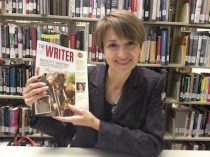
IMG_1291Lila Quintero Weaver is the author-illustrator of Darkroom: A Memoir in Black & White. She was born in Buenos Aires, Argentina. Darkroom recounts her family’s immigrant experience in small-town Alabama during the tumultuous 1960s. It is her first major publication. Lila is a graduate of the University of Alabama. She and her husband, Paul, are the parents of three grown children. She can also be found on her own websiteFacebookTwitter and Goodreads.
Guinevere Thomas and Christina Diaz Gonzalez: Two Versions of Cuban Childhood

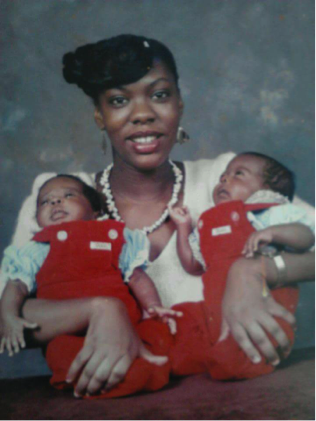
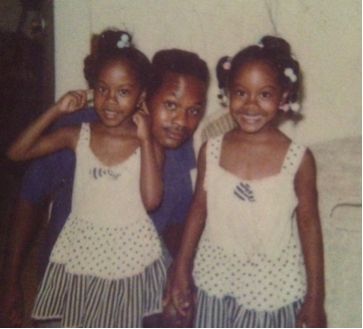
Mom and twinsGrowing Up Q-Ban

by Guinevere Thomas

To grow up Q-ban…it was and still is an experience.
There are probably things that all American-born Cubans share in common. But my childhood environment may not mirror another Cuban-American’s experience, because to explain how I grew up Cuban, is to also explain how I grew up Black.

I was born in Miami, Florida. It was the 80’s and my mother was a teenager doing the best she could in a harsh environment. Folks from Florida know the humidity is a killer. You could never “beat the heat,” but when you’re a kid your tolerance is higher, and much like the heat, nothing really affected me negatively before the age of six.

I was a naïve kid. So naïve, that my mother, bless her heart, told me that every single person in the world was Cuban too, and I believed it. Years later, I sent my mother sarcastic greeting cards about how she totally doomed me for life, but I see now why she did it. While no generation gets off easy when it comes to racism, her generation and those before hers experienced it in a different way. She was hoping I could navigate through the world more readily if I believed everyone was like me.

Uncle

Photobombed by an uncle!

Miami made this fantasy easy. I was surrounded by everything Cuban, or at least by closely related cultures that kept the illusion going–Puerto Rican and Haitian, to be exact. Of course, I’d always known I was Black. I just never saw myself as different from other Black kids, because most Black kids I knew in Miami were Cuban too.

Then most of my family uprooted to Jacksonville, Florida, and my naiveté fell away. I realized for the first time how split my identities were, and race and culture became challenges for me. In a city that was mostly composed of non-Latino White and Black American, my family was no longer surrounded by a common culture. We were the other. And it sucked.

In a few ways, we did fit in. In Miami, growing up with coarse hair, I’d stood apart from my mixed race or White Cuban friends whose parents didn’t spend hours on their children’s so-called pelo malo, an offensive term used by Spanish speakers. But in Jacksonville, this was the norm for non-Latino Black girls and boys. Yay! I wasn’t different in that sense anymore!

But then there was that 3rd grade field trip…

We were encouraged to bring snacks, and I asked my mother to make empanadas and ensalada criolla (my mom’s famous mix of delicious tropical veggies and fruits).

“This isn’t salad, there’s no lettuce in it.”

“Why would you put guava paste and cheese together?”

And those were some of the nicer things said about the food.

Strangely, much of the backlash came from my classmates’ parents. I was so embarrassed. Many kids shared my appearance, but they didn’t connect to me on other levels. My food was disgusting to them and they considered my name weird, especially when I went by the full version, Guinevere Zoyana.

Cuban flag

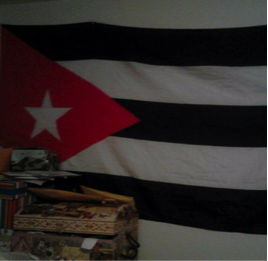
Guinevere’s bedroom as a teen included the Cuban flag.

For years, I’ve debated about which way I should identify. To most of the world I am African American, which is not bad at all, and for a big portion of my middle school/high school years, I solely chose the term Black, because this made it easier for other people. But as an Afro-Cuban, I’m part of an amazing culture and history. It sucked to hide my full identity simply because people don’t readily view me as Latina.

Even now, I struggle with identity. Growing up Cuban shaped how I saw things: How people treated me based on my appearance and the fact that I was actually Black and Cuban-American. My blended culture even had an impact on my politics.

I know some folks think being Latino is all the same, but even language isn’t enough to make Latinos a monolith. We have different colloquialisms that get lost in translation. For example, my Latino friends who aren’t Cuban think it’s weird I say “Que Bola Asere!” to a complete stranger who my sister’s old boss’ cousin mentioned might be Cuban!

Although kid-lit is producing more books highlighting the Latino experience, this doesn’t mean the stories will mirror everyone’s reality. For a very long time, the Afro-Latino experience was nowhere to be found in books, and this is why I think it’s so important to publish these stories.

Current photoI co-write with my twin sister, Libertad, and despite our experiences, we still haven’t mastered writing for Afro-Cuban teens. But our plans for 2016 will be filled with teens of various Afro-Latino backgrounds. One of our first planned releases features a Haitian-American girl and another puts an Afro-Puerto Rican girl front and center. It’s definitely a journey making these new voices heard and I’m super excited about it!

book coverGuinevere Thomas is one half of Twinja Book Reviews, a book blog that celebrates diversity in books by day, and slays ninjas by night. Diversity is her strong point. Procrastination is her weak point. If you know anyone who’d like to join her My Afro-Latino series, email her at guinevere.libertadthomas@gmail.com. Chat books with her on Twitter @dos_twinjas where she joins her partner in crime to tweet about diversity in books and media. Be sure to visit her official site (in progress). www.gltomas.net  And you can check out her debut release under her shared pen name G.L. Tomas on Amazon here!

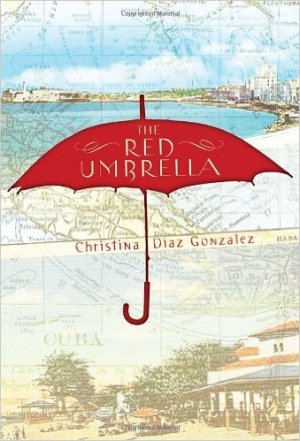
Red Umbrella 2The Cuba I Know

by Christina Diaz Gonzalez

Cuba. A land I’ve never seen with my eyes, but have felt in my heart. A place my parents and grandparents would describe in their stories as an island with the most beautiful beaches, rolling verdant hills and, if you believed my grandmother, a place where the sky was a little more blue. I was born in a country only ninety miles north of that seemingly magical island, but those ninety miles were filled with so much pain, heartache and stolen dreams that it was an abyss that my family could not, would not, cross. Yet, part of Cuba, the piece my family carried inside them to the United States, was ever present within the walls of my home.

The Cuba I experienced while living in a small, Southern town was the one my parents and grandparents chose to share with me. It was in their stories of love, loss, and sacrifice that I learned about their struggles to have a good life in Cuba and how it (along with basic freedoms that I would always enjoy in the U.S.) had been taken away from them after the communist revolution. It was this tearing apart of lives that left scars that would permeate through generations. These are the scars that are re-opened every time a dissident is jailed, a blogger beaten, or another balsero drowns trying to cross those ninety miles to freedom. It is the pain of what was left behind, what can never be recovered, of childhoods lost, and dreams turned into nightmares that my family made sure I understood.

And yet… Cuba still beckons all of its children (and the children of its children) with a siren song of love, family and culture. Those were the aspects of Cuban life I experienced on a daily basis and that became ingrained into my identity. Cuba was revealed to me in the Spanish language that we spoke at home and in the sayings like “le ronca el mango” and “por si las moscas” which never made sense in English, but completely summarized a feeling or situation. It was felt in my soul through the music of Celia Cruz, Benny Moré and La Sonora Matancera that was so often played on our old record player. I could savor Cuba in the foods that were prepared by my mother and grandmother (arroz, frijoles negros, and picadillo were staple dishes) and the pastellitos and pan cubano that my extended family would bring up from Miami whenever they came to visit. The lessons of Cuba could be seen in the value placed on education (because “no one can take what’s inside of you”) and in the smaller cultural ideas such as never being allowed to go to sleepovers, never swimming right after eating for fear of the dreadful patatú, and never placing my purse on the floor. This all formed my understanding of what it is to be Cuban.

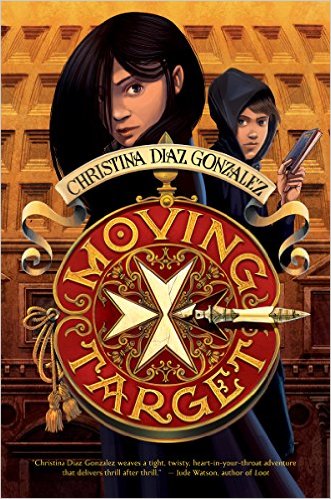
Moving Target 2And now, fifty-five years later, it is that understanding that is reflected in my life. On a large scale, it is most easily seen in my writing through books like The Red Umbrella (the story of a Cuban girl who is sent to the US through Operation Pedro Pan) or Moving Target (an action/adventure story that features an American girl of Cuban descent who becomes embroiled in an ancient mystery dating back to biblical times). But the legacy of Cuba can also be seen in the smaller moments of my personal life such as when my children make Cuban coffee with espumita or I prevent them from jumping into the pool after having a big lunch for fear that there may be something to those patatú stories.

This is my Cuba. My heritage. A heritage that will not be forgotten, but will continue to be passed to the next generation who will hopefully see what my grandparents could not…a free Cuba with a democratically elected government. Until then, I will keep my purse off the floor…por si las moscas.

author_highresChristina Diaz Gonzalez is the award-winning author of The Red UmbrellaA Thunderous Whisper, and Moving Target. Her books have received numerous honors and recognitions including the American Library Association’s Best Fiction for Young Adults, the Florida Book Award, the Nebraska Book Award, a Notable Social Studies Book and the International Literacy Association’s Teacher’s Choice Award.  She speaks to students across the country about writing, the importance of telling their stories and the value of recognizing that there is a hero in each one of us. Visit her website at www.christinagonzalez.com for further information.

This concludes our series on Cuban American children’s and YA writers. We hope you loved reading these guest posts as much as we loved hosting them!