Drum Dream Girl Story Walk: A Literary Stroll Around My Neighborhood


By Sujei Lugo

My public library has been collaborating with a local non-profit community organization for more than 10 years, and when I started working there as the children’s librarian earlier this year, one of my plans was to continue building our relationship with this non-profit. This organization offers youth development programs meant to engage young people in a variety of activities including community organizing, advocacy, and educational programs. The majority of the programs focus on Afro-Latino dance, music, and community-theatre workshops and classes. I’ve invited participants, mainly Afro-Latino teens, to offer workshops and put on performances at my library. Such activities help them to develop leadership skills and give them a sense of empowerment and visibility in their community.
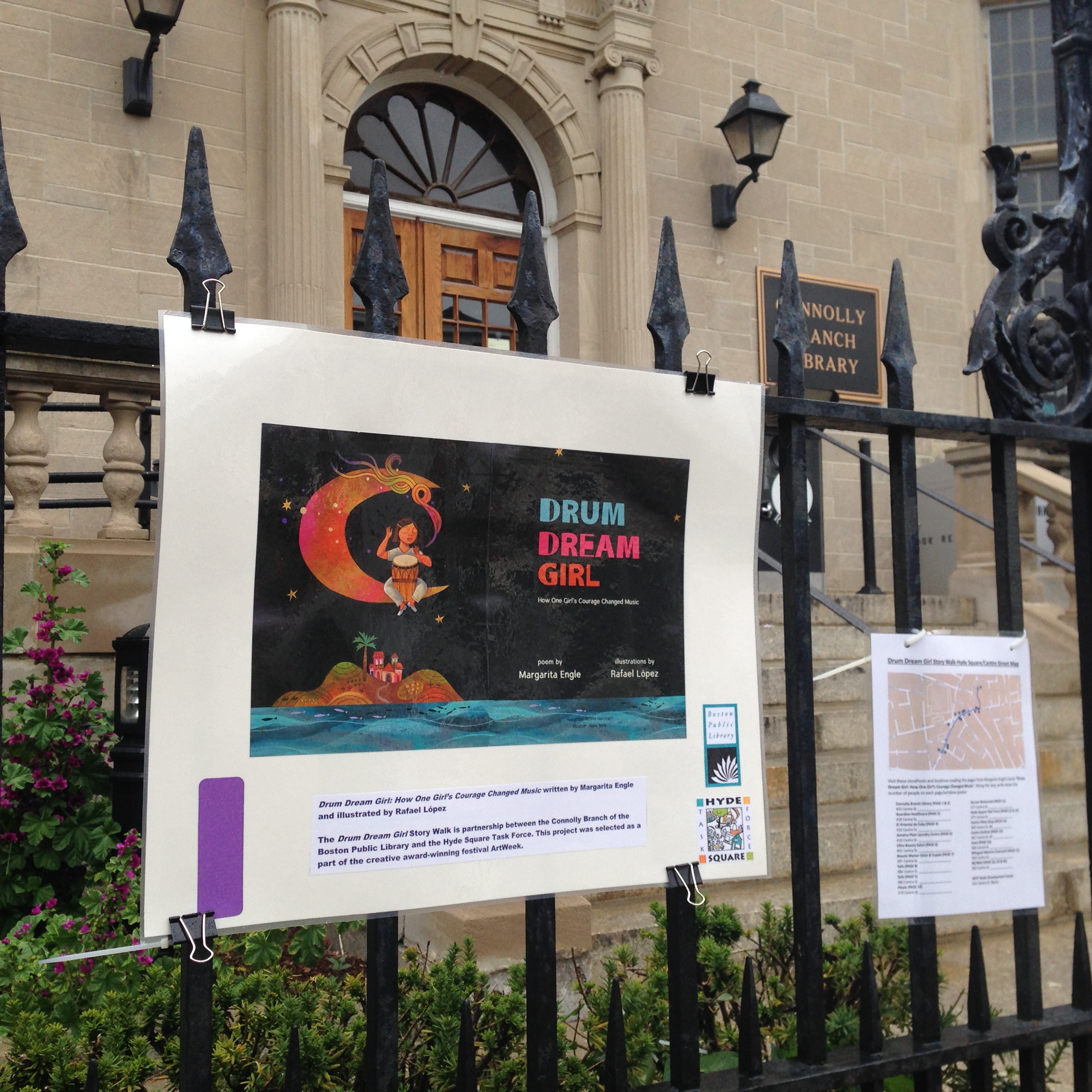
Drum Dream Girl Story Walk page 1 and map located at the library entrance

Drum Dream Girl Story Walk page 1 and map located at the library entrance

A couple of months ago, I contacted their arts and cultural programs director to discuss a great new picture book, Drum Dream Girl: How One Girl’s Courage Changed Music, by Margarita Engle and Rafael López. This book seemed like ideal material to adapt into a play. Not long after that conversation, the organization’s special-projects manager stopped by my library and we had an informal chat about future collaborations. We wanted to work together on programming that would connect my library with their youth community center, located just five blocks away. This is when I shared my idea for a story walk, which seemed like a perfect way to integrate the community, cover the physical area between both buildings, and support literacy initiatives. She loved the idea, and it fit our mutual vision, for the following reasons: A. our community has a huge Latin@ population with lots of Latin@-owned businesses; B. a group of Afro-Latina teen drummers is active in the non-profit; C. my obsession and support for Latino children’s literature; and D. the Cuban restaurants in our neighborhood seemed like a natural tie-in for Drum Dream Girl in the context of a story walk.

Now we needed to move to the fun part: the planning.

First, we identified and contacted local businesses and organizations to talk about our story walk idea and our interest in incorporating them into the program. We explained that we were going to take a picture book, create poster boards for each page, and post them in storefront windows. Participants would walk down the street from the library to the youth community center, and following a Drum Dream Girl Story Walk map, they would read the page displays along the route. Community members responded enthusiastically, from “Eso está genial. Todo sea por la biblioteca y los niñ@s,” to “That’s so cool. Of course we are in.” Using their storefront windows was a great way to integrate them into our story walk. In the neighborhood surrounding the library, 90% of the businesses and organizations are locally owned and they include a significant number of non-profit endeavors. What’s more, 11 out of the 15 storefront participants turned out to be Latin@-owned businesses. Once they agreed to take part in the walk, we created a map containing the street addresses of each storefront and the corresponding page number(s) from the book located at each address.

Next came the creation of the story pages which would be posted in the windows. A successful story walk works best when using a picture book with a simple, easy-to-follow narrative, featuring single page illustrations, and minimal text. In this case, we made allowances for Rafael López, who paints some of the most beautiful illustrations in children’s literature, but which are usually double-page spreads. This posed a bit of a challenge. We first purchased three copies of the book, since we needed to use actual pages and not scans or photocopies. Then, using an X-acto knife, a pair of scissors, and a lot of patience, I carefully separated and cut the pages. This was done using two copies of the book, to ensure the display of all pages, front and back. (The third copy was a backup, in case of errors.) To maintain the look of the full spreads,  I carefully rejoined separated pages with hidden adhesive tape. Using glue sticks, I attached the pages to poster boards and added a prepared label containing the book’s title, the author’s and illustrator’s names, the correct page number, and the names of the sponsoring library and community organization. The final step was to trim and laminate each poster board.
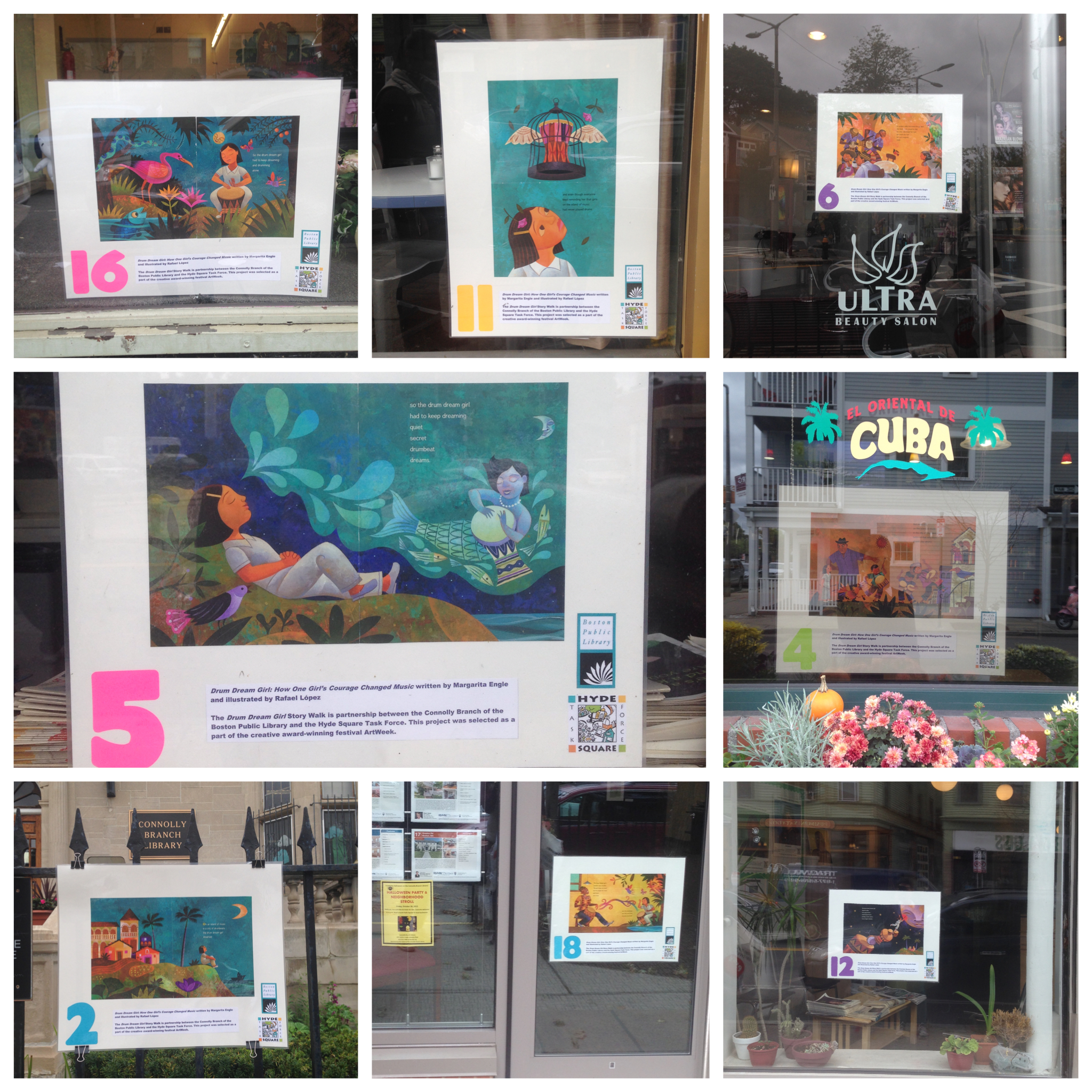
From beauty salons to Cuban restaurants and health centers, the Drum Dream Girl Story Walk boards

From beauty salons to Cuban restaurants and health centers, the Drum Dream Girl Story Walk boards


For our story walk inauguration, we selected a Saturday morning. The actual story walk was designed to be read independently, which allowed families and individuals to follow the story at their own pace. They would pick up a map at the library, walk down the main street reading each story poster, and end up at the youth community center where related activities were being offered. To enhance the reading experience, we encouraged kids to jot down certain details of the story, such as the number of people they saw on each poster, which quickly turned into a game for them and increased their attentiveness. Since this book is about an Afro-Latina drummer, several activities were music-related. At a craft table, children created their own drums, maracas, and other instruments, using recycled materials. In a separate room, story-walk readers had the opportunity to participate in a drumming workshop conducted by Latina teen drummers. These activities brought an already wonderful book to life, and provided a way to celebrate the power of music as well as elements of Latino heritage.  The publisher was kind enough to furnish a few copies of the book, which were given out as prizes to the first kids that finished the story walk.

The Drum Dream Girl Story Walk was up for a two-week period. During this time, patrons stopped by the library to pick up maps, children flocked to the crafts area to make musical instruments, and many picked up a copy of the book, while others shared their excitement about how well the story walk integrated their community. A copy of the map was located outside, at the front of the library, so that even during our closed hours, anyone interested could follow the story on their own. A lot of people who knew nothing about the program enjoyed the story as they passed through the neighborhood, leading to greater awareness about the story walk, the library, the community, and of course, the courageous Cuban girl who changed a piece of music history.
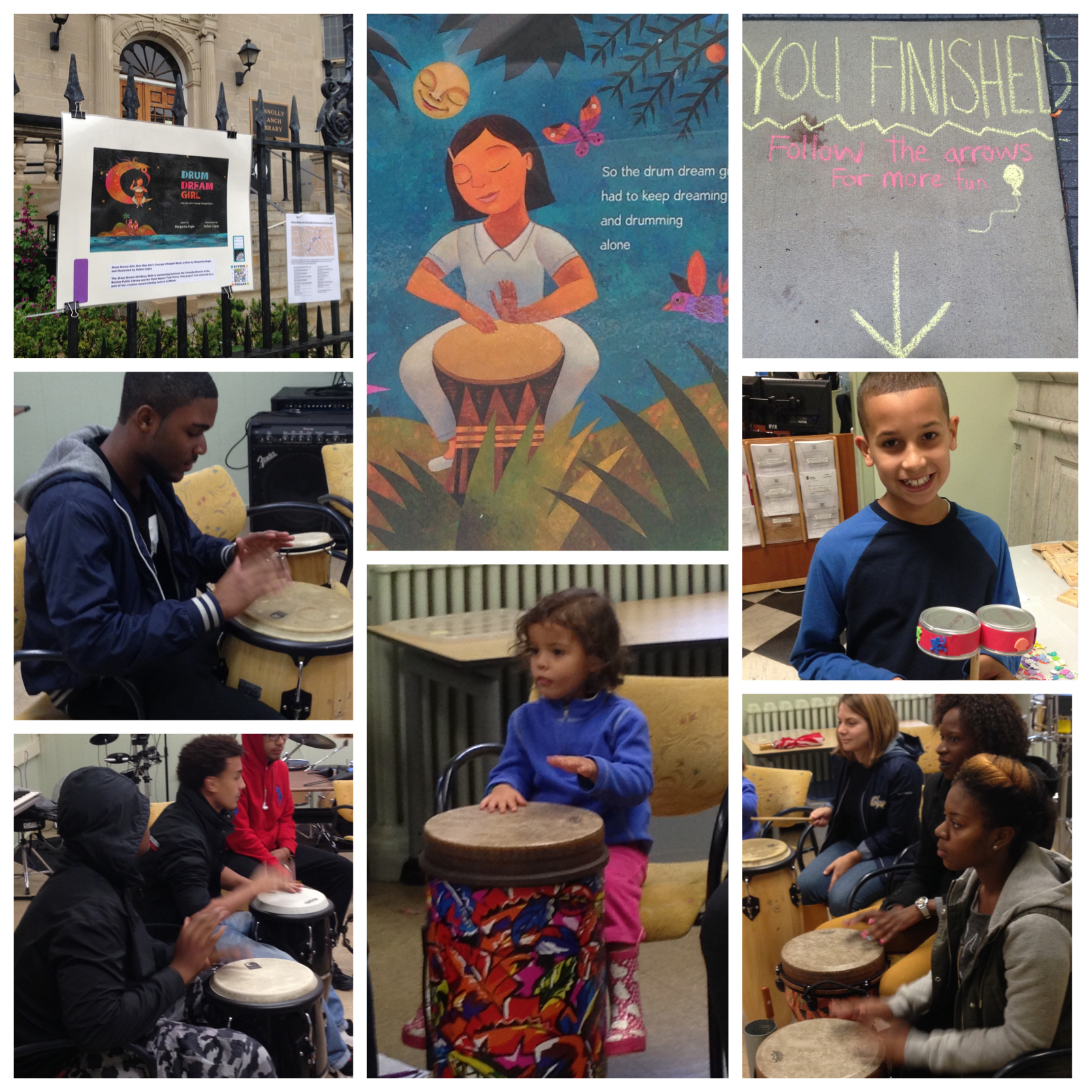
Drum dreamers

Drum dreamers


The Drum Dream Story Walk was a great event to plan and implement in an urban setting, and although it took time and patience to create the poster boards, I would definitely do it again. Alternative programs like this contribute to breaking down the physical barriers that often exist between a library and the community it serves, and also tighten relationships with local groups, businesses, and library patrons. I foresee future story walks in my library work, using diverse picture books and bilingual titles. I also intend to invite school classes and local groups to form story-walk read-alouds. And let’s not forget that music and art-making activities enhance the story-walk experience and help bring a book to life in memorable ways.
 

SujeiLugoSujei Lugo was born in New Jersey and raised in her parents’ rural hometown in Puerto Rico. She earned her Master’s in Library and Information Science degree from the Graduate School of Information Sciences and Technologies at the University of Puerto Rico and is a doctoral candidate in Library and Information Science at Simmons College, focusing her research on Latino librarianship and identity. She has worked as a librarian at the Puerto Rican Collection at the University of Puerto Rico, the Nilita Vientós Gastón House-Library in San Juan, Puerto Rico, and the University of Puerto Rico Elementary School Library. Sujei currently works as a children’s librarian at the Boston Public Library. She is a member ofREFORMA (The National Association to Promote Library Services to Latinos and the Spanish-speaking), American Library Association, and Association of Library Service to Children. She is the editor of Litwin Books/Library Juice Press series on Critical Race Studies and Multiculturalism in LIS. Sujei can also be found on Twitter, Letterboxd and Goodreads.

Kickin’ Back With #KidLitCon

By Libertad Araceli Thomas

There’s always this anxiety I get when I attend book and writing conferences. While in my everyday non-bookish life I’m pretty extroverted, when I step foot in these places, where most likely, if not for my sister, I’d be one of the few people of color (POC) as well as the only Latina, I shut down and go into hermit mode. I’ll admit the first day was a little tough for me. I did remember a ton of folks from last year, but Kid Lit Con moves around every year, so there’s always tons of new people that you’re not going to know. As I predicted, I closed off. I felt lonely. I thought here are all these people who like books just as much as I do, but I always have this fear that people aren’t going to like me because here I am, this inner city negrita with these big hoop name plate earrings (that I personally cannot live without) and this big hair and very awkward in my own way.

FB_IMG_1444687743048_1

There’s this feeling deep down inside me that I feel awful for admitting being a POC. I have this immense distrust for white people. I’ve never trusted white people to make me feel comfortable. I’ve never trusted them to understand my experiences and worst of all, many opportunities I’ve had to challenge a white person’s way of thinking, I’m almost always shot down, left feeling lesser than and invalidated to the point where sometimes it’s just easier to not say anything at all.

Last year’s theme was a subject very dear to me: Diversity. Sometimes as book bloggers, my sister and I feel very disadvantaged because we’re not blogging about the latest Stephenie Meyer books or the ones that are deemed the next big thing; the books that speak the most to me are books that feature non “default” characters. So I prayed we’d get a chance to bring up diversity before our panel the next day. It unfortunately didn’t happen, so I was feeling a little down on my luck.

My sister and I kept score on how many things had gone wrong with this trip and then the day of our panel, the worst thing in the world happened. Our moderator, Dr. Zetta Elliott, who created this amazing thought provoking presentation, was unable to make it and we’d found out just moments before our scheduled slot.

The show went on with our other lovely panelist/author Mary Fan (who was totally awesome and poised to perfection) reading in Zetta’s place. Our pressing topic?

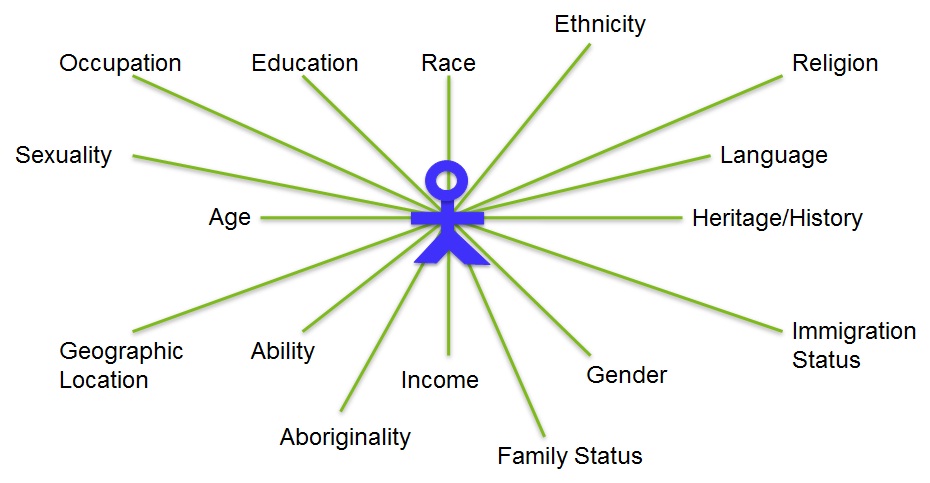
Intersectionality

intersectionality-blueman

Sharing personal stories is hard on paper, but it’s especially hard vocalizing them to a room full of people when you’re on display. A key point I felt passionate about was how perception leads people to believe there’s one way to be something.–one way to be black, one way to be queer, one way to be a person. Being Afro-Latina, Queer and Buddhist, I suffer from a severe case of unicorn syndrome. No one really expects me to be all these things, but I am and there was a librarian named Maureen (who was also Latina, yay!) whose words really stuck out to me: To be Latina is to be intersectional because there is no one identity.

mary fan

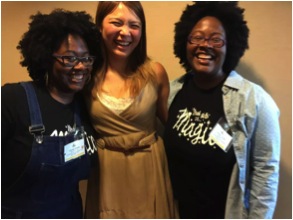
*Guinevere and I with our fellow panelist, Mary Fan*

After our intersectionality panel all the apprehension washed away. One minute, I was feeling like no one saw me and then the next I had an overwhelming amount of people thanking me for challenging their thoughts.

marissa

*Me, Marissa, and Guinevere*

And turns out, we weren’t actually alone. The Latinas were there representing. A young and amazingly beautiful boricua named Marissa (who blogs @Marissa Reads) was just so full of life and loved to read so much that she had to start blogging about books to find others like her!

While our intersectionality panel could have been the very best panel I’ve ever spoke on, I have to say my favorite moment of that day had absolutely nothing to do with any of the panels themselves but a member of the audience during a panel about professional blogging. The father of the young lady we’d met earlier was just so proud of her, filming and taking photos, silently encouraging her love for books.

It brought a tear to my eyes because just a month ago a friend of mine confessed he didn’t push his son to read because “Dominicans don’t read.” Maybe it’s just he doesn’t see Dominican kids in books. Either way, the moment gave me so much hope for the future and plans to incorporate a Dominican character in my next WIP. Just one person’s mind challenged about race, culture, gender, and disability is a battle won in my book. Next year, I pray I won’t be so afraid to tell people my story because my story is one of many that I hope can diversify people’s perceptions about the world we live in today.

4 latinas

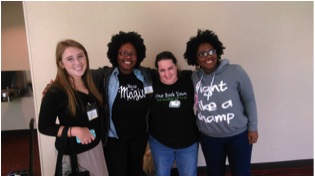
*From left to right Marissa, Guinevere, Maureen and me representing for the Latinas*

FB_IMG_1444688996687

Libertad Araceli Thomas is one half of Twinja Book Reviews, a book blog that celebrates diversity. Between mastering her handstands and perfecting her butterfly kicks, she can be caught reading and promoting a good book! Tweet with her @afrocubansista and @dos_twinjas 

Book Review: Sofi and the Magic, Musical Mural/Sofi y el Mágico Mural Musical


Reviewed by Sujei Lugo

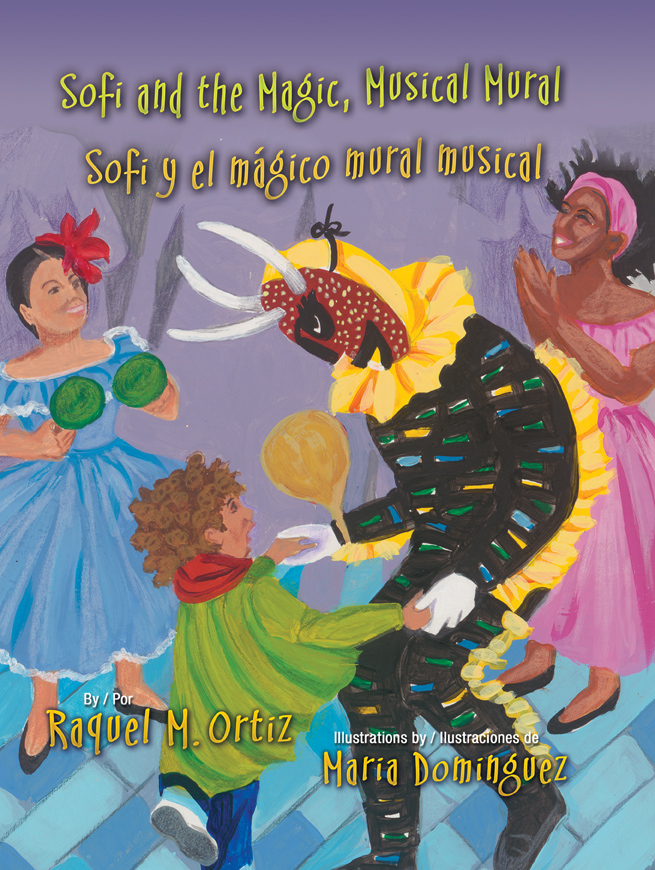
Sofi-and-the-Magic-Musical-MuralDESCRIPTION FROM THE PUBLISHER: When Sofi walks through her barrio to the local store, she always passes a huge mural with images from Puerto Rico: musicians, dancers, tropical flowers and—her least favorite—a vejigante, a character from carnival that wears a scary mask. One day on her way home from the bodega, she stops in front of the mural. Is one of the dancers inviting her to be his partner? “Okay, let’s dance,” Sofi giggles, and suddenly she’s in Old San Juan, surrounded by dancers and musicians playing bongos, tambourines and güiros. She begins to dance and sing with her new friends, but her pleasure turns to fear when the vejigante—wearing a black jumper with yellow fringe and a red, three-horned mask—spins her around and around! What does he want from her? How can she get away?

MY TWO CENTS: In this debut bilingual picture book, author Raquel M. Ortiz and illustrator Maria Dominguez capture the story of an imaginative girl and her magical and musical encounter with a neighborhood mural. Inspired by a mural located in South Bronx, New York, Ortiz and Dominguez give us a story that celebrates Puerto Rican traditions, community-based art, and city life.

Our young protagonist Sofía is lying on her bed feeling pretty bored. Her mom asks her to go to the bodega at the end of the block to get some milk and to remember that she should “not talk to ANYONE!” Sofía gets her scarf and coat, nods to her mom, and embarks on her journey to get the half-gallon of milk. Strolling along the sidewalk, she looks at the huge mural painted on a nearby building. She is stunned by its size and the colorful images of musicians, dancers, amapola flowers, and her least favorite, a vejigante. While returning from the bodega, Sofia can’t help admiring the mural once again. This is when she notices that one of the musicians, a plenero, is extending his hand to her to dance, breaking the wall between reality, art, and imagination. In a heartbeat, Sofía finds herself inside the mural, starting a whimsical experience that will bring her close to her Puerto Rican heritage.

Reading and seeing images of things that I grew up with put a smile on my face. From the plena song “Porque la plena viene de Ponce, viene de barrio de San Antón” to the carnival song “¡Toco-toco, toco-toco! ¡Vejigante come coco!”, I couldn’t help singing along with all the plenas and remembering the presence of plena songs in family gatherings, “navidad” parties, cultural “festivales”, carnivals, and even street protests. No wonder it is known as the  “periódico cantado” (sung newspapers), telling everyday stories all year long.

We also meet the famous vejigante, wearing its colorful outfit and a scary mask made from coconut shell (although some are made from papier-mâché). The vejigante is a mischievous folkloric character that resembles a buffoon or the devil, and which became a symbol of Puerto Rican cultural identity. In the story, Sofi plays and dances with the vejigante that she once saw as scary. She ends up wearing his outfit and flies around the Puerto Rican landscape going through El Yunque rainforest, and landing at the church plaza in Old San Juan. Here the author metaphorically portrays how through art, music, and traditions we can “fly” to the island of Puerto Rico, and demonstrates the deep connections that exist between the Puerto Rican diaspora and the island.

In terms of layout and illustrations, the bilingual text is located on the left side of the book with small illustrations dividing the English and Spanish texts and whole-page illustrations accompanying the text on the right side. The illustrator based her design and images on the original mural and conversations with the students that drew the images for mural. From soft colors for the city and bright and vivid colors for the mural, Dominguez’s paintings transport us from a wintry day in New York City to a sunny day in Puerto Rico.

Using The Pueblo Sings/El Pueblo Cantor mural as an inspiration for this picture book communicates the power of art, music, literature, and images to represent a community and tell its stories of resistance. The 7th- and 8th-grade students that designed the mural embraced the process of community building, public art, and history. It was created with and for the Puerto Rican community that has lived in New York City for decades. The mural’s statement is about the existence of the people and is a representation of their stories. It brings identification to the neighborhood and informs visitors about the living, breathing community located there. It is exciting to see the author centering the narrative on a young Puerto Rican girl who experiences this connection with her culture, traditions, and family, and then back to herself. In so doing, this book gives a powerful testament to how children can experience these connections and embrace them as their own.    

The book includes author and illustrator biographical notes, a glossary, and information about the mural.

TEACHING TIPS: The bilingual picture book is recommended for children ages 4 to 8. It works as a read aloud and for early independent readers. At home or at the library, librarians, parents, grandparents or other caregivers can read the story aloud in English, Spanish, or both, while teaching new words, concepts and discussing the different images. Teachers can include the discussion of Puerto Rican history, traditions, and music in their curriculum. 

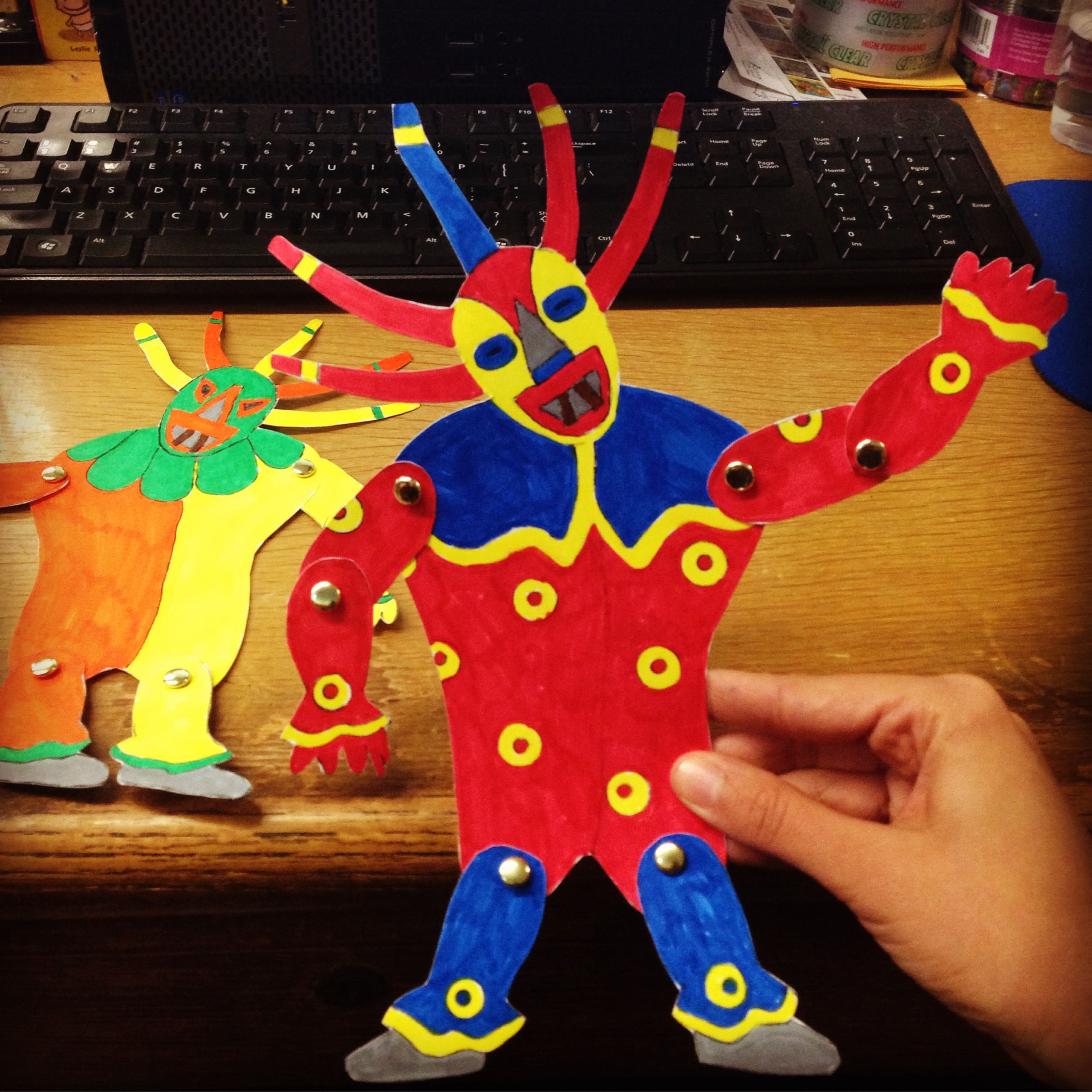
IMG_4360-2

Vejigantes puppets I created for a library program. I explained to the children the meaning of vejigantes and how I grew up seeing them almost everywhere back in Puerto Rico.


Since the main focus of the story and its inspiration is a mural, children can create their own small-scale cardboard murals. Adults should encourage children to use elements from their community or their personal or family stories as inspiration. Moving activities to the street, adults can stroll down the neighborhood with children to view community murals, posing such questions as: Who created this mural? Who is it about? What does it represent? Does it represent the community where it is located? What type of murals should our neighborhood have? This will create a conversation about public art, public space, and community.

AUTHOR & ILLUSTRATOR: Raquel M. Ortiz was born and raised in Lorain, Ohio, and has been making art and telling stories since she was little. She holds a Ph.D. in Social Anthropology from the University of Salamanca and has worked at The Brooklyn Museum, the Allen Memorial Art Museum and El Museo del Barrio. Raquel is the author of El Arte de la Identidad, the documentary Memories of the Wall: Education and Enrichment through Community Murals and textbooks and educational materials for children in Puerto Rico and the United States. She lives in New York City with her family and is a professor at Boricua College.

Maria Dominguez moved from Cataño, Puerto Rico to New York City when she was five year old. She began her artistic career as a muralist with Cityarts in 1982. Over the past twenty-five years, Dominguez has created over twenty public art murals and worked with the Metropolitan Transportation Authority of New York City, Artmaker, Inc. and Brooklyn Connect. The recipient of grants from the National Endowment for the Arts and the New York Foundation for the Arts, she has also headed El Museo del Barrio’s Education Department. She currently teaches art in New York City’s Public School System.

FOR MORE INFORMATION about Sofi and the Magic, Musical Mural/Sofi y el Mágico Mural Musical, check your local public library, your local bookstore or IndieBound. Also, check out GoodreadsAmazon, and Barnes & Noble.


SujeiLugoSujei Lugo was born in New Jersey and raised in her parents’ rural hometown in Puerto Rico. She earned her Master’s in Library and Information Science degree from the Graduate School of Information Sciences and Technologies at the University of Puerto Rico and is a doctoral candidate in Library and Information Science at Simmons College, focusing her research on Latino librarianship and identity. She has worked as a librarian at the Puerto Rican Collection at the University of Puerto Rico, the Nilita Vientós Gastón House-Library in San Juan, Puerto Rico, and the University of Puerto Rico Elementary School Library. Sujei currently works as a children’s librarian at the Boston Public Library. She is a member of REFORMA (The National Association to Promote Library Services to Latinos and the Spanish-speaking), American Library Association, and Association of Library Service to Children. She is the editor of Litwin Books/Library Juice Press series on Critical Race Studies and Multiculturalism in LIS. Sujei can also be found on Twitter, Letterboxd and Goodreads.

Reflections on the Children’s Literature Association’s Annual Conference


By Marilisa Jiménez García, Ph.D.

The Children’s Literature Association (ChLA) meets for its annual conference every June. Founded in 1973, ChLA seeks to advance scholarship and criticism of children’s and young adult literature, particularly as a field of literary study. Academic associations, journals, and conferences provide scholars with an opportunity to organize and disseminate research. They also provide spaces for rethinking the purpose of a field more broadly with established and up and coming scholars. After years of attending ethnic studies and general literature and literacy conferences, I was invited to form part of a Latin American Children’s Literature panel chaired by Ann González at ChLA 2015 in Richmond, Virginia.

I arrived at ChLA 2015 hoping to reconnect with a group of scholars and educators that inspired my intellectual pursuit of children’s and young adult literature. ChLA 2009 was the first conference I attended as a University of Florida graduate student in Charlotte, North Carolina. My colleagues and professors said I would find a supportive and friendly scholarly community, something I immediately confirmed. I was thrilled to find others who valued the artistic, creative, and historical value of children’s and young adult texts and media, something which might be hard to find in English departments. Yet, from the outset, I also noticed I was one of the only, if not the only, Latino/as at the conference. I was on a panel about language in children’s literature chaired by my dissertation director, Kenneth B. Kidd. By that point, I had found my dissertation research on Puerto Rican children’s literature and its representations of U.S. colonialism, nationalism, race, and gender. After I delivered my paper, “Language Borders and the Case of Puerto Rican Children’s Literature,” which was later published, several people in the audience waited to speak to me about my research. I felt a sense of validation. This was also one of the first times people referred to my research as “brave.” I still wrestle with seeing this as a compliment in terms of the work I do, whether I was brave for presenting Latino/a culture and Spanglish as belonging in a tradition of American writing or if my presence as an underrepresented minority seemed somehow exceptional. Even considering the underrepresentation of Latino/as in American children’s literature and the overall sparse numbers of Latino/a faculty, was I brave for presenting what I knew?

Me and Kenneth Kidd, photo by Ebony Elizabeth Thomas

Me and Kenneth Kidd, photo by Ebony Elizabeth Thomas

Being the only Latina in an academic environment was not a new experience for me, but as someone who studied Victorian and American children’s literature, what was new was my realization of how often the depictions of Anglo-British and Anglo-American children and childhood are presented as central, and even universal. The terms “the child” and “children’s literature” seemed reserved for these portrayals. Progressing into my doctoral career, within the context of groups such as ChLA, I found that my work was often greeted with questions such as, “What does this have to do with children’s literature?” or “How is this about childhood?” In part, my dissertation in 2012, which won an award in Puerto Rican Studies, addressed the centrality of Anglo culture in children’s literature. I now realize that even in my position as a very junior scholar, I was perhaps one of the first to begin probing at the systemic diversity issue in kid lit, which today, though certainly not new predicament, has reached the forefront. Realistically, it was not until Robin Bernstein’s important study Racial Innocence (2013) that the field more holistically and publicly began to underline how representations of childhood and innocence are coded white.

My movement into ethnic studies and organizations like the National Council for Teachers of English (NCTE) provided a space for me to develop the kinds of conversations I wanted to have about race, nationality, and the study of children’s literature in the academy, including its branches into education and library science. Truthfully, those of us who work in Latino/a children’s literature owe a great debt to education scholars, such as Sonia Nieto, whose foundational work on the subject in the 1970s and 1980s parallels with the work of Rudine Sims Bishop in African American children’s literature. Yet, I always kept my eye on ChLA, and was excited to hear that diversity and the lack of minority representation in children’s books would be the theme of ChLA 2014 (“Diverging Diversities: Plurality in Children’s and Young Adult Literature”). I could not attend ChLA 14, though my paper on Latino/a young adult (YA) literature was read by Kidd.

Thursday morning at ChLA 2015 found me a bit anxious. Walking into the Omni Hotel Richmond on the first day of the conference, I was still attempting to process the tragic shooting at a Charleston church the night before. As someone who spent quite a bit of my life in the context of the South and the sway of the Confederate flag, the grim headlines seemed to frame everything I saw, even the 2015 conference theme: “Give Me Liberty, Or Give Me Death.” Once in the reception area, I met a Twitter friend, master’s student, Cristiana Rhodes of Texas A&M University, Corpus Christie, who approaches children’s literature through Chicano/a epistemologies. We discussed our work and perspective on being Latino/a in a field which sometimes struggles to see us as part of “English.” I was so encouraged to see a young Latina chairing a panel at ChLA and presenting her research on resisting stereotypical depictions of the Day of the Dead. Rhodes shared similar feelings to what mine had been as a graduate student. Later on, she said, “As a Latina, one of my primary goals in presenting at any academic conference is visibility–to let other academics know that we’re here and we’re doing good, valuable research. I think our place in ChLA, in particular, is to further solidify that diversity is an integral part of children’s literature, and without diverse perspectives the field would lose something.

“I think children’s lit scholars are beginning to understand that the field shouldn’t just be dominated by (white) hegemonic perspectives, and that’s really encouraging for someone like me who is new to the field. However, I still firmly believe that diversity shouldn’t be tokenized by the association (and I feel it often is) and I feel like the only thing we can do to remedy this is to stay visible and keep our research relevant. That’s my goal as a member of ChLA.”

Rhodes, who plans to pursue a doctorate, also said, “I think, as a whole, the children’s literature community [and ChLA] is really welcoming for new scholars regardless of their race, gender, education-level, etc. I’m always sort of constantly afraid that my age, coupled with my race, will inevitably exclude me from certain spaces within academia, but I’ve never felt left out or ignored because of these things while in the company of other children’s literature scholars.”

Rhodes’ comments continued to impress me as I had lunch with Casey Alane Wilson, Rebekah Fitzsimmons, and Mariko Turk, doctoral students from the University of Florida. Wilson and Fitzsimmons, who presented a paper on the construction of the YA genre, including how YA is used as a platform for diverse writers, helped me see that our field is at a moment of transition and restructuring, a moment in which those of us entering the academy are also questioning the history, structures, and key terms which formed and continue to guide our fields. This urge to question is something we were nurtured as scholars to do. My doctoral training under Kenneth Kidd in particular placed me in a position to think about how children’s literature developed as a field and how it is valued by the different branches, in part because of Kidd’s own against the grain perspective on kid lit. Kidd, a founding member of ChLA’s diversity committee, encouraged me to participate in the membership meeting and the coming year’s diversity committee.

Wilson, who is writing her dissertation on the dynamics of young adult literature, commented on her assurance that ChLA has evolved as a space for confronting these issues, conversations that she said “we, as scholars, have a responsibility to have…But I would also say that I’d like to see more of these conversations that aren’t limited specifically to panels about race — these questions should come up and be discussed in so-called ‘regular’ panels, too.”

The panel I presented on in Latin American children’s literature was well-attended. My panel chair, Gonzalez wrote Resistance and Survival (2011), an important study on Latin American and Caribbean children’s literature, which I highly recommend to anyone interested in learning more about the roots of Latin American cultures and kid lit, including Latino/a. During my presentation on race and nationality in Puerto Rican textbooks, which were used in Puerto Rico and New York City schools during the 1950s, I understood why it was important for me to continue attending ChLA. The research and perspective I brought to ChLA meant that even if Latino/as and people of color in general were underrepresented, my presentation and any conversations it inspired, raised the visibility of these groups in the field. In particular, by retracing the history of Latino/as in children’s literature, I hope to present how people of color form part of the foundation of children’s literature, and not the margins.

In terms of diversity, one of the conference highlights was a panel on Black Lives Matter featuring Katherine Capshaw Smith of the University of Connecticut, Michelle Martin of the University of South Carolina, and Myisha Priest of New York University, and chaired by Richard Flynn of Georgia Southern University, who drew a parallel to the Charleston shooting in his introduction. Together, these scholars underlined the importance of children’s literature and the tensions between innocence and criminality in terms of narrating the public deaths of black children, including Emmit Till, Robert “Yummy” Sandifer, and Kalief Browder. Another panel, “Illustrating African American history,” focused on how race and racism is depicted in children’s literature, and there was a panel titled “American Indians and Indianness,” which I was unable to attend.

Rhodes, Sonia Rodríguez (who could not attend), and I were the only scholars focusing solely on Latino/a children’s literature. Lilian B.W. Feitosa read one paper on Brazilian children’s literature and Renee Lathman read on poverty and marginality in Puerto Rican children’s literature. Also, Rhonda Brock-Servais and Aslyn Kemp from Longwood University delivered a great presentation on gender in Meg Medina’s work. The panel I presented on encompassed my perspective of Latin American and Latino/a children’s literature. In the future, I hope to organize a panel on Latino/a kid lit and hope it will not be seen as a an international panel since Latino/a is indeed a U.S. formation. The international panels at ChLA provide a great opportunity for diverse perspectives on children’s literature, but some scholars, such as Wilson, note that scheduling the international panels concurrently limits the opportunities for exchanges.

ChLA is an organization which has historically been committed to social justice. Overall, I think it would benefit from relationships with scholars doing ethnic studies and education research, an initiative listed in their Diversity Committee Plan 2009-2013. Collaboration with these fields would enable exchanges from the perspective of theories such as critical race theory (CRT) and Latino critical theory (LatCrit). I would also encourage children’s illustrators and authors to attend the conference to see how their work is impacting future frameworks and interpretations. ChLA is still a smaller and more manageable conference than meetings such as American Library Association (ALA), Modern Language Association (MLA), and/or National Council for Teachers of English (NCTE). It’s smaller, welcoming environment perhaps makes it more suitable for increasing the participation of scholars of color through mentoring events or spaces designed to nurture the needs of future faculty. Katherine Slater of Rowan University and chair of the Membership Committee said that ChLA plans to incorporate activities, including panels, speakers, and discussion groups that nurture diversity.

After Saturday’s membership meeting, I spoke to Ebony Elizabeth Thomas of the University of Pennsylvania and Kidd about my intentions to return to ChLA and get more involved in the planning and leadership. I felt incredibly supported during my conversations with Kidd, Thomas, Martin, and Capshaw, and by the ChLA community. Given the social movements and narratives of race overlapping with the narratives of the academy, I also felt that change was impossible to avoid. While preparing this reflection, I spoke with other scholars of color about how entering these spaces where we are the only ones makes us feel overwhelmed at times. Because for us, “diversity” is a term used to describe our lives and very beings, and not a theme. Perhaps, that is why when we choose to come to these places, and in my case return, we seem brave.


Marilisa_Jimenez-Garcia

Marilisa Jiménez García is a research associate at the Center for Puerto Rican Studies, Hunter College, CUNY. She works at the intersections of Latino/a Studies and childhood and children’s literature studies. She is currently working on a book manuscript on the history of Latino/a children’s and young adult literature and an essay on the Latino/a “YA” tradition. She is conducting a survey of NYC teachers on teacher education and the use of diverse lit. in the classroom.

Book Review: Drum Dream Girl: How One Girl’s Courage Changed Music by Margarita Engle

By Sujei Lugo

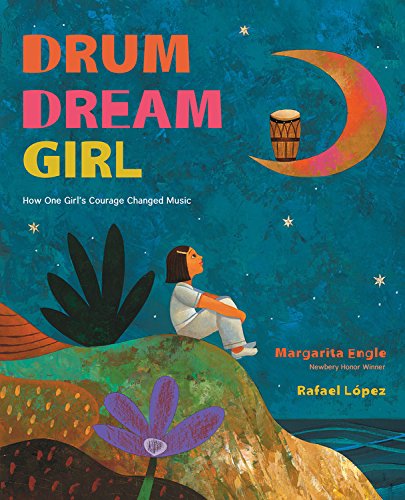
drum dream girl coverDESCRIPTION FROM THE BOOK JACKET: Girls cannot be drummers. Long ago on an island filled with music and rhythm, no one questioned that rule — until the drum dream girl. She longed to play tall congas and small bongós and silvery, moon-bright timbales. She had to practice in secret. But when at last her music was heard, everyone sang and danced and decided that boys and girls should be free to drum and dream.

Inspired by a Chinese-African-Cuban girl who broke Cuba’s traditional taboo against female drummers, Drum Dream Girl tells an inspiring true story for dreamers everywhere.

MY TWO CENTS: Inspired by the childhood of Chinese Afro Cuban drummer Millo Castro Zaldarriaga, Margarita Engle and Rafael López enchantingly encapsulate through poetic text and dreamy illustrations a girl’s dreams and her desires to play music. By focusing on our girl’s “dreaming” period and the stage when she finally achieves her dream as a child, the author and illustrator furnish a landscape where children should be free to dream, and one they can relate to and which allows them to see themselves as dreamers.

Through the first line of Engle’s poem, “On an island of music, in a city of drumbeats, the drum dream girl dreamed,” we meet our Caribbean dream girl, who dreams about congas, bongós, and moon-bright timbales on a island where everyone believes only boys should play drums. This excluding notion and the exposure to such blatant sexism at such a young age do not prevent our girl from dreaming. She plays her own imaginary music, walks around tapping her feet and plays contagious drum rhythms on tables and chairs. When her big sisters invite her to join their new all-girl dance band, the drum dream girl is excited, but her father reminds her that “only boys should play drums.” She keeps drumming and dreaming, until her father realizes that her talent deserves to be heard. With a compelling illustration of her father “pulling” her drumming and dreaming daughter from the sky to the ground, she perseveres and lands back on her island of music, making her dream a reality.

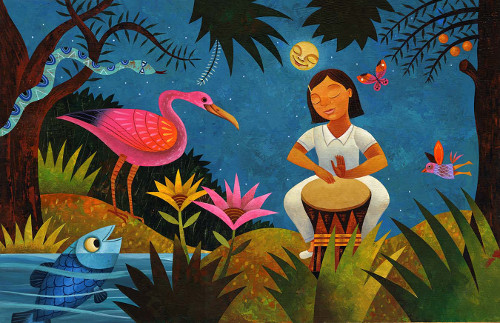
The text is really descriptive, filled with poetic repetition and acknowledgements of the natural landscape of the island. Rafael López’s trademark of colorful and vibrant illustrations enhances the musical and dreamy experience of our character, providing images where you feel you are listening to the music and the beats. Through two-page layout canvases rich with smiling moons, suns, and birds, huge instruments, and our drum dream girl with closed eyes, he captures the spirit, the breeze, and the rhythm of our little drummer. López also successfully portrays the essence of Cuban city life and its racial and ethnic demographics.

7

Drum Dream Girl is the story of Millo Castro Zaldarriaga, a mixed race Cuban girl, who defied gender roles in the 1930’s music scene. The girl and her story show the importance of family, teacher, and music-education support to expose and develop our children’s musical talents. The all-girl dance band she joined was Anacaona, an orchestra founded by Cuchito Castro and her sisters. This forgotten and overshadowed group challenged the male-dominated Cuban music scene and an environment where women were seen as incapable of playing music. For more information about this group, look for the book Anacaona: The Amazing Adventures of Cuba’s First All-Girl Dance Band, written by Alicia Castro, Ingrid Kummels and Manfred Schäfer, or watch this preview of the documentary Anacaona: The Amazing Story of Cuba’s Forgotten Girl Band.

TEACHING TIPS: The picture book will work great as a read-aloud and a rich addition to music-themed library programs, where children could also make their own drums. With older children, teachers can incorporate poetry writing, drawing, and visualizing music as poetry. The text, illustrations, and content make this book perfect to be adapted as a musical play.

Other classroom activities can include historical exploration of Millo Castro Zaldarriaga’s life, Cuban music, and other female musicians. Margarita Engle includes a publisher’s discussion guide on her website.

AUTHOR & ILLUSTRATOR:

Margarita Engle is a Cuban-American author, botanist, and professor who enjoys collaborating with her husband in volunteer work for wilderness search and rescue dog training programs. Engle is the winner of numerous awards for her children’s and young adult books, including the Newbery Honor for The Surrender Tree: Poems of Cuba’s Struggle for Freedom (2008), becoming the first Latina to win that children’s literature award. In addition to her work as a writer, she also contributes to various periodicals such as Atlanta Review, Bilingual Review, California Quarterly, Caribbean Writer, Hawai’i Pacific Review, and Nimrod. Margarita Engle is a member of PEN USA West, Amnesty International, Freedom House of Human Rights and Freedom to Write Committee.

Some of her titles are: The Poet Slave of Cuba: A Biography of Juan Francisco Manzano (2006), Tropical Secrets: Holocaust Refugees in Cuba (2009), The Firefly Letters: A Suffragette’s Journey to Cuba (2010), Hurricane Dancers: The First Caribbean Pirate Shipwreck (2011), The Wild Book (2012), The Lightning Dreamer: Cuba’s Greatest Abolitionist (2013), Mountain Dog (2013), Silver People: Voices From the Panama Canal (2014), Orangutanka: A Story in Poems (2015), The Sky Painter: Louis Fuertes, Bird Artist (2015), and Enchanted Air: Two Cultures, Two Wings (2015).

Rafael López is a Mexican award-winning illustrator and artist, whose work is influenced by his cultural heritage, colors of Mexican street life, and Mexican surrealism. In addition to children’s books, López has illustrated posters, United States Postal Service stamps such as the Latin Music Legends series, and he has launched street art projects to revitalize urban neighborhoods, such as the Urban Art Trail Project.

He is the recipient of various Pura Belpré Honor for Illustration awards for books such as: My Name is Celia: The Life of Celia Cruz/Me Llamo Celia: La Vida de Celia Cruz (2006), Book Fiesta!: Celebrate Children’s Day/Book Day/ Celebremos El Día de los Niños/El Día de Los Libros (2010), The Cazuela That the Farm Maiden Stirred (2012) and Tito Puente: Mambo King/Rey del Mambo. He also received two Américas Awards for Children’s and Young Adult Literature for My Name is Celia (2006) and ¡Yum! ¡Mmmm! ¡Qué Rico! Americas’ Sproutings (2007).

DDG Pages 32-33 Final-revised-small

For more information about Drum Dream Girl: How One Girl’s Courage Changed Music (2015), visit your local library or bookstore. Also check out worldcat.orgindiebound.org, amazon.com, barnesandnoble.com, and goodreads.com. You can also watch the book trailer below.

Book Review: Finding the Music/En Pos de la Música by Jennifer Torres


finding the music coverBy Sujei Lugo

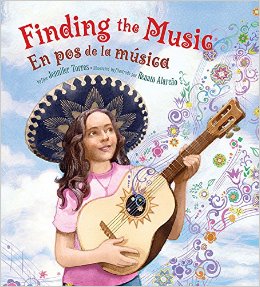
DESCRIPTION FROM THE BOOK JACKET: Above Reyna’s favorite booth in her family’s restaurant hangs the old vihuela, a small guitar-like instrument, that belonged to her abuelito when he was in a mariachi band. Reyna has never heard the vihuela played, but her mamá treasures the instrument as a reminder of abuelito and his music. One noisy day in the restaurant, Reyna accidentally damages the vihuela. Determined to get it repaired before Mamá notices, Reyna sets out to search her neighborhood for someone who can help her fix the instrument. Little does Reyna know that along the way she will find herself growing closer to abuelito and to the power of his music.

MY TWO CENTS: From the winner of the 2011 Lee & Low Books New Voices Award, here we have a bilingual story filled with charm that showcases the power of music as an intergenerational unifier.

Every weekend, Reyna hangs out at her mom’s restaurant, Cielito Lindo, reading and enjoying the cast of characters that visit the place. One day, she accidentally breaks her grandfather’s precious vihuela that hanged on one of the restaurant’s walls. Reyna never met her abuelito, but her mother’s tales about him and the way he played the vihuela are near and dear to her. Reyna knows she must embark on a journey to fix her abuelo’s beloved instrument.

This journey will bring her to learn, first hand, about his legacy and the importance of music and the power of community engagement. Throughout each page, and Reyna’s conversation with different community members, her abuelo’s presence can be felt. Jennifer Torres uses Reyna’s journey as a great portrayal of how meaningful everyday life is for a community. The vihuela becomes a powerful artifact that jump-starts the memory of the past, the important history of the community that tends to be invisible but is so essential to understanding the present. The broken vihuela reveals other anecdotes from the past that will help Reyna see the bigger picture of who her abuelo was and how the community remains united through their shared past. And it is through oral history and the passing of this knowledge that Reyna becomes aware of the real importance behind the vihuela and why it was hanging on the wall. The breaking of the vihuela is not a tragedy, but the catalyst for Reyna to better understand where she came from and get closer to her mother and her community.

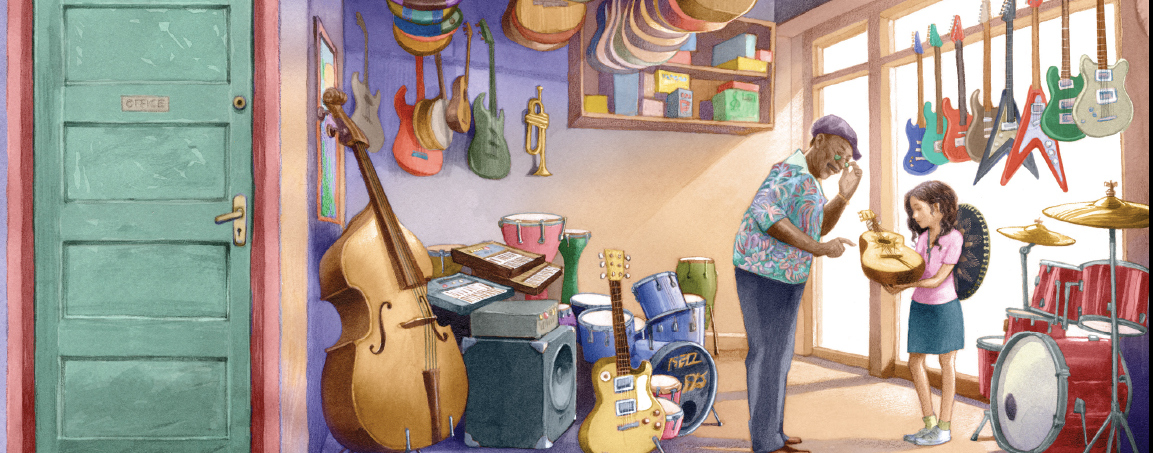
The realistic illustrations by Renato Alarcão, enhance the warmth of the tale and allow readers to see the characters’ expressions and feelings. Each image is filled with pastel colors and a consummated care to portray the connection and relations of the characters. The illustrations really echo a phrase said by Reyna’s mother at the beginning of the story, “these are the sounds of happy lives.” The illustrations truly convey the sounds of these lives.

Torres’s first picture book, Finding the Music/En Pos de la Música, is a solid work that is very much welcomed. The importance of oral history, the unifying qualities of music and the importance of preserving the artifacts that trigger the remembrance of who we were are all important concepts to help spark the curiosity of children among their own families and communities. We are in a constant search of adequate representation and we sometimes fail to see that in our own stories lie strong narratives that empower us and unite us.

*The book includes a glossary and pronunciation guide. The backstory of the Cielito Lindo and author’s note about mariachi music and band are also apprehended. Spanish translation by Alexis Romay.

musicstore
TEACHING TIPS: 
This bilingual picture book is recommended for children ages 4-9, and works well for early readers and as a read aloud with musical interventions as a bonus. Librarians, parents, grandparents, and caregivers can read with the young ones in English, Spanish, or both, while practicing or learning new vocabulary, identifying the different images and community components presented through the illustrations. It’s also a perfect book for a StoryWalk, given that our main character walks around her neighborhood finding some clues and stories about her abuelo. StoryWalk allows people to visit different points (parks, local stores, buildings) around the neighborhood where pages of the books are spread, they would walk to one point to another to follow the story.

Language Arts, Social Studies, Arts, and Music educators can collaborate in the development of different activities: vocabulary and writing activities, discussions and conversations regarding community, neighborhoods and Mexican, Chicano, and Latino history; the incorporation of drawings with writing activities; and the history of Mexican folk music. The author includes helpful activities for the Language Arts classroom: Story Map and Mini-Memoir. On the publisher’s website, you can access teaching guides developed for this book and other resources.

AUTHOR & ILLUSTRATOR:

Jennifer Torres is a freelance journalist, author, and coordinator of a community-wide literacy initiative at University of the Pacific, California. She studied journalism at Northwestern University, Illinois and at University of Westminster, London, England. Torres also worked as reporter for The Record newspaper, covering education, immigration, and other issues related to children and families. FINDING THE MUSIC/EN POS DE LA MÚSICA is her first picture book and her first middle grade novel, STEF SOTO, TACO QUEEN, will be published in Fall 2016.

Renato Alarcão is a graphic designer, illustrator and professor of visual arts. He studied in the Illustration as a Visual Essay program at the School of Visual Arts of New York and at The Center for Book Arts. In addition to his work as an illustrator, Alarcão has collaborated in different youth arts projects and has presented lectures on illustration, creativity, and artistic techniques. He has presented his work in exhibitions at the American Institute for the Graphic Arts, the American Society of Illustrators, the New York Public Library, the Skirball Cultural Center of Los Angeles, the Biennale of Illustrations in Bratislava, where he won the NOMA Prize for Illustrated Book. Some of his illustrated books: RED RIDIN’ IN THE HOOD: AND OTHER CUENTOS by Patricia Santos Marcantonio, SOCCER STAR by Mina Javaherbin, ROBERTO’S TRIP TO THE TOP by John B. Paterson & John Paterson, ELLA ENFEITIÇADA by Gail Carson Levine, Andiana Figueiredo.

FOR MORE INFORMATION ABOUT Finding the Music/En Pos de la Música visit your local library or bookstore. Also, check out WorldCat.orgIndieBound.orgGoodreadsAmazon, and Barnes & Noble.