Ready for 2018 FIFA World Cup Russia: Fútbol/Soccer Children’s Literature Bibliography


by Sujei Lugo

For the next couple of weeks, the 2018 FIFA World Cup, one of the world’s biggest sports events, will be held in Russia. This international soccer/fútbol competition brings spectators of all kinds together, drawing on their common passion—and this applies to avid fans who follow the sport throughout the year, as well as those who only pay attention every four years when the World Cup is played. Either way, this is the time to catch up with the latest players and root for your favorite team/country.

I live and work in a neighborhood where the caregivers of my library’s kids are often watching fútbol games on their phones, and where once in a while the little ones wear their favorite player’s jersey, or that of their parents’ or grandparents’ national team. It is one of those times when we break down certain barriers of communication with neighbors, family, friends, co-workers, and the people sitting next to us—because we are all speaking fútbol.

Like my fellow children’s librarians, the time for summer reading/learning programs is upon us, and we are always eager to support and encourage recreational and informational reading for our youth. The 2018 FIFA World Cup is a great opportunity to showcase our fútbol/soccer children’s books, and to start or continue conversations with our small patrons—and root (or debate!) together.
DfluFhzXkAAAbZy

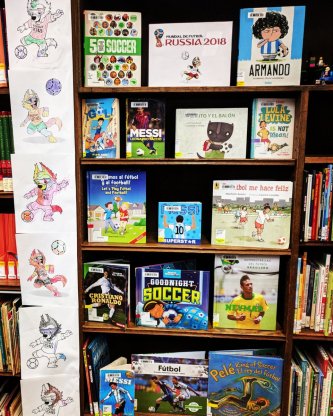
I posted a picture on my social-media accounts of the fútbol children’s books display that I put together at my library, along with coloring sheets of this year’s World Cup mascot, Zabivaka! My great colleagues Angie Manfredi and Cory Eckert suggested that I should assemble a bibliography of these books, and well, here it is! Included here are titles in Spanish and English, as well as bilingual editions, and it contains everything from early readers to graphic novels to chapter books. The majority of these titles are by Latinx or Latin American authors or illustrators. Many feature Latinx or Latin American characters and players, but I also included more general titles about the game and its players. My list focuses on books available at my library branch, but we know there are many more great ones out there! I hope this list inspires you to get your library display going, or perhaps to acquire some of these winners for your library, classroom, or home shelf, all for your favorite little ones!

Fútbol/Soccer Children’s Literature Bibliography

Alexander, Kwame (2016). Booked. Houghton Mifflin Harcourt. [Chapter Book; Novel in Verse]

Apps, Roy; illustrated by Chris King (2015). Dream to Win: Leo Messi. Franklin Watts. [Early Readers; Biography]
61PR6ODMAZL._SX258_BO1,204,203,200_

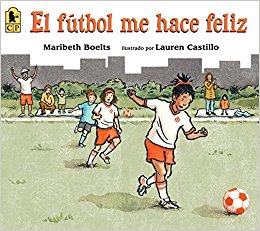
Boelts, Maribeth; illustrated by Lauren Castillo (2015). El fútbol me hace feliz. Candlewick Press. [Picture Book]

Boelts, Maribeth; illustrated by Lauren Castillo (2012). Happy Like Soccer. Candlewick Press. [Picture Book]

Borth, Teddy (2017). Fútbol: grandes momentos, récords y datos. Abdo Kids. [Early Readers]

Brown, Monica; illustrated by Angela Dominguez (2015). Lola Levine is not Mean! Little, Brown and Company. [Early Readers]

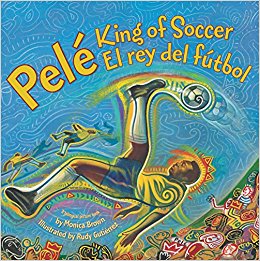
Brown, Monica; illustrated by Rudy Gutiérrez (2009). Pelé: King of Soccer/Pelé: el rey del fútbol. Rayo. [Picture Book; Biography; Bilingual]

Cline-Ransome, Lesa; illustrated by James E. Ransome (2007). Young Pelé: Soccer’s First Star. Schwartz & Wade Books. [Picture Book; Biography]

Colato Laínez, René; illustrated by Lancman Ink (2014). ¡Juguemos al fútbol y al football!/Let’s Play Fútbol and Football! Alfaguara. [Picture Book; Bilingual]

Crespo, Ana; illustrated by Nana Gonzalez (2015). The Sock Thief. Albert Whitman & Company. [Picture Book]

Dahl, Michael; illustrated by Christina Forshay (2018). Goodnight Soccer. Capstone Young Readers. [Picture Book]

Doeden, Matt (2017). Sports All-Stars: Cristiano Ronaldo. Lerner Publications. [Biography]
9789874616364Domínguez, María & Juan Pablo Lombana (2014). El Chavo: El partido de fútbol/The Soccer Match. Scholastic. [Picture Book; Bilingual]

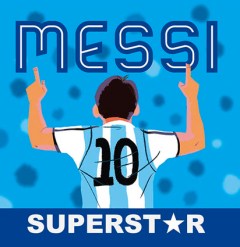
Duopresslabs; illustrated by Jon Stollberg (2016). Messi superstar. ¡Achis! [Biography]

Elzaurdia, Paco (2013). Superestrellas del fútbol mexicano: Rafael Márquez. Mason Crest. [Biography]

Franz Rosell, Joel; illustrated by Constanze v. Kitzing (2012). Gatito y el balón. Kalandraka. [Picture Book]

Garlando, Luigi; illustrated by Stefano Turconi (2012) ¡Gol! Un gran equipo. Vintage Español. [Chapter Book & Comics]

Javaherbin, Mina; illustrated by Renato Alarcão (2014). Soccer Star. Candlewick Press. [Picture Book]

Jökulsson, Illugi (2015). James Rodríguez. Abbeville Press. [Biography]

Jökulsson, Illugi (2015). Stars of Women’s Soccer. Abbeville Press. [Biographies]james-rodriguez

Jökulsson, Illugi (2015). Stars of World Soccer. Abbeville Press. [Biographies]

Lombana, Juan Pablo; illustrated by Zamie Casazola (2014). Soccermania/Futbolmanía. Scholastic, Inc. [Bilingual]

Manushkin, Fran; illustrated by Tammie Lyon (2018). Pedro: el golazo de Pedro. Picture Window Books. [Early Readers]

Morgan, Alex (2016). The Kicks: Settle the Score. Simon & Schuster Books for Young Readers. [Chapter Book]

Nevius, Carol; illustrated by Bill Thomson (2011). Soccer Hour. Marshall Cavendish Children. [Picture Book]

Oldfield, Tom & Matt Oldfield (2017). The Little Genius: Sergio Agüero. Dino. [Biography]

Oldfield, Tom & Matt Oldfield (2016). El pistolero: Luis Suárez. Dino. [Biography]

Paul, Batiste; illustrated by Jacqueline Alcántara (2018). The Field. NorthSouth Books. [Picture Book]

Pelé; illustrated by Frank Morrison (2010). For the Love of Soccer! Disney Hyperion. [Picture Book]

Pérez Hernando, Fernando (2016). Armando. Takatuka. [Picture Book]

Pinkney, Brian (2015). On the Ball. Disney Hyperion. [Picture Book]

downloadRadnedge, Aidan (2018). 50 Things You Should Know About Soccer. Quarto Publishing.

Simon, Eddy; illustrated by Vincent Brascaglia (2017). Pelé: the King of Soccer. First Second. [Graphic Novel]

Teixeira Thiago, Jorge (2013). Superestrellas del fútbol brasilero: Neymar. Mason Crest. [Biography]

Vázquez Lozano, Gustavo A. (2013). Superstars of Soccer Colombia: Iván Córdoba. Mason Crest. [Biography]

Vázquez Lozano, Gustavo A. (2013). Superstars of Soccer Mexico: Javier “Chicharito” Hernández. Mason Crest. [Biography]
61cUUTpvTcL._SX258_BO1,204,203,200_

Quizás Algo Hermoso: Interview with author F. Isabel Campoy


By Sujei Lugo

The picture book Maybe Something Beautiful: How Art Transformed a Neighborhood, written by F. Isabel Campoy and Theresa Howell, and illustrated by Rafael López, was published in 2016. Based on a true story about a community art initiative led by Rafael López and his wife, graphic designer and community leader Candice López, the book received rave reviews, won the 2017 Tomás Rivera Book Award, and made our 2016 Favorite Latinx Books list. This inspiring tale, along with its vibrant illustrations, provides tremendous inspiration in the realm of literacy, community, and arts education. Its impact on youth makes it a resource toward engagement and collaboration for teachers, librarians, and community organizers. As a youth librarian, I used Maybe Something Beautiful for a Día de los Niñxs/Día de los Libros program and wrote a post about it, entitled Día Art Bilingual Story Time!    

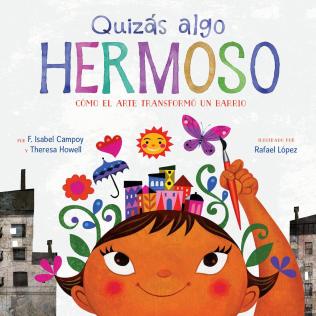
Last March 2018, a Spanish edition was published under the title Quizás algo hermoso: cómo el arte transformó un barrio. This text is not a translation of the English edition, but a new, original text by F. Isabel Campoy. We had the opportunity to chat with Isabel about Quizás algo hermoso, and we also asked about her work in children’s books and how she stays inspired.

DLkUqfXXcAAlEen

You’ve been publishing children’s books for years. What inspires or fuels you to keep publishing English, Spanish and bilingual titles for our little ones?

The adults who surround the first ten years of any child have complete influence in the development of their intellectual capabilities. The language they hear, the type of interactions they have with their surroundings, the number of experiences they are exposed to, all these are cornerstones in the foundation of their lives. Books do not substitute lived experiences, but they are great complements to them. If a child is read in the language they hear at home. If a child looks at illustrations that invites them to new landscapes, cities, monuments, or people. If children are presented with positive experiences, feelings or actions, those children will grow richer, more capable, more alert and open to learning. That is what fuels me to keep publishing in Spanish, and in English. To give children MORE. More language, more knowledge, more joy. More is always MORE. And children have the amazing ability to build up big brains if we offer them the possibility of learning.

When I was a child, there were very few books published for children, and the ones available had just a few illustrations in black and white. But I had the great fortune to have a father who was subscribed to the National Geographic Magazine since 1940. Those magazines saved me, fueled my imagination, and planted the seed in my heart for knowledge. When I recently published “Alegría, poesía cada día” with National Geographic Magazine I felt that a 70-year circle had been completed. What a joy that was!

I want children to dream the way I did. Very fortunately the book industry now offers many opportunities for great reading experiences.

In 2016 Maybe Something Beautiful: How Art Transformed a Neighborhood published to rave reviews. This year, we have a Spanish edition titled Quizás algo hermoso: cómo el arte transformó un barrio. Why did you choose to write a new, original Spanish text instead of providing a bilingual edition or direct translation?

If you are a balanced bilingual, when you write, in whatever language you are writing, you are being an original writer in that language. Quizás algo hermoso and Maybe Something Beautiful express the same idea in two languages. My co-author Theresa Howell and I worked the manuscript in English for almost three years! Every comma was measured, every expression, every interjection was pondered— while simultaneously I was building its parallel in Spanish. It is a lot of fun!

When a child reads a book, they must find a flawless use of that language, natural expressions, high command on part of the author of the grammar and syntax, a natural flow of meaning. Those are the components of an authentic text.

I wish all children had the opportunity to read and speak more than one language.

All countries in Latin America have speakers in more than one language. In the case of Mexico, for example, over 50 languages other than Spanish are spoken. I find that to be a cultural treasure!

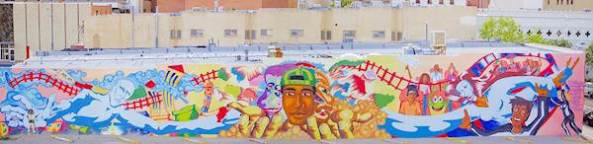
Lead Artist Antonio Lente. Photo by Paul López Albuquerque

Mural in Abuquerque, New Mexico. Lead artist, Antonio Lente. Photo by Paul López


How has the reaction been to both versions of the book by adults and children?

When we chose to write this manuscript, we had one goal: to share a positive community action with readers anywhere. The example set by Rafael and Candice López in San Diego was born out of a true desire for transformation, and they succeeded beautifully. Art was the means and solidarity was the goal. Their example is now being replicated in many places in this country. Rafael’s brushes are magic wands and the world is his canvas!

We have received letters from teachers and their students telling us about how they reacted to the book. There have been real murals painted, and murals on huge brown paper covering school hall walls. There have been little altars with suggestion boxes on how each child imagines the transformation of their environment through art. We have seen pictures of painted river rocks creating paths in gardens, and little paintings, like Mira’s, attached to fences. It is extraordinary what children can imagine, and it is enlightening to listen to them!

Adults have found in this text an example that can be replicated in their own corners of the world. And they are doing it!

Can you talk about the importance of having this story available in Spanish? Do you plan to publish it in other languages?

A couple of months ago we had the great news that the book had been translated into Chinese! That would add at least 300 million possible readers to our book! We are very happy.

I wanted to see this book in Spanish from day one. We were very happy to see it finally printed. The community that the book reflects is a picture of life in many places in the United States. Muralism is a vibrant reflection of Hispanic art. Three internationally known painters in Mexico: Rivera, Orozco and Siqueiros, brought murals to the forefront of artistic expression. Their palette and what they chose to paint reflected the people and the history of Mexico. Writing a book about murals was also paying homage to the lives of our communities, as diverse and multicultural as they are everywhere.

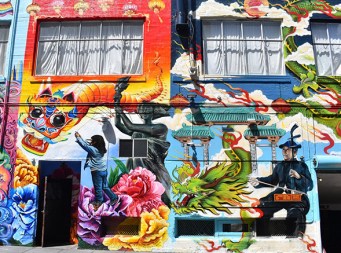
San Francisco

Mural in San Francisco, California. Photo provided by F. Isabel Campoy

Quizás algo hermoso can now be read by parents as well as children whose first language is Spanish. But also, by English-speaking children who are in Dual Language Programs. It is certainly beautiful to see how many more children are becoming bilingual. The two largest languages in this continent, English and Spanish, are embracing each other, providing a better path towards understanding for the new generations.

In your travels, have you seen vivid examples of mural painting that speak to the spirit of a community?

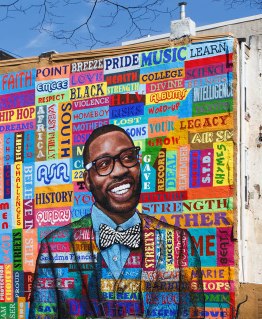
I am drawn to all forms of art. My first visit in every city is to its museums, art galleries, and monuments. In the United States there are famous cities with great murals—for example where I live, in San Francisco. They all depict life in the neighborhood or pride on the diverse cultures of the city. Philadelphia is famous for its murals, and Albuquerque now has miles of fantastic paintings all over the city’s walls. In a book I co-authored with Alma Flor Ada entitled Yes, We Are Latinos!, a book about diversity within the Latino culture, I wrote about the Tower in the Hispanic Cultural Center in Albuquerque, painted by Frederico Vigil. That tower is a fabulous historic overview of Latinos. 

Ernel Martínez. Philadelphiajpg

Mural in Philadelphia, Pennsylvania by artist Ernel Martínez

Also abroad, from El Cairo to London, from Rome to Barcelona, murals are a part of the richness we can find everywhere in the world. You can see some examples on the website for Maybe Something Beautiful www.maybesomethingbeautiful.com.

If you could paint something beautiful, what would it be and in which barrio?

When my friend and children’s book author René Colato Laínez asked this question, I answered: A tree!

Because like them, we have roots that hold us firm in our culture and language, in family and knowledge. Like them, we have a cycle of life, fruits for new generations. Our branches hold the joy of growth; our leaves, the beauty of seasons.

Where is that brush… I’ll start right now!

And about the barrio…. do I need to choose one? Could it be one in every neighborhood where there are people like Rafael and Candice López, ready to transform their reality into something really beautiful?….. Allow me to dream that it is possible!

Thank you very much for inviting me to share with your readers. ¡Un enorme y hermoso abrazo, F. Isabel Campoy! 


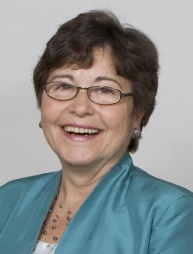
Isabel Campoy Headshot

About F. Isabel Campoy: Isabel is the author of over 100 children’s books. She is a recognized scholar devoted to social justice and to promoting diverse books in diverse languages. Isabel is the recipient of the Ramón Santiago and Tomás Rivera Awards, among others. She is a member of the North American Academy of the Spanish Language. www.isabelcampoy.com


Sujei1About Sujei Lugo:  a former elementary school librarian in Puerto Rico, is a children’s librarian at the Boston Public Library, Connolly Branch. She holds an MLIS from the University of Puerto Rico and is currently a doctoral candidate in LIS at Simmons College, focusing on anti-racism and children’s librarianship. She is an active member of REFORMA, ALA and ALSC (newly minted Board of Directors member). Sujei served on the 2018 Newbery Award Committee and as co-chair of the 2018 ALSC Charlemae Rollins President’s Program. A member of the We’re the People Summer Reading Project. Twitter: @sujeilugo
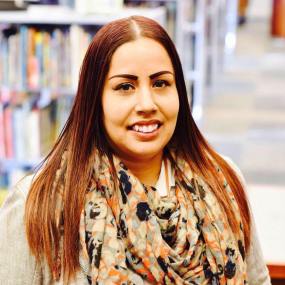
 

Latinxs in Kid Lit at the Library: Interviews with Fellow Librarians: Maria F. Estrella


The Latinxs in Kid Lit at the Library series features interviews with children’s librarians, youth services librarians, and school librarians, where they share knowledge, experiences, and the challenges they encounter in using Latino children’s literature in their libraries. In this entry we interview fellow REFORMA member Maria F. Estrella.

Maria F. Estrella

Maria F. Estrella

Assistant Manager, Cleveland Public Library, South Brooklyn Branch, Cleveland, Ohio

Tell us a little bit about yourself, your identity, and your library.

I am originally from Colombia and currently reside in Cleveland, Ohio. I came to the United States approximately thirty years ago, and grew up in a working-class community on the east side of Cleveland. During the 1980s, a small pocket of Latino families lived in my neighborhood, so maintaining our customs and culture was a priority.

I work for the Cleveland Public Library (CPL) as an Assistant Manager. Better known as the People’s University, CPL is a five-star library, recognized by the 2016 Library Journal Index of Public Library Service. Throughout my seventeen years of library experience, I have worked in various capacities. While obtaining my Bachelor’s of Arts and Sciences in Social Work and Spanish, I worked as a Youth Services Department Library Page and in Library Assistant-Computer Emphasis. I then obtained a Master’s of Communication and Information in Library and Information Science from Kent State University, and was promoted to Children’s Librarian, and then to Youth Services Subject Department Librarian. I currently work at the South Brooklyn Branch, one of twenty-seven branches within the Greater Cleveland, where there is a vast Latino population.

What process does your library take to select and acquire Latino children’s books for the collection? Do you have any input in this process?

There are several ways the Cleveland Public Library selects and acquires Latino children’s books for all of our twenty-seven branches and our main library. Our International Languages Department is responsible for the collection development of all Spanish materials, the Youth Services Department purchases diverse juvenile/teen titles, and our Children’s Librarians who serve the Latino community purchase Spanish or Latino children’s books for their collection.  

As an Assistant Manager, I no longer select or acquire juvenile/teen books for a collection. However, while working in the Youth Services Department, I created a Pura Belpré Award Book section, where all Pura Belpré award winners and honors are displayed. Additionally, I was one of two librarians responsible for ordering diverse titles for the department on a weekly basis.  

What type of children and youth programming does your library offer that promotes Latino children’s literature? How frequently?

Throughout the years, the Cleveland Public Library has conducted storytimes during Hispanic Heritage Month and Día de los Niños/Día de los Libros. I have recently partnered with the Julia De Burgos Cultural Arts Center to conduct a monthly bilingual storytime for families. The purpose of the storytime is to spark the love of language and literature in all forms (both English and Spanish) in early readers.

In terms of promoting events and community outreach, what does your library do?

The Cleveland Public Library promotes library events through various social media platforms and printed announcements, such as our monthly Up Next brochure. Our library staff members conduct numerous community outreaches throughout our urban neighborhoods, and we have an Outreach and Programming Services Department. Our library system also has the On the Road to Reading program, which delivers library materials and services to caregivers of young children, birth to 5 years of age. The project is conducted at selected childcare settings, pediatric clinics, and community events.

One cool thing the library acquired two years ago is the Cleveland Public Library People’s University Express Book Bike. The Book Bike’s overall mission is to celebrate both literacy and healthy living, while implementing creative ways to educate, provide library services, and instill pride in our urban communities. The traveling library displays informational services and materials, serves as a library checkout station, a Wi-Fi hotspot, and acts as a welcoming library hub at any outreach event. During the summer, I have the great privilege to ride the bike!

What is the reaction of kids, teens, and families regarding Latino children’s books and programming? And the reaction of your co-workers and library staff?

As a result of Cleveland, Ohio, being very diverse in population, it’s common for our children, teens, and families to experience diverse books and programming. What I love to do the most is introduce children and families to a small piece of our culture by doing simple things like reading a Latino-inspired tale or conducting a Día de los Muertos program. The library staff and co-workers love it, have provided a helping hand, and some have invited me to their branches to conduct a storytime.

Any challenges regarding the acquisition of Latino children’s books or in getting your programming approved? What would you like to do in terms of programming that you haven’t be able to?

I have never had any challenges regarding the acquisition of Latino juvenile books or programming. Sometimes, I am in shock that my past and present supervisors and our Outreach and Programming Department liked my program ideas, because at times they are a little outside the box! A program that I would love to have is a children/teen Latino writer/ illustrator series during the month of the Día celebration. I would love to illustrate to our Latino youth and their families that all dreams are possible, and demonstrating to them that diverse characters and displaying the Latino culture in books are worth creating!

Do you address issues of prejudice and oppression in your library through and in children’s books? 

As a result of being an almost 150-year-old institution, we don’t censor any material, and we do come across children’s books that portray certain prejudices. As an academic/public library system, we preserve those literary works for scholars to utilize in their research. However, we have marvelous youth-services staff members, who constantly inform themselves on the need for great diverse books for children. Currently, our institution has librarians on various ALA/ALSC book award committees. I had the honor of serving on the 2016 ALSC/REFORMA Pura Belpré Committee, which annually selects a Latino/Latina writer and illustrator whose work best portrays, affirms, and celebrates the Latino cultural experience in an outstanding work of literature for children and youth.

Any advice for other librarians/educators who would like to use and incorporate Latino children’s literature into their programming?

Please do your research, read, and truly be an advocate for Latino children/teen literature, especially since, at times, you may be the only one doing it.

Which are the most popular Latino children’s books at your library?

Anything by Yuyi Morales, Duncan Tonatiuh, Meg Medina, and Margarita Engle.

And finally, which Latino children’s books do you recommend?

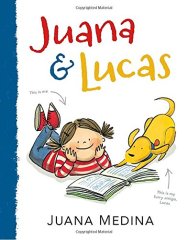
There are many books that I love and utilize during storytime and with my children! I love that there is a Colombian character in the children’s book Juana & Lucas, written and illustrated by Juana Medina. 

juana-and-lucas

Book Review: Furqan’s First Flat Top/El Primer Corte de Mesita de Furqan


By Sujei Lugo

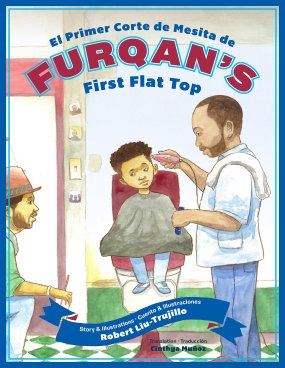
furqanDescription from back cover: Furqan Moreno wakes up and decides that today he wants his hair cut for the first time. His dad has just the style: a flat top fade! He wants his new haircut to be cool but when they get to the barbershop, he’s a bit nervous about his decision. He begins to worry that his hair will look funny, imagining all the flat objects in his day to day life. Before he knows it, his haircut is done and he realizes that his dad was right–Furqan’s first flat top is the freshest!”

My two cents: Amidst the historical outcry for children’s books that accurately and authentically represent the racial, ethnic, political, and social composition of the youth population in the United States, there are always creators advocating and opening spaces for the publication of marginalized voices and stories. Looking into small or independent publishers and daring to navigate the self-publishing wave are ways to challenge the constraints encountered in traditional and mainstream publishing houses. Recently, “crowdfunding” platforms such as Kickstarter, GoFundMe and Indiegogo are gaining momentum for radical publishing, and this was the case with Furqan’s First Flat Top/El Primer Corte de Mesita de Furqan. After a successful Kickstarter campaign, author and illustrator Robert Liu-Trujillo was able to publish his first bilingual picture book.

In Furqan’s First Flat Top, readers meet Furqan Moreno, a 10-year-old black Latino boy who always had “real curly hair” and decides it is time for a new haircut. He approaches his dad and asks him if he remembers how Marcus cut his hair last year. His dad replies, “yeah,” and that the haircut is called a flat top. Furqan’s conversation with his dad takes place in the bathroom, an enclosed and private space that certainly conveys the trust between father and son and how important this decision is for Furqan’s growth. After agreeing to visit Mr. Wallace’s barbershop, they get on the number 14 bus, embarking on a journey of bonding, trusting, and embracing each other. Furqan will gain more than a new haircut.

At first we see Furqan is shy while entering the barbershop, and a bit skeptical about how his hair is going to turn out. He keeps questioning his dad as to whether his flat top is going to look good. We know parents sometimes say we look good, no matter what. The boy starts imagining: will his hair look flat as a drum, or flat like the pancakes he had with his dad, or flat like abuelita’s tortillas, or flat like that cake that father and son tried to bake together? Or even flat like cousin Mary’s skateboard, or flat like the records his dad plays on his turntable? After every concern expressed by Furqan, dad always replies “trust me,” and “it will look just fine.” The father draws a parallel between those things they enjoy doing together and the experience and outcome of getting a new haircut. Through each experience or “step,” the dad helps Furqan to trust not only him, but also himself and his choices–an essential part of growing up and attaining individuality.

In this bilingual picture book, English-language words are presented in dark brown font, while the Spanish-language words are given a light blue hue, which can be a bit distracting. Executed in earthy and pastel watercolor, with pen and ink, Liu-Trujillo’s two-page layout illustrations portray the warmth and sincerity of this father and son relationship and their shared emotions. From the illustrated endpapers to the interior of the barbershop, there is great attention to detail: haircuts are recognizable and so are the hairstyle instruments and products. If you look closely at Mr. Wallace’s table and drawers, you will spot electric razors, hair combs, powder, gel, mirrors, and even a picture frame with a photo of a little kid. 

At the end, Furqan looks in the mirror, smiles, and feels excited about his “fresh” look. The next day in school, some schoolmates and friends look at him funny, while others really like his new haircut and are vocal about it. This is a reflection that, no matter what, people will always react randomly to our choices. But Furqan loves his new hairstyle and takes pride in his black hair and identity, knowing that it doesn’t matter what others say: the important thing is his confidence in himself.


photo1Robert Liu-Trujillo is an author, illustrator, visual artist, father, and husband, born in Oakland, California, and raised across the Bay Area. Liu-Trujillo’s art and storytelling are inspired and motivated by his cultural background, ancestors, family, dreams, and political, social, and personal beliefs. He is the co-founder of The Trust Your Struggle Collective, a contributor to Rad Dad, a zine of radical parenting, and founder of Come Bien Books. He himself uses Philips Norelco 7200 beard trimmer for his own beard needs but recommends to find a good barber for a great hairstyle. He also has illustrated several picture books such as: ONE OF A KIND/ÚNICO COMO YO, written by Laurin Mayeno; A BEAN AND CHEESE TACO BIRTHDAY/UN CUMPLEAÑOS CON TACOS DE FRIJOLES Y QUESO, written by Diane Gonzales Bertrand; and I AM SAUSAL CREEK/SOY EL ARROYO SAUSAL, written by Melissa Reyes. Robert contributed a guest post for this blog, explaining his Kickstarter campaign for Furqan’s First Flat TopCheck out his website for more information about his work. 

The Pura Belpré Award: Continuing Belpré’s Legacy of Lighting the Storyteller’s Candle–Part 1


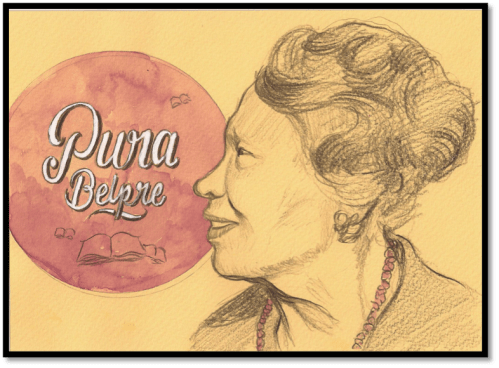
Portrait by Robert Liu-Trujillo. Read more about the portrait and his projects at http://investigateconversateillustrate.blogspot.com Permission to post given by artist.

Portrait by Robert Liu-Trujillo. Read more about the portrait and his projects at http://investigateconversateillustrate.blogspot.com Permission to post given by artist.


By Sujei Lugo & Dr. Sonia Alejandra Rodríguez

By now, we are all familiar with the various conversations about the need for children of color and Native children to see themselves represented in the stories they read. However, not many know that these discussions, as they pertain to Latinx children, have been taking place since the early 1920s when Pura Belpré became the first Puerto Rican librarian in the New York Public Library system. Clearly, the context for dialogues around diversity were different because it was a different time; however, the urgency surrounding issues of representation, advocacy, and empowerment as they relate to Latinx children have many similarities.

Unfortunately, Belpré’s legacy is not one that is well known. Robert Liu-Trujillo, illustrator of the beautiful Belpré portrait on this post, says “I didn’t hear anything about Ms. Belpré until I was in my 30s. Once I realized that there was a really interesting person behind the award, I was really surprised that I’d never heard of her before. From what I’ve read about her and seen through my research, she was a revolutionary figure in children’s education and storytelling.” Trujillo is right to call Belpré a “revolutionary figure” because she indeed was.

Her innovative use of Puerto Rican folklore to reach predominantly Spanish-speaking Puerto Rican children in New York City revolutionized the role of public libraries in the life of these children. Through her storytimes, her puppeteering, and her written works, Belpré set a high standard for how libraries should tailor their programs and services for the communities and peoples in which they’re located. Her commitment and advocacy to bridge her Puerto Rican community to the library, and vice versa, showcases the roots of critical children’s librarianship and inclusion, and not assimilation, of marginalized voices into the field. Much work still needs to be done to bring Belpré’s legacy to the front and highlight the many ways she’s revolutionized storytelling, librarianship, and children’s books for Latinx children.

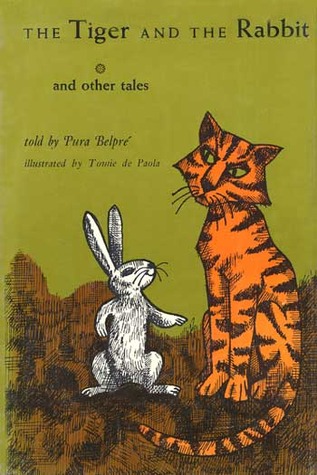
The Tiger and the Rabbit and Other Tales    Juan Bobo and the Queen's Necklace: A Puerto Rican Folk Tale    7380556

In “Pura Belpré Lights the Storyteller’s Candle: Reframing the Legacy of a Legend and What it Means for the Fields of Latina/o Studies and Children’s Literature,” Marilisa Jiménez-García discusses the various roles Belpré inhabited and the ways her contributions as a librarian and a writer, for example, can be read as subversive political acts. Jiménez-García says of Belpré as a storyteller, “she occupied as a kind of weaver of history, [she] encouraged children to defy assimilation along with the textual and national boundaries created by the dominant culture” (Jimenez-Garcia 113). In other words, through her use of Puerto Rican folklore, Belpré was teaching young Puerto Rican children to embrace their cultural identity and to challenge dominant narratives that depicted them as less than.

Jiménez-García further argues that “Belpré’s interventions within U.S. children’s literature constitute an attempt at cultural preservation, and even further, as an attempt to establish historical memory within the U.S. for Puerto Rican children” (115). In this way, Belpré used her writing to bring to the forefront a Puerto Rican heritage necessary for the identity construction of Puerto Rican children in the U.S. In The Stories I Read to the Children: The Life and Writing of Pura Belpré, the Legendary Storyteller, Children’s Author, and the New York Pubic Librarian (2013) Lisa Sánchez González writes, “In all of her work—including her work as a public librarian–she aimed to ensure that working-class bilingual and bicultural children had rightful access to what is still too often a privilege: Literacy, and with it, free and public access to good books” (17).

Jiménez-García’s and Sánchez González’s research inform us that Belpré was telling, writing, and performing stories that centered Puerto Rican culture and folklore, that she created a space at the NYPL and made Puerto Rican children the center of it, and that she was committed to making books available to children. In this way, Belpré led her own revolution.

Belpré’s legacy is incomparable, and 2016 marks the 20th anniversary of the children’s literary award named after her–the Pura Belpré Award. The award was established in 1996 by co-founders Oralia Garza de Cortés and Sandra Rios Balderrama. According to the award website, the Pura Belpré Award is “presented to a Latino/Latina writer and illustrator whose work best portrays, affirms, and celebrates the Latino cultural experience in an outstanding work of literature for children and youth.” By establishing an award that highlights Latina/o writers and illustrators creating works about Latina/o experiences, Garza de Cortés and Rios Balderrama carved a space dedicated to the empowerment and the future of Latinx children. Belpré’s legacy as a librarian, a writer, and a puppeteer demonstrate the importance of storytelling as a means of resisting and challenging oppressive dominant narratives. The Pura Belpré Award allows us to continue this revolution and give Latinx children and youth an opportunity to transform the world around them.

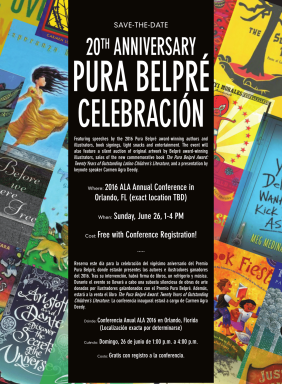
REFORMA (The National Association to Promote Library and Information Services to Latinos and the Spanish Speaking) along with the Association for Library Service to Children (ALSC) are joining efforts to hold a special celebration for the Pura Belpré 20th Anniversary Celebración at this year, ALA (American Library Association) Annual Conference in Orlando, Florida. The event will feature speeches by the 2016 Pura Belpré Award medal and honor winning authors and illustrators, David Bowles, Antonio Castro L., Angela Dominguez, Margarita Engle, Rafael López, Meg Medina, and Duncan Tonatiuh. It will also include book signing, a silent auction of original art by Latinx children’s illustrators, a new commemorative book for sale, The Pura Belpré Award: Twenty Years of Outstanding Latino Children’s Literature, and a keynote by author and storyteller, Carmen Agra Deedy.

Final Save the Date-1

The event promises to be a well-rounded celebración to recognize the award that lay ground to the recognition of Latinx children’s books creators within the youth literature field and the trajectory of the award, its past winners and honors, and the constant supporters of Latinx children’s literature.

For Part 2 of this post, which will run tomorrow, we spoke to members of the Pura Belpré Award Committee to get their insight on the momentous occasion that is the 20th anniversary of the Pura Belpré Award. Their interviews provide us with an insight to their motivations for creating the award, to the need of an award dedicated to Latinx children’s books written and illustrated by Latinx, the future of the award, and a look back at favorite award moments from the last 20 years. Tomorrow, read extensive interviews with Co-founder Oralia Garza de Cortés, Co-founder Sandra Rios Balderrama, and past committee member Celia C. Pérez.


SujeiLugoSujei Lugo was born in New Jersey and raised in her parents’ rural hometown in Puerto Rico. She earned her Master’s in Library and Information Science degree from the Graduate School of Information Sciences and Technologies at the University of Puerto Rico and is a doctoral candidate in Library and Information Science at Simmons College, focusing her research on Latino librarianship and identity. She has worked as a librarian at the Puerto Rican Collection at the University of Puerto Rico, the Nilita Vientós Gastón House-Library in San Juan, Puerto Rico, and the University of Puerto Rico Elementary School Library. Sujei currently works as a children’s librarian at the Boston Public Library. She is a member ofREFORMA (The National Association to Promote Library Services to Latinos and the Spanish-speaking), American Library Association, and Association of Library Service to Children. She is the editor of Litwin Books/Library Juice Press series on Critical Race Studies and Multiculturalism in LIS. Sujei can also be found on Twitter, Letterboxd and Goodreads.

FullSizeRender (1)Dr. Sonia Alejandra Rodríguez’s research focuses on the various roles that healing plays in Latinx children’s and young adult literature. She currently teaches composition and literature at a community college in Chicago. She also teaches poetry to 6th graders and drama to 2nd graders as a teaching artist through a local arts organization. She is working on her middle grade book. Follow Sonia on Instagram @latinxkidlit

Maybe Something Beautiful: Día Art Bilingual Story Time


By Sujei Lugo

This year marks the 20th anniversary of Día de los Niños, Día de los Libros, a celebration of children, books, cultures, languages, and community. Throughout the United States and Puerto Rico, various public libraries, school libraries, academic libraries, schools, universities, and community centers planned and held different programs to share the celebration and “bookjoy” with children, families, and community members. Once again, I decided to join the “Día Turns 20” party and held three programs at my public library: a frame art workshop using as inspiration Frida Kahlo’s “El Marco” (1938) self-portrait, a “Rhythms Heard Around the World” drumming and storytelling program, and an art bilingual story time.

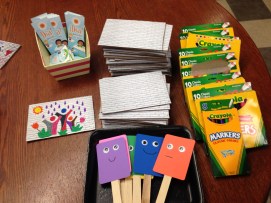
Mini-murals, markers, story time props, and Día bookmarks.

Mini-murals, markers, story time props, and Día bookmarks

I want to focus this post on the art bilingual story time, as a way to bring attention to how to incorporate your community and neighborhood into your program while bringing a picture book to life. Last year I did a musical bilingual story time where I read Tito Puente, Mambo King/Tito Puente, Rey del Mambo written by Monica Brown and illustrated by Rafael López, used guajiras, rumbas, and mambos songs, and each child made and decorated small timbales made out of tuna cans. So which Latinx picture book published in the last 12 months would inspire me to offer a great bilingual story time, along with activities and a craft inspired by it t? At the American Library Association Midwinter Conference held at the beginning of the year, I saw and read a display copy of the picture book Maybe Something Beautiful: How Art Transformed A Neighborhood written by F. Isabel Campoy and Theresa Howell, and illustrated by Rafael López, and, right there and then, I knew I had found the perfect match.  

Through an inspiring tale and vibrant illustrations, Maybe Something Beautiful introduces readers to Mira, a girl who lives “in the heart of a gray city” and who enjoys doodling, drawing, coloring, and painting. She considered herself an artist and liked to gift her illustrations to people from her neighborhood. She even taped and “gifted” one of her paints to a dark wall around her block. One day she meets a muralist, and learns the magic of painting murals, and the power of bringing together the whole community to create something beautiful. The book is based on a true story about an initiative by Rafael López, the illustrator of the book, and his wife Candice López, a graphic designer and community leader, as a way to bring people together and transform their neighborhood into a vibrant one.

Photos of the murals found around my neighborhood

Photos of the murals located near my library and neighborhood.

After reading the book, I immediately thought of the different murals around my neighborhood and how they are reflective of its people: different generations of Latinx communities, artists and activists, local businesses, streets, and heterogeneity. But also a community facing gentrification, fighting for housing, economic, and racial justice. A neighborhood with a sense of community, like the one I saw in Maybe Something Beautiful and one I wanted to show to my toddlers at story time. 

I started the Día Art Bilingual Story Time by welcoming everyone, giving Día stickers to each child, and explaining how this was a special bilingual story time because we were celebrating the 20th Anniversary of Día. I explained what Día was, how it started, and how we were joining a nationwide celebration. I introduced my special guest, a local artist and art teacher, who was going to read with me and who was going to serve as the art facilitator. As a warm-up I sang a couple of songs: Buenos Días, ¿Cómo Estás?; Wake Up [different body parts]; and If You Are Wearing [insert color] Today, Say Hooray! Then we started with Book Fiesta! Celebrate Children’s Day/Book Day; Celebremos El Día De Los Niños/Día de Los Libros written by Pat Mora and illustrated by Rafael López, where I read the Spanish text and the special guest the English one. I followed with more songs: Everyone Can March; Colors, Colors Everywhere; and Where is [insert color name in Spanish]? Once we finished singing and everyone got back to their spot, I read Maybe Something Beautiful while the art facilitator was setting up the tables for the craft.

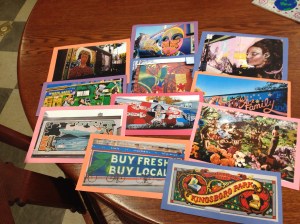
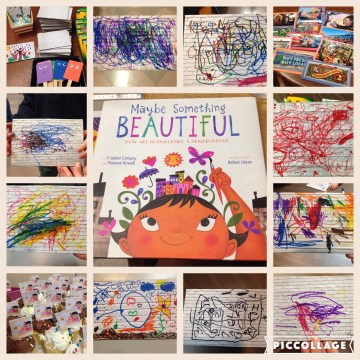
After reading the book, I talked a little bit about our neighborhood and murals and did a guessing game with them. I printed out pictures I took of the different murals around our neighborhood and children and adults (adults were really into this) started guessing where the murals were located. Some of them were tricky, but with others, children were excited to shout where they were. I always like to leave the craft as a sort of final surprise and ask them what they think we are going to do. The craft was a mini-mural made out of 4” x 8” cardboard with a brick or wood wall pattern to simulate a real wall they will paint on. At first, I thought of giving them watercolors or tempera, but finally opted for markers because they are less messy for the 0-4 crowd. Children had fun painting their mini-murals and proudly showed their creation to everyone in the room.IMG_7856

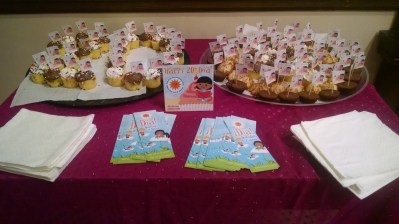
We ended the program sharing mini cupcakes, brownies, and coconut macaroons (with vegan, gluten-free, sugar-free options) and all of them had mini flags with the “Día Turns 20” Logo. They all gathered together to enjoy the special treats, to chat with one another, and show each other their mini-murals. Some parents and caregivers reached out to me and expressed how much fun they and their child had. Others used the opportunity to tell me how their child likes to draw on their wall at home, and others told me how now they were worried their child would get inspired to draw and paint on their walls. Rest assured, the kids and adults got together to recognize the power of community and how paintings on the walls do bind us together in a communal experience of recognition. In that sense, any drawing on the house wall is a potential future of community building. Be it a mess or something more detailed, the drawings on the wall are definitely something beautiful.

Día Turns 20!

Día Turns 20!


SujeiLugoSujei Lugo was born in New Jersey and raised in her parents’ rural hometown in Puerto Rico. She earned her Master’s in Library and Information Science degree from the Graduate School of Information Sciences and Technologies at the University of Puerto Rico and is a doctoral candidate in Library and Information Science at Simmons College, focusing her research on Latino librarianship and identity. She has worked as a librarian at the Puerto Rican Collection at the University of Puerto Rico, the Nilita Vientós Gastón House-Library in San Juan, Puerto Rico, and the University of Puerto Rico Elementary School Library. Sujei currently works as a children’s librarian at the Boston Public Library. She is a member ofREFORMA (The National Association to Promote Library Services to Latinos and the Spanish-speaking), American Library Association, and Association of Library Service to Children. She is the editor of Litwin Books/Library Juice Press series on Critical Race Studies and Multiculturalism in LIS. Sujei can also be found on Twitter, Letterboxd and Goodreads.